
Not gaining muscle despite working out usually does not mean you need a harder workout.
It usually means one part of the process is quietly holding everything back.
You may be training with real effort, leaving the gym tired, and still look the same in the mirror a few months later.
That is frustrating.
I have had phases where the bar felt heavier every week, yet my T-shirt seemed to receive absolutely none of the good news.
The answer is rarely a magic exercise or another supplement.
Muscle growth needs a useful training signal, enough food to support it, and enough recovery for the body to respond.
If one of those is missing, more gym hours can simply create more fatigue.
Building muscle isn’t just about showing up
I used to think a hard gym session had to be productive.
If I left tired, sweaty, and with my arms feeling full, I assumed I had done enough.
Then a few weeks would pass.
My T-shirt looked the same.
Some lifts had barely moved.
That was the annoying part.
I was giving the gym plenty of time, but not always giving my muscles a clear reason to grow.
Muscle does not grow just because a workout feels exhausting.
It grows when the working muscle deals with enough controlled resistance, then gets enough food and recovery to adapt.
That training signal is called mechanical tension.
In plain English, the muscle has to work hard through clean, demanding reps.
A few sets that slowly become heavier, longer, or more controlled usually do more than a heroic pile of random exercises.
The goal is not to crawl out of the gym feeling ruined.
The goal is to give your body a clear message.
Then give it a chance to answer.
The gap between training hard and training right
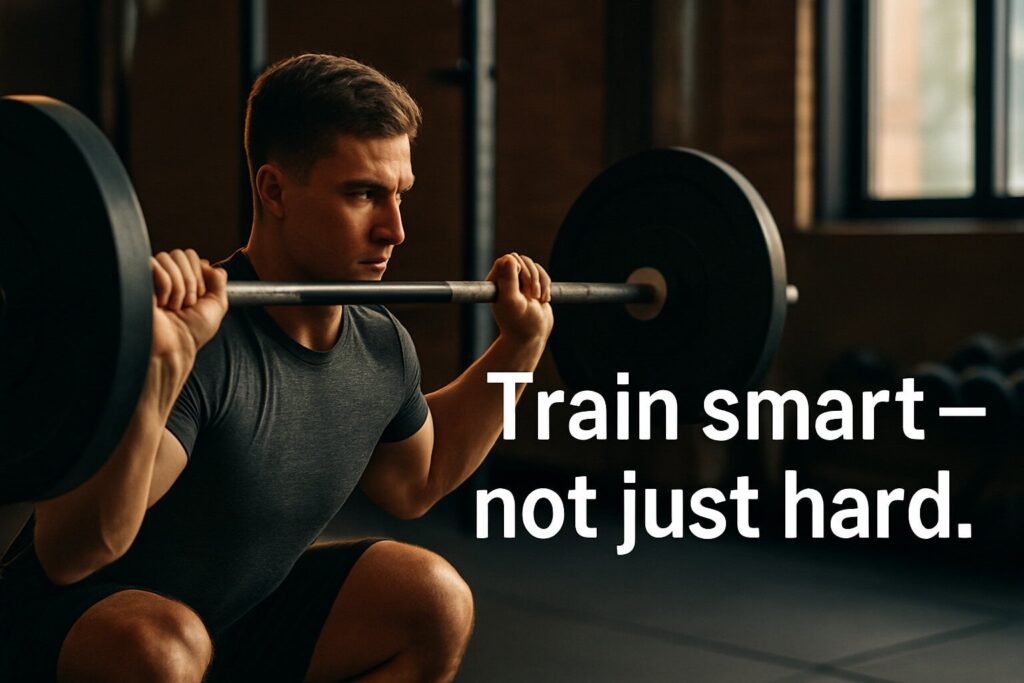
I have watched people pile plates onto the bench, grind out crooked reps, and then blame their chest when nothing changes.
I have also spent weeks doing the opposite.
I trained cautiously, stopped every set while it still felt comfortable, and wondered why the same weights kept feeling exactly the same.
Both approaches can leave you tired.
Neither automatically gives a muscle a reason to grow.
That is where progressive overload matters.
It does not mean forcing more weight onto the bar every single week.
Sometimes the progress is one extra clean rep.
Sometimes it is a slower lowering phase, a short pause at the chest, or less bouncing through the easy part.
I still remember benching five days a week and feeling very committed to the idea.
My chest had apparently not received the memo.
The sessions gave me fatigue, but not much useful progress.
When I reduced the noise and used a few controlled working sets, with a pause and a clear target, my chest actually started to grow.
You do not always need another exercise.
You need a reason for the next rep to be harder than the last one.
Why your program might be sabotaging your gains
A workout can feel busy without giving you much to build on.
I have had sessions with supersets, extra curls, an exercise I saw online, and just enough rest to make everything feel intense.
By the end, I was exhausted.
The next week, I had no clear idea what I was supposed to improve.
That is the problem with a random program.
You do not need fifteen curl variations to build your biceps.
You need a few movements you can repeat well, enough challenging sets to make them matter, and enough recovery to come back stronger.
If the same weights and reps have not moved for months, you are probably not “maintaining good form.”
You are giving your body the same job it already knows how to handle.
Keep one program long enough to learn from it.
Six weeks is usually a fair starting point.
Write down the weight, reps, and how the set looked.
Film an occasional set if your technique feels uncertain.
Small improvements in control, range of motion, or bar speed still count.
But if nothing is improving at all, the program needs an honest adjustment.
Training volume and recovery: the love-hate relationship

Adding more sets can help.
Until those extra sets begin stealing from the next workout.
I remember a phase when I kept adding a little more because I wanted faster progress.
Another chest set.
Another finisher.
One more exercise because the muscle still did not feel “worked enough.”
At the time, it seemed sensible.
More work should mean more growth, right?
A few days later, everything felt heavier.
My joints felt more tired than strong, and the next session started badly before it had even really begun.
I have seen the same pattern in other lifters too.
They leave the gym completely spent, take pride in how sore they are, then wonder why the same weights feel harder every week.
That is usually a recovery problem, not a sign that you need to push harder.
The useful amount of volume is enough to challenge the muscle and still let you repeat good work later in the week.
For many lifters, somewhere around 10 to 20 hard sets per muscle group per week can be a sensible range.
A 2022 review found that around 10 sets per week per muscle group may be enough to maximize hypertrophy.
But I would not treat that number like a rule carved into the wall of the gym.
A lifter sleeping well, eating enough, and training three days per week may handle more work than someone doing physical work all day and sleeping badly.
The right number depends on sleep, food, exercise selection, and how well you recover between sessions.
If your lifts feel worse, your energy is dropping, and soreness keeps following you around for days, adding more volume is probably not the answer.
Sometimes progress starts when you remove one unnecessary set.
Nutrition that actually supports growth

Training hard while eating too little is a frustrating combination.
I used to think I was eating plenty because I had a big dinner and a protein shake after the gym.
Then I looked at the whole day.
Coffee in the morning, a rushed lunch, long hours on my feet, and not much left by the time I trained.
It was not exactly a muscle-building masterplan.
You do not need a perfect diet or a container of chicken and rice following you around all day.
But your body does need enough energy, enough protein, and meals that support the work you expect it to do.
A small calorie surplus, often around 200 to 300 calories above maintenance, is a sensible place to start if your goal is size.
For protein, about 1.6 to 2.2 grams per kilogram of body weight per day works well for many people who lift regularly.
The timing of meals does not need to be perfect.
Still, arriving at training hungry and under-fuelled makes hard sets feel harder than they need to.
Eat consistently, include carbohydrates around demanding sessions when they help, and watch whether your body weight and gym performance are actually moving.
That tells you more than guessing from one big meal.
Why your big lifts matter more than you think
Cable machines and isolation work can build plenty of muscle.
I use them too.
But there was a period when my training became mostly flyes, curls, pushdowns, and whichever machine happened to be free.
Every workout felt busy.
I still could not tell you, honestly, what was getting better.
That changed when I gave more attention to the bigger lifts.
A squat, bench press, deadlift, or overhead press asks several muscles to work together.
They are useful because the progress is harder to fake.
If the same bench press is cleaner, steadier, or stronger than it was a month ago, something useful is happening.
If it still feels like you are wrestling a shopping trolley with one bad wheel, the program is giving you useful feedback too.
Compound lifts do not need to be treated like sacred exercises.
Not everyone feels great with every version.
But I like having one or two of them in a program because they give the smaller exercises a job.
When my bench improved, dips and triceps work stopped feeling like random extras.
They became support work for a press that was actually moving forward.
The smaller exercises still matter.
They just work better when they are helping something instead of trying to carry the whole program alone.
Mind-muscle connection or mechanical tension?

Both matter.
But they do different jobs.
I learned this with curls.
Some sets gave me a huge biceps pump because I was moving slowly and concentrating hard.
The problem was that I was sometimes using weights so light that the set never became very demanding.
It felt productive.
That was not always the same thing.
On the other side, I have seen people swing a heavier dumbbell from the floor to their shoulder and call it a curl.
The weight was there.
The biceps were not doing much of the work.
Mind-muscle connection helps you control the movement and keep tension where you want it.
Mechanical tension gives the muscle a reason to adapt.
For most exercises, I get better results when I lower with control, briefly own the hardest position, and then lift without turning the rep into a slow-motion performance.
The rep should feel deliberate.
It should also feel difficult.
If you can feel the muscle working but never have to challenge it, add a little more load or make the exercise harder.
If the weight is moving but you cannot control where the effort goes, take some weight away.
You need both the steering wheel and the engine.
Sleep: the anabolic drug no one talks about
I notice bad sleep in the gym before I even start the first real set.
The warm-up weight feels strangely heavy.
I take longer to feel switched on.
Even a session I normally enjoy can become a small argument between me and the bar.
For years, I thought I could solve that feeling by pushing harder or taking something stimulating before training.
It helped me feel more awake.
It did not make me more recovered.
A hard workout is only one part of building muscle.
The body still needs time afterward to restore energy, manage fatigue, and prepare for the next session.
I have also had weeks where I trained well on paper, ate reasonably well, and still felt flat because sleep kept getting cut short.
The problem was not that I suddenly needed a new routine.
I needed a better starting point for the routine I already had.
Most adults do well aiming for around seven to nine hours.
But I would not obsess over chasing a perfect number every night.
I pay more attention to the practical signs.
Am I waking up less wrecked?
Do my usual weights feel familiar again?
Can I train two or three good sessions in a week without feeling like every set is a test of survival?
If the answer stays no, I look at sleep before I add another set, another supplement, or another complicated recovery trick.
Sometimes going to bed a little earlier does more for the next workout than anything in the gym bag.
Accessory work that supports your main lifts, head to toe
The main lifts give a program its structure.
The smaller exercises are where I fill in what those lifts leave behind.
After benching, for example, I do not always need more heavy pressing.
Sometimes dumbbell presses or cable flyes let me work the chest with more control and less pressure to chase another number.
For arms, I still curl.
I just stopped treating endless curls as a full plan.
Triceps pushdowns have helped me practice the lockout portion of pressing without turning every extra set into another heavy bench attempt.
Overhead extensions and hammer curls give the arms work from angles that regular pressing and curling do not cover as well.
Shoulders need the same balance.
An overhead press can be a useful strength movement, but I like pairing it with lateral raises, rear-delt flyes, or face pulls when the shoulders need more direct attention.
For back work, pull-ups and rows do most of the heavy lifting.
On days when I start cheating the row, a chest-supported version is a much less dramatic way to remind my back what it is supposed to do.
Legs are similar.
Squats are great, but single-leg work, lunges, RDLs, hamstring curls, and calf raises help me give each area some direct work.
Accessory exercises are not random extras.
They are the details that make the bigger movements feel more complete.
Gear, environment, and gym setup that actually help growth
The gym itself will not build muscle for you.
Still, the environment can make good training easier to repeat.
I notice it when I train around people who take their sets seriously.
Nobody needs to shout or turn the gym into a film trailer.
But seeing someone set up carefully, log a set, and take their rest properly can pull your own standards upward.
I also like arriving with one small target.
Maybe I want one cleaner rep on the bench.
Maybe I want the same row weight with less body swing.
That is more useful than walking in with the vague plan of “destroying chest.”
Equipment helps when it gives an exercise a clear purpose.
Resistance bands can make a home session harder.
Safety pins can make a barbell setup feel more secure.
Chains can change the resistance through a lift, but they are not a requirement for muscle growth.
Most good progress still comes from a few familiar tools used well.
The same applies after training.
I do not expect foam rolling, stretching, or a cold shower to magically fix recovery.
But a short routine that helps you slow down, loosen up, and leave the gym feeling less beaten up can be worth keeping.
You do not need a complicated setup.
You need one that makes it easier to train consistently and come back ready to do it again.
Programming through life changes: work, travel, stress, age
No training plan survives real life exactly as written.
I have had periods when work took more energy than the gym.
On those weeks, trying to force the same number of sets only made every session feel worse.
What helped more was keeping the main movements and removing a few extra sets.
A shorter good workout still keeps the habit alive.
When travel gets in the way, bands, push-ups, bodyweight rows, split squats, and a few hard sets can do enough to maintain momentum until you are back home.
You do not need to turn a hotel room into a temporary bodybuilding laboratory.
As you get older, or simply notice that a joint needs more attention, give yourself a longer warm-up and choose variations you can control well.
That does not mean training timidly.
It means choosing a version of the exercise you can repeat without collecting little warnings from your shoulders, knees, or lower back.
If you are dealing with an injury, do not force the painful movement.
Keep training what feels safe, and get individual advice from a qualified clinician when pain is persistent, sharp, or worsening.
A program works best when it can bend a little without breaking.
Consistency is not doing everything perfectly.
It is knowing what to keep when life gets messy.
The classic split that actually works
Chest & Triceps / Legs & Shoulders / Back & Biceps (+ Core)
Old-school splits aren’t the problem.
Poor structure is.
This classic split works when every muscle group
—including the core—
is trained deliberately,
with enough volume to grow
and enough clarity to avoid confusion.
This is a structured hypertrophy plan with clear work for each muscle group, including core.
Day 1 – Chest & Triceps
Horizontal pushing and arm lockout strength
Chest
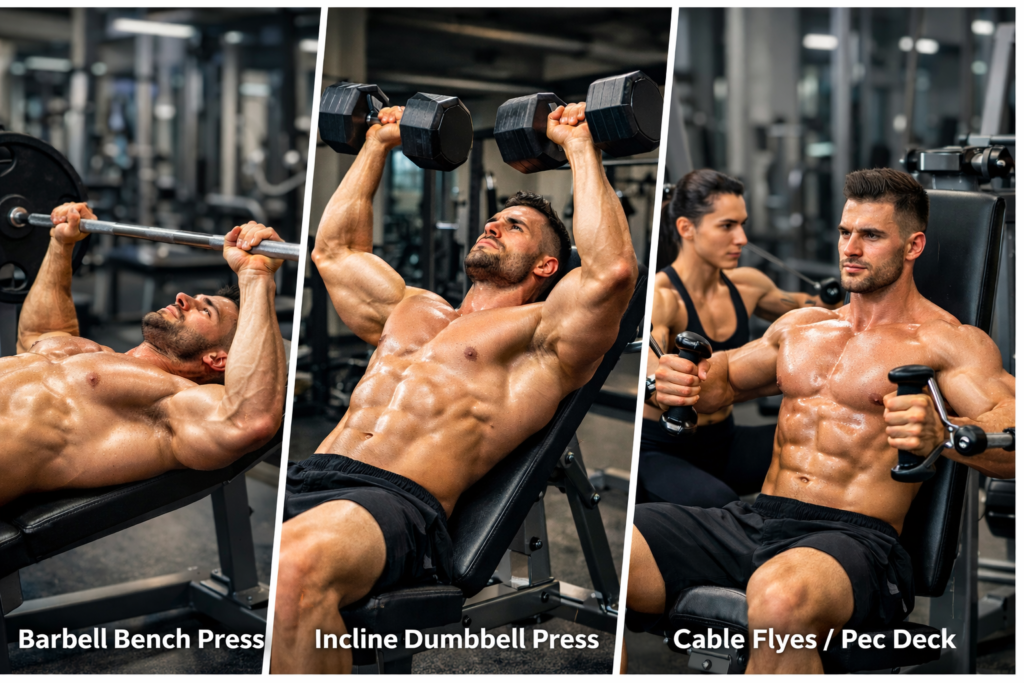
1. Barbell Bench Press
Target muscles:
- Pectoralis major
- Anterior deltoids
- Triceps (secondary)
Execution:
Lie on the bench, eyes under the bar, feet flat and stable on the floor.
Pull your shoulder blades together and lower the bar slowly to mid-chest.
Push the bar up while keeping your back tight and feet planted.
Sets & reps:
4 × 5–6
Progressions:
- Add 2.5–5 lb once all reps are clean
- Increase pause duration
- Improve bar speed
Variations:
- Dumbbell bench press: press dumbbells independently to allow a deeper stretch and more shoulder freedom.
- Machine chest press: follow a fixed path and focus on constant chest tension.
2. Incline Dumbbell Press
Target muscles:
- Upper chest
- Front delts
- Triceps (secondary)
Execution:
Set the bench to a low incline and sit back with dumbbells at chest level.
Lower the dumbbells slowly until you feel a stretch in the chest.
Press them up under control without fully locking out.
Sets & reps:
3 × 8–10
Variations:
- Incline barbell press: lower the bar to the upper chest under full control.
- Low-incline machine press: press through the handles without aggressive lockout.
3. Cable Flyes or Pec Deck
Target muscles:
- Chest (shortened range)
Execution – Cable Flyes:
- Step forward to create tension on the cables before the movement begins.
- Open the arms along a wide arc until the chest is fully stretched.
- Bring the hands together by squeezing the chest, not the shoulders.
Execution – Pec Deck:
- Sit firmly with chest up and elbows aligned to the pads.
- Open the arms slowly until a controlled chest stretch is reached.
- Close the pads by contracting the chest without pushing the shoulders forward.
Sets & reps:
3 × 12–15
Triceps
4. Close-Grip Bench Press or Dips
Target muscles:
- Triceps (long and lateral heads)
- Chest (secondary)
Execution – Close-Grip Bench Press:
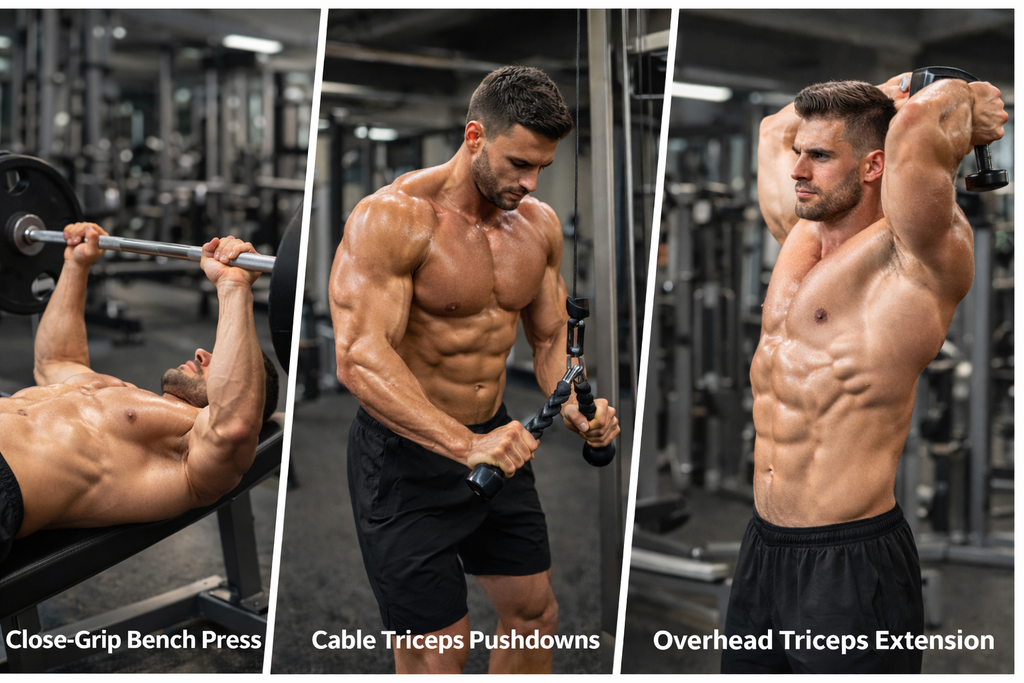
- Grip the bar slightly inside shoulder width and keep the elbows close to the torso.
- Lower the bar under control until it touches the lower chest.
- Press up by extending the elbows, focusing on triceps drive.
Execution – Dips:
- Support the body on parallel bars with a slight forward lean.
- Lower yourself until the elbows reach a deep but controlled bend.
- Push back up by extending the elbows, keeping tension on the triceps.
Sets & reps:
3 × 6–8
Variations:
- Weighted dips: slight forward lean, controlled descent, strong triceps-driven press.
- Smith close-grip press: press along the rails while keeping elbows tucked.
5. Cable Triceps Pushdowns
Target muscles:
- Triceps lateral head
Execution:
Stand facing the cable with elbows glued to your sides.
Push the handle down until arms are fully straight.
Return slowly without moving your shoulders.
Sets & reps:
3 × 10–12
6. Overhead Triceps Extension
Target muscles:
Hold the weight overhead with elbows pointing forward.
Lower the weight behind your head slowly.
Extend the arms back up without arching the lower back.
Execution:
- Full stretch overhead
- Controlled extension
Sets & reps:
2–3 × 12
Day 2 – Legs, Shoulders & Core
Lower-body strength, shoulder stability, trunk control
Legs – Quadriceps & Glutes
1. Squat or Leg Press
Target muscles:
- Quadriceps
- Glutes
- Core stabilizers
Execution – Squat:
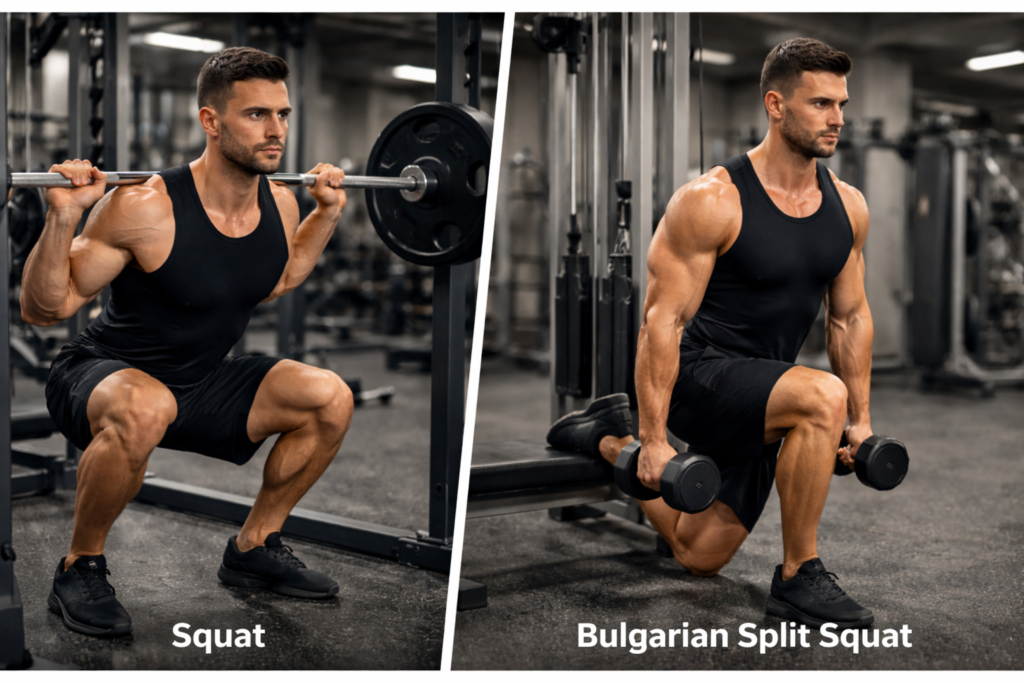
- Stand with the bar balanced over mid-foot and brace the core before descending.
- Lower the hips while keeping the chest up and knees tracking forward.
- Drive up by pushing through the floor, maintaining full-body tension.
Execution – Leg Press:
- Sit with the lower back firmly against the pad and feet placed on the platform.
- Lower the sled under control until the knees bend deeply without losing position.
- Press the platform away by extending hips and knees, keeping tension on the quads and glutes.
Sets & reps:
4 × 5–8
Variations:
- Hack squat: back against the pad, drive through mid-foot.
- Safety bar squat: stay upright and reduce shoulder strain.
2. Bulgarian Split Squat
Target muscles:
- Quads
- Glutes
Execution:
Place your back foot on a bench and front foot flat on the floor.
Lower your body slowly on the front leg.
Push back up through the front foot without bouncing.
Sets & reps:
3 × 8 per leg
Legs – Hamstrings
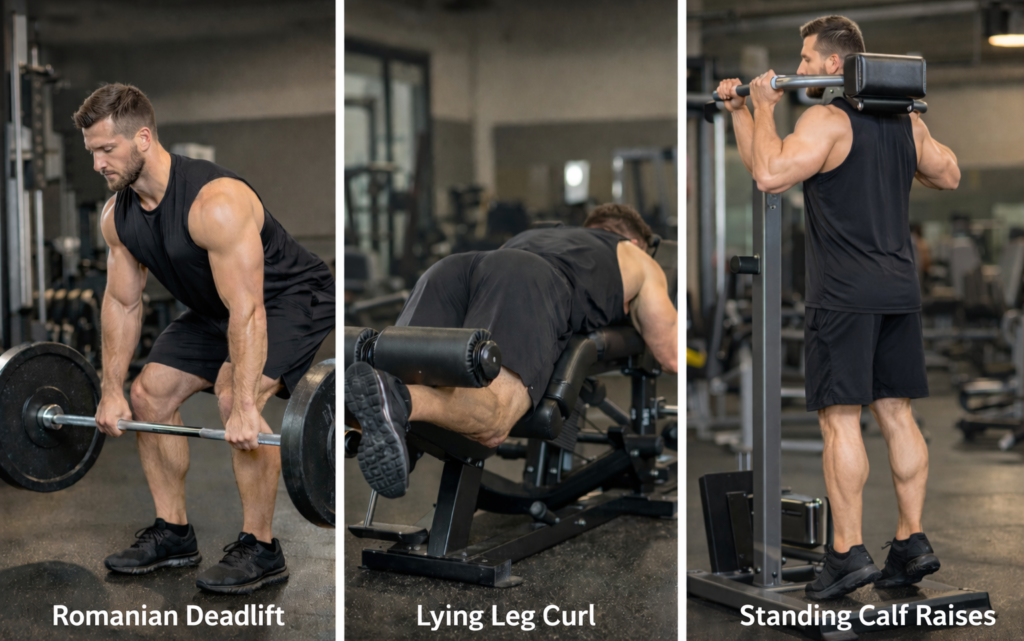
3. Romanian Deadlift
Target muscles:
- Hamstrings
- Glutes
- Lower back (isometric)
Execution:
Stand tall holding the bar close to your thighs.
Push your hips back while keeping your back flat.
Stand back up by driving your hips forward.
Sets & reps:
3 × 6–8
4. Leg Curl
Target muscles:
- Hamstrings
Execution:
Sit or lie in the machine with knees aligned to the pivot.
Curl the weight by bending your knees.
Lower slowly to keep tension on the hamstrings.
Sets & reps:
3 × 10–12
Calves
5. Standing or Seated Calf Raises
Target muscles:
- Gastrocnemius
- Soleus
Execution – Standing Calf Raises:
- Stand tall with weight balanced over the forefoot and heels free to move.
- Lower the heels slowly to feel a deep stretch in the calves.
- Rise up by pushing through the balls of the feet and fully contracting the calves.
Execution – Seated Calf Raises:
- Sit with knees bent and feet flat on the platform or blocks.
- Lower the heels under control until the calves are fully stretched.
- Lift the heels by driving through the forefoot, focusing on calf contraction.
Sets & reps:
4 × 10–15
Shoulders
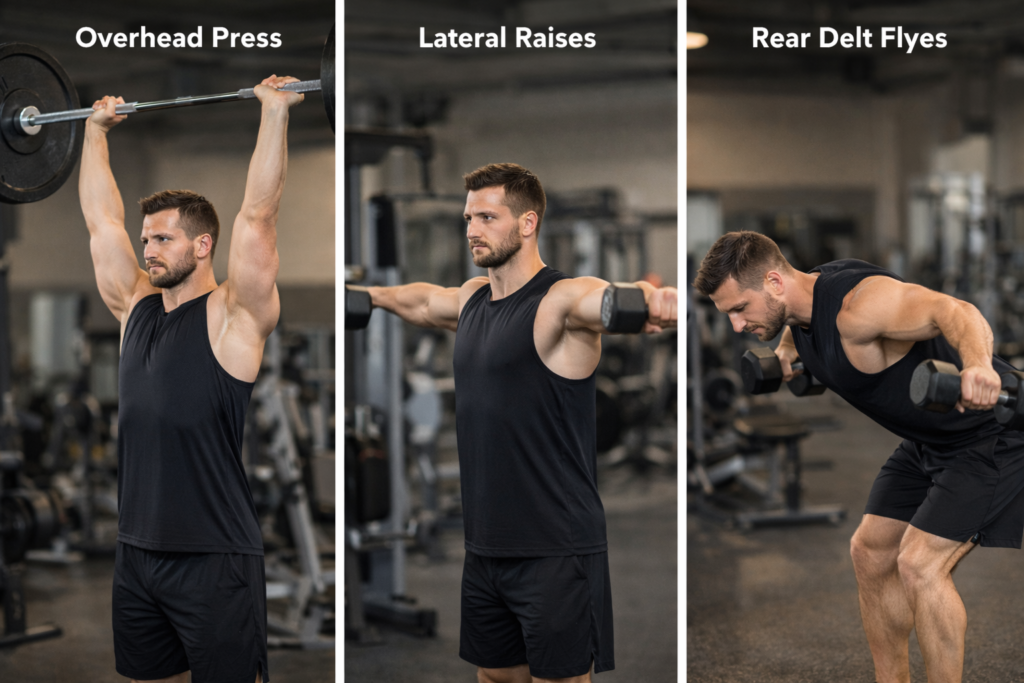
6. Overhead Press
Target muscles:
- Deltoids
- Triceps
- Upper chest
Execution:
Start with the bar at shoulder height and core tight.
Press the bar straight overhead.
Lower it back down slowly to the shoulders.
Sets & reps:
3 × 5–8
Variations:
- Seated dumbbell press: press independently for more shoulder stability.
- Machine shoulder press: smooth, controlled reps.
7. Lateral Raises
Target muscles:
- Medial delts
Execution:
Hold dumbbells at your sides with elbows slightly bent.
Raise arms out to the sides until shoulder height.
Lower slowly without swinging.
Sets & reps:
4 × 12–15
8. Rear Delt Flyes or Face Pulls
Target muscles:
- Rear delts
- Upper back
- Rotator cuff
Execution – Rear Delt Flyes:
- Hinge at the hips with the torso inclined and arms hanging under the shoulders.
- Open the arms outward while keeping a slight bend in the elbows.
- Squeeze the rear delts at the top without using momentum.
Execution – Face Pulls:
- Set the cable at upper-chest or face height and grip the rope with thumbs up.
- Pull the rope toward the face while driving the elbows outward.
- Finish by squeezing the rear delts and upper back, not the arms.
Sets & reps:
3 × 12–15
Core
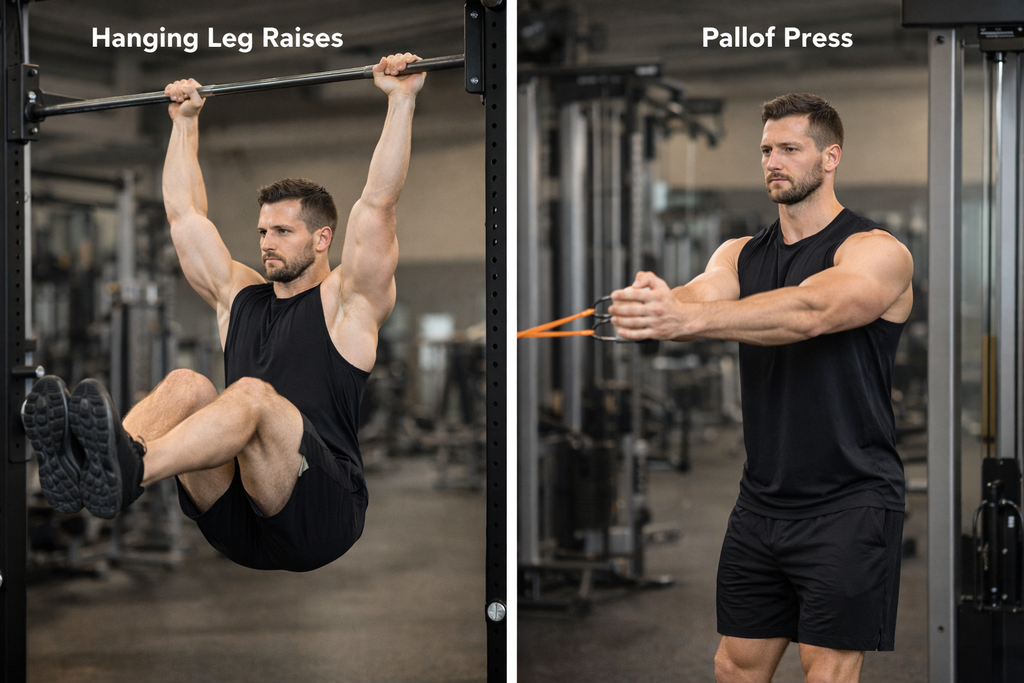
9. Hanging Leg Raises or Captain’s Chair Raises
Target muscles:
- Rectus abdominis
- Hip flexors
Execution – Hanging Leg Raises:
- Hang from the bar with shoulders active and core engaged.
- Raise the legs by curling the pelvis upward rather than swinging.
- Lower the legs slowly while maintaining control and tension.
Execution – Captain’s Chair Raises:
- Support the body on the pads with the back stable and arms pressing down.
- Lift the knees or legs by tilting the pelvis upward.
- Lower under control, keeping constant tension on the abs.
Sets & reps:
3 × 8–12
10. Pallof Press or Weighted Plank
Target muscles:
- Obliques
- Deep stabilizers
Execution – Pallof Press:
- Stand or kneel perpendicular to the cable with the core fully braced.
- Press the handle straight out in front of the chest without rotating.
- Hold briefly, then return under control while resisting rotation.
Execution – Weighted Plank:
- Set up in a strong plank position with the spine neutral.
- Place external load on the upper back while maintaining full-body tension.
- Hold the position without sagging or rotating.
Sets:
2–3 controlled sets
Day 3 – Back, Biceps & Core
Pulling strength, arm size, trunk stability
Back
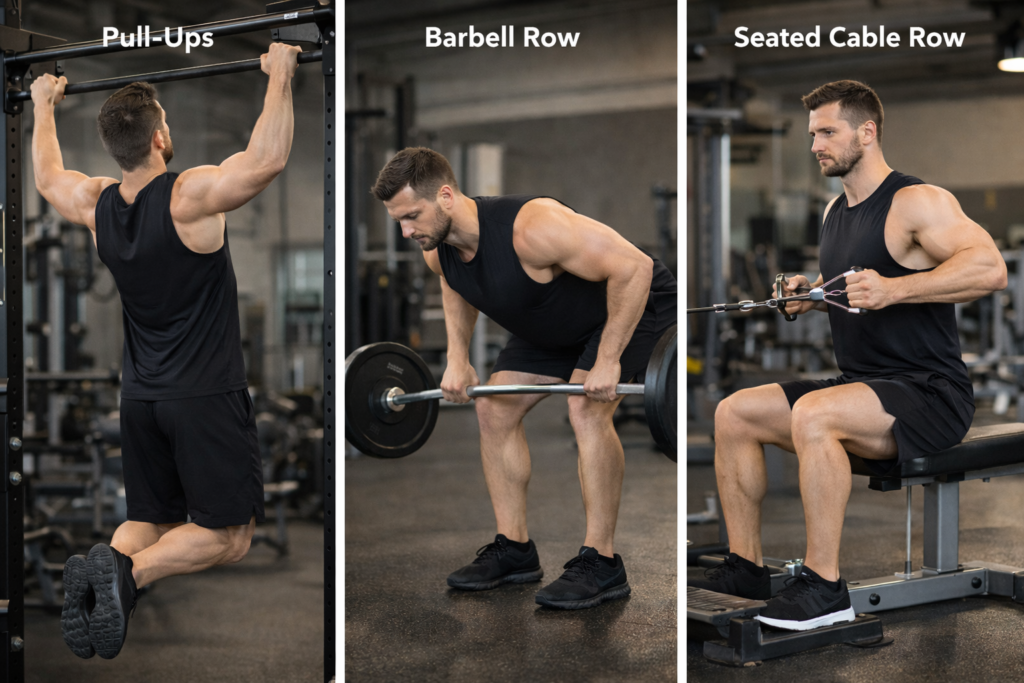
1. Pull-Ups or Lat Pulldown
Target muscles:
- Lats
- Upper back
- Biceps (secondary)
Execution – Pull-Ups:
- Hang from the bar with shoulders active and chest tall.
- Pull the body upward by driving the elbows down and back.
- Lower under control until the arms are fully extended.
Execution – Lat Pulldown:
- Sit firmly with thighs secured and chest slightly lifted.
- Pull the bar toward the upper chest by leading with the elbows.
- Control the return while maintaining tension on the lats.
Sets & reps:
4 × 6–10
2. Barbell or Chest-Supported Row
Target muscles:
- Mid-back
- Lats
- Rear delts
Execution – Barbell Row:
- Hinge at the hips with the torso inclined and the bar hanging below the shoulders.
- Pull the bar toward the lower ribs by driving the elbows back.
- Lower the bar under control while keeping the torso stable.
Execution – Chest-Supported Row:
- Set the bench so the chest is fully supported and the spine stays neutral.
- Pull the weights by leading with the elbows and squeezing the upper back.
- Lower slowly while maintaining constant tension.
Sets & reps:
4 × 6–8
3. Seated Cable Row
Target muscles:
- Back thickness
- Scapular control
Execution:
Sit upright with feet on the platform and arms straight.
Pull the handle toward your waist.
Slowly extend the arms back forward.
Sets & reps:
3 × 10–12
Biceps
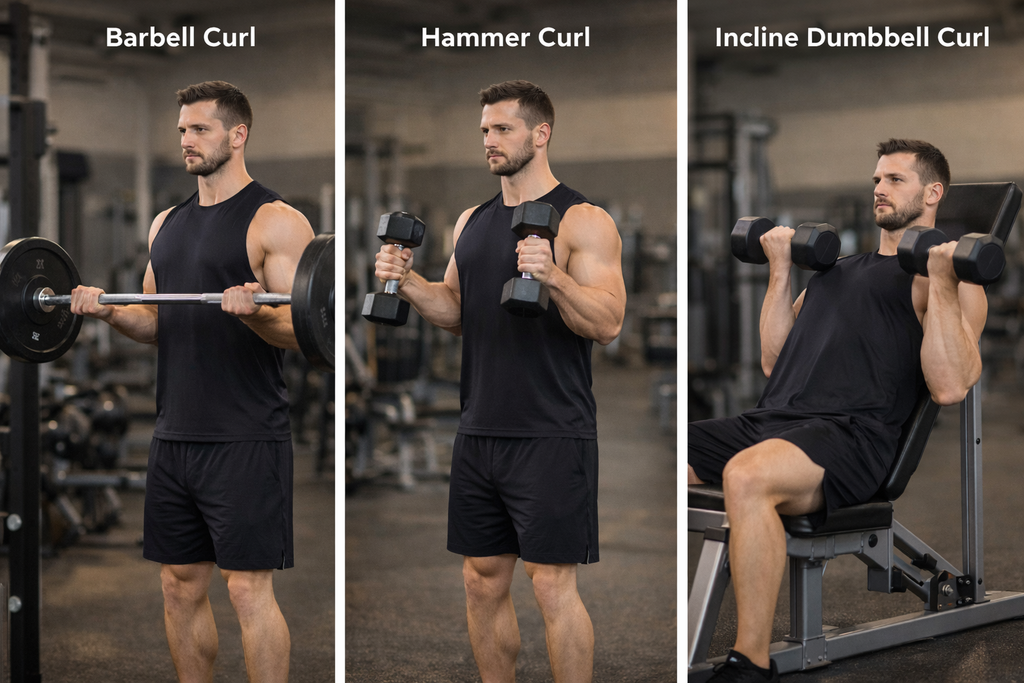
4. Barbell Curl
Target muscles:
- Biceps brachii
Execution:
Stand tall holding the bar at shoulder width.
Curl the bar up without moving your torso.
Lower the bar slowly.
Sets & reps:
3 × 8–10
5. Hammer Curl
Target muscles:
- Brachialis
- Forearms
Execution:
Hold dumbbells with palms facing each other.
Curl the weights up keeping elbows still.
Lower slowly under control.
Sets & reps:
3 × 10–12
6. Incline Dumbbell Curl or Cable Curl
Target muscles:
- Biceps long head
Execution – Incline Dumbbell Curl:
- Sit back on an incline bench with arms hanging behind the torso.
- Curl the dumbbells up while keeping the elbows slightly back.
- Lower slowly to maintain tension through the stretched position.
Execution – Cable Curl:
- Stand upright with the cable set low and arms extended.
- Curl the handle while keeping the elbows fixed at the sides.
- Control the return to maintain constant tension on the biceps.
Sets & reps:
2–3 × 12
Core
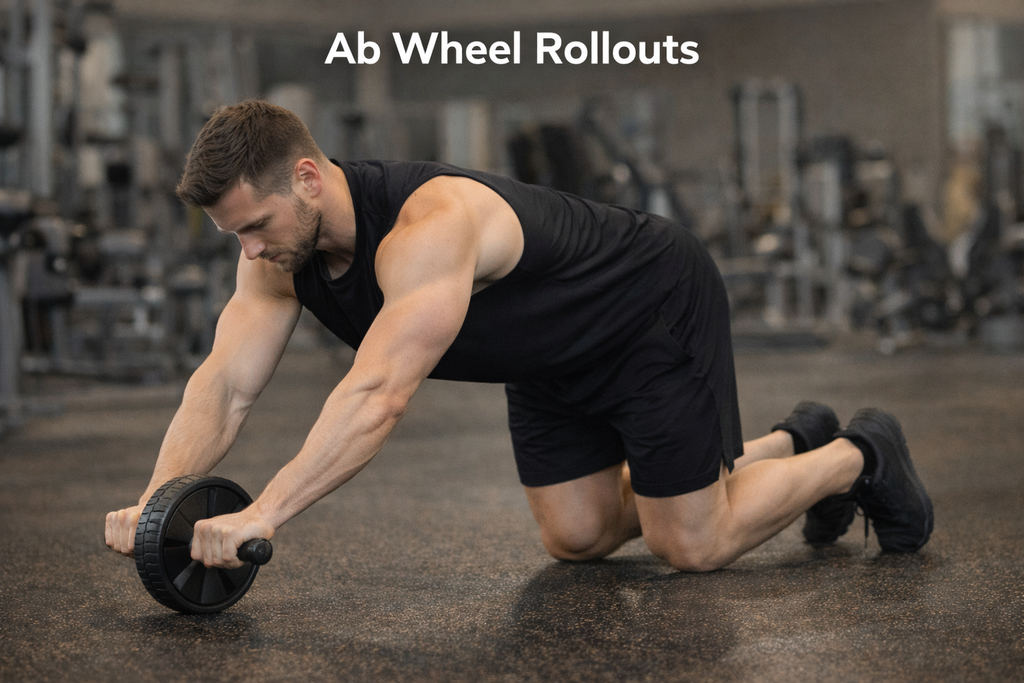
7. Ab Wheel Rollouts or Barbell Rollouts
Target muscles:
- Anterior core
- Deep stabilizers
Execution – Ab Wheel Rollouts:
- Start on the knees with the wheel positioned under the shoulders.
- Roll the wheel forward by extending the hips and shoulders while bracing the core.
- Pull back to the start by contracting the abs, not the lower back.
Execution – Barbell Rollouts:
- Load a barbell with plates that can roll smoothly.
- Roll the bar forward while maintaining a neutral spine and tight core.
- Reverse the movement by pulling the bar back with abdominal control.
Sets & reps:
3 × 6–10
WHY THIS SPLIT IS TRULY COMPLETE
|
Mindset and habit formation behind consistent growth
Muscle is built by habits, not hacks.
The best lifters don’t have perfect genetics — they have routines that stick.
Keep a workout journal.
Write your numbers, energy levels, even your mood.
That data becomes your personal coach.
Celebrate micro-wins:
An extra rep, smoother form, less fatigue.
Progress is progress — even when the mirror’s silent.
Tracking progress like a pro (beyond the scale)
The scale lies.
Muscle is denser than fat, so if your weight stays the same but your body looks sharper, that’s progress.
Track your circumference measurements, not just weight.
Measure your arms, legs, and chest every 3–4 weeks.
Watch your strength metrics: 5RM, bar speed, time under tension.
If they’re improving, your muscles are too.
Recovery markers matter just as much — sleep quality, mood, soreness.
If all those are trending up, your program’s working.
Final takeaway
If you want to build real strength and size, stop treating training like punishment and start treating it like practice.
Pay attention to what your body responds to.
Respect recovery as much as intensity.
Lift with purpose, not impulse.
Because the gym will always give back what you put in — just not always in the way you expect.
Stay consistent, stay patient, and yeah — stop overcomplicating what’s meant to be simple: show up, execute well, recover better, repeat.
That’s the real secret to growth that lasts.