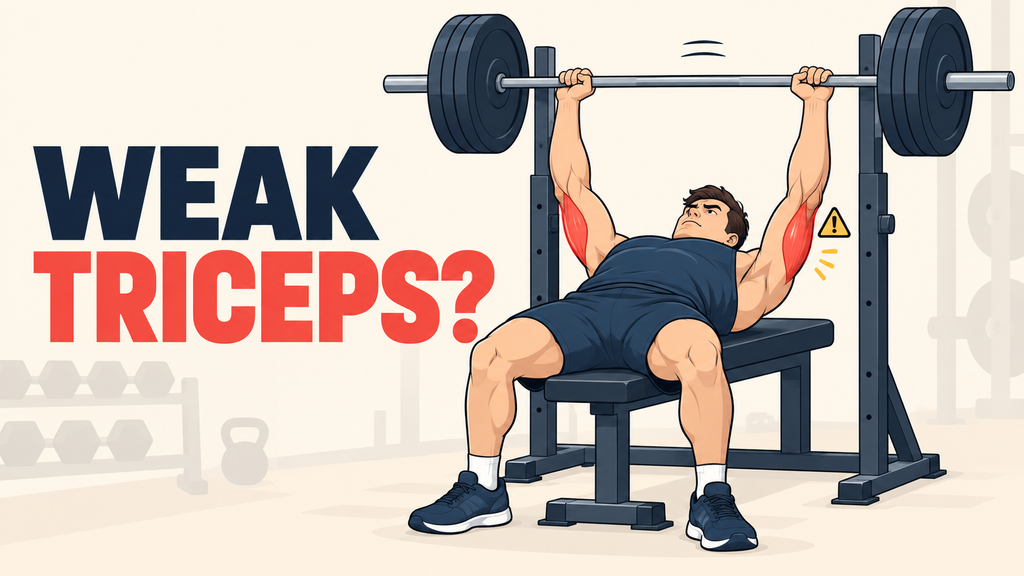
Weak triceps can make your bench press feel heavier in a very annoying way.
The bar does not always fail on your chest.
Sometimes it moves, climbs halfway up, and only then makes you realize your arms forgot to bring the finish.
Why Bench Press Feels Heavier Near Lockout
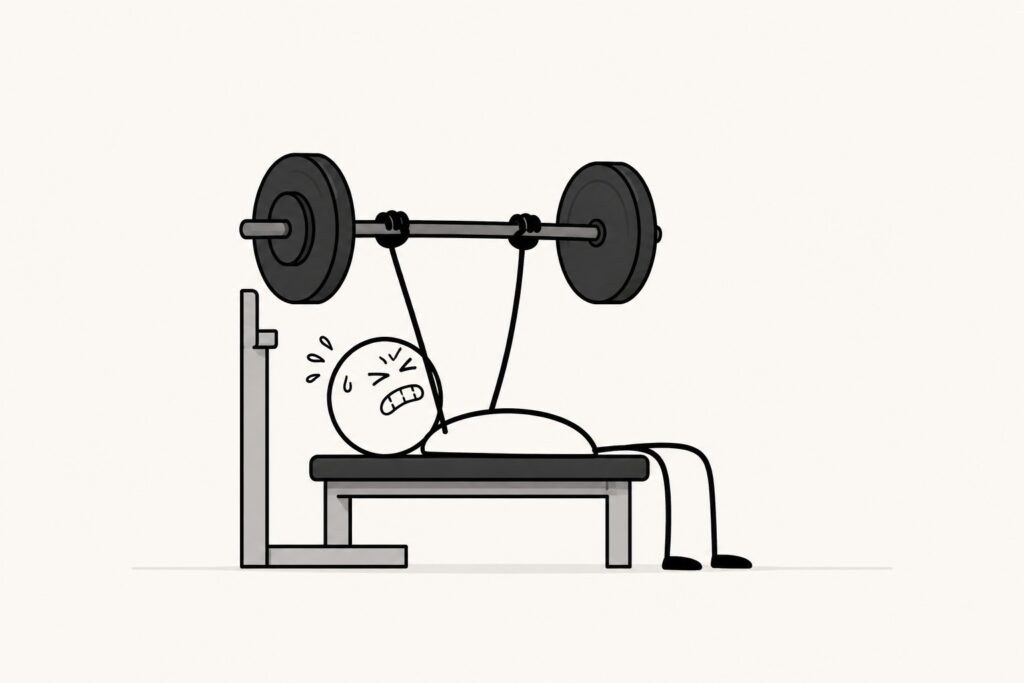
Bench day feels honest in a way that is slightly rude.
The bar does not care if the playlist is good.
The plates do not care if last session went better.
On one of those sessions, I load a weight that should feel manageable and slide under the bar already half-confident.
Feet press into the floor.
Upper back digs into the bench.
Hands find their usual grip, just wide enough that the bar feels familiar.
The first rep lowers fine.
The bar touches the lower chest, the press starts, and for a second I think the set is going to behave.
A few inches later, the lift changes.
The bar keeps moving, but it loses that clean pop.
Near the top, my elbows need to finish the rep, and suddenly the weight feels heavier than it looked while I was loading it.
That moment is where weak triceps often show up.
Chest gets the bar moving.
Front shoulders help drive the arms.
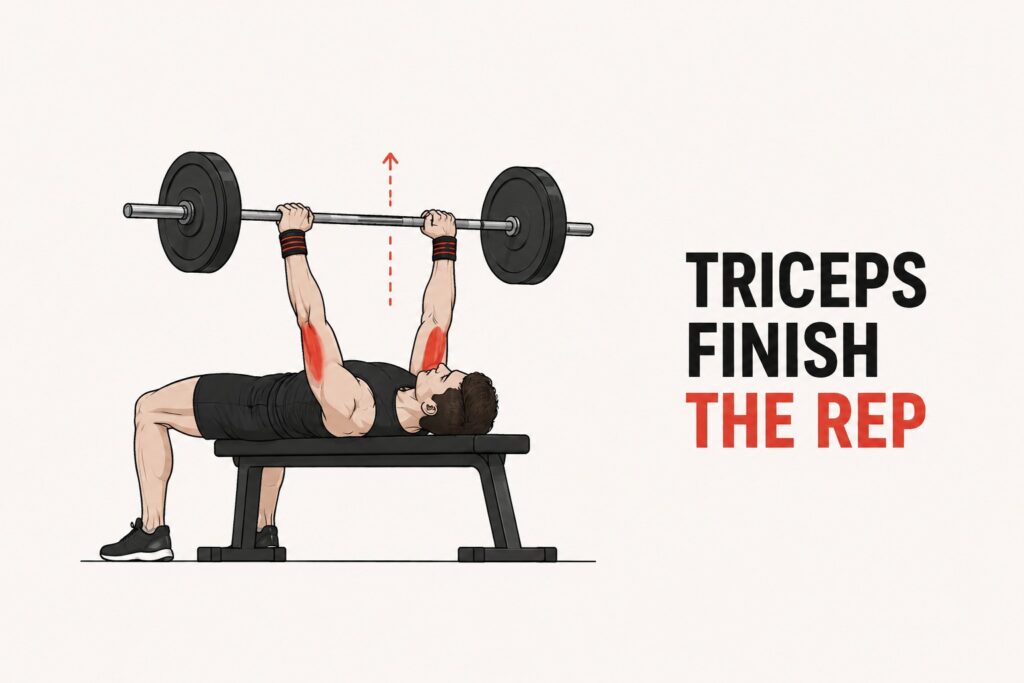
Triceps have to finish by straightening the elbows.
When that final part feels slow, shaky, or strangely underpowered, the problem may not be the whole bench press.
The problem may be the finish.
Why I Kept Blaming My Chest Instead Of My Triceps
My first reaction used to be very predictable.
Bad bench day?
Add dumbbell presses.
Still bad?
Add push-ups.
Still annoyed?
Throw in some cable flyes and see if your chest finally gets the message.
Chest work has its place, but I was fixing the wrong section of the lift.
The bar was not pinned to my chest.
The bottom part was not perfect, but it moved.
The ugly part arrived later, right when the elbows had to extend and lock the press out with control.
Lockout simply means finishing the rep at the top.
It does not mean snapping the elbows hard.
It means the arms reach the completed position while the shoulders stay stable and the bar stays controlled.
Once I started paying attention to where the rep slowed, the session made more sense.
A bottom problem feels like the bar never wants to leave the chest.
A messy position problem feels unstable from the start.
A triceps problem often waits until the bar is already halfway up, then quietly turns the rep into a negotiation with gravity.
That was the part I kept missing because I kept trying to fix it with more chest work.
How A Closer Bench Grip Exposes Weak Triceps
One session changed my thinking more than another round of flyes ever did.
After regular benching felt weird at the top, I took weight off the bar and moved my hands slightly closer.
Not extremely close.
A ridiculously close grip usually makes my wrists complain before my triceps learn anything useful.
Just a bit inside my normal hand position.
The rep felt different right away.
Lowering the bar still felt controlled, but the press asked much more from the back of my arms.
The top half became the hard part sooner.
That told me something useful.
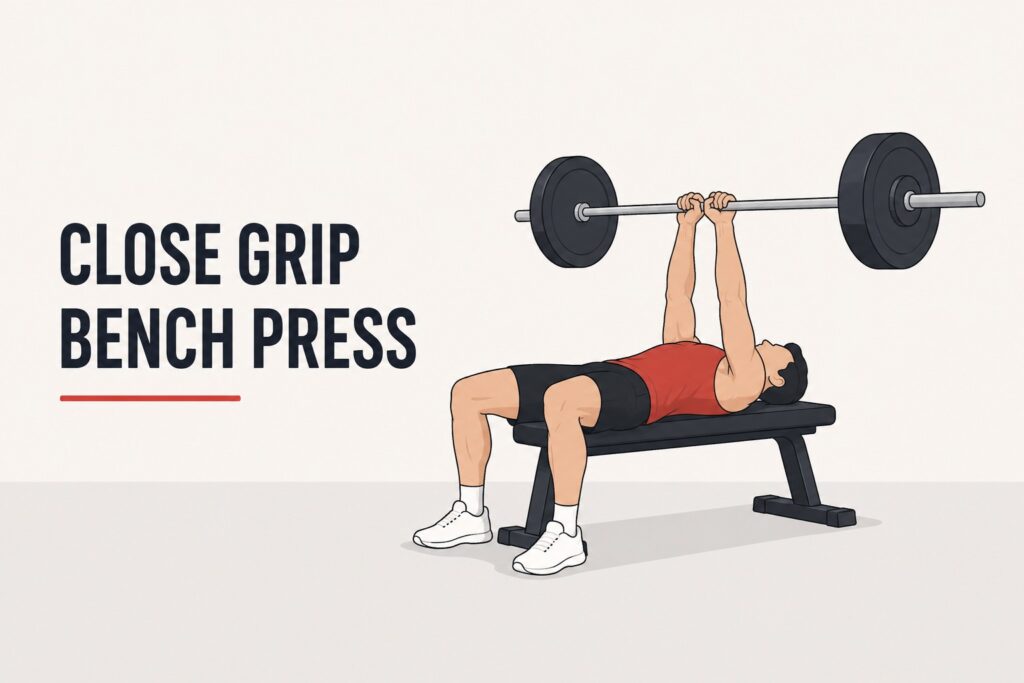
The close-grip bench press is a bench variation where the hands sit closer than usual, so the elbows bend more and the triceps have to work harder to straighten them.
A clean version looks like this:
- Hands slightly inside your regular bench grip.
- Wrists stacked over the forearms.
- Elbows close enough to the body to feel controlled, but not pinned awkwardly against the ribs.
- Bar lowered toward the lower chest area.
- Press finished with smooth elbow extension.
A 2021 study by Saeterbakken and colleagues compared narrow, medium, and wide grip bench press in novice and trained men, looking at muscle activity and 6-rep max strength.
The simple takeaway fits what many lifters feel in the gym: grip width changes how the bench press loads the body, and a closer grip can make the triceps work harder.
Weak Triceps Or Just A Bad Bench Press Day?
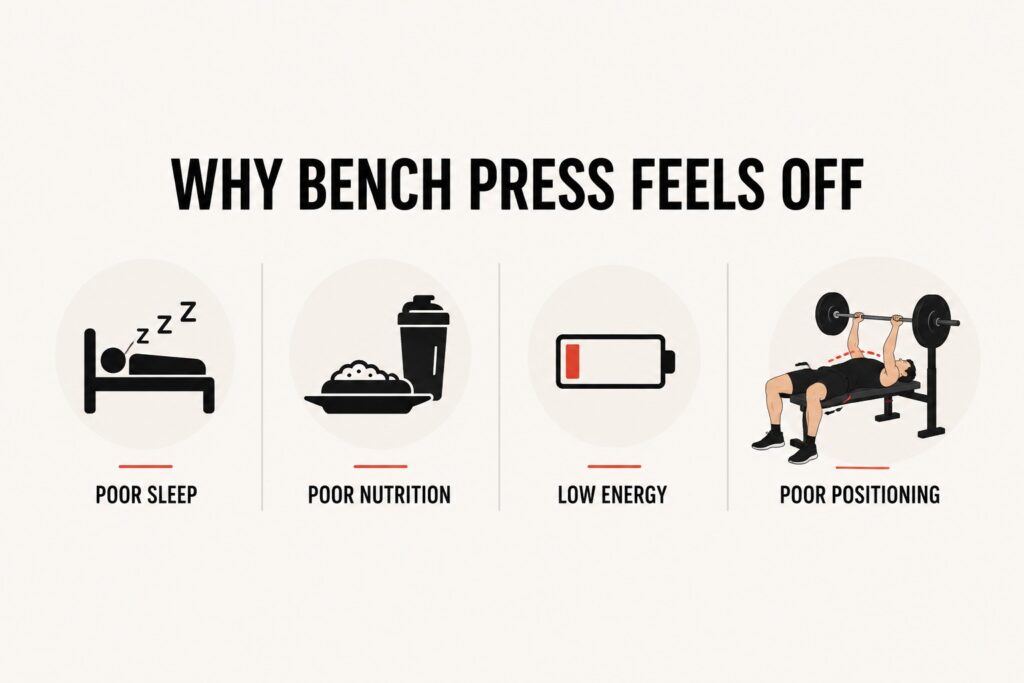
Not every heavy bench means weak triceps.
Some days, the whole body feels like it came with low battery mode installed.
Poor sleep can make the bar feel awful.
Rushed food can make warm-ups feel weird.
A sloppy body position can turn a normal weight into a circus act.
Before I blame my triceps, I look at a few things.
- Does the bar move well from the chest and slow near the top?
- Do lighter close-grip reps feel much harder than expected?
- Do narrow push-ups feel strangely difficult compared with regular push-ups?
- Does the bar path stay clean, or does it drift forward and back?
- Are my feet firm, or am I sliding around like the bench is made of soap?
That last one has happened.
Bench press gets ugly fast when your feet keep moving under the bar.
Position matters before isolation work.
If the wrists fold backward, the shoulders shift around, and the upper back keeps losing contact with the bench, adding pushdowns may not fix the problem.
Clean the press first.
Only after the rep looks stable does it make sense to ask whether the triceps are actually limiting the lift.
The Triceps Exercises I Actually Keep
I do not need ten triceps exercises after benching.
That path sounds productive, then ruins the next pressing session.
A few good choices work better.
The first option I usually trust is the close-grip bench press, because it stays close to the main lift and directly trains the part of the press that slows near the top.
Since I already covered that grip earlier, I do not need to repeat the whole breakdown here.
After that, these are the triceps exercises I actually keep in rotation.
Dumbbell floor press
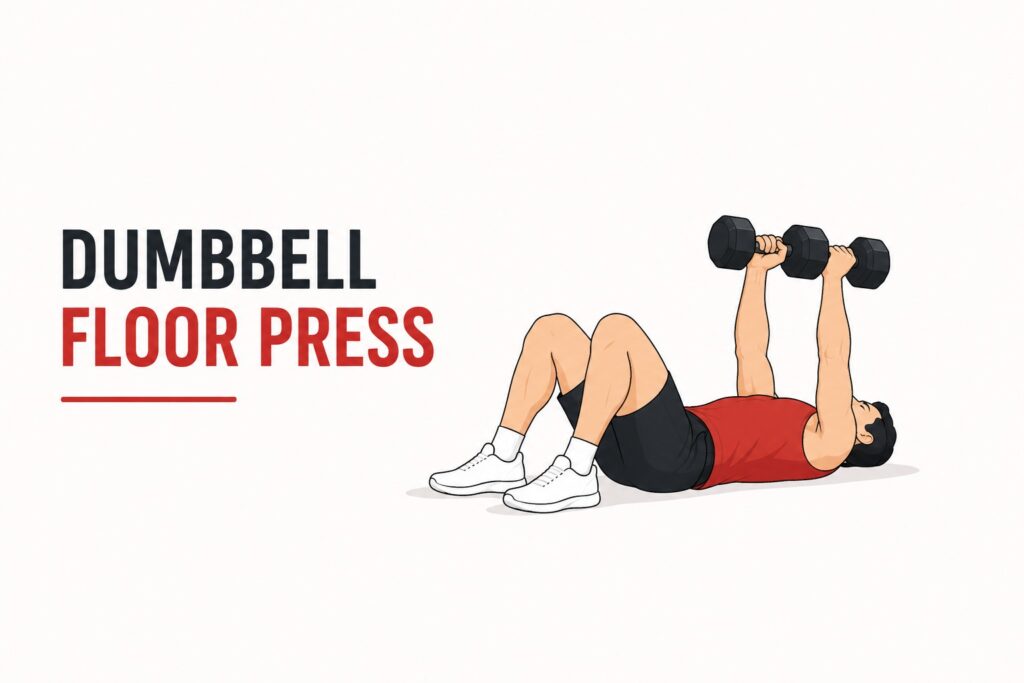
Floor press means lying on the floor and pressing dumbbells upward.
The upper arms touch the floor before the dumbbells reach a deep chest position, so the range is shorter than a normal dumbbell press.
That shorter range keeps more attention on the mid-to-top part of the press.
This feels useful on days when heavy benching already did enough, but the triceps still need clean pressing practice.
Cable pushdowns
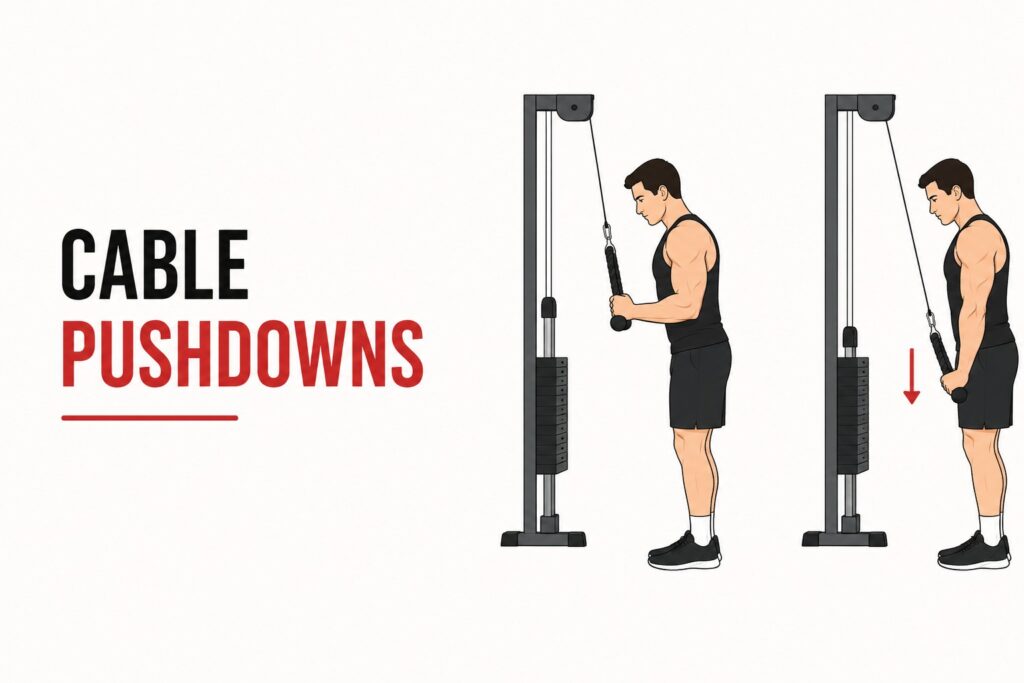
Cable pushdowns are simple and honest.
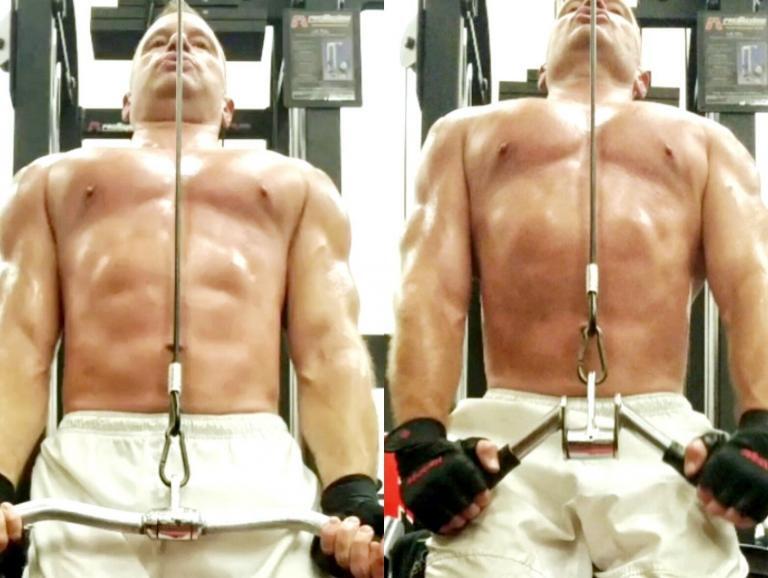
Stand facing the cable machine, hold a rope or straight bar, keep the upper arms near your sides, and straighten the elbows to bring the handle down.
The trick is staying still.
When the torso starts swinging, the exercise turns into a full-body fight with the cable machine.
Band pressdowns
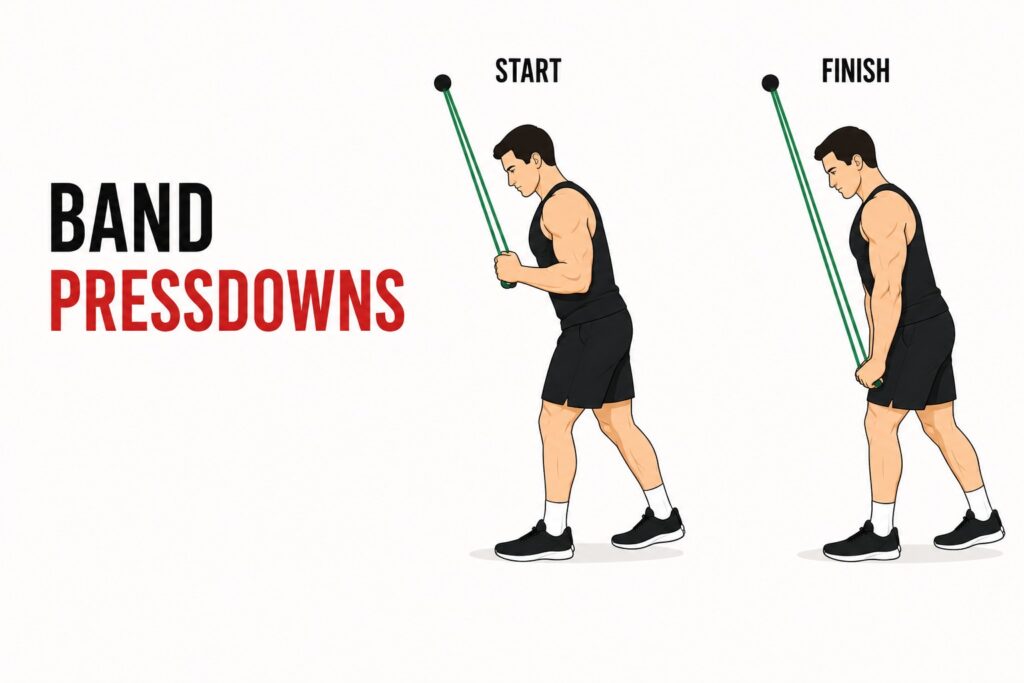
Bands work well at home or in a crowded gym.
Anchor the band high, hold the ends, keep the upper arms still, and straighten the elbows.
Step farther away for more tension.
Move closer when the reps get ugly.
Simple, cheap, and hard to blame on equipment.
Narrow Push-Ups Make Weak Triceps Obvious
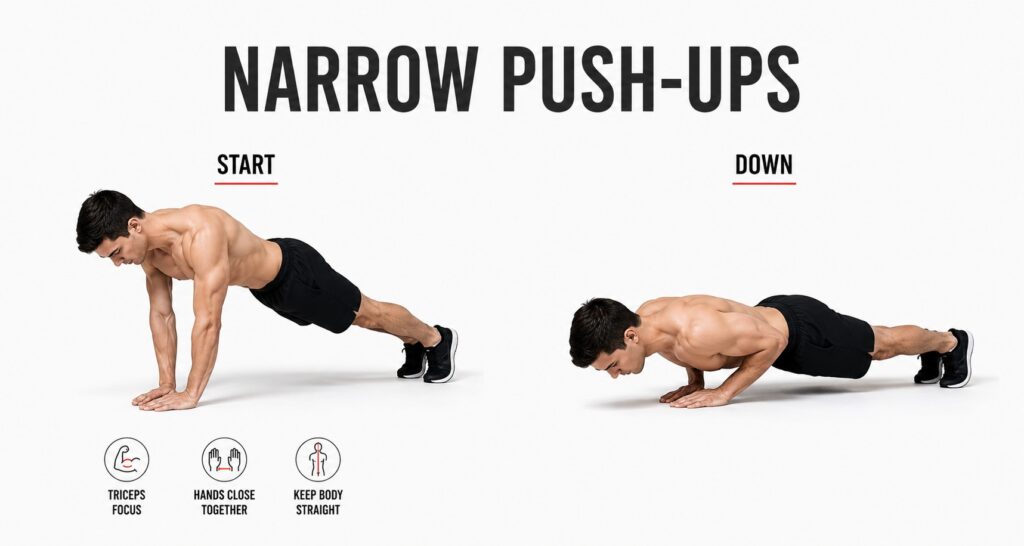
Narrow push-ups are humbling.
Regular push-ups can feel fine.
Hands move closer, and suddenly the floor starts asking personal questions.
A narrow push-up uses a hand position under the shoulders or slightly inside.
The body stays long from head to heels.
Chest lowers toward the floor, then the arms press the body back up.
The triceps work harder because the elbows have to extend strongly at the top.
Beginners can make them easier with:
- Hands on a sturdy table.
- Hands on a bench.
- Knees on the floor.
- Shorter sets with cleaner reps.
Lifters with more control can make them harder with:
- Feet elevated.
- A slow lower.
- A brief pause near the bottom.
- A resistance band across the upper back.
One thing I learned fast: a harder version is only useful if the reps still look like reps.
If the hips sag, the neck reaches forward, and the elbows flare everywhere, the body has already started filing complaints.
How Much Triceps Work Is Enough After Bench Press?
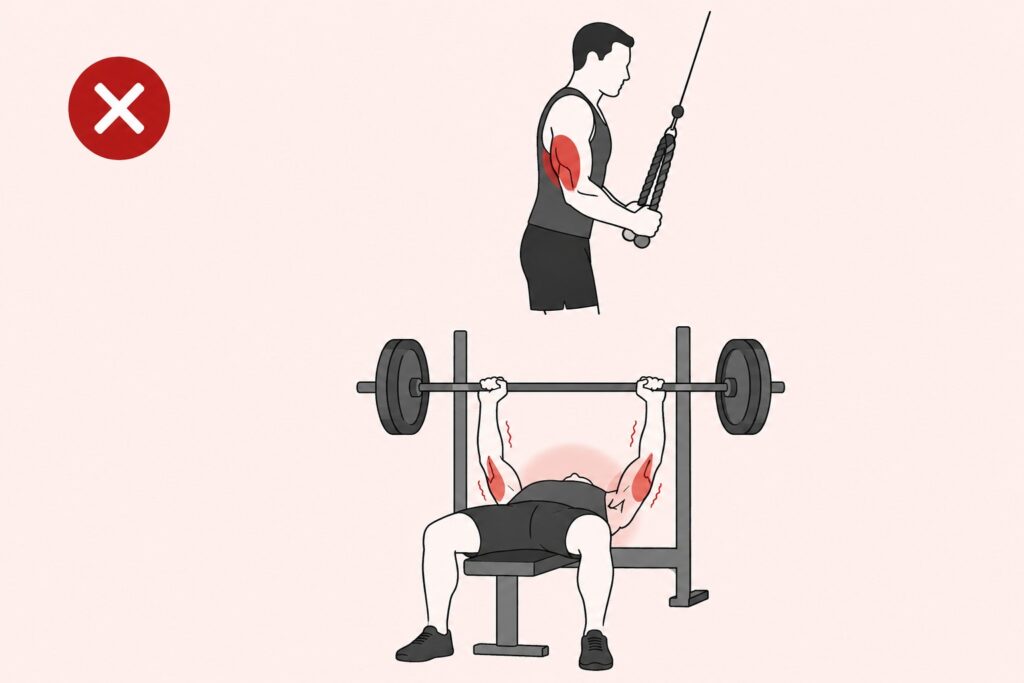
Extra triceps work can help the bench press.
Too much extra triceps work can make the next bench day feel worse.
That line is easy to cross because arm work feels satisfying.
A few pushdowns at the end of a session feel harmless.
More sets feel even better.
Then the next bench day arrives, and the top half of every rep feels tired before the weight gets serious.
I learned to keep the add-on simple.
A good bench session might look like this:
- Main bench press work.
- Close-grip bench press or dumbbell floor press.
- Cable pushdowns or band pressdowns.
That is enough for most normal training days.
Two triceps-focused movements after benching usually give me a better finish without stealing too much recovery.
Going beyond that can work for some lifters, but I need a reason.
Extra work makes sense if the main bench was lighter than usual.
It also makes sense if I have enough recovery before the next pressing day.
Without that, more triceps work can leave the next bench session feeling worse, not stronger.
The Practical Answer
Bench press started making more sense for me when I stopped treating every rough rep like a chest problem.
Some sessions need better setup.
Some need less weight.
Some need more recovery.
But when the press moves well at first and falls apart near the finish, the triceps deserve attention.
A little focused work is usually enough.
No giant arm session.
No panic accessories.
Just a better reason behind the next exercise I choose.
Weak triceps can make your bench press feel heavier.
Once you know where the lift changes, the bench press stops feeling random and starts feeling much easier to read.
FAQ:
Can long arms make weak triceps more noticeable on bench press?
Yes, longer arms can make triceps weakness more noticeable during bench press because the bar usually has to travel farther.
A longer range of motion means the arms spend more time pressing under tension, especially near the upper part of the lift.
That does not mean long-armed lifters are doomed.
It just means they often need better patience with technique, stronger pressing control, and enough triceps work to support the longer press.
Many long-armed lifters also benefit from learning a stable touch point on the chest instead of lowering the bar wherever it happens to land.
Should I train triceps before bench press?
Usually, training triceps before bench press is not the best choice if your goal is to press heavier.
Pre-fatiguing the triceps can make the main lift feel worse before the real work even starts.
A light warm-up is fine.
Heavy pushdowns, skull crushers, or close-grip pressing before bench can steal strength from the lift you are trying to improve.
Triceps work fits better after the main bench sets, unless the session is designed specifically as a lighter technique day.
Are dips good for building triceps for bench press?
Dips can help build triceps, but they are not the friendliest option for everyone.
A dip is done by supporting your body on parallel bars, bending the elbows to lower yourself, then pressing back up.
Leaning forward usually brings more chest into the movement.
Staying more upright usually asks more from the triceps.
The catch is shoulder comfort.
If dips pinch the front of the shoulders or feel unstable, cable pushdowns, close-grip bench press, or assisted dips may be better choices.
Do skull crushers help bench press strength?
Skull crushers can build triceps size and strength, but they should be used carefully.
The exercise is usually done lying on a bench with a barbell, EZ bar, or dumbbells, bending the elbows so the weight moves toward the forehead or behind the head, then straightening the arms again.
That long elbow bend can challenge the triceps well.
It can also irritate the elbows if the load is too heavy or the reps are rushed.
For bench press carryover, skull crushers work best as a controlled accessory, not as a heavy ego lift at the end of an already hard pressing day.