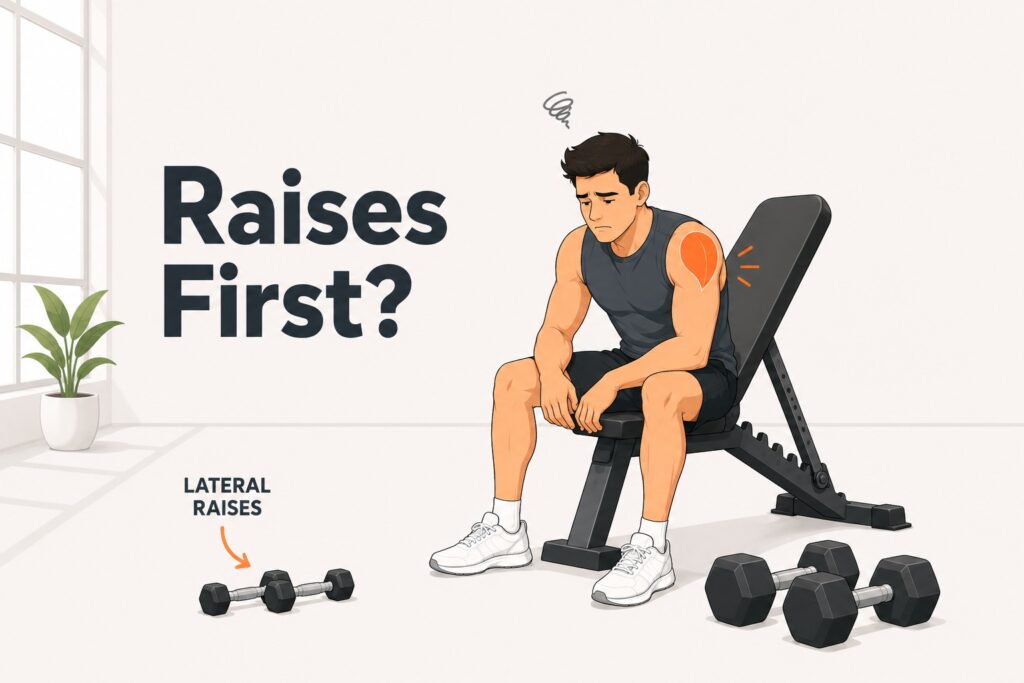
Lateral raises before overhead press make shoulder fatigue feel different almost immediately.
Not in the “my shoulders are completely smoked” way.
More in the annoying gym way where the dumbbells still move, but the press suddenly gets way pickier.
I notice it before the first real working set even gets going.
The side of the shoulder already has that warm, thick feeling from the raises, and the overhead press no longer feels like a clean push from point A to point B.
The shoulder starts letting fewer sloppy reps slide.
The Raise Changes the Press Before the Weight Gets Heavy
Lateral raises look innocent.
Grab two dumbbells.
Stand tall.
Lift the arms out to the sides until the hands are around shoulder height.
Lower them back down with control.
That is the whole movement, at least from the outside.
From the inside, it is a tiny shoulder argument repeated for 12 to 15 reps.
The main muscle doing the work is the side delt, also called the lateral deltoid, the rounded part on the outside of the shoulder that gives the upper body that wider look.
At the beginning, everything feels almost too easy.
Dumbbells float up.
Shoulders feel clean.
Confidence enters the room wearing sunglasses.
A few sets in, the top half of each rep starts getting sticky.
The dumbbells still rise, but the side delts stop feeling fresh.
That is where the overhead press changes before it even starts.
Normally, pressing dumbbells overhead feels like a bigger movement.
Legs stay planted.
Core braces.
Arms drive upward.
Shoulders, triceps, upper chest, and upper back all help keep the weight moving.
After lateral raises, the press feels narrower.
More local.
Less “whole upper body working together” and more “the side of the shoulder is already tired and now wants to complain in writing.”
Pre-fatigue is not just tiredness.
It changes which part of the lift gets noticed first.
Overhead Press Feels Different After Lateral Raises
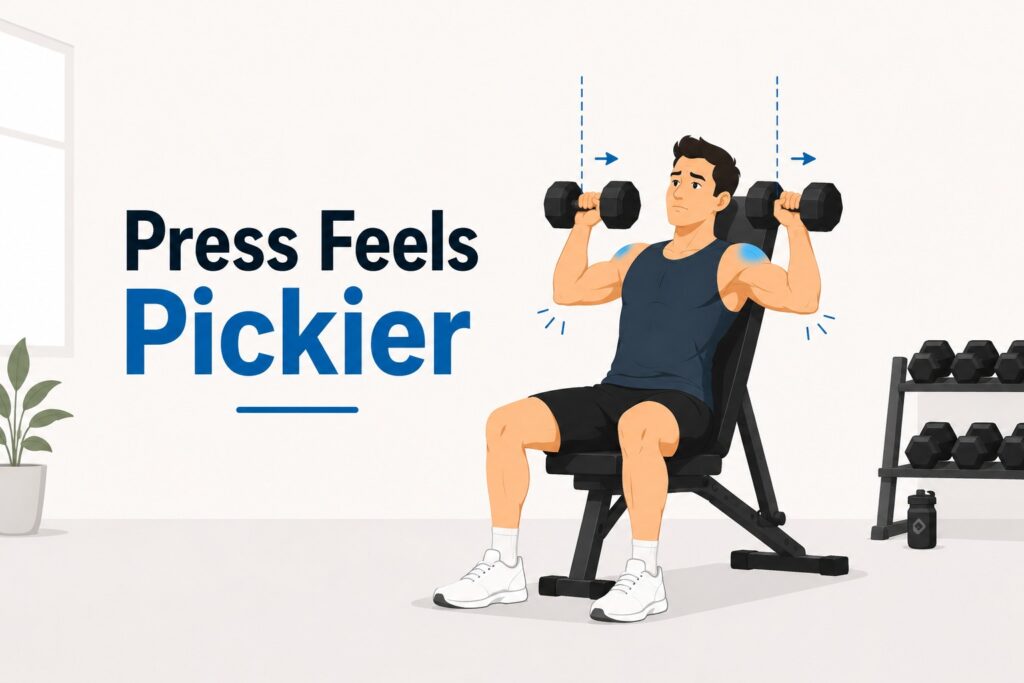
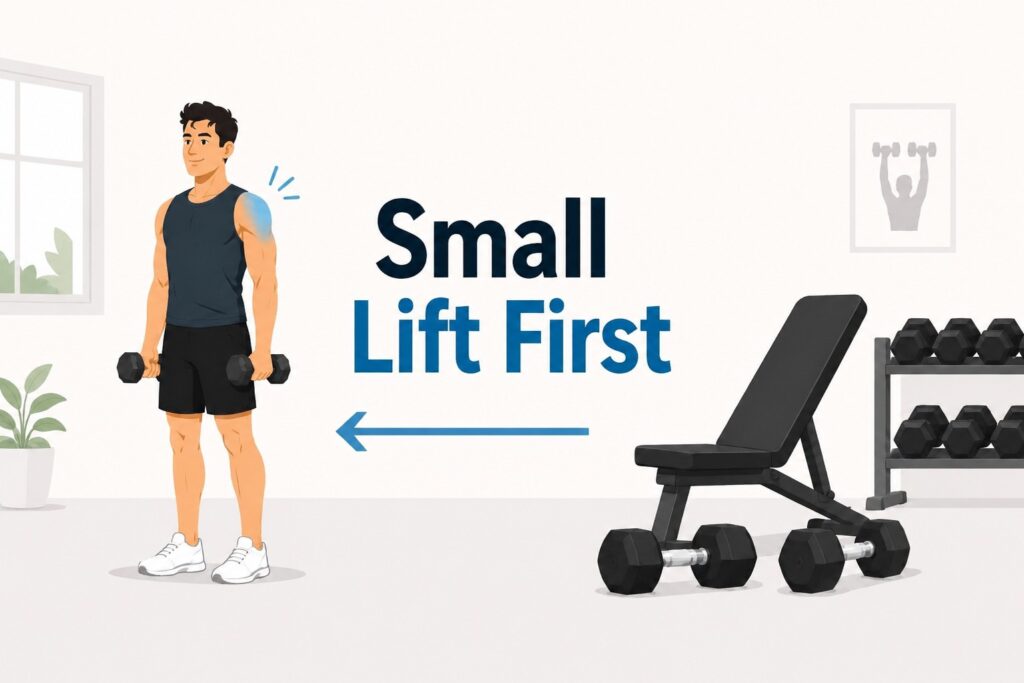
After lateral raises, I expect the overhead press to feel heavy right away.
Instead, the weird part usually shows up in the middle of the rep.
The dumbbells leave shoulder level without much drama.
Lockout is not always the problem either.
The messy zone is that halfway point where the upper arm keeps traveling upward and the shoulder has to keep the dumbbell path organized.
That middle range suddenly feels crowded.
The weights drift slightly forward.
The ribs want to flare.
The lower back tries to help like an employee who was never trained for this job.
On a fresh overhead press, this might not happen until later in the set.
After lateral raises, it happens earlier because the shoulder is already carrying fatigue from a movement that looked “small” on paper.
Small exercise.
Big attitude.
The Bad Version Starts When I Treat Raises Like a Main Lift

One session teaches this faster than any anatomy chart.
I grab dumbbells that are a little too heavy for lateral raises because, in my head, small dumbbells do not feel serious enough.
Very mature gym logic.
The first reps move.
That is all the proof my brain needs.
So instead of choosing a weight that lets the side delts work cleanly, I start turning lateral raises into a small personal wrestling match.
The dumbbells rise, but they do not really float anymore.
They get heaved.
My torso adds a tiny swing.
The lower half of the rep becomes a launch.
The top half becomes a grind.
By the end, the side delts are tired, but not in that clean “target muscle did the job” way.
More like I spent ten minutes teaching my whole body how to cheat a shoulder exercise.
That is the part I miss in the moment.
I think I am making the overhead press harder in a useful way.
Actually, I am just arriving at the press with tired shoulders, messy coordination, and zero clear feedback.
The plan looks normal enough:
- heavy-ish lateral raises
- too many hard reps
- short rest because apparently patience is illegal
- overhead press right after
- normal pressing weight because pride enjoys comedy
Pressing after that does not teach me much.
It only tells me that bad fatigue is louder than good tension.
A better version starts with a less exciting weight.
The dumbbells move slower.
The side delts do the work without the whole body joining the project.
The last reps feel demanding, but they still look like lateral raises.
That is the line I try to respect now.
If the raises become a full-body event, I am not “pre-fatiguing” my shoulders.
I am just spending my pressing quality before the press even starts.
The Useful Version Feels Different, Not Worse
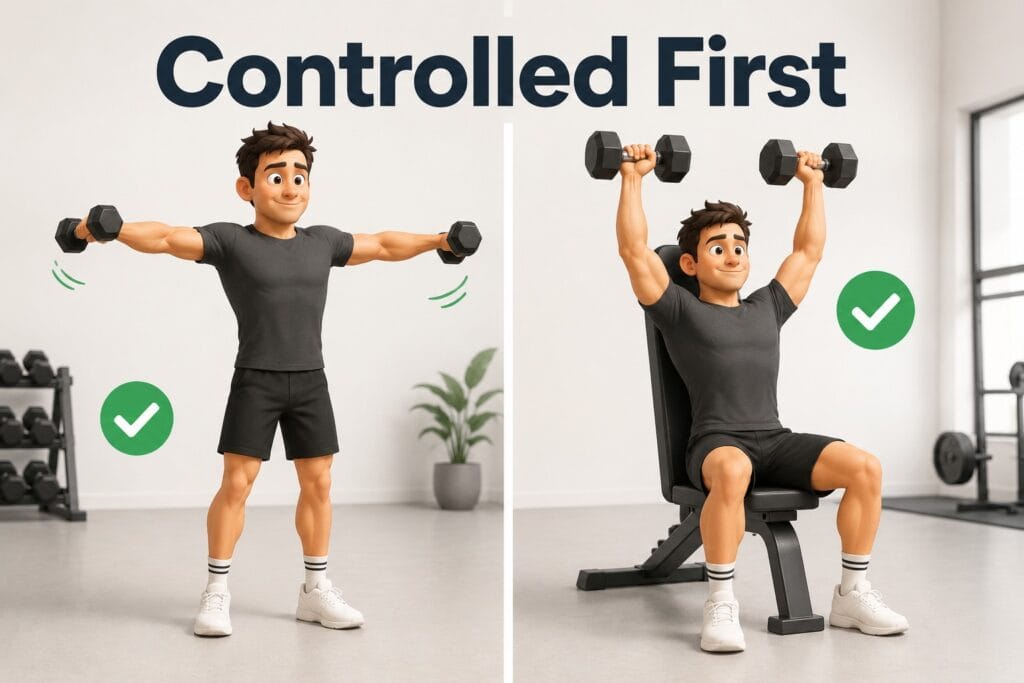
So yes, I think we can agree on one thing.
Lateral raises that are too heavy before overhead press are usually not some advanced shoulder strategy.
A better version starts lighter than pride prefers.
The lateral raises are controlled.
No swinging.
No jumping the dumbbells upward with the hips.
No turning the neck into a second shoulder muscle.
The arms move out to the sides, slightly forward of the body, with a soft bend in the elbows.
The dumbbells stop around shoulder height.
Lowering takes as much attention as lifting.
A clean pre-press raise set feels like this:
- the side delts warm up clearly
- the traps stay mostly quiet
- the dumbbells do not swing
- the last reps slow down without getting ugly
- the shoulders feel awake, not irritated
That changes the overhead press in a useful way.
The press feels more deliberate.
The body cannot just blast through reps with momentum.
The shoulder has to guide the weight.
The press becomes less about proving a number and more about keeping the dumbbells stacked over the body while fatigue is already present.
That can be valuable.
Especially for people who normally press heavy but never really feel their shoulders working until the set is nearly over.
Why Shoulder Fatigue Feels So Local After Raises

Overhead press is a compound lift.
That means more than one joint and more than one muscle group are involved.
The shoulders press.
The triceps straighten the elbows.
The upper back helps create a stable base.
The core keeps the torso from bending backward.
Lateral raises are more isolated.
They focus heavily on the side delts.
So when raises come first, the press does not begin with the whole system equally fresh.
One specific part of the shoulder has already spent money.
Now the overhead press asks that same area to keep contributing while other muscles are still relatively fresh.
That mismatch creates the strange feeling.
The body is not fully tired.
The shoulder is.
That is why the press can feel confusing.
Energy is still there.
Motivation is still there.
The dumbbells are not absurdly heavy.
Yet the lift feels less stable, less smooth, and more demanding in the shoulder itself.
This also lines up with research on deltoid activation.
A study on resistance-trained men found that both the lateral raise and shoulder press produced high medial deltoid activity, with the lateral raise at 30.3% MVIC and the shoulder press at 27.9% MVIC.
That helps explain why changing the exercise order can change where fatigue shows up first, even when the same shoulder muscles are still involved.
Dumbbells Make the Difference Easy to Notice
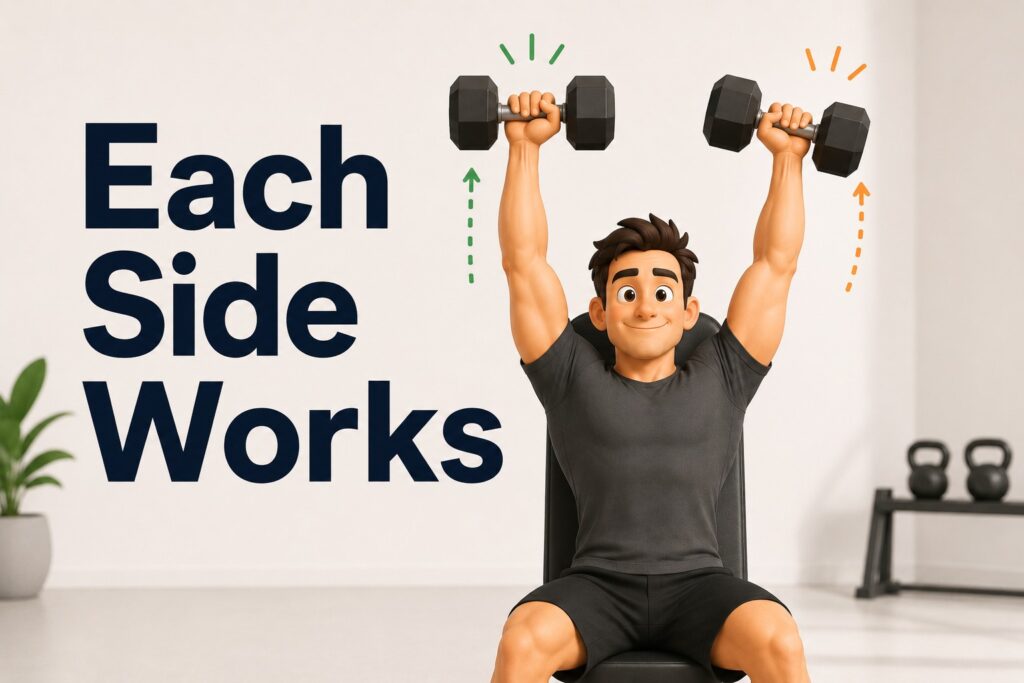
Dumbbell overhead press exposes this order quickly.
Each arm has to control its own weight.
No bar connects the hands.
No machine guides the path.
After lateral raises, that freedom becomes both useful and slightly rude.
A fresh dumbbell press may feel smooth.
After raises, the dumbbells can wobble near the middle of the press.
One side may travel faster.
The top position may feel harder to organize.
That does not automatically mean the exercise is bad.
It means the shoulder stabilizers are working harder while the side delts are already tired.
A smarter dumbbell version looks like this:
- use 5 to 15 percent less weight than usual
- press seated if standing turns into back arching
- stop with 1 or 2 reps still in reserve
- lower the dumbbells slowly to shoulder level
- avoid grinding reps just to match your normal numbers
That last point matters most.
Using the usual overhead press weight after pre-fatiguing the shoulders is possible.
Sometimes useful.
Often unnecessary.
What matters is whether the harder feeling gives you better shoulder work or just worse pressing.
Machines Change the Story Completely
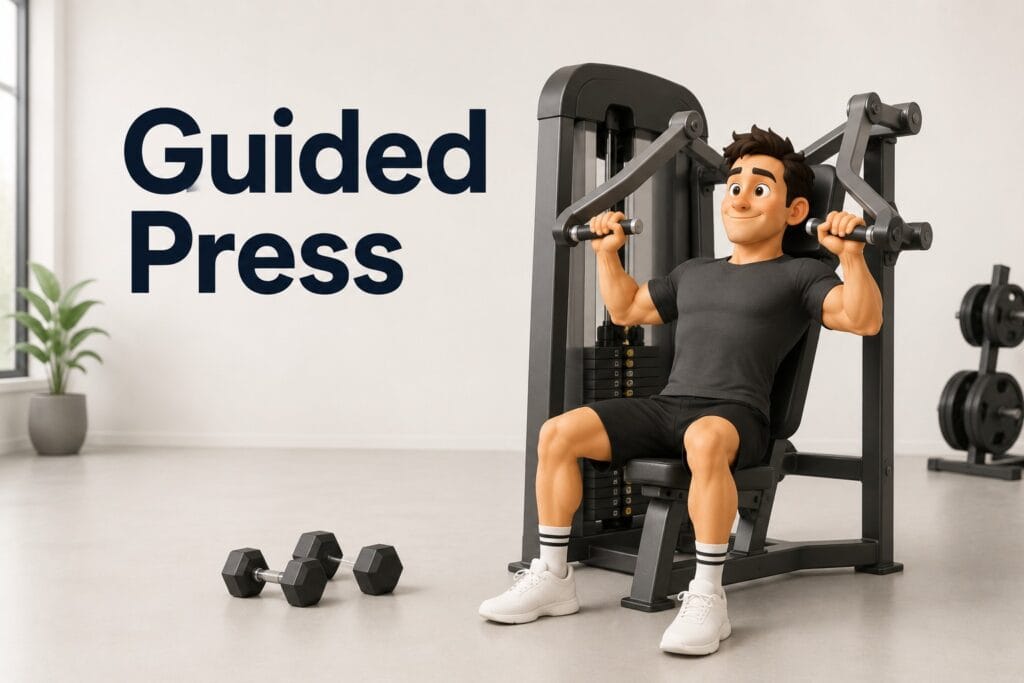
Machine shoulder press after lateral raises feels different from dumbbells.
The machine controls the path.
That means less wobble.
Less balance.
Less guessing.
For some lifters, that is a gift.
The shoulders can be tired, but the movement still stays organized.
A machine press after lateral raises can be useful when the goal is shoulder volume without turning every rep into a coordination test.
The downside is that the machine may hide some warning signs.
Because the handles move along a fixed path, it is easier to keep pressing even when the shoulder feels irritated.
That is where paying attention matters.
A good machine version feels controlled and muscular.
A bad machine version feels like the shoulder is being shoved through a path it did not choose.
Useful signs:
- shoulder pressure feels even on both sides
- no sharp pinch at the front of the shoulder
- neck stays relaxed
- elbows track naturally under the handles
- reps slow down without becoming painful
Cable Raises Before Pressing Feel Sneakier Than Dumbbells

Cable lateral raises before overhead press can make the fatigue even more obvious.
With dumbbells, the hardest part usually happens near the top.
With cables, tension can stay present through more of the movement.
Set the cable low.
Stand sideways to the machine.
Hold the handle in the outside hand.
Lift the arm out to the side with control.
The shoulder often feels the work earlier in the rep.
That can make a light cable feel heavier than expected.
Wonderful for the side delt.
Humbling for anyone who picked the weight based on vibes.
Before overhead press, cable raises are best kept moderate.
A useful version might be:
- 2 sets per side
- 10 to 14 reps
- smooth tempo
- no leaning away aggressively
- rest long enough before pressing
Cable raises are excellent when the goal is to feel the side delt without swinging.
They are less excellent when the goal is to preserve maximum pressing strength.
Again, the order decides the purpose.
When Raises First Are Actually Useful

Starting with lateral raises is not always the wrong choice.
It depends on what the session is trying to do.
Raises before overhead press can work when the goal is:
- more shoulder focus
- better awareness of the side delts
- lighter pressing with cleaner control
- hypertrophy work instead of max strength
- reducing the urge to chase heavy press numbers
Pressing first makes more sense when the goal is:
- maximum overhead strength
- heavier barbell or dumbbell work
- skill practice with fresh shoulders
- better performance on compound lifts
- less local fatigue before technical pressing
The Shoulder Gives Warnings Before It Gives Problems

Fatigue is fine.
Confusion is fine.
A slightly lighter press is fine.
Pain is not the prize.
Stop or reduce the intensity when:
- the front of the shoulder pinches
- one side feels unstable
- the press path keeps drifting forward
- the lower back has to arch hard to finish reps
- the neck takes over every rep
- lowering the weight feels unsafe
There is no bonus point for turning shoulder day into a negotiation with your future physical therapist.
A better adjustment is simple.
Use lighter raises.
Rest longer.
Press seated.
Use a machine.
Move raises after pressing.
Or keep the press lighter and treat it as controlled shoulder volume.
Conclusion
Lateral raises before overhead press make shoulder fatigue feel different because the side delts are already working before the bigger press begins.
That changes the press from a fresh strength lift into a more controlled, shoulder-focused movement.
Used badly, it makes the overhead press messy, lighter, and weird for no good reason.
Used well, it teaches exactly where the shoulders lose control and how much weight still moves cleanly.
That is the real reason lateral raises before overhead press can be useful.
Shoulder fatigue feels different because the session is asking the delts to work first, then prove they can still press with control.
FAQs
Can lateral raises before overhead press help if one shoulder feels less coordinated?
Yes, but only if the lateral raises stay light and controlled.
Sometimes a few clean raises help you notice which shoulder moves less smoothly before pressing overhead.
Use this more like a body-awareness drill, not a way to exhaust one side harder.
If one shoulder feels unstable, painful, or very different from the other, reduce the weight and keep the press easier that day.
Should I do lateral raises before overhead press on every shoulder day?
Probably not.
Using this order every single time can make your pressing numbers harder to track because the shoulders are never equally fresh when you press.
It works better as a variation for shoulder-focused days, not as the default order forever.
Some sessions should still begin with overhead press if you want to see how strong and clean your pressing really is.