Compound lifts alone can build enough muscle for a lot of people, especially if the exercises are chosen well, trained hard enough, and progressed with some patience.
The part that gets messy is the word “enough,” because my legs, chest, back, shoulders, arms, and patience do not always agree in the mirror.
I like compound lifts.
Squats, presses, rows, pull-ups, deadlifts, lunges, dips, and push-ups make a workout feel useful fast.
Walk into the gym, grab the bar, move real weight, leave with your shirt slightly more honest than when you arrived.
Beautiful.
Still, after using mostly compound lifts for long stretches, I started noticing a strange thing.
Some muscles were getting plenty of work, while others seemed to be sitting in the corner like they were technically invited but not really part of the party.
Compound Lifts Make Training Feel Honest Fast
I understand why compound lifts are so easy to love.
Put a bar on your back, press dumbbells from a bench, pull your body toward a bar, and the workout immediately feels serious.
No overthinking every small muscle in the room.
No walking around the gym searching for the perfect cable attachment like it holds the secret to your entire physique.
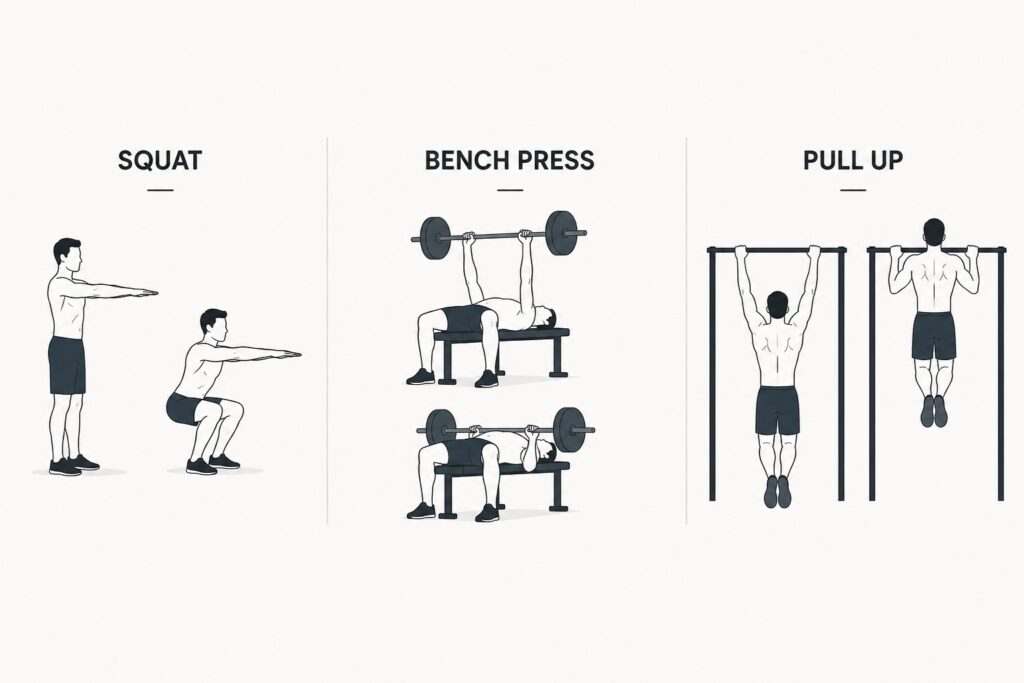
A compound lift simply means more than one joint moves and several muscles work together.
A squat uses your hips, knees, and ankles while your quads, glutes, inner thighs, core, and back all help you stay controlled.
A bench press uses your shoulders and elbows while your chest, triceps, front shoulders, upper back, and even your legs help create a stronger push.
A pull-up uses your shoulders and elbows while your lats, upper back, biceps, core, and hands all join the effort.
That is the beautiful part.
One exercise trains a lot of body at once.
The slightly annoying part is that “a lot” does not always mean “everything equally well.”
I had to learn that the slow way, which is apparently my favorite method.
The Compound-Only Phase Actually Worked
For a while, most of my training is built around the big lifts.
Squats or leg press.
Bench press or dumbbell press.
Rows.
Pull-ups or pulldowns.
Romanian deadlifts.
Overhead press.
Some sessions feel almost too clean.
The notebook looks simple, the workout moves fast, and the body gets plenty of hard work without turning the session into a fitness buffet.
Progress shows up too.
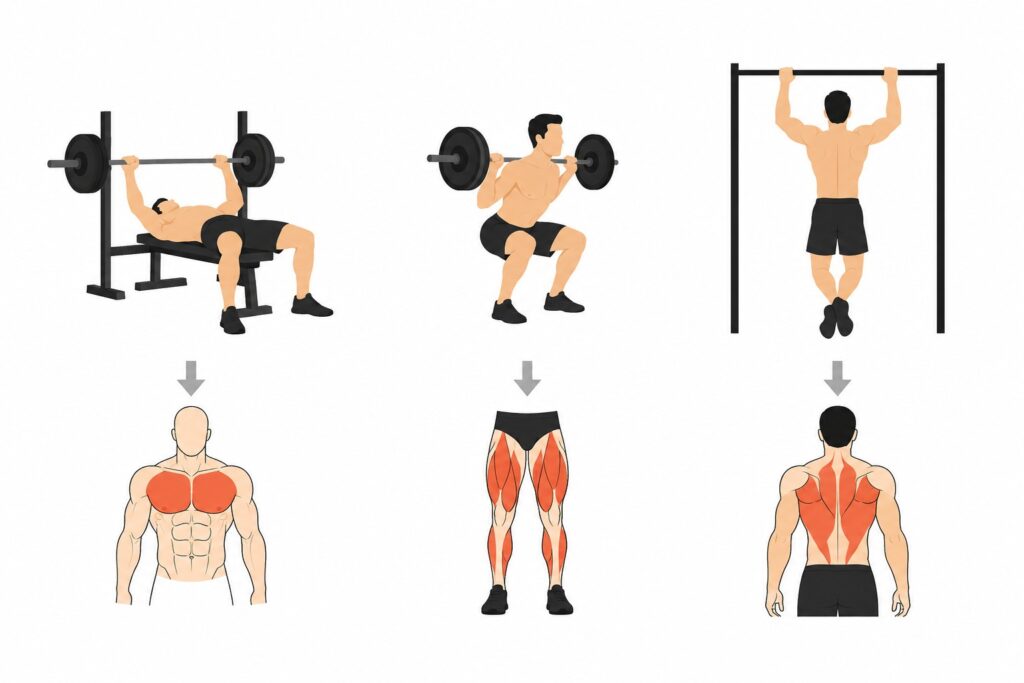
Legs respond to squats, leg presses, lunges, and hip hinges.
Chest grows from pressing when the reps are controlled and the range is not shortened just to survive the set.
Back improves from rows and pull-ups because those exercises force the torso to work as a connected piece.
Arms even get more work than beginners expect.
Chin-ups train the biceps because the elbows bend while the body moves upward.
Bench press and dips train the triceps because the elbows straighten under load.
Rows make the arms help while the back pulls.
So yes, compound lifts can absolutely build muscle.
That part is not the problem.
The problem begins when a lift feels hard enough to count, but the muscle you care about is not getting the cleanest job.
Hard Exercises Can Still Miss Specific Muscles
A hard set can fool you.
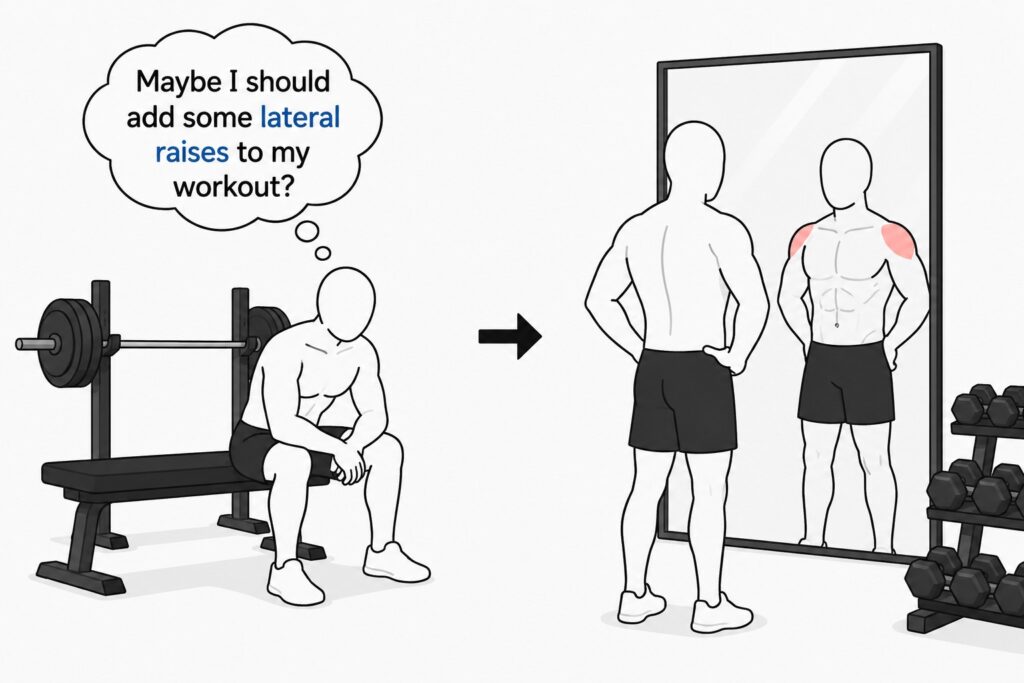
I used to finish heavy presses and assume my entire upper body had been handled like a professional adult.
Then the mirror gave a more sarcastic review.
Front shoulders had plenty of work.
Chest was doing fine.
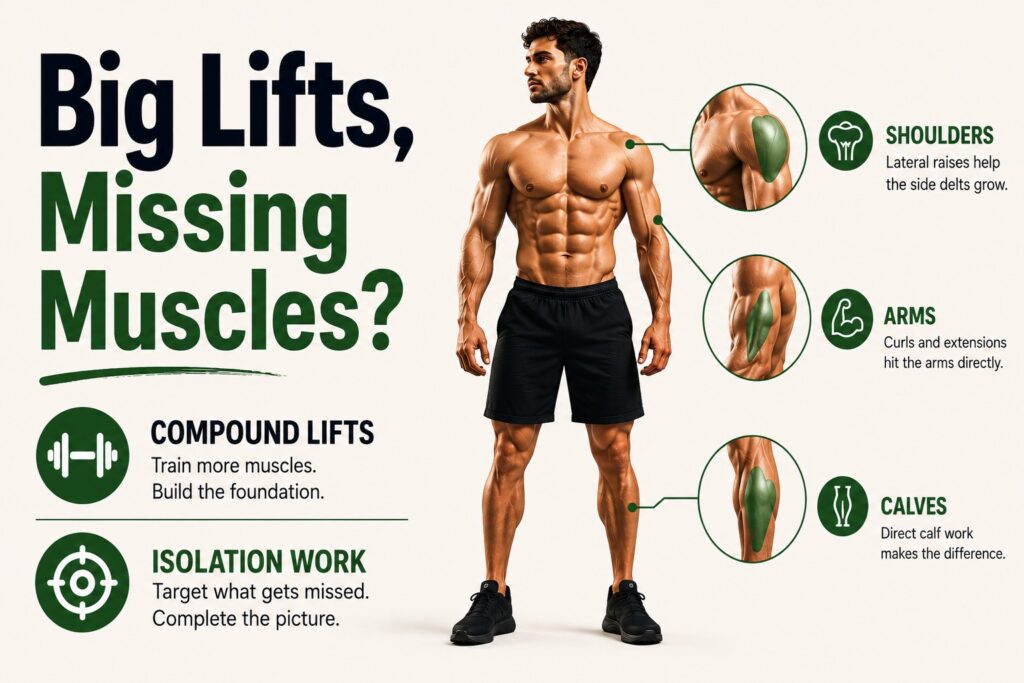
Side delts looked like they received the email about training three weeks late.
That is when lateral raises started making more sense.
A lateral raise is simple.
You hold dumbbells at your sides, lift your arms out to the sides with a slight bend in the elbows, stop around shoulder height, then lower with control.
The outside of the shoulder gets a direct job instead of being a helper during pressing.
Nothing mystical happens.
The muscle just stops being background staff.
That lesson applies all over the body.
Compound lifts often train several muscles, but the strongest or most useful muscles may take more of the work.
Smaller muscles sometimes help enough to get tired, but not enough to grow as much as you want.
Common places where this can happen include:
- Side delts during overhead pressing
- Biceps during rows and pull-ups
- Triceps during bench press and dips
- Hamstrings during squat-focused leg training
- Rear delts during lat-heavy pulling
- Calves during most lower-body compound lifts
- Abs during big lifts if bracing never gets trained directly
The big lift still earns its place.
It just does not always spread the work as fairly as it feels in the moment.
The Muscle That Ends the Set Tells You a Lot
A useful question during compound lifts is simple.
Which muscle quits first?
That question changed the way I judge exercises.
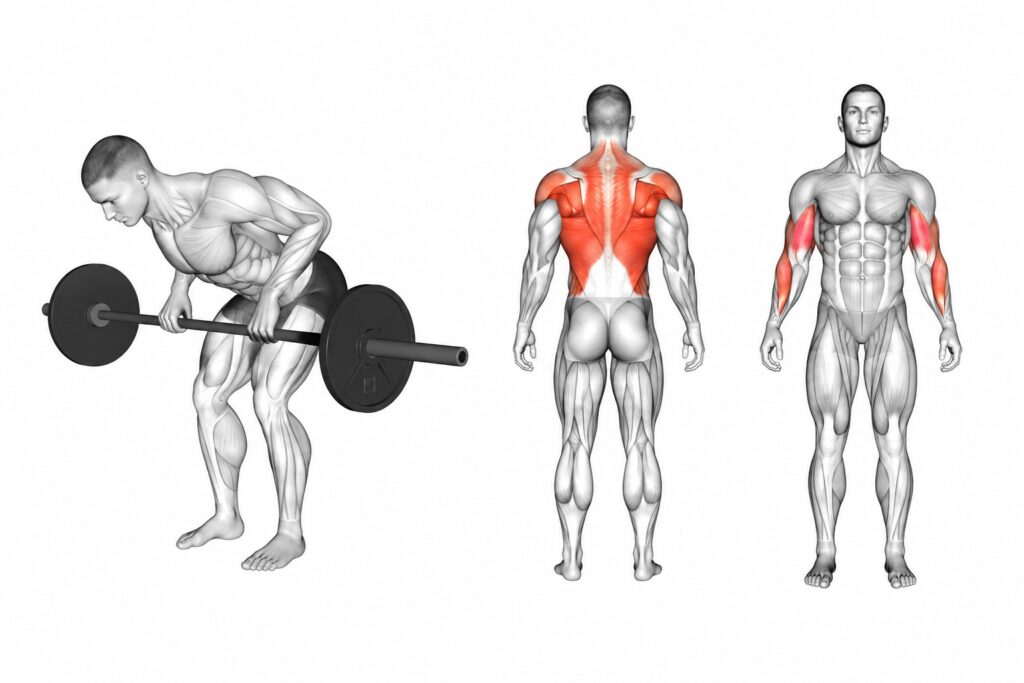
Take a barbell row.
You bend forward with the hips back, keep the spine steady, hold the bar, and pull it toward your lower ribs or upper stomach.
The back should pull the upper arm toward the torso.
The biceps help, but the upper back and lats should be doing the main job.
On some days, rows feel perfect.
The back gets worked, the torso stays steady, and each rep makes sense.
Other days, the lower back gets tired from holding the position before the upper back has received enough work.
The row is still a compound lift.
The target just gets interrupted.
A chest-supported row can solve that because the bench holds the torso, letting the upper back pull without the lower back stealing the ending.
Squats teach the lesson too.
A squat starts with the feet planted, the torso braced, and the hips and knees bending together.
The quads straighten the knees.
The glutes help drive the hips upward.
The core and upper back keep the body from folding like wet cardboard.
A clean squat builds serious muscle.
Still, balance, bracing, or lower-back fatigue can stop the set before the quads are truly finished.
In that case, leg press or split squats may train the legs more clearly.
The question is not whether the compound lift is good.
Better question: is the muscle you want to grow actually receiving the best work?
Isolation Work Makes Sense When the Big Lift Leaves Clues
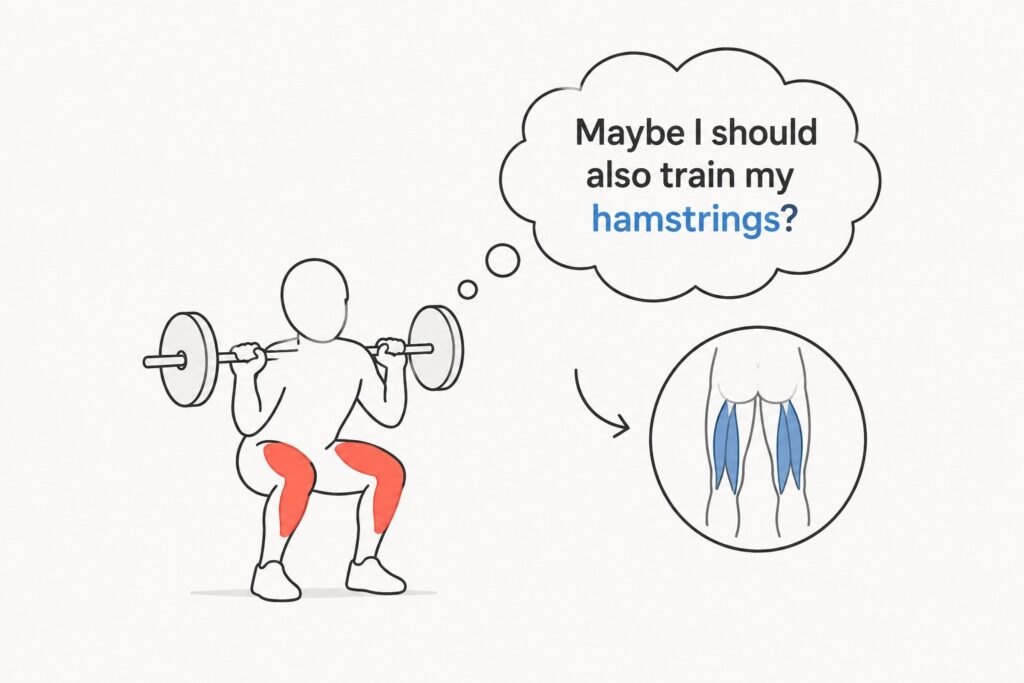
Isolation work started making sense to me when I stopped treating it like decoration.
At first, curls, lateral raises, leg curls, and triceps extensions felt like the optional dessert after the “real” lifts.
Nice to have, maybe useful, but not essential.
Then some compound lifts began leaving clues.
A press could feel hard, yet the chest did most of the work while the triceps barely received a clear finish.
A pulling session could train the back well, but the biceps seemed to help more than truly work.
A leg day could be heavy and exhausting, while the hamstrings still felt like they only assisted from the side.
That is where isolation work earns its spot.
Not as random extra volume.
More like a direct answer to a muscle that keeps getting skipped by the bigger movement.
A curl gives the biceps one clear job: bend the elbow against resistance.
A lateral raise gives the side delt one clear job: lift the arm out to the side.
A leg curl gives the hamstrings one clear job: bend the knee against resistance.
A triceps extension gives the back of the upper arm one clear job: straighten the elbow without turning the whole body into part of the lift.
Useful moments to add isolation work include:
- One muscle keeps lagging behind the rest
- The compound lift always ends because another area takes over
- The target muscle never seems to receive direct work
- Extra volume is needed without adding another heavy lift
- A joint feels better with lighter, cleaner movement
- Recovery is already limited, but one muscle still needs attention
One Small Add-On Is Usually Enough
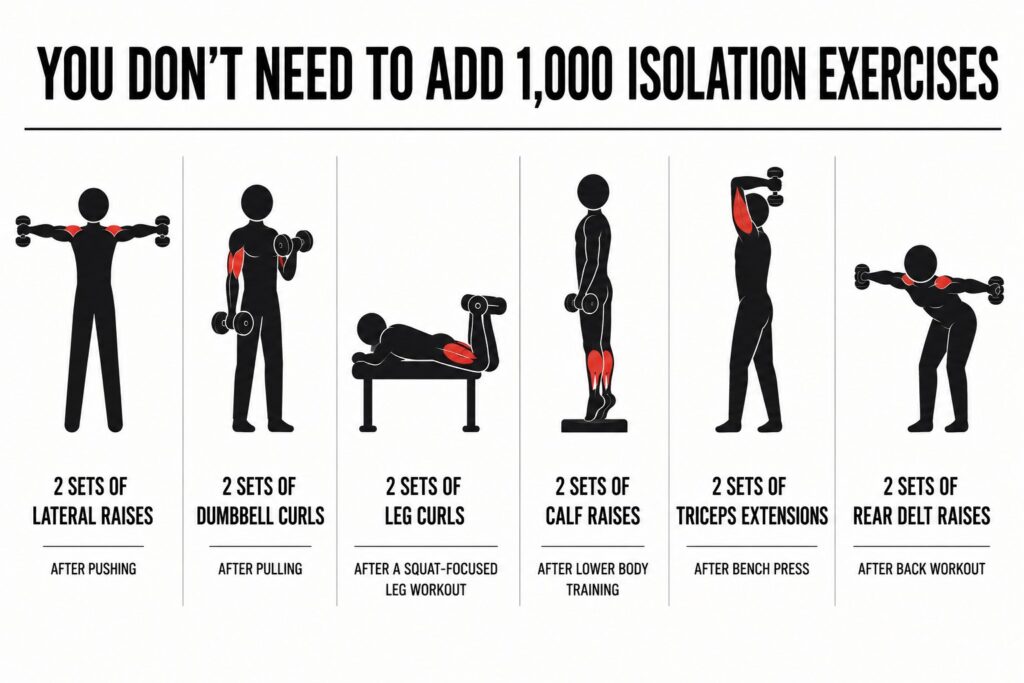
My worst approach was seeing one gap and immediately adding half a new workout.
Side delts lagging?
Suddenly the session has five shoulder finishers and a cable angle that looks like I am trying to solve geometry with sweat.
That usually creates clutter, not better training.
Most of the time, the first fix can be small.
A useful add-on might be:
- 2 sets of lateral raises after pressing
- 2 sets of curls after pulling
- 2 sets of leg curls after squat-dominant leg work
- 2 sets of calf raises after lower-body training
- 2 sets of triceps extensions after chest pressing
- 2 sets of rear delt flyes after back work
The goal is not to destroy the muscle.
The goal is to give it a clearer job than it received during the compound lift.
Moderate reps usually fit well here.
Something like 10–20 controlled reps often works better than chasing heavy weight immediately.
The last few reps should require attention, but the movement should still look like the exercise you started.
A curl should not need a hip swing, a neck vein, and a personal apology.
Clean work tells you which muscle is actually training.
Your Body Shape Changes the Answer
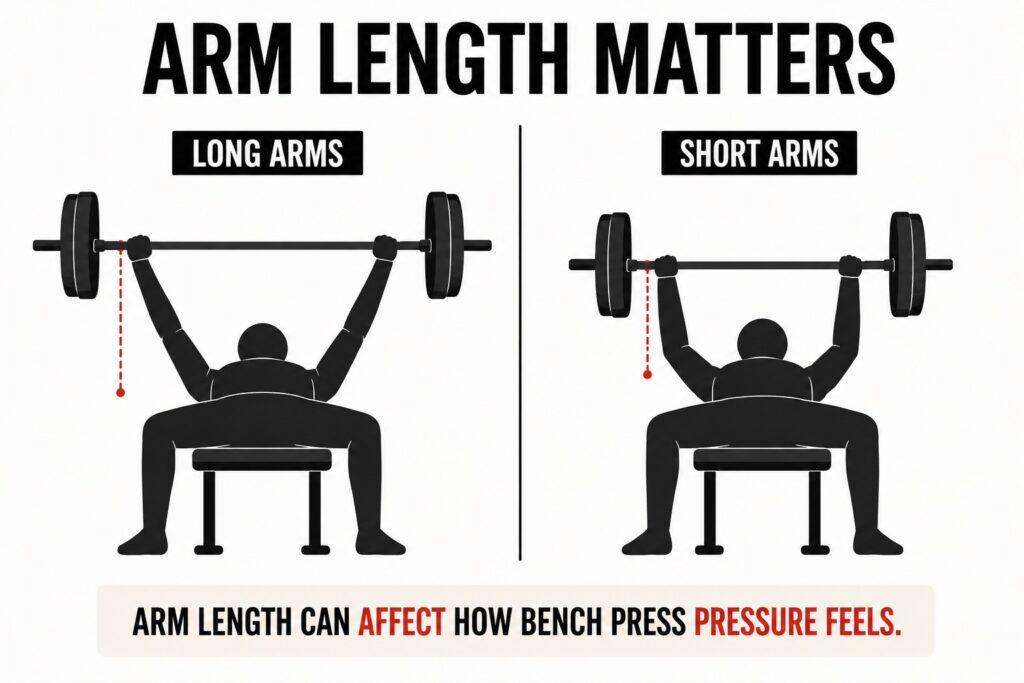
Two lifters can do the same compound lift and get a different result.
That used to annoy me because I wanted exercises to behave like simple math.
They do not.
Long arms can change how pressing feels.
Long legs can change where squats land.
Shoulder structure can affect whether pressing feels chest-heavy, triceps-heavy, or mostly like front delts doing paperwork.
Hip shape, torso length, limb length, and mobility all influence which muscles receive the clearest work.
None of that means the lift is wrong.
It means your body has a vote.
That is why copying someone else’s compound-only plan can be tricky.
Their press may hammer their chest.
Yours may end because the shoulders take too much of the job.
Their lower-body training may grow their legs evenly.
Yours may leave hamstrings or calves asking if training was canceled.
During a lift, I like to notice:
- Which muscle receives the clearest work
- Which area gets tired before the target muscle
- Whether the movement feels stable enough to push hard
- Whether the joint feels worked or irritated
- Whether one direct exercise would solve the gap faster
That last question keeps the article practical.
Sometimes the answer is not a new program.
Sometimes it is just two honest sets for the muscle that keeps being ignored.
My Current Answer on Compound Lifts and Isolation Work
I no longer treat compound lifts and isolation work like rival teams.
That made training more complicated than it needed to be.
Compound lifts are still the base because they train a lot of muscle, build coordination, and make progress easier to measure.
Isolation work is the adjustment tool.
Most sessions still begin with the big work.
Then I look at what actually happened.
Did the main muscles receive enough clear tension?
Did one smaller muscle keep getting skipped?
Did the set end because the target muscle was trained, or because another area interrupted the exercise?
That check matters more than blindly adding exercises.
Some days, the compound lifts are enough.
Other days, one direct movement makes the session feel more complete.
The important part is not adding isolation work because every muscle needs its own private event.
Add it because your training gives you a clear reason.
FAQ About Compound Lifts and Isolation Work
Can compound lifts make one side grow more than the other?
Yes, sometimes.
If one side is stronger, more coordinated, or more stable, it may take over during presses, rows, lunges, or pull-ups.
That is where dumbbell work, single-arm rows, split squats, and single-leg movements can help you notice differences before they become obvious in the mirror.
Do deadlifts build enough muscle by themselves?
Deadlifts can build a lot of muscle, especially in the glutes, hamstrings, traps, upper back, grip, and core.
The problem is that they feel so “complete” that it is easy to assume they cover everything perfectly.
They do not.
Deadlifts train the backside of the body very well, but they do not replace squats for quad growth, rows for direct back pulling, or leg curls for the knee-bending job of the hamstrings.
So yes, deadlifts deserve their place.
Can compound lifts build calves at all?
Usually not enough for most people.
Calves help during squats, lunges, step-ups, and leg press, but they rarely receive the kind of direct range and tension they get from calf raises.
If calves matter to you, they usually need their own annoying little appointment.
Do abs grow from squats and deadlifts?
They can get stronger at bracing, but that is not always the same as direct ab growth.
During heavy lifts, the abs mostly resist movement.
Exercises like cable crunches, hanging knee raises, reverse crunches, or weighted planks give them a clearer job if you want more visible development.
Should older lifters use more isolation work?
Often, yes.
Not because older lifters cannot train hard.
More direct exercises can add muscle stimulus with less full-body fatigue and less setup stress.
A machine row, leg curl, cable fly, or lateral raise can be easier to recover from than adding another heavy compound lift.
Can too many compound lifts make recovery worse than expected?
Yes.
A workout with squats, deadlifts, bench press, rows, pull-ups, and overhead press may look efficient on paper.
In real life, that can become a full-body tax bill.
Isolation work sometimes helps because it lets you train a muscle without asking your spine, grip, core, and nervous system to attend every meeting.