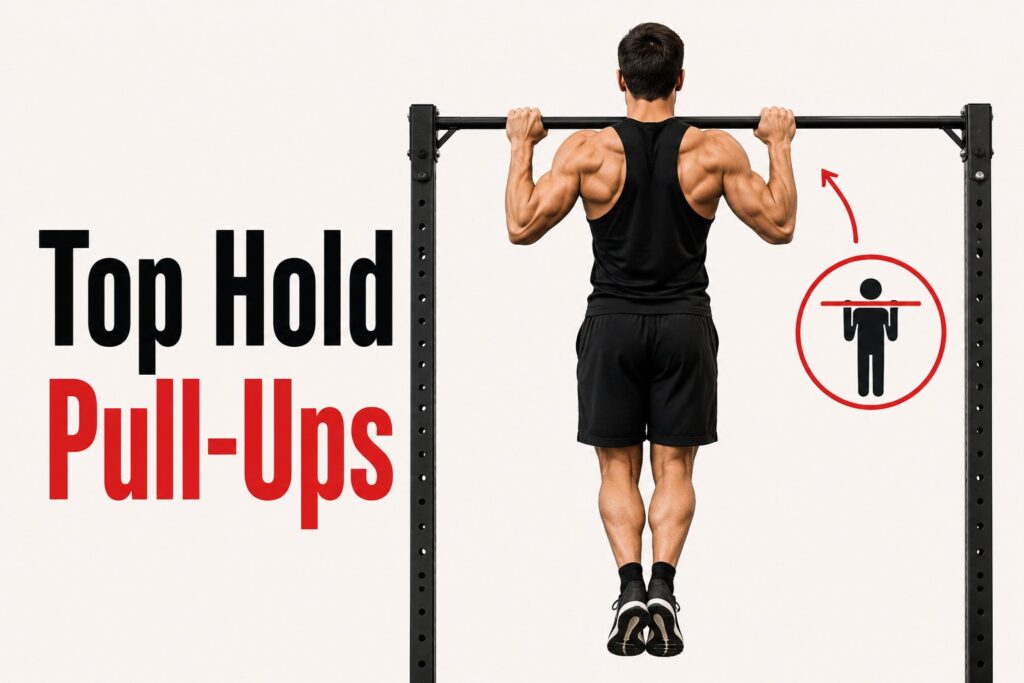
Holding the top position in pull-ups carried over to stronger full reps for me because it finally made the finish of the movement impossible to rush.
Instead of treating the bar like something to barely clear, I start treating the top position as the place where the rep has to prove itself.
A normal pull-up can hide a lot when it moves fast.
Two quiet seconds above the bar expose more than another messy set ever does.
My Pull-Ups Look Fine Until the Last Few Inches
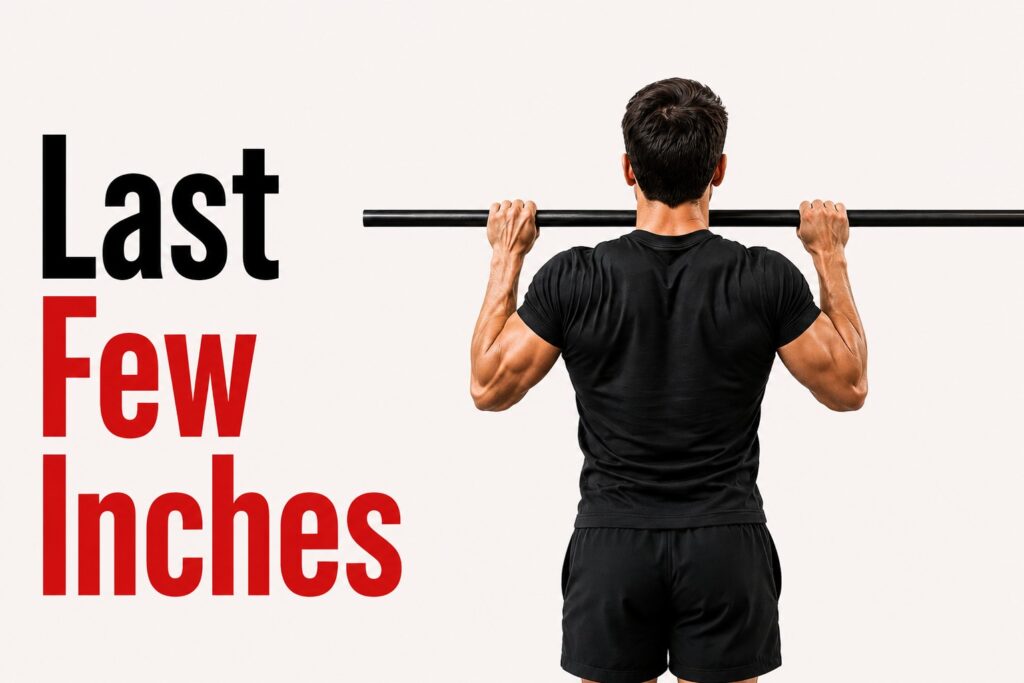
Most of the rep looks acceptable from the floor.
Hang.
Pull.
Almost there.
Chin gets close enough to make the brain say, “Good enough, buddy, let’s go home.”
During those last inches, though, the pull-up starts changing personality.
Sometimes the chin reaches forward before the body actually gets higher.
Other times the feet drift a little, almost like they want to submit an application to help.
A few reps count on paper, but they do not leave me with that clean “yes, that was finished” feeling.
So I stop adding more reps for a bit and start pausing where the rep usually gets suspicious.
Right above the bar.
Short.
Clean.
Annoyingly honest.
Why Holding the Top Teaches More Than Just Hanging There
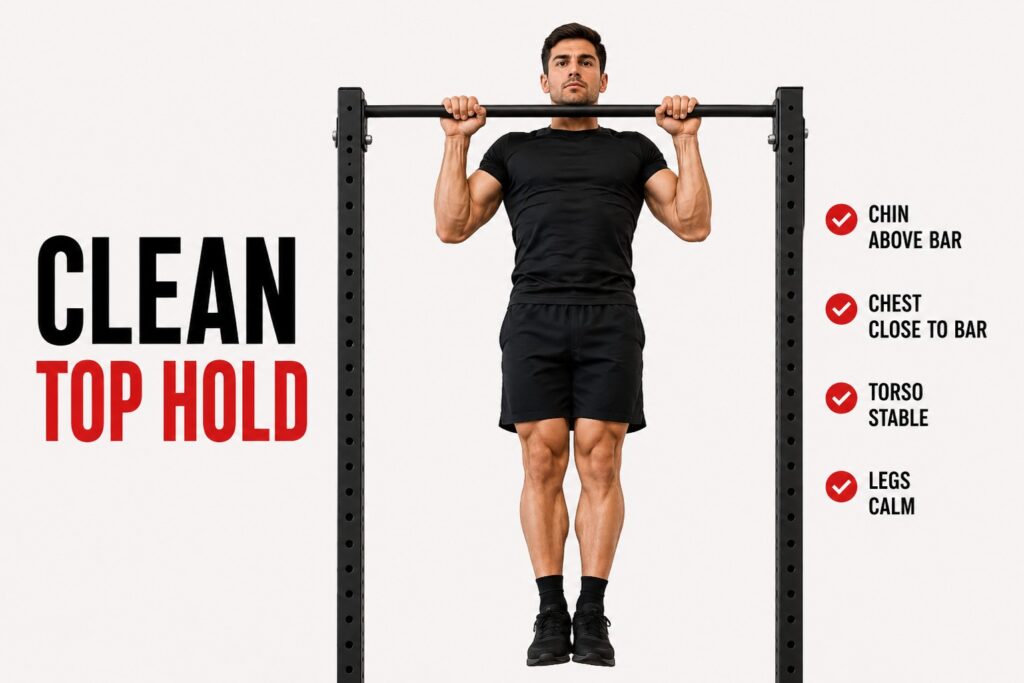
A top hold is not just hanging in a difficult position.
Done well, it teaches the body what the end of a pull-up should look like.
Here is what I want from that position:
- Chin clearly above the bar
- Chest close enough that the rep looks complete
- Legs calm instead of swinging around
- Lower ribs controlled, not flared up
- A pause that lasts long enough to show control
A good top hold looks like a clean pause, not a rescue mission.
Chin above the bar.
Chest close.
Body steady enough to repeat the position.
That repeatable finish is what carries into stronger full reps.
The Box Version Changed the Exercise for Me
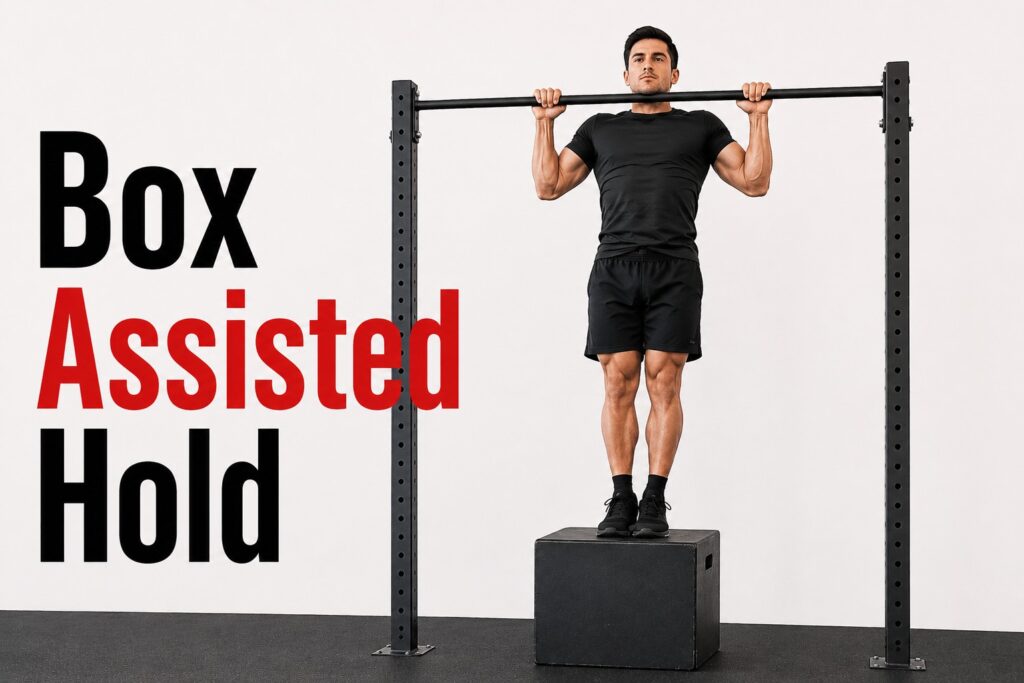
Using a box under the pull-up bar makes this drill much better.
Without the box, getting into the top position can become the hardest part, especially if the goal is control rather than just effort.
With the box, I can step high enough to start near the finish and spend energy on the actual lesson.
A simple box version looks like this:
- Place a sturdy box or bench under the bar
- Step up until the chin is near bar height
- Take the hands onto the bar with the usual pull-up grip
- Use the legs only enough to arrive at the top
- Shift most of the work into the upper body
- Hold for 2–5 seconds
- Lower under control or step back down
This works especially well for beginners.
Someone who cannot do a full pull-up yet can still practice the finished position.
Pull-Up Top Holds Change at Two, Five, and Ten Seconds
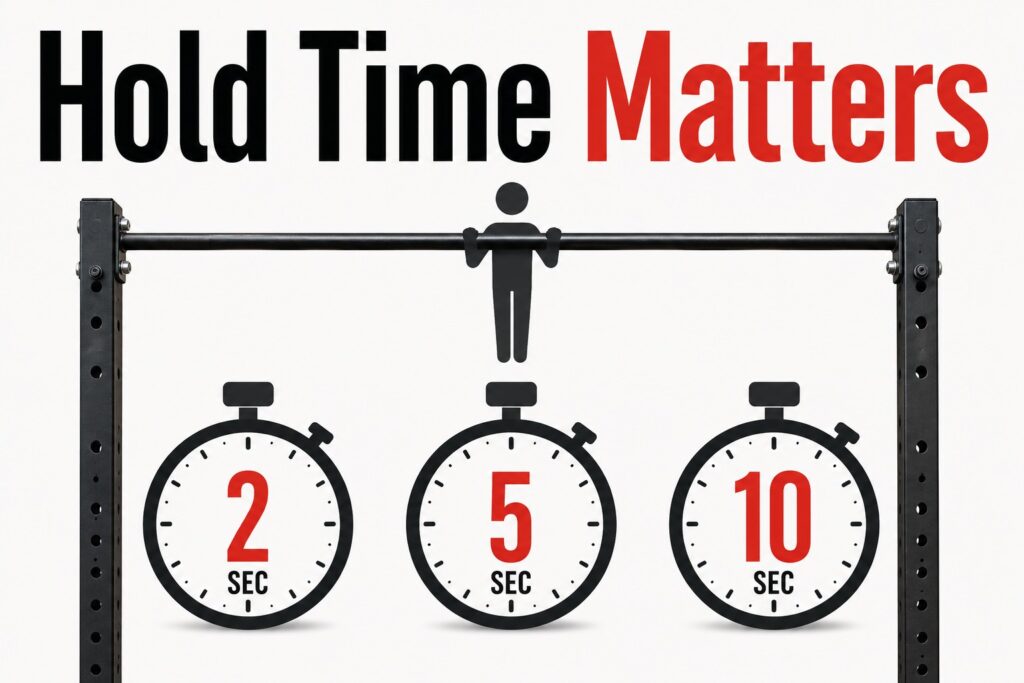
Hold time changes the whole purpose.
I used to think longer meant better because fitness logic loves making everything unnecessarily medieval.
In practice, shorter holds often teach more.
Here is how I think about it now:
- 2 seconds: best for learning the position
- 3–5 seconds: best for building control without making the drill ugly
- 8–10 seconds: useful only if the position stays clean
- Anything longer: usually turns into a patience test with worse technique
A two-second hold teaches the body to arrive and stay.
A five-second hold gives the position enough time to settle.
A ten-second hold can be useful, but only when it still resembles the pull-up I want to improve.
Once the chest drifts away, the legs start searching for help, or the chin reaches forward, the hold has stopped teaching the right thing.
High Partial Pull-Ups Train the Final Inches Near the Bar
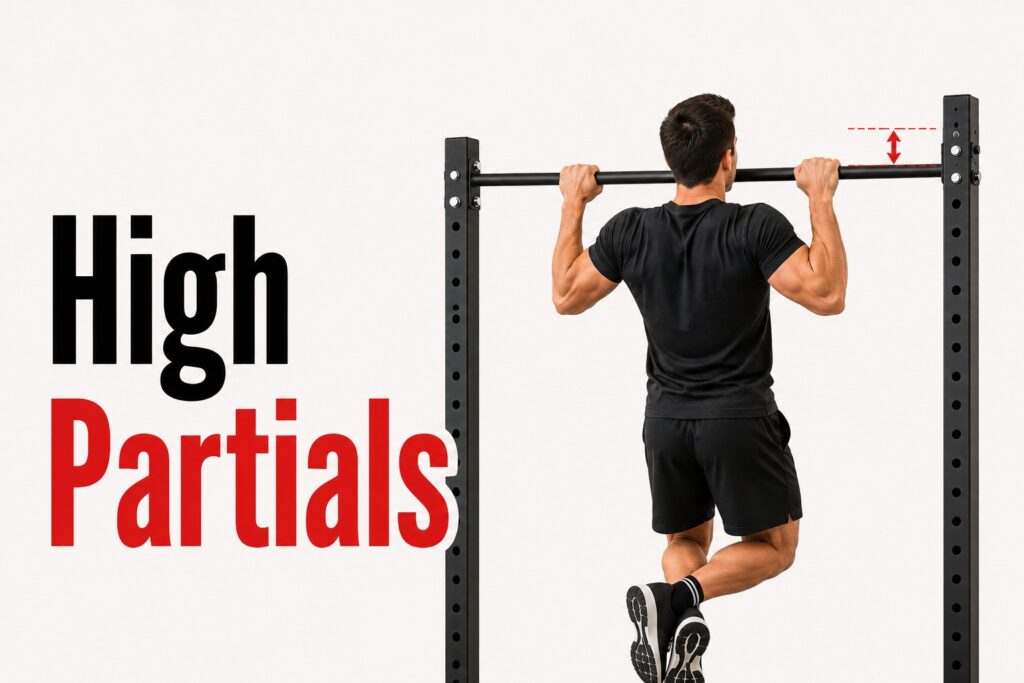
High partial reps are small reps near the top of the pull-up.
They are not full reps.
They are more like practice for the part where my pull-ups usually get awkward.
I start near the top, lower only a few inches, then pull back up and pause.
Two or three small reps are enough.
A useful set might look like this:
- Step to the top from a box
- Hold for 2 seconds
- Lower 3–5 inches
- Pull back to the top
- Pause again
- Repeat once more
- Step down before quality drops
This gives the upper range more attention without turning the whole session into a grind.
For someone who always gets close to the bar but cannot quite finish cleanly, this variation can be more useful than adding another rough full set.
My Favorite Way to Use It Before Normal Pull-Ups
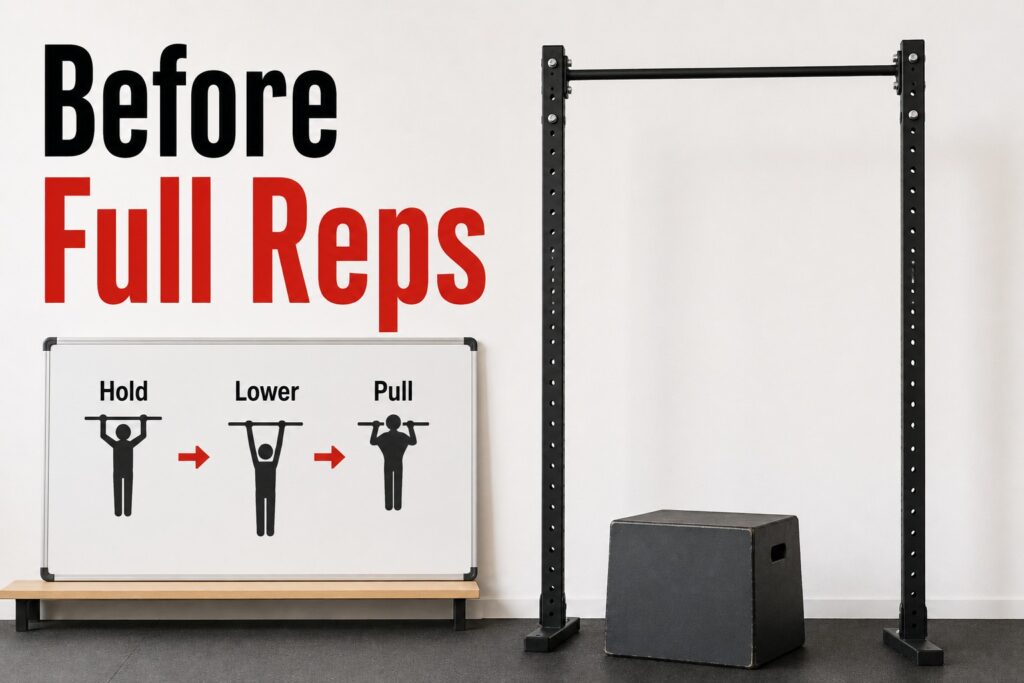
Before full reps, top holds work like a rehearsal.
Not a warm-up in the lazy sense.
More like showing the body the address before asking it to drive there.
A short sequence is enough:
- 1 box-assisted top hold for 3 seconds
- 1 controlled lower
- Rest until the next rep still feels clean
- Repeat once
- Start regular pull-ups
That tiny block makes the first real set feel more organized.
Instead of pulling toward a vague “up there somewhere,” the body has already visited the finished position.
I notice this most on days when the bar feels slightly heavy from the beginning.
A couple of clean holds can bring the rep back into focus without draining the session.
Using It After the Last Rep Is a Different Animal
A hold after the final rep gives different information.
Now the question is simple.
Did the last rep really finish, or did it barely slide across the line wearing sunglasses?
After the last clean pull-up, I pause for one or two seconds at the top.
Nothing longer.
Just enough to see whether the position is still there.
Possible outcomes:
- Clean pause: the set probably ended at a good point
- Instant collapse: the final rep was already near the limit
- Neck reach appears: the top range needs more control
- Swing takes over: fatigue is changing the movement
This version keeps me honest.
More reps are tempting, but the last-rep hold often tells me when the set has already delivered its useful work.
Pull-Up Top Hold Options Beyond the Box
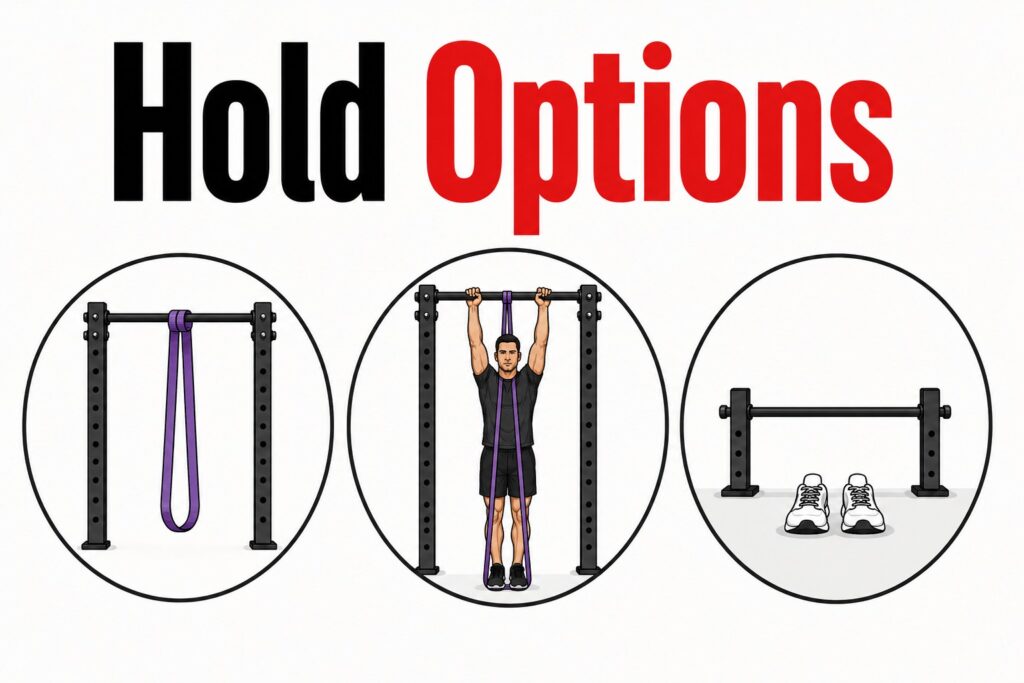
You do not need full pull-ups before practicing top holds.
Since the box-assisted version already covers the easiest entry point, the next step is choosing the right amount of help.
Useful options include:
- Band-assisted top holds: use a resistance band to reduce part of your bodyweight, then hold the top position with more control and less panic.
- Top hold plus slow negative: hold above the bar briefly, then lower down with control so the body practices both the finish and the way back.
- Lower-height bar holds with feet supported: use a low bar, keep the feet lightly on the floor, and adjust how much help the legs give.
The Strength Science Behind Pull-Up Top Holds
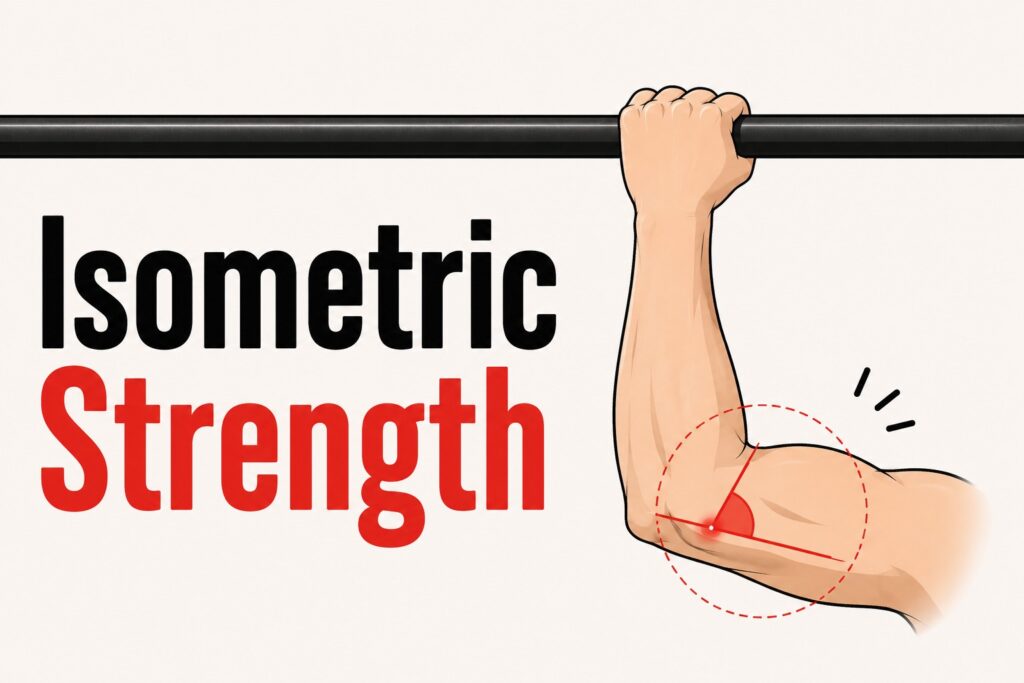
Top holds are isometric training.
Isometric simply means the muscles are working while the body position stays still.
Research on isometric training shows that strength gains often happen most around the joint angle being trained, which fits the idea that holding near the top of a pull-up can help the upper part of the rep.
Plain version?
Practicing the hard top position can make that top position less foreign.
This does not replace full pull-ups, rows, assisted reps, or controlled negatives.
It just gives the finish its own practice.
For my pull-ups, that is exactly where the extra attention helps.
Final Thoughts
Top holds helped because they made the end of the pull-up clearer.
Instead of rushing through the hardest final inches, I started practicing the position where the rep should actually finish.
For me, holding the top position in pull-ups carried over to stronger full reps because the body learned the ending before chasing more reps.
Cleaner holds made cleaner pull-ups, and cleaner pull-ups made stronger full reps feel much more realistic.
FAQs About Holding the Top Position in Pull-Ups
Should my chin just clear the bar, or should I pull higher?
For regular pull-ups, chin-over-bar is usually enough.
For top holds, though, pulling slightly higher can sometimes teach a better finish.
A good target is getting the upper chest closer to the bar without turning the movement into a weird neck reach.
If the only way to get higher is by throwing the head forward, the position is no longer cleaner.
Better to hold a slightly lower position with control than fake extra height with the face.
Should I hold with a hollow body or with my chest arched?
For most strict pull-ups, a slight hollow body works well.
That means ribs down, abs lightly tight, and legs slightly in front of the body.
A stronger chest-to-bar style may use a little more arch, especially in advanced pulling.
Neither position is automatically better.
The useful version is the one that matches the pull-up style you are trying to improve.
Can top holds help if I always miss the very last rep of a set?
Yes, especially if the missed rep happens close to the bar.
Top holds teach the body to stay organized where the last rep usually falls apart.
A good option is to stop one rep before failure and add a short top hold instead.
That gives you quality work near the finish without turning the final rep into a full-body negotiation.
Should my thumbs wrap around the bar during top holds?
Usually, yes.
Wrapping the thumb around the bar gives a more secure grip and makes the hold feel safer.
A thumbless grip can feel smoother for some people, but it also gives less security, especially when fatigue shows up.
For top holds, where you are staying above the bar on purpose, a full grip is usually the smarter choice.
Can top holds make my pull-up bar feel lower over time?
Funny enough, yes, in a practical sense.
The bar obviously does not move.
But once the top position becomes familiar, the final inches can feel less foreign.
Instead of reaching for a place your body barely recognizes, you are pulling toward a position you have already practiced.
That familiarity can make the full rep feel mentally and physically less intimidating.
Should I squeeze my legs together during the hold?
Lightly, yes.
Squeezing the legs together can help keep the body quieter.
It also stops the lower body from acting like a separate project.
You do not need a hard gymnastics squeeze.
Just enough tension to keep the legs from swinging, bending randomly, or trying to help the pull without permission.
Do top holds work better with a neutral grip?
A neutral grip can be a great option.
That means the palms face each other, usually on parallel handles.
Many people find neutral-grip pull-ups more comfortable and easier to control near the top.
If regular pull-ups feel awkward but neutral-grip reps feel clean, top holds with a neutral grip can be a smart middle step.
Can I do top holds on a lat pulldown machine?
Yes, in a modified way.
Pull the bar down to upper-chest height and pause there.
This does not perfectly copy a pull-up because the body stays seated and the load moves instead of your body.
Still, it can teach the idea of finishing the pull with control.
For beginners, lat pulldown pauses can be a nice bridge before doing top holds on an actual pull-up bar.