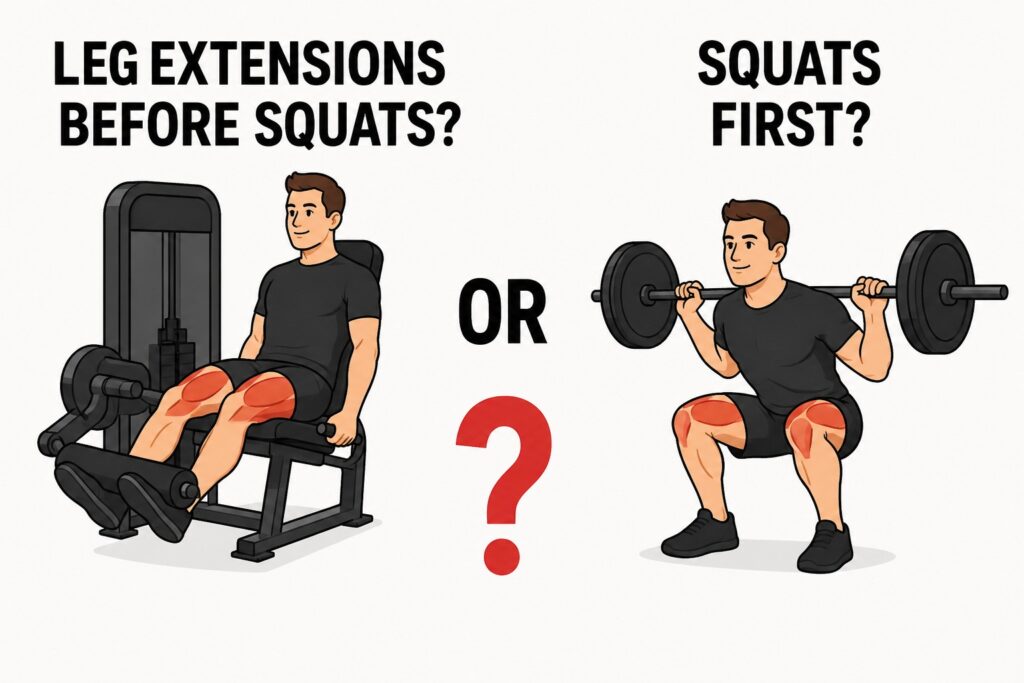
Leg extensions before squats sound like one of those gym ideas that can go brilliantly or ruin your first squat set before it even starts.
I get the appeal.
Quads first.
Squats after.
Maybe a faster path to more front-thigh work.
Maybe a terrible way to make the bar feel heavier for no good reason.
That is why this quad-building shortcut only makes sense when the leg extension sharpens the squat instead of stealing all the good reps before the real work begins.
The Machine Looked Too Easy Until It Changed the Squat
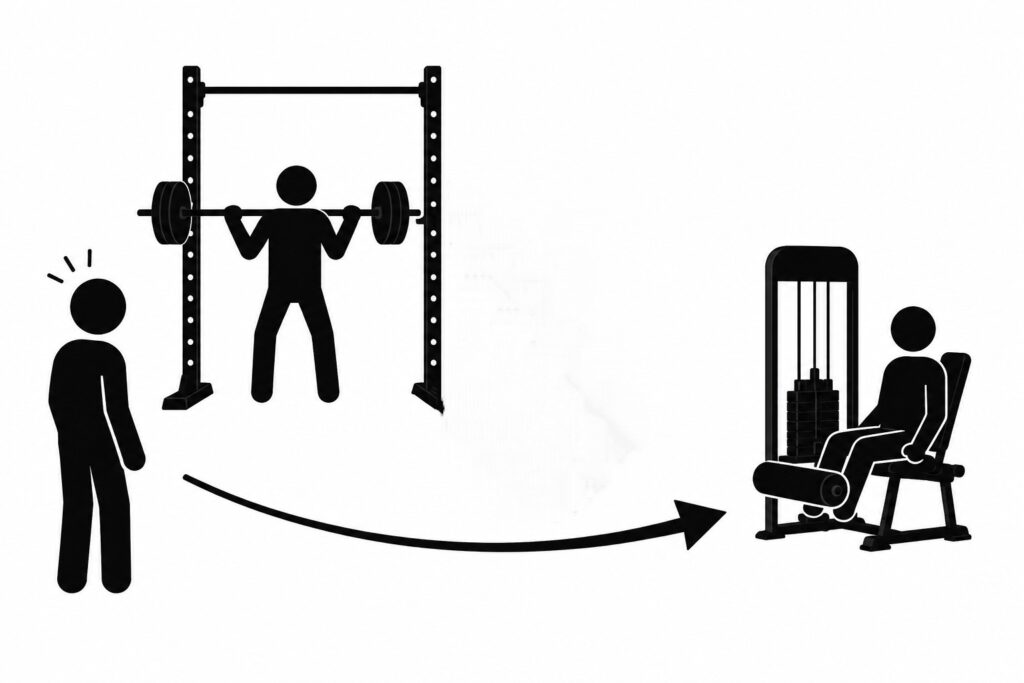
The squat rack is taken, naturally.
Two guys are sharing it, one water bottle is somehow guarding the floor, and the leg extension machine is sitting there like the quiet kid who actually studied for the exam.
So I take the seat.
No grand plan yet.
Just the padded backrest, the roller against my lower shins, and that little stack of plates waiting to expose how much my quads have been freeloading during squats.
A leg extension is simple from the outside.
You sit on the machine, place the front of your lower legs behind the pad, straighten your knees, lift the weight, and lower it again with control.
Your quads, the big muscles on the front of your thighs, do most of the work because their main job is knee extension.
That just means straightening the knee.
During squats, those quads still work, but they have company.
Glutes help.
Adductors help.
Hamstrings help.
Lower back and core help keep the body from folding like cheap lawn furniture.
Because of that, squats can become sneaky.
A person can finish a hard squat set and still wonder why the front of the thighs did not receive much of the punishment.
Leg extensions before squats force the quads to wake up before the bigger movement begins.
Useful idea.
Dangerous little trap.
The machine feels so controlled that it tempts you to do too much.
My First Version Was Basically Quad Vandalism
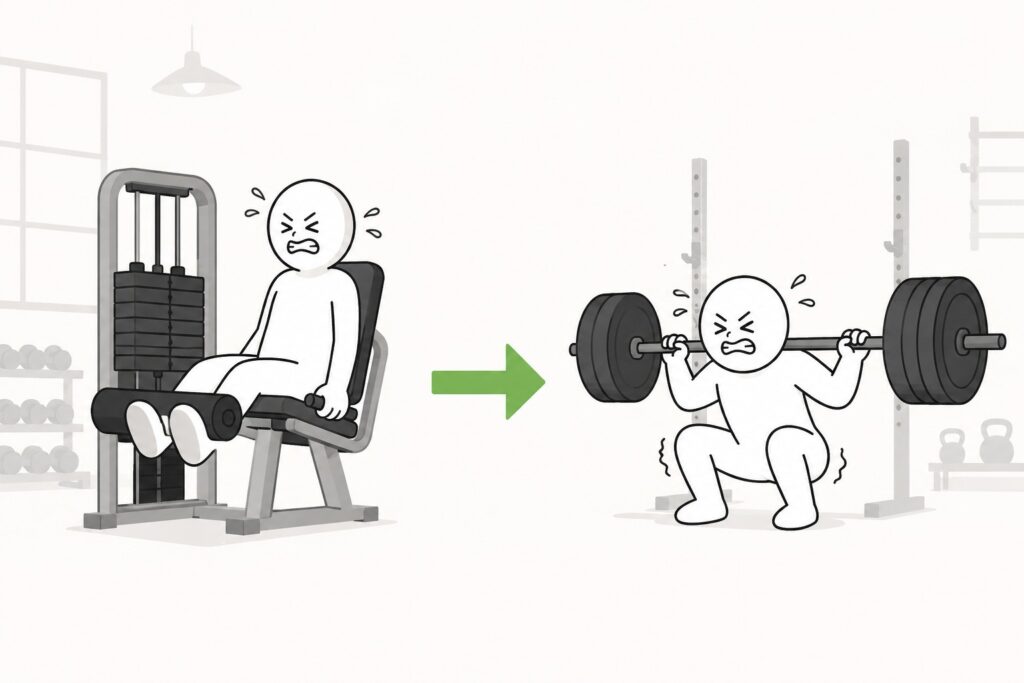
The first time I try this seriously, the plan is reasonable for about twelve seconds.
Light leg extensions before squats.
Easy.
Controlled.
Mature adult behavior.
Then the weight stack starts looking too friendly.
One extra plate becomes two.
Reps slow down.
The last few inches near the top turn into a tiny courtroom drama between my thighs and my poor life choices.
By the time the rack opens, my quads already feel like they have signed out for the day.
The bar is not even heavy, but the squat feels heavier than it should.
Knees bend less smoothly.
The bottom position feels sticky.
Standing up takes longer, and the whole set has that annoying “why did I sabotage myself?” flavor.
That session teaches the first real rule.
Leg extensions before squats work better as a signal booster than as a thigh funeral.
Useful version:
- Use 1 or 2 controlled sets.
- Keep the reps clean.
- Stop before the quads feel cooked.
- Leave the machine feeling ready to squat, not ready to sit in the parking lot.
Poor version:
- Chase a huge burn before squatting.
- Lock out every rep aggressively.
- Add weight just because the machine feels stable.
- Start squats already moving like a tired shopping cart.
The difference is huge.
One version makes the squat clearer.
The other version turns the squat into damage control.
The Better Set Feels Almost Too Modest
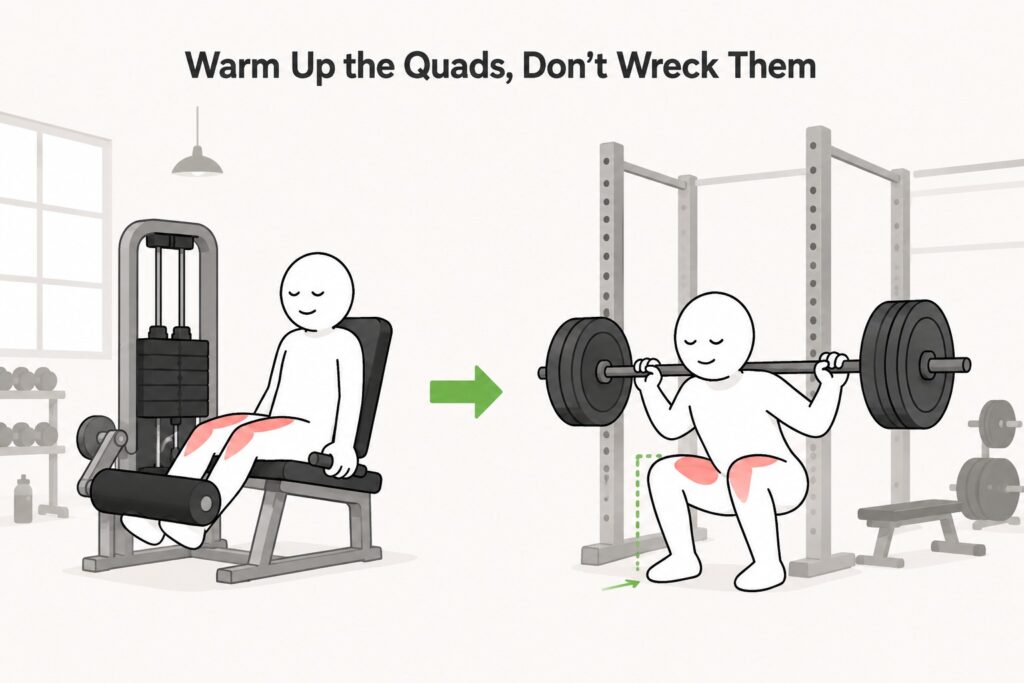
A smarter attempt feels boring at first.
That is usually a good sign in the gym, even if nobody wants to admit it.
I lower the weight, sit deeper into the pad, and let the roller rest across the lower shins instead of halfway across the ankles like some medieval shin trap.
The first reps move smoothly.
Knees straighten.
Quads tighten.
The weight comes down without crashing.
No kicking.
No bouncing.
No little celebration at the top.
Just clean tension.
Around rep ten, the front of the thighs feels awake, but not ruined.
That is the sweet spot.
Walking to the rack afterward, the legs feel more connected to the squat pattern.
Not stronger.
Clearer.
Different thing.
The first warm-up squat has more front-thigh awareness.
Knees travel forward with less hesitation.
The descent feels less like dropping the hips back and hoping everything works out.
A squat still needs the whole body, but now the quads are easier to find inside the movement.
For someone whose squats always turn into hips-back, torso-forward, “why do my glutes do everything?” reps, that can be genuinely useful.
The Squat Tells You Immediately If You Went Too Far
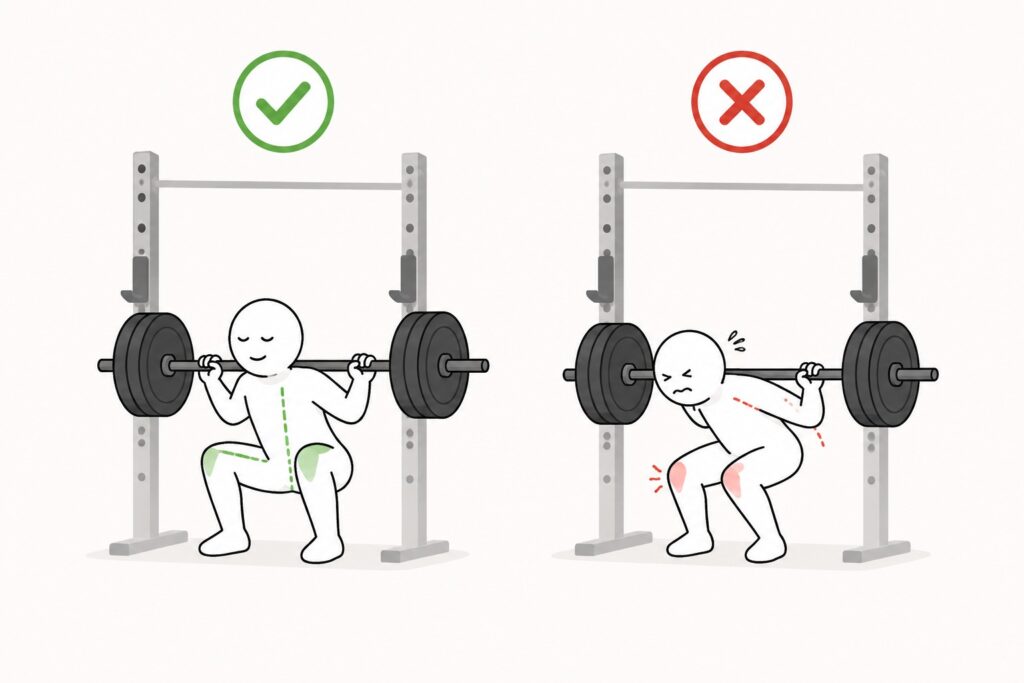
The rack gives feedback fast.
The first few squat reps give the answer.
Good leg extensions before squats make the movement feel more organized.
Bad ones make every rep feel like the legs are buffering on bad Wi-Fi.
Helpful signs during the squat:
- The front of the thighs works without sharp knee discomfort.
- Heels stay planted.
- Depth stays natural.
- Knees track in line with the toes.
- Standing up feels controlled, even if the quads are working harder.
Warning signs during the squat:
- Knees feel irritated before the set really begins.
- Hips shoot back earlier than usual.
- Torso leans forward more than planned.
- Depth disappears.
- The bar speed drops in a way that feels clumsy, not muscular.
That distinction matters.
Quad fatigue is fine.
Losing the squat pattern is not worth it.
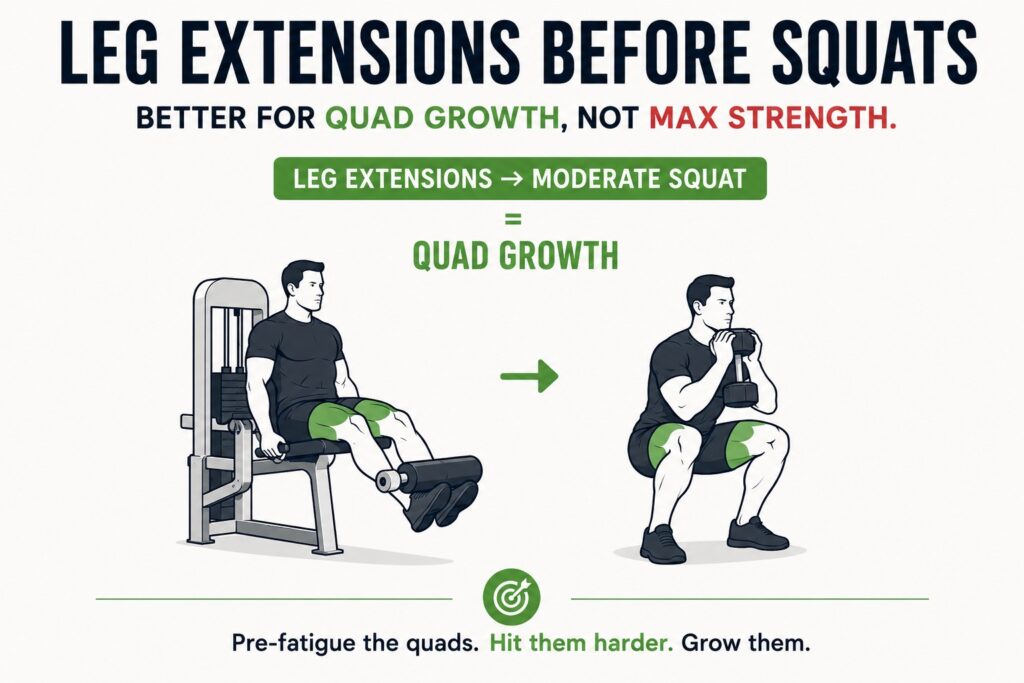
Leg Extensions Before Squats Make More Sense for Muscle Than Max Strength
Heavy squat days deserve respect.
A heavy barbell squat needs balance, bracing, timing, leg drive, and enough focus to keep the movement clean.
Pre-fatiguing the quads before that kind of set can be a bad trade.
The bar feels heavier.
The bottom position gets less reliable.
Confidence under the bar drops.
For pure strength work, squats usually belong first.
Fresh legs practice the skill better.
For quad growth, though, leg extensions before squats can make more sense.
The goal changes.
Instead of asking, “How much weight can I squat today?” the better question becomes, “Can I make a moderate squat hit my quads harder without turning ugly?”
That is where this method earns a place.
Good squat choices after leg extensions include:
– Goblet squats.
– Front squats.
– Heel-elevated squats.
– Hack squats.
– Moderate back squats.
A goblet squat uses a dumbbell or kettlebell held in front of the chest.
That front-loaded position often helps beginners stay more upright because the weight pulls the torso slightly forward instead of forcing the bar across the back.
A front squat places the weight across the front of the shoulders.
That usually keeps the torso more vertical and gives the quads a clearer job, but it can feel awkward if the wrists, shoulders, or upper back are not ready for it.
A heel-elevated squat places the heels on small plates or wedges.
This usually lets the knees travel forward more comfortably, which often increases the work for the front of the thighs.
A Smith machine squat uses a bar that moves on fixed rails.
That removes some balance demand, so you can focus more on knee bend, depth, and quad tension without worrying as much about the bar drifting.
A hack squat uses a machine where your back rests against a pad and your feet press against a platform.
This can be very quad-friendly because the machine guides the path, but the foot position still matters a lot.
A moderate back squat is the regular barbell squat done with a weight you can control cleanly.
The bar sits across the upper back, and the goal after leg extensions is not to lift the most weight possible, but to keep the squat smooth while the quads work harder.
None of these versions need to become fancy.
The useful version is the one where the front of the thighs work harder and the joints still feel calm.
Machine Setup Can Save the Whole Idea
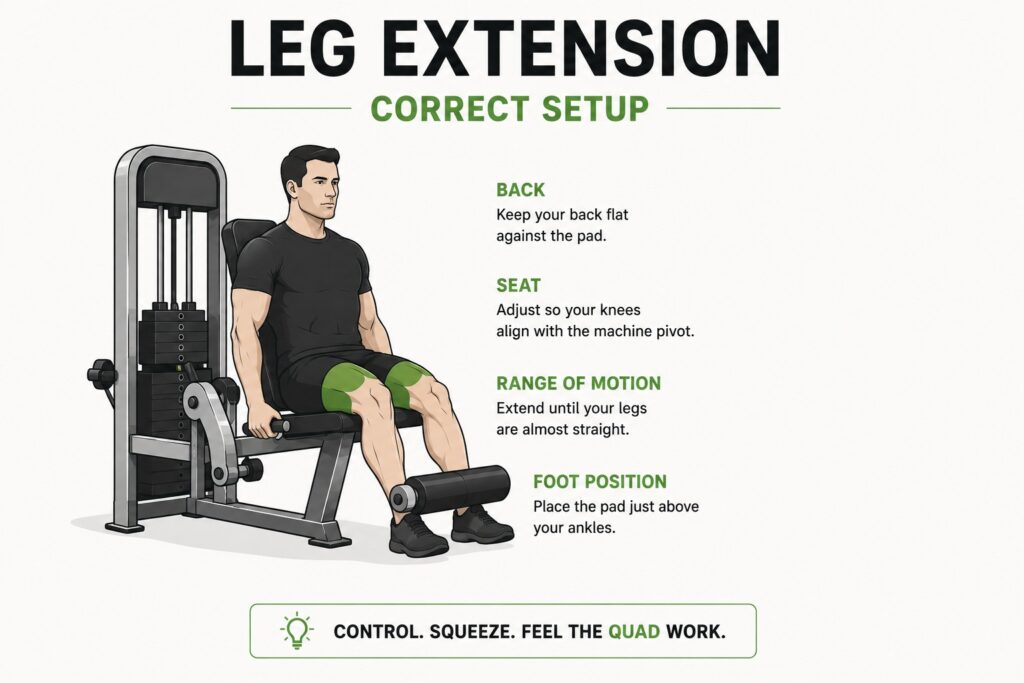
Leg extensions get blamed for knee discomfort, but the machine setup often deserves at least part of the blame.
One day, the seat is a notch too far back.
The roller sits awkwardly.
My hips slide a little during the rep.
Nothing feels painful, but the movement has that “this is slightly wrong” feeling.
That is the kind of moment worth respecting before loading more weight.
A better setup feels locked in without being cramped.
The knee lines up close to the machine’s pivot point.
The back stays against the pad.
The roller rests near the lower shin.
The hips stay down.
Each rep moves from the knee, not from the whole body wiggling around to help.
Before using leg extensions before squats, I check:
- Can I bend the knees comfortably at the bottom?
- Does the pad sit on the lower shin, not on the foot?
- Do both legs move evenly?
- Can I lift without throwing the weight?
- Can I lower without the stack slamming?
A clean leg extension should feel controlled and direct.
The Study Supports Leg Extensions Before Squats, But the Gym Decides the Dose
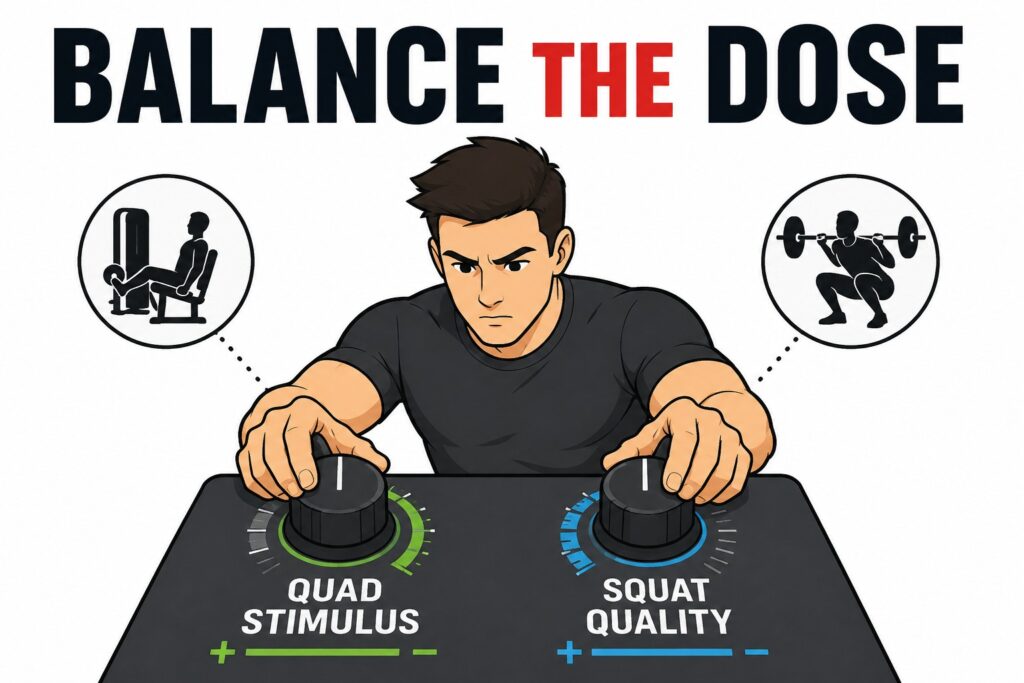
Pre-exhaustion is the technical name for doing an isolation exercise before a bigger compound lift.
Leg extensions before squats are a practical version of that idea.
One study by Trindade and colleagues compared a traditional leg-training order with a pre-exhaustion method where lifters performed leg extensions before leg press, and both training groups improved strength and quadriceps thickness.
That is useful, but it does not mean the machine-first method is automatically better.
Research opens the door.
The actual session decides whether you should walk through it.
In my own training, the method works best when it changes the target, not the quality.
The squat should still look like a squat.
Quad tension should rise.
Technique should stay readable.
Knees should feel loaded, not annoyed.
Many people stop the thought at “pre-exhaustion can help hypertrophy.”
Inside the gym, the better question is sharper.
Can you pre-fatigue the quads enough to improve the squat stimulus without making the squat worse?
That is the line.
Cross it, and the shortcut becomes a mess.
Three Ways I Use Leg Extensions Before Squats Without Wrecking the Session
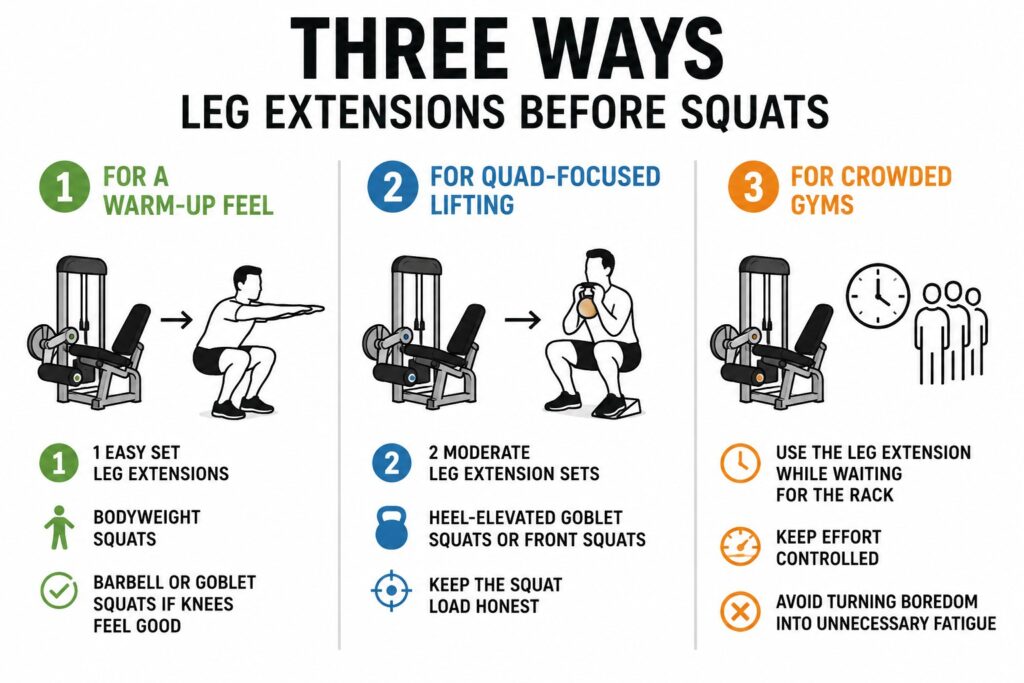
Leg extensions before squats work best when they have a clear job before I even touch the machine.
Some days, they are just a warm-up.
Other days, they are there to push more work toward the quads.
Crowded gym days have their own little category, because waiting for the squat rack can turn people into very strange decision-makers.
I like three simple options.
For a warm-up feel
- 1 easy set of leg extensions.
- Bodyweight squats afterward.
- Barbell or goblet squats only if the knees feel good.
This version is useful when the legs feel stiff, the first few bodyweight squats feel rusty, or the quads need a small reminder before the real sets.
The machine stays light enough that walking to the rack still feels normal.
For quad-focused lifting
- 2 moderate leg extension sets.
- Heel-elevated goblet squats or front squats.
- Keep the squat load honest.
This version makes more sense when the goal is quad growth, not proving the heaviest squat of the month.
The squat should feel more front-thigh focused, but the reps still need to look controlled.
For crowded gyms
- Use the leg extension while waiting for the rack.
- Keep effort controlled.
- Avoid turning boredom into unnecessary fatigue.
That last one is underrated.
Gym waiting time can become accidental training chaos very fast.
One minute you are waiting for the rack.
Five minutes later, you have done four brutal leg extension sets and now the squat rack opens like a cruel joke.
The Shortcut Works Only When the Squat Still Looks Like Training
Leg extensions before squats can be smart.
They can also be a very efficient way to make the rest of leg day worse.
The difference is not the exercise order by itself.
The difference is what happens to the squat afterward.
Keep the leg extension controlled.
Leave some energy in the quads.
Choose a squat variation that matches the goal.
Stop pushing the method when the knees feel irritated or the movement turns sloppy.
Used well, leg extensions before squats make the front of the thighs easier to find and harder to ignore.
Push the machine too hard, and leg extensions before squats stop being a shortcut and start becoming the reason your squat session feels cursed.