
We’ve all had that Monday where the gym is packed with dudes fighting over the flat bench, each one determined to annihilate their chest in a single Herculean workout.
The “International Chest Day” ritual.
The logic?
Smash it so hard in one session that it grows for a week straight.
But then you’ve got the other camp—people sneaking in chest work almost every day, tossing in a few light sets here and there, believing frequency is king.
So which one is actually smarter?
That’s the million-dollar question.
And honestly, the answer is messier than people like to admit.
The appeal of going all in once a week

There’s something satisfying about the “blow it up and leave it” strategy.
One marathon chest day where you go full throttle—flat bench, incline, dips, cables, flies, push-ups, the whole arsenal.
By the end, you feel like you’ve just gone through war.
Your pecs are fried, your arms don’t want to move, and your shirt sticks to you like you wrestled a bear.
On paper, it makes sense.
You’re throwing massive volume (total sets × reps × weight) at the muscle in a single session.
Volume is one of the main drivers of hypertrophy.
So if you can cram it all into one day, that should work… right?
The catch is recovery.
Your muscles don’t grow in the gym.
They grow when you rest, eat, and let your body rebuild.
Smash too much in one go, and you’re stuck with crippling DOMS for days, unable to press a door open without whimpering.
And sometimes, you’re not even recovering fully before the next “big chest Monday” rolls around.
It’s like burning through all your fuel in one wild drag race, then having to walk home because the tank is empty.
Why training chest more often actually works
Now let’s look at the “lighter but frequent” approach.
Instead of annihilating your pecs once a week, you sprinkle in shorter, easier sessions multiple times—say three to five.
Maybe you hit bench one day, flies another, dips later in the week.
None of them leave you crawling out of the gym, but collectively the weekly volume can match or even beat the once-a-week method.
Here’s why that can be effective:
- Protein synthesis (the muscle-building signal) spikes after a workout but only stays elevated for 24–48 hours in trained lifters.
- Hitting chest more often means you’re reigniting that signal multiple times, telling your body, “Yo, we still want bigger pecs.”
- You stay fresher per workout. Instead of set number 19 where your form looks like you’re wrestling with gravity, you can push quality reps more often.
But what about strength and performance?
This is where things get interesting.
Strength isn’t just about the muscle—it’s also about the nervous system.
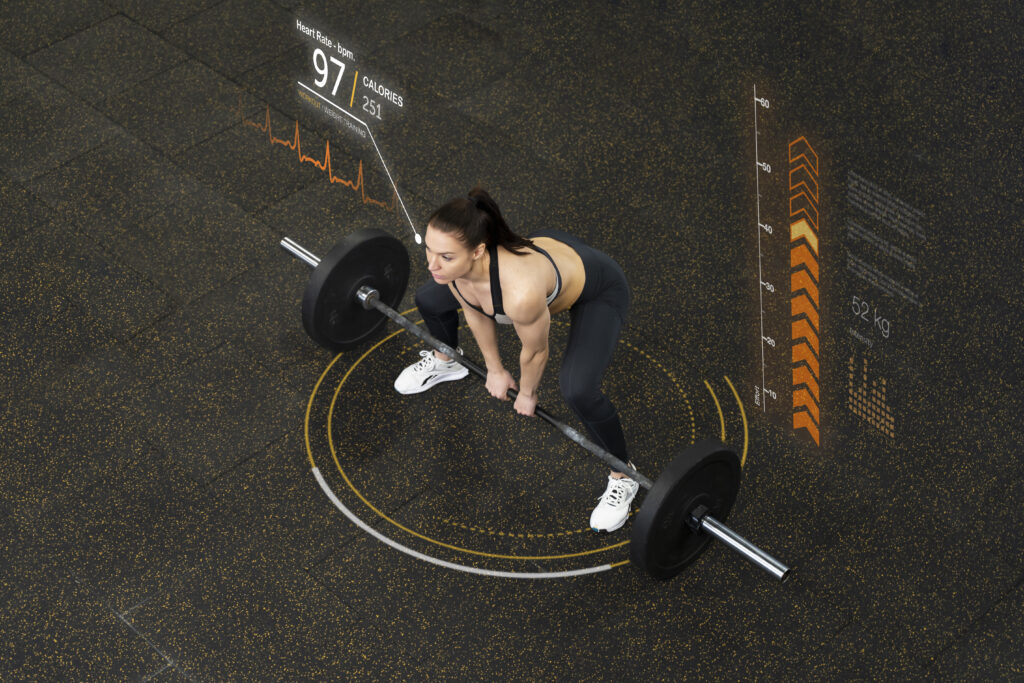
The more often you practice the bench press (with decent form and load), the better your body gets at the movement itself.
That’s why Olympic lifters train their lifts almost daily.
It’s not just muscles; it’s skill.
If you’re trying to boost your bench max, practicing it multiple times—even with lighter loads—helps your brain and body sync up.
What the evidence really says about training frequency
Research has actually put this to the test.
Most studies comparing once-a-week muscle blasting versus higher frequency training (when total weekly volume is matched) show frequency tends to win—or at least tie.
The body seems to prefer smaller, repeated signals rather than one big sledgehammer.
You’re able to push higher quality reps more often, recover better, and keep protein synthesis firing more consistently.
That said, there’s no universal law here.
Some people still grow just fine with a once-a-week setup, especially if they’re new to lifting or have crazy genetics.
We all know that one guy who benches once every two weeks and still fills out a large T-shirt like it’s painted on.
Don’t compare yourself to genetic freaks.
Confessions of a former chest-Monday addict
I’ll be honest.
I used to be a hardcore “chest Monday” guy.
I’d load up on coffee, psych myself up, and treat the session like an event.
I’d leave the gym feeling like my pecs were carved out of stone.
But by Thursday, I was flat again—tired, sore, and already itching to train but knowing I’d just wreck recovery if I touched bench again.
When I switched to training chest three times a week with fewer sets, things changed.
My recovery improved, my strength climbed faster, and my chest actually looked fuller week to week.
I didn’t feel like I was dying every session, but the results piled up.
It felt like a slow drip filling the bucket instead of a chaotic flood that left me empty.
Was it sexy?
Not really.
Was it effective?
Absolutely.
Here’s how to not overthink it”
Here’s the kicker: both can work.
If you genuinely love a once-a-week “big chest day” and it keeps you consistent, you’ll still build muscle—as long as the volume is high enough and recovery is on point.
If your schedule and energy allow for more frequent chest training, you’ll probably see better overall progress by spreading the volume across the week.
Especially if you’re past the beginner stage.
The best program isn’t the one that looks fancy—it’s the one you can recover from, stick to, and progress with over time.
Final Thoughts
Smashing chest once a week with insane volume feels epic, but it’s not always the most efficient way to grow.
Spreading your workload out—lighter but more frequent—usually keeps your body happier, your lifts cleaner, and your gains steadier.
At the end of the day, don’t just think about how destroyed you feel after a workout.
Think about how you’re progressing month to month.
Muscle growth is a marathon, not a one-night stand.
Quick Fire FAQs
1. Can I train chest effectively without a bench?
Absolutely.
It’s not ideal, but it’s doable.
Push-ups, dumbbell floor presses, and weighted dips can cover most of what a bench does if you control tempo and push the effort.
The key is creativity — elevate your feet, add bands, or slow the eccentric to make light setups hit harder.
It won’t look fancy, but your pecs won’t know the difference.
2. Why does my chest lose its “pump” so fast after workouts?
Because the pump isn’t permanent — it’s just blood and nutrients rushing in.
If it fades too quickly, it usually means hydration or carb intake is low.
Try adding more electrolytes and carbs pre-workout, and aim for consistent chest sessions week to week.
Over time, the “flat” look between workouts disappears as real muscle replaces the temporary swell.