Cold and flu season at the gym changes a normal workout before you even touch the first dumbbell.
The goal is not to train in fear or treat every bench like a biological crime scene.
It is to notice the situations that raise your exposure, make a few smarter choices, and keep training without being reckless about your health or everyone else’s.
One evening last winter, I arrived during the after-work rush with a back-and-shoulders workout planned.
The cable station was packed, every bench was occupied, and a guy near the dumbbells was coughing hard between sets.
Instead of forcing the original plan, I trained in a quieter corner with dumbbells and left the cable work for another day.
That session was still useful.
More importantly, I did not spend an hour squeezed between strangers just because my notes said “cable row.”
1. Wipe Your First Station Before You Start
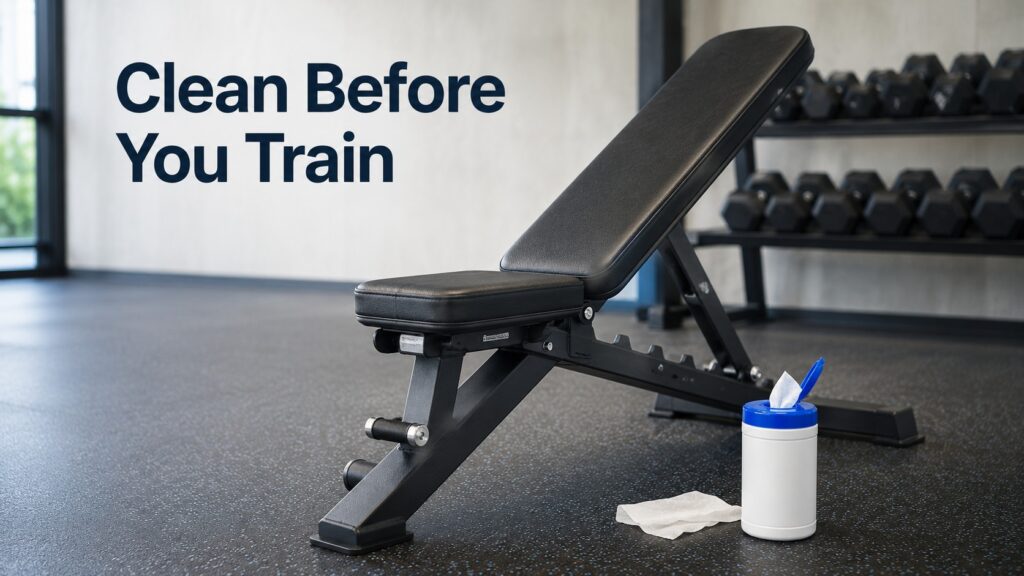
The first thing I do after putting my bag down is find the wipes.
That habit started after I grabbed a bench handle that was still damp from the previous person.
Maybe it was sweat.
Maybe it was cleaning spray.
Either way, I did not feel like spending the rest of the workout wondering.
Wipe the areas you will actually touch.
On a bench, that means the seat, backrest, and adjustment handle.
On a machine, focus on the grips, seat, pin, and any button you need to press.
Then clean it again when you are done.
A fast swipe is better than nothing, but do not wipe disinfectant away instantly if the product label says it needs time on the surface.
That tiny pause is a good moment to set your water bottle down, choose your weight, and get ready for the first set.
2. Keep Your Hands Away From Your Face Between Sets
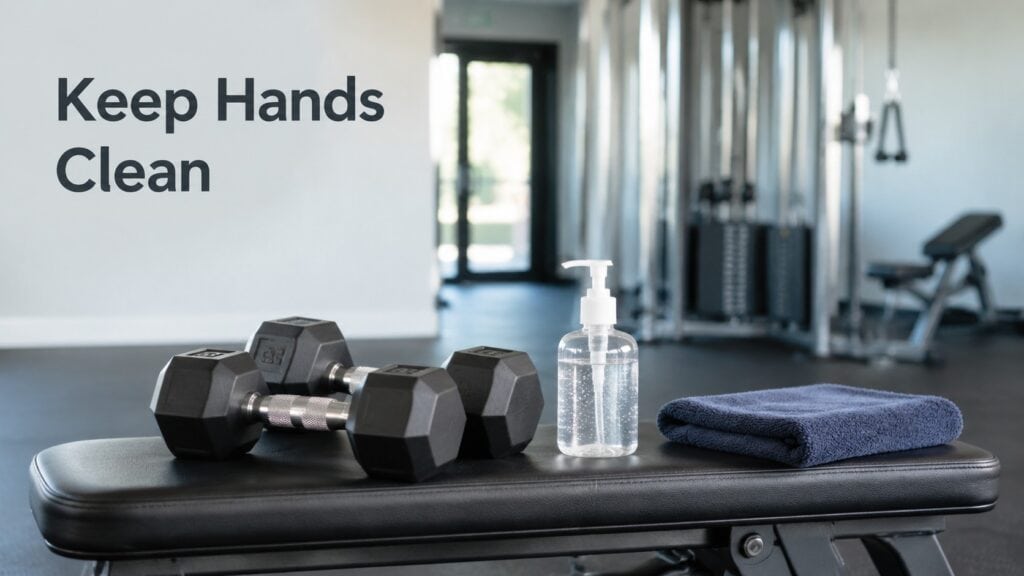
The gym gives your hands a busy evening.
They touch a door handle, a dumbbell, a pin on the cable stack, the bench adjustment, your phone, and your water bottle.
Then your nose itches.
That is the moment that matters.
I used to rub my eyes without thinking while resting after a hard set.
Once I noticed how often I did it, I became much more careful.
Use hand sanitizer during the session if you need it.
Wash your hands with soap and water before leaving the gym, especially before driving home, eating, or touching your face.
You do not need to stand there scrubbing like you are preparing for surgery.
You just need to stop treating your hands as though they stayed clean after an hour in a shared gym.
3. Bring the Few Things You Actually Use
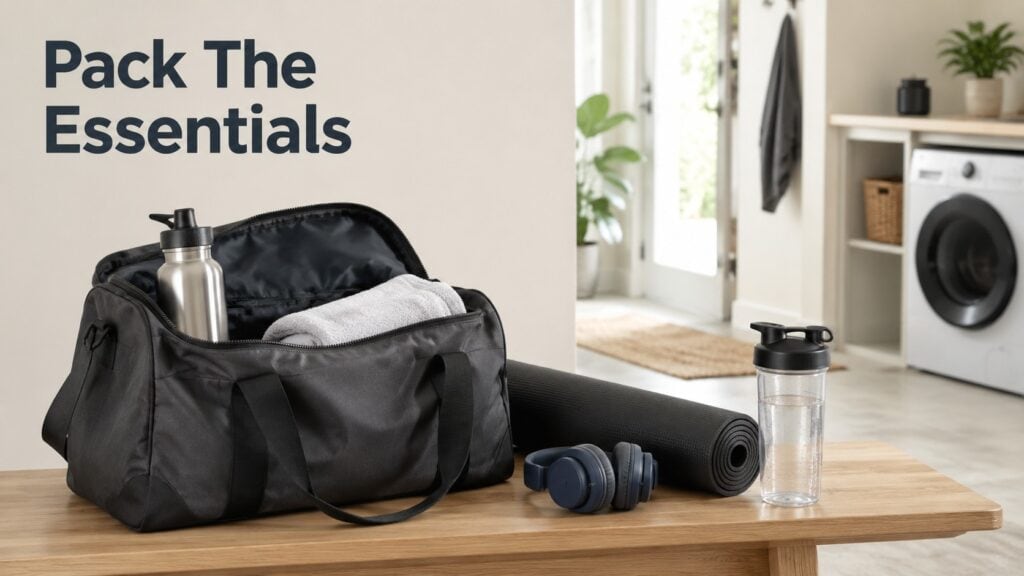
A gym bag does not need to look like you are moving into the building.
A water bottle, a clean towel, headphones, and your own mat for floor work cover most of what matters.
Using your own bottle avoids repeated trips to a shared fountain.
A towel gives you something clean to use during the session and is useful on a bench if the gym rules allow it.
For yoga, mobility work, or stretching, a personal mat is easier to clean than one that has been used all day.
The part I learned late was what happens after training.
A damp towel, dirty shirt, and half-empty shaker bottle should not stay inside the bag until the next workout.
Open the bag when you get home.
Put the towel in the wash.
Rinse the bottle.
Future you will be grateful when Monday morning does not begin with a smell that could qualify as a health warning.
4. Treat a Packed Gym as a Different Workout
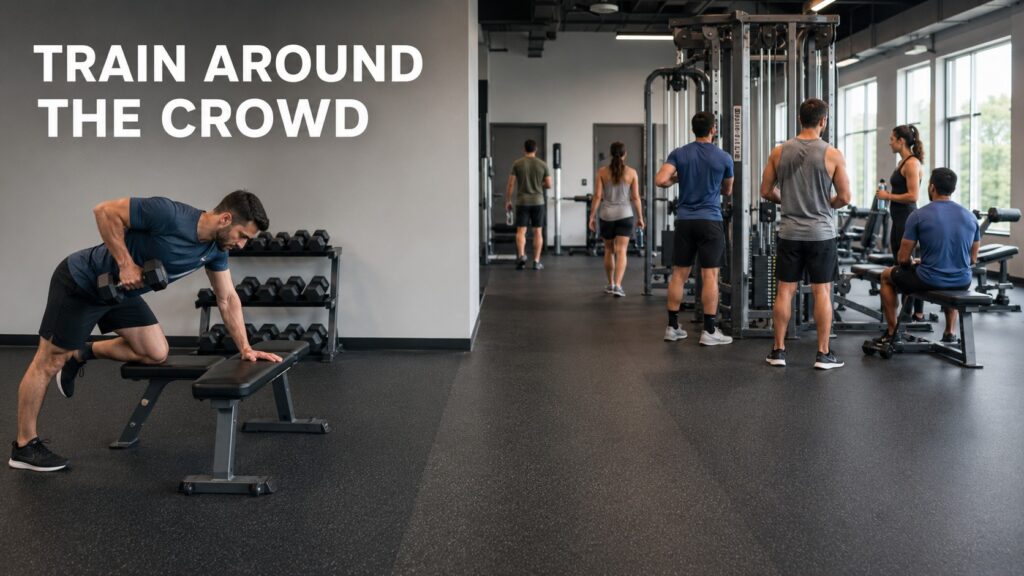
A crowded gym does not always mean you need to leave.
It does mean the workout may need to change.
During flu season, I look at the room before deciding where to begin.
If the benches are full and people are waiting directly behind them, I might start with pull-ups, dumbbell presses, or a leg exercise in a more open area.
If every cable handle is being passed around constantly, I can use dumbbell rows instead.
This is not settling for less.
It is choosing the version of the session that fits the room.
The best time to train is usually before the evening rush, later at night, or whenever your gym is noticeably quieter.
Even moving your session by 30 minutes can give you more space and a calmer workout.
5. Choose a Well-Ventilated Gym Area
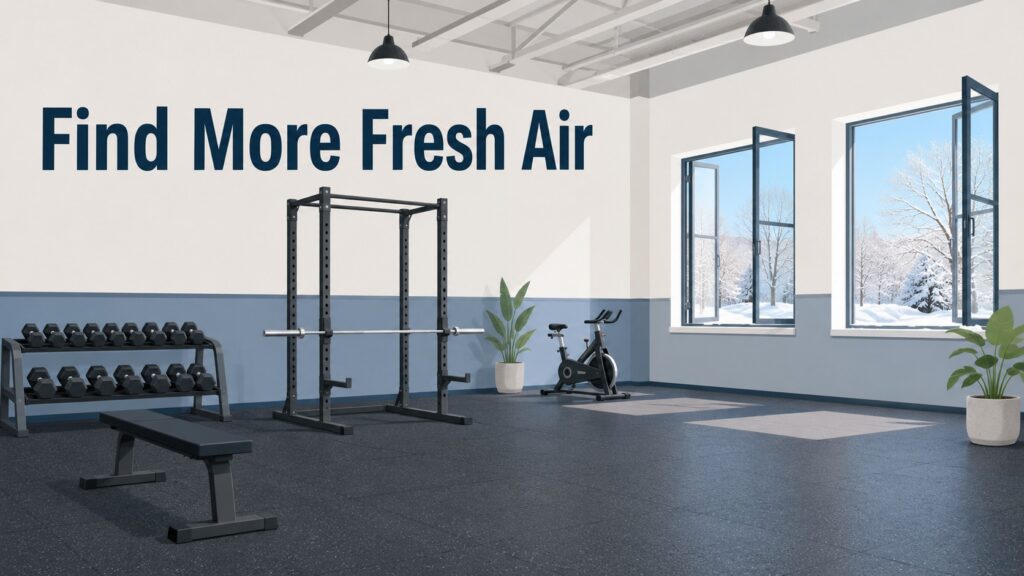
Before a hard set, I like room around me.
It helps with concentration, but it also makes winter gym sessions more comfortable when people are breathing heavily nearby.
Look for an area with airflow, open space, or fewer people moving through it.
A packed studio with closed doors feels very different from a large free-weight room with windows and high ceilings.
You do not need to become an air-quality detective.
Just use common sense.
If one part of the gym is hot, crowded, and full of people waiting shoulder to shoulder, use another part if you can.
On mild days, an outdoor walk, a park workout, or a few sets on outdoor bars can also replace an indoor session.
Fresh air is not a special fitness ritual.
Sometimes it is simply the more pleasant option.
6. Give Coughing Gymgoers Space Quietly
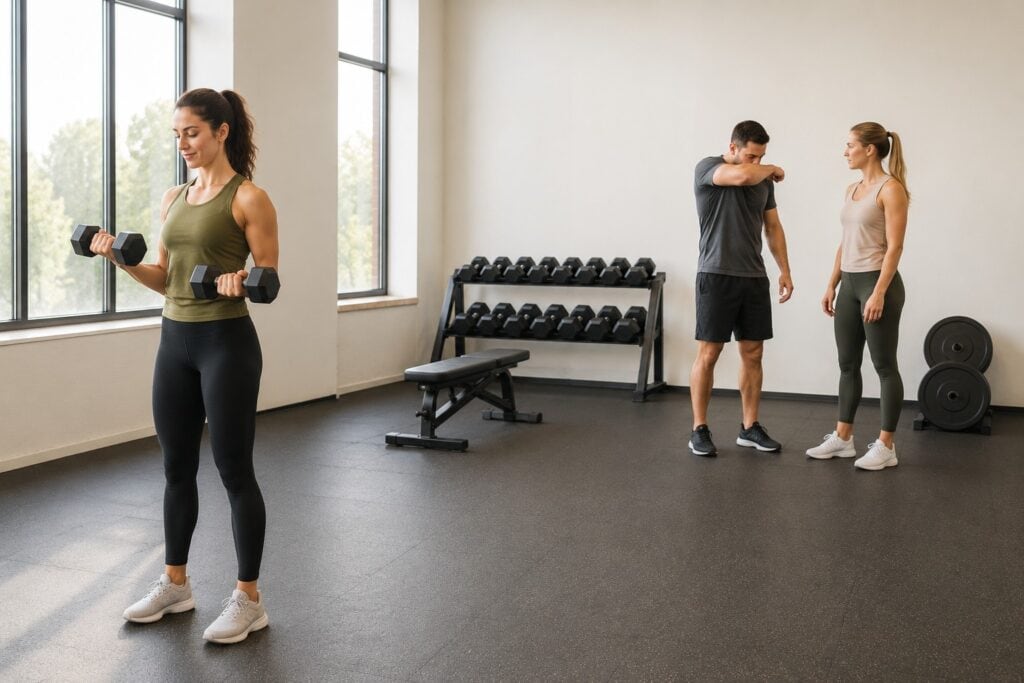
Nobody enjoys being watched because they cough once.
Allergies, a dry throat, and recovery from an old cold can all look similar from across the room.
Still, if somebody nearby is coughing repeatedly or clearly looks unwell, you are allowed to move.
I do not make a face or announce it to the room.
I switch benches, do another exercise first, or train on the opposite side of the gym.
That is easier than standing there feeling irritated and distracted.
A flexible workout is a useful skill.
You can come back to the machine later, or replace it completely.
The goal is to protect your space without turning a normal gym decision into a confrontation.
7. Stop Using Your Phone as a Rest-Period Toy
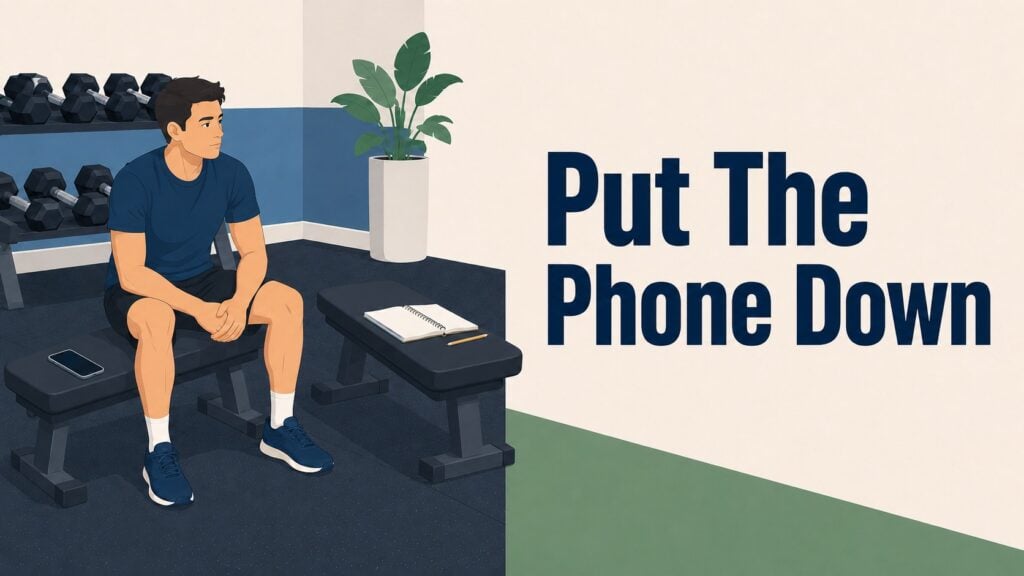
My phone is useful for tracking sets and playing music.
It is less useful when I pick it up after every set, scroll for five minutes, and then touch my face without thinking.
Phones collect whatever your hands collect.
That includes machine handles, weights, locker doors, and the floor when it slips out of a pocket.
Keep it in your bag, pocket, or on a clean towel when you are not using it.
Log the set.
Change the song.
Then get back to training.
Cleaning the phone case every few days is also worth doing.
This habit helps your workout move better too, because five-minute rests have a strange ability to become fifteen-minute rests when a phone is involved.
8. Be More Careful in the Locker Room
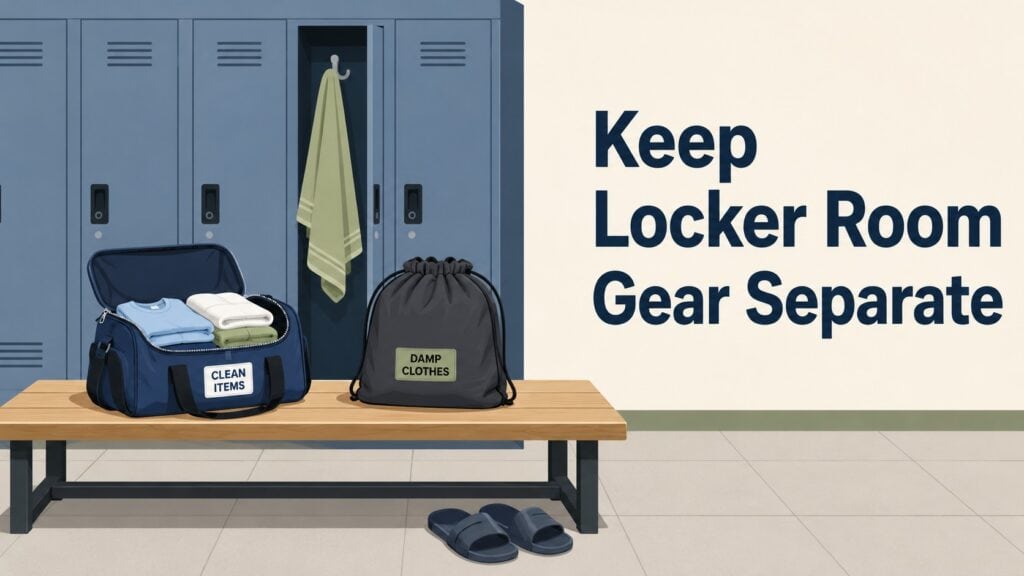
The locker room is where people rush.
Shoes come off, wet towels land on benches, bags open everywhere, and somebody is always trying to use the last free hook.
When it is practical, arrive ready to train and shower at home afterward.
That is not possible every day, especially before work or after a long commute.
On those days, bring shower sandals, keep clean clothes inside a bag, and avoid putting them directly on a shared bench.
I did that once after a workout because I was tired and wanted to change quickly.
Nothing terrible happened.
It was just a lazy choice with no upside.
A small bag for clean items and another for damp clothing keeps the whole process easier.
9. Stay Home From the Gym When You Are Sick
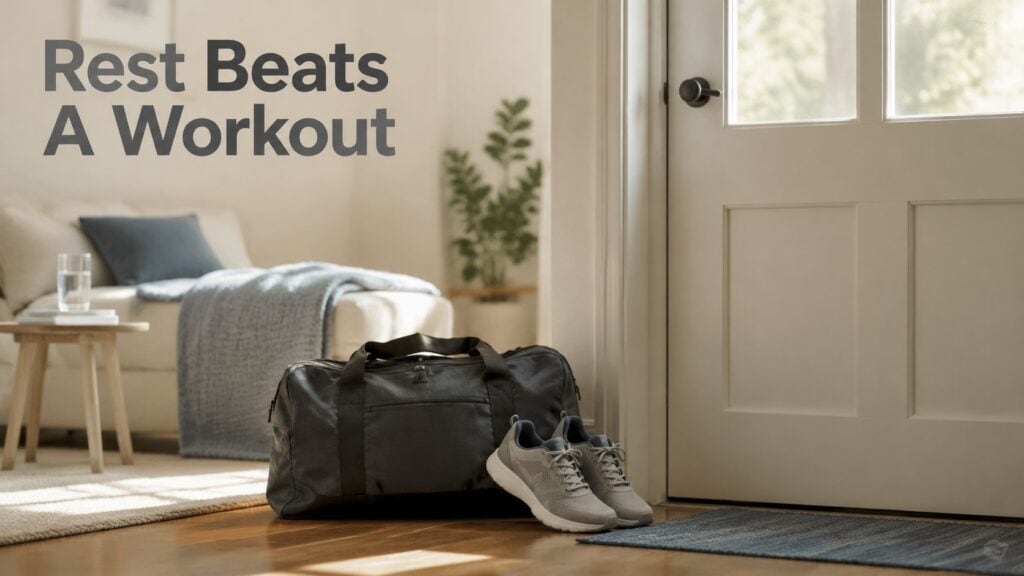
This is the tip people resist most.
You may have trained consistently for weeks.
Your program may say leg day.
You may worry that missing one session will ruin progress.
It will not.
Stay home if you have a fever, vomiting, diarrhea, body aches, strong fatigue, chest discomfort, or a respiratory illness that could spread to other people.
One missed workout is a tiny problem compared with dragging an illness out longer or passing it around a crowded gym.
I have tried to force a session when I felt run down.
The warm-up felt heavy, my concentration was poor, and I spent the whole time bargaining with myself.
Rest would have been the smarter choice from the beginning.
10. Keep a Gentle Backup Session at Home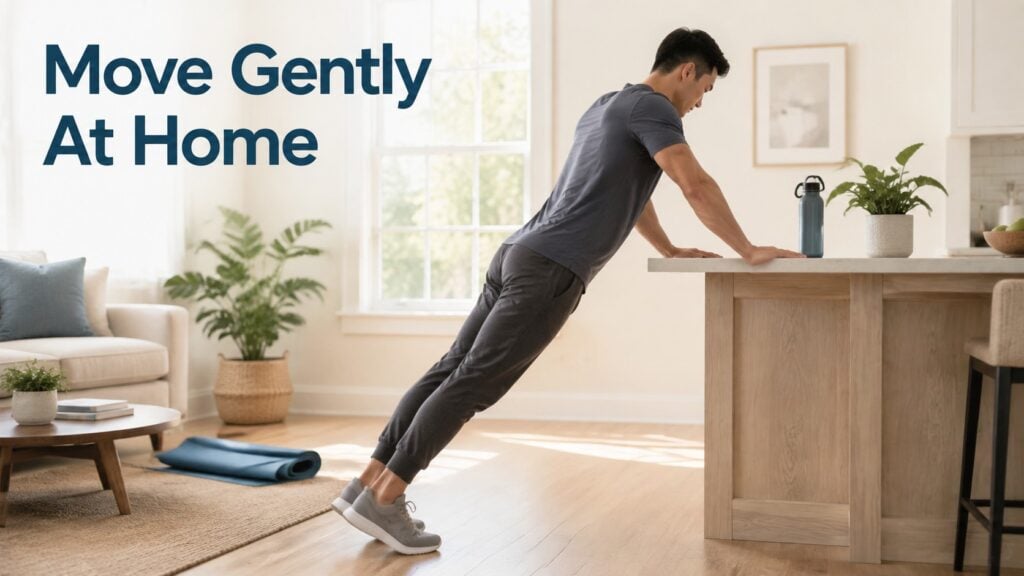
There is a middle ground between a heavy gym workout and lying on the couch all day.
If you are not sick but want to avoid a packed gym, an easy home session can keep the routine alive.
Try one or two relaxed rounds of:
- 8 to 12 bodyweight squats
- 6 to 10 incline push-ups against a sturdy counter or table
- 10 glute bridges on the floor
- 20 seconds of easy stretching for the hips and upper back
- A 10-minute walk outside
Keep the effort comfortable.
You should finish feeling like you moved, not like you just tried to defeat an illness with a resistance band and poor judgment.
When your body is asking for rest, let rest be the plan.
11. Know When a Mild Cold Still Changes the Session
A runny nose or light congestion is different from a fever and full-body fatigue.
Even then, a normal hard workout may not be the best choice.
If you decide to move, cut the session down.
Walk instead of doing hard intervals.
Stop if your breathing becomes uncomfortable, your energy drops sharply, or your symptoms worsen.
Harvard Health suggests reducing training intensity and duration when a person has a mild upper-respiratory illness without fever or a significant cough, then increasing gradually only if they tolerate it well.
Read the Harvard Health guidance
That is a sensible approach.
You do not need to “earn” rest by first proving that you can make yourself miserable.
12. Return to the Gym Gradually After the Flu
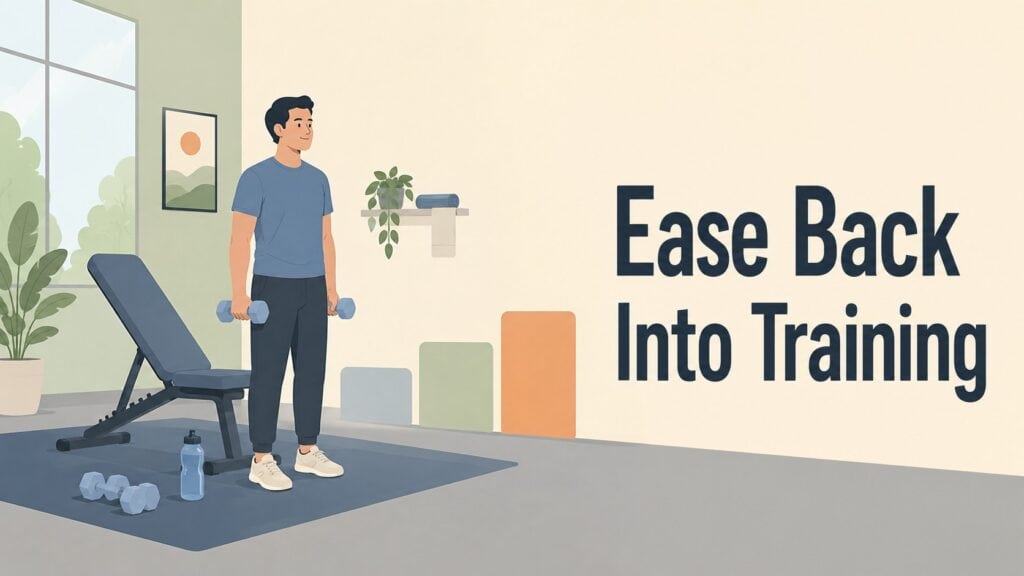
The first session after the flu can be humbling.
Weights that are normally comfortable may feel strangely awkward.
A warm-up that usually takes five minutes can leave you more tired than expected.
Start smaller than your instincts want.
If you normally do four working sets of dumbbell presses, do two lighter sets.
If you usually run for 30 minutes, walk for 10 to 15 minutes and see how you feel afterward.
Leave several repetitions in reserve.
Avoid hard cardio, max lifts, and long circuits during the first return.
Your training is still there.
It does not disappear because you let your body catch up before asking it to perform again.
If chest pain, dizziness, faintness, unusual shortness of breath, or intense fatigue appears, stop and speak with a healthcare professional.
13. Protect Sleep Like You Protect Training Time

A gym session looks important because it is written in the calendar.
Sleep often gets treated as the flexible part.
That can turn into several short nights, too much caffeine, and a workout where everything feels heavier than it should.
I notice it first in my patience.
The gym is crowded, somebody is using the equipment I planned to use, and suddenly a simple adjustment feels annoying.
A decent night of sleep does not guarantee you will avoid a cold or the flu.
It does support recovery, energy, and your ability to train with a clearer head.
If you have to choose between a brutal early workout after very little sleep and an extra hour in bed, I would usually choose the extra hour.
Consistency is built across months, not won in one exhausted morning.
14. Eat and Drink Like a Normal Human Being

Cold and flu season produces plenty of promises about foods, drinks, and supplements that supposedly stop every virus in its tracks.
Be suspicious of that.
No tea, lemon, garlic, vitamin, or green powder guarantees that you will avoid getting sick.
Regular meals still matter.
Protein, fruit, vegetables, beans, grains, dairy, fish, meat, or whatever balanced foods work for you give your body energy for training and recovery.
Drink water throughout the day and take extra fluids around sweaty workouts.
I keep this simple after the gym.
A normal meal, water, and a shower do more for me than chasing an expensive “immune” drink with a label that looks like a superhero poster.
15. Do Not Turn Missed Workouts Into Punishment
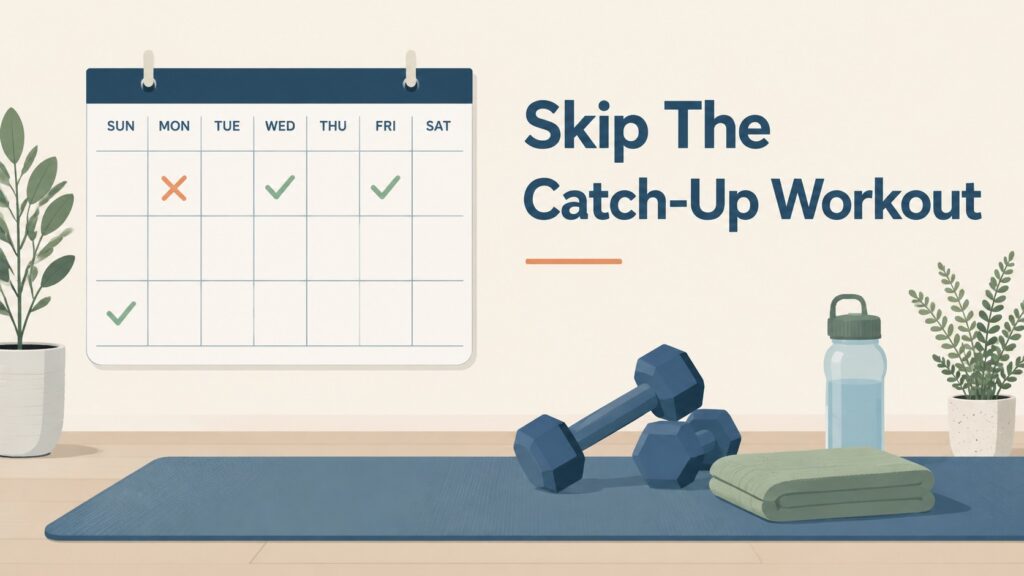
Winter schedules can get messy.
You miss a day because you are tired, the gym is crowded, or you have mild symptoms and choose to rest.
Then comes the temptation to add extra sets, extra cardio, and an extra workout later in the week.
I have done this.
It made the next session worse.
Training hard enough to progress is useful.
Trying to recover missed work in one heroic session usually leaves you tired and sore for no good reason.
Keep most strength sets controlled.
Leave one to three solid repetitions before failure.
Use rest days.
Reduce the amount of work for a week if fatigue has been following you around.
Fitness improves through repeatable sessions, not through one angry workout after a bad Tuesday.
16. Choose Group Classes With Your Eyes Open
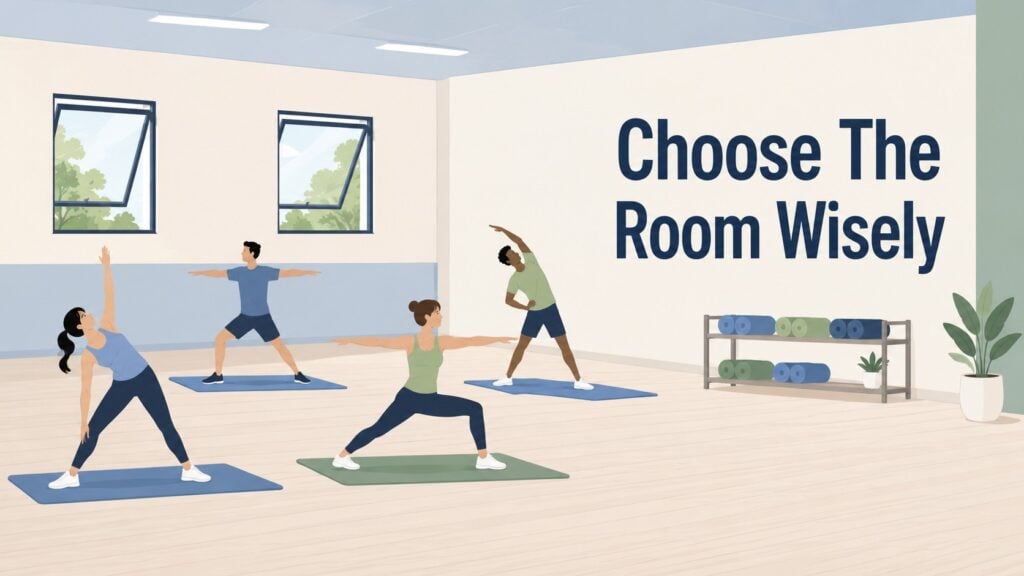
Group classes can be great when you need structure or enjoy training around other people.
They can also be crowded, hot, and difficult to leave once the music starts.
Before you join, look at the room.
Is there enough space to move?
Does the class use shared mats, handles, or equipment that gets cleaned between groups?
Is there airflow?
A quieter class time or a larger room may be a better choice during flu season.
If the studio is overflowing, train on the main gym floor or do a home workout that day.
Changing the location does not mean you skipped training.
It means you paid attention before committing to 45 minutes in a room where nobody can raise their arms without hitting somebody else.
17. Make Considerate Gym Habits Automatic
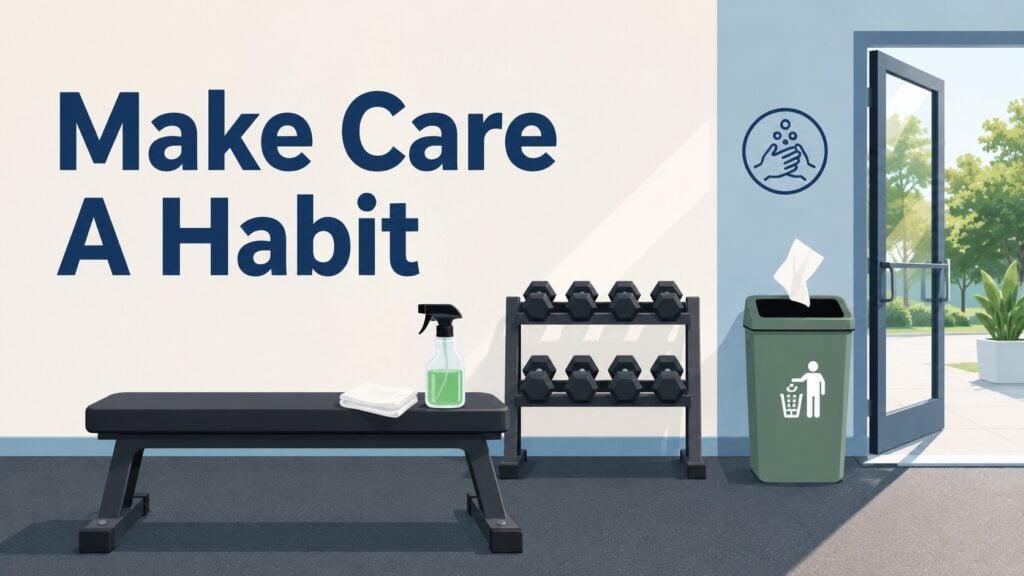
The best gym hygiene habits are not complicated.
Wipe equipment after using it.
Use a tissue or your elbow when you cough or sneeze.
Throw tissues away.
Wash your hands before leaving.
Stay home when you are ill.
Give people a little space when the room allows it.
Those habits protect you, but they also make the gym better for everyone else.
Nobody wants to become the unpaid referee of every messy bench, abandoned towel, or cough during a packed class.
A little awareness does most of the work.
The Workout Can Wait
I used to think a good workout meant following the plan exactly, even when the gym was packed or my body was clearly asking for an easier day.
Now I would rather change one exercise, train at home, or take a day off than spend the session fighting the room and feeling annoyed.
The weights will still be there tomorrow.
During cold and flu season at the gym, a little awareness keeps training sensible without making your routine feel like a hospital visit.