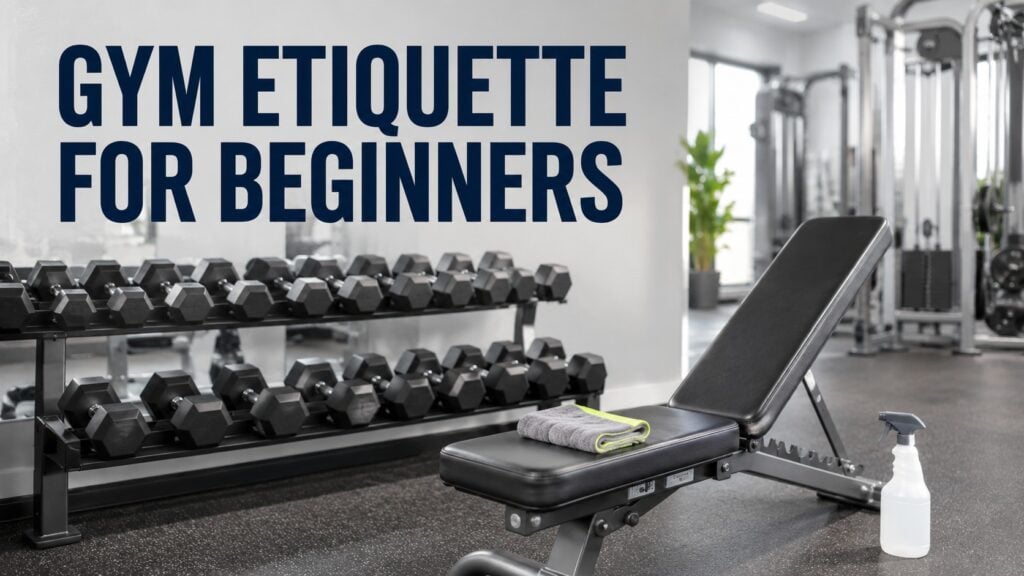
Stepping into the gym for the first time can feel like being the new kid on the block.
It is completely normal to feel a little out of place at first—believe me, we have all been there!
You may wonder whether you are using a machine for too long, standing too close to someone, or breaking one of those unwritten rules that everyone else seems to understand.
The good news is that gym etiquette is mostly about awareness, safety, and basic consideration.
That is why I have put together these 25 essential gym etiquette tips to help you avoid common mistakes and begin your fitness journey with confidence.
Follow them, and you will feel at home sooner than you might expect.
Good gym etiquette means returning weights, wiping down equipment, sharing popular machines, respecting personal space, and keeping phone use, filming, and noise under control.
| Situation | Good Gym Etiquette |
|---|---|
| You finish using weights | Return them to the correct rack |
| A machine is occupied | Ask how many sets are left |
| Someone is resting | Politely ask whether you can work in |
| You leave sweat on equipment | Wipe it down after use |
| You need to take a call | Step away from the workout floor |
| You want to record a set | Check the gym’s policy and protect other people’s privacy |
1. Re-Rack Your Weights After Every Exercise
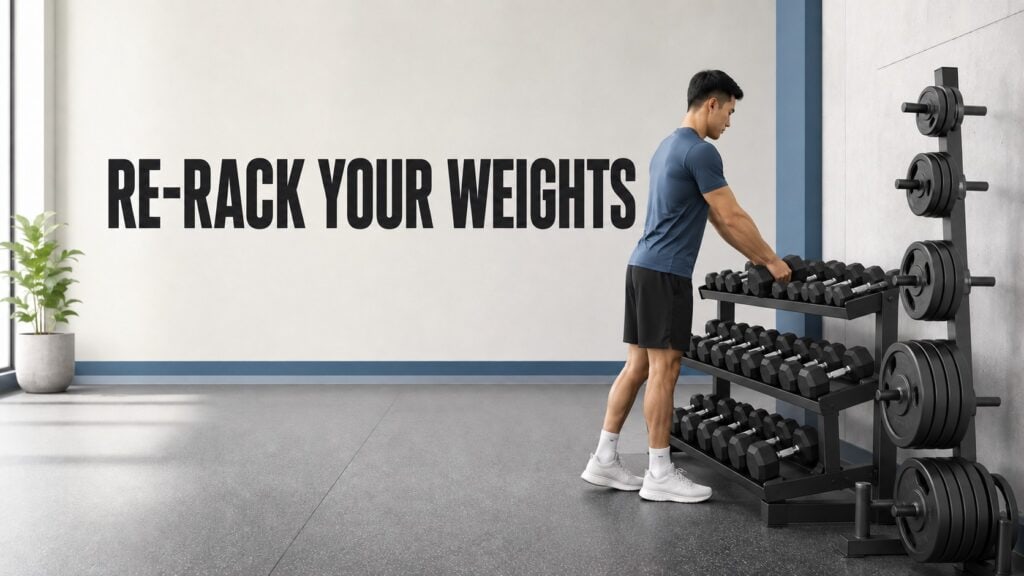
Leaving dumbbells, plates, or barbells scattered around the gym is one of the quickest ways to annoy other members.
When you finish an exercise, return everything to the correct rack or storage area.
Do not leave heavy plates on a bar and assume the next person will want the same setup.
They may be a beginner, an older adult, or someone who cannot safely remove the weight you left behind.
Leaving heavy plates on the bar is like leaving dirty dishes in the sink—just plain rude.
Re-racking weights also keeps walkways clear and prevents someone from tripping over equipment.
Take the extra few seconds and leave the area ready for the next person.
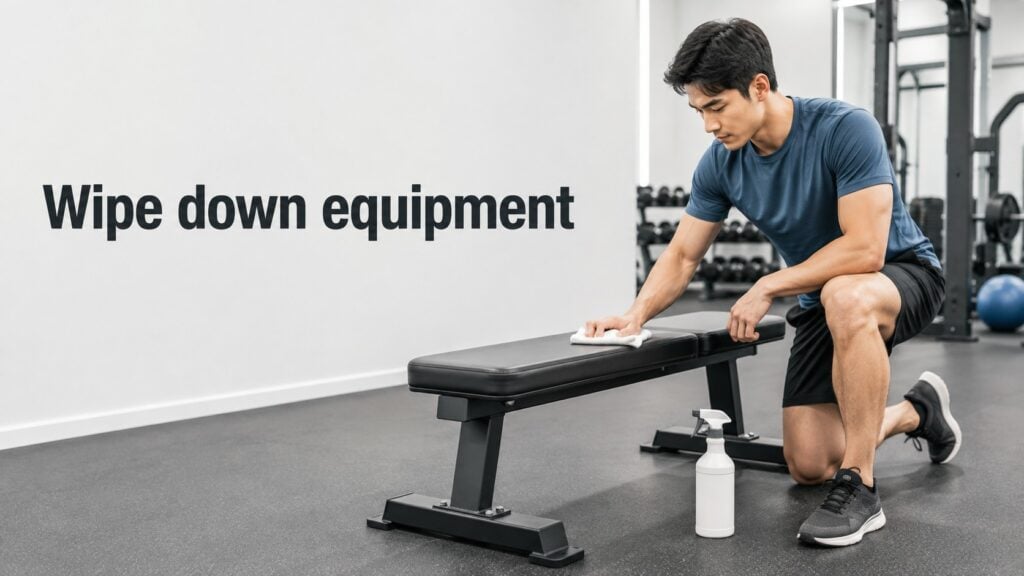
2. Wipe Down Equipment After Use
Remember how mom always nagged you about cleaning up?
It turns out she was preparing you for gym life!
Always wipe down benches, machine seats, mats, handles, and cardio equipment after using them.
Believe me, no one wants to touch a bench that is slick with someone else’s sweat.
If you have ever sat in a mysterious wet spot, you know exactly what I mean.
Most gyms provide disinfectant spray, wipes, or paper towels.
Spray the cloth rather than covering the machine with liquid, especially around screens and electronic controls.
A clean gym creates a more pleasant workout experience for everyone.
Plus, it is simply good manners.
Additional Gym Hygiene Tips
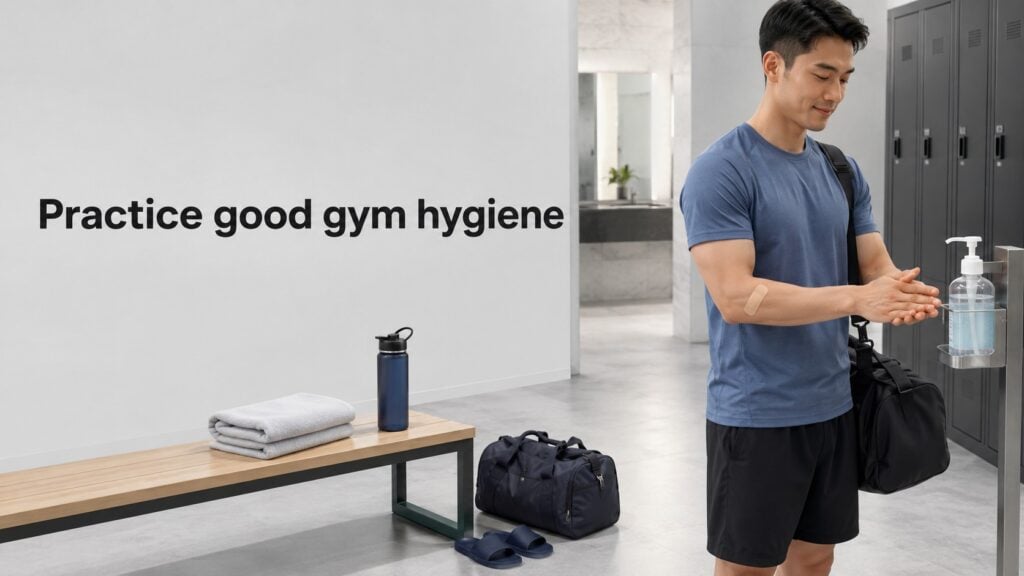
Do not share personal items: Sharing may be caring, but water bottles and towels are best kept to yourself.
Cover open wounds: Keep cuts and scrapes properly covered before using shared equipment.
Wear flip-flops in locker rooms and showers: Athlete’s foot is not a souvenir you want to bring home.
Wash your workout clothes regularly: Funky smells might clear out the gym, but not in a good way.
Cover coughs and sneezes: Channel your inner vampire and cough or sneeze into your elbow.
Wash or sanitize your hands: Shared handles, mats, and weights are touched by many people throughout the day.
3. Do Not Hog Machines or Benches
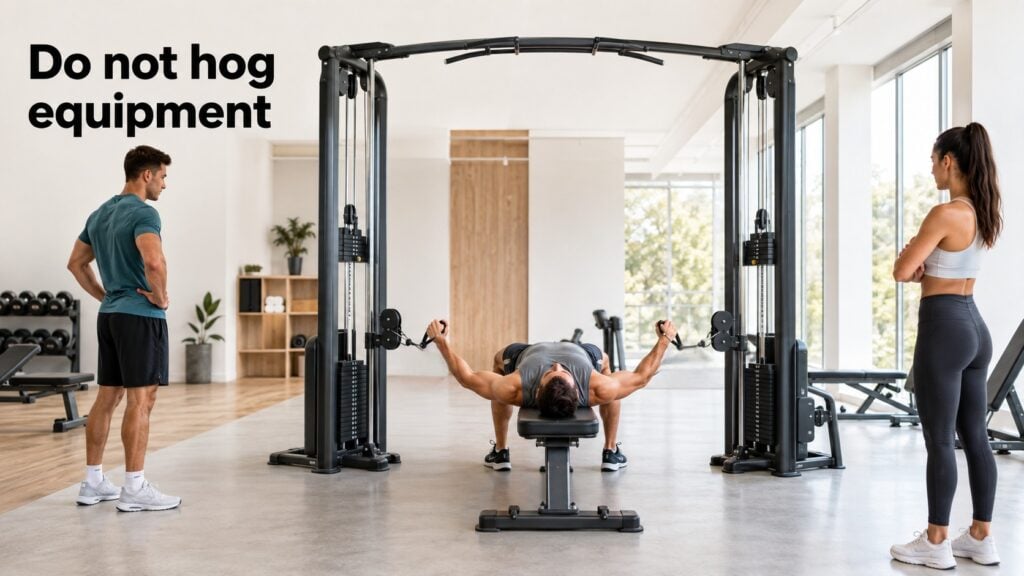
Picture this: You are ready to use the bench press, but someone has been camped there for ages without performing another set.
Frustrating, right?
Do not be that person.
Take the rest time your workout requires, but avoid occupying equipment longer than necessary.
Once you have completed your planned sets, clear your belongings and make the space available again.
This becomes especially important during busy periods when squat racks, benches, cable stations, and popular machines may already have people waiting.
You do not need to rush every set.
4. Let Others Work In Between Sets
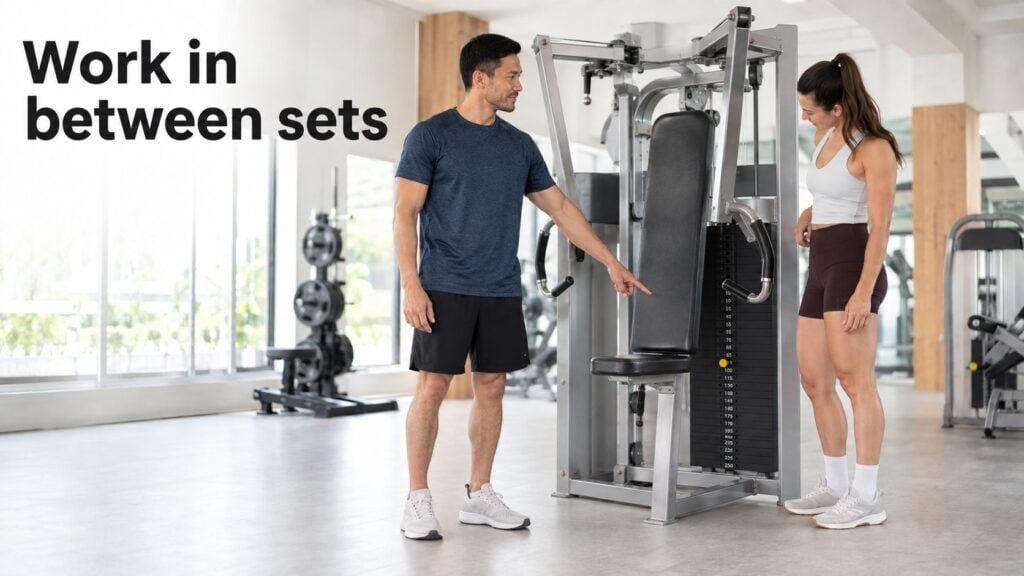
“Working in” means alternating sets with another person while one of you rests.
If someone asks to work in and the machine can be adjusted easily, allowing it is usually good etiquette.
You can change the weight or seat position between sets and then return the machine to the other person’s setup.
However, sharing is not always practical.
Two people may be using very different weights, performing different exercises, or following routines that require complicated adjustments.
Nobody expects you to dismantle an entire barbell setup every two minutes in the name of gym karma.
If sharing the equipment between sets is not practical, a brief and friendly explanation is usually enough.
5. Ask How Many Sets Are Left Without Hovering
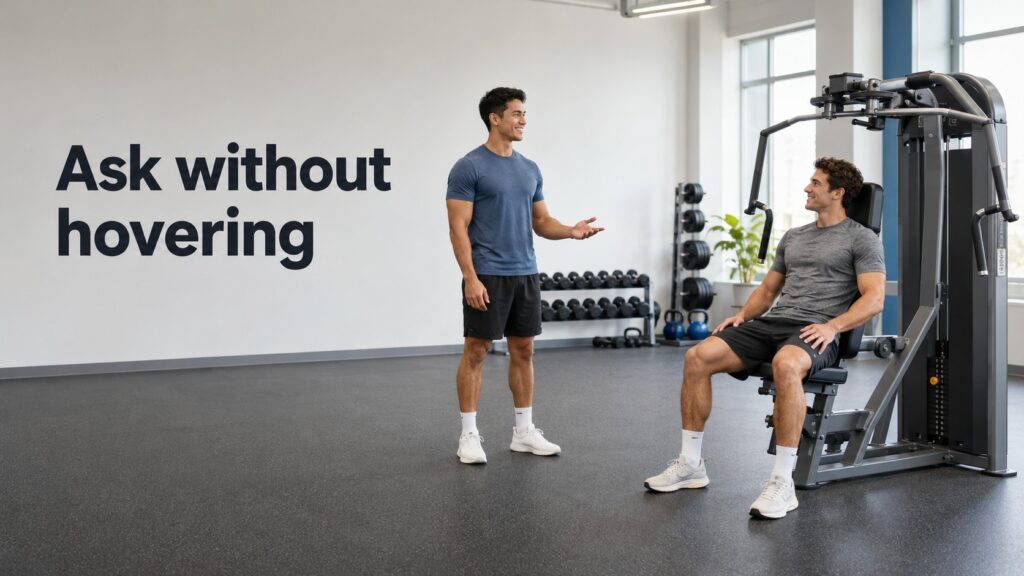
During peak hours, patience is key.
If the equipment you need is occupied, wait until the person finishes their current set before speaking to them.
Then ask:
“Excuse me, how many sets do you have left?”
That is completely normal gym behavior.
What is not helpful is standing inches away, staring at the person, or pacing around the machine like a hungry shark.
Once you know how long the wait will be, you can perform another exercise, take a short rest, or ask whether working in is possible.
Who knows, you might even discover a useful alternative exercise.
6. Respect Personal Space Around Lifters
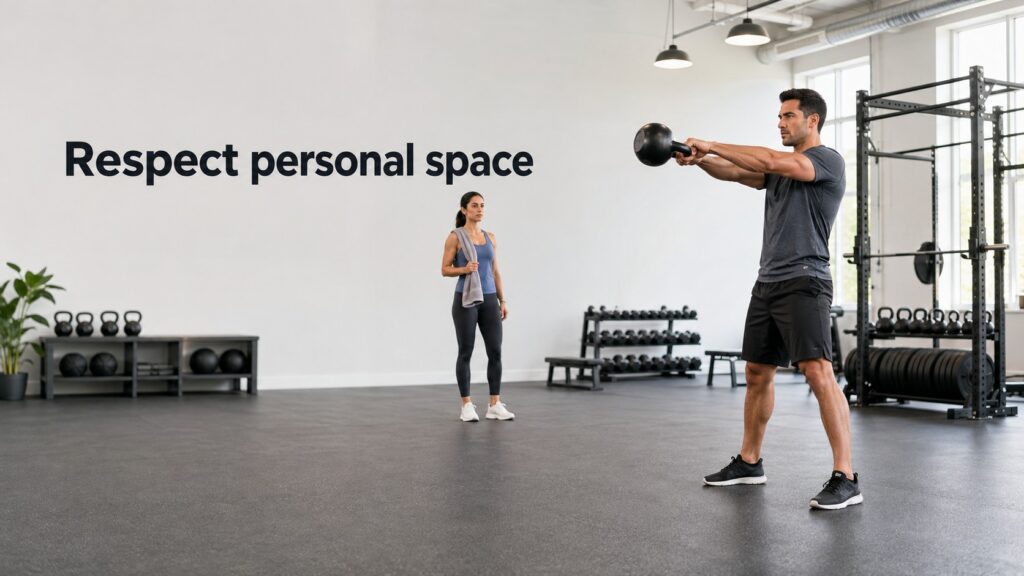
Have you ever had someone set up directly beside you in an otherwise empty gym?
It is awkward, but it can also be dangerous.
Give people enough room to move, lift, and finish an exercise safely.
This is particularly important around dumbbells, barbells, cable machines, kettlebells, and lifting platforms.
A dumbbell can move sideways, a kettlebell can swing backward, and someone finishing a heavy set may need extra room to regain their balance.
You do not want to get smacked while walking through what has unexpectedly become a windmill farm.
Pay attention to your surroundings and avoid walking directly in front of or behind someone during a set.
7. Do Not Block the Dumbbell Rack
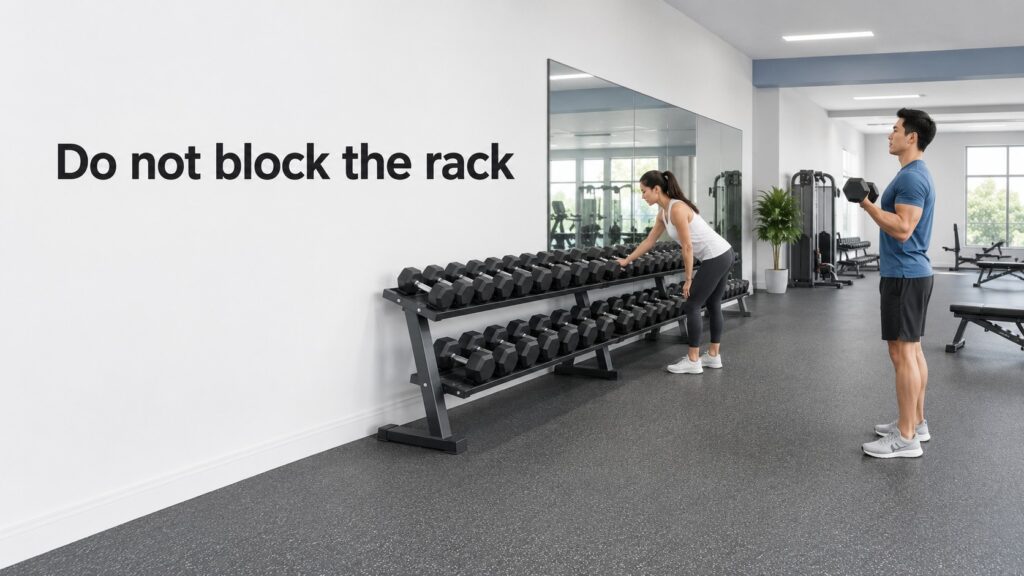
The space immediately in front of a dumbbell rack is for selecting and returning weights.
It is not the ideal place to complete an entire set.
Pick up your dumbbells, take several steps back, and leave enough room for other members to reach the rack.
The same principle applies to kettlebell shelves, weight trees, cable attachments, and mat storage areas.
Completing curls two inches from the dumbbell rack may give you an excellent view of yourself in the mirror.
It also prevents everyone else from getting their weights.
8. Keep Bags and Personal Belongings Out of Walkways
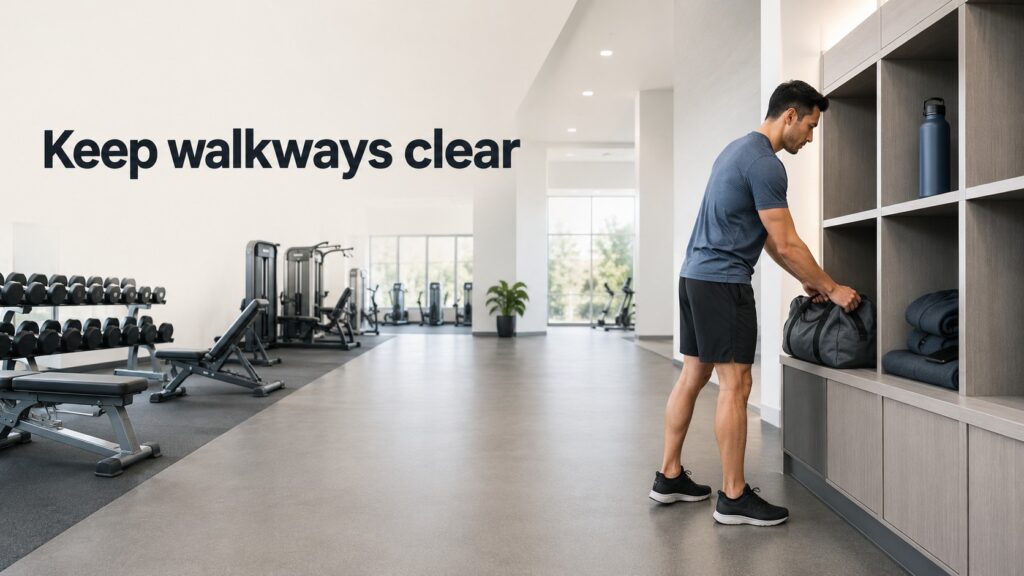
Gym bags, jackets, bottles, resistance bands, and phones can become tripping hazards when left on the floor.
Use a locker, cubby, shelf, or another designated storage area whenever possible.
If you need to keep a water bottle or small item nearby, place it somewhere visible and out of the normal walking path.
Do not create a small obstacle course around your bench.
A tidy training area is safer and leaves more room for everyone to move.
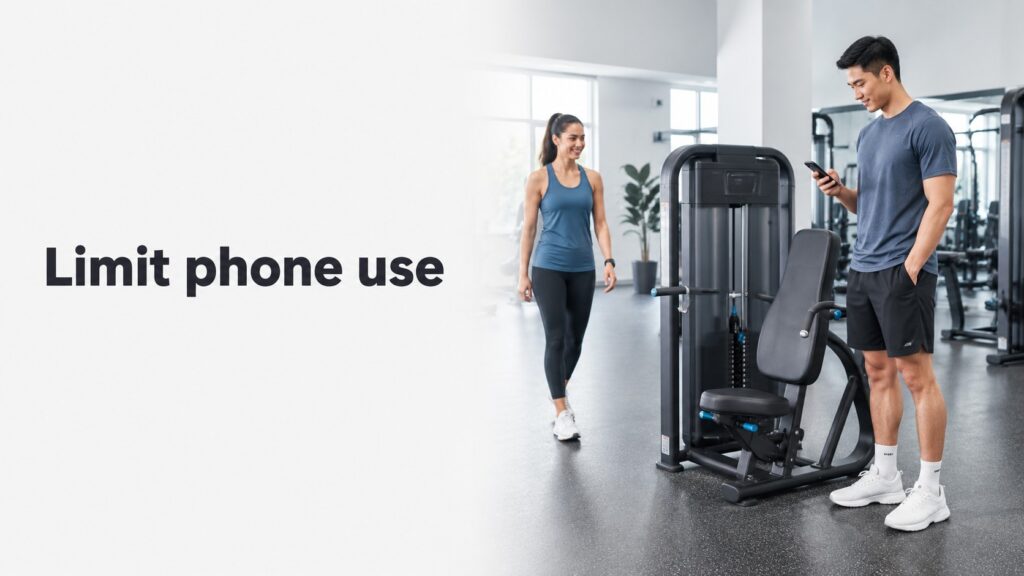
9. Avoid Excessive Phone Use on Gym Equipment
Our phones are practically extensions of ourselves.
Using one at the gym is fine within reason.
You might change your music, record your weights, check your workout plan, or reply to an important message.
The problem begins when a quick check becomes a ten-minute journey through social media while you remain seated on a popular machine.
Stay present enough to notice whether another person is waiting.
Your phone should support your workout, not place the entire gym on hold.
10. Follow the Gym’s Filming and Photography Rules
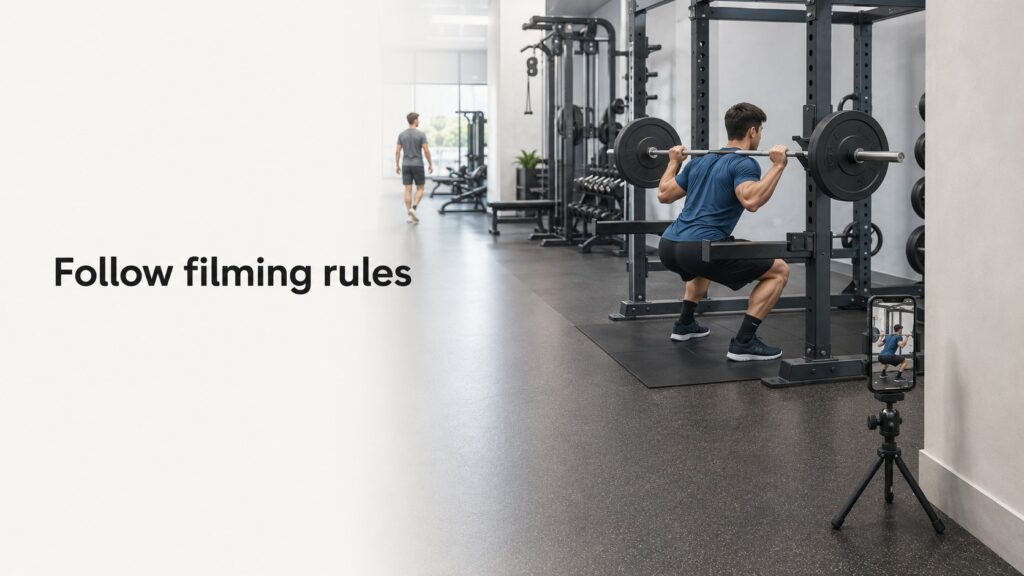
Recording a set can be helpful for checking technique or tracking progress.
However, being allowed to film yourself does not give you control over the space around you.
Check the gym’s recording policy before setting up your phone or tripod.
Keep equipment out of walkways, use a narrow camera angle, and avoid capturing other members whenever possible.
Never record someone else deliberately without permission.
Locker rooms, changing areas, showers, and similar private spaces are not appropriate places for photography or video.
If someone accidentally walks through your shot in a shared workout area, remember that they are using the gym—not invading your film studio.
11. Keep Grunting, Shouting, and Swearing Under Control
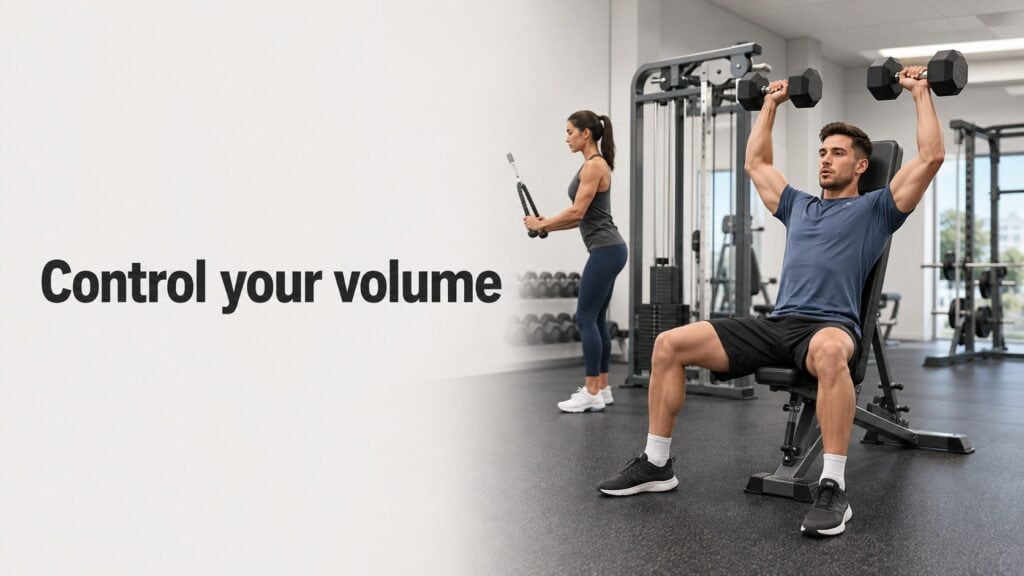
Some vocal effort during a difficult set is completely natural.
However, excessive grunting, shouting, and repeated swearing can distract the people training around you.
There is a difference between making an involuntary sound during a hard repetition and turning every set into a live performance.
You do not need to exercise in complete silence.
Just remember that everyone shares the same training space and may not want to hear every stage of your workout.
12. Do Not Drop Weights Unless the Area Allows It
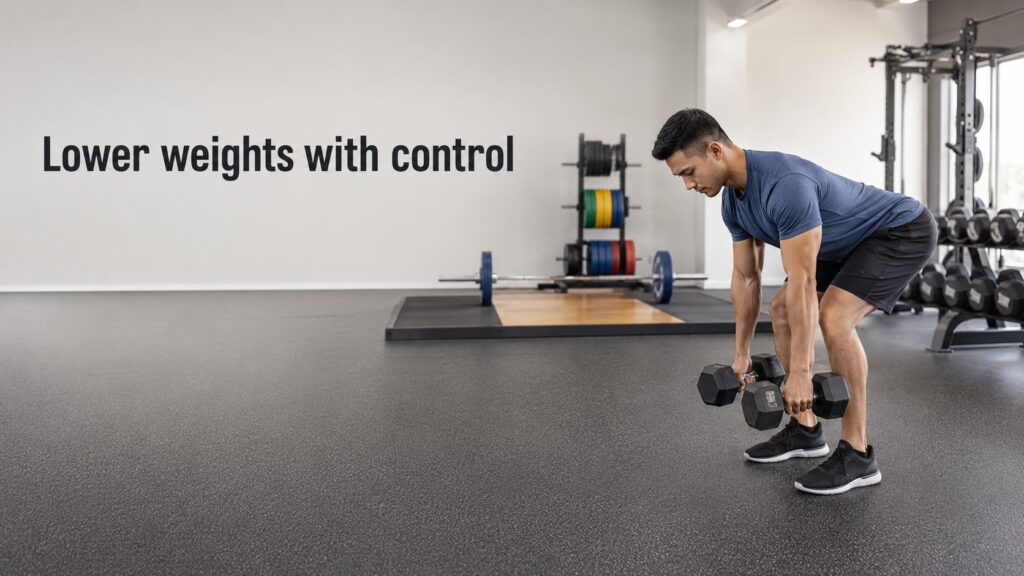
Dropping weights might make you feel like the Hulk, but it is not appropriate in every gym or during every exercise.
Unnecessary dropping can damage dumbbells, barbells, floors, and machines.
The sudden noise can also startle someone performing a nearby lift.
Lower the weight with reasonable control whenever it is safe to do so.
Certain gyms have lifting platforms and bumper plates designed for Olympic lifts or other exercises where releasing the bar may be necessary.
Follow the facility’s rules and use only equipment intended for that purpose.
If you cannot lower an ordinary dumbbell safely, that may be a sign that the weight is currently too heavy.
13. Read and Follow Your Gym’s Specific Rules
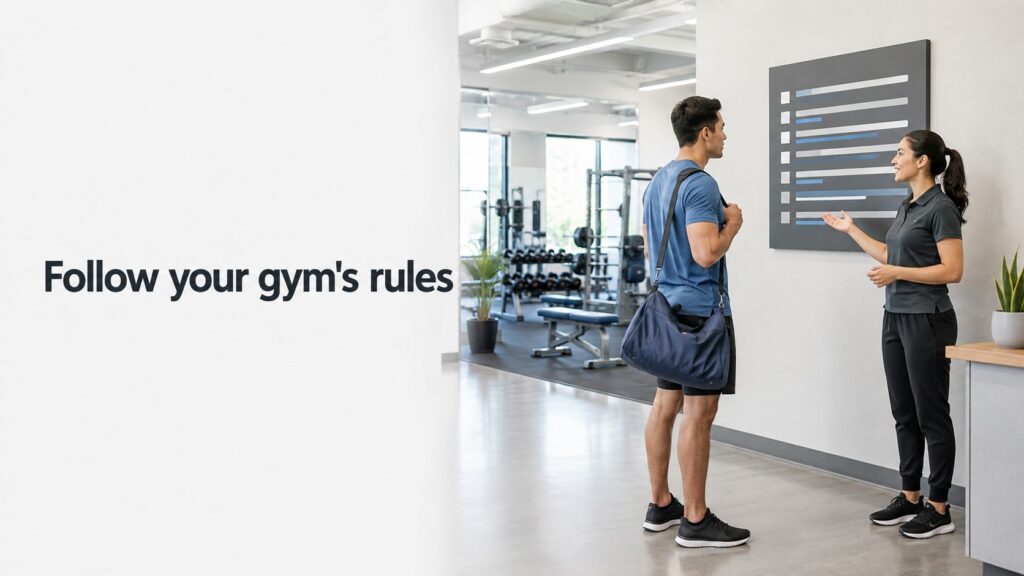
I know—reading the gym rules is not the most exciting part of joining.
However, each facility has its own policies.
One gym may allow chalk, barefoot training, or heavy deadlifts only in designated areas, while another may prohibit them.
There may also be time limits on cardio equipment, booking systems for classes, dress codes, or rules about bags on the workout floor.
Understanding these details can save you from an awkward conversation with the staff.
If you are unsure about something, ask.
It shows consideration, and staff members would usually prefer a question over cleaning up a preventable problem later.
14. Ask Staff When You Do Not Understand the Equipment
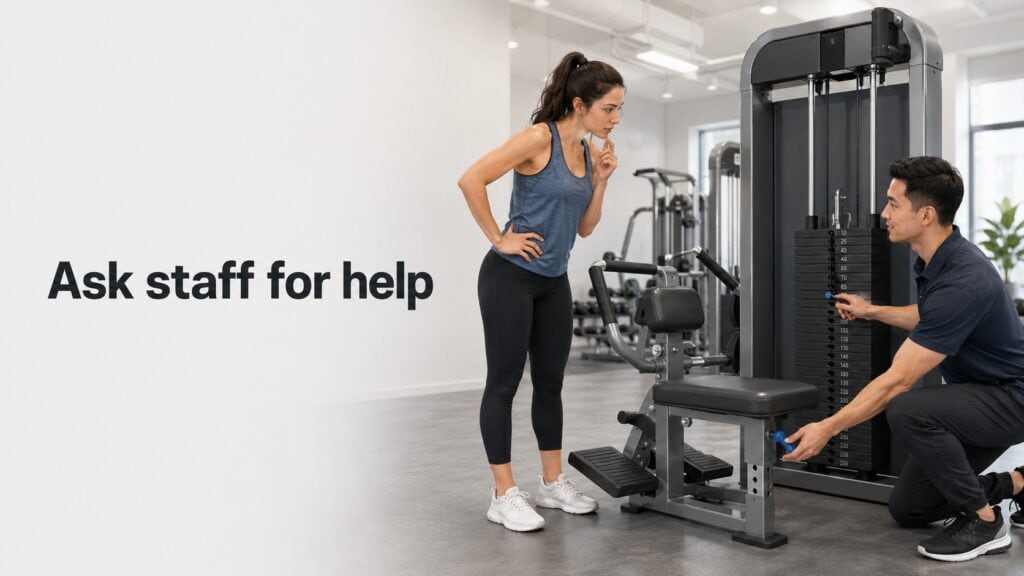
Confession time: I had no idea how to use half the machines when I first started.
Asking for help was one of the best decisions I made.
Gym staff and qualified trainers are there to assist you.
It is better to ask how to adjust a machine than to guess, use it incorrectly, or leave it in a strange configuration for the next person.
Gym instructors are not just there to look fit and carry whistles.
They can explain machine settings, safety features, class procedures, and basic gym rules.
Nobody begins with complete knowledge.
A short question can save you from a long and uncomfortable experiment.
15. Wear Clean, Comfortable Gym Clothes
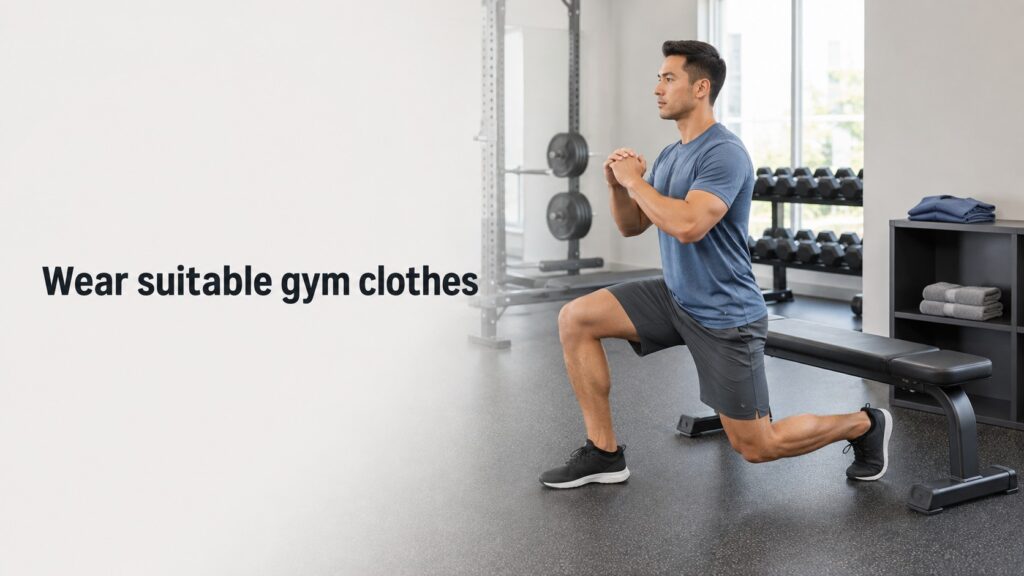
So you have brand-new workout gear and are ready to make a grand entrance.
Hold your horses!
Before turning the gym into your personal catwalk, let us talk about clothing.
Comfort and safe movement matter more than making a fashion statement.
Choose breathable, flexible clothing that allows you to move without constantly adjusting it.
I once wore a very loose shirt because I thought it looked cool, only to have it snag on a machine—not my finest moment!
Wear clean workout clothes and suitable footwear for the activity you plan to perform.
Muddy shoes can make the floor slippery, while metal accessories, sharp zippers, or rough hardware can damage padded benches.
You do not need expensive gym fashion.
You need clothing that stays out of the way while you train.
16. Avoid Strong Perfume or Cologne
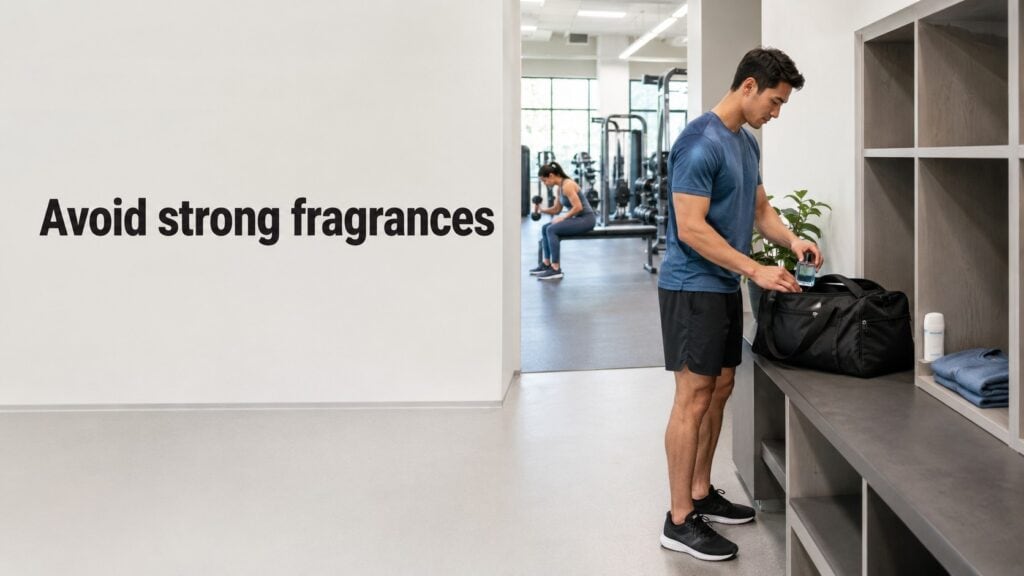
We all want to smell presentable, but the gym is not the place for a fragrance cloud.
Strong perfume or cologne can become overwhelming in an enclosed room, especially when people are breathing heavily.
Some members may also be sensitive to powerful scents.
Wear clean clothes, use deodorant, and save the generous spray of fragrance for after your post-workout shower.
Your gym buddies’ noses will appreciate it.
17. Do Not Interrupt Someone During a Set
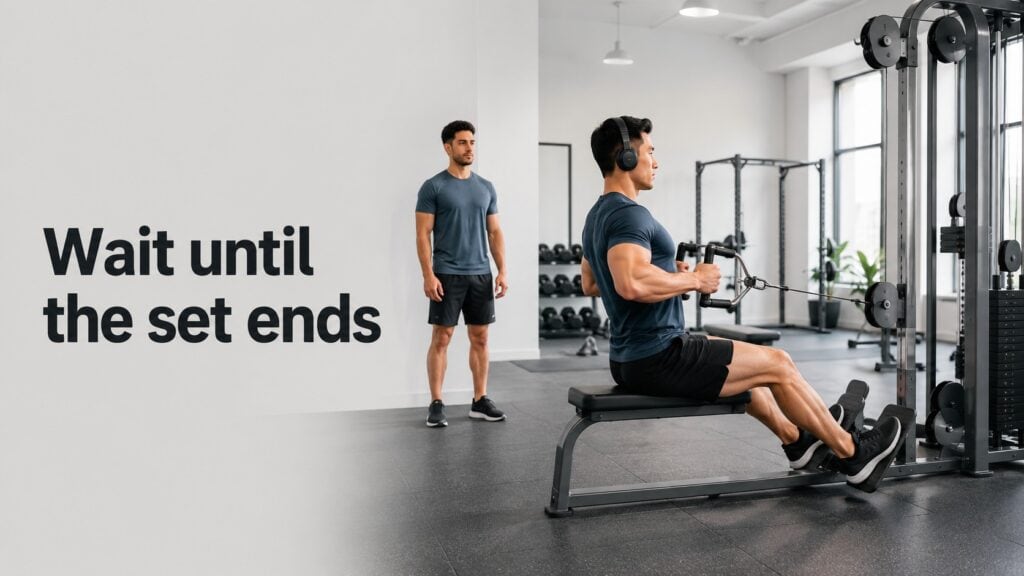
The gym can be a great place to meet people with similar interests.
However, timing matters.
I have been on the receiving end of a conversation in the middle of a set, and trying to talk while lifting is not fun.
It can also distract someone at exactly the wrong moment.
Wait until the person has finished the exercise, put down the weight, and had a moment to recover.
Headphones, limited eye contact, or short answers may indicate that someone wants to focus rather than socialize.
Respect that signal.
Who knows, you might still make a new friend during a cooldown stretch.
18. Respect Boundaries and Avoid Unwanted Attention
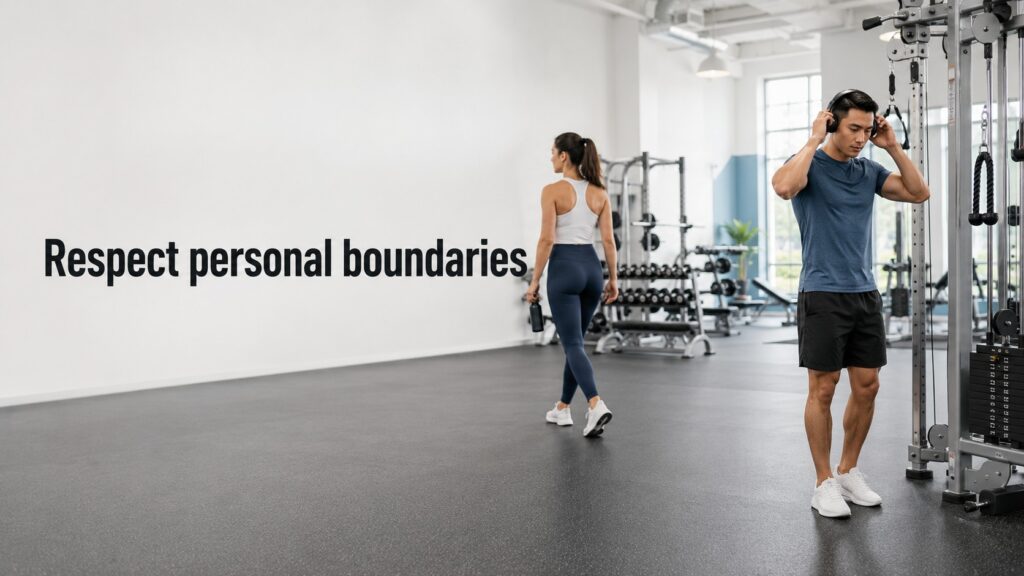
The gym should be a place where everyone can exercise without feeling watched, pressured, or judged.
Avoid staring, repeatedly attempting to begin a conversation, making comments about someone’s body, or offering unwanted romantic attention.
If you speak to someone and they give short answers, return to their workout, or put their headphones back on, take the hint gracefully.
Do not follow them to another part of the gym or continue trying to get their attention.
Most people are there primarily to train.
A polite greeting may be welcome, but respecting someone’s lack of interest is essential.
19. Avoid Giving Unsolicited Advice
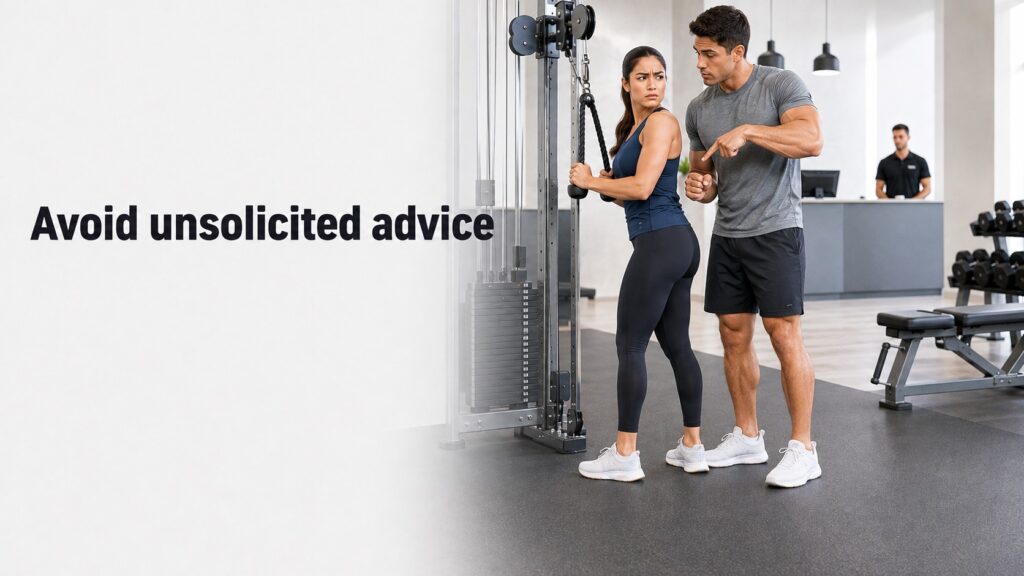
Unless someone asks for help, avoid offering random exercise corrections or critiques.
I have been on both sides of this situation, and unsolicited advice can feel intrusive even when the intention is good.
You may not know the person’s goals, physical limitations, coaching instructions, or reason for choosing a particular variation.
Supporting other members does not mean becoming their temporary personal trainer.
If someone appears to be in immediate danger, alert a member of staff.
Otherwise, let people follow their own routines.
20. Do Not Compare or Judge Other Members
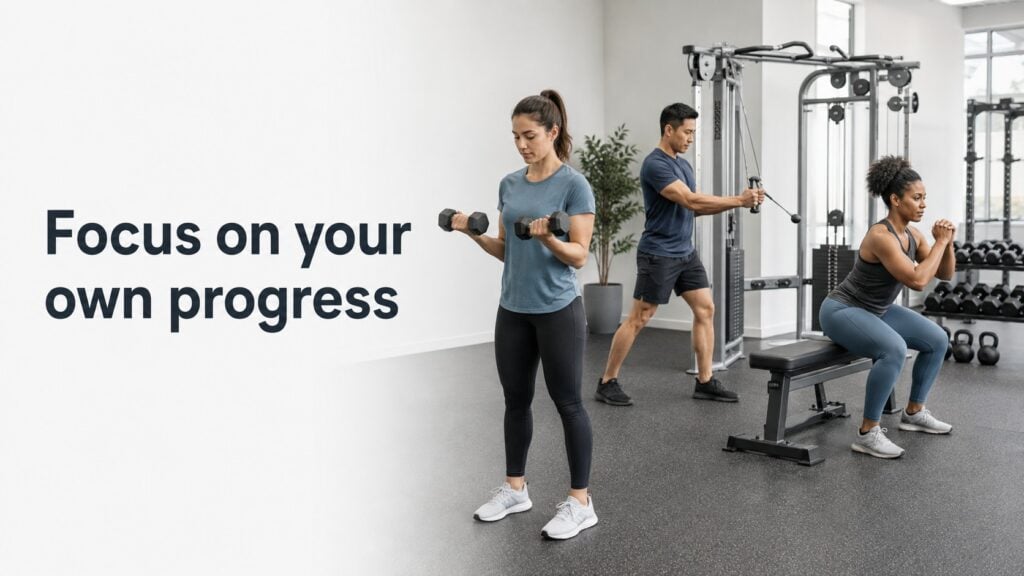
It is easy to look around and feel intimidated—or occasionally superior.
Remember that everyone is at a different point in their fitness journey.
I can recall feeling out of place beside experienced lifters.
Comparing myself with them did not improve my workout.
It only distracted me from my own progress.
Avoid mocking someone’s technique, weight, body, clothing, or fitness level.
The beginner using a light dumbbell today may have needed more courage to enter the gym than the strongest person in the building.
Focus on your training and allow everyone else to do the same.
21. Have a Workout Plan During Busy Hours
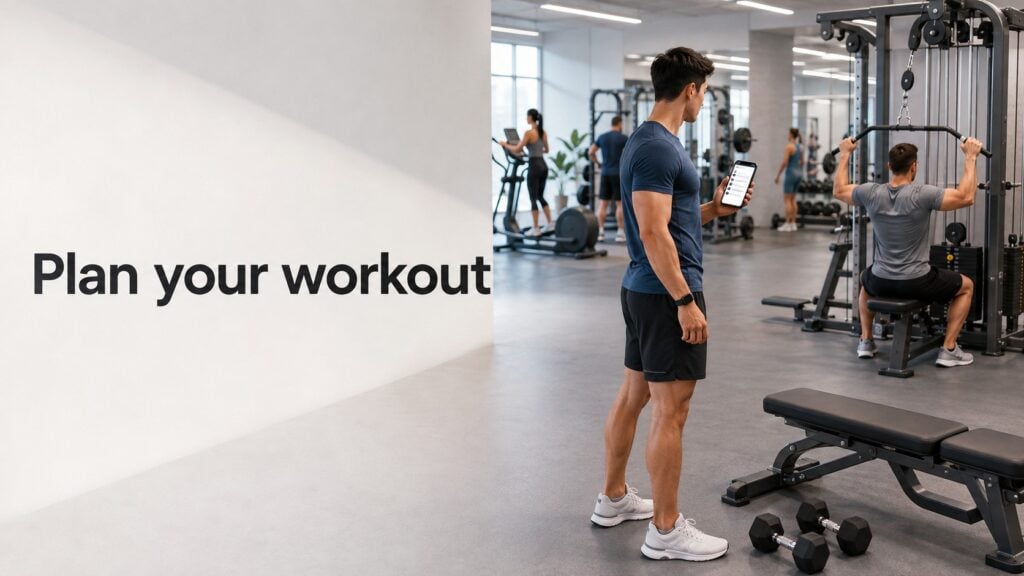
Your time is valuable, and so is everyone else’s.
Having a basic plan helps you move through your workout without wandering around and occupying equipment while deciding what to do next.
I used to spend too much time trying to choose my next exercise.
A structured plan eventually made my sessions more efficient and less frustrating.
Your routine does not need to be complicated.
Know which exercises you intend to perform and keep one or two alternatives available in case a machine is occupied.
Flexibility is particularly useful during peak hours.
Why a Basic Workout Plan Helps
It reduces decision fatigue: You spend less time wondering what to do next.
It keeps the session organized: You can move between exercises more efficiently.
It prevents equipment hogging: You are less likely to sit on a machine while planning.
It provides alternatives: You can adjust when the gym is crowded.
It helps track progress: You know what you performed during previous sessions.
22. Avoid Occupying Multiple Machines During Peak Hours
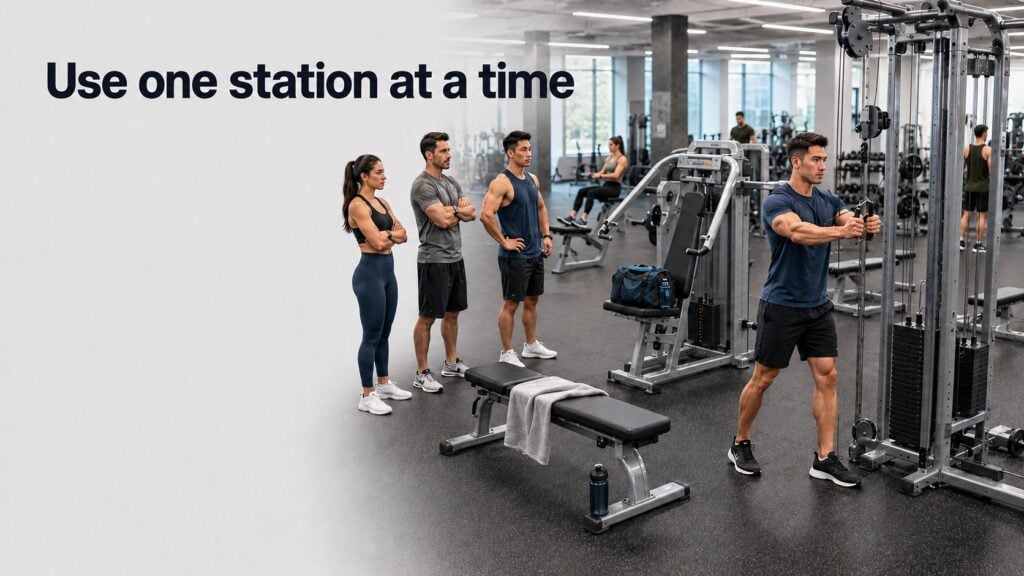
Supersets, circuits, and giant sets can be effective training methods.
They can also become inconsiderate when one person attempts to reserve half the gym during the busiest hour of the day.
If the gym is quiet, moving between two nearby pieces of equipment may not cause a problem.
If people are waiting, limit the number of stations you occupy or allow others to use them between your sets.
Leaving a towel on a machine does not give you permanent ownership while you perform three other exercises across the room.
Be adaptable.
Sometimes the most respectful workout adjustment is choosing an exercise that requires less equipment.
23. Use Mirrors Without Blocking Other People
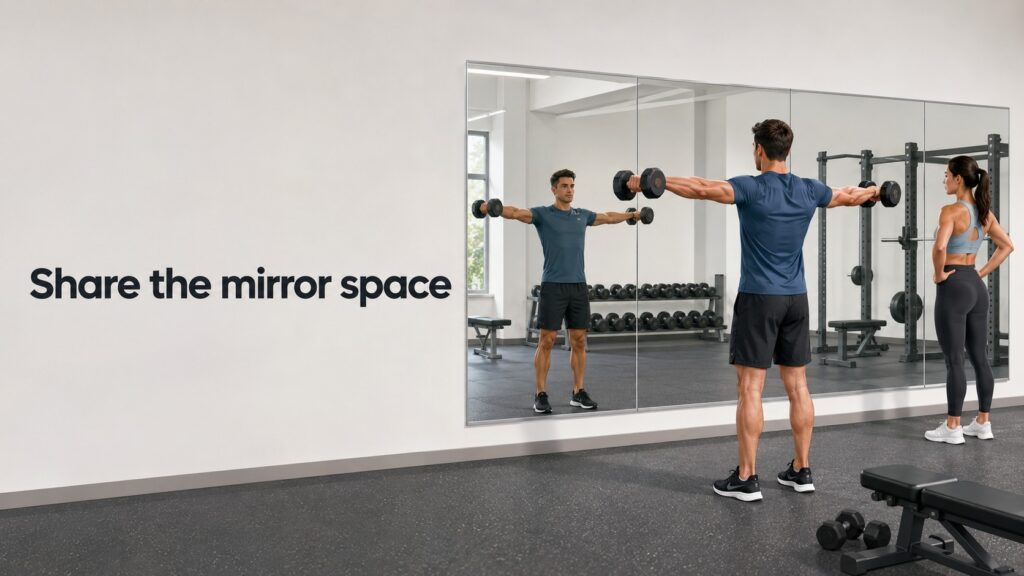
Gym mirrors are useful for checking exercise position and monitoring your surroundings.
They are not reserved for one person’s extended posing session.
Avoid standing directly between another lifter and the mirror they are using to check their form.
Likewise, do not walk across someone’s immediate lifting area simply because you want a closer view of yourself.
A quick progress check is not a major problem when the area is quiet.
Just remain aware that other members may also need the mirror.
Use it as a training tool rather than claiming it as your personal bathroom mirror.
24. Follow Locker Room, Pool, and Sauna Etiquette
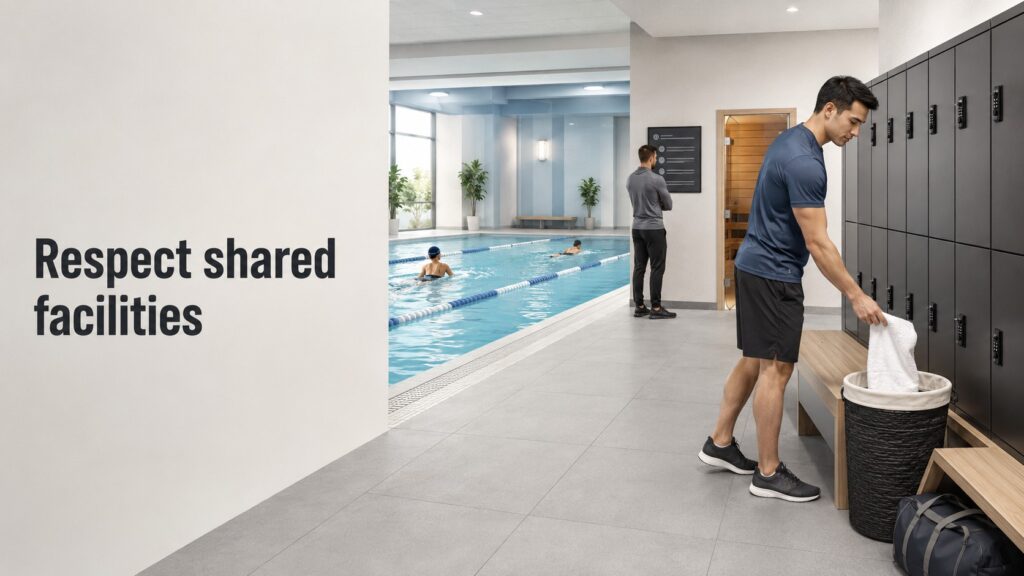
Courtesy does not end when you leave the weight room.
Keep your belongings organized in the locker room and dispose of towels, tissues, and other trash properly.
Do not spread wet clothes across shared benches or occupy more space than necessary.
If the gym has a swimming pool, shower before entering, wear appropriate swimwear, and choose a lane that matches your pace.
I once found myself in the fast lane when I should have been in the slow lane.
It felt like being overtaken by dolphins!
In saunas, steam rooms, and hot tubs, follow the posted hygiene and clothing rules, keep conversations quiet, and avoid staying longer than the facility permits.
These are shared relaxation areas, not private extensions of your home.
25. Stay Home When You Are Sick or Contagious

Feeling unwell?
Sometimes the most considerate gym decision is not entering the gym at all.
If you have a fever, vomiting, diarrhea, or a contagious respiratory illness, stay home and recover.
I once tried to push through a cold, only to feel worse while potentially sharing my germs with everyone around me.
One missed session will not erase your progress.
The weights will still be there when you return.
Resting protects your recovery and prevents other members from taking home an unwanted souvenir from the gym.
If symptoms are severe, unusual, or persistent, seek advice from a qualified healthcare professional.
Gym Etiquette Comes Down to Awareness
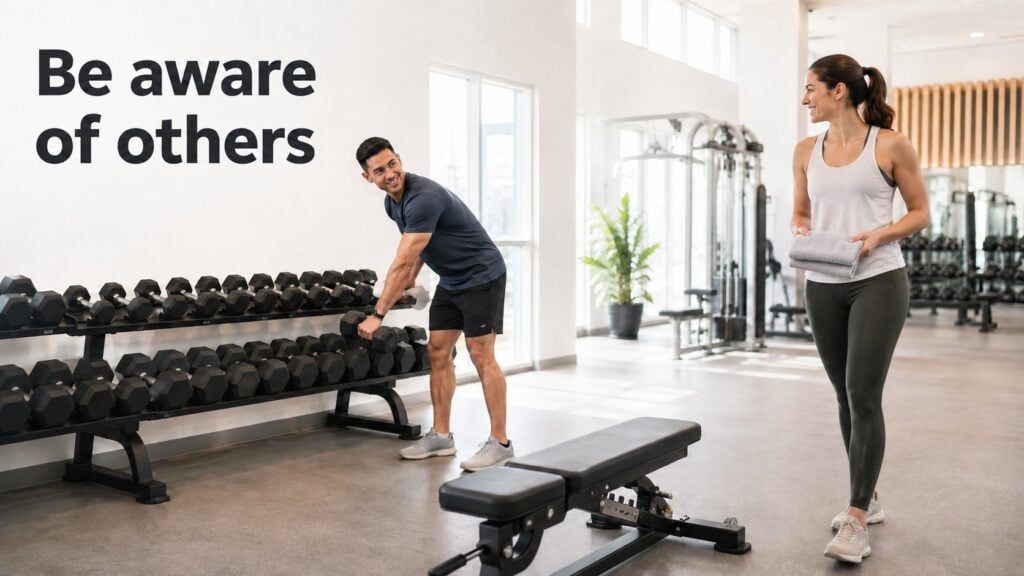
You do not have to memorize every unwritten gym rule before your first workout.
Most gym etiquette comes down to three simple principles:
- Be aware of the people around you.
- Treat shared equipment with care.
- Leave the space ready for the next person.
Mistakes happen.
If you accidentally interrupt someone, block an area, or misunderstand a rule, acknowledge it and adjust.
A simple apology can go a long way.
Beginners are rarely judged for not knowing everything.
People are much more likely to become frustrated with experienced members who know the rules and choose to ignore them.
How to Handle Poor Gym Etiquette Respectfully
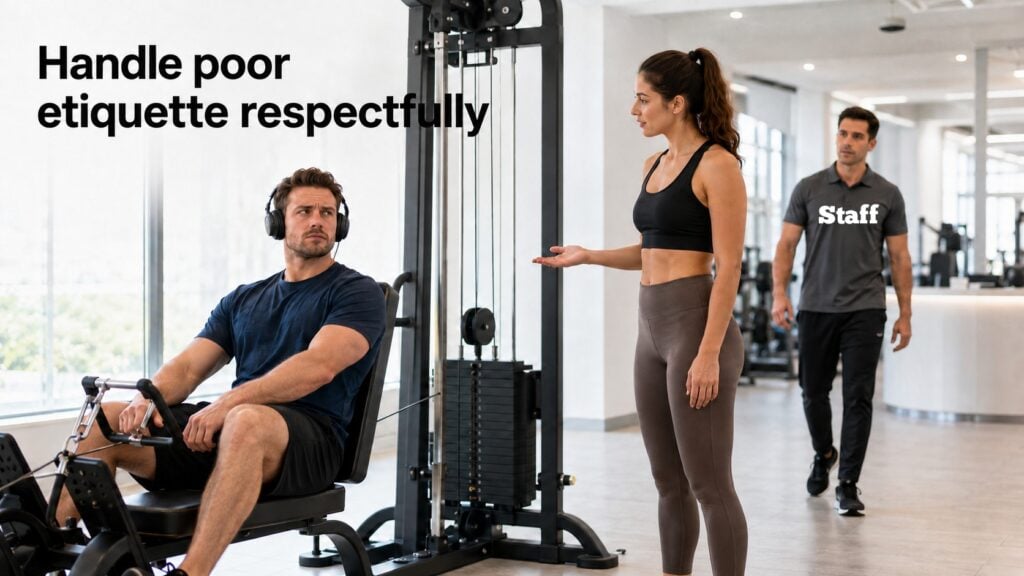
Following gym etiquette does not guarantee that everyone around you will do the same.
Someone may leave weights on a bar, sit on a machine for a long time, block a walkway, or accidentally enter your training space.
Start with a calm and specific request rather than assuming the person is deliberately being rude.
You might ask whether they have finished with the equipment, whether you can work in, or whether they can move a bag away from the lifting area.
Most small problems can be resolved with one polite sentence.
Avoid shouting, insulting the person, or attempting to win an argument in front of the entire gym.
If the behavior is dangerous, repeated, or against the facility’s rules, speak with a staff member.
You joined the gym to train, not to become an unpaid referee for every dumbbell dispute.
Conclusion
These 25 gym etiquette rules are your roadmap to feeling more confident and comfortable in a shared training environment.
You do not need to move through the gym terrified that you are breaking a secret rule.
Clean what you use, return equipment, respect other people’s time and space, and ask questions when you are uncertain.
Those habits will already put you ahead of plenty of people who have been training for years.
So grab your gear, keep these tips in mind, and make the most of your workout.
Catch you in the gym—I will be the one re-racking the weights and wiping down the machines. 😜