It was a night like any other.
I had just shut down my laptop, dinner had been light and “fitness-friendly,” and my mind was still buzzing from a post-scroll brainstorming session on Instagram.
So, like a good mindful human, I thought: “Let’s do a nice relaxing yoga session before bed and I’ll crash like an ox.”
Twenty minutes later, I was in child’s pose, breathing to the rhythm of waves and Tibetan flutes, already imagining Morpheus ready to cradle me into dreamland.
Spoiler: I didn’t fall asleep until 2:30 AM.
And no, I didn’t have any coffee.
And no, it wasn’t a full moon.
It was that evening yoga — meant to calm me down — that actually turned into a sneaky mental workout.
So I asked myself:
Can yoga before bed actually mess up your sleep instead of helping it?
The answer is: it depends.
And now I’ll explain everything — with real-life examples, science, mistakes to avoid, and a few handy tricks if you truly want to sleep better without giving up the mat.
Does yoga help you sleep better? Yes, but not always how you think
Let’s start from the beginning.
The vast majority of research confirms that yoga is a sleep ally.
It lowers cortisol (the stress hormone), slows heart rate, reduces blood pressure, and activates the parasympathetic system — the one responsible for “rest and digest.”
In particular:
- Static, long-held poses help the body release tension
- Slow breathing techniques improve nighttime breath quality
- A regular bedtime ritual like yoga supports circadian rhythm regulation
One study published in the Journal of Clinical Sleep Medicine showed that people who practice yoga regularly (even just twice a week) tend to:
- Fall asleep more easily
- Wake up less during the night
- Feel more rested in the morning
And this holds true whether you’re stressed or dealing with chronic insomnia.
So no, yoga isn’t the enemy.
The problem isn’t yoga itself.
The problem is what kind of yoga, how intense it is, and when you do it.
When yoga wakes you up instead of helping you sleep
Ever tried doing a slightly dynamic flow at 10:30 PM?
Maybe a good ol’ sun salutation, a couple of balancing poses, maybe even some backbends to “open your heart”?
You finish sweaty but “relaxed”… and somehow feel more wired than before.
It happens because:
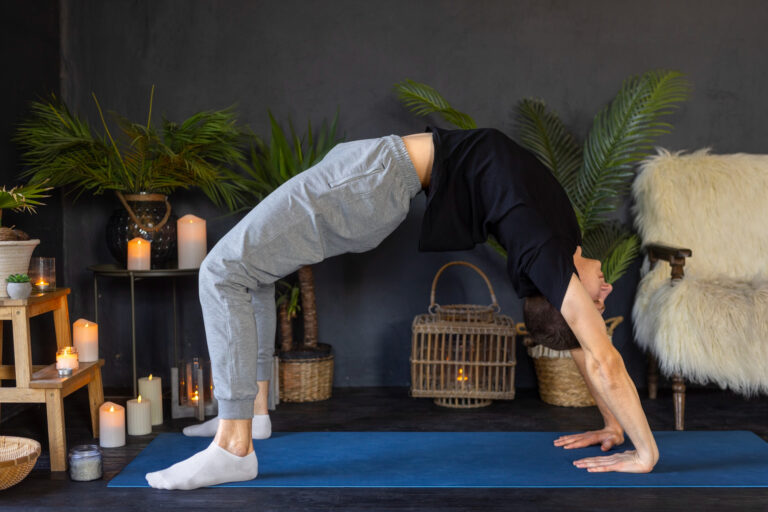
- Inversions (like shoulder stand or bridge) activate the brain and boost blood flow to the head
- Deep chest openers stimulate the sympathetic system
- Dynamic transitions engage muscles and sharpen mental focus
Basically, you’re sending mixed signals to your nervous system:
“Hey body, time to wind down!”
“No wait, we’re doing acrobatics! Are we still in workout mode?”
And that confusion can totally sabotage your sleep prep.
That’s why doing yoga before bed can cause insomnia — if you pick an overly active style or if your body is already tired and on edge.
Even breathing can be “too energizing”
I know, I know: “Breathing is the key.”
But not all breathing is bedtime-friendly.
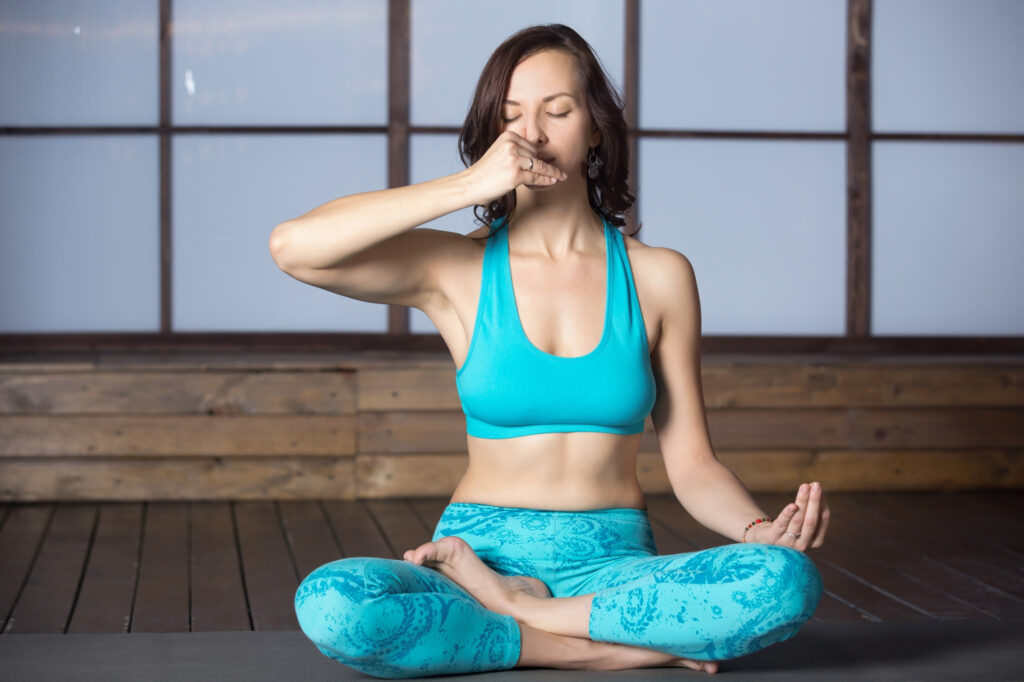
If you use techniques like Kapalabhati (breath of fire) or a super strong Ujjayi, you might actually wake up your mind instead of calming it down.
These kinds of breathing, while great for focus or mental detox, aren’t ideal for slowing your heart rate or switching off your brain.
It’s like taking a “relaxing” ice-cold shower at midnight.
Not gonna work.
Better to go for simple, slow, diaphragmatic breathing.
Like the 4-7-8 method or classic box breathing (inhale 4, hold 4, exhale 4, hold 4).
Zero stress.
Maximum chill.
Real testimonials: when evening yoga tricks (or saves) you
Marco, 31, online coach: “I started doing yoga every night to improve sleep. But I was doing flows that were way too intense, and I’d wake up at 3 AM with my mind racing. Then I realized 10 minutes of Yin Yoga is all I need. Now I sleep like a baby.”
Giulia, 27, runner: “Evening yoga is a game changer for me. But it has to be super slow — like just 3–4 poses with chill music. If I overdo it, my body thinks it’s race warm-up time.”
Luca, 39, former chronic insomniac: “The first time I tried 4-7-8 breathing before bed, I thought it was nonsense. After three days… poof. Knocked out before I even remembered the last pose. Now yoga is my sacred evening ritual.”
Ashley, 35, Brooklyn – Reddit /r/Yoga: “Thought a mini evening practice would relax me, but after 15 minutes of guided flow, my brain starts sprinting. Turns out my body loves it… but my brain goes full throttle. Now I do just 2 poses and lay down with an eye pillow. Pure magic.”
Tyler, 29, Austin – Facebook group ‘Yoga for Men’: “Used to do yoga after leg day to loosen up, but if I did it late, I’d stay up for hours. Learned that evening yoga has to be turtle-speed: slow, long holds, lights off.”
Rebecca, 42, Portland – YouTube comment on Yoga with Adriene: “At first I did those ‘calm down before bed’ sessions, but ended up overthinking everything afterward. Now I do 5 minutes of breathing + savasana, then go to bed with a tea and white noise. It’s like flipping a switch.”
Jake, 33, Denver – Bodybuilding.com forum: “Worked out late, then did yoga to chill. But it hyped me up even more. Switched to soft yoga in the morning and passive stretching at night = way better sleep, less anxiety. Recovery’s still on point.”
When it works great (and why)
If done right, yoga before bed can be one of the most powerful tools for better sleep.
Here’s what actually works:
Static, long-held poses like:
- Legs up the wall: lie on your back with your glutes close to a wall, legs straight up. Arms open at your sides. Stay for 5 minutes. Supports circulation and slows everything down.
- Savasana: lie on your back, legs slightly apart, arms relaxed with palms facing up. Eyes closed, no movement. Just breathe.
- Child’s pose: kneel with your butt on your heels, forehead to the floor, arms stretched forward or resting by your sides. Gently stretches the back and calms the breath.
- Happy baby: lie on your back, bend your knees toward your chest and grab your feet (or ankles). Knees aim for the armpits. Rock gently if you want. Releases the pelvis.
Slow sequences, around 2–3 minutes per pose, no frantic transitions or challenge poses
Conscious, quiet breathing — ideally nasal and diaphragmatic, letting the rhythm stretch naturally
Soft lighting, ambient music or complete silence. No screens, no notifications, no harsh light
No goal chasing: don’t try to “open the hips” or “unlock the spine.” You’re not there to improve. You’re there to let go
This way, yoga becomes moving meditation — not a hidden workout.
And your body understands the message.
Your nervous system starts shutting down gently.
And sleep arrives — no resistance needed.
Want to sleep better with yoga? Here’s what to avoid
To keep it simple:
🚫 Active flows (like vinyasa) after 8:00 PM
🚫 Intense poses like wheel, shoulder stand, or handstand
🚫 Dynamic or forceful breathing
🚫 Overthinking during practice (“Am I doing this right?”, “Tomorrow I’ll nail that backbend!”)
🚫 Doing it just out of obligation (your body senses that too)
Better options:
✅ Yin Yoga
✅ Restorative Yoga
✅ 5 passive poses in bed
✅ Relaxing music or total silence
✅ Natural, diaphragmatic breathing
✅ Mat off, brain off
Body temperature matters: yoga warms you up… but sleep needs you cool
Here’s something people often forget: to fall asleep, your internal body temperature needs to drop.
It’s a basic physiological requirement for entering deep sleep.
Now, if you do a yoga session that’s too active before bed, you raise your body temp — even just half a degree.
That half degree can delay sleep by 30 to 60 minutes.
Especially if you jump straight into bed right after.
So if you do yoga at night:
- Keep it slow, with no prolonged muscle engagement
- Finish at least 30–45 minutes before bedtime
- If you still feel warm, try a lukewarm shower or a cold compress on the neck
Bottom line: your body needs to cool down to sleep — not feel like it just finished a warm-up.
Watch the light: even yoga on your phone can sabotage melatonin
It may sound silly, but it’s huge:
Lots of people do evening yoga using a YouTube video or an app.
Problem is? Blue light from your device blocks melatonin — the sleep hormone.
So there you are, with low lights and relaxed muscles… but your phone screen is keeping your brain on alert.
Some easy fixes:
- Use a downloaded video and switch to airplane mode
- Turn on night shift/light filtering on your phone or tablet
- Or learn 3–4 basic sequences to do with eyes closed or guided by audio
Yoga works best when there’s less visual stimulation — not just less physical movement.
More disconnection = less agitation.
Just ate? Be mindful of when you hit the mat
Another underestimated detail: how long after dinner do you practice yoga?
Because yes, this can mean the difference between sleeping peacefully and tossing around like a half-cooked crêpe.
After you eat — especially a big, protein-heavy dinner — your body’s busy digesting.
Doing yoga too soon can:
- Cause abdominal discomfort in compressive poses
- Increase reflux or bloating, especially in forward folds
- Prevent full parasympathetic activation, since digestion is already a major task
How long should you wait?
👉 After dinner: at least 60–90 minutes
👉 After a small snack: 30 minutes is enough
👉 After breakfast (if you do morning yoga): ideally 45–60 minutes if it was a light meal
If you’re short on time, focus on supine poses, avoiding deep forward bends or aggressive twists.
And please — no “happy baby” right after chicken and rice.
Why are you doing yoga? Your intention changes everything
It might sound like cliché philosophy, but it’s one of the most overlooked truths.
The reason you step on the mat directly affects how the practice impacts you.
If you approach evening yoga thinking:
- “I need to regain mobility”
- “I need to unlock my back”
- “I want deep stretching”
…chances are you’ll activate, focus, and engage.
But if your intent is:
- “Let go of the day”
- “Slow my breath”
- “Prepare for rest”
…your whole body gets the message.
The difference between “doing yoga to get a result” and “doing yoga to unwind” is subtle…
But it directly influences how your nervous system responds.
No time for a full session? Three minutes (in bed) is enough
Many skip bedtime yoga because they think it has to be a full practice — mat, incense, and 25 minutes of flow.
In reality, just 3–5 minutes in bed can work wonders.
Here’s a simple bedtime mini-sequence that actually helps sleep:
- Supine twist — 1 minute per side
- Happy baby — 1 minute
- Savasana with hands on belly — 1–2 minutes, breathing slowly
It’s literally a “yoga pill” — but for your nervous system, it’s magic.
RELATED:》》》 Why do backbends in yoga give me a weird headache behind my eyes?
Conclusion: Yoga before bed is a double-edged sword (but a powerful one)
The issue isn’t “whether to do yoga before bed.”
The issue is how you do it.
If you use yoga to slow down, tune in, and surrender without rushing… it works.
But if you turn it into a mini workout or just another item on your to-do list… it can become stimulation, not relief.
Listen to your body.
Accept that nighttime isn’t about “doing more” — it’s about “doing less.”
And trust this: the best sleep doesn’t come when you try hard to fall asleep.
It comes when you stop trying so much.
Sometimes it’s enough to lie down in silence, close your eyes, and let gravity do the rest.
That’s already yoga.
And your nervous system… says thank you.