Twice-a-week chin-ups enter the plan so quietly that I barely give them a personality.
One session shows up early in the week.
Another one lands a few days later.
At first, they are just part of the routine.
A box to check.
A familiar movement between the louder stuff.
Then one day the boring exercise starts looking suspicious.
Nothing screams for attention during the session.
The change does not arrive with confetti, gym thunder, or a cinematic protein-shake moment.
It shows up later, in that annoying way training progress often does.
Quietly.
Almost rudely.
Like the body has been keeping a secret while I was busy paying attention to something else.
That is how this whole chin-up thing catches me.
The Arm Story Is Not the Biceps Peak
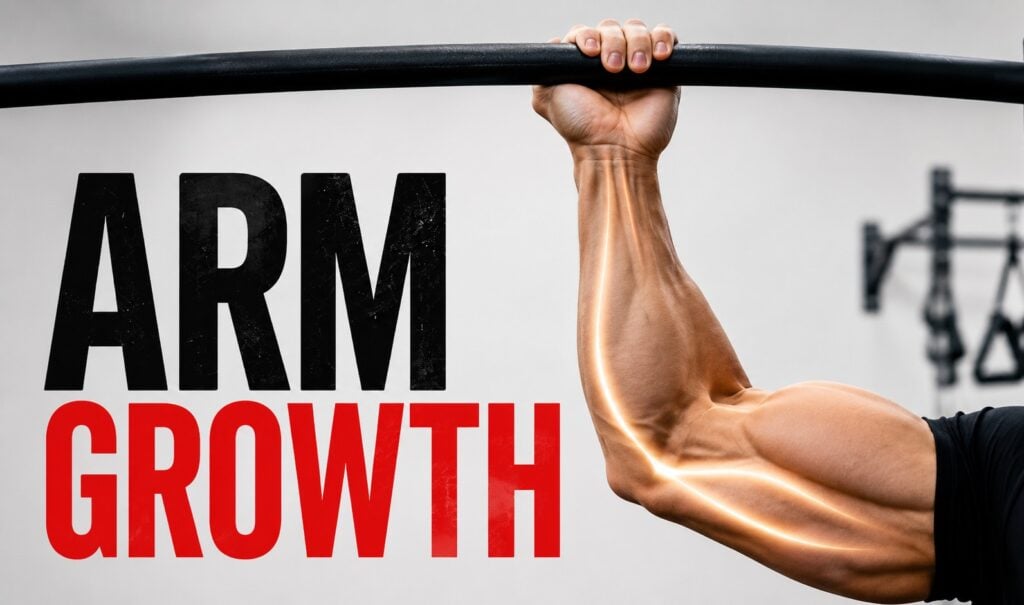
The first thing I notice is not some cartoonish biceps mountain.
The change shows up lower.
Near the elbow, the arm starts looking fuller.
From the side, the upper arm has more thickness.
That catches my attention.
Curls usually give me a clearer biceps burn.
Chin-ups leave a wider fingerprint.
The biceps work, obviously.
The brachialis gets dragged into the party underneath the biceps.
The brachioradialis near the forearm has to help because the hand refuses to let go of the bar.
Even the grip adds something to the look.
After a while, the arm does not just look pumped.
It looks used.
In a good way.
Like it has been doing a real job instead of waiting under gym lighting for approval.
I Still Think of Chin-Ups as Pulling, Not Arm Day
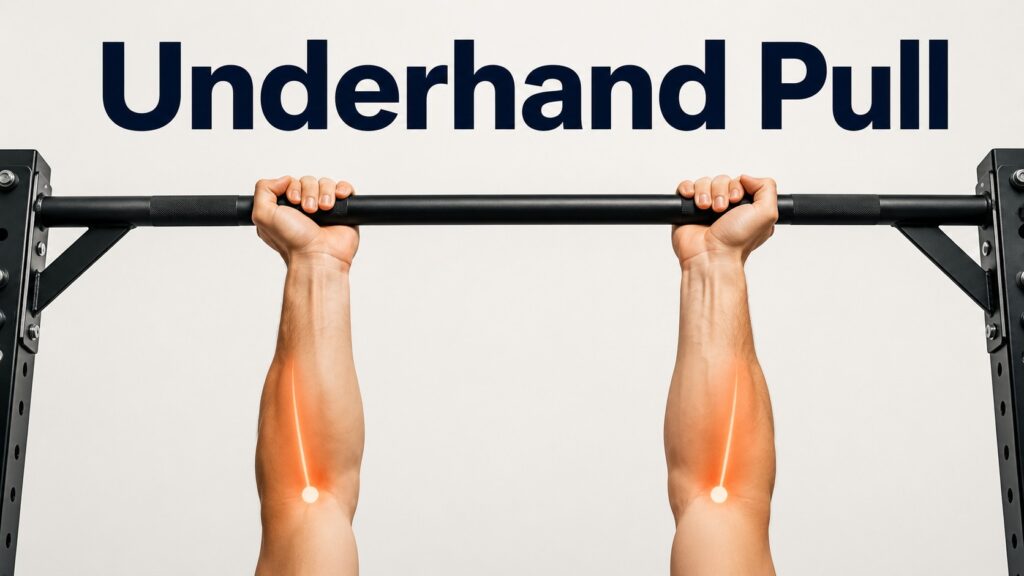
Most chin-up sessions begin with a simple goal.
Get on the bar and pull well.
That is it.
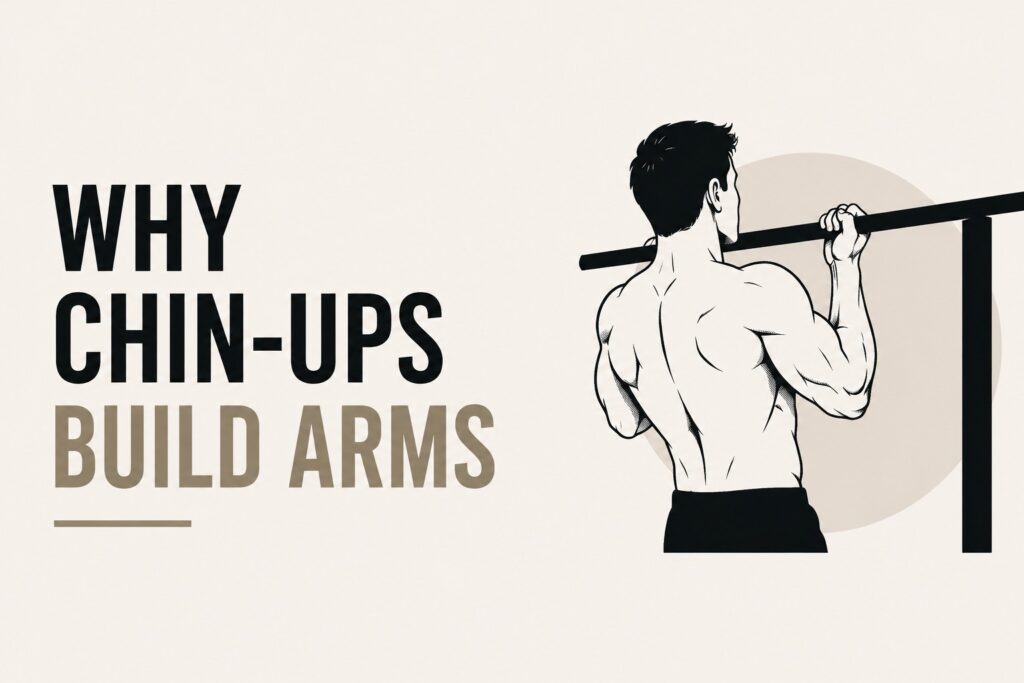
A normal set starts with the hands on the bar.
The body hangs.
The shoulders settle.
The abs brace just enough to stop the legs from becoming wind chimes.
Then the pull begins.
At first, the back feels like the main worker.
The lats help bring the body up.
The upper back keeps the shoulders from acting weird.
Somewhere in the middle, the arms begin to make themselves impossible to ignore.
The elbows have to bend.
The forearms have to stay locked onto the bar.
The biceps have to help finish the pull.
By the end of the set, I am not thinking, “Great back exercise.”
More often, the thought is, “Okay, apparently my arms had a full-time job here and nobody told me.”
That is the difference.
Chin-ups do not ask the arms to pose.
They ask them to connect the whole pull.
The Bar Makes the Arms Earn Their Part
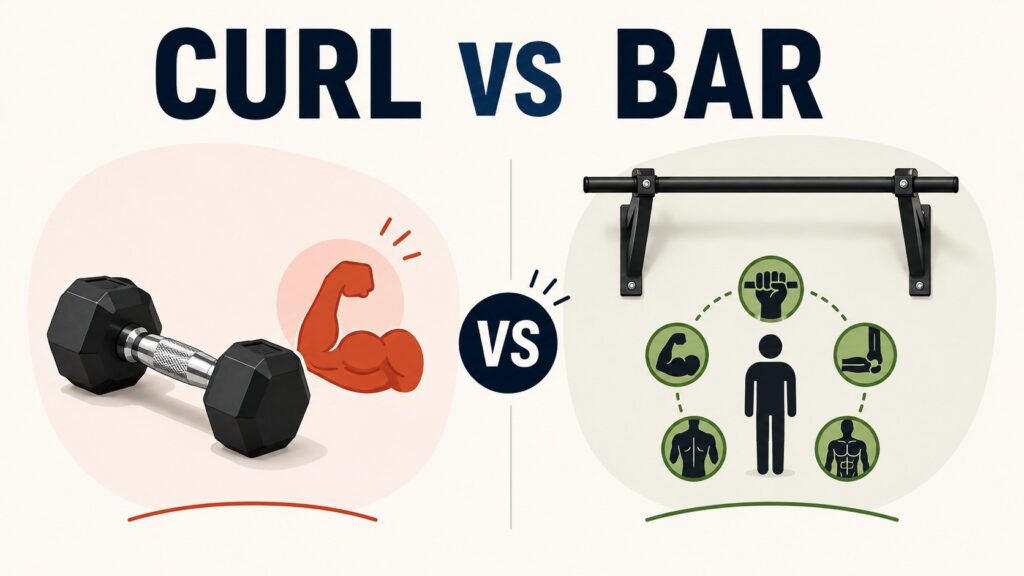
A dumbbell curl is honest in a very simple way.
Pick up the weight.
Bend the elbow.
Feel the biceps complain.
Beautiful.
Clean.
Very easy to understand.
Chin-ups are honest in a rougher way.
The bar does not let me choose a cute little resistance that matches my mood.
Bodyweight comes with me.
Happy day, tired day, heavy lunch day, all included.
When I pull, the arms are not moving a dumbbell through space.
They are helping move the body.
That makes the job feel bigger.
The hands have to hold.
The forearms have to stay serious.
The elbows have to bend under a load that is not exactly polite.
The upper arms have to connect that bend to the back and shoulders.
A curl says, “Can the biceps move this weight?”
The chin-up says, “Can the whole pulling chain work without falling apart?”
That question hits the arms differently.
Twice a Week Changes the Whole Feeling
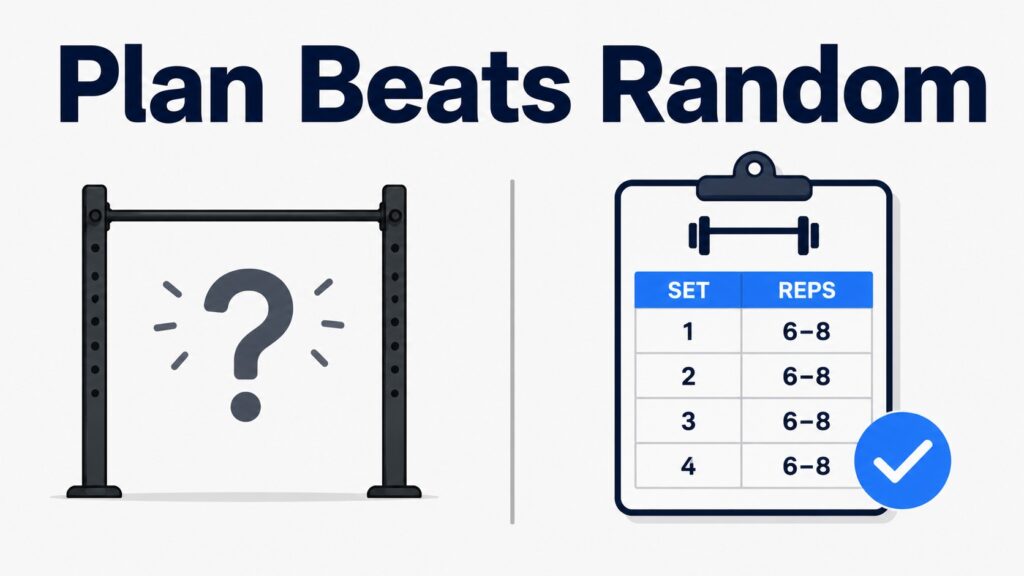
Random chin-ups are fun.
A bar shows up, and suddenly the brain starts acting like a park athlete with a sponsorship deal.
One set happens.
Maybe two.
Then the day moves on.
That keeps the movement familiar, but it does not give the body much to organize.
Twice-a-week chin-ups change the conversation.
The bar returns before the pull disappears from my system.
The hands remember the pressure.
The elbows remember the bend.
The upper back remembers where it has to sit before the arms start working.
That rhythm gives me better information than a random heroic set ever does.
When the second session moves clean, I know the dose is right.
When every rep feels strangely heavy, the body is basically handing me a receipt.
Too much fatigue.
Not enough recovery.
Or maybe that “extra easy set” was not as easy as I wanted to believe.
One Chin-Up Day Cannot Do Every Job
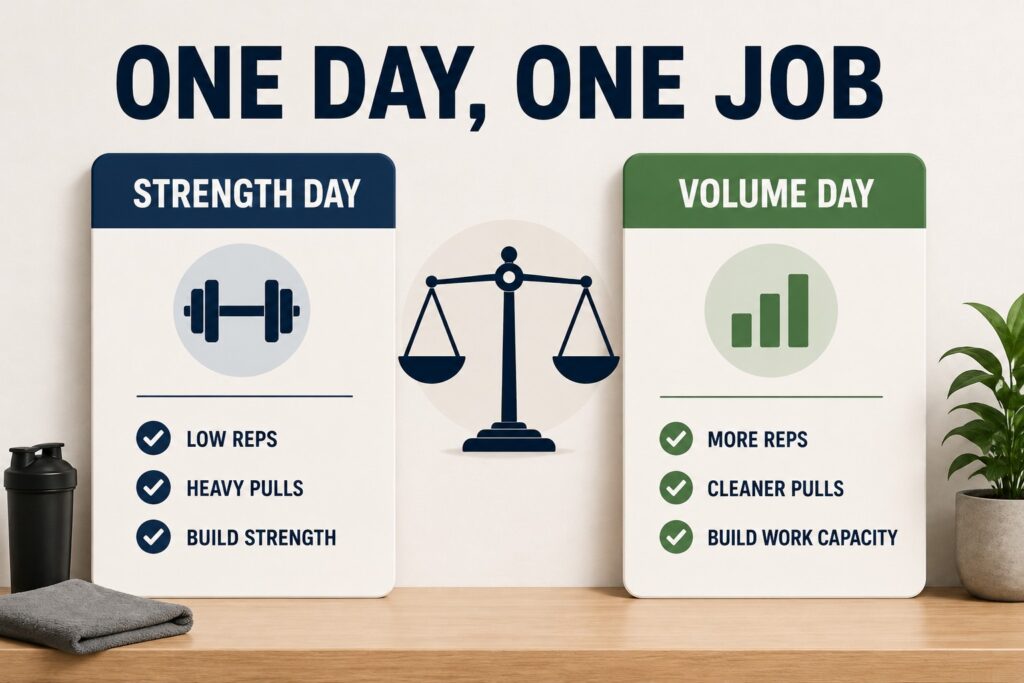
At some point, I stop making every chin-up session feel identical.
That helps a lot.
Some days are more strength-focused.
The reps stay lower.
The pull feels heavier from the first inch.
Other days are smoother.
The sets carry more total work, but each rep stays cleaner.
That small difference changes how the arms respond.
Heavy sets make the arms fight harder.
Cleaner volume keeps them working longer.
Both matter.
If every session becomes a max-effort circus, the elbows eventually send a strongly worded email.
When every session turns into sloppy high reps, the biceps get lost inside swinging and survival tactics.
So the movement has to stay honest.
Otherwise, I am not training chin-ups.
I am negotiating with gravity while hanging from metal.
The Top Half Humiliates the Arms in a Useful Way
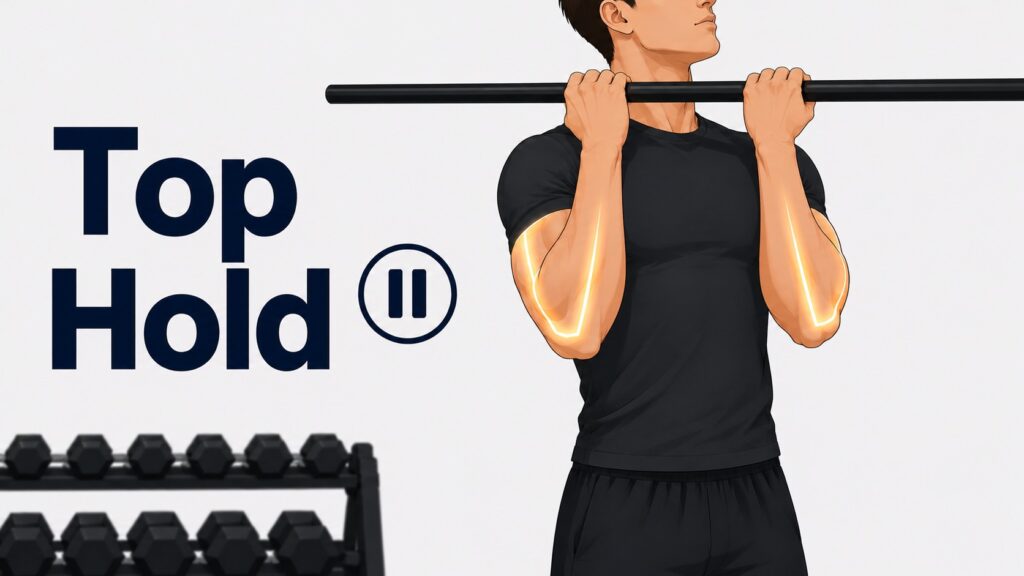
The bottom of the chin-up feels like the start of a big back movement.
Dead hang.
Shoulders set.
Body tight.
Pull begins.
The top half tells a different story.
That is where the arms get caught.
Near the bar, the elbows have to bend harder.
The biceps have to help finish the job.
The body cannot just drift upward and hope nobody notices.
If I rush the top, my neck tries to reach before the rest of me arrives.
That is never a proud moment.
Sometimes the knees twitch.
Occasionally the chin becomes weirdly ambitious.
Meanwhile, the bar just sits there judging everyone.
A cleaner top changes everything.
Even a tiny moment of control near the bar makes the arms take responsibility.
No long pause is needed.
Just enough control to prove the body actually got there by pulling.
The Way Down Is Where I Used to Waste Half the Rep
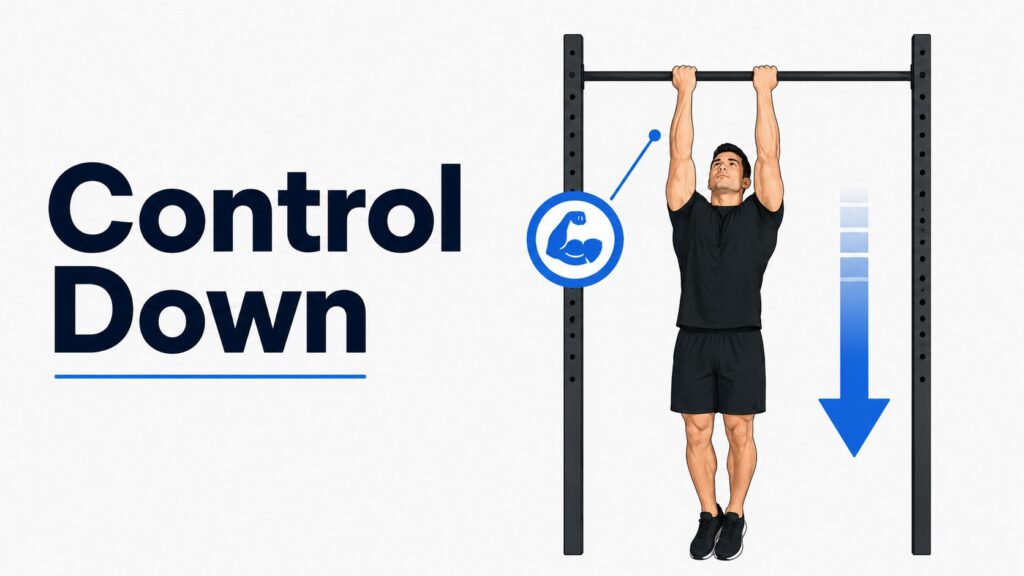
Pull up.
Feel successful.
Drop down like gravity owns the set.
That makes the rep easier, but it steals a lot of arm work.
Once I slow the way back down, chin-ups get more interesting.
The arms are no longer just helping me reach the bar.
They have to brake the body.
The biceps lengthen under tension.
The forearms keep the grip alive.
The elbows handle the load instead of riding a free fall.
A controlled lower does not need to last forever.
Nobody needs a five-minute chin-up documentary.
Two or three honest seconds can change the set.
Assisted Chin-Ups Save the Movement From Becoming a Circus
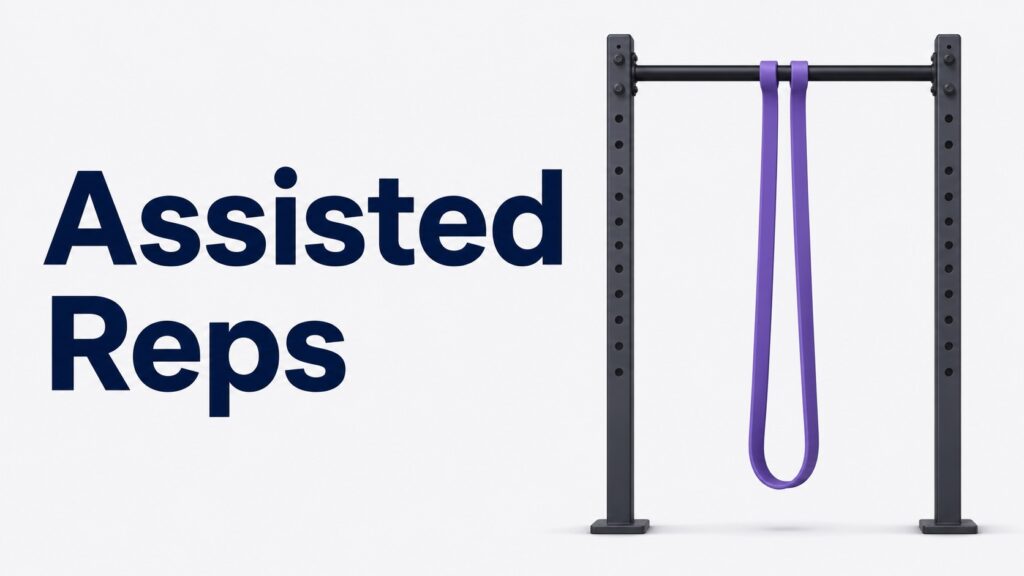
Assisted chin-ups get mocked too much.
Bands and assisted machines are treated like training wheels by people who somehow think joint irritation is a personality badge.
I do not see it that way.
Assistance can make the movement better.
A good assisted chin-up lets the body practice the full pull.
Hands stay on the bar.
Elbows bend through a real range.
Chest rises.
The top position exists.
The way down stays controlled.
That is better than one full bodyweight rep where the legs kick, the neck reaches, and the top half becomes a rumor.
For arm growth, clean practice matters.
The biceps need useful tension.
Forearms need enough time holding.
Elbows need a workload they can tolerate.
Assisted reps can deliver all of that.
The Elbows Decide Whether the Plan Survives
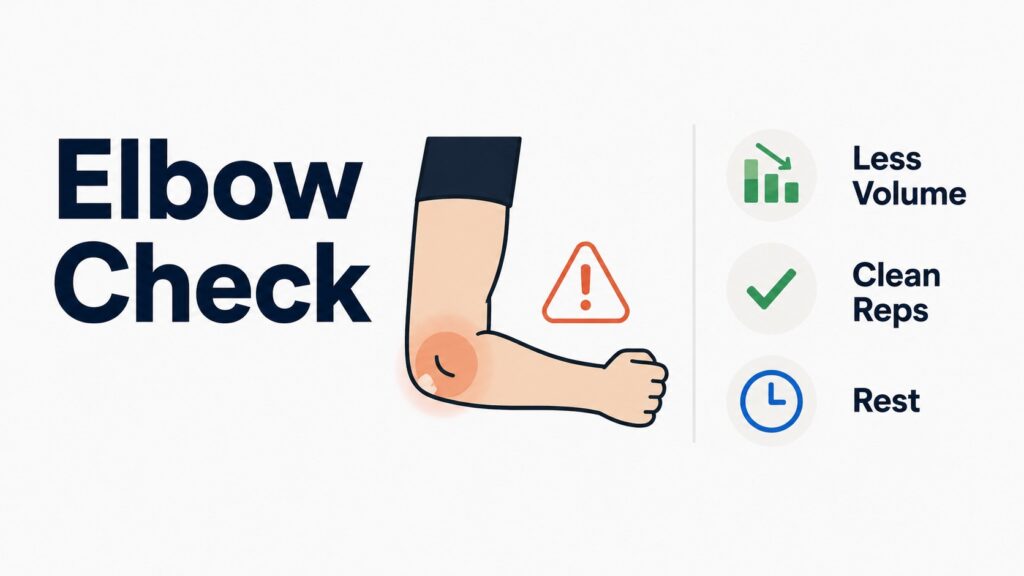
The biceps sometimes want more before the elbows agree.
That lesson comes fast with chin-ups.
Muscles can feel ready.
Tendons often need more patience.
Unfortunately, tendons do not care about enthusiasm.
They move at the speed of an old office printer.
Add too much too quickly and the inner elbow starts complaining.
More sets.
Extra reps.
Slow descents on everything.
Curls after every pulling session.
Very ambitious.
Very dumb.
The warning usually starts quietly.
A little tightness near the elbow.
Some irritation during the first few reps.
A tiny signal that says, “Technically possible, but paperwork is being filed.”
That is where I adjust.
Dropping one set for a while is better than losing the whole movement for weeks.
Keeping curls lighter after chin-ups can help.
Skipping slow descents for a short stretch can help too.
A neutral grip may calm things down if underhand pulling feels cranky.
Nothing about this is glamorous.
Still, it is the difference between building arms and building an elbow problem with biceps attached.
Grip Width Matters, but Control Matters More
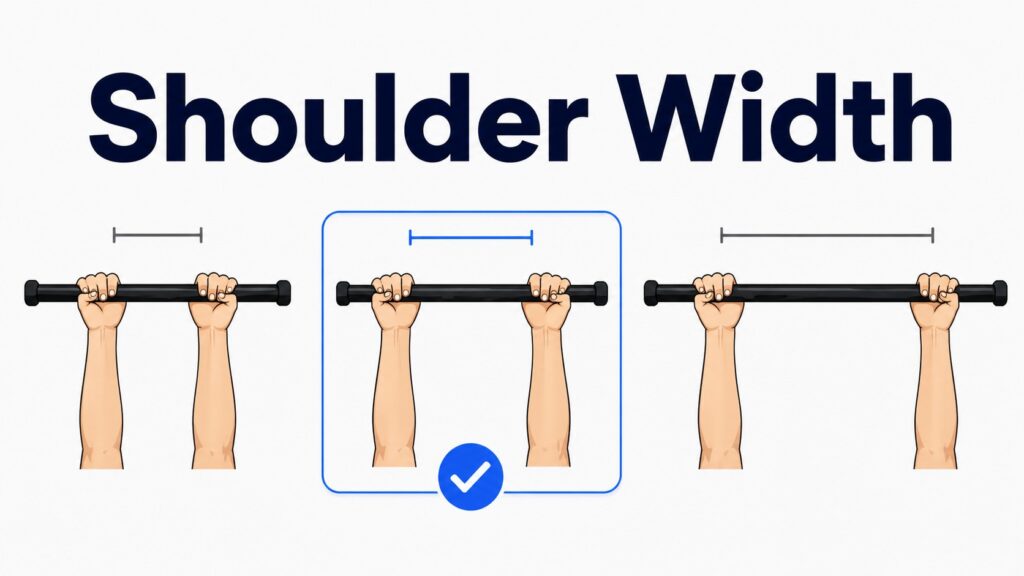
Grip width can change the sensation, but I try not to make it weird.
Shoulder-width usually works best.
Hands roughly under the shoulders.
Palms facing in.
Wrists calm.
Elbows able to bend strongly.
That boring setup gives me the cleanest arm work.
A narrow grip can hit the biceps hard, but it can also crowd the wrists and elbows.
Wider underhand pulling often feels awkward through the shoulders.
Some people handle those variations fine.
My arms usually get more from a basic grip and better reps.
Chin-Ups Make Curls Feel Like the Cleanup Crew
Curls still matter.
I like them.
A curl is simple in the best way.
Elbow bends.
Biceps work.
Life briefly makes sense.
But chin-ups change how curls fit into the week.
Before chin-ups are consistent, curls can feel like they are carrying the whole arm-growth project alone.
More sets.
More angles.
More variations.
More standing around wondering if the biceps got the message.
Once chin-ups are in the plan twice a week, curls feel different.
The bar handles the heavy pulling work.
Dumbbells come in afterward to clean up the details.
That makes the arm training feel more complete.
Chin-ups load the arms inside a full-body pull.
Curls isolate the biceps more directly.
Hammer curls add thickness around the brachialis and forearms.
Incline curls can give the biceps more stretch.
Regular curls keep everything simple.
No three-hour arm opera is needed.
A strong pull first, then a little targeted work.
That combination feels much smarter than throwing curl variations at the wall and hoping one develops a personality.
Hammer Curls Fit the Chin-Up Look
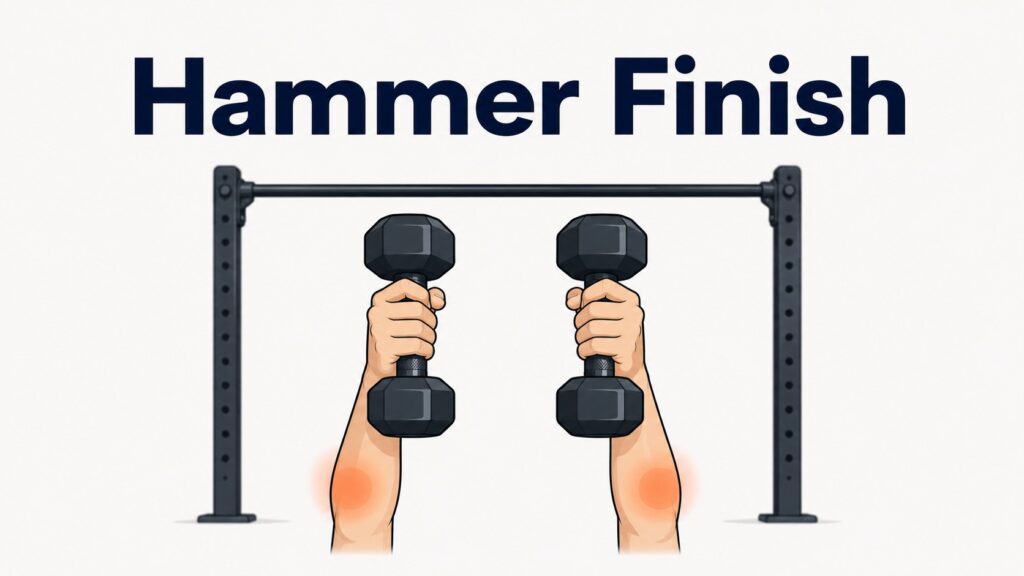
Hammer curls make sense after chin-ups because they match the area that starts changing first.
That thicker look near the elbow does not come only from the biceps peak.
The brachialis matters.
The brachioradialis matters.
Hammer curls give those areas a direct follow-up.
Palms face each other.
Elbows bend.
Forearms stay involved.
The movement is simple enough that pride is usually the only thing that ruins it.
When the dumbbells get too heavy, shoulders start rocking.
The back joins in.
The weight flies up like someone is trying to start a stubborn lawn mower.
That is not arm training anymore.
That is gym slapstick.
Controlled hammer curls after chin-ups work better.
Lift with control.
Pause briefly.
Lower without dropping.
Keep the upper arm quiet.
Let the elbow area do its job.
Chin-ups give the heavy pull.
Hammer curls add density.
Progress Shows Up on the Bar Before It Shows Up in the Mirror
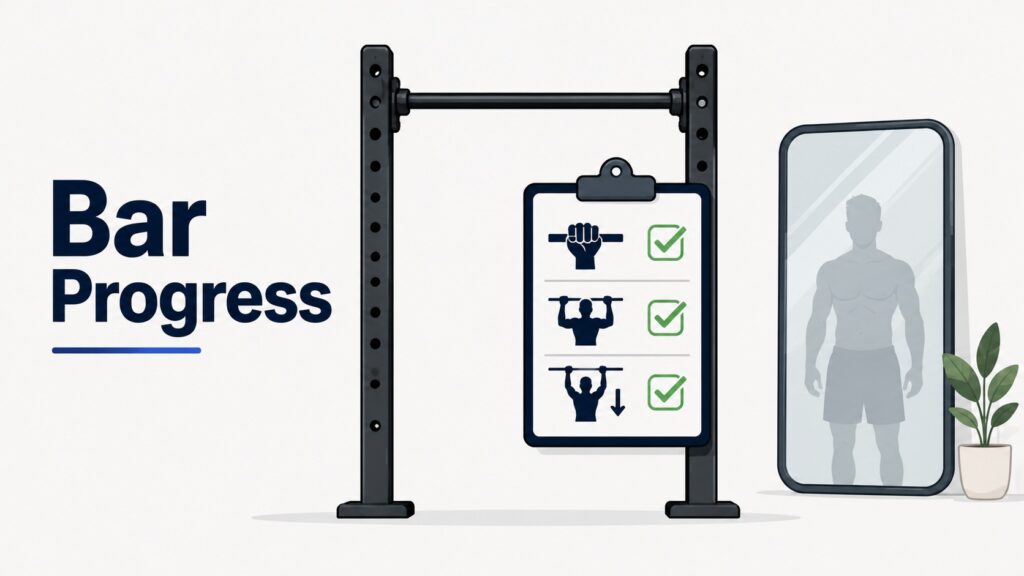
The mirror is slow.
Annoyingly slow.
Before the arms look bigger, the reps often get better.
The grip panics less.
The body swings less.
The top position gets cleaner.
The descent stops falling apart.
Elbows bend with more confidence.
That progress can feel invisible if I only stare at the tape measure.
The bar gives feedback sooner.
A cleaner rep is feedback.
A calmer grip is feedback.
A controlled last rep is feedback.
Those details matter because arm growth is not always a sudden sleeve explosion.
Sometimes function improves first.
The body wastes less energy.
The pull becomes less chaotic.
Arms stop acting like confused passengers and start doing their part.
Then the visual changes begin to sneak in.
A little more thickness near the elbow.
A denser forearm line.
A stronger look through the upper arm.
Chin-Ups Stop Building Arms When the Rep Turns Into a Shortcut
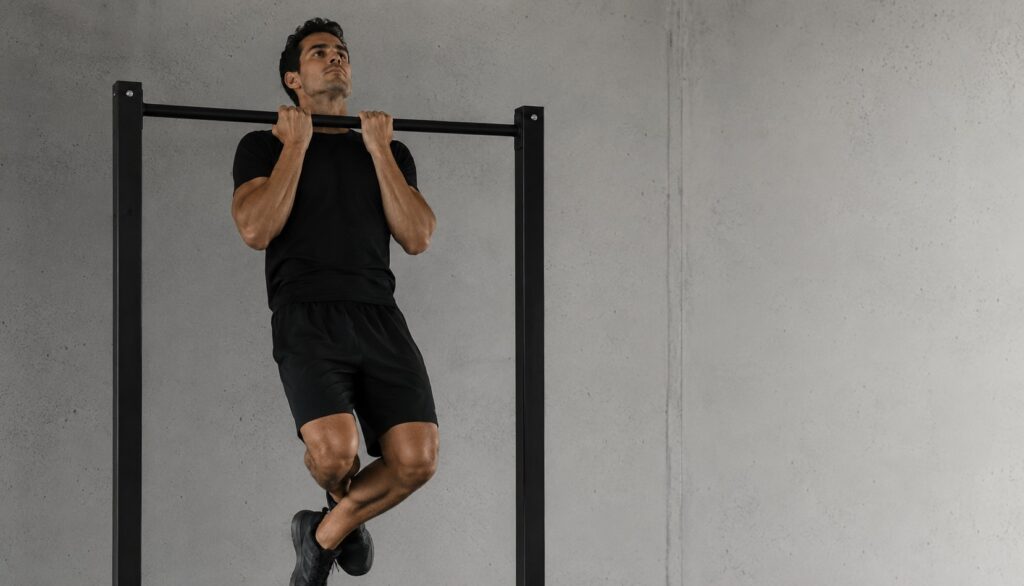
The body is very good at finding easier routes.
Sometimes too good.
A little swing appears.
The knees help.
The chin reaches.
The descent drops faster.
Range gets shorter.
Suddenly the rep still “counts,” but the arm work is watered down.
I have done those reps.
They feel productive because they are hard.
Hard does not always mean useful.
A useful chin-up needs enough control to keep tension in the right places.
The body does not have to look frozen.
No one needs robot reps.
Still, the pull should be owned.
The top should be earned.
The descent should not disappear.
When shortcuts take over, the arms lose the clean job that made the movement valuable.
That is where chin-ups stop building and start flattering.
The bar lets me cheat a little.
It never lets me cheat without consequences.
Final Thoughts: Chin-Ups Make Arm Training Simpler
Twice-a-week chin-ups make my arm training easier to organize.
The bar already gives the arms a serious job.
After that, curls do not need to save the whole plan.
They just add the extra work.
That is the part I like.
Less guessing.
Less random pump chasing.
Less throwing five curl variations into the session because the mirror looked quiet.
Chin-ups give the arms a strong base.
Curls clean up the details.
Simple, boring, useful.
And usually, that is where the best arm growth starts.