
A funny thing happened the first time walking became “daily” instead of “when life allows.”
Just a boring routine that started because the gym felt heavy, legs felt tight, and the brain felt like it had 37 browser tabs open.
So walking became the low-effort reset button.
And then something weird showed up.
Body fat moved a little, sure, but gym sessions started feeling… cleaner.
Recovery improved in a way that was hard to describe without sounding like a yoga poster.
Muscle growth didn’t suddenly explode, but it stopped feeling like it was fighting against the rest of my life.
| The Quick Answer: Can Walking Help Muscle Growth? Walking can support muscle growth when it improves training quality and recovery without pushing calories too low. Walking can hurt muscle growth when it quietly drags energy down, appetite down, or leg freshness down. The difference is dosage and timing. Used well, walking helps training. Used poorly, it steals from recovery. |
The first myth to kill: walking isn’t “just cardio”
Walking is cardio the same way a screwdriver is “just a tool.”
Used gently, it fixes things.
Used aggressively, it strips screws and ruins the whole day.
Walking sits in a sweet spot because it can raise daily movement without hammering the nervous system or joints.
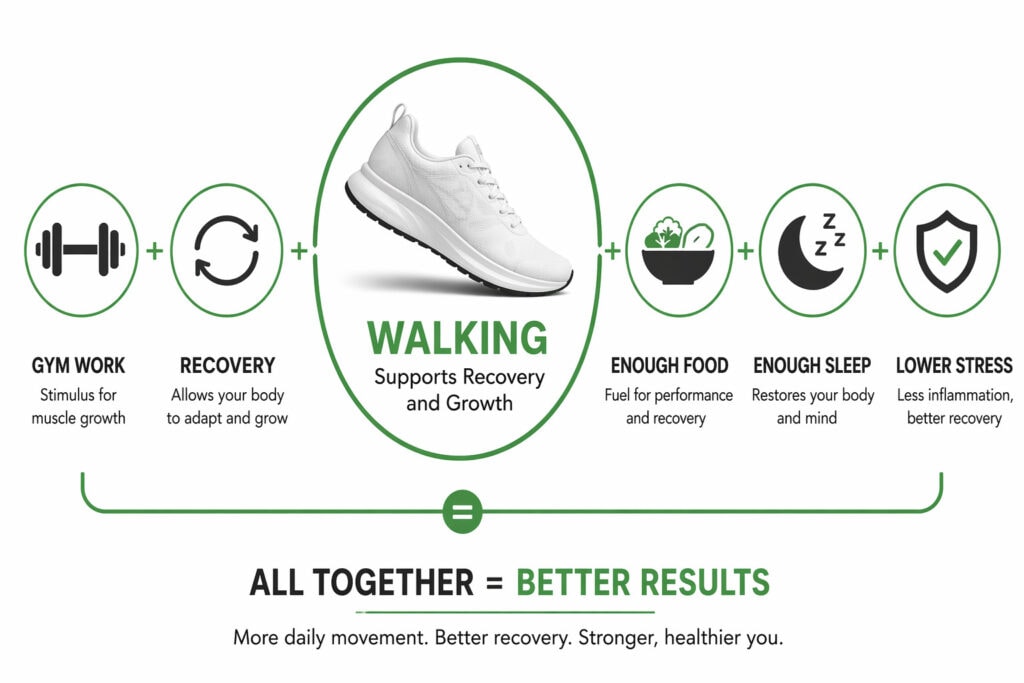
That matters because muscle growth is not only gym work.
Growth is gym work plus recovery plus enough food plus enough sleep plus not being constantly inflamed and fried.
Walking can support a lot of that.
What walking actually does inside the body
It increases NEAT without feeling like punishment
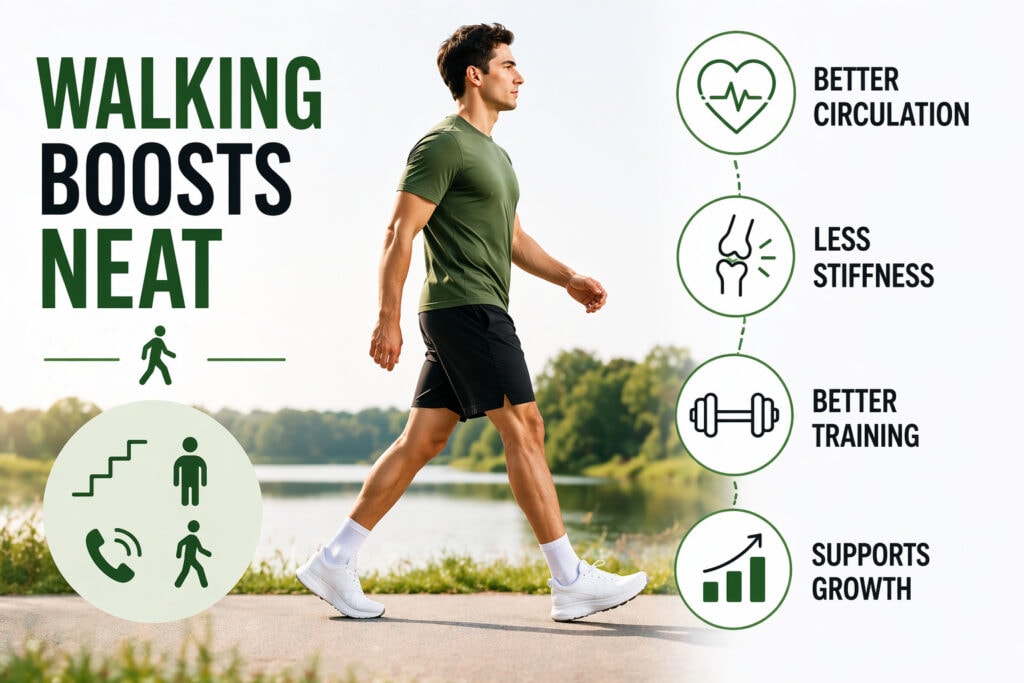
NEAT means “non-exercise activity thermogenesis.”
Translation: calories burned from regular movement that isn’t a workout.
Think stairs, standing, walking to places, pacing while on a call, and life stuff that adds up over time.
Walking boosts that “background burn” without demanding a shower and a motivational speech.
That can help fat loss, yes.
But it also changes recovery because circulation improves and stiffness drops.
Less stiffness means better training quality, which means better tension on muscles, which is the main driver for growth.
It improves blood flow without creating a huge recovery bill
Hard intervals can be amazing, but they come with a cost.
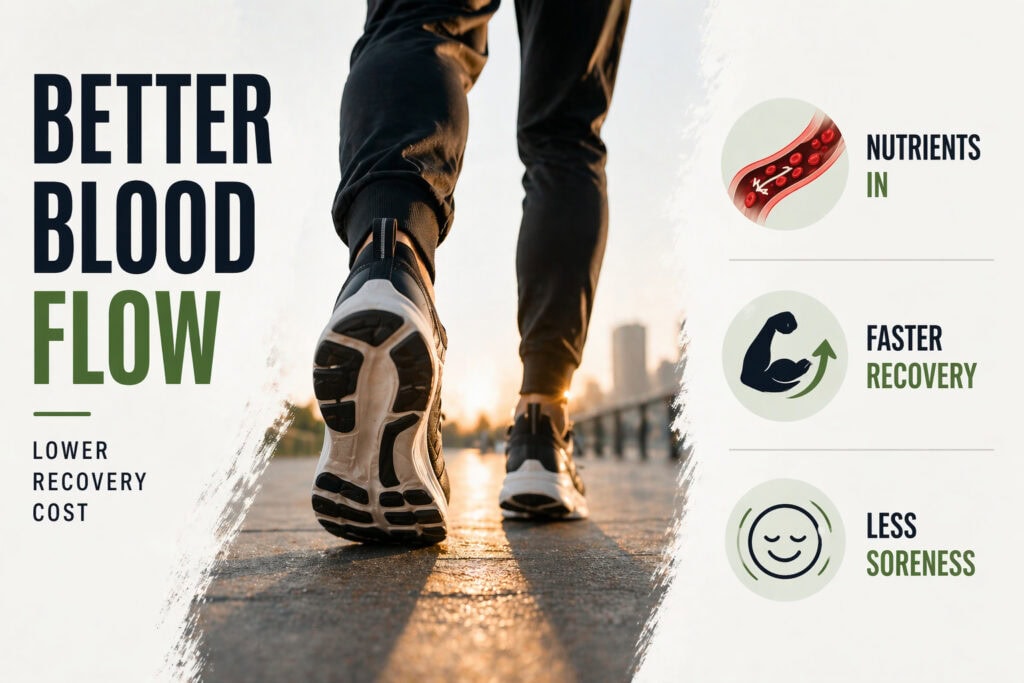
Walking is more like paying for recovery in small coins instead of dropping a giant bill at once.
More blood flow means muscles get nutrients delivered and waste products cleared more efficiently.
Soreness doesn’t vanish, but it often becomes “annoying background noise” instead of “walking like a newborn deer.”
It can lower stress load, which indirectly helps muscle building
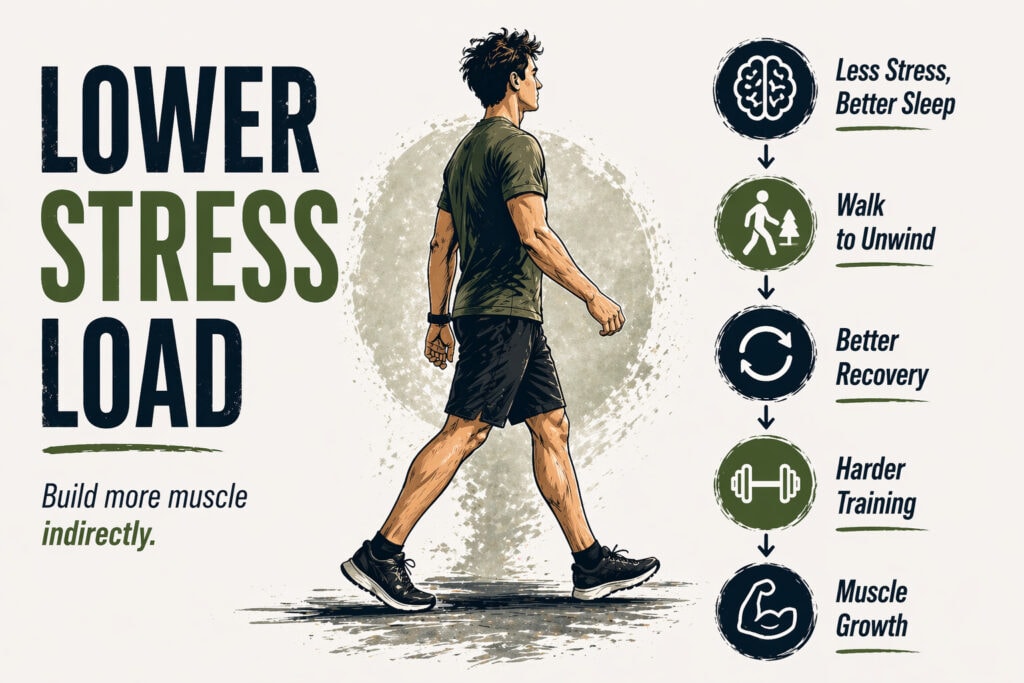
High stress doesn’t “kill gains” in a cartoon way.
Stress mostly steals sleep quality, appetite consistency, and training focus.
Walking is one of the simplest ways to downshift without needing a perfect day.
A calmer system tends to recover better.
Better recovery tends to allow harder training.
Harder training done consistently is where muscle shows up.
The Ideal “Walking Every Day” Zone for Recovery and Results
A pattern showed up in my normal routine without me trying to “optimize.”
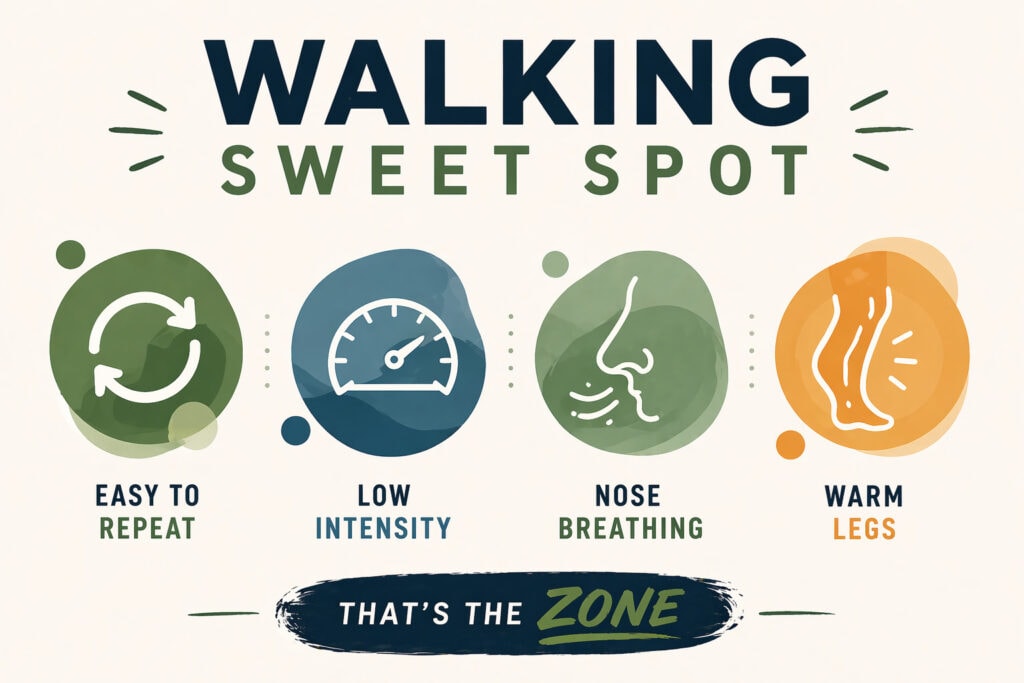
Walking worked best when it was easy enough to repeat and boring enough to ignore.
Intensity stayed low.
Breathing stayed mostly through the nose, or at least conversation was still possible.
Legs felt warmer after the walk, not trashed after the walk.
That’s the zone.
Numbers that kept working for me
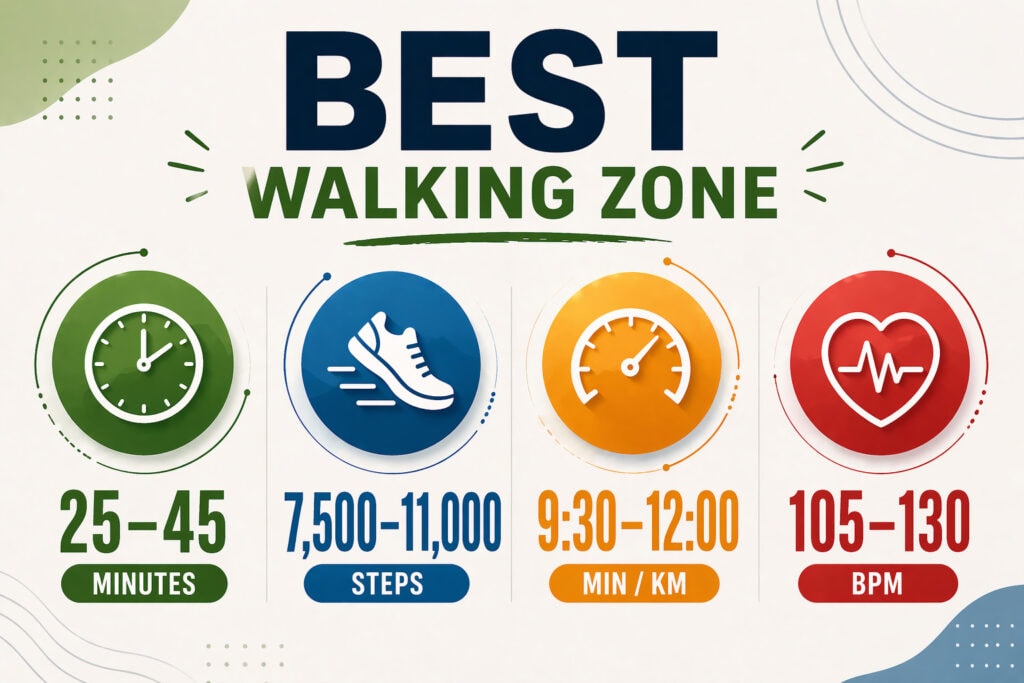
Most days landed between 25 and 45 minutes.
Step count usually landed around 7,500 to 11,000 steps total for the day.
Pace lived around 9:30 to 12:00 minutes per kilometer depending on terrain and mood.
Heart rate often sat around 105 to 130 bpm for me, which is “alive and moving” without feeling like training.
Anything beyond that started flirting with fatigue if food didn’t match it.
How Walking Helped My Gains

Sometimes progress comes from small changes, not bigger workouts.
Adding regular walks created better rhythm through the day, and training started to feel stronger, fresher, and more consistent.
How the Routine Was Set Up
Strength sessions happened 4 times, each around 65–80 minutes.
Walking happened every day, mostly 35 minutes after dinner.
Pace stayed easy, like “could explain a movie plot while walking” easy.
The Routine Structure
Upper body push day looked like this:
- Flat dumbbell press: 4 sets of 8 reps with 32 kg dumbbells.
- Incline dumbbell press: 3 sets of 10 reps with 26 kg.
- Overhead press machine: 3 sets of 12 reps.
- Cable lateral raise: 4 sets of 15 reps.
- Triceps rope pushdown: 3 sets of 12–14 reps.
Energy during those sessions felt steadier.
Shoulders stayed warmer between sets.
Rest times didn’t need to creep longer because breathing recovered faster.
What Improved
Sleep became deeper without needing to “try.”
Appetite became more predictable, which made eating enough easier.
Leg soreness didn’t vanish, but it stopped spreading into the next session like a bad smell in an elevator.
Training quality went up.
When training quality goes up, muscle stimulus improves without adding more sets.
Daily Walking Began Costing Me Performance
There was a point when walking stopped being recovery and became extra training.
More speed, more incline, more time.
Nothing seemed wrong at first, but once hard leg sessions were added, the legs slowly stopped feeling fully fresh in the gym.
What walking looked like when it stopped being helpful
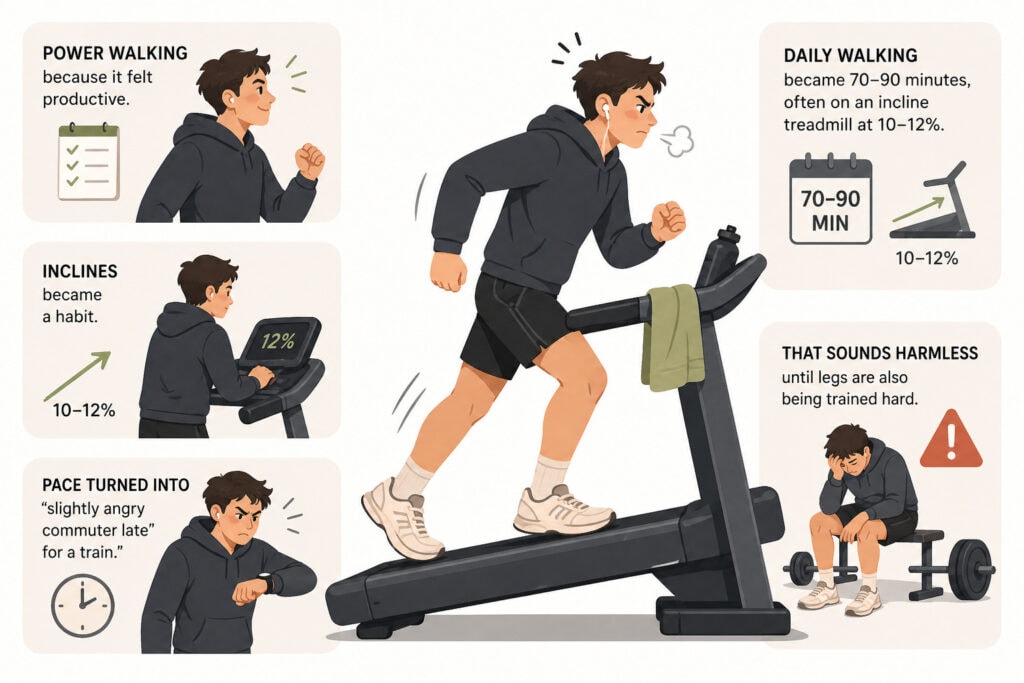
Walking shifted into “power walking” because it felt productive.
Inclines became a habit.
Pace turned into “slightly angry commuter late for a train.”
Daily walking became 70–90 minutes, often on an incline treadmill at 10–12%.
That sounds harmless until legs are also being trained hard.
How legs started feeling in the gym
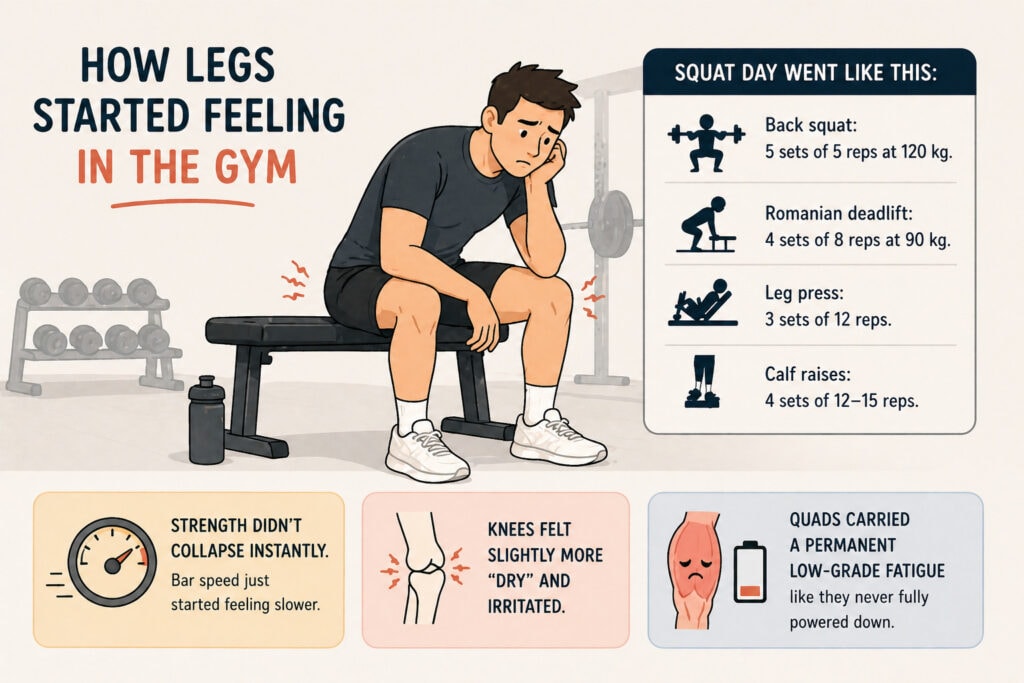
Squat day went like this:
- Back squat: 5 sets of 5 reps at 120 kg.
- Romanian deadlift: 4 sets of 8 reps at 90 kg.
- Leg press: 3 sets of 12 reps.
- Calf raises: 4 sets of 12–15 reps.
Strength didn’t collapse instantly.
Bar speed just started feeling slower.
Knees felt slightly more “dry” and irritated.
Quads carried a permanent low-grade fatigue like they never fully powered down.
The Real Problem
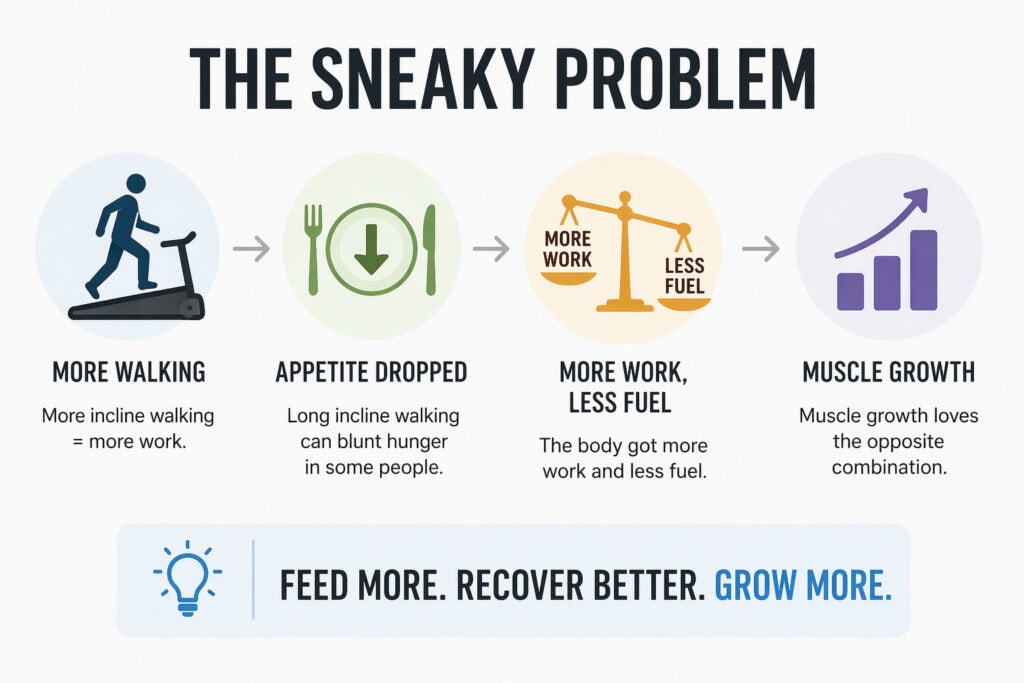
Calories didn’t increase to match that walking.
Appetite even dropped a bit because long incline walking can blunt hunger in some people.
So the body got more work and less fuel.
Muscle growth loves the opposite combination.
Walking for fat loss vs walking for muscle support
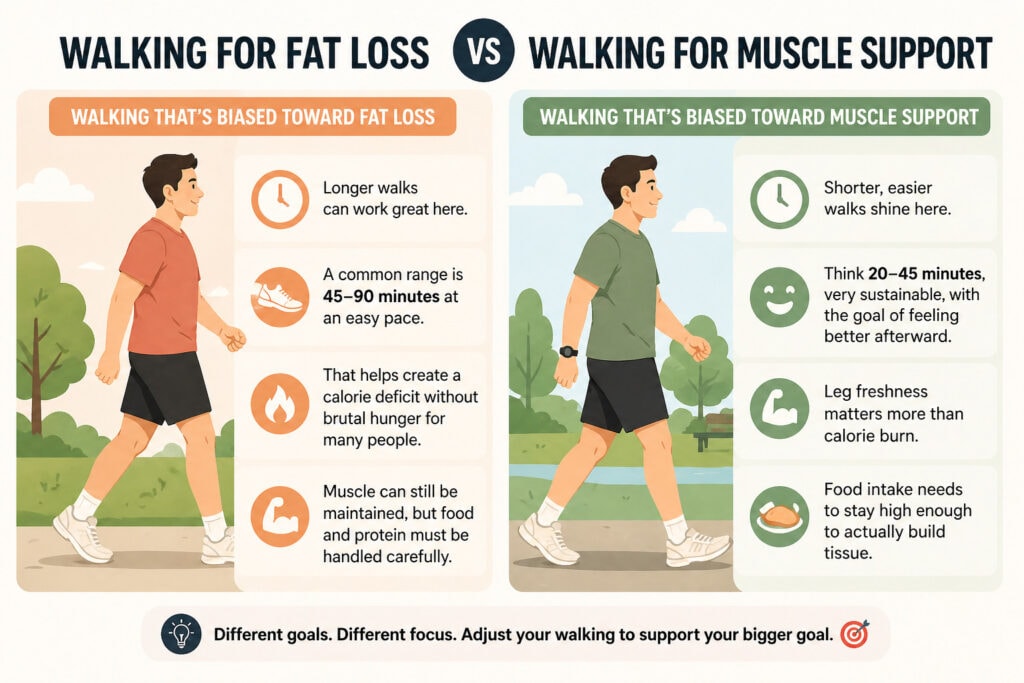
Walking for fat loss is usually about increasing total daily energy burn.
Walking for muscle support is usually about improving recovery and training quality without draining resources.
Walking that’s biased toward fat loss
Longer walks can work great here.
A common range is 45–90 minutes at an easy pace.
That helps create a calorie deficit without brutal hunger for many people.
Muscle can still be maintained, but food and protein must be handled carefully.
Walking that’s biased toward muscle support
Shorter, easier walks shine here.
Think 20–45 minutes, very sustainable, with the goal of feeling better afterward.
Leg freshness matters more than calorie burn.
Food intake needs to stay high enough to actually build tissue.
Walking can also use up calories pretty quickly
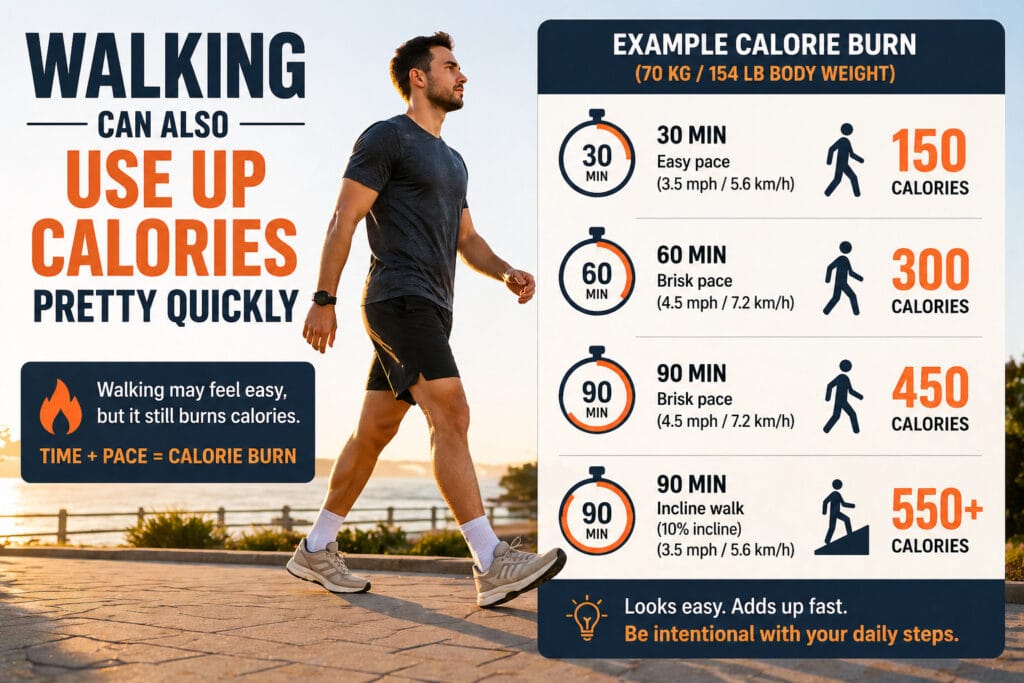
A daily 40-minute walk might burn roughly 150–300 calories depending on body size and pace.
That’s not “tiny.”
That’s a full snack.
Skipping that snack while also lifting hard is a classic way to spin wheels.
Muscle growth needs building materials.
Walking too hard too close to leg day can backfire
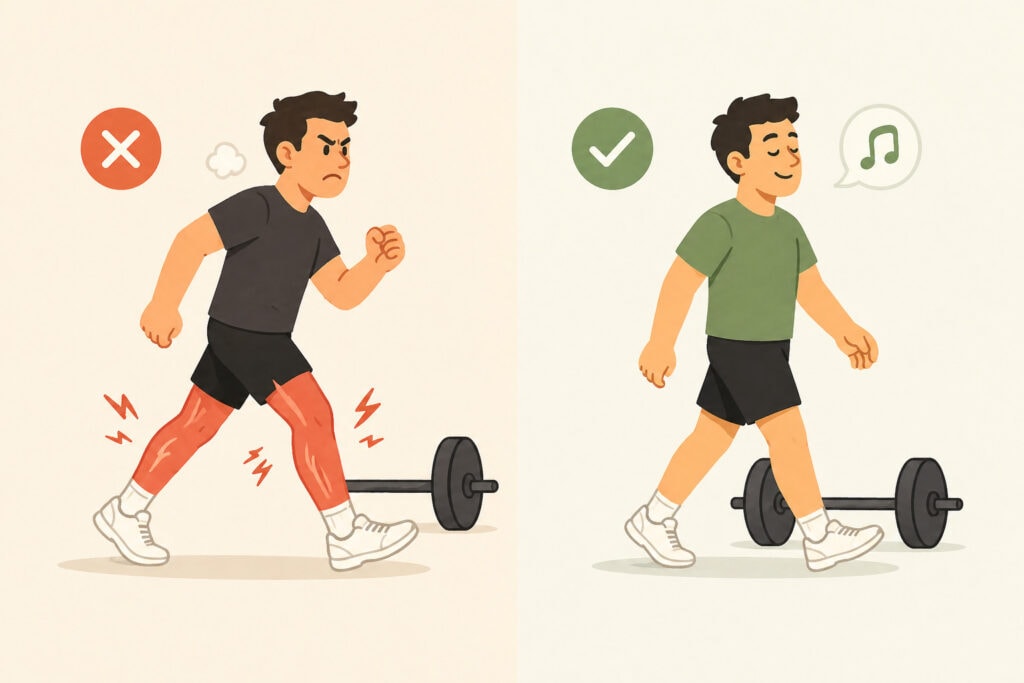
Easy walking is usually fine anytime.
Hard incline walking before heavy squats can make legs feel pre-fatigued.
Hard incline walking after heavy squats can extend soreness and reduce next-session performance.
A small timing tweak often fixes it.
How to set walking intensity without gadgets
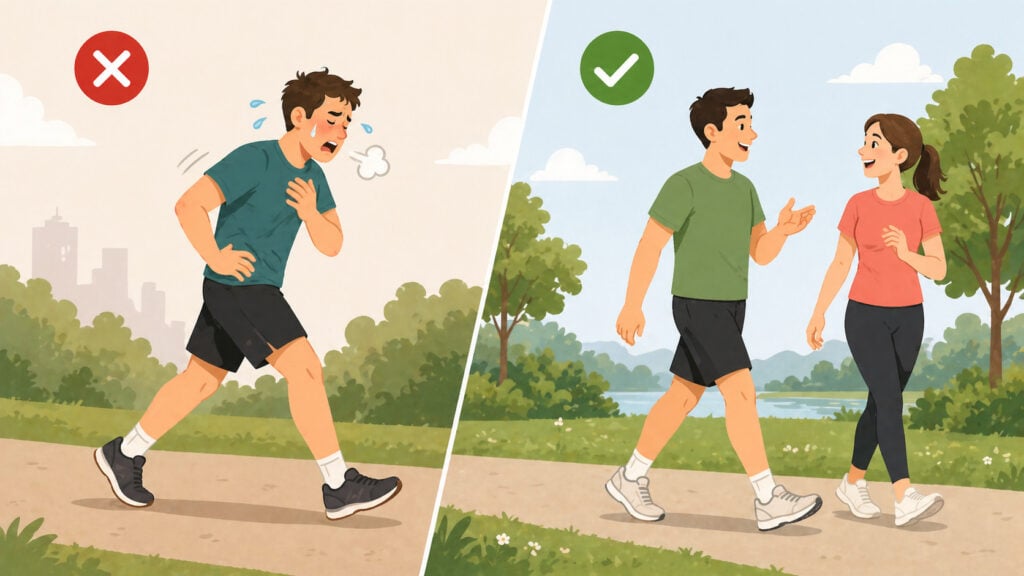
Heart rate monitors help, but they aren’t required.
A simple rule worked for me.
Conversation should be possible without sounding like a broken accordion.
Nasal breathing should work most of the time.
Legs should feel warmer after, not cooked after.
If calves start burning or quads start pumping like it’s a workout, intensity has drifted too high for “muscle support walking.”
If lifting is the main goal, here’s the walking template that behaved best
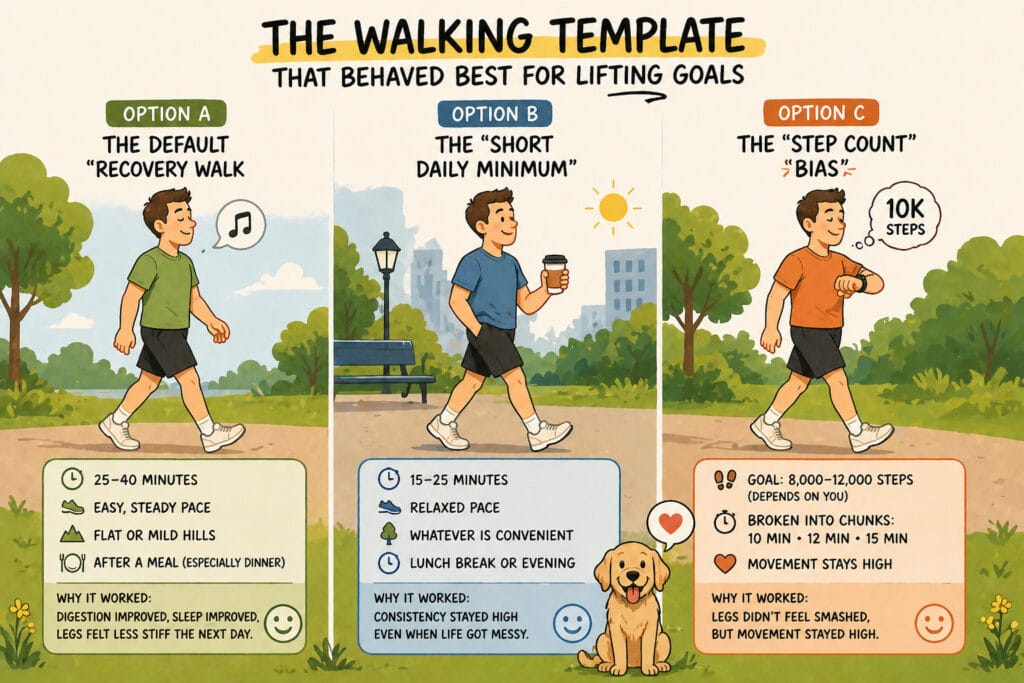
Option A: the default “recovery walk”
Duration: 25–40 minutes.
Pace: easy, steady, no racing.
Terrain: flat or mild hills.
Timing: after a meal works great, especially dinner.
Why it worked: digestion improved, sleep improved, legs felt less stiff the next day.
Option B: the “short daily minimum”
Duration: 15–25 minutes.
Pace: relaxed.
Terrain: whatever is convenient.
Timing: lunch break or evening.
Why it worked: consistency stayed high even when life got messy.
Option C: the “step count bias”
Goal: 8,000–12,000 steps per day depending on body size, appetite, and training volume.
Walking gets broken into chunks like 10 minutes, 12 minutes, 15 minutes.
Why it worked: legs didn’t feel smashed, but movement stayed high.
Walking, Hydration, and Foot Care
Walking daily can gradually beat up feet and ankles when shoes are a poor match.
Blisters, hot spots, and foot pain often change the way you walk without you even noticing.
Changed gait can then shift stress toward the knees, hips, or lower back.
That sometimes spills into lifting technique, especially during squats, lunges, and deadlifts.
Even a small limp or altered stride can make lower-body sessions feel less stable.
Hydration matters too, because tired and dry tissues often feel stiffer and less cooperative during long walks.
Low hydration can also make recovery feel slower, especially in warmer weather.
Comfortable shoes that fit well usually matter more than expensive tech or flashy marketing.
Rotating between two pairs can sometimes help by changing pressure points across the week.
Varied surfaces also help, since sidewalks, trails, grass, and tracks load the body a little differently.
When feet feel better, lifting mechanics often feel cleaner too.
When daily walking is a bad idea (or at least needs adjustment)
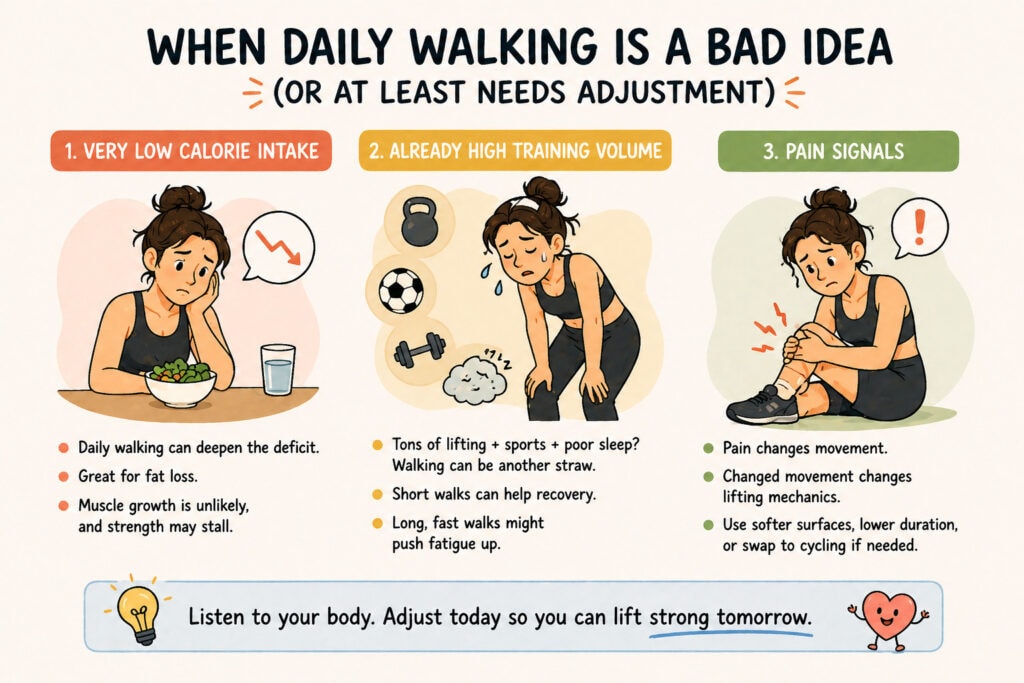
Some situations make walking daily less helpful.
Not forever.
Just “handle with care.”
Very low calorie intake
If dieting hard, daily walking can deepen the deficit.
That can be great for fat loss.
Muscle growth in that situation is unlikely, and strength may stall.
Already high training volume
If lifting includes tons of sets, plus extra sports, plus poor sleep, walking can become one more straw on the camel’s back.
Short walks still might help recovery, but long fast walks might push fatigue up.
Pain signals in feet, shins, knees, or hips
Pain changes movement.
Changed movement changes lifting mechanics.
A small ache can become a big limitation if ignored.
In that case, walking might need softer surfaces, lower duration, or even a temporary swap to cycling.
Final Thoughts
Walking daily can support muscle growth in indirect but useful ways.
It may improve recovery, sleep, stiffness, mood, and overall training quality.
It can also work against muscle growth when it turns into extra hard training, burns calories you needed, or leaves legs feeling flat.
The best daily walk for building muscle usually looks pretty boring.
That is not a bad thing.
Easy walking, hard lifting, and enough food is a powerful combination.
Fat loss can still happen when food intake stays below total energy use, since walking adds movement without much stress.
Muscle growth can still happen when calories stay high enough and recovery remains solid.
Walking is not only a fat-loss tool.
Used well, it can fit almost any goal.