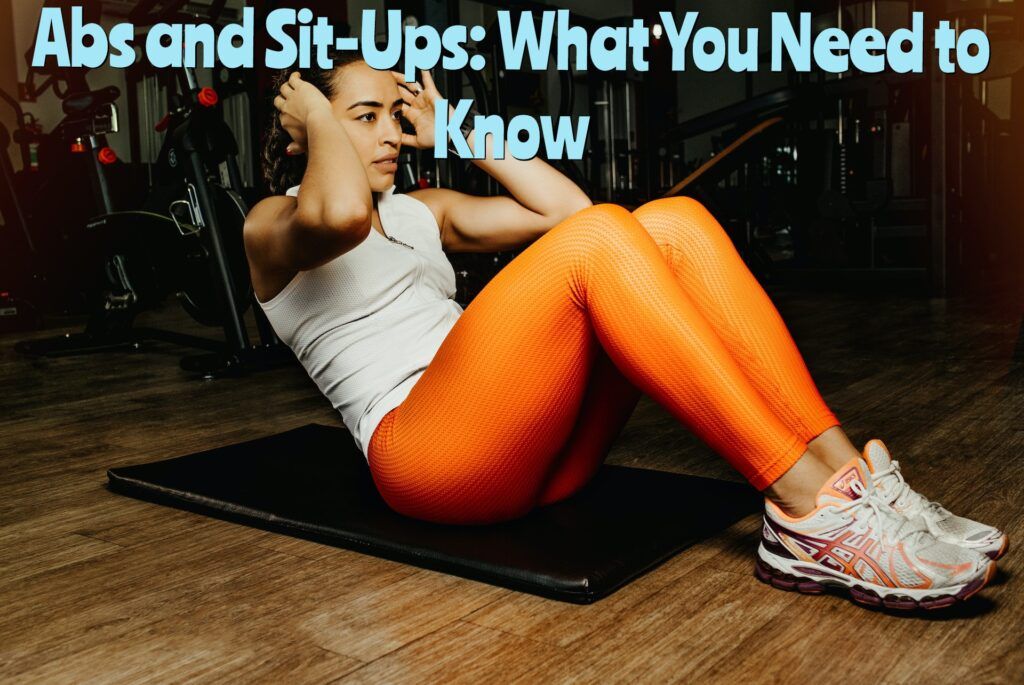
They can strengthen and thicken the muscles underneath your stomach.
Still, sit-ups alone usually cannot reveal a six-pack when body fat is covering it.
I have had living-room sessions where 50 sit-ups left my abs sore for two days.
Then I caught my reflection a week later and wondered why nothing looked different.
That gap between a hard set and a visible result confused me for years.
The effort felt obvious.
The result did not.
What Sit-Ups Can and Cannot Do for Your Six-Pack
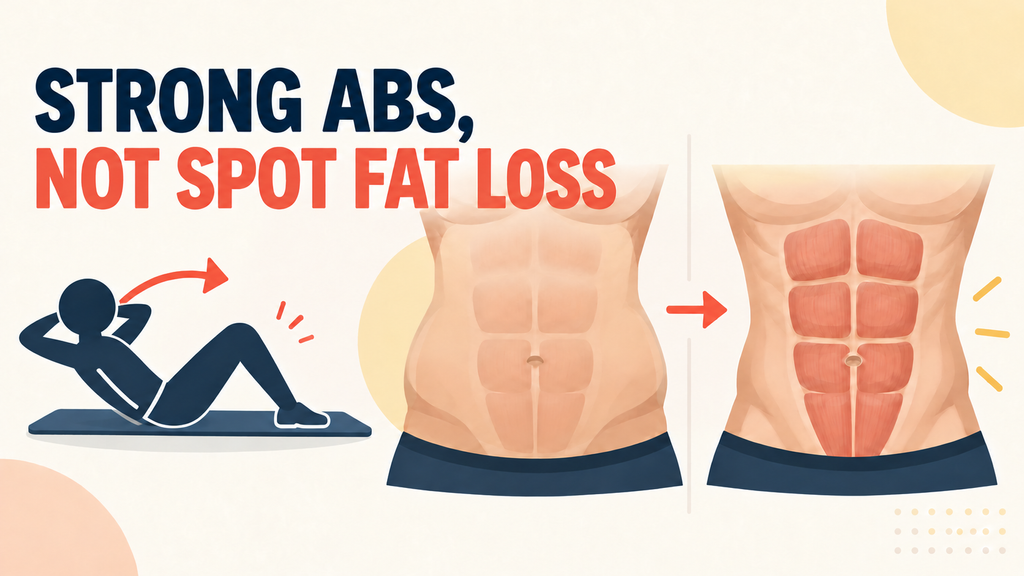
Sit-ups train your rectus abdominis, the long muscle down the front of your stomach that forms the visible blocks of a six-pack.
They also involve the hip flexors, which help bring your torso toward your thighs.
Stronger, more developed abs can make a six-pack look deeper once it is visible.
Visibility, though, depends largely on how much fat sits between the skin and those muscles.
I think of it like building a good stone wall behind a tarp, which is probably why the comparison makes immediate sense to me after a day around masonry.
The wall is still there, and it may be getting sturdier every week.
You just will not see its outline clearly until the tarp is removed.
For most people, the useful answer is this:
- Use sit-ups to train your abs if they feel comfortable.
- Build your meals and daily movement around gradual fat loss if seeing definition is the goal.
- Include a few other abdominal movements so your trunk gets more than one kind of challenge.
- Stop treating a burning stomach as proof that fat is leaving that exact area.
Why Sit-Ups Feel Different After 30 Reps
At home, I sometimes lie down with my knees bent, feet on the floor, and decide I will do “just a quick hundred.”
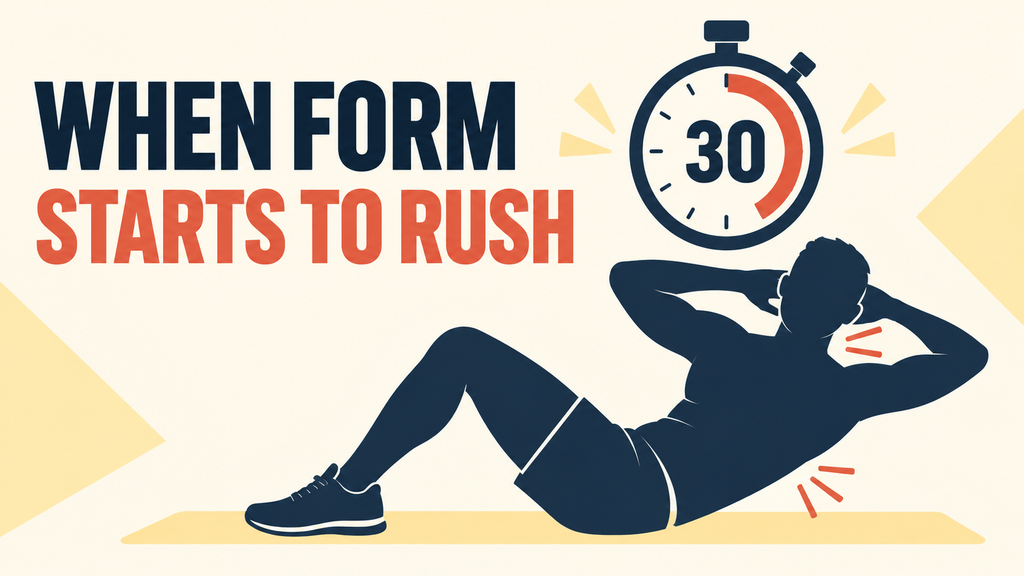
That plan sounds ambitious until rep 30, when the speed rises, my feet start pulling on the carpet, and the movement turns into a rushed nod toward my knees.
The front of the stomach is working, but so are the muscles at the front of the hips, and that was hard for me to admit when I wanted every rep to count as “abs.”
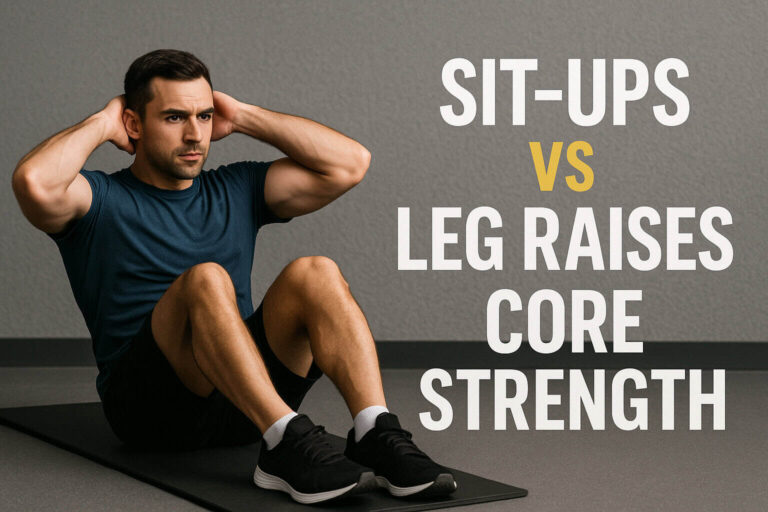
With a sit-up, you start on your back and bend your knees.
Your shoulder blades and then much of your back lift from the floor as your chest travels toward your thighs.
The rectus abdominis bends the spine forward, while the hip flexors take on more work as the torso comes fully upright.
At first, I treated that as a failure.
Now I see it differently: a sit-up is not a private conversation between you and your six-pack.
On a day when my lower back feels stiff from work or a long drive, full sit-ups can feel more like a tug in the hip crease than an abdominal exercise.
In that moment, forcing another 20 reps is usually a poor trade.
I shorten the range, switch to a crunch, or move on to a plank variation instead.
Useful sit-ups tend to look and feel like this:
- Knees are bent and feet stay planted without somebody holding them down.
- Hands rest across the chest or lightly beside the head, rather than pulling the neck forward.
- The rise is controlled enough that you can exhale as you come up.
- Your stomach tightens before the lower back complains.
- You stop one or two repetitions before the form becomes a frantic race.
Neck pain, sharp back pain, numbness, or a pinching feeling are reasons to stop and choose a different movement.
Hard training should leave you worked, not folded like a deck chair.
Why Hundreds of Sit-Ups Do Not Target Belly Fat
The tempting idea is easy to understand.
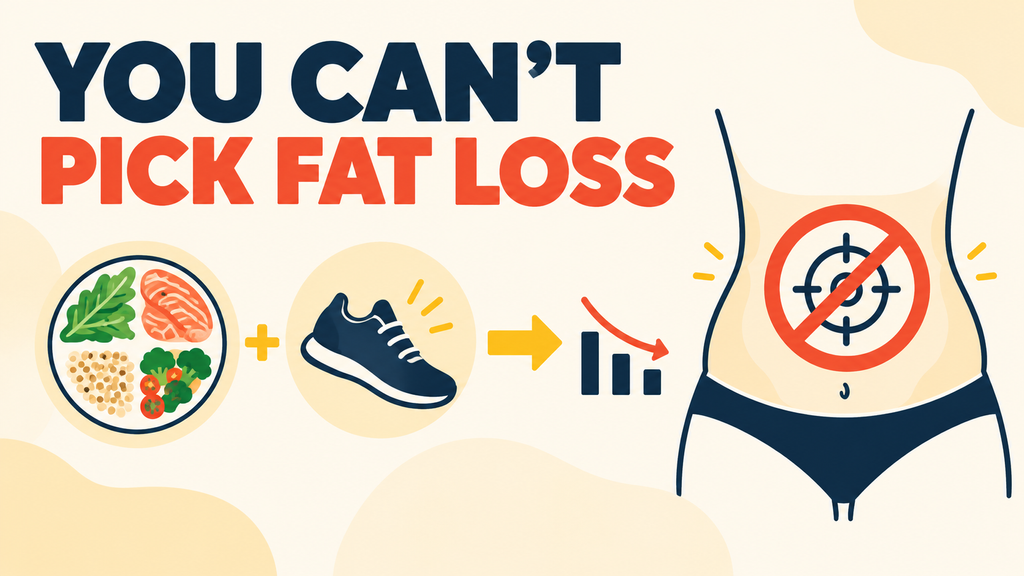
If a muscle near the belly is working hard, surely the fat next to it should be the first fuel source to disappear.
Bodies are less cooperative than that.
Fat loss happens through an energy deficit, meaning you use more energy than you take in for long enough that the body draws from stored energy.
Where fat comes off first is influenced by genetics, hormones, sex, and plain bad luck with the mirror.
Many men hold onto lower-belly fat late into a cut, while many women notice hips and thighs holding on stubbornly.
Neither pattern means the workouts are failing.
One small study by Vispute and colleagues had participants train their abdominal muscles for six weeks and found better abdominal endurance, but no meaningful reduction in abdominal fat from the exercise alone.
That result matches what I kept seeing in ordinary training: a sore midsection proves the muscles were challenged, not that the local fat received an eviction notice.
Food becomes the boringly powerful part here, and I resisted that answer far longer than I should have.
I do not mean living on chicken breast and sadness.
I mean looking at the ordinary extras that quietly pile up: large evening portions, drinks that do not fill you up, handfuls while cooking, and weekends that erase five careful weekdays.
For a person who wants visible abs, these basics carry far more weight than adding a second sit-up marathon:
- Keep protein in meals so hunger is easier to manage.
- Let most meals include filling foods such as fruit, vegetables, potatoes, beans, rice, eggs, fish, meat, yogurt, or tofu.
- Walk more, especially on days spent at a desk or on the sofa.
- Aim for a slow body-weight change rather than a crash diet that turns training into a miserable chore.
- Watch a weekly trend, because one salty dinner can make the scale look like it has developed a grudge.
Sit-Ups Can Still Earn Their Place
After realizing they were not a belly-fat shortcut, I nearly wrote sit-ups off completely.
That was an overcorrection.
Once I stopped asking sit-ups to do every job, I enjoyed them again.
Done with control, they are a straightforward way to practice bending the torso and loading the front abs.
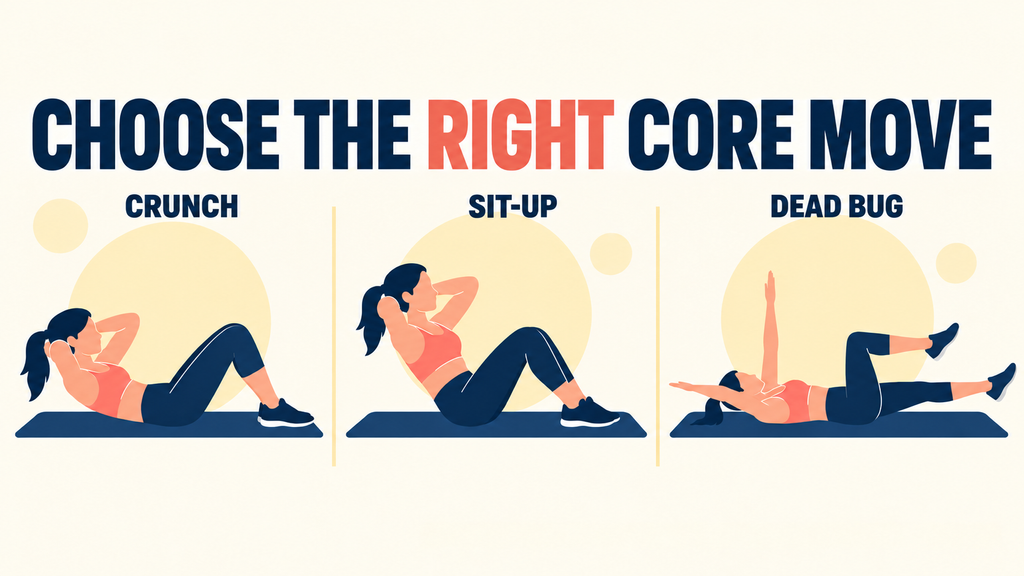
Beginners often do better with a crunch first.
Lie on your back with knees bent, then lift only your head, neck, and shoulder blades a little from the floor.
I imagine bringing my ribs toward my pelvis instead of trying to touch my knees with my forehead.
That shorter motion keeps the focus closer to the abs and is easier to control.
Try two or three sets of 8 to 15 slow crunches, resting about 60 to 90 seconds between sets.
Choose one version that you can repeat cleanly:
- Crunch: best when full sit-ups irritate the lower back or feel too hip-heavy.
- Standard sit-up: useful for controlled trunk flexion with no equipment.
- Dead bug: lie on your back with arms toward the ceiling and knees bent at 90 degrees, then slowly lower the opposite arm and leg without letting the back arch; useful for learning to brace.
Your Abs Need More Than Sit-Ups
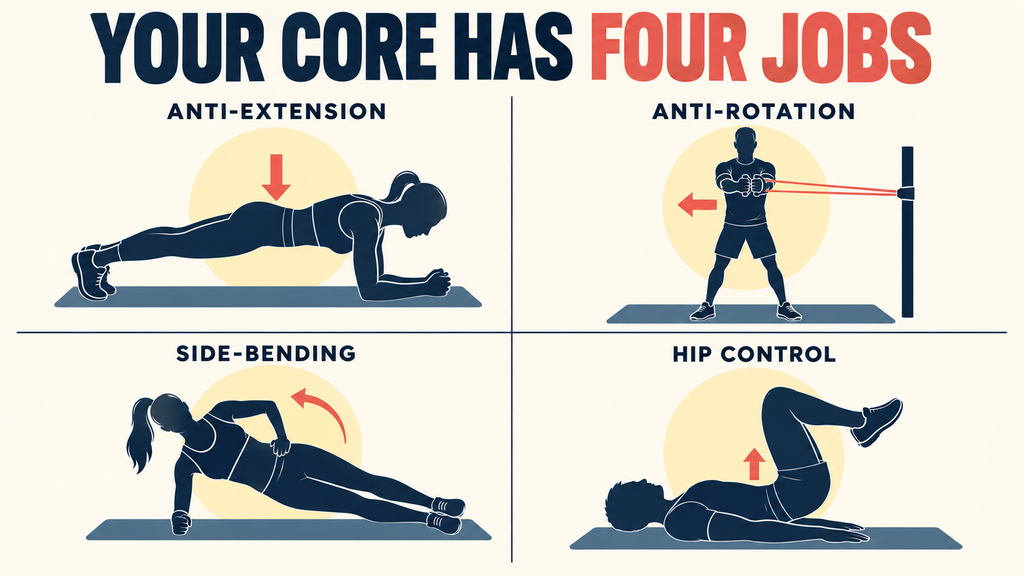
Training made me notice that the stomach muscles do not only curl your body upward.
They also help stop your spine from arching, twisting, or bending sideways when a load or a moving limb tries to pull you out of position.
That is why I could do plenty of sit-ups yet still shake during a plank or feel my middle give up first while carrying heavy shopping bags upstairs.
You do not need a cable machine for this idea.
Pair sit-ups with one movement from each group below across the week:
- Anti-extension: forearm plank, high plank, or dead bug, where you resist the lower back sagging.
- Anti-rotation: a band press-out, where the band pulls you sideways and you keep the torso facing forward.
- Side-bending resistance: side plank, with one forearm on the floor and your body held in a straight line on one side.
- Hip and leg control: reverse crunch, where the pelvis curls upward while you avoid swinging.
At home, a round of crunches, dead bugs, and side planks fits into the time it takes the coffee to finish brewing.
A Six-Pack Is Built in Two Different Places
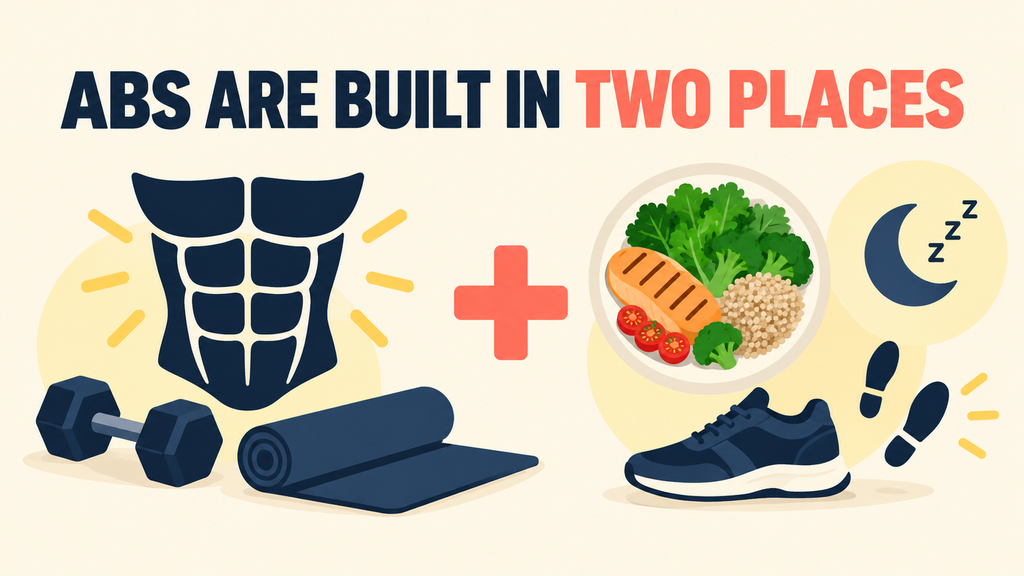
One place is the mat or gym floor, where I make the abdominal muscles stronger and thicker.
The other is the kitchen and the rest of the day, where my eating habits, steps, sleep, and overall training influence the layer covering those muscles.
Ignoring either half creates a familiar frustration.
Muscle size matters more than I expected.
When I add resistance slowly to abdominal work, the blocks look more pronounced at a body fat level where they used to be barely visible.
I have wasted time chasing the look of somebody else’s stomach, and it can make a sensible goal feel strangely impossible.
A better target is a stronger trunk, a waistline moving in the direction you want, and definition that reflects your own build.
When I Would Skip Sit-Ups for the Day
There are days when I roll out the mat, feel the stiffness in my back after work, and know the floor is not the place to prove anything.
Full sit-ups may be worth avoiding or adapting if you have:
- Sharp or increasing lower-back pain during the movement.
- A neck that gets sore because the hands keep pulling the head forward.
- Recent abdominal surgery, a hernia concern, or a condition for which a clinician has given restrictions.
- A pregnant or postpartum body that needs individual guidance before pushing abdominal pressure.
- A long day of heavy lifting that already leaves the trunk tired and braced for hours.
The Verdict on Sit-Ups and Six-Pack Abs
Sit-ups can build stronger abs and make the blocks of a six-pack stand out more.
That becomes visible once you are lean enough to see them.
They cannot decide where body fat comes off.
For that reason, sit-ups work best alongside sensible eating, regular movement, and other core exercises.
A visible six-pack comes from building the muscle, then gradually revealing what you have built.