You walk into the gym and everything looks useful at the same time.
The machines.
The dumbbells.
The treadmill.
The bench that is already taken, because of course it is.
I remember pretending to stretch near the dumbbell rack while secretly trying to decide what exercise looked least confusing.
That is usually where beginners lose the workout before it even starts.
This article is a practical walk-through of the little choices that make the gym less confusing:
where to start, what to adjust, how much weight to use, when to rest, and when to stop adding random exercises just because they are nearby.
1. Pick Your First Stop Before the Gym Picks It for You
 My worst beginner sessions always started with wandering.
Not walking.
Wandering.
I would pass the machines, glance at the dumbbells, pretend to adjust my shoes, and somehow end up near the treadmill area doing absolutely nothing useful.
Choosing the first stop fixes that.
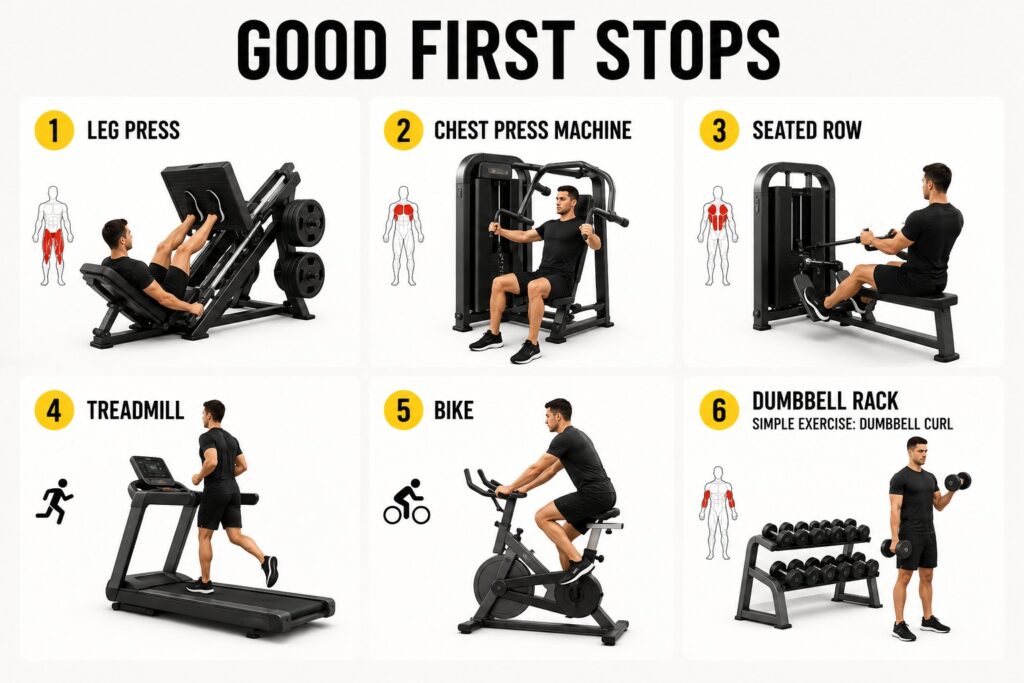
Before the workout begins, pick one place to go first.
Good first stops are:
- Leg press.
- Chest press machine.
- Seated row.
- Treadmill.
- Bike.
- Dumbbell rack with one simple exercise in mind.
That first decision lowers the mental noise.
The workout feels less like a maze once your feet know where to go.
2. Start With Equipment That Explains the Movement
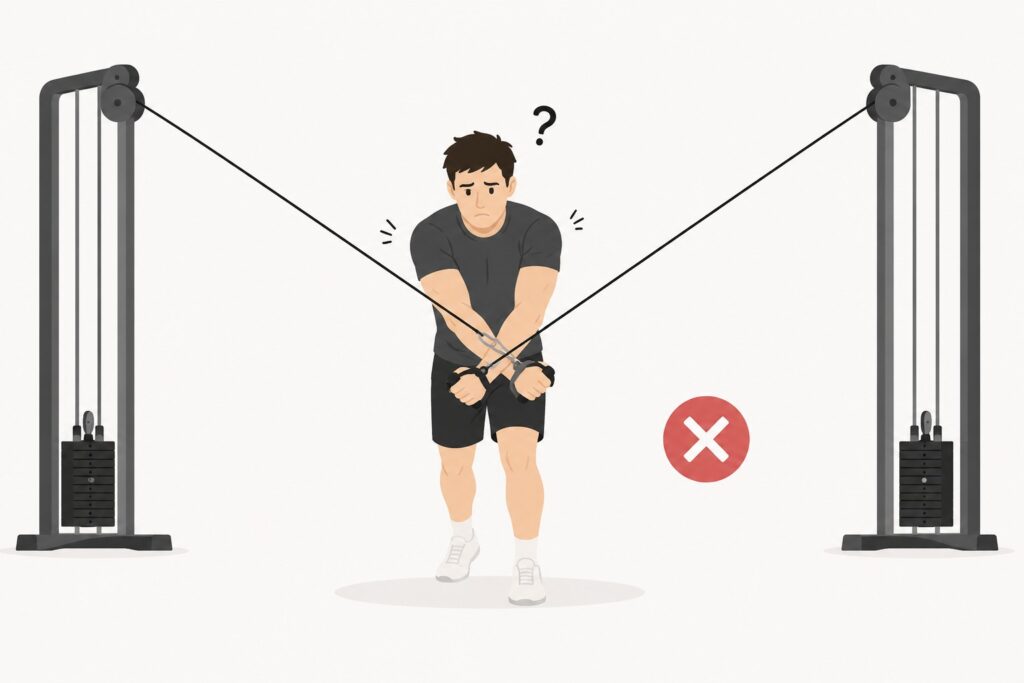
Early on, I made the gym harder by choosing exercises that looked cool but made no sense in my body.
Cable machines were the worst.
Too many handles.
Too many angles.
Too many ways to look like I was setting up a small fishing operation.
Machines helped me slow down.
A leg press, for example, is clear.
You sit down, place your feet on the platform, bend your knees, lower the platform toward you, and push it away.
Your quads and glutes do most of the work.
That kind of exercise lets you learn effort before learning gym acrobatics.
3. Adjust the Machine Before You Judge the Exercise
There were times I thought, “This machine feels terrible.”
Then I changed the seat by one notch and suddenly the machine was fine.
Very humbling.
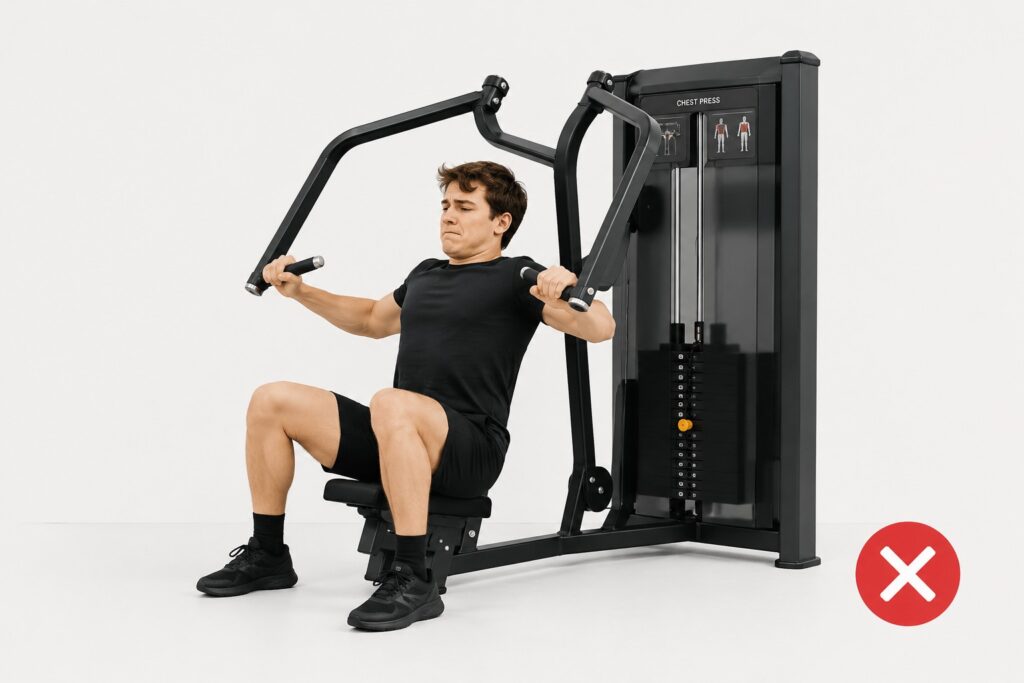
On a chest press machine, the handles should usually sit around mid-chest height.
Too high can make the press feel shoulder-heavy.
Too low can make the movement feel awkward before it even starts.
Check these before adding weight:
- Feet flat.
- Back against the pad.
- Handles near chest level.
- Wrists comfortable.
- Pressing path smooth.
- No weird pinching.
A machine is not automatically wrong.
Sometimes the setup just needs two boring seconds of attention.
4. Let the First Set Tell You the Truth
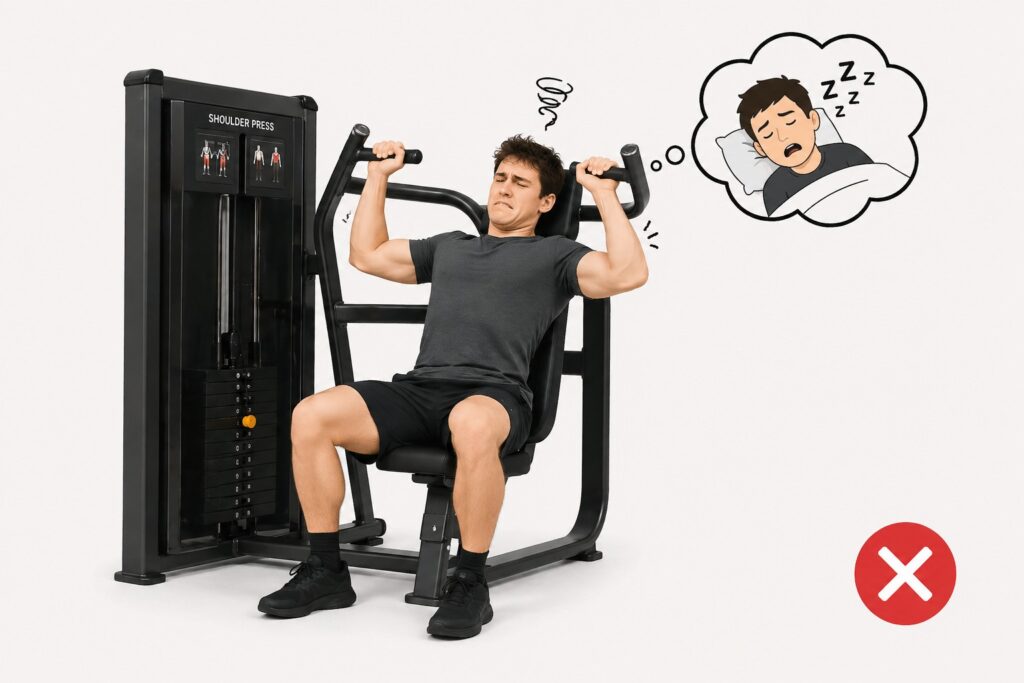
I used to treat the first set like it needed to impress somebody.
Bad idea.
The first set is where the body tells you what kind of day it is.
Maybe sleep was bad.
Maybe work was heavy.
Maybe your legs feel like they were replaced overnight with cheaper parts.
Start lighter than planned.
Do 8 controlled reps.
Notice what happens.
The first set should answer questions like:
- Does the movement feel smooth?
- Is the weight too light or too ambitious?
- Can you control the lowering part?
- Does anything feel sharp or strange?
- Can you repeat this without guessing?
A beginner who listens during the first set trains smarter for the rest of the session.
5. Choose a Weight You Can Repeat, Not Just Survive
I have picked weights that looked reasonable on the rack and then instantly regretted the relationship.
The first rep moved.
The second rep argued.
The third rep filed paperwork.
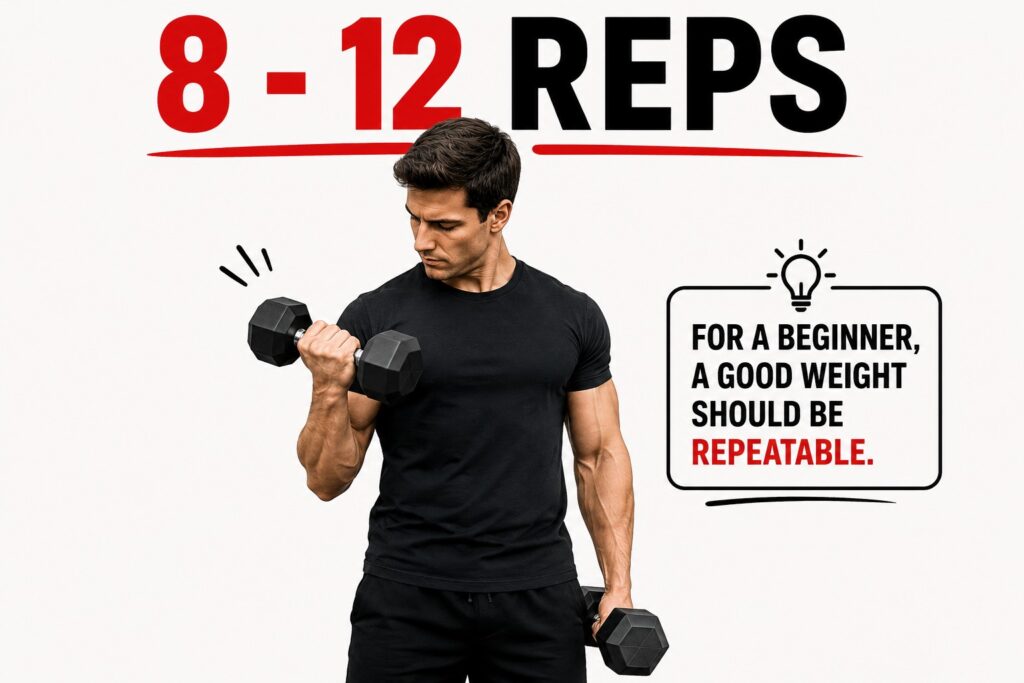
For beginners, a good weight should be repeatable.
Aim for 8–12 reps where the last few feel challenging but still organized.
Reduce the weight when:
- The movement gets shorter.
- The body twists.
- The weight drops too fast.
- You start bouncing.
- You cannot repeat the set cleanly.
Surviving one set does not prove much.
Repeating clean work teaches the body what to do.
6. Keep One Good Rep in Your Pocket
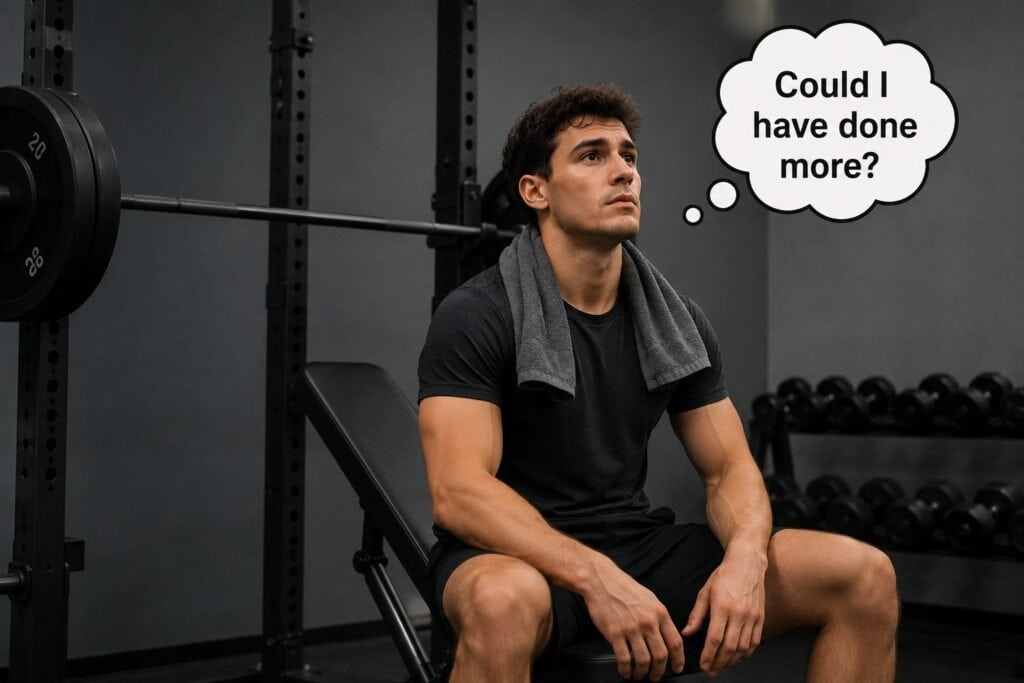
This one took me longer to accept because stopping early feels strange at first.
You finish a set and think, “Could I have done more?”
Probably.
That does not mean you should grind until the exercise melts.
Keeping one good rep in your pocket means stopping before form falls apart.
On a chest press, that might mean ending while the handles still move smoothly.
On a leg press, it might mean stopping before the knees start wobbling inward.
Good stopping signs:
- The last rep still looks controlled.
- The target muscles worked.
- No sudden pain appeared.
- You could repeat the movement next set.
- The exercise did not turn into a full-body escape attempt.
That small bit of restraint makes the next exercise better.
7. Learn One Movement Pattern at a Time
In the beginning, I thought more exercise names meant more knowledge.
Actually, it mostly meant more confusion.
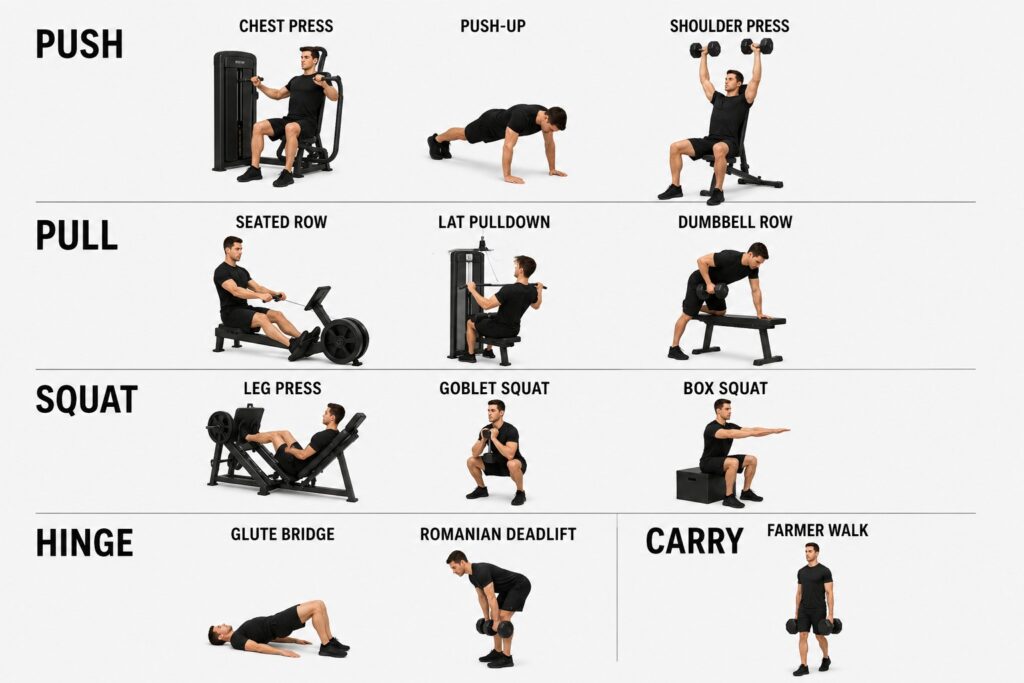
Fitness becomes easier when you group exercises by what they do.
A push means you press something away.
A pull means you bring something toward you.
A squat means knees and hips bend together.
A hinge means hips travel back while the back stays long.
A carry means you hold weight and walk.
That gives you a simple map:
- Push: chest press, push-up, shoulder press.
- Pull: seated row, lat pulldown, dumbbell row.
- Squat: leg press, goblet squat, box squat.
- Hinge: glute bridge, Romanian deadlift.
- Carry: farmer walk with dumbbells.
The gym starts making more sense when the names stop floating around separately.
8. Make Push-Ups Easier Without Turning It Into a Moral Problem
Floor push-ups humbled me fast.
I used to think, “If I cannot do these cleanly, I am weak.”
No.
The floor version was just too hard for where the body was that day.
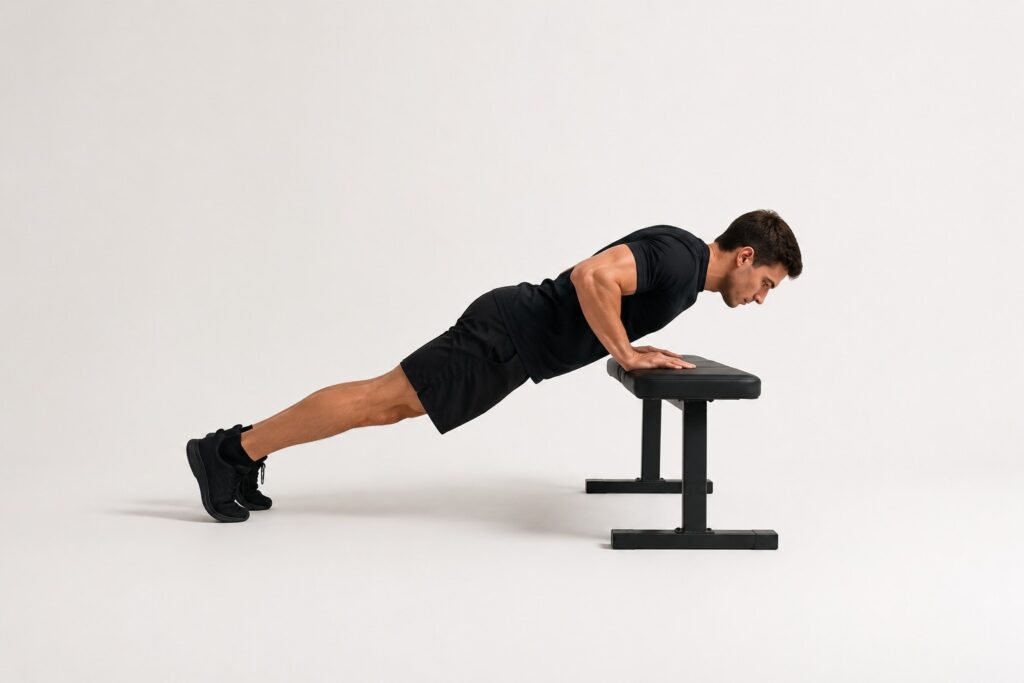
Hands on a bench changed everything.
Place your hands on a stable bench, step your feet back, keep your body long, lower your chest toward the bench, and press back up.
Chest, shoulders, triceps, and core still work.
Higher hands make the movement easier because you press less bodyweight.
Useful beginner options:
- Wall push-up.
- Counter push-up.
- Bench push-up.
- Box push-up.
- Knee push-up.
- Slow lowering push-up.
Scaling an exercise is not cheating.
It is how you actually learn it.
9. Rest Until the Next Set Has a Chance
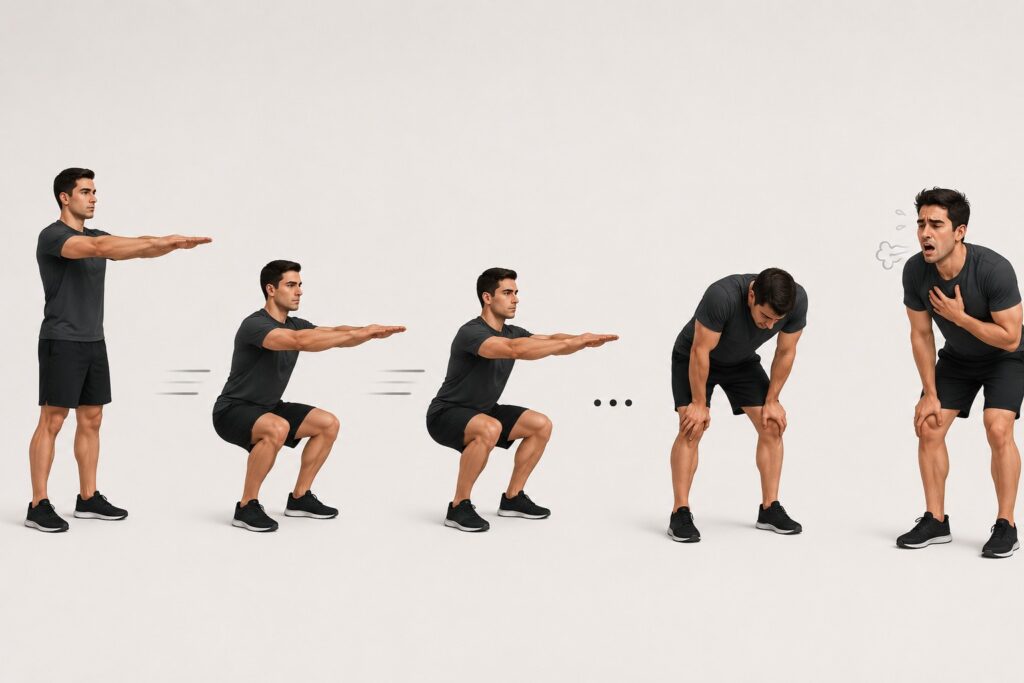
I have rushed sets because I thought resting looked lazy.
That was dumb.
Rushing made the next set messy, and then I blamed strength instead of the clock.
Most beginner sets do well with 60–120 seconds of rest.
Bigger leg movements may need closer to two minutes.
You are probably ready when:
- Breathing settles.
- The next setup feels clear.
- Hands and feet know where to go.
- The weight does not feel scary before it moves.
- You can control the first rep.
Rest is not wasted time.
It is where the next clean set gets built.
10. Write Notes That Save Your Next Workout
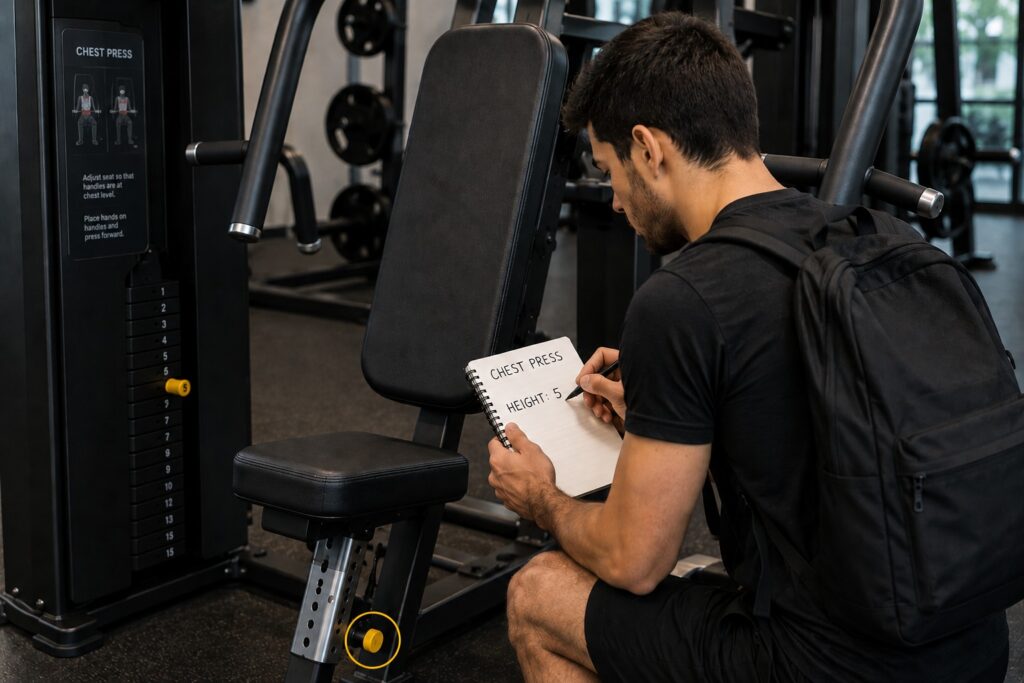
I avoided logging workouts at first because it sounded too serious.
Then I kept forgetting which seat height worked, which weight was too much, and which machine made me feel like folded laundry.
A tiny note fixes that.
Write the useful stuff only.
Examples:
- Leg press — seat 3 — 100 lb — 10 reps on the first set, 10 reps on the second set.
- Chest press — seat 4 — 40 lb — 10 reps on the first set, 9 reps on the second set.
- Row machine — neutral handles felt better.
- Treadmill — 12 min — incline 3.
- Bench push-up — 3 sets of 8 — clean.
That note is not for being fancy.
It is for walking in next time with less confusion.
11. Stop Changing Exercises Every Workout
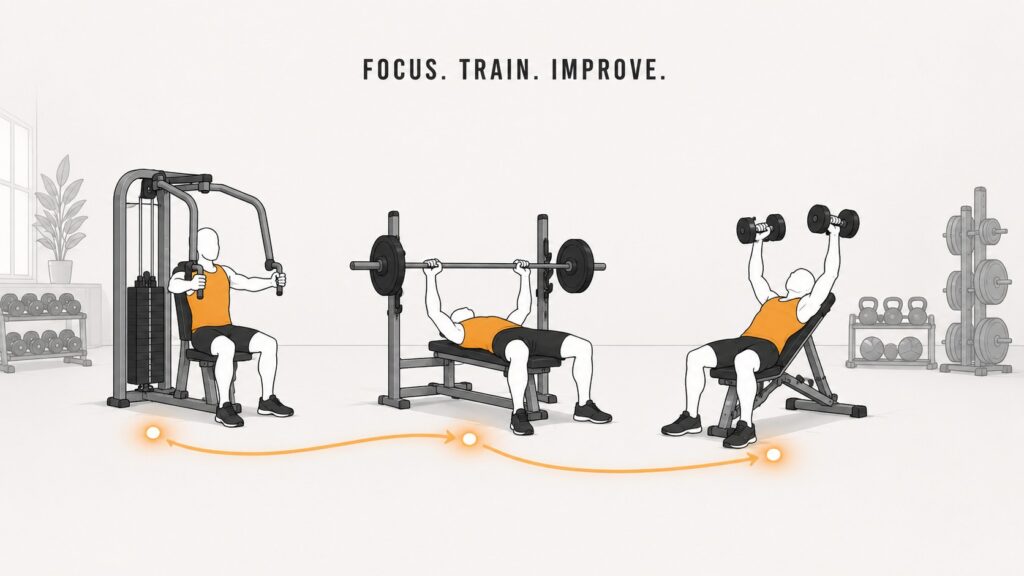
I used to swap exercises too quickly.
One day chest press.
Next day dumbbell press.
Next day cable fly.
Next day some machine I saw someone else use and immediately overestimated.
The problem was simple.
I never gave myself enough time to learn anything.
Beginners need a few repeated exercises.
Keep some anchors for several weeks:
- One leg exercise.
- One push exercise.
- One pull exercise.
- One easy cardio choice.
- One core movement.
Change things when they hurt, never fit your body, or keep feeling confusing after several honest tries.
Familiarity is not boring here.
It is useful.
12. Watch the Last Two Reps More Than the First Two
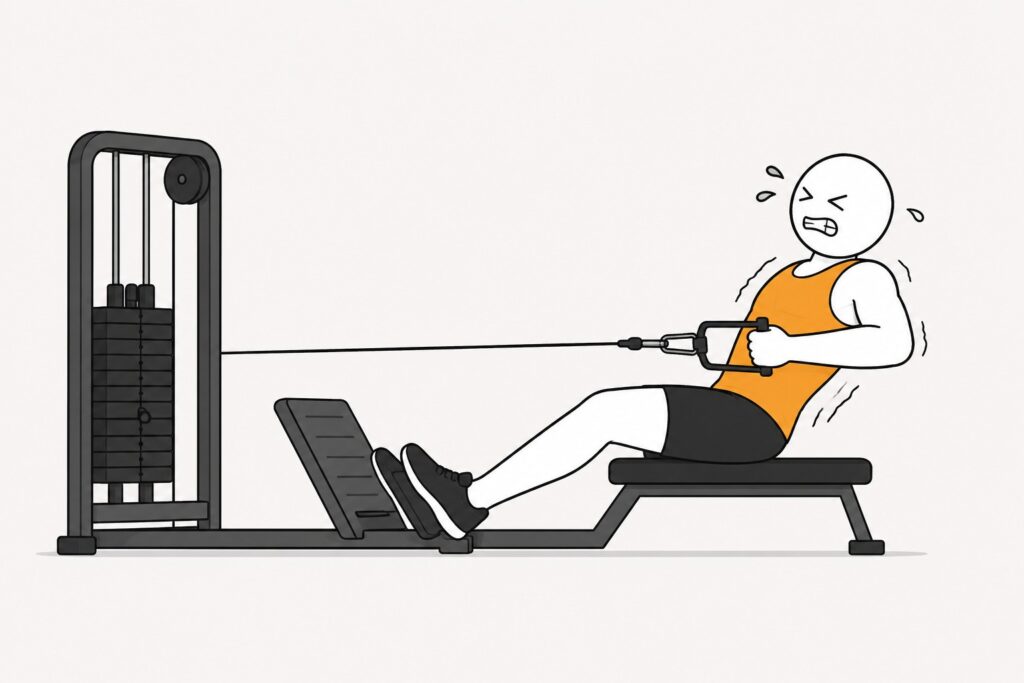
The first reps can fool you.
They usually look fine because you are fresh.
The last two reps tell the real story.
On a seated row, sit tall, place your feet on the pads, hold the handles, and pull them toward your lower ribs.
Back muscles and biceps help.
Good final reps still have control.
Rushed final reps usually bring leaning, jerking, or half-pulling.
Watch for:
- Torso staying steady.
- Handles reaching a clear finish.
- Weight returning slowly.
- No big body swing.
- No sudden shortening of the pull.
Those last two reps show whether the weight belongs in your workout.
13. Use Cardio You Can Repeat Tomorrow
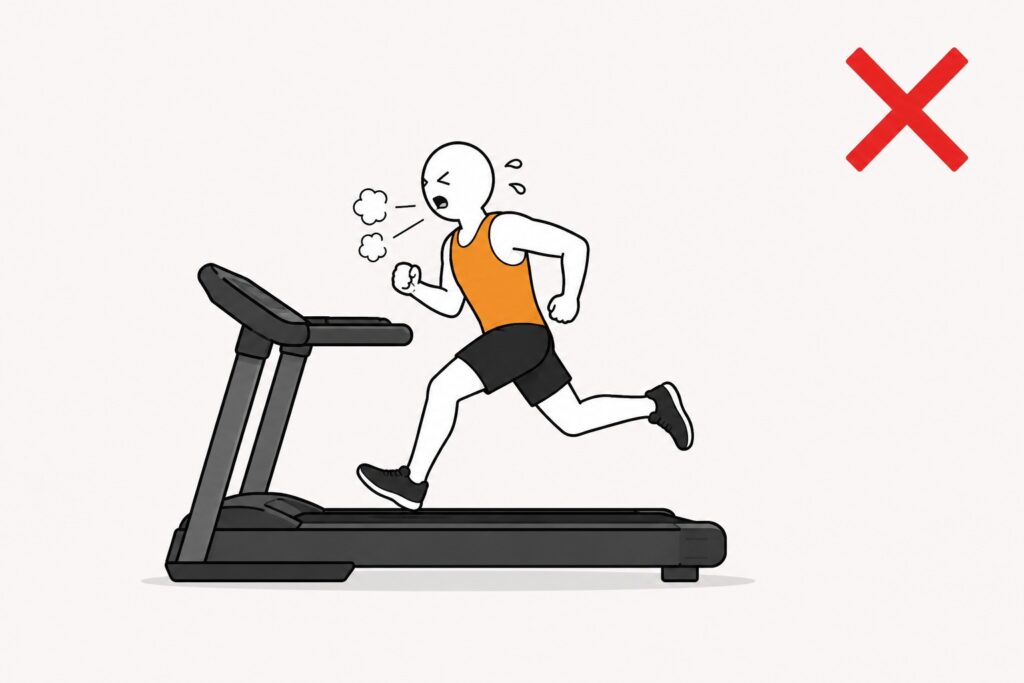
I have made cardio too aggressive before.
The workout ends, I jump on a treadmill like I have something to prove,
and five minutes later I am bargaining with myself over whether seven minutes counts as cardio.
Beginner cardio should be repeatable.
Try a pace where you can speak in short sentences.
Breathing can be warmer.
The body should not feel like it is being chased by wolves.
Good options:
- 10–15 minutes walking after lifting.
- Easy bike pace.
- Light elliptical.
- Outdoor walk after dinner.
- Short incline walk.
Cardio builds faster when it does not scare you away from the next session.
14. Know When Effort Becomes a Warning Sign
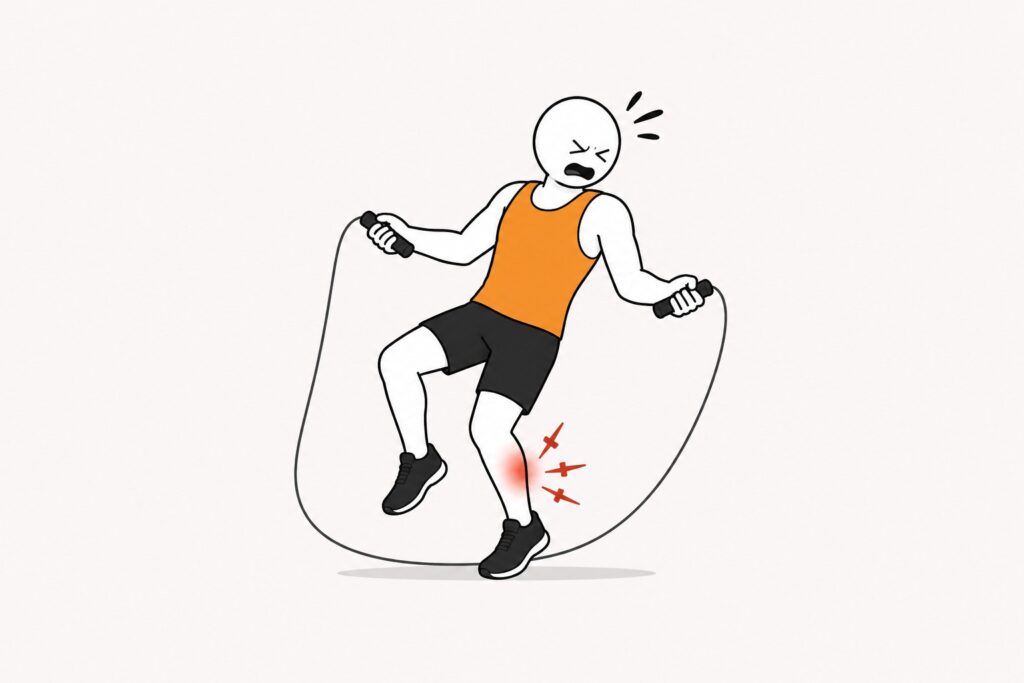
Some discomfort is just effort.
Some discomfort is your body asking you to stop being stubborn.
I learned to separate the two after forcing exercises that should have been adjusted.
Muscle work can feel warm, heavy, or challenging.
Warning signs are different.
Stop or reduce when you feel:
- Sharp pain.
- Pinching.
- Numbness.
- Sudden pain.
- Joint pain that changes the movement.
- Pain that makes you compensate.
A beginner does not need to fight through that.
Use a lighter weight, shorter range, different handle, easier version, or another exercise.
15. Build Backup Options Before the Gym Gets Crowded
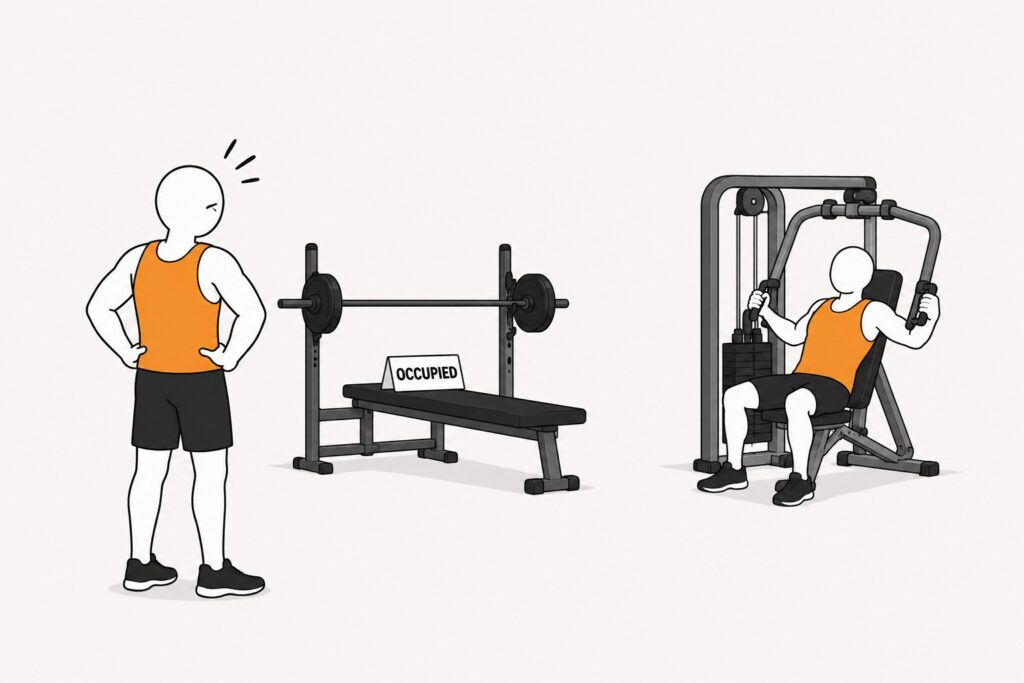
Crowded gyms used to destroy my plan.
One busy bench and suddenly the whole workout felt ruined.
Now I keep backup options ready.
If the bench is taken, use chest press.
If the cable row is busy, use a seated row machine.
If the squat rack is packed, use leg press.
If the treadmill area is full, use the bike.
Backups keep the session alive.
The gym feels less confusing when one occupied machine does not cancel your brain.
16. Ask Specific Questions Instead of Feeling Lost Quietly
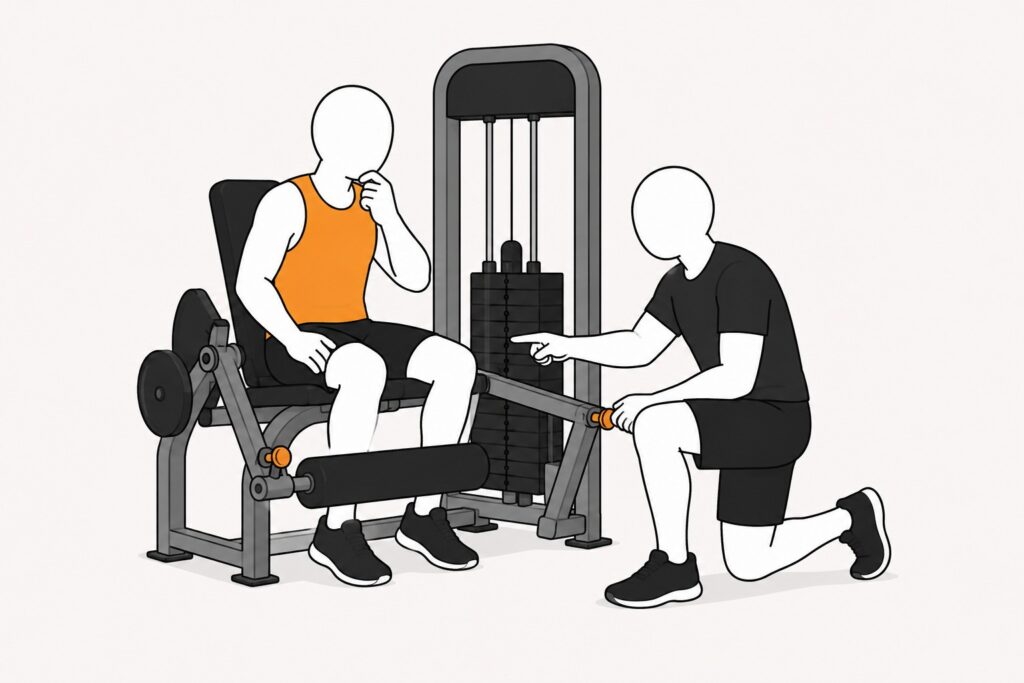
I used to avoid asking because I did not want to look new.
Plot twist: I already looked new.
Asking one small question would have saved time.
Useful questions are short:
- “Is this seat height okay?”
- “Does this machine train back or chest?”
- “Can I work in after your set?”
- “Where do my feet go on this platform?”
- “Does this bench adjust?”
Most people answer and go back to their workout.
The scary moment lasts five seconds.
The saved confusion can last the whole session.
17. Eat Like Training Is Actually Happening
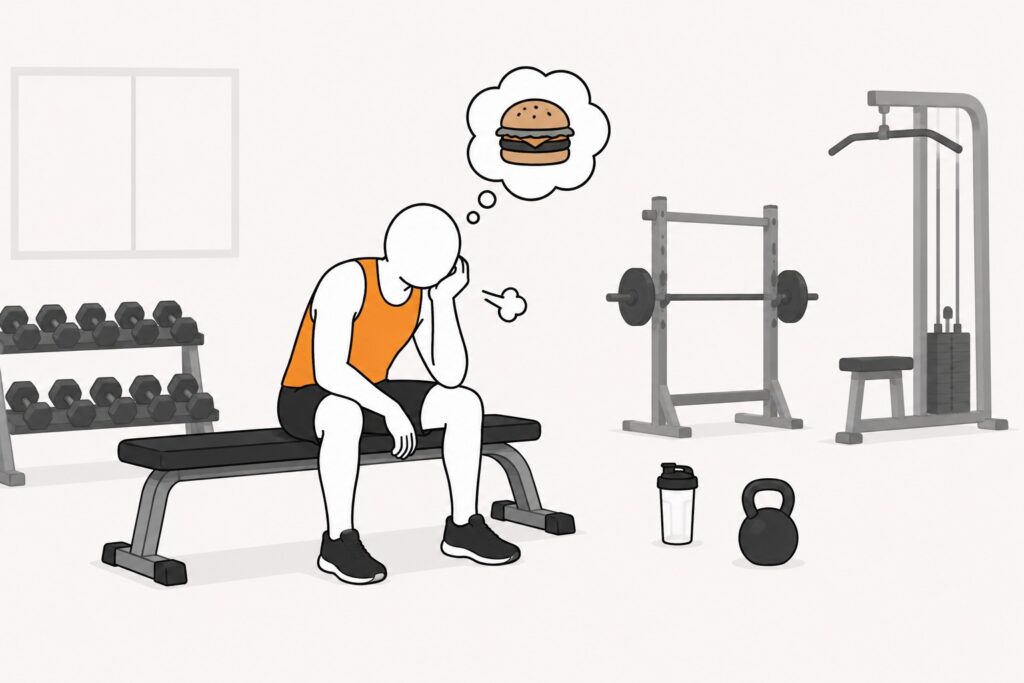
Some bad workouts were not training problems.
They were food problems wearing gym clothes.
I would show up underfed, over-caffeinated, and confused why the warm-up felt heavy.
You do not need a perfect meal plan.
Start with normal fuel.
Simple pre-workout choices:
- Greek yogurt and fruit.
- Toast with eggs.
- Banana and peanut butter.
- Oats with milk.
- Rice and chicken.
- A normal lunch 2–3 hours before training.
A fueled beginner usually learns movements better.
Coffee and hope can only carry so much.
18. Train Two or Three Days Before You Try to Become a Gym Ghost
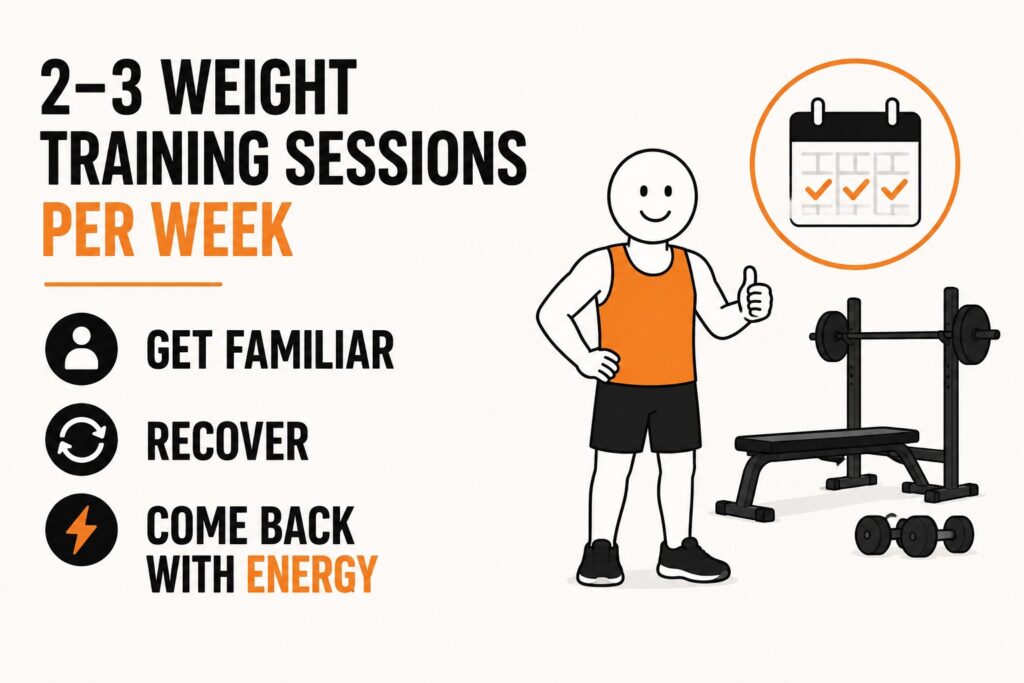
More days sound serious.
Serious does not always mean better.
At the beginning, two or three strength sessions per week are enough to learn the gym, recover, and return with decent energy.
The American College of Sports Medicine has recommended 2–3 weekly resistance training days for novice lifters, which matches what I usually see work in normal life too.
A realistic start might be:
- Two full-body strength days.
- One or two easy cardio days.
- Rest days without guilt.
- Short notes after each session.
The goal is not living in the gym.
The goal is understanding it well enough to come back.
19. End Before the Workout Turns Into Random Extra Stuff
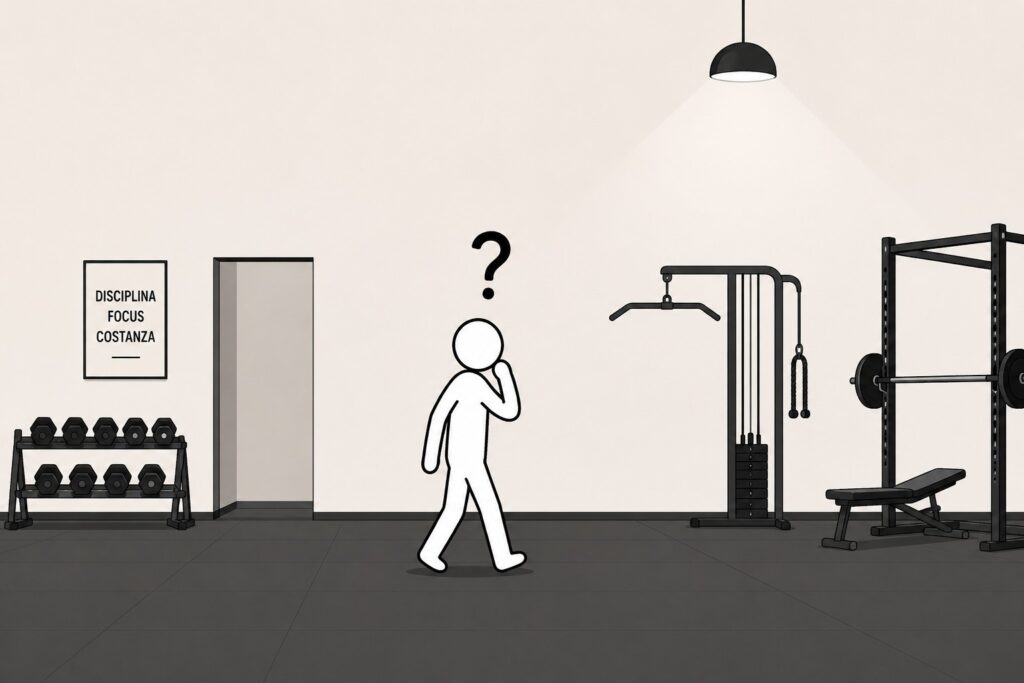
My beginner workouts often went wrong at the end.
The planned part finished.
Then I wandered.
Suddenly I was doing calf raises, curls, an ab machine, and some cable movement I could not explain in court.
Ending clean is a skill.
A useful beginner session can finish after:
- 4–6 exercises.
- 2–3 sets each.
- Short cardio if energy is good.
- Notes for next time.
- No random panic exercises.
Leaving with clarity is better than leaving exhausted and confused.
20. Leave the Gym With One Practical Win
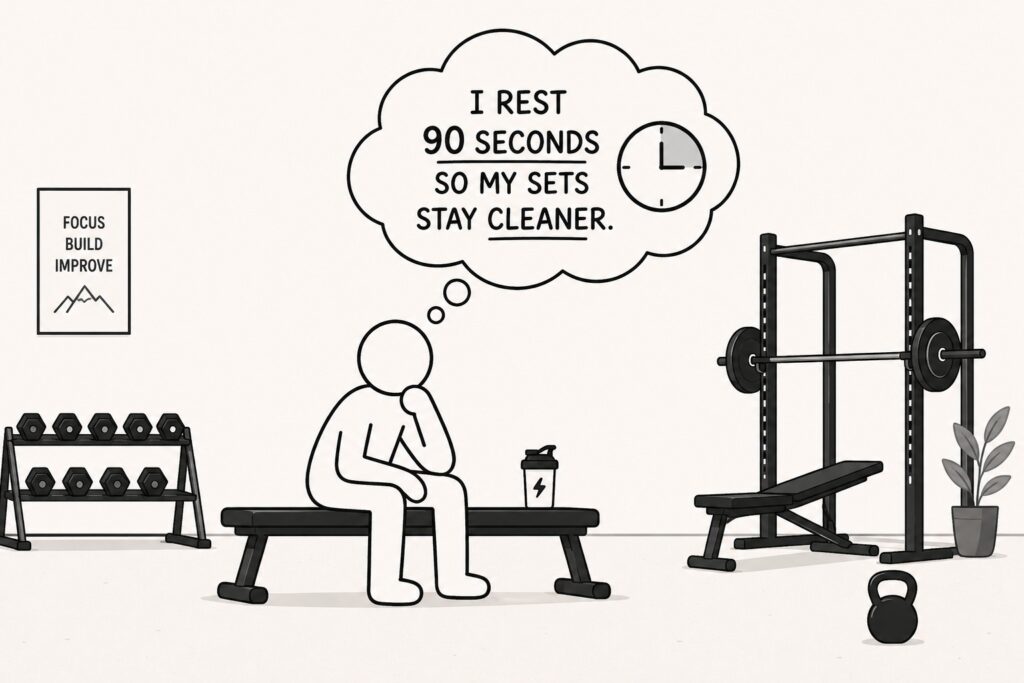
A good beginner workout does not need to transform your whole life.
It should give you one clearer piece.
Maybe the leg press seat finally fits.
Maybe chest press handles make more sense.
Maybe bench push-ups are the right version today.
Maybe 90 seconds of rest makes your sets cleaner.
Maybe you learned that the bike is a better cardio finish than forcing the treadmill.
Those small lessons stack quietly.
Next session begins with one less mystery.
That is what these 20 beginner fitness tips are really for.
They make the gym less confusing by turning a room full of equipment into places, movements, and choices you have already lived through once.