I’ve asked myself this question more times than I’d like to admit.
Every time I scroll past some slick ad for the “ultimate all-in-one training system,” I can’t help but wonder if I really need half the machines I’ve seen in commercial gyms.
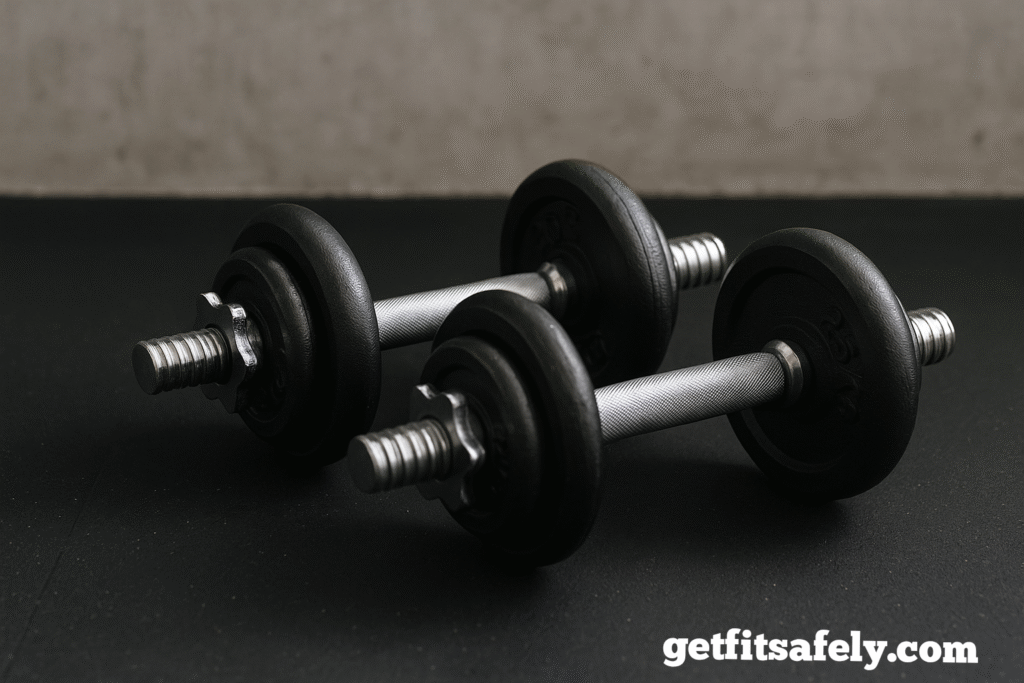
Or if, deep down, I could actually crush an entire workout with just a single pair of dumbbells.
The idea sounds almost too good to be true.
But let’s unpack it.
The myth of endless equipment?
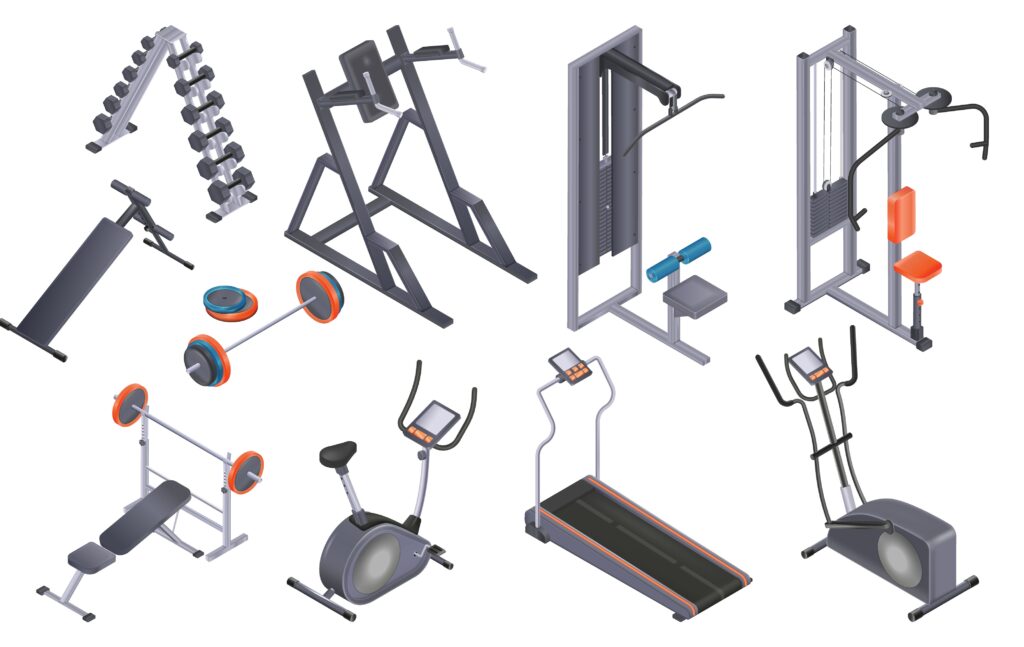
When you first walk into a gym, it feels like Disneyland for muscles.
Rows of machines, each one promising to sculpt a different part of your body.
Cables, pulleys, leg presses, chest flies—you name it.
But here’s the thing: your body doesn’t know what brand of machine you’re using.
It only knows tension.
Load.
Time under stress.
And you can get all of that with something as simple as a set of free weights.
Think about it. Squats?
Done. Shoulder presses?
Easy. Rows?
Absolutely.
Even your beloved curls—yeah, dumbbells have your back.
Machines aren’t useless.
They’re great for isolation.
But when you strip it down, strength training boils down to pushing, pulling, hinging, and squatting.
All of which can be done with one pair of weights.
Let’s talk muscle mechanics
Studies on resistance training keep showing that muscle growth is about one thing: progressive overload.
Increase the weight, add reps, slow down the tempo—you’re sending your muscles the signal to adapt.
It doesn’t matter if you’re using a shiny cable stack or two heavy hunks of iron.
The stress is what counts.
And free weights often recruit more stabilizer muscles than machines.
When you’re pressing dumbbells overhead, you’re not just working delts.
You’re forcing your core, traps, and grip strength to play along.
Where the limits kick in
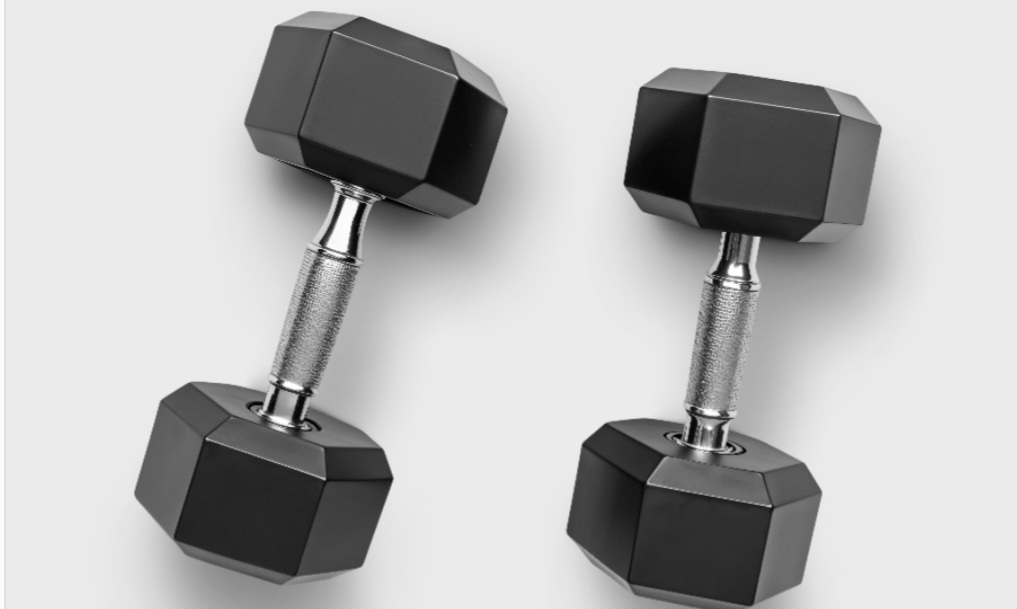
Okay, let’s not romanticize this.
One pair of weights can take you far, but eventually, you’ll hit a ceiling.
If the dumbbells are too light, you’ll outgrow them fast.
Doing sets of 50 reps isn’t exactly efficient for strength.
And if they’re too heavy, you’ll struggle with form on accessory moves.
Certain muscle groups—like legs—also demand way more load than shoulders or arms.
That’s where adjustable systems or multiple sets start making sense.
Yes, you can stretch your limits with tempo work, drop sets, or unilateral moves.
But if you’re chasing serious hypertrophy or raw strength, one pair of weights can feel like running a marathon in flip-flops.
Possible? Maybe. Optimal? Not really.
The art of creativity
Here’s where it gets fun.
I once spent three months in a tiny apartment with nothing but a single pair of 35-pound dumbbells.
No bench.
No squat rack.
Just me, the weights, and a yoga mat that had seen better days.
And those months ended up being some of the most creative workouts of my life.
Bulgarian split squats with feet on a chair.
Floor presses with a pause at the bottom.
One-arm rows balanced on the coffee table.
My sessions looked like circus acts, but they worked.
When you’re forced to adapt, you get scrappy.
You start thinking about angles, leverage, and tempo—stuff you ignore when you have endless gear.
And honestly? That kind of training builds not just muscle, but resilience.
Who actually benefits most
If you’re a beginner, one pair of weights is gold.
It teaches you the basics without overwhelming you.
You’ll build strength, coordination, and confidence.
And you won’t blow your paycheck on gear you don’t need yet.
If you’re a busy professional who just wants to stay fit at home, again—perfect.
A couple of dumbbells can cover push, pull, and legs in a quick circuit.
Even advanced lifters can benefit.
Travel workouts, minimalist cycles, or deload weeks thrive on the simplicity of one set.
But if you’re aiming for bodybuilding competition or chasing max deadlifts, eventually, you’ll need heavier artillery.
Smart ways to keep progressing with just one pair
The biggest challenge with a single set of weights is progressive overload.
But you don’t need heavier plates right away—you can outsmart the problem.
* Slow down the eccentric phase to turn a 30-pound press into something that feels like 50.
* Hold pause reps at the bottom of squats or curls for an evil burn.
* Train one side at a time with split squats, single-arm presses, or one-leg deadlifts.
* Use density training—shorter rest, more volume—to make “light” weights feel like monsters.
These tricks keep your muscles guessing, which is exactly what drives growth.
Why your muscles aren’t growing even when you’re doing everything right
When your whole program relies on the same pair of weights, recovery matters more than ever.
The margin for error is smaller.
Hammer the same patterns daily without rest, and you’re not building—you’re breaking down.
That’s where sleep, nutrition, and mobility work save you.
Protein fuels repair.
Sleep resets your nervous system.
Mobility keeps joints happy so you don’t burn out from repetitive patterns.
Your dumbbells lift the weight, but recovery locks in the gains.
When it makes sense to upgrade
At some point, if you’ve truly maxed out one pair, the smartest move isn’t another variation—it’s an upgrade.
And it doesn’t mean dropping thousands on a home gym.
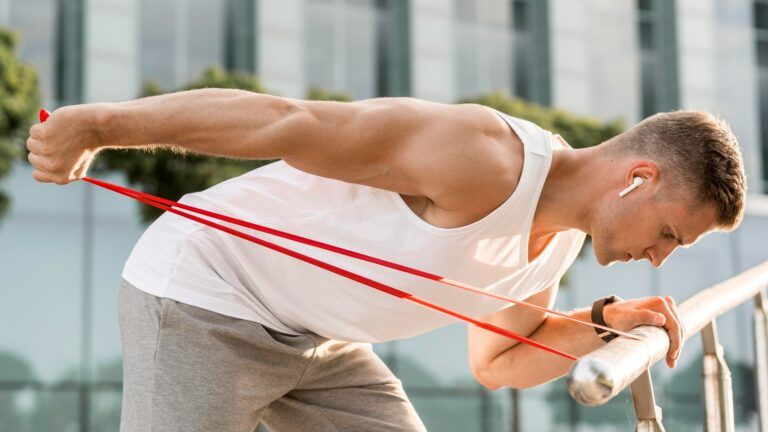
* Grab a set of resistance bands to pair with your weights.
* Add a pull-up bar for vertical pulling.
* Pick up a heavier pair just for compounds.
You don’t toss the old tools—you expand your arsenal.
Your one pair becomes the foundation you keep building on.
When light weights still humble your legs
Legs are stubborn.
They crave more load than most upper body moves.
But leverage changes everything.
A goblet squat feels brutal if you elevate your heels.
A long-stride split squat lights up glutes with no extra pounds.
Romanian deadlifts with a slow negative make hamstrings cry mercy.
And when I add a looped band to the dumbbells, the resistance climbs as I stand tall.
Suddenly my living room feels like a leg press station.
Solving weak links before they stall you
Every lifter hits sticking points.
Presses freeze mid-range.
Rows stop climbing. Split squats stall.
The culprit? Usually weak links around the main lift.
So I program finishers: wall slides for shoulders, Y-raises for traps, Cossack squats for hips.
Ten minutes at the end does more than another sloppy set of bench.
Fix the weak link, and the whole chain grows stronger.
Safety first when you’re training solo
At home, you’re both lifter and spotter.
That means playing smart.
I floor press instead of risking a bench setup I can’t escape.
I cut sets when speed slows down, not when ego says grind.
And I rack dumbbells on chairs so I’m not awkwardly deadlifting them 40 times a session.
Training at home gives freedom, but also responsibility.
The smarter you are with safety, the longer you’ll keep making gains.
Final Rep
If you’ve been stressing over building the perfect home gym, here’s the truth: you don’t need perfection.
One pair of weights can spark progress, build muscle, and keep you consistent.
Yes, eventually you’ll want more variety. Heavier loads. Maybe a barbell or some bands.
But don’t underestimate what you can do with less.
It’s not about the equipment—it’s about what you put into it.
So pick up those weights, push yourself, and see how far you can go.