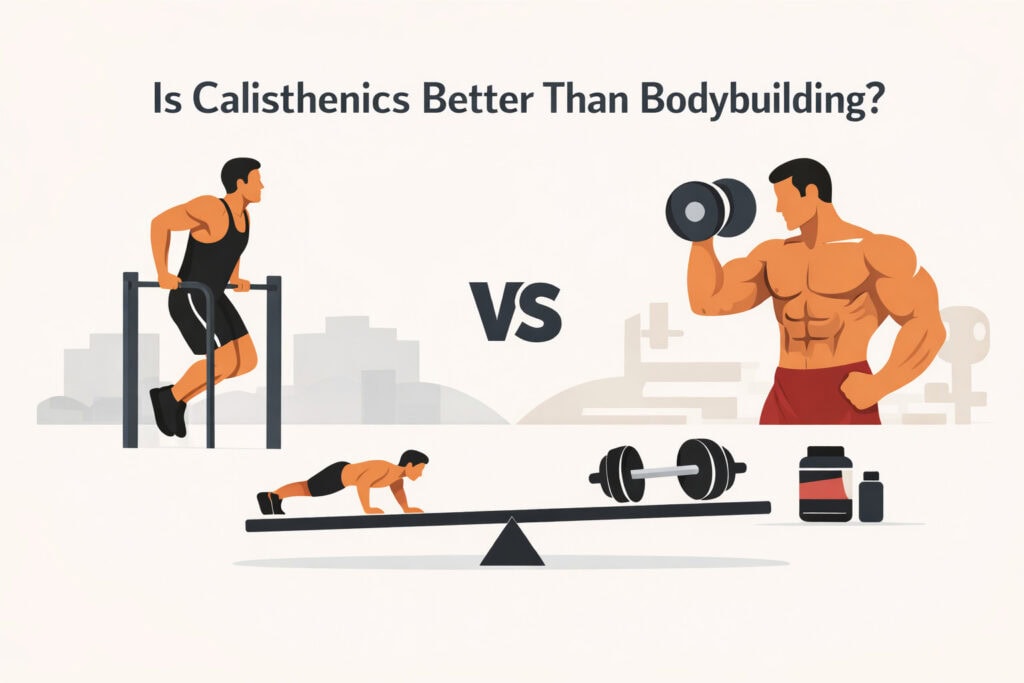
The first time someone told me “calisthenics is better,” it happened next to a pull-up bar that was slightly sticky from old rain and bad decisions.
Two meters away, there was a gym entrance with air conditioning, mirrors, and a guy curling dumbbells like he was trying to shake hands with the universe.
I had one question in my head.
If both paths make people look strong, why do they feel so different in real life?
When People Say Calisthenics Is Better Than Bodybuilding, This Is What They Really Mean
“Better” depends on what the body is being asked to do.
That sounds obvious, but I ignored it for years and paid with a long streak of training that felt… busy.
Muscle size, strength in specific lifts, athletic control, joint comfort, convenience, and cost all pull in different directions.
When someone says “calisthenics is better,” half the time they mean “I like it more,” and the other half they mean “it solves a problem bodybuilding didn’t solve for me.”
Calisthenics and Bodybuilding Don’t Just Build Bodies Differently—They Feel Different Too
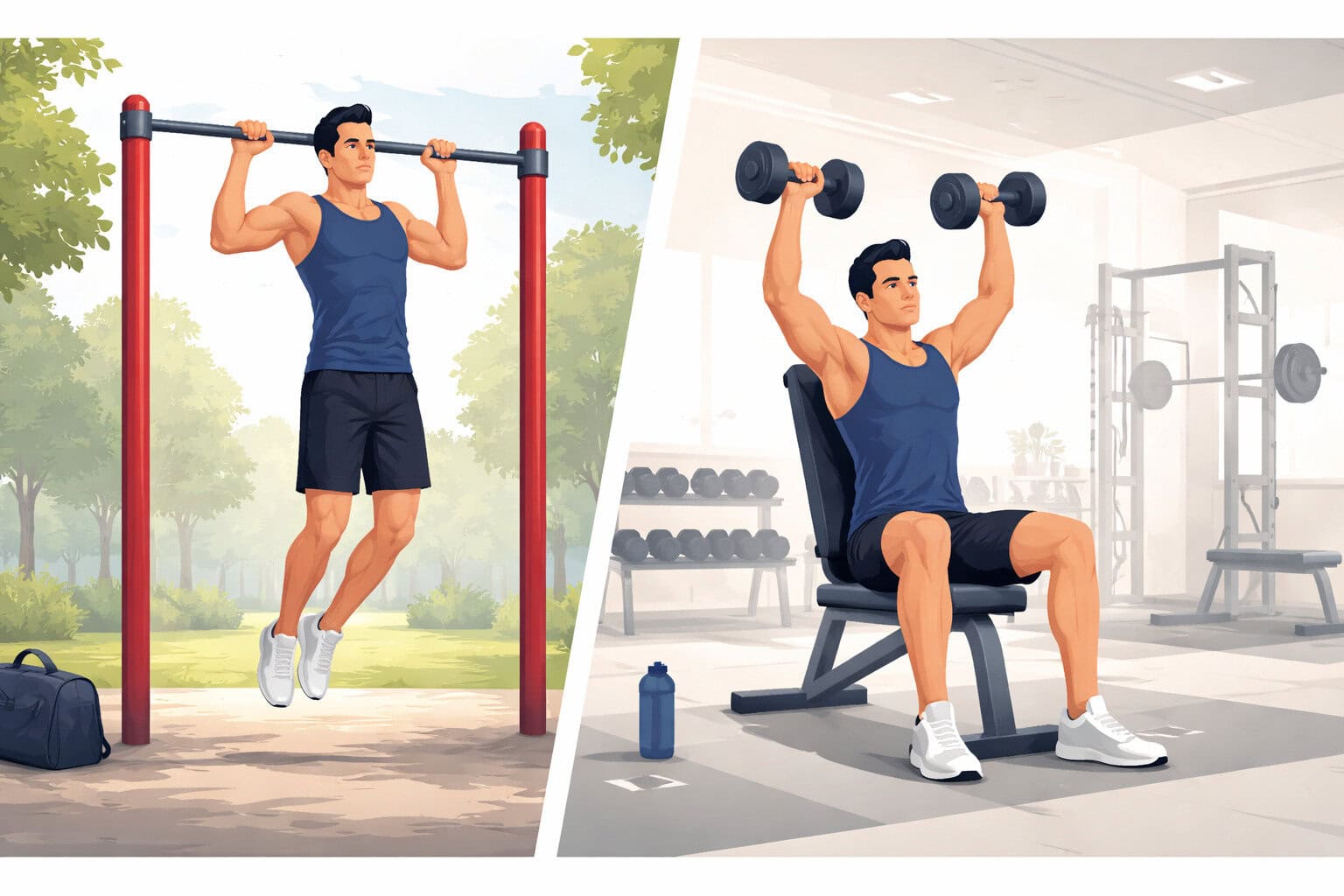
A bodybuilding-style session often feels like constructing a wall one brick at a time.
A calisthenics-style session often feels like trying to keep the wall from falling on you while you’re still holding the bricks.
Weights are external load you can measure precisely.
Bodyweight is internal load that changes with leverage, balance, and how clean your technique is that day.
One isn’t magically superior.
They’re just different languages for telling your body, “Hey, adapt to this.”
What Calisthenics Is, Explained Like You’re New to the Planet
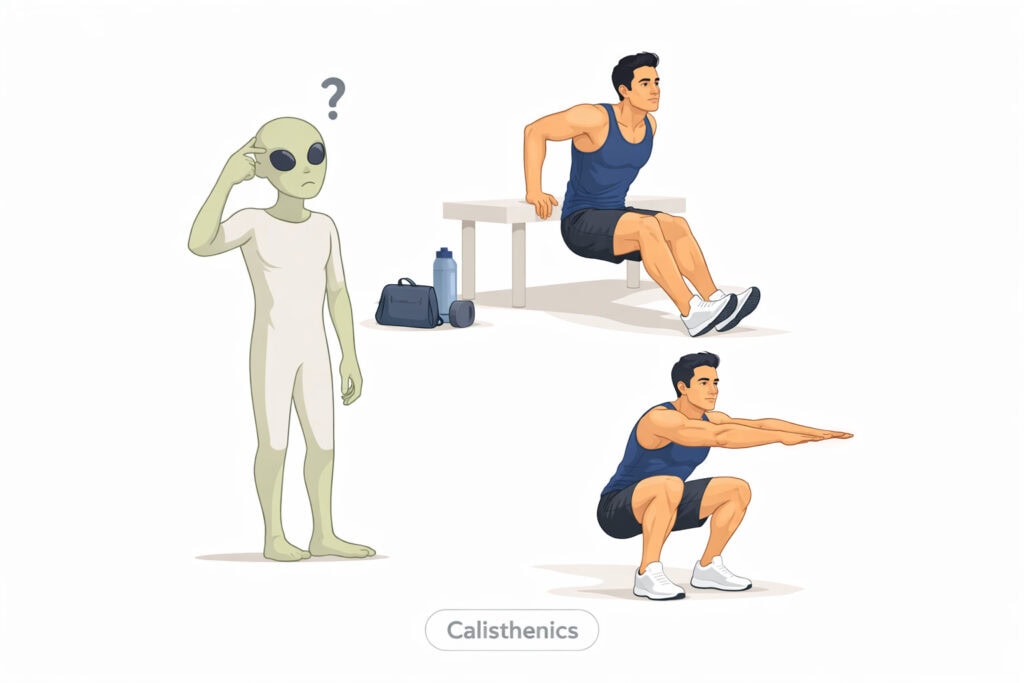
Calisthenics is training where your body is the main resistance.
Push-ups, pull-ups, dips, squats, lunges, leg raises, planks, and all the harder versions that look like circus tricks are in the same family.
A pull-up is “you pulling your body up to a bar.”
A dip is “you pushing your body up on parallel bars,” like you’re trying to climb out of a pool without splashing.
A push-up is “you pushing the floor away,” while your whole body stays stiff like a plank of wood.
Progress usually comes from making the movement harder by changing leverage, range of motion, tempo, or total work.
What Bodybuilding Is, Without the Misunderstanding
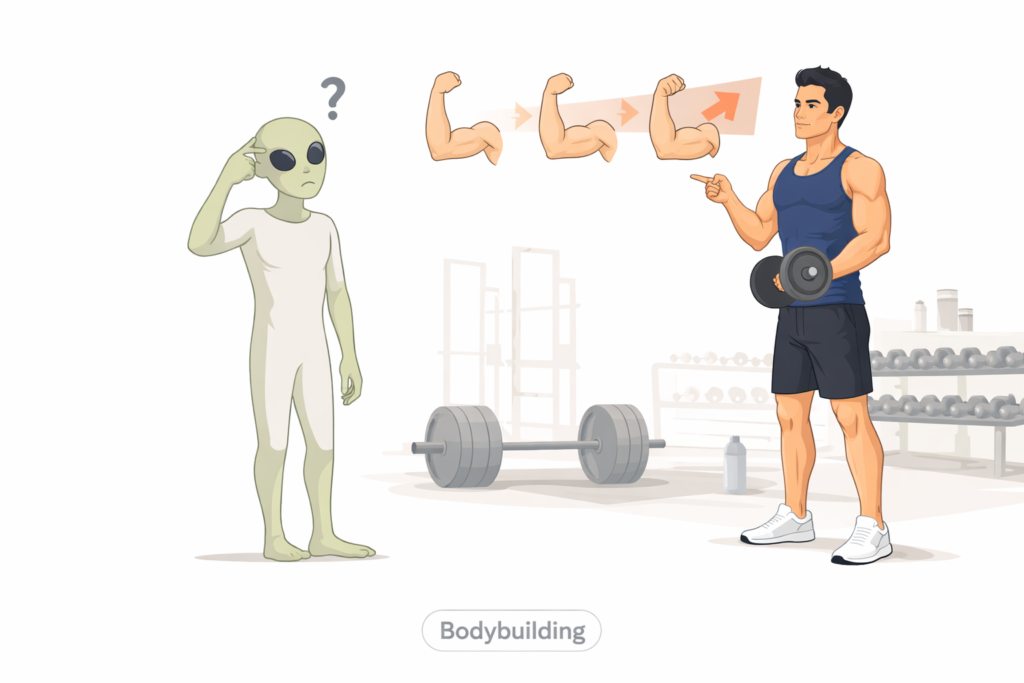
Bodybuilding training is mainly about building muscle size through controlled resistance and enough volume.
That usually means weights or machines, because they make it easier to target a muscle and progressively overload it.
Progressive overload is just a fancy way to say “over time, the body needs a slightly bigger reason to change.”
That bigger reason can be more weight, more reps, more sets, slower reps, shorter rest, or a tougher variation.
Bodybuilding is not only “getting big” in a cartoon way.
It can be extremely precise, joint-friendly, and smart, especially when machines and dumbbells are used well.
The First Big Difference Between Calisthenics and Bodybuilding: How Easy It Is to Add Load
This is where bodybuilding usually wins on pure simplicity.
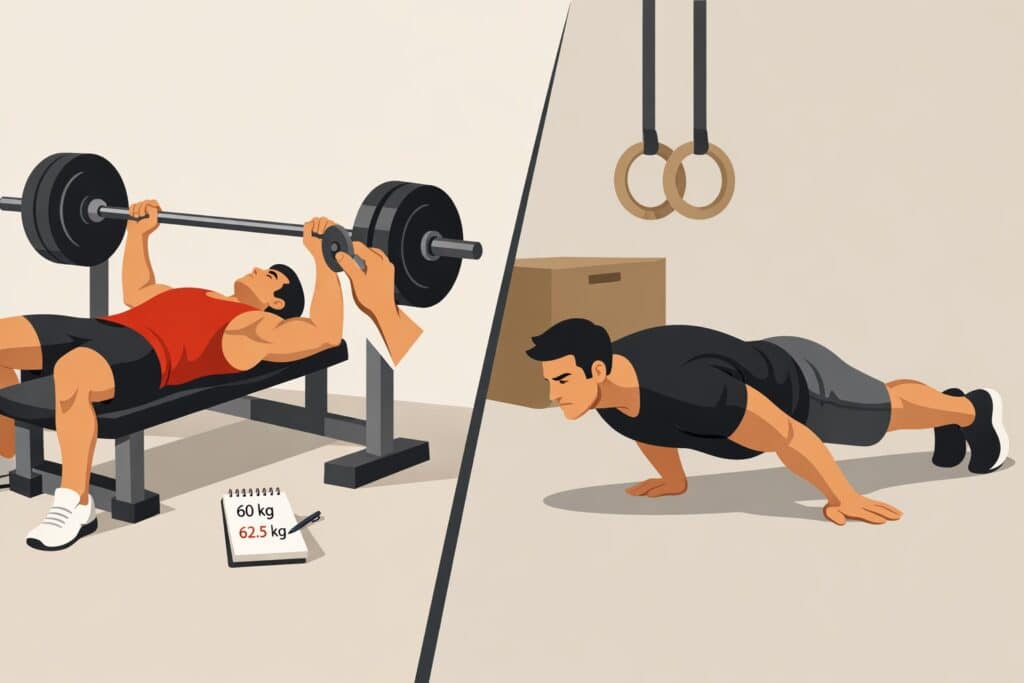
If you bench press 60 kg for 8 reps, next time you can try 62.5 kg for 8 reps and you can write it down like a normal person.
With bodyweight, you don’t always add “2.5 kg” in a clean way.
Instead, you make the movement harder by changing the mechanics.
A regular push-up might become a feet-elevated push-up, then a ring push-up, then a pseudo planche push-up, and each step changes more than just “difficulty.”
That’s powerful, but it can also feel like switching video game controllers mid-level.
How Calisthenics Progression Really Works in Real Sessions
Progression in calisthenics is often about leverage and control, not only effort.
That means two people can do “the same exercise” and experience totally different difficulty depending on technique.
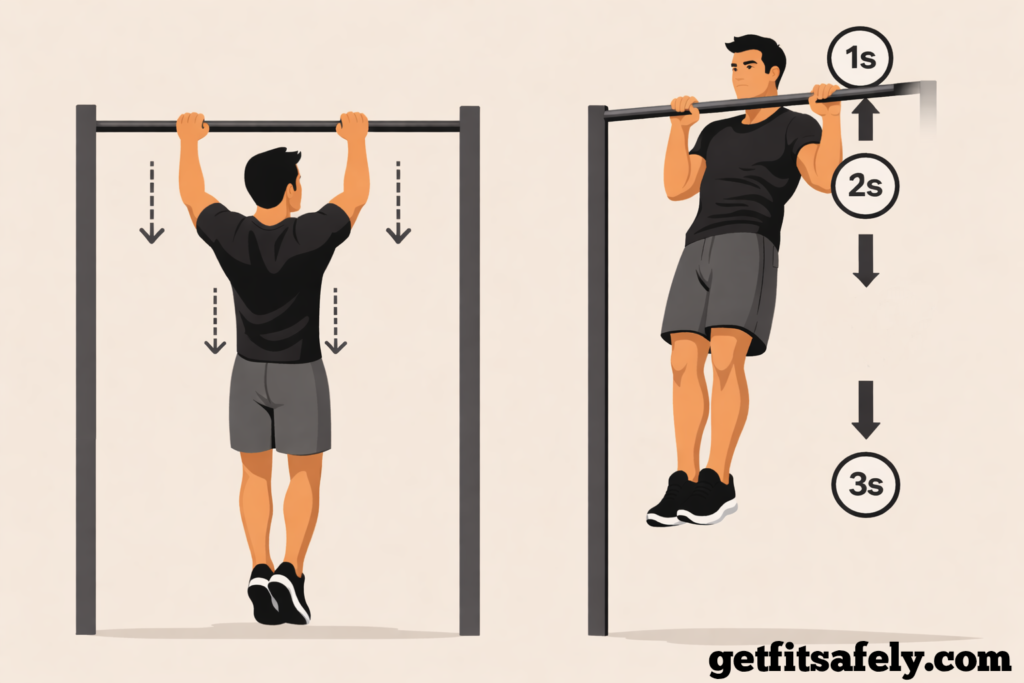
A clean pull-up with a full hang, ribs down, and no kicking is harder than a half-rep pull-up that starts with bent elbows and a jump.
The bar doesn’t care about excuses, which is rude but useful.
A typical pull-up setup that kept my elbows happier looked like this.
I’d start with 2 sets of 5 slow scapular pull-ups, resting about 60 seconds, focusing on pulling the shoulders down without bending the elbows.
Then I’d do 4 sets of 4 pull-ups with a 2-second lift, a 1-second pause with chin over the bar, and a 3-second lower, resting 120 seconds.
By the third set my lats felt like someone poured hot tea under my armpits, and my forearms felt inflated, but the reps stayed clean.
When I rushed and cut the lowering phase, the same “4 sets of 4” felt easier in the moment and worse in my joints the next day.
How Bodybuilding Progression Feels When You Do It Properly
Bodybuilding progress is often less mysterious.
You pick an exercise that targets a muscle well, you use a stable setup, and you add work over time.
The stability part matters more than people admit.
A chest press machine or dumbbell press lets you push hard without balancing your whole body like you’re on a canoe.
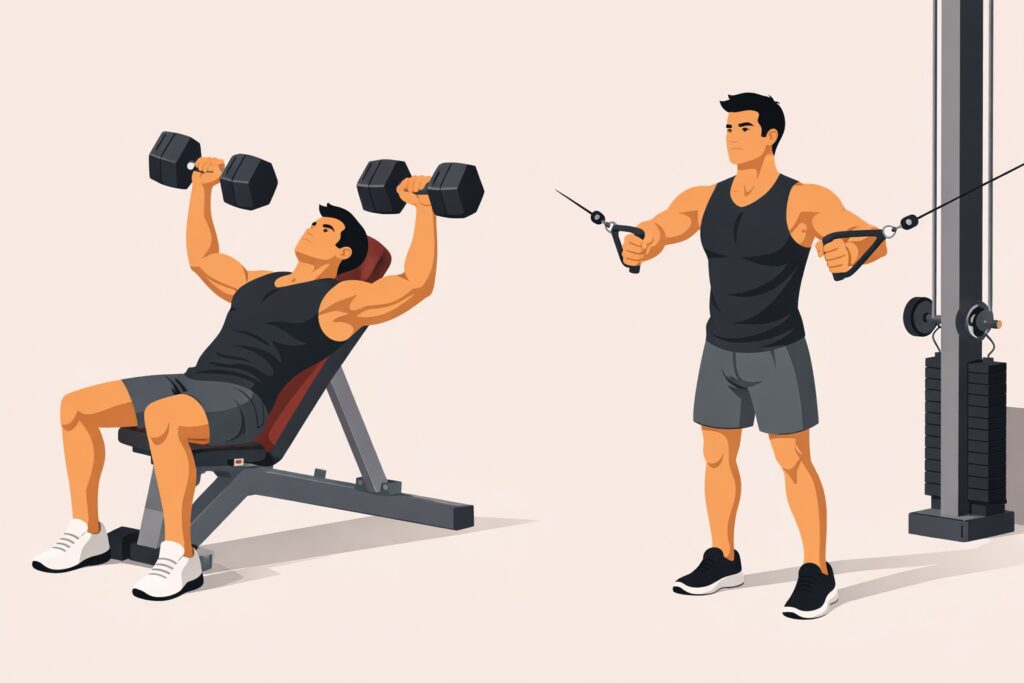
A chest session that actually built my chest without turning my shoulders into cranky door hinges looked like this.
Dumbbell incline press for 4 sets of 8, with 90 seconds rest, stopping each set with about 1–2 reps left in the tank.
Each rep had a 2-second lower, a brief pause near the chest, then a controlled press up.
Cable flyes for 3 sets of 12, resting 60 seconds, thinking about hugging a big barrel instead of flapping the arms like a startled bird.
The pump was ridiculous, the joints felt calm, and the next day my chest was sore in a very “I exist” kind of way.
The Second Big Difference: Skill Demands vs Muscle Demands
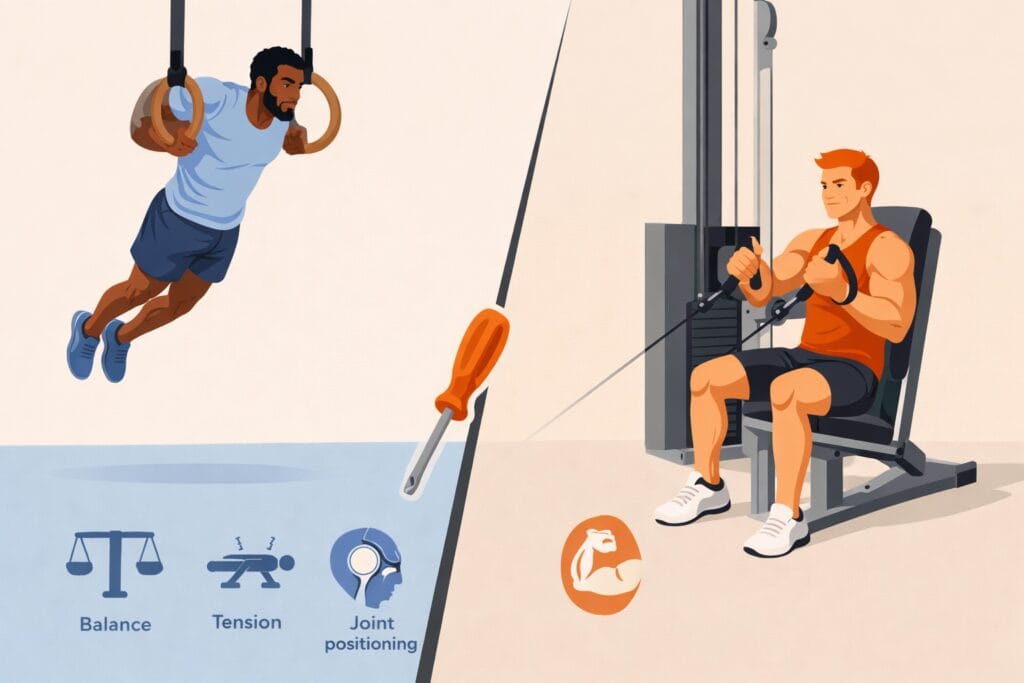
Calisthenics often charges a skill tax.
That tax is coordination, balance, tension, and joint positioning.
Skill can make you look strong before you actually have strength everywhere.
I’ve seen people hit a clean muscle-up and still struggle with a heavy row or strict overhead pressing strength.
Bodybuilding pays less skill tax because machines and stable weights reduce balance requirements.
That lets you isolate muscles more directly.
Isolation isn’t a bad word.
It’s just a tool, like using a screwdriver instead of trying to carve a screw with your teeth.
Muscle Growth: Which One Builds More Size?
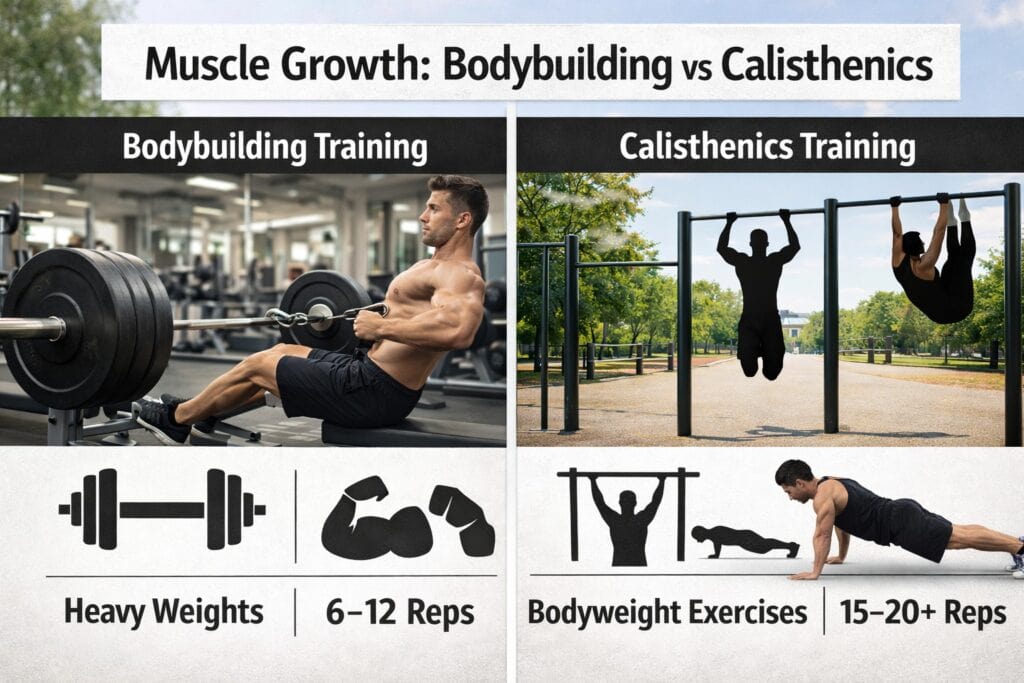
If the main goal is maximum muscle size, bodybuilding-style training usually has an easier time.
Not because bodyweight “can’t build muscle,” but because adding consistent tension and volume is simpler with weights.
Hypertrophy, which means muscle growth, responds well to sets that get close to failure in moderate rep ranges.
In fact, research comparing push-ups and bench press performance found similar muscle activation when intensity is matched.
The difference is not whether muscle can grow, but how easy it is to load it progressively over time.
For many people that’s somewhere around 6–20 reps per set, depending on the exercise and the person.
Strength: Which One Makes You Stronger?
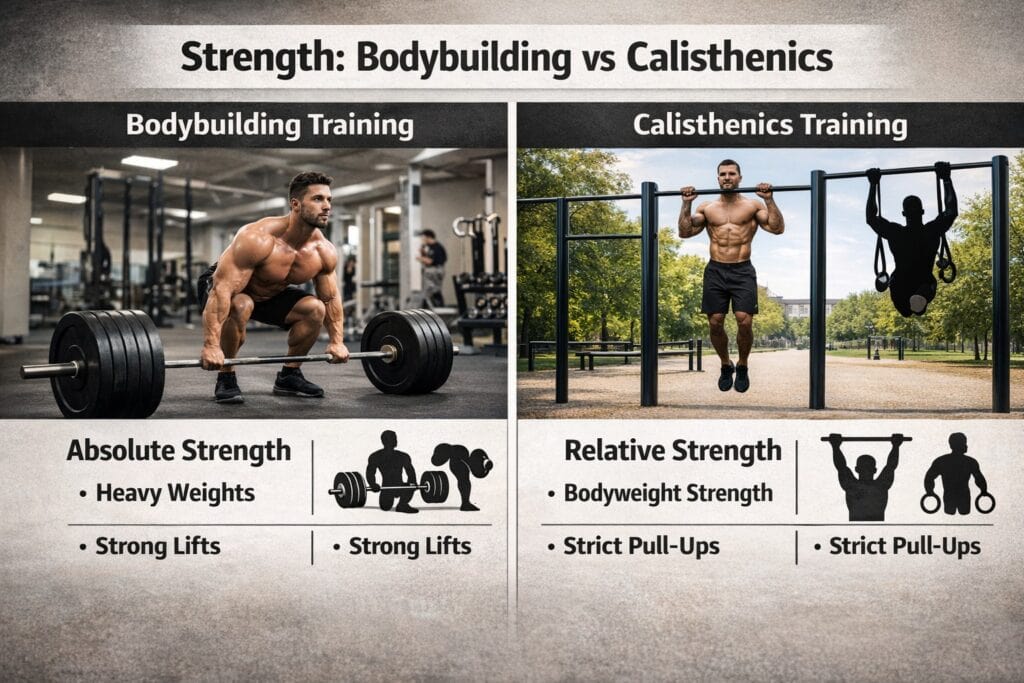
Strength is specific.
That means you get strong at what you practice.
Bodybuilding training can build strength, but it usually focuses on muscle size and controlled fatigue more than peak force.
Calisthenics can build impressive strength, especially relative strength, meaning strength compared to bodyweight.
A strict ring dip or strict pull-up strength is very real, and it carries over to a lot of athletic stuff.
Absolute strength, like “how much weight can you lift,” usually favors weight training simply because the tool is literally built for that.
If someone wants a bigger deadlift, calisthenics alone is not the shortest road.
If someone wants to feel like their body is a solid unit that can push, pull, hang, and move through space, calisthenics is often a direct hit.
The Difference in Joint Stress Between Calisthenics and Bodybuilding
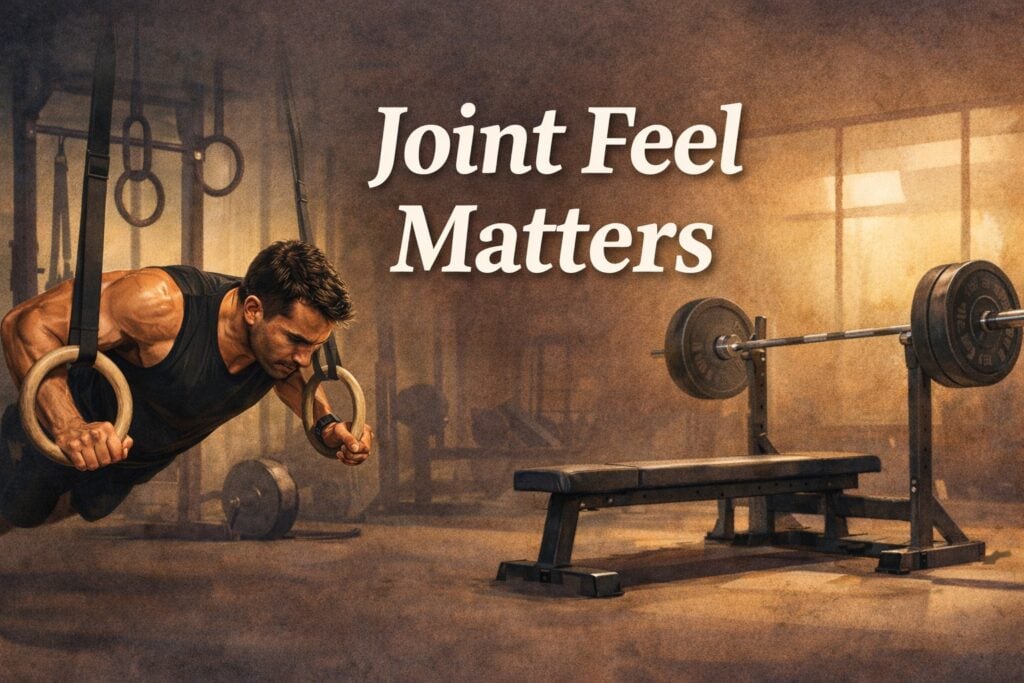
My shoulders have been the loudest critics in my training life.
They don’t care about ideology, they care about positions and recovery.
Calisthenics can feel amazing on joints when form is clean and volume is sane.
It can also feel rough when someone jumps into deep dips, high-rep kipping pull-ups, or ring work without the control to own it.
Bodybuilding can be joint-friendly because machines stabilize you and let you find a comfortable path.
Bodybuilding can also be rough when someone forces barbell movements that don’t match their structure and then tries to “push through” because ego is a loud coach.
The calmest shoulder weeks I ever had came from mixing the two.
Stable pressing for volume, and calisthenics pushing for control, with enough rest that the tendons didn’t feel like old rubber bands.
Full-Body Tension and Why Calisthenics Is So Good at It
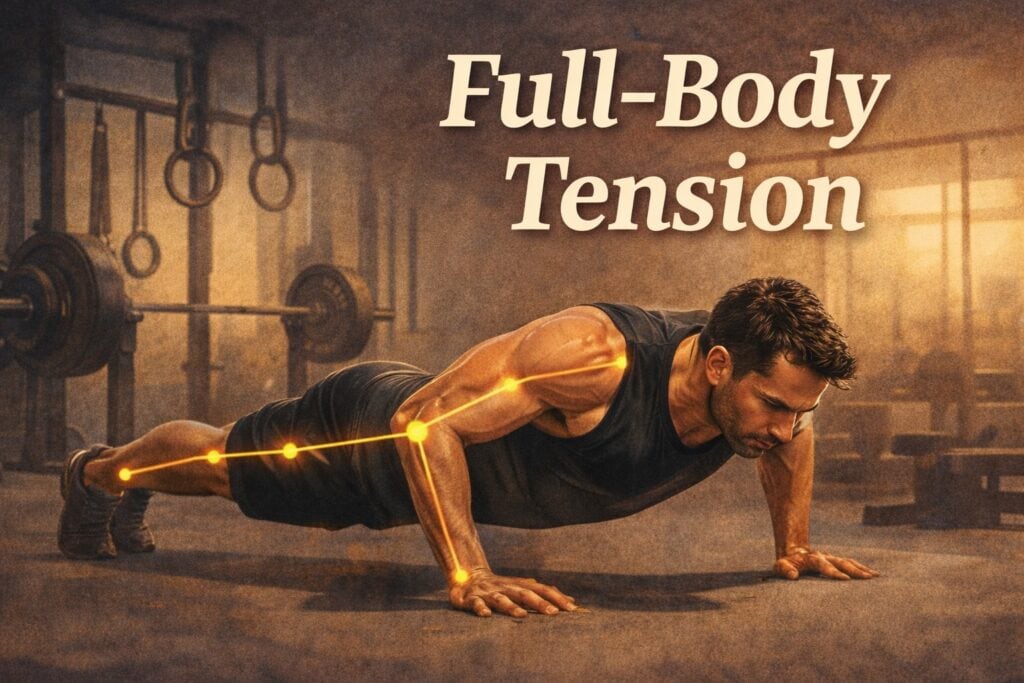
Calisthenics teaches you how to make your body act like one piece.
That’s not mystical.
It’s literally learning to squeeze glutes, brace abs, and keep ribs down while the arms work.
A push-up done well is not only chest and triceps.
It’s also the core, the glutes, the serratus muscles around the ribs, and the shoulder blades moving correctly.
When I cleaned up my push-up, my bench press immediately felt more stable, even though I wasn’t benching much.
The bar path felt less shaky, and my shoulders stopped doing that tiny pinch thing at the bottom.
That wasn’t random.
That was better body control showing up inside a weight lift.
Bodybuilding Makes It Easier to Work on One Area
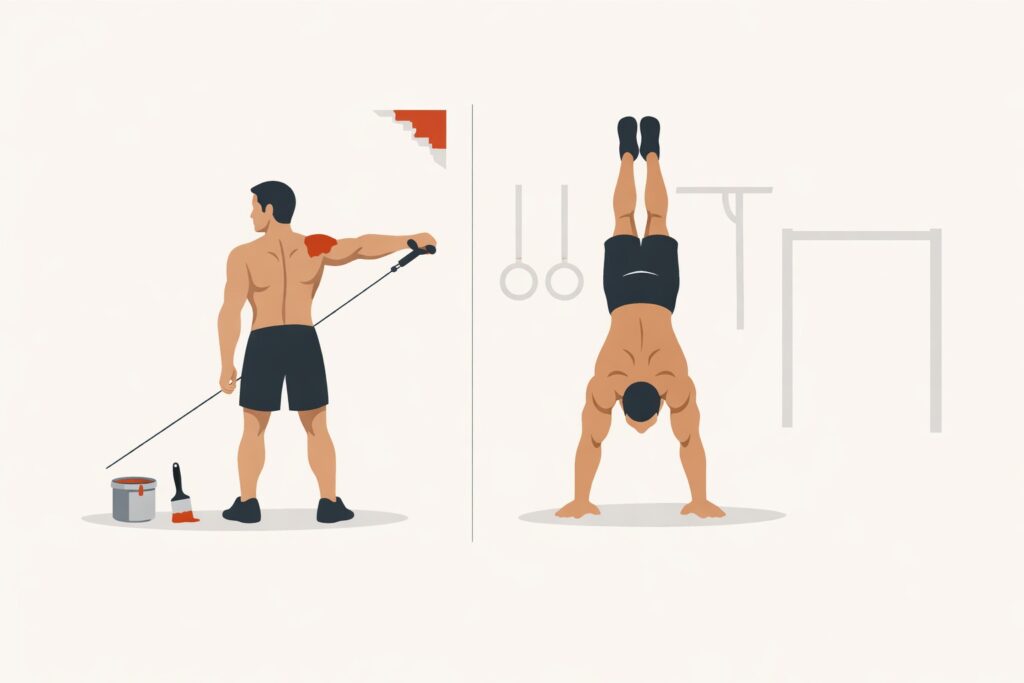
Bodybuilding shines when a specific muscle is behind and you want to bring it up.
Upper chest, side delts, hamstrings, calves, rear delts, lats, you name it.
Calisthenics can hit those areas, but sometimes it’s like trying to paint a small corner with a big brush.
A cable lateral raise is a small brush.
A handstand push-up is a big brush that also paints your triceps, your traps, your balance, and your courage.
When my side delts looked like they were on vacation, adding 3 sets of lateral raises for 12–15 reps twice per week did more than months of “harder push-up variations.”
That didn’t make calisthenics bad.
It just reminded me that tools exist for a reason.
Why Some Training Styles Are Easier to Learn Than Others
Some exercises are easier to understand the first time you try them.
Movements that are simple, repeatable, and easy to track tend to work best while the body is still learning how to move under effort.
Bodyweight training often helps here because the movements are natural and don’t require much equipment.
Weight training helps in a different way, because machines and dumbbells make it easier to feel a muscle working without worrying too much about balance.
The place where training happens often matters more than the method itself.
A gym gives access to stable equipment that makes learning smoother.
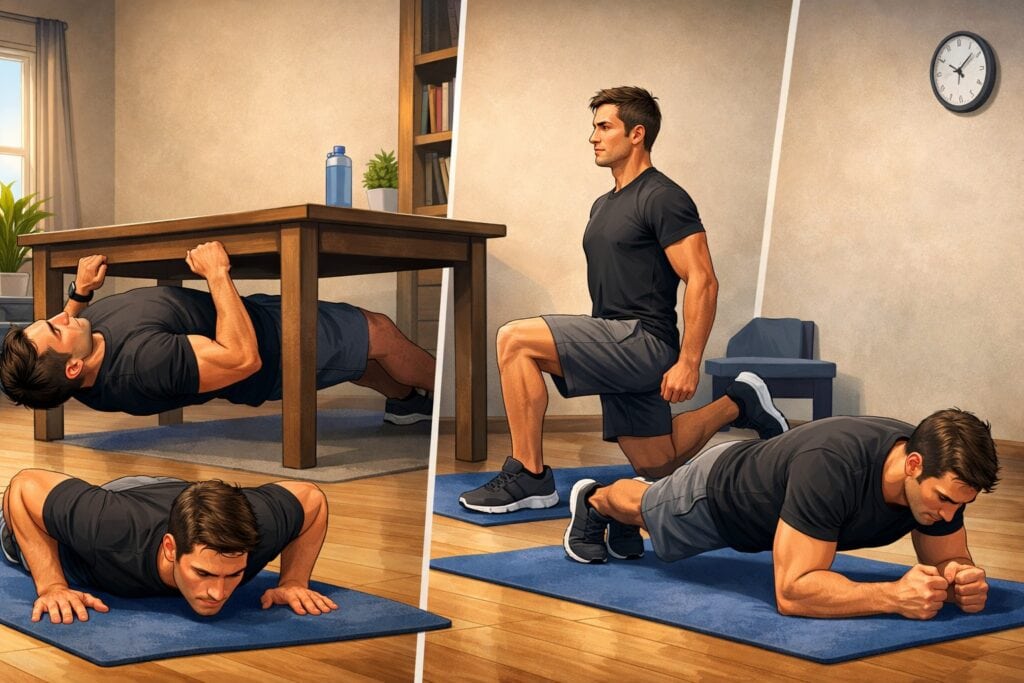
At home, simple movements like push-ups, rows under a table, squats, and planks can still build a solid base if they are done with control and consistent rest times.
A session built around those basics might look like this.
Push-ups for 4 sets of 6–12 reps, resting about 90 seconds, lowering for 3 seconds and pressing up smoothly.
Table rows for 4 sets of 6–10 reps, resting 90 seconds, pulling the chest toward the edge while keeping the body straight.
Split squats for 3 sets of 10 each leg, resting about 60 seconds, moving down under control and standing up without rushing.
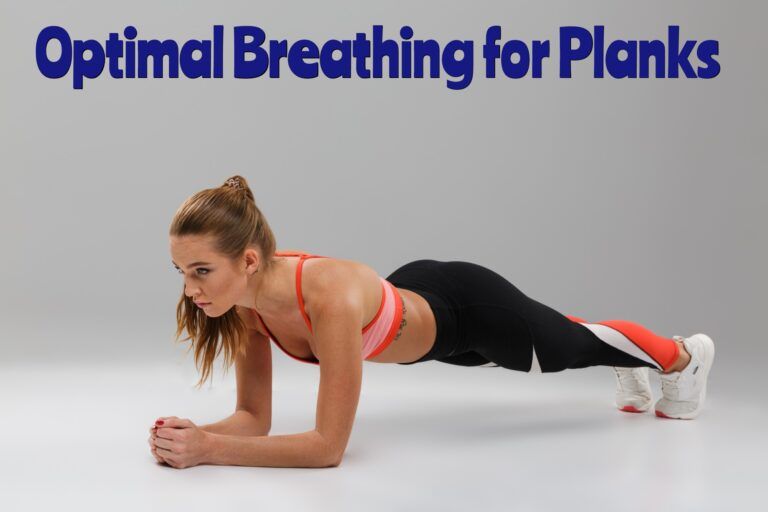
A plank for 3 rounds of 25–45 seconds, resting 45 seconds, breathing normally instead of holding the breath.
At the end of a session like this, the fatigue feels spread across the whole body rather than concentrated in one joint, which is usually a good sign that the load was manageable and the technique stayed clean.
Bodybuilding vs Calisthenics for Getting “Athletic”
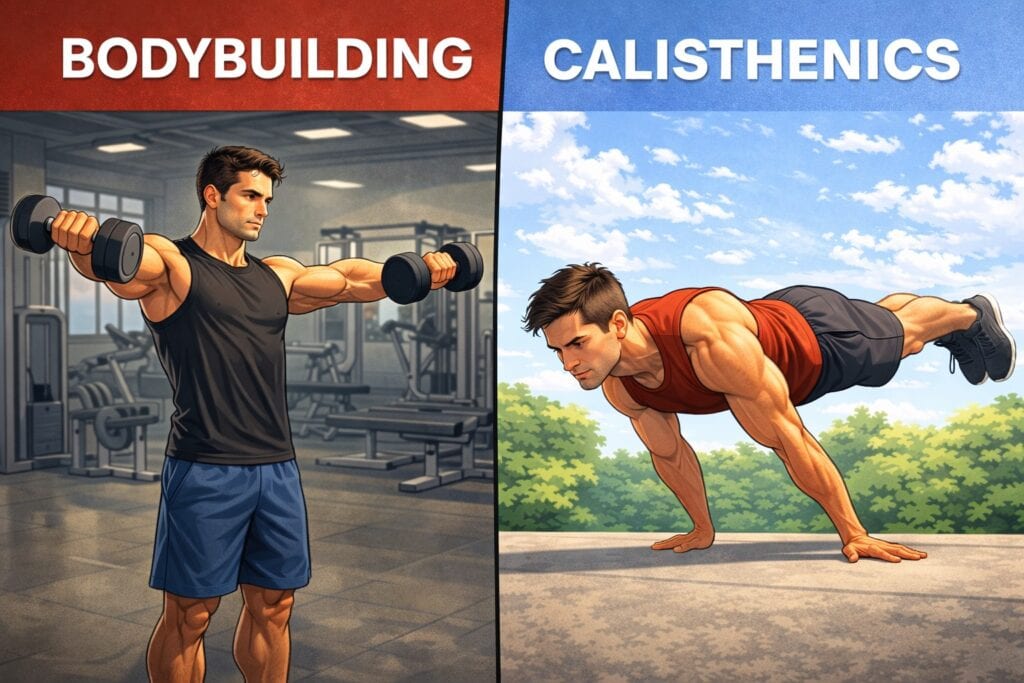
Athletic is a fuzzy word, but most people mean this.
Moving well, feeling coordinated, having strength that shows up outside the gym, and not feeling fragile in awkward positions.
Calisthenics leans into that naturally because you’re moving your body through space.
Pull-ups teach hanging strength and shoulder control.
Dips teach pushing strength with deep shoulder positioning.
Single-leg work teaches balance and hip stability.
Bodybuilding can absolutely support athletic performance by building muscle and resilience, especially when unilateral work and full ranges are used.
The difference is that calisthenics often forces athletic coordination whether you asked for it or not.
Sometimes that’s a gift.
Sometimes that’s the annoying part that makes progress slower at first.
The “Detours” I See People Take in Both Camps
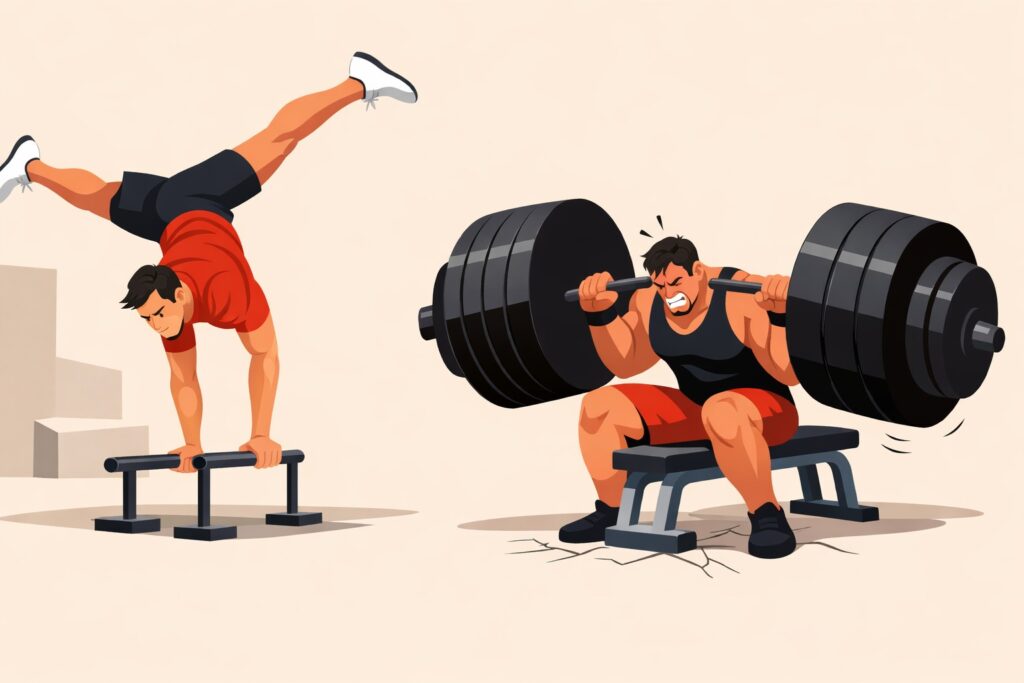
I’m going to avoid the classic buzzwords here, but the idea is simple.
Some choices look productive, feel productive, and still quietly block progress.
In calisthenics, the big detour is chasing harder variations before owning the basic version.
A half-range dip with shoulders rolling forward can feel intense, but it can also make elbows and shoulders hate you.
In bodybuilding, the big detour is using weight that’s too heavy to control and calling the wobble “intensity.”
A dumbbell press where the shoulders slide around like shopping cart wheels is not “hardcore,” it’s just messy loading.
Another detour in both styles is turning every set into a max-out.
When every set is all-out, recovery becomes the limiting factor, not effort.
The best training weeks I’ve had were boring on paper and smooth in the body.
Reps looked controlled, rest times were consistent, and the next session didn’t feel like my joints were filing a complaint.
How Technique Changes the Entire Outcome in Calisthenics
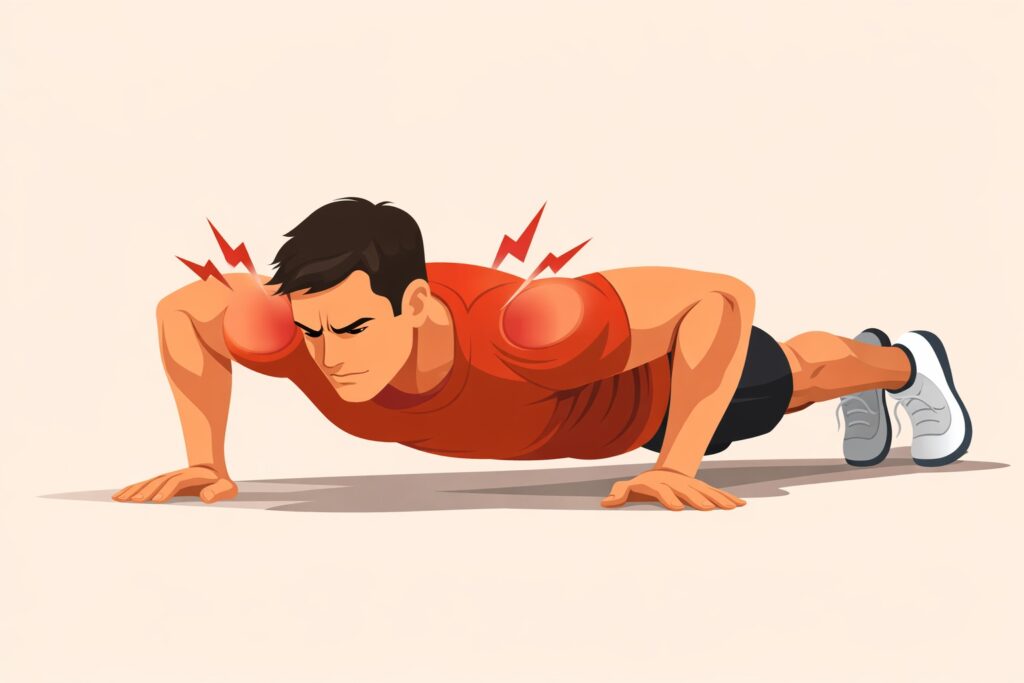
In calisthenics, small technique changes can turn the same movement into a different exercise.
A push-up with elbows flared wide and shoulders shrugged up is mostly stress in the front of the shoulder.
A push-up with elbows about 30–45 degrees from the torso, shoulder blades moving naturally, and ribs down hits chest and triceps in a cleaner way.
The push-up cues that made the biggest difference for me were these.
Hands under the shoulders, fingers spread like you’re gripping the floor.
Squeeze glutes lightly, so the lower back doesn’t sag.
Lower in about 2–3 seconds, keeping the body straight.
Pause for a tiny moment near the bottom without relaxing.
Press up while “pushing the floor away” and letting the shoulder blades move.
On a good set, the chest burns and the triceps feel thick.
On a sloppy set, the neck tightens and the shoulders complain first.
How Technique Changes the Entire Outcome in Bodybuilding
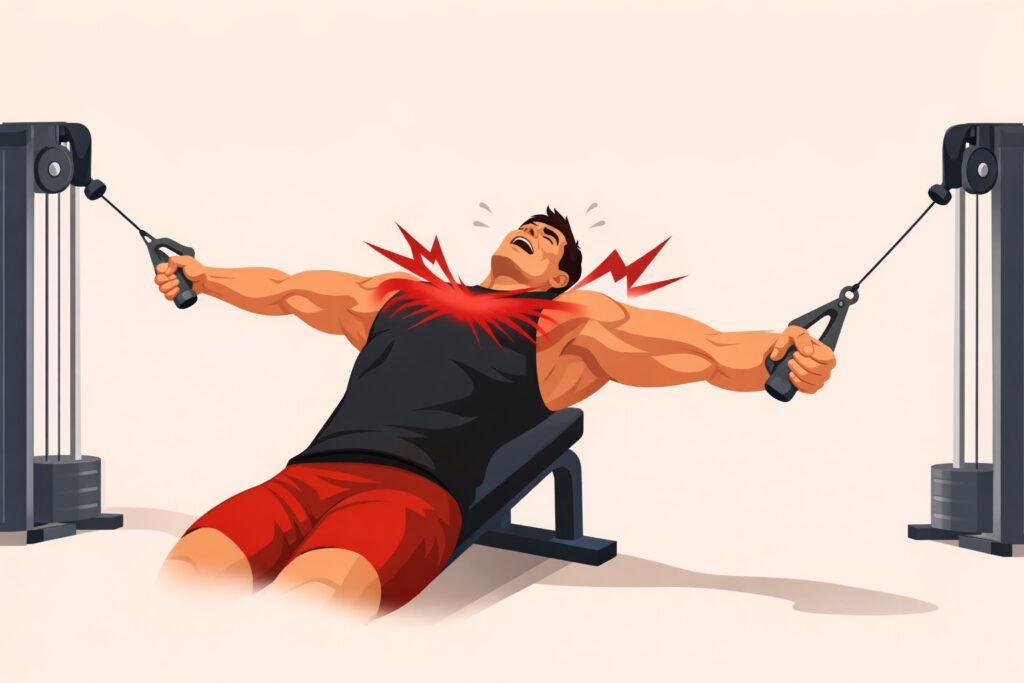
Bodybuilding technique is often about stability and range.
The muscle grows from tension, and tension is easier to create when the position is repeatable.
A chest flye done with bent elbows and a controlled arc can light up the chest without joint pain.
A chest flye done with straight arms and huge stretch can feel dramatic, but it can also be too much for the shoulder joint for some people.
The difference is not bravery.
The difference is matching the movement to what your joints tolerate while still getting the muscle close to fatigue.
That’s why machines can be a blessing.
A good machine is like bowling with bumpers while you learn the basics, and the muscle still gets worked hard.
Equipment Reality: The Stuff People Pretend Doesn’t Matter
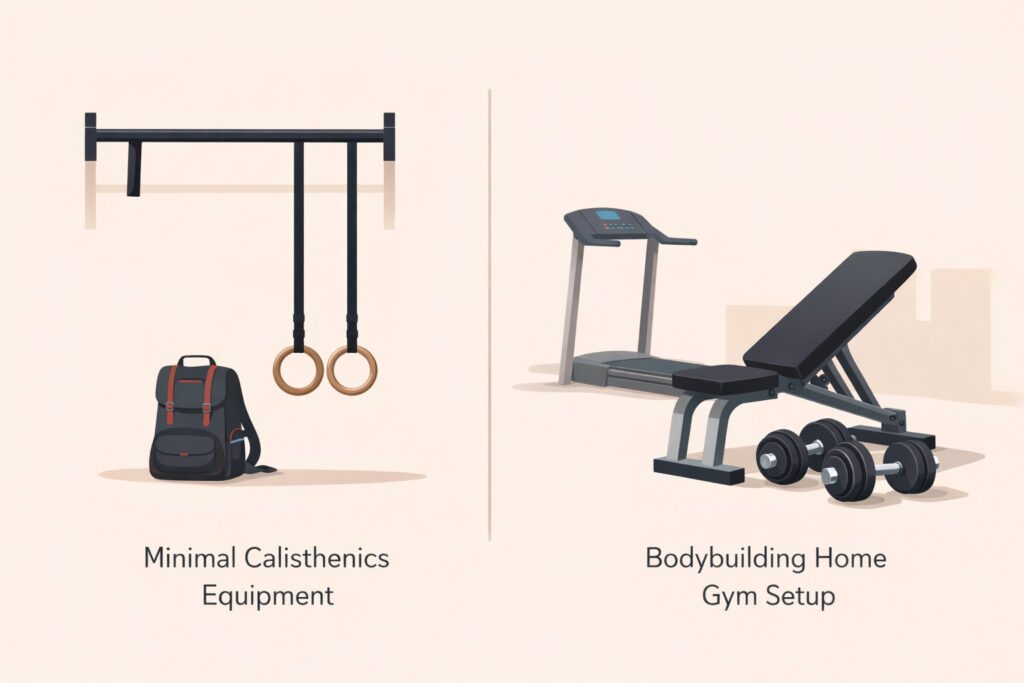
Calisthenics is cheap and portable, which is a massive advantage.
A pull-up bar, rings, and a backpack for loading can cover an absurd amount of training.
Bodybuilding usually needs gym access or a good home setup with adjustable dumbbells, a bench, and enough weight to progress.
A person with zero gym access can still build a strong, muscular upper body with calisthenics.
A person who wants big legs and has no weights will need to get creative or accept that legs will progress slower.
Creativity can work, but it has limits.
A backpack squat can be great until the backpack becomes a small suitcase and your spine starts negotiating.
Different Tools for Different Jobs
There was a period where I kept trying to make one style of training solve everything.
If I trained only with bodyweight, my pulling strength and control improved, but my legs never felt truly challenged unless the sets dragged on forever.
If I trained only with weights, progress in size and raw strength was easier to measure, but some movements started feeling stiff, and pull-ups stopped feeling smooth.
At some point the answer wasn’t choosing a side.
It was noticing that different exercises solved different problems, almost like using a screwdriver for screws and a hammer for nails instead of trying to force one tool to do both.
Pull-ups and dips, for example, worked better for me with bodyweight.
A strict pull-up, done from a full hang, pulling in about 2 seconds, pausing briefly at the top, and lowering in 3 seconds, made my upper back and arms feel worked in a very complete way.
Four sets of 4–6 reps with about 2 minutes of rest were enough to feel strong without elbows getting irritated.
Leg training told a different story.
Bodyweight squats quickly turned into long sets where breathing became the limit before the legs did.
Switching to loaded movements like squats or a leg press, using 4 sets of 8–10 reps with 2 minutes of rest, made the work feel centered exactly where it should be, in the thighs and glutes instead of just the lungs.
Smaller muscles were another place where weights made things simpler.
Side delts, for example, responded much faster to 3 sets of lateral raises for 12–15 controlled reps, resting about a minute, than to endless variations of push-ups that mainly worked chest and triceps.
The difference was not effort, but precision.
Over time, training stopped feeling like following a method and started feeling like solving small practical problems.
If the goal was control and coordination, bodyweight movements usually gave the clearest feedback.
If the goal was putting more tension on a specific muscle or making progress easier to track, weights often did the job more directly.
That shift in perspective changed how sessions felt.
Instead of asking “Which system is better?”, the question became “What does this exercise need to do today?”
And once that question replaced the old one, planning workouts became much simpler and progress stopped feeling like guesswork.
When Calisthenics Starts Making Sense Without You Even Planning It
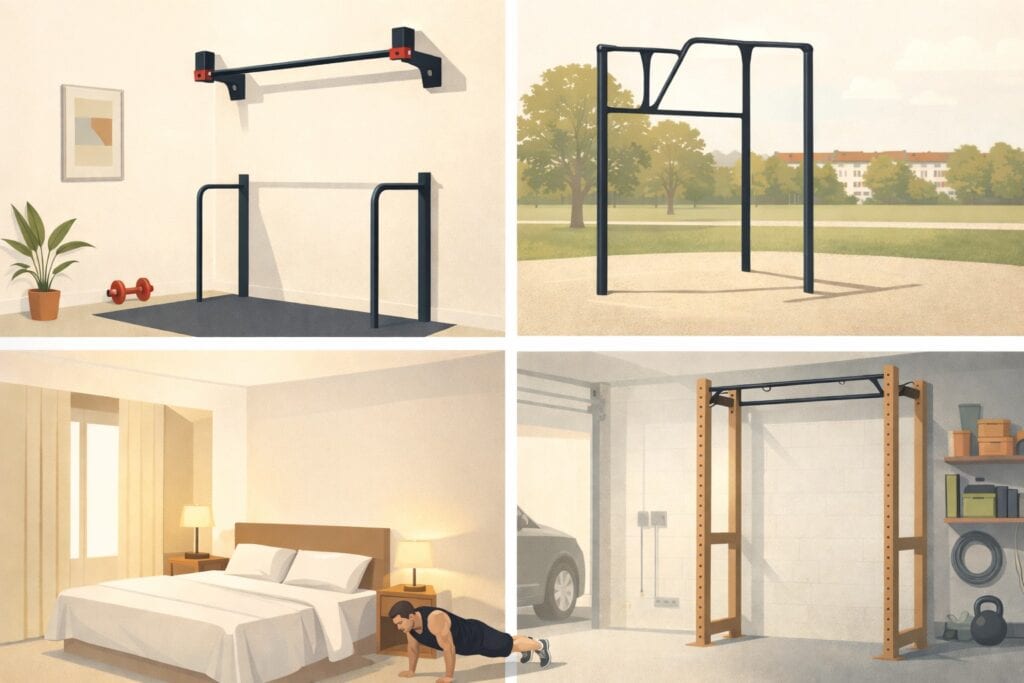
It usually doesn’t start with a philosophy.
It starts with reality.
There was a period when I could only train late in the evening at home, and setting up a full weight session felt like more work than the workout itself.
A pull-up bar and the floor solved that in seconds, and sessions stopped getting skipped.
Once pull-ups, dips, or push-ups are done with clean form, the feedback is immediate: the body either moves as one piece, or weak spots show up right away.
I remember noticing this during slow push-ups when my hips started sagging halfway through a set, which made it obvious my core was giving up before my chest was.
That kind of honest feedback is often what keeps people consistent more than chasing flashy skills.
Most people aren’t really chasing advanced tricks.
They’re chasing clean, stable reps that don’t irritate elbows and shoulders.
When that starts to click, even everyday movements feel smoother and more controlled, and that’s usually the moment calisthenics begins to make sense without much planning.
When Weights Solve Problems Calisthenics Doesn’t Fix Easily
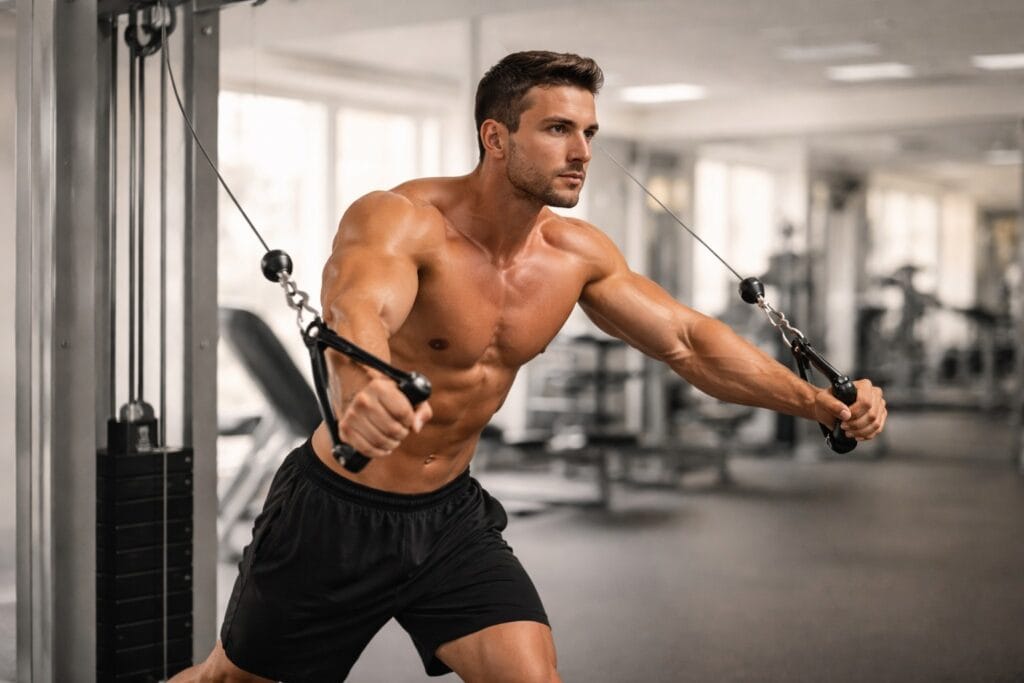
Weights start making sense when direct load becomes important.
Leg training is the clearest example.
I’ve already talked about squats, but lunges showed the same thing from a different angle.
Bodyweight lunges worked well at first, but after a while the sets kept getting longer, and the limiting factor felt more like balance and overall fatigue than the legs themselves.
Adding dumbbells and doing controlled sets of eight to ten per leg changed the sensation immediately, because the effort finally stayed in the quads and glutes instead of spreading everywhere else.
Precision is another factor.
At one point my upper back felt like it wasn’t really working during pull-ups, especially near the top of the movement.
Adding a few weeks of chest-supported rows made it much easier to feel the shoulder blades pulling together, and when I went back to pull-ups, the movement felt stronger and more controlled.
Repeatability also matters.
I’ve had sessions where a new push-up variation felt harder but inconsistent from set to set, while a dumbbell press felt identical every time, making progress easier to track.
For that reason, weights don’t really replace calisthenics in many cases—they simply complement it and make progress easier to manage in specific areas.
Conclusion
Calisthenics is often “better” at making the body strong as a unit.
Bodybuilding is often “better” at building muscle size with less guesswork and more precise loading.
Neither is the final boss of training.
They’re tools, and the smartest move is using the tool that matches the job.
If the goal is a bigger chest and bigger legs in the most straightforward way, bodybuilding has an easy advantage.
If the goal is a body that feels capable, controlled, and strong in space, calisthenics hits something deeper than numbers on a stack of plates.
A lot of people end up blending them, not because they’re indecisive, but because the combination covers more bases with fewer compromises.
That mix is where training finally stopped feeling like a debate and started feeling like a solution.