Every lifter hits that moment — the bar moves smooth, strength feels unstoppable.
Next session?
Add just 2.5 pounds per side, and your lower back files for early retirement.
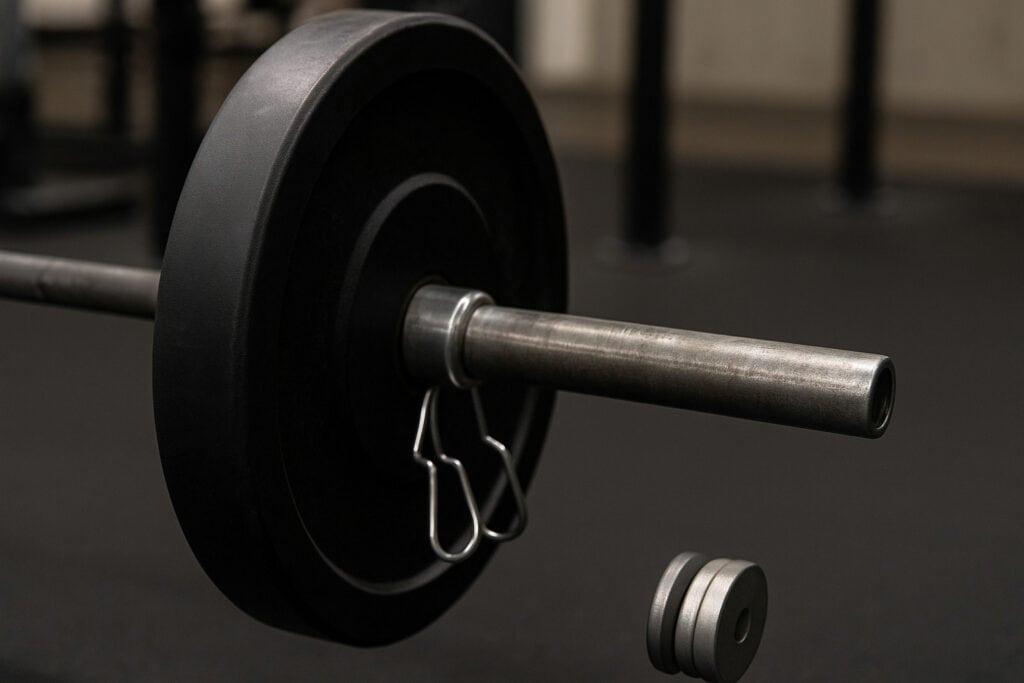
That’s when you hear about fractional plates.
Tiny, coin-sized metal slices that promise to keep progress alive when gravity starts fighting back.
But are they really worth it?
Or just another gym gadget collecting dust next to the ab roller and that resistance band you swore you’d use?
Why 5 Pounds Can Feel Like 50

At some point, every lifter hits that weird no-man’s-land where 5 pounds feels too heavy and zero feels like you’re standing still.
You can crush 135 on the bench, but 140 suddenly pins you like you’ve never seen a barbell before.
That’s not weakness — that’s just physics laughing at your nervous system.
Our muscles grow gradually, but most gym plates only let you jump in big chunks.
A standard pair of 2.5-pound plates adds 5 total pounds — and sometimes, that’s a bigger jump than your current strength can handle smoothly.
This is where progress stalls.
You start missing reps.
You second-guess your program.
You maybe even think, I’ll just do a few extra sets.
Spoiler: that rarely fixes it.
What Fractional Plates Actually Do
Fractional plates let you make micro jumps — as little as half a pound per side.
It sounds ridiculous until you realize that’s exactly what keeps progress alive.
Think about it: adding just 1 pound to your lift every week means 52 pounds more by the end of the year.
That’s literally the difference between benching two plates and still living in the land of “almost there.”
The best part?
Your body barely notices the difference from session to session.
You sneak progress in under the radar, and your nervous system just goes, “oh okay, I can handle this.”
That’s how strength adaptation works — smooth, steady, and sneaky.
How a Tiny PR Made Me Rethink Progress
I bought a cheap set of fractional plates online after getting stuck on my overhead press for what felt like eternity.
I couldn’t break past 115 pounds.
Every time I tried 120, it was like pressing a small car.
So I tried adding just a 1-pound increase per side.
117 pounds went up easy.
That was my lightbulb moment.
It wasn’t that I was weak — I was just trying to jump too far at once.
Once I slowed the increments, everything changed.
The press went from a weekly disappointment to a reliable climb.
It’s kind of like dieting — if you try to drop 20 pounds overnight, you’ll crash.
But add small, consistent habits, and boom — progress becomes predictable.
Why Slow Progress Beats Big Jumps Every Time
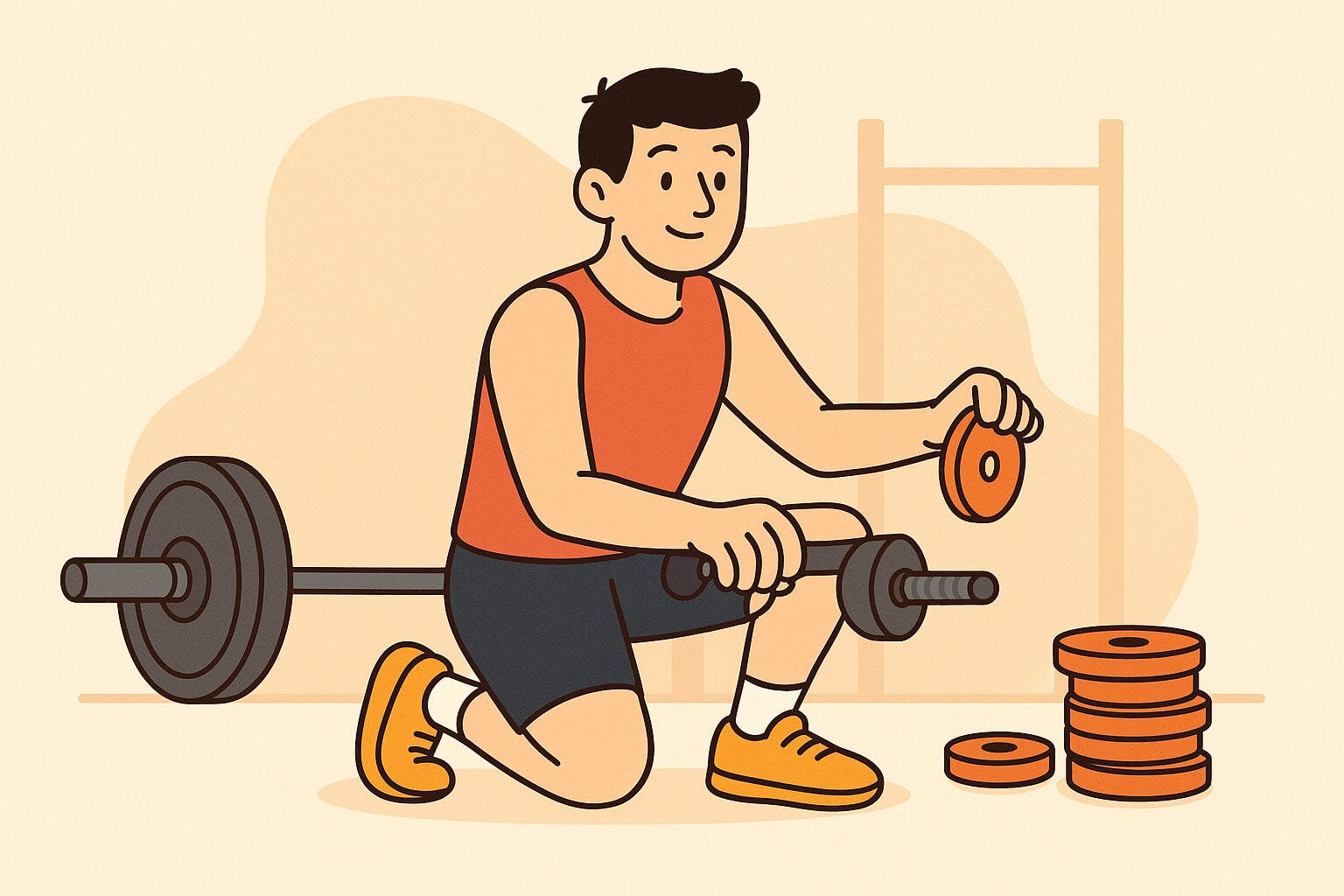
There’s a reason Olympic lifters and powerlifters use these tiny plates like sacred relics.
The body adapts best with gradual overload.
Muscles, tendons, and your nervous system all need time to adjust to new loads.
When you push too fast, fatigue builds faster than adaptation.
Studies in strength progression consistently show that smaller load increases result in better long-term performance — fewer plateaus, fewer injuries, and steadier gains.
Should Every Lifter Invest in Fractional Plates?
Here’s where it depends.
If you’re a total beginner still adding 10 pounds to your squat every week, fractional plates aren’t a priority yet.
Your body’s adapting so fast you won’t need them for months.
But once your lifts slow down — usually within 6 to 12 months of consistent training — fractional plates become gold.
Especially for upper body lifts where 5-pound jumps feel massive.
They’re also a must if you train at home.
Commercial gyms rarely have them, and even when they do, someone’s always using them to prop open a door.
Why Tiny Wins Build Big Confidence
There’s also a mental benefit people underestimate.
When you add 0.5 or 1 pound, it’s not intimidating.
You trick your brain into trying because it feels doable.
And that matters — because confidence is half the battle in lifting.
That small victory builds momentum.
You start stacking wins instead of failures.
You walk into the gym expecting to succeed instead of fearing another missed lift.
That alone makes those little metal circles worth their weight — literally.
It’s Not the Weight — It’s Everything Else
Let’s be real — not every plateau is solved by adding smaller weights.
Sometimes you’re not stuck because the jump is too big.
You’re stuck because your recovery sucks, your sleep’s off, or your form quietly fell apart without you noticing.
If you’re missing lifts even after deloading or changing rep schemes, tossing in fractional plates won’t magically fix that.
They’re a precision tool, not a rescue plan.
Before blaming the weight jump, ask:
Am I eating enough to actually grow?
Did I sleep more than five hours last night?
Have I been training with focus, or just going through the motions?
If those boxes aren’t checked, even half-pound plates can’t save the day.
How to Microload Like a Human, Not a Machine
Fractional plates are great — but only if you know how to plug them into your plan.
You don’t have to add weight every single workout like a robot.
A smarter approach:
Stick with the same weight until you hit your target reps comfortably.
Then add a fractional increase — say 0.5 or 1 pound per side.
Keep that new load for a week or two before bumping again.
It’s the “wave” method — small rise, hold steady, rise again.
This keeps your nervous system calm, your form clean, and your ego under control.
Budget Gains Made Simple
You don’t even need to buy official fractional plates to start.
Some lifters use heavy washers from a hardware store.
Same effect, just cheaper.
Or grab magnetic microplates that snap onto dumbbells and cables too — they’re portable, and they make progressive overload possible even in random hotel gyms.
What to Look for When Buying Fractional Plates
Okay, you’re sold (sort of).
But not all fractional plates are created equal.
Here’s your buyer’s cheat sheet:
Accuracy: Aim for plates calibrated within ± 0.5%. If they’re off by too much, your “small gains” become a mess.
Material & Durability: Brass, steel, or magnetic types. Brass holds up — think decades. Magnetic ones are cool for snapping on, but check if they wobble.
Compatibility: Make sure they actually fit your barbell sleeve or dumbbell. Some are too small or too large.
Stackability: Easy to stack, easy to take off. You don’t want to be fumbling between sets.
Set Size & Range: A good kit often gives you 0.25 lb, 0.5 lb, and 1 lb plates (or the metric equivalents). That gives you flexibility at different load ranges.
RELATED:》》》 If I’m Building a Home Gym, Should I Invest in an Olympic Barbell or Stick with Standard?
The Bottom Line
Fractional plates aren’t magic.
They won’t fix a bad program or bad recovery habits.
But if you’re serious about long-term progress and tired of being stuck between plate sizes, they’re one of the smartest investments you can make.
They cost less than a dinner out, but they’ll keep your training moving forward for years.
Progress doesn’t always have to be dramatic.
Sometimes it’s about being quietly consistent — just a little better, a little stronger, week after week.
And honestly, that’s the kind of progress that sticks.