I used to roll my eyes at foldable treadmills.
You know, the kind you see in small apartments or influencer home gyms — folded neatly in a corner like they’ve never seen a drop of sweat.
Meanwhile, I was out here thinking: “Yeah right, that thing’s gonna snap in half the first time you sprint.”
But here’s the twist — I was wrong. Well, half wrong.
Because as it turns out, foldable treadmills aren’t all cheap plastic toys anymore. Some of them are surprisingly legit… if you know what you’re buying.
How They’ve Changed Over the Years
Back in the day, foldable treadmills were a nightmare.
Tiny rollers, wobbly decks, and motors that overheated faster than my patience on leg day.
They were fine for walking, but sprinting on one felt like running on a folding chair.
Now?
Things have changed.
Modern foldables come with legit upgrades like:
- 3.0–3.5 CHP continuous motors
- 20″ × 55″ decks for full stride
- Shock absorption tech that rivals gym models
- 275–325 lb weight capacity
The result: smoother rides, sturdier frames, and less of that “is this thing about to die?” feeling mid-run.
So no, they’re not all fragile toys anymore.
But that doesn’t mean they’re indestructible either.
The Real Weak Spots You Don’t Notice Until It’s Too Late
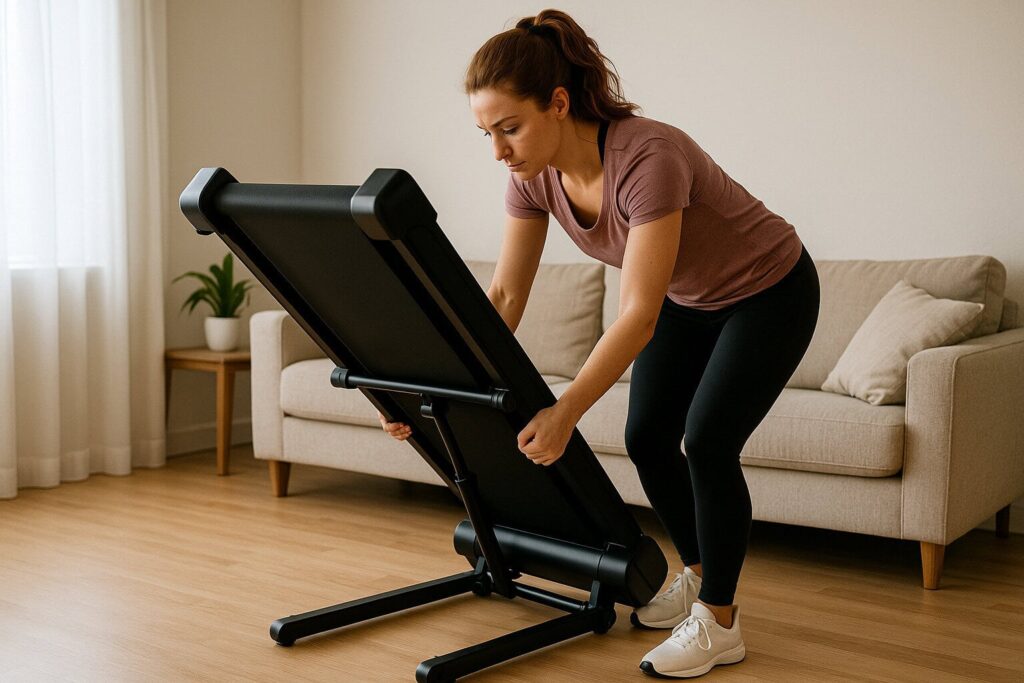
Most people assume the hinge — the folding mechanism — is what fails first.
But in reality, the motor or belt tension system gives up way sooner on cheap foldable treadmills.
Why?
Because when you compact the treadmill, manufacturers have to shrink or reposition the motor housing and rollers.
That means less airflow, more heat buildup, and faster wear.
Think of it like cramming a race car engine into a lawnmower frame. Sure, it runs — but not for long.
On the flip side, premium foldables (like NordicTrack, Sole, or Horizon’s higher-end lines) solve this with better ventilation and stronger decks.
They’re made for daily use, not “New Year’s resolution for three weeks and done.
| Component / Factor | What Happens & Why It Matters |
|---|---|
| Motor ventilation | Smaller compartment = less airflow → more heat buildup → shortened motor lifespan. |
| Roller size | Shorter belts and smaller rollers wear unevenly → more friction → earlier belt/roller replacement. |
| Deck stiffness | Less mass can mean more vibration → higher fastener fatigue and noisier ride over time. |
| Compact design trade-off | Tighter airflow and higher internal temps — not great for longevity if maintenance is ignored. |
| Estimated lifespan ranges | Cheap foldables: motor brushes may burn out after ~400–600 hours. High-end foldables: 2,000+ hours with proper maintenance. |
Quick Comparison: Foldable vs. Non-Foldable (Realistic View)
| Feature | Foldable | Non-Foldable |
|---|---|---|
| Deck Stability | Slight flex under heavy sprints | Rock-solid |
| Motor Ventilation | Compact, warmer | Open, cooler |
| Noise Level | Quieter in modern models | Slightly louder |
| Portability | Easy to move & store | Heavy, fixed |
| Price Range | $700–$1,800 (mid-tier sweet spot) | $1,200–$3,000+ |
| Best For | Apartments, light cardio, small spaces | Daily runners, high mileage, gym setups |
Bottom line: you’re trading a little stability for convenience.
But for most home users, that’s a perfectly fair deal.
Does a Foldable Treadmill Hurt Your Joints More?
Not really — and this is where biomechanics come in.
Joint impact isn’t about whether your treadmill folds.
It’s about deck design and cushioning.
A solid foldable treadmill with an 8–10mm elastomer layer under the deck can absorb 20–30% more impact than old fixed models with wood boards.
So your knees don’t care if it folds — they care about the shock absorption curve.
The real issue happens when the deck flexes too much.
That “bouncy” feeling might feel comfortable but can cause instability in your ankle alignment during push-off.
Translation: your treadmill’s structure matters more than its folding ability.
Space Saver or Stress Maker?
We all love the fantasy of running in the morning and reclaiming our entire living room ten minutes later.
Click, fold, done — adult magic.
But space-saving convenience can come at a cost.
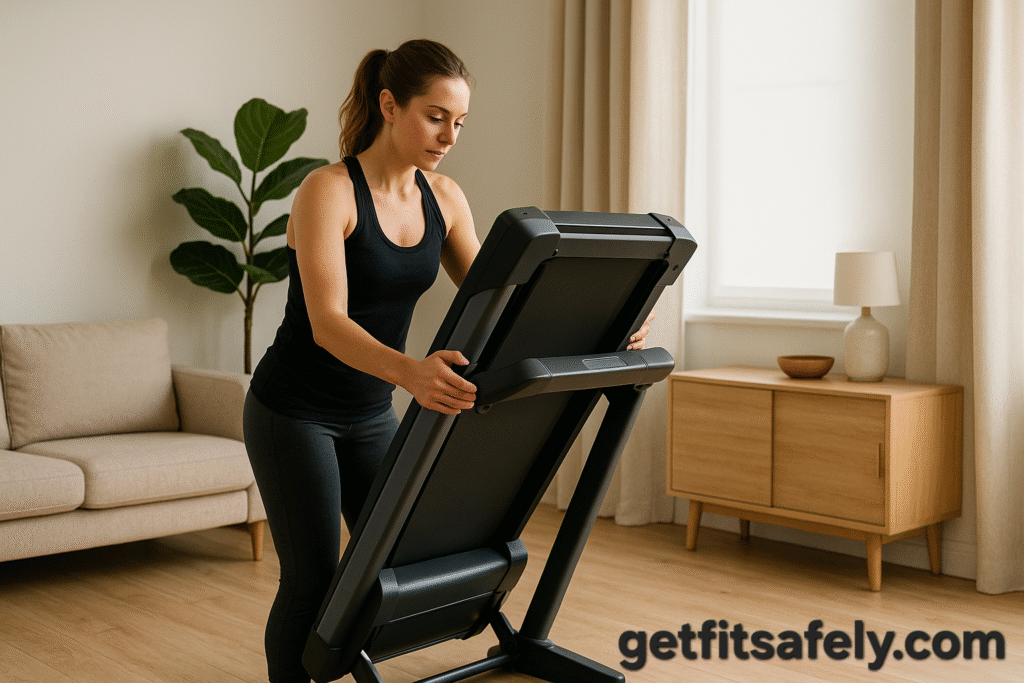
If you store your treadmill at the wrong angle (or against a damp wall), you risk warping the frame or killing the hydraulic lift.
And smaller decks (often 50–55 inches vs 60 on non-foldables) can shorten your stride and mess with natural gait if you’re tall.
It’s not a dealbreaker — just a reminder that every design choice has trade-offs.
If you’re more concerned about space than durability, check out what I found when comparing compact treadmills and how they actually save space (or not).
How to Keep a Foldable Treadmill Alive Longer Than Expected
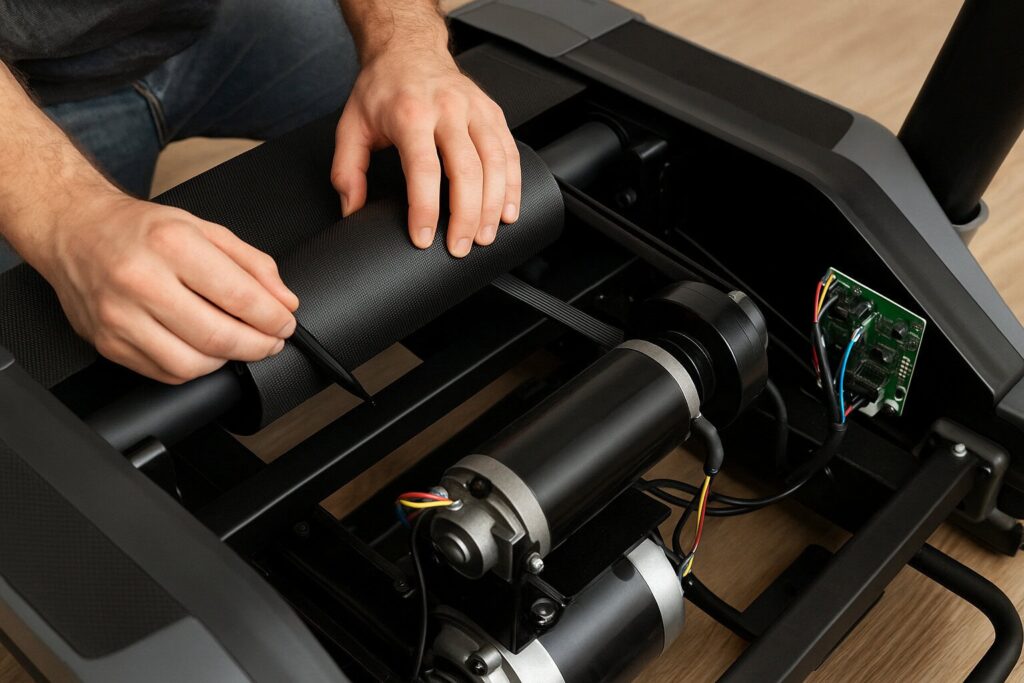
This is the part nobody talks about — but it’s where you beat the odds.
Foldable treadmills don’t die faster because they’re weaker.
They die faster because people treat them like furniture, not machines.
Here’s how to keep yours running quietly for years:
- Lubricate the belt every 150 miles (or every 3 months) with 100% silicone oil.
- Vacuum under the deck weekly to prevent dust buildup and motor heat.
- Check belt tension monthly — if it slips more than 3 inches, tighten both screws equally.
- Don’t fold immediately after intense use. Let it cool 15–20 minutes to avoid trapping heat.
- Store flat occasionally. Keeping it upright 24/7 stresses the lift system.
I’ve seen budget foldables last 5+ years just because someone treated them with a little respect — and I’ve seen premium ones die in 12 months from pure neglect.
| Curious how fast you can safely go on a foldable model? I broke that down here — it’s not as simple as it looks. |
Final Thoughts
If you’ve got limited space, moderate training goals, and realistic expectations, yes — foldable treadmills are absolutely worth it.
If you’re a high-mileage runner training for races, go fixed and never look back.
Either way, what really decides how long it lasts isn’t the hinge — it’s how you use it.
Because no treadmill, foldable or not, can survive being a laundry rack for nine months and a sprint station for one.
And in the end, the smartest choice isn’t the biggest machine — it’s the one you’ll actually use, day after day, without dreading it.