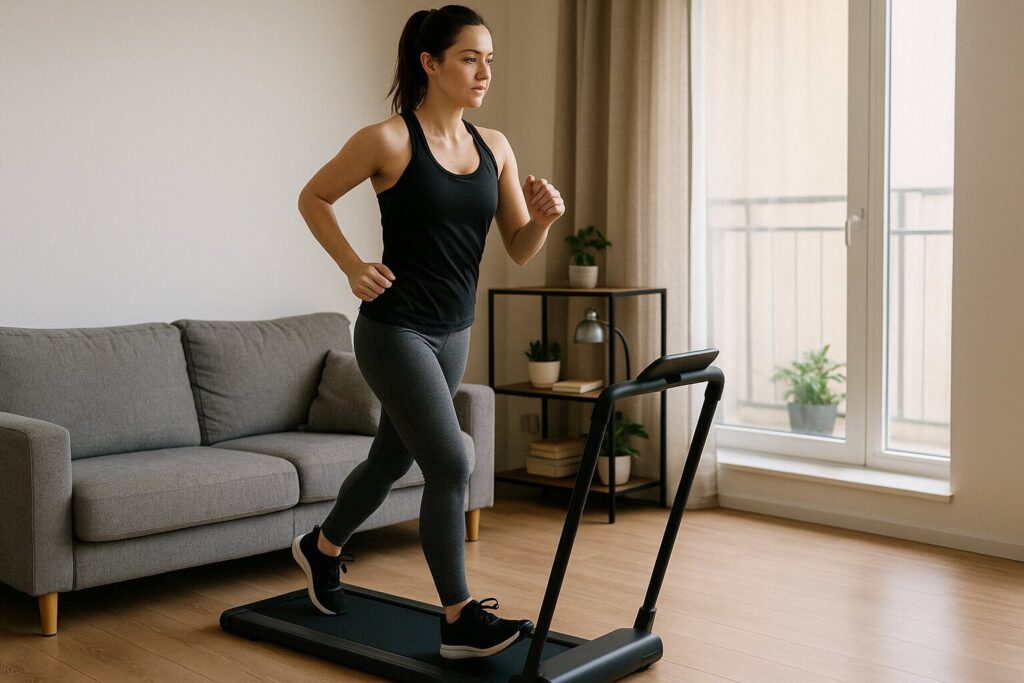
In most apartments, the “home gym corner” is whatever space isn’t already taken by a couch or a laundry basket.
That’s why compact treadmills look like the perfect fix.
They’re sleek, foldable, and promise “gym-quality” in a small box.
But once it arrives and the belt starts rolling, things change fast.
You see what really happens when brands try to squeeze cardio gear into a closet-sized frame.
| Before going any deeper, let’s clear one thing up — compact and foldable treadmills aren’t the same thing. Foldable ones are full-size machines that fold up vertically when you’re done. Compact ones, on the other hand, are designed to stay small all the time, trading power and deck size for convenience. This article is all about compact treadmills — the kind made for tight spaces, light workouts, and easy storage. |
The Compact Dream (and the Reality Check)
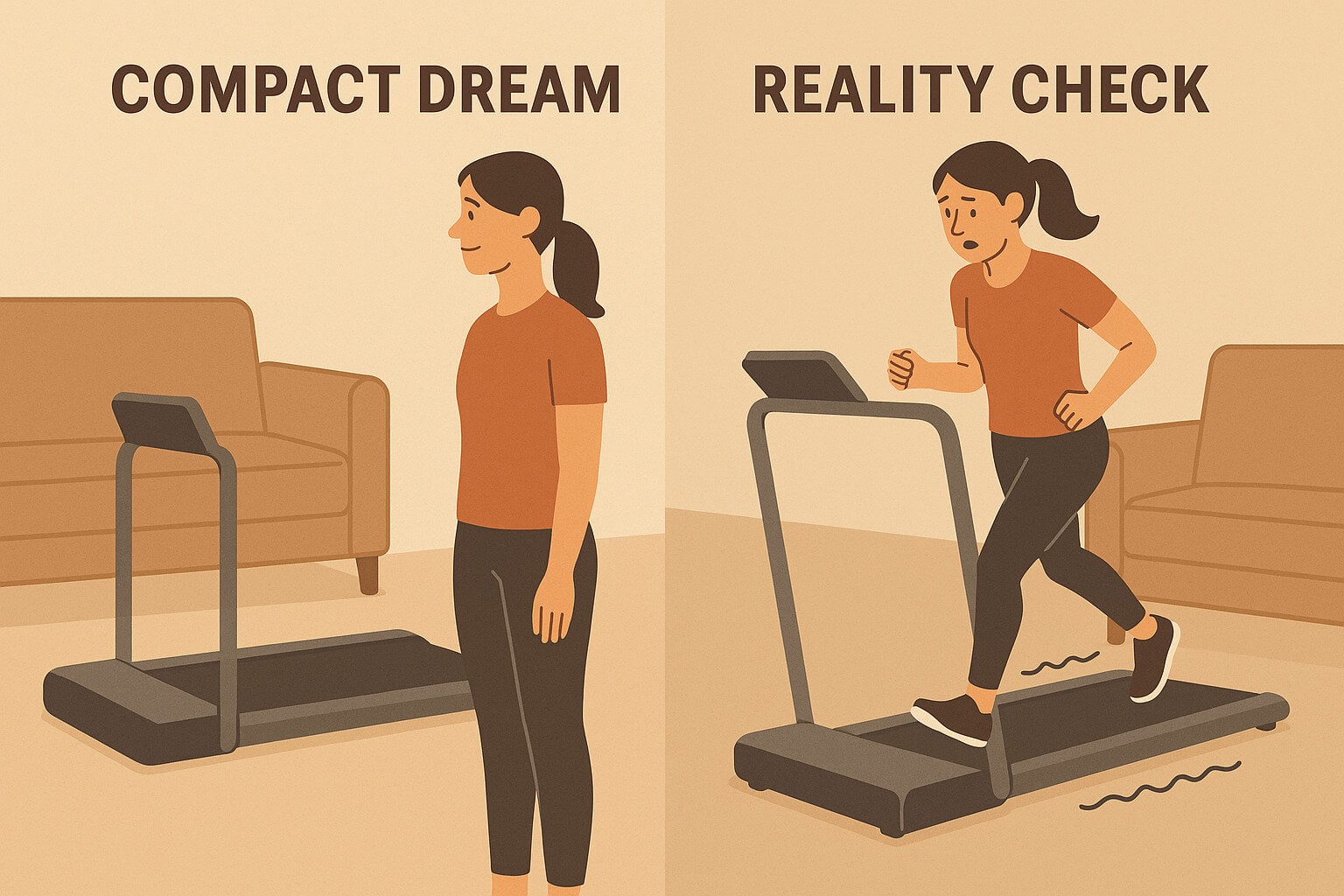
Compact treadmills look amazing online.
They slide under your couch, weigh less than your dog, and promise “gym-quality workouts” in 3 feet of space.
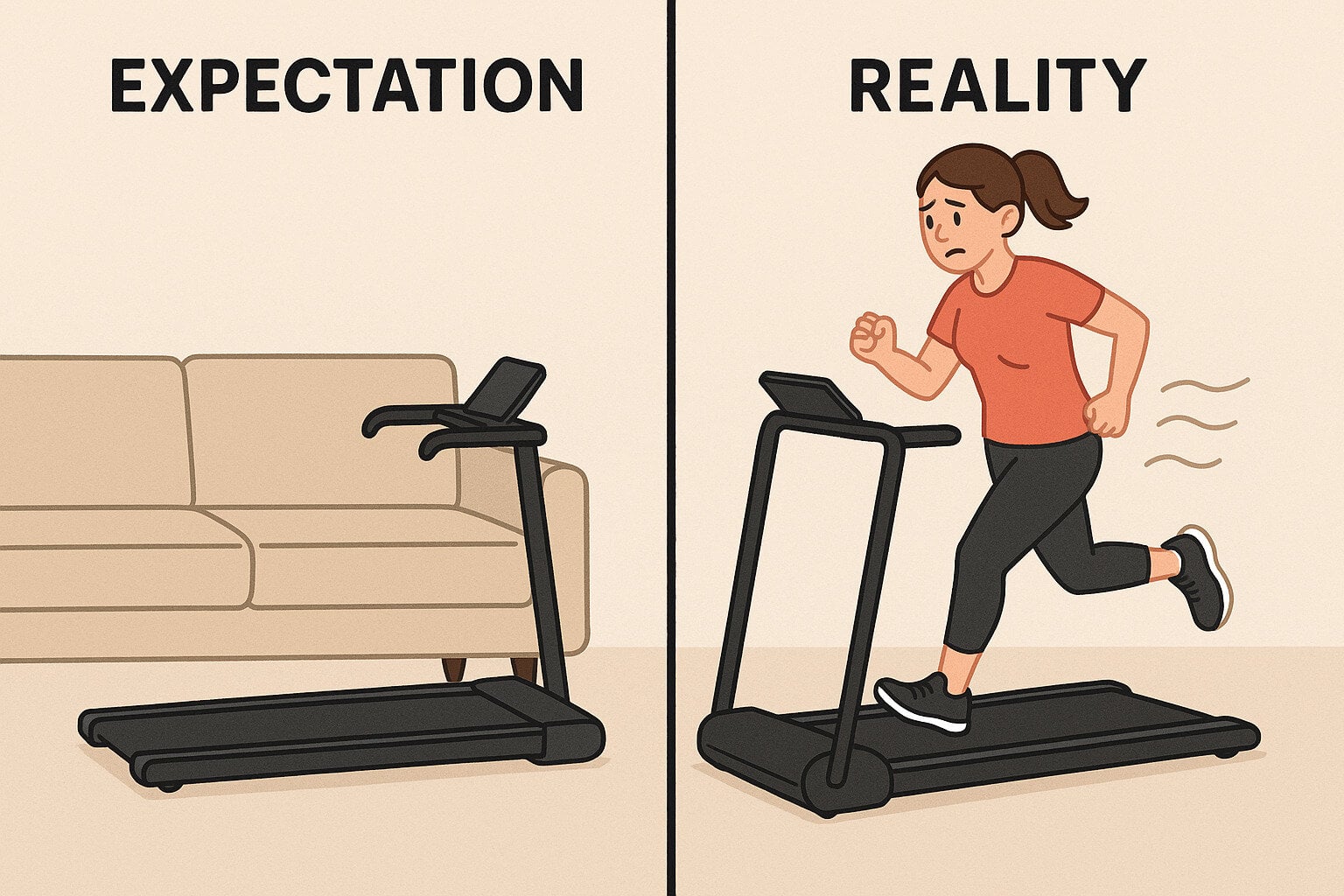
But when that shiny box shows up, reality hits fast.
You unfold it, realize the belt is shorter than your stride, and that the handrails feel like aluminum chopsticks.
The truth is, compact treadmills do save space — but the trade-off is usually in running feel, noise, and long-term durability.
They’re like travel-size toothpaste: convenient, not meant for daily life.
Where the Space-Saving Magic Comes From
To make treadmills smaller, brands cut down on:
- Deck length: usually 45–50 inches vs 55–60 on regular models
- Roller diameter: smaller rollers = higher belt friction
- Motor power: typically 1.5–2.0 CHP, compared to 3.0+ on standard treadmills
- Cushioning layers: thinner decks, often without proper shock absorption
That’s how they fit into tight spaces — but every inch shaved off means a little more vibration and a little less stability.
It’s basic physics: less mass = less momentum control.
And when you hit 6–7 mph, you start feeling that wobble underfoot like you’re running on a bridge made of IKEA parts.
But They’re Not All Bad News
If you use them for what they’re designed for — walking, light jogging, maybe a casual sweat during Netflix — they’re actually great.
They’re quiet, lightweight, and can slip under a bed or sofa in seconds.
Perfect for:
- Small apartments or dorms
- People who work from home and need movement breaks
- Recovery days or low-impact cardio
In fact, using one consistently is still better than skipping cardio because you “don’t have space.”
The key is knowing what you’re buying.
Compact vs. Foldable: Not the Same Thing
People mix these two up all the time.
A foldable treadmill is a full-sized machine that folds up vertically to save floor space.
A compact treadmill, on the other hand, is built smaller from the start.
That means:
- You can’t extend the deck — it’s just shorter
- The motor is weaker
- And the structure is lighter overall
In short: foldables are “real treadmills that shrink.”
Compacts are “mini treadmills that try their best.”
So if your goal is long-term running, pick foldable.
If it’s light cardio or walking, compact can totally work.
How Compact Is Too Compact?
If you’re under 5’9″, most compact decks will feel fine.
But taller runners? You’ll feel like you’re dancing on a balance beam.
Ideally, you want at least 48 inches of deck length for comfortable jogging.
Some ultra-compact models drop to 40 inches — that’s walking only territory.
And pay attention to weight capacity:
- Cheaper ones handle around 220–250 lbs max.
- Better ones reach 275–300 lbs with sturdier frames.
Go beyond that, and you’ll wear down the belt and motor fast — no matter how new it is.
Real Space Saved (and What You Lose in Return)
Sure, compact treadmills can save 4–6 square feet of floor space compared to regular ones.
But here’s the trade-off:
- Shorter stride space
- No incline or limited incline range
- Smaller motor lifespan
- Less shock absorption
So yeah, you’ll reclaim some living room — but you’ll also sacrifice running comfort and intensity potential.
Still, if you’re mostly walking or doing light cardio, that trade-off can be worth it.
| Wondering if foldable treadmills handle wear and tear better? The full breakdown covers how long they actually last — and what really causes them to break down over time. Read the main guide → |
How to Pick a Compact Treadmill That Doesn’t Feel Like a Toy
A few quick checks before buying:
- Look for at least 1.75 CHP motor minimum
- Belt size 18″ × 48″ or longer
- Weight limit over 250 lbs
- Built-in shock absorption layer
- Fold-flat storage height under 6 inches if you plan to slide it under furniture
Bonus tip: avoid anything under 60 lbs total weight — that’s a red flag for instability.
You want light, not flimsy.
Get the Most Out of Your Compact Treadmill
Most people buy a compact treadmill because it fits their home — but then forget to make it fit their lifestyle.
And that’s where the real gains get lost.
The secret isn’t just using it, it’s designing your environment so you’ll want to use it.
Here’s what actually helps:
- Pair it with a standing desk setup.
Walking slowly while answering emails burns 100–150 calories per hour without messing up your focus. - Set a visible routine cue.
Keep the treadmill open and ready right after breakfast or before Netflix — if it’s hidden, you’ll forget it exists. - Combine it with mobility or resistance work.
A 20-minute walk followed by band work or dumbbell circuits makes a compact treadmill feel like part of a full training plan. - Track mileage, not minutes.
Compact treadmills make you underestimate your effort since the steps are shorter — aim for distance to stay consistent.
Keeping a Compact Treadmill Running Smooth for Years
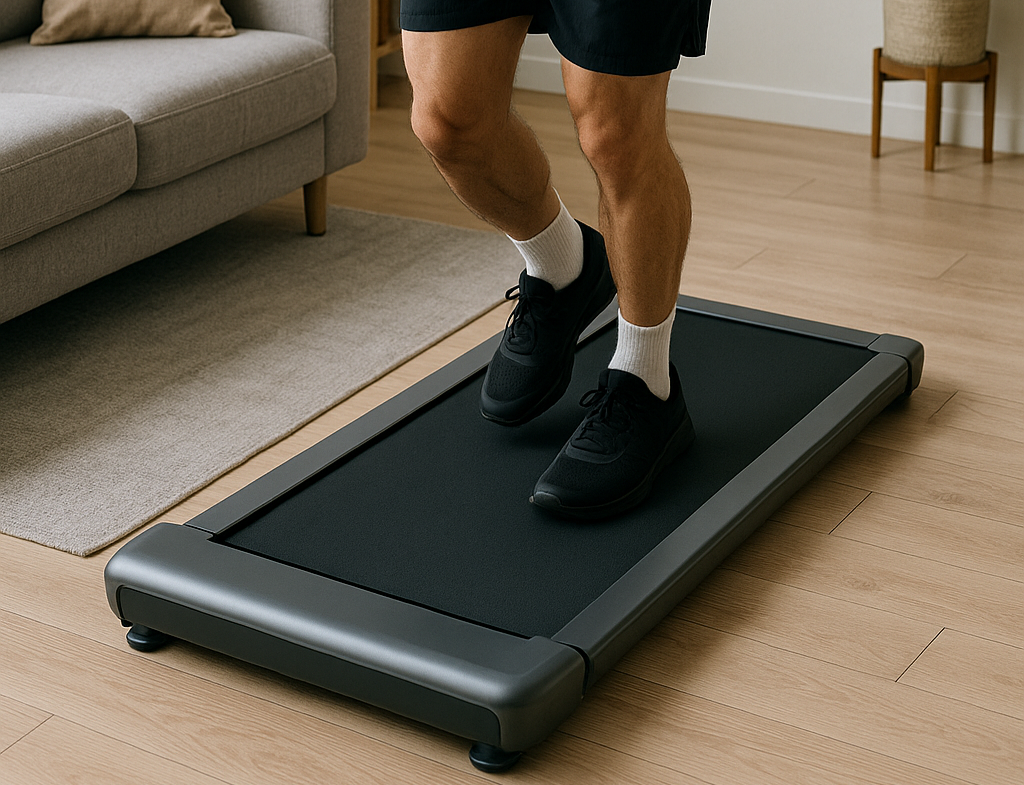
Compact treadmills don’t die because they’re weak — they die because people treat them like furniture.
The difference between one that lasts a year and one that lasts five?
Daily habits.
Here’s what keeps them running smooth:
- Use a stable surface.
Skip the carpet — go for hardwood or a solid mat.
It keeps the motor cooler and prevents belt wobble. - Keep it clean and lubricated.
A thin layer of silicone oil every few months cuts friction and heat in half.
Dust is your enemy — vacuum around the base weekly. - Stick to steady cardio.
Compact treadmills aren’t built for all-out sprints.
Think consistent pace, not punishment. - Let it cool before storing.
Give it 10–15 minutes before folding or sliding it away — that’s all it takes to protect the electronics. - Stay within the weight range.
Going over even a little adds strain to the belt, motor, and deck joints.
Compact treadmills are simple machines — take care of them like a piece of gear, not a coffee table, and they’ll pay you back with years of quiet reliability.
| Thinking about pushing your treadmill faster? There’s a full guide on what happens when you sprint on foldable models — and how to keep them from shaking apart. Check it out → |
Conclusion
Compact treadmills can be a great solution for small spaces, as long as you don’t expect them to replace a full gym treadmill.
They’re designed for walking, light jogging, and consistency — not sprint intervals or marathon prep.
So if you buy one knowing that, it’ll serve you well for years.
But if you expect a pocket-size treadmill to act like a $2,000 machine… let’s just say, you’ll learn about “cut corners” the hard way.