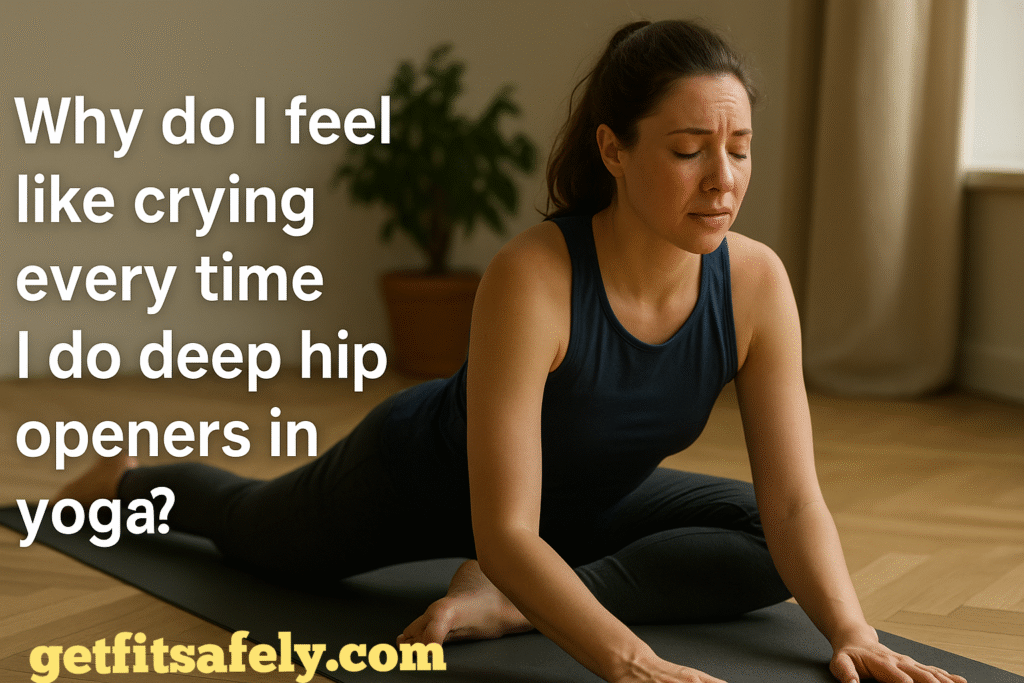
There you are,
Sitting in pigeon pose.
Breathing, stretching, trying to stay composed.
And suddenly—out of nowhere—your eyes start watering like it’s the dramatic finale of a dog movie.
No, you didn’t pull a muscle.
No, your hip didn’t crack.
You didn’t even feel pain.
It was more like an emotional wave rising out of nowhere.
And it hits you harder than any squat PR.
If it ever happened to you during a hip opener in yoga, feeling on the verge of tears, know this—you’re not “broken.”
You’re simply human.
Let’s see why it happens, because it’s way more common than people think.
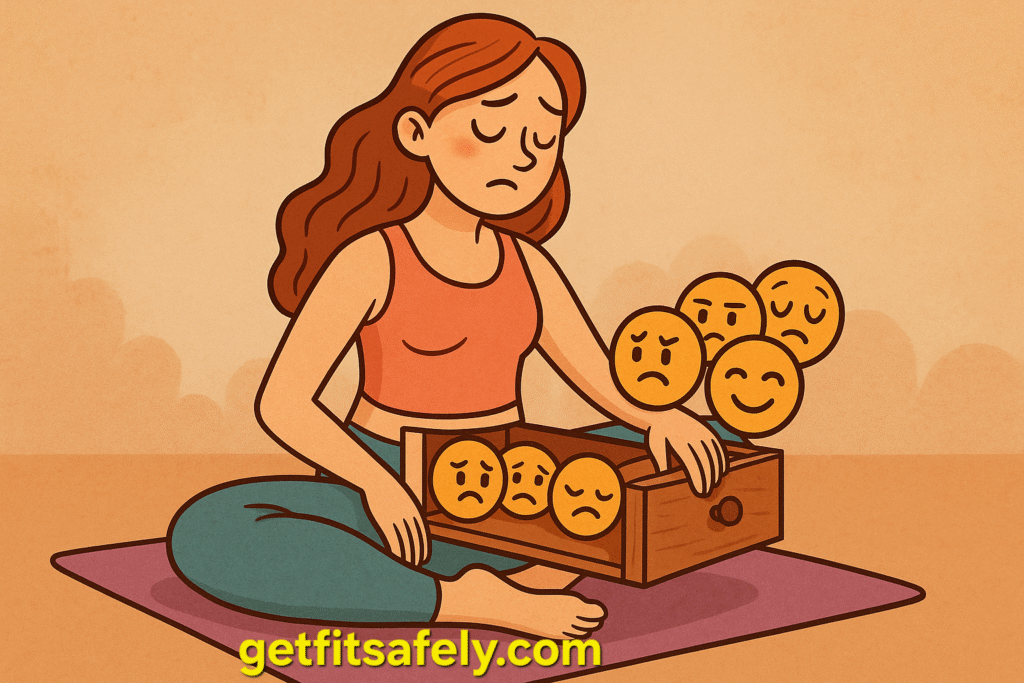
Hips as the body’s secret drawer of emotions
Here’s the truth.
Hips aren’t just for squats, running, or filling out jeans.
They’re like the body’s emotional storage.
Think about it.
Every time you’ve been stressed, anxious, angry, or held back feelings… you tensed up.
And guess where that tension often hides?
In the iliopsoas, aka your hip flexors.
Science backs it up.
The psoas muscle (that deep flexor connecting your spine to your femur) is closely tied to the stress response.
When you’re in fight-or-flight mode, it tightens.
When you relax, it softens.
So if you’ve been carrying months or years of stress like an overstuffed backpack, and suddenly you drop into a deep stretch that “unlocks the vault”—boom.
Here come the emotions.
It’s like hitting “play” on feelings you had on pause.
Why yoga flips the switch
Now, why does it happen specifically in yoga?
Because yoga is sneaky.
Unlike lifting weights, where you push and grit your teeth, yoga tells you to stop.
To breathe.
To really listen to what’s happening inside your body.
That’s dangerous ground if you’ve spent years ignoring yourself.
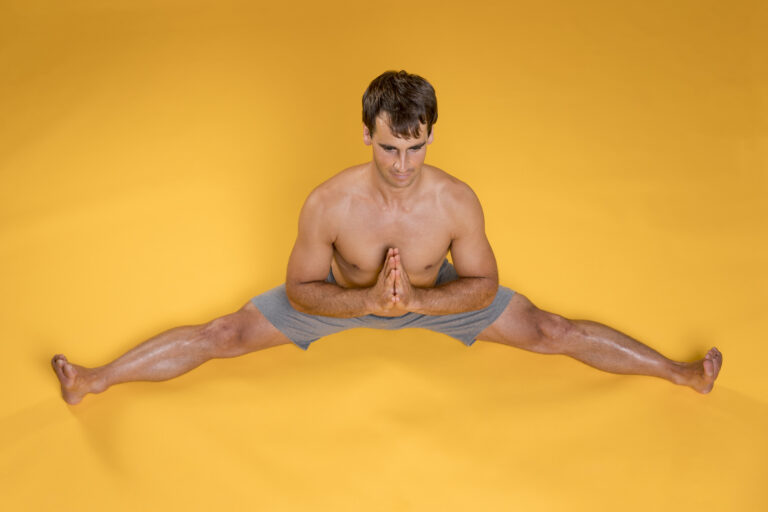
Hip openers like pigeon, frog, or lizard don’t just stretch muscle fibers.
They strip down your defenses.
And when those walls drop, your body whispers: “Remember that heartbreak from 2018? Or the work stress? Yeah, here’s the full package.”
You’re not crying for “no reason.”
It’s your nervous system finally letting something go.
Is it all in my head?
Absolutely not.
This isn’t “new age yoga fluff.”
Studies show that accumulated stress really does affect muscle tension and posture.
Even trauma can stay stuck in the body.
That’s why some therapists recommend somatic practices—movements that help release emotions stored physically.
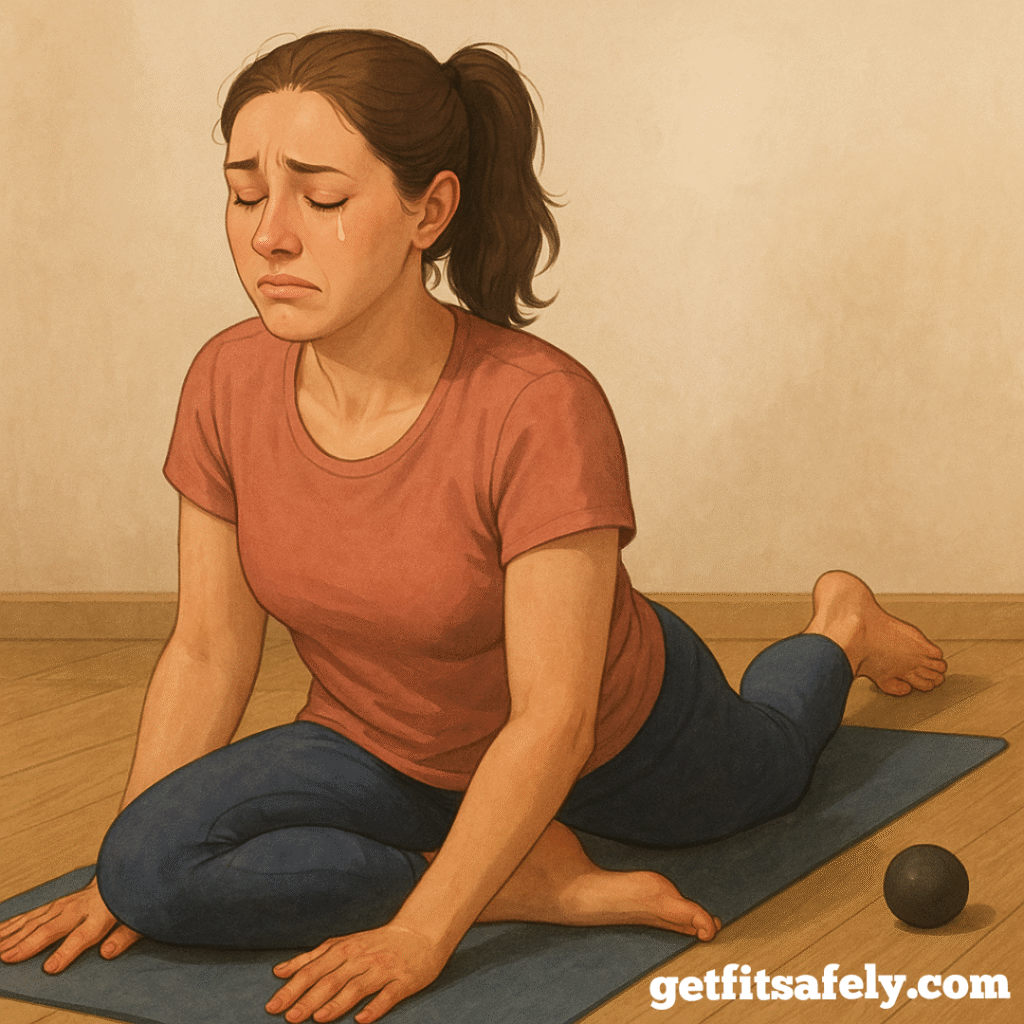
So when tears sneak up in pigeon pose, you’re not weak.
You’re just doing an emotional reset.
If you’ve ever used a massage ball on your glutes and suddenly felt anger rise, it’s the same mechanism.
Pressure + buildup = release.
That “oh no, what now?” moment
The upside of emotional hip openers
Here’s the good part.
When you start letting emotions out, your hips don’t just loosen physically.
They free up mentally too.
It’s like unclogging a drain.
Water flows better.
You move better.
And often, you live better.
I’m not saying yoga is magical or that one pigeon pose fixes life.
But stopping, breathing, and letting go can unlock more than you’d imagine.
So next time tears come during a hip opener, don’t apologize.
Don’t wonder if it’s weird.
When hip openers turn into an inner journey
There’s a part people often overlook: deep hip openers aren’t just stretching.
They’re a doorway to parts of ourselves we usually ignore.
When you stay still in an intense pose, with your breath digging into tissues and no escape route for your body, something happens.
It feels like a “mandatory meeting” with yourself.
No distractions.
No phone scrolling.
No running away.
That silence becomes a mirror.
That’s why so many describe these poses as physical and emotional therapy.
Not always pleasant, but deeply useful.
The connection with breath
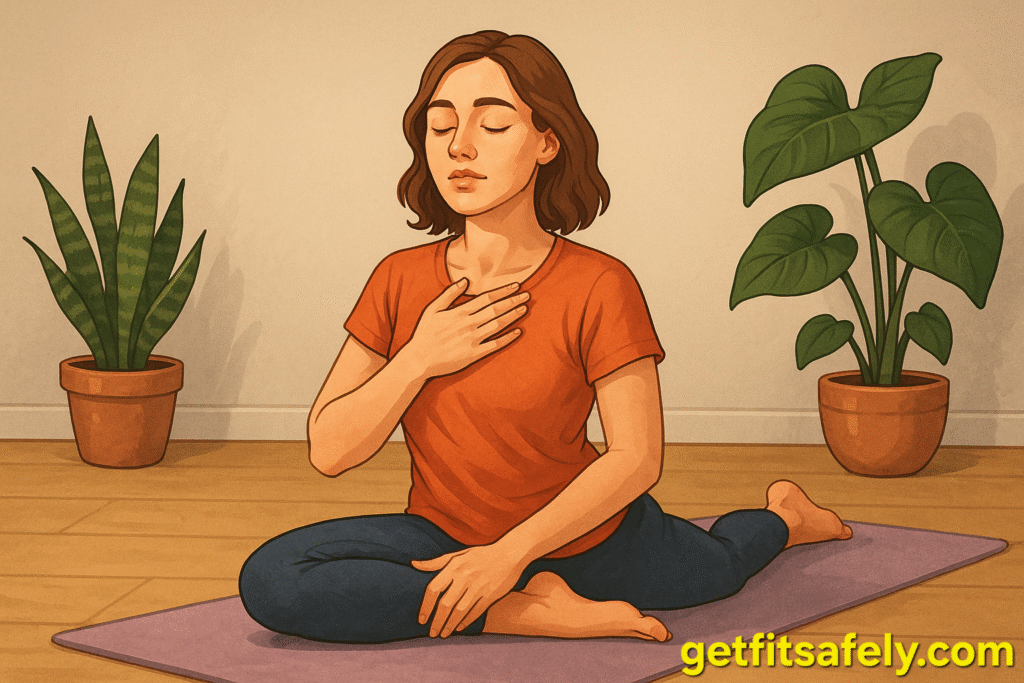
Another thing that amplifies everything is the breath.
During a hip opener, your breath becomes like a magnifying glass on sensations.
Inhaling, you notice your rigidity.
Exhaling, you feel fibers surrender.
But along with muscles, sometimes emotions release too.
It’s like hitting a “reset” button: with every exhale, you let go of something you don’t need anymore.
And it’s not always just physical tension.
From fragility to strength
Crying on the mat may seem like weakness.
In reality, it’s the opposite.
It means you’re allowing yourself the luxury of letting go.
It means you’ve stopped holding everything in—and that’s an act of massive strength.
The true benefit of hip openers isn’t just improved mobility.
It’s facing what’s inside you without running.
That’s where a new kind of resilience is born.
The role of recovery
Another interesting point is that emotional release isn’t only “psychological.”
It actually helps physical recovery too.
When muscles relax after an emotional wave, circulation and mobility improve.
It’s like the body can finally breathe better.
Many athletes say that after moving through these “emotional crises” in yoga, they felt lighter even in sports movements.
So yes, those tears can turn into better performance—not just a cathartic session.
How to make emotional hip openers safe and empowering
Let’s be real.
When hip openers hit and the tears come down, it feels like your body is playing a prank.
But that’s actually where the magic is.
Here’s how to handle it—with simplicity, a touch of lightness, and lots of breath:
- Welcome the trigger, don’t fight it
As soon as the “inner curtain” drops and emotions rise—pause.
Recognize it.
Don’t judge your reaction.
That pause is powerful.
It turns the wave into a welcome. - Breathe—not just air, but softness
Deep hip openers like pigeon, frog, or lizard don’t just stretch muscles.
They dive straight into your nervous system.
Let exhalation carry the emotion too.
Each breath smooths the edges—outside and in. - Create a ritual after practice
After stretching, prepare a soft “landing”:- Write a line in your journal
- Drink water
- Lie down in silence for a minute
These little acts give body and mind a safe place to settle.
- Build trust with simpler poses
If full pigeon scares you, start with easier ones like butterfly or low lunge.
Move slowly.
Listen inward.
You’re not skipping the work—you’re building the foundation. - Let movement become a mirror
Hip openers awaken physical and emotional memory.
It’s the science of the nervous system, somatic practice, and yoga speaking the same language.
If something surfaces—it’s good.
You’re not broken.
You’re just more aware. - Use somatic support (bonus tools)
Want to go deeper? Try:- Shaking out your legs after an intense pose
- Gentle side twists or accordion-like spine waves
These moves loosen the psoas and help release hidden tension.
- Bring calm into your practice space
Set the mood:- Soft music
- Warm light
- Maybe a cozy blanket for final relaxation
The environment matters—it softens emotional intensity.
- Share… or keep it private
Some find relief whispering, “That pose almost made me cry.”
Others prefer to step aside and breathe alone.
Both are valid.
Your experience is real either way.
What science and experiences say
The psoas muscle, that deep hip flexor, tightens with stress and holds fight-or-flight energy.
When you really open it, emotional release can come.
Yoga also shifts the body from sympathetic (action mode) to parasympathetic (rest and digest).
That’s where repressed emotions find space to leave.
And it’s not just experts saying it—forums are full of similar stories.
Someone even wrote: “I’m typing this with tears in my eyes. The awareness of emotions spikes the day after an intense hip opener session.”
You’re not alone.
In short: your emotional hip opener toolkit
| Step | Action | Why it helps |
|---|---|---|
| Pause & breathe | Let tears flow without resistance | Emotional release needs space |
| Post-practice routine | Journal, water, rest | It grounds the experience |
| Go gradual | Start with simple poses | Build trust with your body |
| Add somatic moves | Twists, waves, self-massage | They melt deep tension |
| Curate the environment | Music, lighting, props | It softens the intensity |
| Share or stay silent | Expression or introspection | Both honor your real needs |
RELATED:》》》Can yoga make tight hamstrings worse if your hips are misaligned?
Conclusion
If you cry every time you do deep hip openers in yoga, it doesn’t mean you’re fragile.
It means your body is smart enough to release when you finally give it space.
Let the tears out, stretch a little deeper, breathe a little stronger.
And remember: sometimes the heaviest weight we drop isn’t on the barbell.
It’s on the mat.