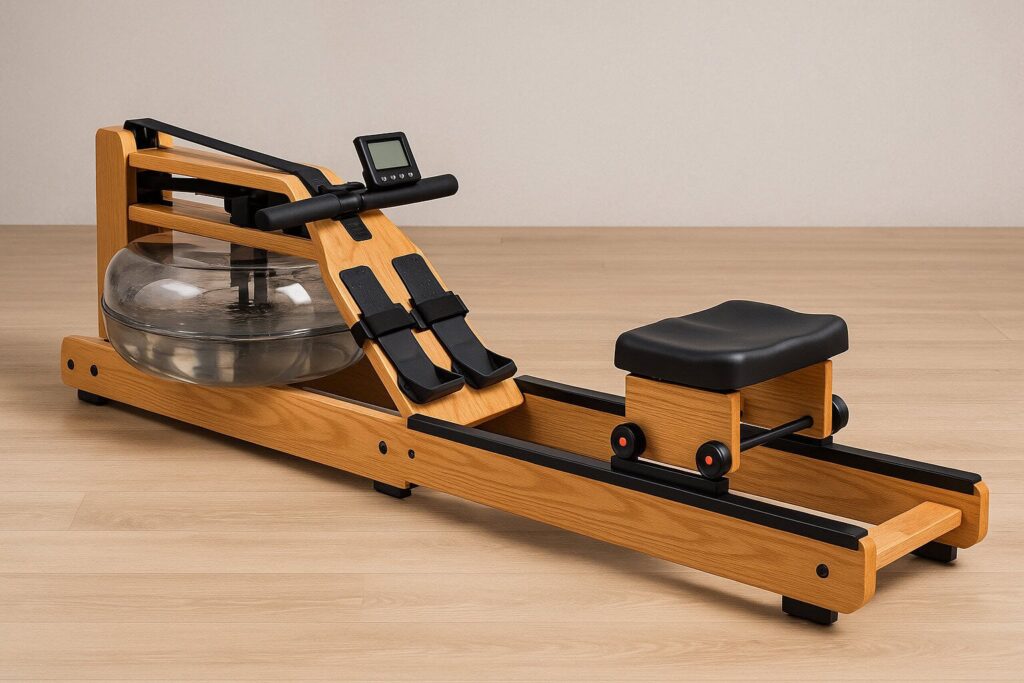
At first, a water rower looks like just another machine built to make you sweat.
But once that steady “whoosh” of the water kicks in, something changes.
It stops feeling like exercise and starts feeling like rhythm — smooth, hypnotic, and impossible to walk away from.
Water resistance doesn’t just work your muscles; it quietly takes over your mind in the best possible way.
The weird psychology behind “the pull”
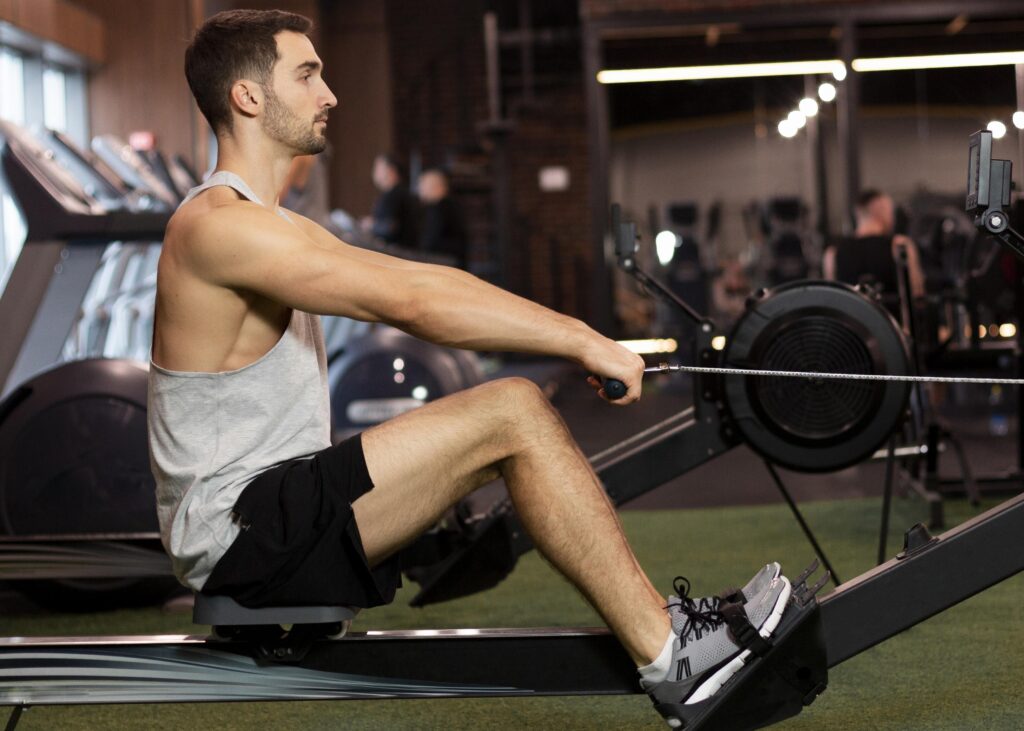
Rowing with water resistance is a completely different beast from other cardio workouts.
When you pull that handle, you’re not fighting a mechanical tension or air drag.
You’re fighting fluid.
The harder you drive, the more it pushes back — and the feedback is instant, smooth, and satisfying.
It’s not just resistance; it’s communication.
That sensation of water catching and releasing under pressure gives your brain what scientists call continuous proprioceptive feedback — a fancy term for “your body knows exactly what’s happening.”
It keeps you fully engaged because your brain doesn’t get bored.
Every pull feels alive, and that subtle variation in resistance makes it impossible to zone out.
Instead, you zone in — completely locked in that loop between body and breath.
Why it hooks your brain like a loop
When you row, your mind and body sync to a simple pattern: drive, release, recover, repeat.
After a few minutes, the sequence becomes automatic.
Your breathing matches your rhythm.
Your focus narrows to just one thing: the next stroke.
That’s what psychologists call the flow state — a sweet spot where effort and focus align so perfectly that time disappears.
It’s the same state athletes, artists, and musicians chase when they’re totally absorbed in their craft.
And water rowers make it easier to get there because the sound, resistance, and motion are all fluid — literally.
Air rowers feel like machines.
Water rowers feel like meditation.
It’s the closest thing to mindfulness you can get while your heart’s pounding.
Your brain on water rowing
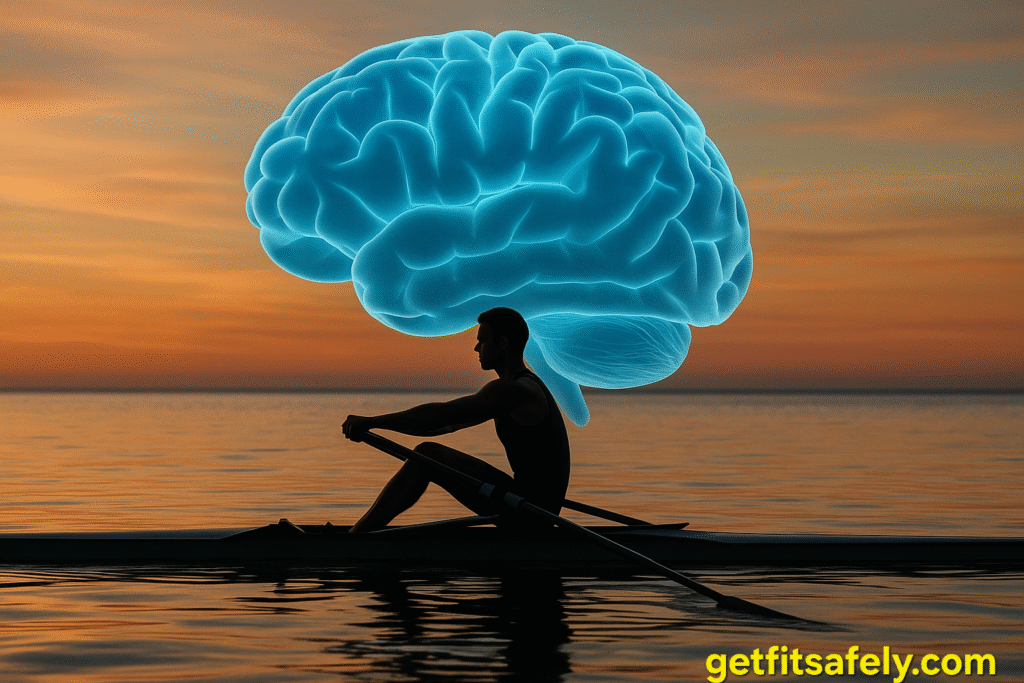
Let’s get nerdy for a second.
When you row at a steady rhythm, your body releases endorphins, serotonin, and dopamine — the “feel-good” chemicals that calm your mind and improve focus.
But there’s something extra happening with water resistance training: the auditory and tactile feedback loop.
The consistent swoosh of the water acts like white noise, which lowers stress by quieting the amygdala — the part of the brain responsible for the “fight or flight” response.
Meanwhile, the rhythmic push and release stimulate your parasympathetic nervous system — basically your internal “chill” button.
It’s exercise and mindfulness rolled into one.
That’s why, after 20 minutes on a water rower, you don’t just feel exhausted — you feel centered.
The deeper layer: when your brain starts craving the rhythm
Here’s what most people don’t realize — that “addictive” pull you feel during a water row isn’t just motivation or good vibes.
It’s your dopamine system responding to rhythm and reward.
Every time you complete a stroke — catch, drive, release — your brain gets a tiny hit of satisfaction.
It’s like checking something off a list over and over again, but with your whole body.
That predictable loop of action and feedback becomes a reward circuit.
And water rowing amplifies it.
The sound, the smooth drag, the bounce of resistance — they all serve as sensory confirmation that you’re doing it right.
Your nervous system learns to associate that feedback with success, and dopamine floods in just enough to make you want “one more pull.”
It’s not addiction in the bad sense — it’s reinforcement in the athlete’s sense.
You’re teaching your brain to link consistency with pleasure, effort with calm.
Over time, you start craving rhythm, not chaos — and that’s the real mind training behind water rowing.
💡 Related read: Curious how rowing stacks up against running or cycling for overall cardio performance?
Check out this guide on rowing vs. other cardio workouts — it breaks down endurance, joint impact, and motivation in detail.
Mental benefits that go beyond “stress relief”
Everyone talks about rowing being a great full-body workout — and it is — but the mental payoff is what keeps people hooked.
Regular rowing sessions have been linked to lower anxiety levels, improved focus, and even better emotional regulation.
It’s not just about “burning off stress”; it’s about teaching your mind to find rhythm under pressure.
That carries over into everything: work deadlines, social chaos, even those random moments when your brain won’t shut up at 2 a.m.
When you train yourself to stay calm and consistent while your heart rate is spiking — you’re literally building mental endurance.
How to use rowing as actual mind training
Here’s the part most people miss: if you approach rowing just as cardio, you’re leaving half the benefits on the table.
You can turn each session into mental conditioning if you treat it like meditation with movement.
- Start slow and pay attention to your breathing for the first few minutes.
- Match your breath to your strokes — inhale on the recovery, exhale on the drive.
- Instead of zoning out to music, focus on the sound of the water.
- Try “counting strokes” to stay present: 20 strokes of focus, then reset.
- Notice when your mind drifts, and pull it back to the rhythm.
It sounds simple, but it’s powerful.
You’re training focus, not just endurance.
When the magic doesn’t happen (and how to fix it)
Of course, not every rowing session feels transcendental.
Some days you hop on the machine and it’s just… noise and sweat.
Usually, that happens for a few reasons:
- You’re rushing your form and not connecting with the catch — so it feels mechanical.
- You’re pushing too hard too soon, spiking your heart rate before you find your rhythm.
- You’re distracted — checking your phone, your splits, or anything other than the water.
The fix?
Back off the intensity for a minute or two.
Slow down your stroke rate.
Let the sound of the water guide your pace instead of your display screen.
Once the noise in your head fades, the feedback loop reconnects.
That’s when the session shifts — and you feel that effortless glide again.
You’ll feel that smooth pull again — and suddenly, it all clicks back into place.
Why this feeling is so addictive
You know that moment when everything syncs — your breathing, your motion, the water sound — and suddenly, you’re not “doing cardio” anymore?
That’s why people fall in love with water rowing machines.
It’s one of the rare workouts that gives you both the adrenaline of intensity and the calm of meditation at the same time.
It’s paradoxical — you’re pushing your body, but it feels grounding.
You’re sweating like crazy, but your mind is still.
Once you experience that, it’s hard to go back to anything else.
You crave that rhythm again — the one that clears your head while setting your heart on fire.
🏋️♂️ Also read: If you’re mixing water rowing with strength training, make sure you’re not burning out.
Dive into this article on balancing rowing and lifting to keep both gains and recovery in check.
Final thoughts
If you’ve ever felt mentally scattered, anxious, or restless, rowing is one of the best reset buttons you can pull.
It teaches focus under fatigue, patience under pressure, and calm inside chaos.
And you don’t need a fancy setup or perfect form to get started — just a few minutes, a bit of water, and the willingness to listen to the rhythm.
When your mind starts syncing with your movement, you’ll understand why water resistance feels so addictive.