
I swear, there are days I walk into the gym with fire in my eyes.
Pull day.
My time to shine.
Back nice and tight, playlist blasting, hands on the barbell.
And yet, by the second set…
My shoulders start rebelling.
A sharp twinge, followed by an early fatigue that feels like they’ve run a marathon—
while I’m just trying to feel my lats.
I don’t know about you, but it really pisses me off.
Why Do Shoulders Get Tired Before the Back Even Joins the Party?

The shoulder is the most mobile joint in the human body.
And like any versatile structure, it pays the price in stability.
During pulling exercises—from rows to pull-ups—
shoulders don’t push, they guide, stabilize, control.
The problem?
They’re often already under stress before the workout even begins:
- You trained heavy push movements the day before (chest, front delts)
- You spend your days hunched at a desk
- You sleep poorly, recover worse, and still hit the gym
Result: the stabilizing muscles (like the rear delts and rotator cuff)
crash too soon.
Pre-Workout Matters More Than You Think

Warm-ups aren’t just a formality.
They’re a message to your nervous system.
If you half-heartedly do two pull-ups with no load,
you’re basically saying “Eh, we’ll give it a shot.”
Want to pull hard without frying your shoulders? Start like this:
- Face pulls with a 2-second pause
- Scapular pull-ups to feel the scapular engagement
- Band T and Y raises for the rear delts
- Scapular mobility drills with a stick or band
Just 10 minutes. But they’ll change your entire session.
Your shoulders wake up, target muscles get prepped.
And finally, you pull with your back—not your neck.
Too Much Push, Too Little Rest: The Overlap Problem in Splits
Okay, here we get into the delicate world of weekly programming.
If your split looks like this:
- Monday: chest and shoulders
- Tuesday: back
…you’re in trouble.
Your poor front delts didn’t get a chance to recover.
And your rear delts can’t handle all the stabilization work.
Practical advice?
Leave at least 48 hours between push and pull days,
or adjust shoulder volume—especially if you notice recurring fatigue.
Think in terms of quality, not just quantity.
Know the Signs: Normal Fatigue or Red Flag?
Let’s be honest:
A little muscle burn?
Totally normal.
But sharp pains, lateral aches, popping sensations, or weakness? No thanks.
If your shoulders hurt during exercises or continue bothering you at rest,
you’re not progressing—you’re heading toward chronic inflammation.
Rotator cuff tendinopathies don’t appear overnight.
They build over time, with a pile-up of small errors.
Ignoring them is like pressing your finger into a crack on your windshield
and hoping it won’t spread.
Spoiler: it will.
Form Is Everything (Yes, Even If You’ve Been Lifting for Years)
Shoulder fatigue is often not your shoulder’s fault.
It’s a form issue.
Take barbell rows, for example.
How many of you pull toward your chest, with elbows tucked,
working more biceps and front delts than lats?
Too many.
Instead, try this:
- Pull with elbows wide, toward your belly button
- Keep your scapula retracted and depressed
- Pause for a second in the contraction
This way, you take the tension off the shoulders
and put it right where it belongs—on your back and lats.
Muscle Imbalances: The Silent Culprit
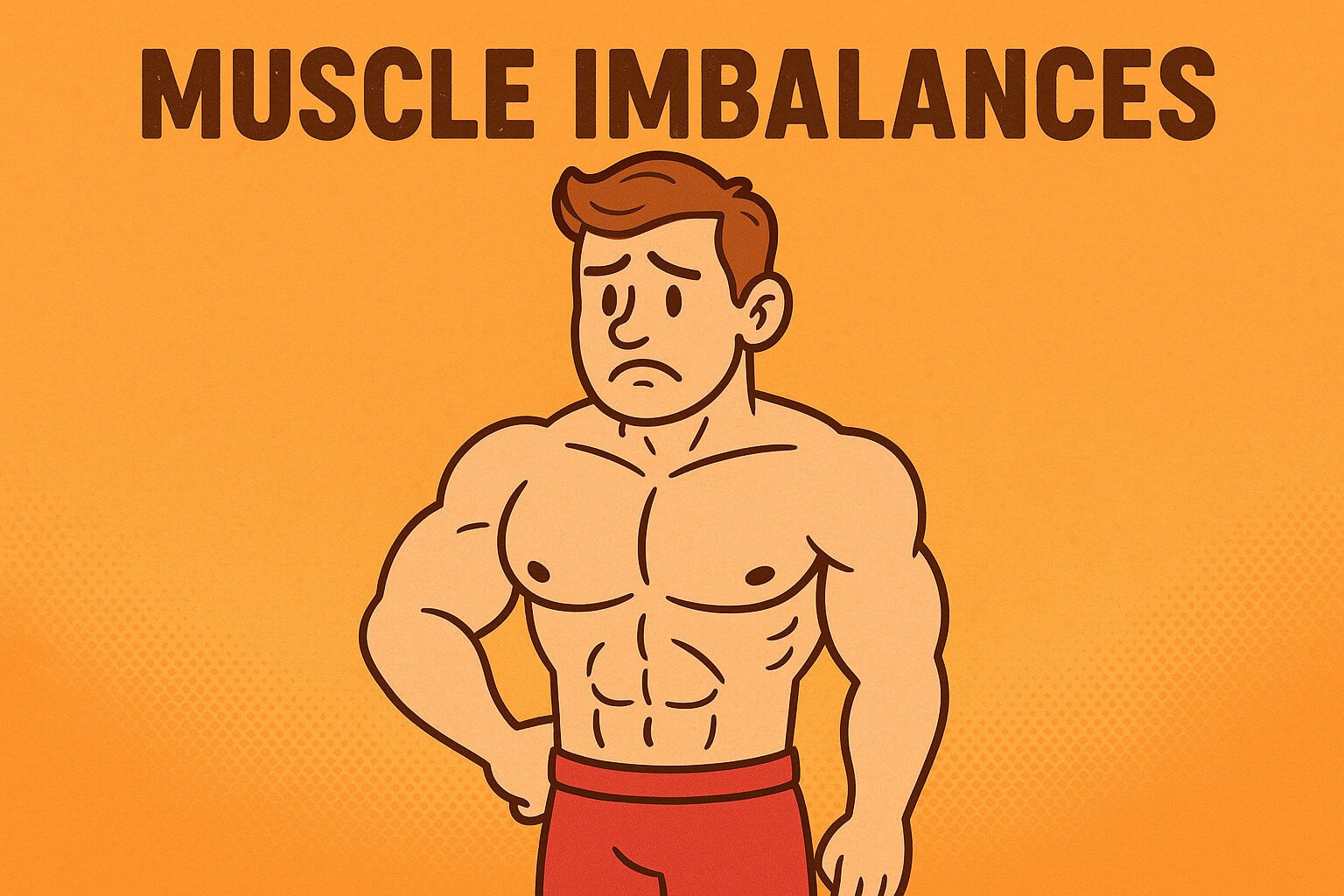
One reason shoulders give out early is that the posterior side is too weak compared to the front.
Front delts at level 10, rear delts at 3.
Guess which side takes the overload?
Practical fix:
- Reverse flyes with a pause
- Slow face pulls with external rotation
- Prone dumbbell rows on an incline bench
Just two sessions a week can rebalance everything.
And after a month, you’ll feel the difference.
RELATED;》》》 I’ve noticed my left shoulder is visibly smaller—should I train it more often than the right?
Don’t Neglect Grip Work If You Want to Help Your Shoulders Too
Yes, grip.
If it’s too weak, your shoulders “rush in” to support the load.
And the more weight you use, the more your shoulders suffer.
A strong grip unloads tension from the arms and shoulders.
So:
- Train with fat bars or towels
- Add farmer’s walks and static holds
- Alternate grips: overhand, neutral, underhand
Training grip is like reinforcing the base of a tower—
if it’s solid underneath, everything else stands tall.
Smart Stretching: Not Just Flexibility, Real Prevention
Here’s the thing:
Most people think stretching is a kind of slow dance at the end of a workout.
But proper stretching releases dominant muscles
that block good scapular posture.
- Chest Stretch:
- Stand next to a wall, place your arm at a 90° angle, and gently turn your body away.
- For a deeper stretch, extend your arm fully and repeat.
- Front Deltoid Stretch:
- Clasp your hands behind your back, straighten your arms, and gently lift them.
- Keep your chest open and shoulders pulled back.
- Upper Traps Stretch:
- Tilt your head to one side, bringing your ear toward your shoulder.
- Use your hand for a gentle pull, feeling the stretch in your neck and upper traps.
This helps you open your chest, free your scapula,
and release chronic shoulder tension.
When Changing Exercises Is the Right Move (It’s Not Giving Up)
If a certain exercise irritates your shoulders every time,
even with good form and warm-up… just stop.
Not all exercises suit everyone.
Try safer alternatives:
- Chest-supported rows: remove lumbar and scapular stress
- Neutral-grip lat pulldown: more natural, less shoulder strain
- Low-cable rows with a pause
- Controlled TRX rows
It’s not a step backward.
It’s a smart move toward better, longer progress.
Training Shoulders After Chest: Suicidal Move or Strategic Mistake?
Let me say it upfront: I wrote a whole article on this.
So if you want the full deep-dive on physiology, recovery times, and solutions,
read that one next.
But for now, let’s be clear:
training shoulders (especially the front delts) the day after chest
is a recipe for early fatigue.
These two muscle groups share a ton of work—
and not just during bench press:
- Horizontal pressing? Front delts are already in the game.
- Overhead press the next day? You’re slamming them again without mercy.
Then pull day comes around… and your shoulders are fried.
It’s not about toughness. It’s about strategy.
What can you do?
- If you must separate chest and shoulder days,
focus your shoulder day on lateral and rear delts, avoiding heavy pressing. - Or alternate with low-volume days to give shoulders a break.
- Even better: train chest and shoulders on the same day,
then give them 48–72 hours of rest before serious pulling.
Remember: fatigue builds up neurally too, not just muscularly.
And if you hit pull day already neurologically drained…
good luck feeling those lats.
Muscle Fatigue and Deficiencies: What If It’s Not Just Your Training?

Let’s be real:
Not everything is solved with better form and planning.
If your body’s running low on essential micronutrients,
you could do the best warm-ups on Earth… and still feel drained, unstable, sluggish.
That weird, early, unexplainable muscle fatigue—even with solid rest—
can have biochemical roots.
And no, I won’t just say “eat more protein and drink water.”
It’s not about what to eat more of,
but what your cells have been missing for a while.
Here are a few deficiencies that directly impact neuromuscular function and endurance:
- Magnesium: without it, nerve signals to muscles get scrambled.
It’s like texting on 5% battery. Cramping, stiffness, and early fatigue are your red flags. - Vitamin D: key for strength and inflammation control.
If you’re indoors 24/7 or wear sunscreen even to check the mail… you might be low. - Iron: vital for oxygen transport. Even slight dips make you feel winded in longer sets.
It’s not mental weakness—it’s cellular chemistry. - Electrolytes (sodium, potassium, calcium):
imbalances mess with nerve signaling and muscle contraction. - B vitamins: your energy “mechanics.”
If they’re low, your muscles won’t recover or activate properly.
The solution isn’t to shotgun random supplements.
It’s to listen to your body, note symptoms, and—if needed—
get a targeted blood panel.
Sometimes, your plan isn’t the issue.
You’re just trying to sprint with half a tank.
Conclusion
If you’ve made it this far, one thing’s clear:
Early shoulder fatigue isn’t inevitable.
It’s a symptom.
A signal.
A little alarm bell saying, “Hey, something’s off here.”
And that “something” could be:
- A rushed warm-up
- A poorly designed weekly split
- Sloppy lifting technique
- Or even a missing micronutrient
The good news? You can fix it all.
And when your shoulders finally do their job—just enough, not too much—
your back kicks into high gear.
That’s when the real work starts.
The kind of work that builds.
That grows.