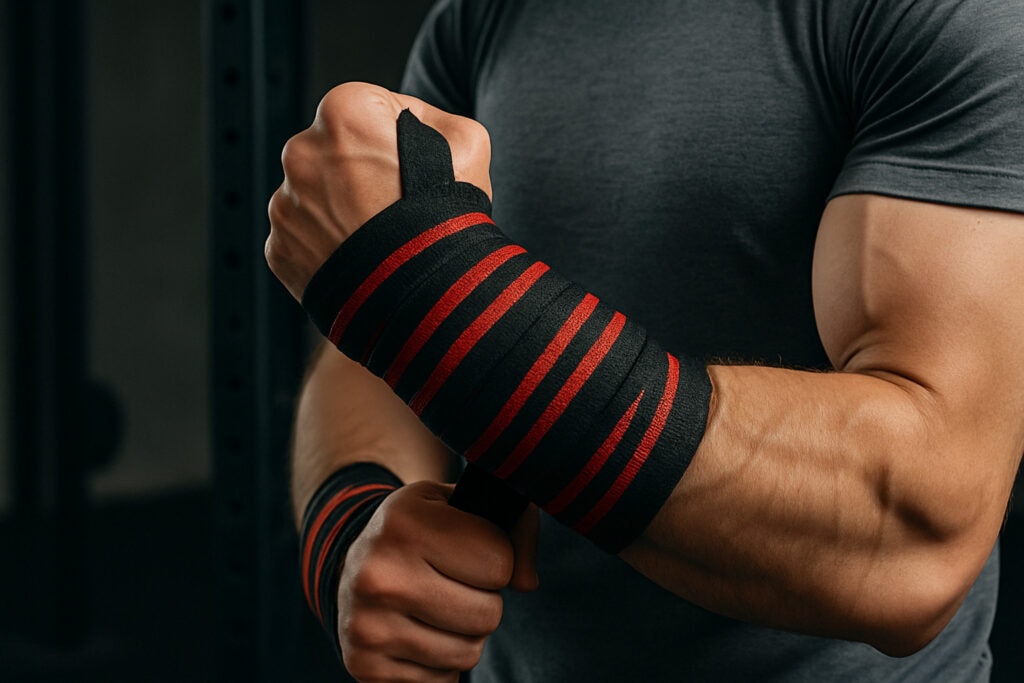
The first time I strapped on an extra-long pair of wrist wraps, I felt like I was getting ready for battle.
Not a set of bench press.
I wrapped, twisted, pulled—until my forearm looked like a sausage about to burst.
And then I thought, okay, cool… but can I actually move my hand now?
That’s the big question.
Are longer wrist wraps giving us superhero-level support, or are they just a clunky overkill that makes lifting feel like you’re fighting against your own gear?
Let’s break this down without making it sound like a boring equipment manual.
The logic behind wrist wraps
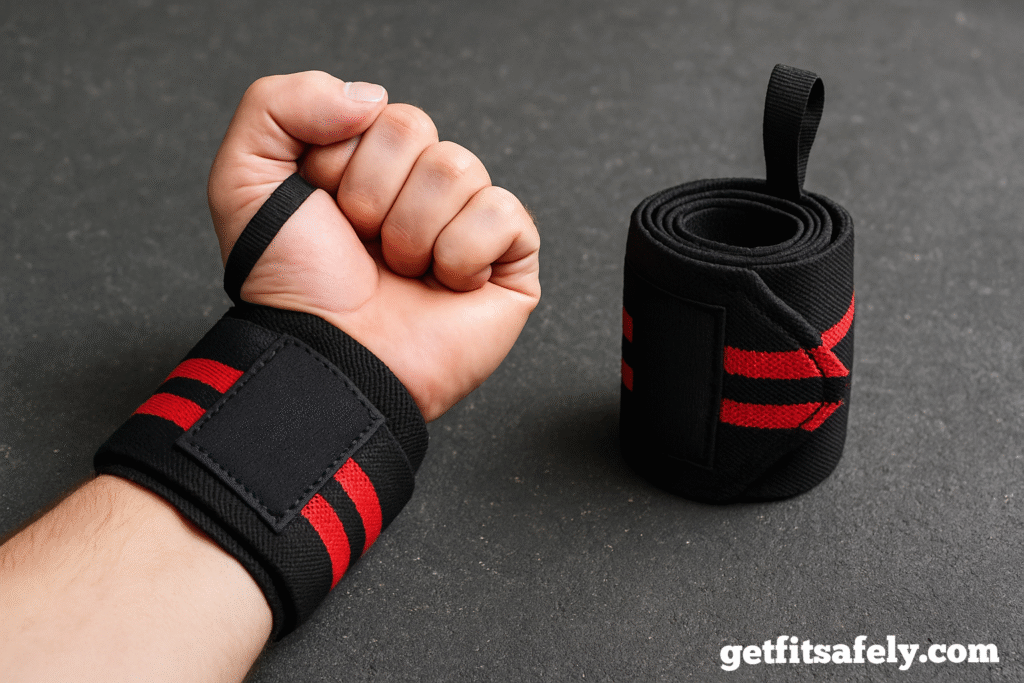
Wrist wraps are basically braces for your joints.
They keep your wrists stacked, stable, and less likely to collapse under heavy load.
The idea is simple:
- Shorter wraps = quicker to put on, lighter, less bulky.
- Longer wraps = more material, more layers, tighter compression, possibly more support.
But here’s the catch—more doesn’t always mean better.
It’s like putting three pairs of socks on before running a marathon.
Sure, you’ve got more cushion, but suddenly you can’t feel the ground and your stride feels weird.
Why the big boys stick with longer wraps
There are definitely moments where the “mummy wrap” style feels legit.
If you’re pressing big weight overhead, grinding on heavy bench sets, or doing low-rep max attempts, that extra stiffness can make you feel locked in.
The extra material gives you leverage.
Think of it like turning a regular seatbelt into one of those full-body race car harnesses.
You’re not going anywhere.
That confidence boost matters.
Sometimes just knowing your wrists won’t fold like a cheap lawn chair can help you push harder.
The hidden hassle of longer wraps
Now, let’s talk real life.
When you go with the longer wraps, suddenly every set turns into a wrap ritual.
You’re rolling, tucking, tightening for what feels like forever.
By the time you’re ready, your gym buddy has already finished his set and is scrolling Instagram.
And then during lifting?
Your wrist can feel so stiff that adjusting your grip is like trying to steer a car with the wheel locked.
Great if you’re benching heavy.
Not so great if you’re doing high-volume accessory work where you actually need some wrist mobility.
It’s like showing up to a pickup basketball game in full hockey goalie gear.
Impressive, sure—but overkill.
The Wrap Effect: Physics Meets Perception
Here’s where things get interesting.
Longer wraps don’t just squeeze your wrist—they play tricks on how your body feels under the bar.
From a mechanical standpoint, the extra layers increase pressure around the joint, which stiffens everything up and limits unwanted motion.
That’s the part that makes your wrist feel bulletproof when you’re pressing big.
But the story doesn’t end there.
Studies have shown that even though lifters feel more secure with wraps, their actual numbers—strength, speed, endurance—barely change.
So it’s not about adding horsepower.
It’s about giving your brain the green light to push without second-guessing your joints.
It’s kind of like putting on noise-canceling headphones before a heavy set.
The music doesn’t change, but suddenly you’re locked in, tuned out, and more confident to go all out.
That blend of physics and perception is the real wrap effect.
Not a magic ticket to more weight, but a tool that shifts the way you experience the lift.
Wraps vs Straps – Pick What You Need, Not What Looks Cool
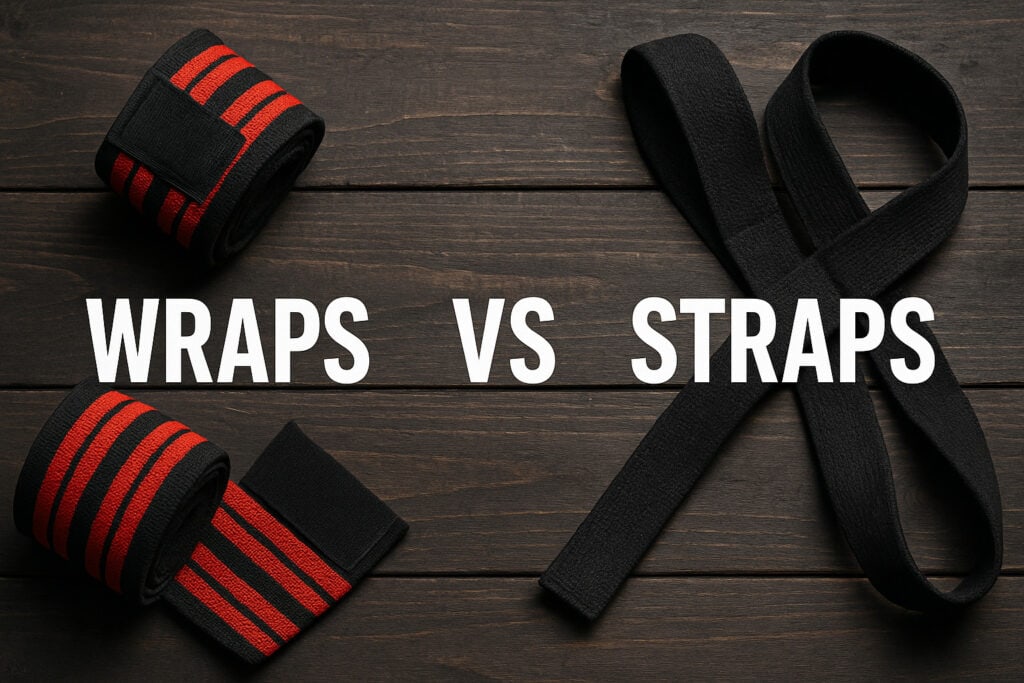
Quick reality check—wraps and straps are not the same thing.
Wraps support the wrist joint.
Straps help your grip.
Mixing them up is like confusing a belt with suspenders.
If you’re pressing heavy, wraps are your go-to.
If you’re pulling deadlifts or rows and your grip is the weak link, that’s when straps step in.
Different tools, different jobs.
Yet, I still see people rocking giant wrist wraps for pull-ups like it’s giving them superhuman grip.
Spoiler: it’s not.
That’s like bringing oven mitts to arm wrestling.
Little wrap habits that change your training flow
Here’s something nobody tells you—wrap length can change how you use them outside of the big lifts.
Longer wraps can double as makeshift wrist warmers.
If your gym feels like an icebox in winter, that extra fabric traps heat and makes your joints feel ready faster.
They can also help with grip psychology.
When you feel locked in at the wrist, your brain frees up bandwidth to focus on bar path and breathing.
It’s subtle, but it matters when every ounce of focus counts.
On the flip side, shorter wraps are quick hitters.
You can throw them on mid-workout without killing momentum, almost like chalk for your wrists.
That flexibility can keep your flow going, especially in circuits or supersets.
Different sports, different needs
Not all training styles play by the same rules.
Powerlifters thrive on stiffness.
They don’t care if their wrists feel like concrete blocks—as long as it adds pounds to the bar.
Strongman athletes?
They mix it up.
Some events need crushing overhead strength, while others need grip shifts on awkward objects.
A too-long wrap can actually be a disadvantage when moving stones or logs.
CrossFitters and functional athletes often avoid long wraps altogether.
When you’re bouncing between pull-ups, cleans, and handstand push-ups, you can’t waste time unwrapping like you’re undoing Christmas gifts.
That’s why pros usually have more than one pair.
They match the wrap to the day, just like you’d pick shoes for squatting versus running.
| I once trained with a guy who swore by 36-inch wraps for bench day. |
| But on overhead press, he’d grab his old 12-inch pair and laugh: “I don’t need to feel like a robot for shoulder presses.” |
| That’s the real pro move. |
| Not just having wraps, but knowing which wrap for which moment. |
A quick tip for wrap rookies
If you’re new to wraps, don’t just buy the longest pair you see on Amazon.
Experiment.
Try different lengths at the gym if you can borrow from a friend.
Pay attention to how your wrists feel not just during the lift, but also between sets.
The right wrap isn’t the one that looks the most hardcore.
It’s the one that makes you forget you’re even wearing it once the barbell’s in motion.
RELATED:》》》 What is the best chalk alternative for grip if your gym bans powder?
Final Thoughts
At the end of the day, longer wrist wraps aren’t magic.
They give you more support when you actually need it.
But they can also get in the way when training calls for speed, comfort, and flow.
The best setup?
Own a pair that matches your training style.
Long wraps for the heavy grind days.
Shorter wraps (or none at all) when you just need to move.
Because support is awesome—until it becomes a cage.
Your job is to find that sweet spot where the gear helps you lift more, not fight against it.
And when you find that balance?
That’s when the bar feels like it was built for your hands.
No awkwardness, just strength.