Headphones can make your gym workout more enjoyable, but they can also make training less safe when they disconnect you from what is happening around you.
I noticed this after a few sessions where the music was perfect, the workout felt focused, and yet I was missing small things happening just a few steps away.
The issue is not wearing headphones.
The issue is forgetting that a gym is a shared space with moving people, heavy weights, and equipment that requires attention.
The Moment I Realized Gym Headphones Can Affect Safety
For a long time, headphones were just part of my gym bag.
Phone.
Water bottle.
Towel.
Headphones.
That was the routine.
One evening, I was training chest during a busy hour.
The benches were almost full, people were moving between machines, and the dumbbell area was crowded.
I finished a set of presses and stood up to return the dumbbells.
A person was waiting near the rack because I was standing exactly where they needed to pass.
I had not heard anything.
No “excuse me”.
No footsteps.
No movement around me.
I was completely inside my own workout.
Nothing bad happened.
The situation lasted only a few seconds.
Still, it made me think about how headphones change the way we interact with a gym.
They can improve concentration.
They can make cardio sessions easier.
They can help create a training mood.
But they can also remove information that normally helps us react.
1. Missing What Happens Around Your Training Area
A gym is full of small sounds.
A barbell being loaded.
A cable machine moving.
A bench being dragged across the floor.
Someone walking behind you.
A person asking if you are finished with equipment.
Most of the time, your brain processes these things without effort.
Headphones can reduce those signals.
I noticed this especially around dumbbell racks.
That area is usually busy because everyone is choosing weights, returning equipment, or waiting for space.
Walking through it while listening to loud music can make you less aware of where your body is moving.
Simple habits can help:
- lower the volume when the gym is crowded;
- remove one earbud while moving around;
- look before carrying heavy equipment;
- avoid standing in walkways between machines.
The few seconds spent checking your surroundings are worth it.
A good workout does not require ignoring the room around you.
2. Not Hearing Problems Before They Become Bigger
Some gym problems start with a small sound.
A loose plate.
A machine making an unusual noise.
A cable moving differently.
A person warning someone nearby.
Those signals are easy to miss with loud music.
During one workout, I was resting near a squat rack after a set of rows.
Someone next to me started loading plates onto a bar.
One side moved slightly before being fixed.
It was a small detail, but the sound gave the person a chance to notice it immediately.
A person wearing loud headphones might only see the problem once it becomes obvious.
Before heavier exercises, I now pay more attention to the area around me.
A quick check helps:
- are the plates secure?
- is the bench stable?
- is there enough space to move?
- are people close to the equipment?
Headphones should not replace basic awareness before lifting.
3. Letting the Music Control Your Reps
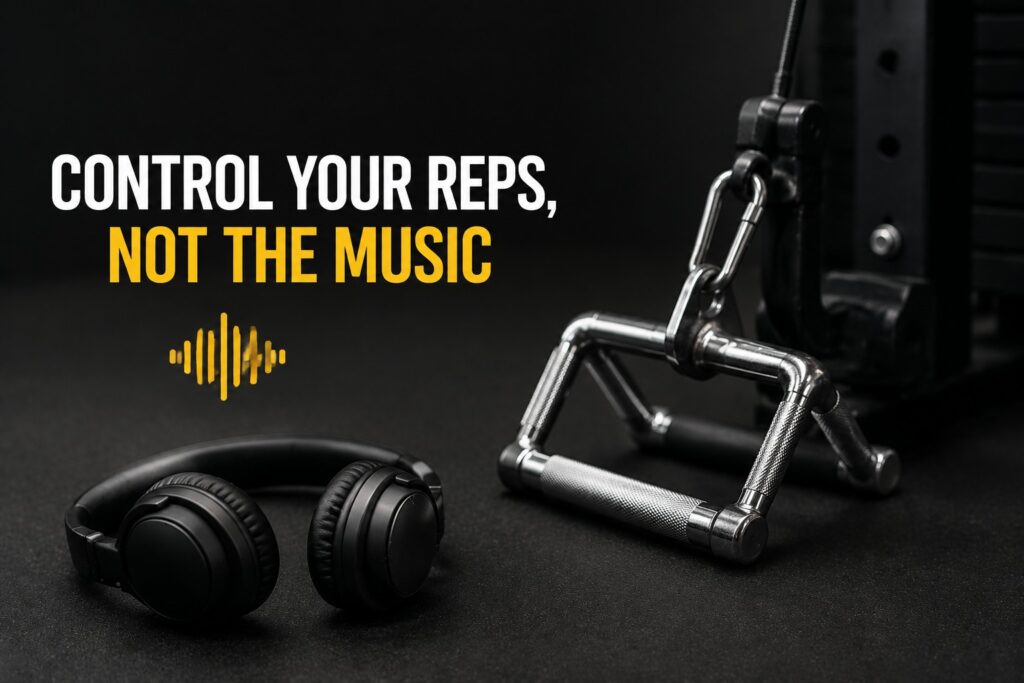
This one surprised me because it was not about safety around other people.
It was about my own movement.
Some songs naturally make you move faster.
That can be great during cardio.
It can also affect resistance training.
I noticed it during cable work.
The weight was comfortable, but the rhythm of the song made me pull faster than usual.
The exercise changed.
The handle moved quickly.
The return became less controlled.
Cable rows are simple to understand.
You sit or stand in a stable position, pull the handle toward your body, and control the movement back.
The back muscles should do most of the work instead of using speed to move the weight.
A few checks help keep the exercise useful:
- can you pause briefly during the hardest part?
- does the weight move smoothly?
- are you controlling the return?
- would the movement look the same without the music?
A playlist can improve your session.
It should not decide how every repetition happens.
4. Losing Extra Focus During Heavy Exercises
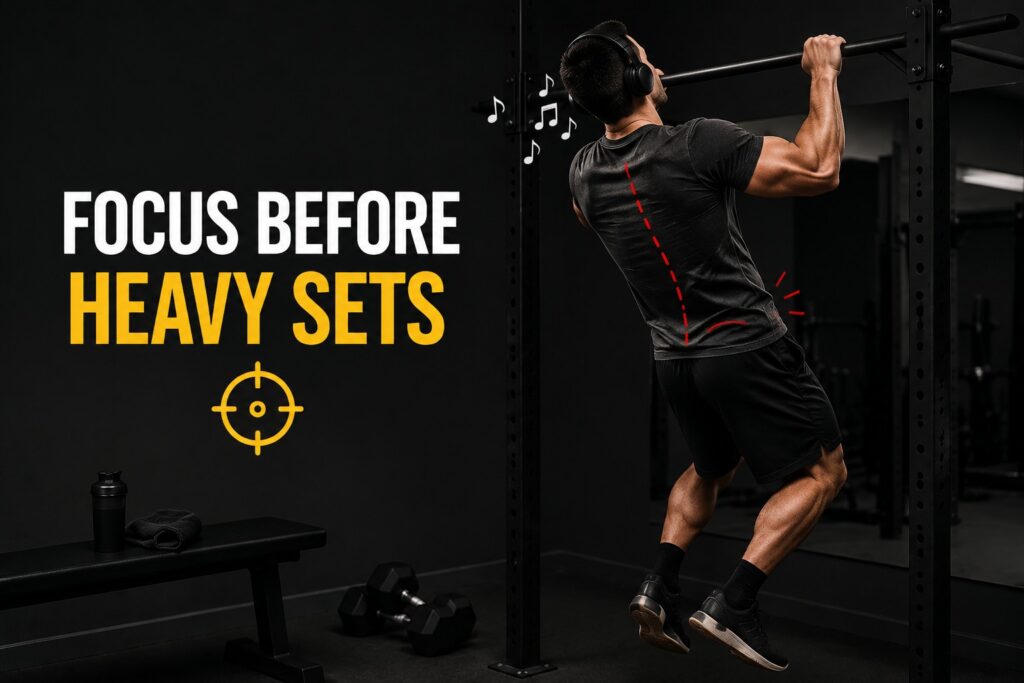
Heavy lifts require more attention because the margin for mistakes becomes smaller.
A squat with a light warm-up weight gives you room to adjust.
A heavier set demands more preparation.
Before a challenging set, I want to notice:
- how my body feels;
- how the equipment feels;
- whether the setup is correct;
- whether the area around me is clear.
I learned this during a deadlift session.
The gym was quiet, so I turned the music up.
The first sets felt great.
During a heavier set, though, I realized I was rushing my preparation.
The song created energy, but I needed more concentration.
Now I usually change my headphone habit depending on the exercise.
For warm-ups:
- music is fine;
- volume can be higher;
- focus is more relaxed.
For heavier sets:
- lower the volume;
- check the setup;
- take more time before lifting.
The weight deserves your attention.
5. Making Communication Harder
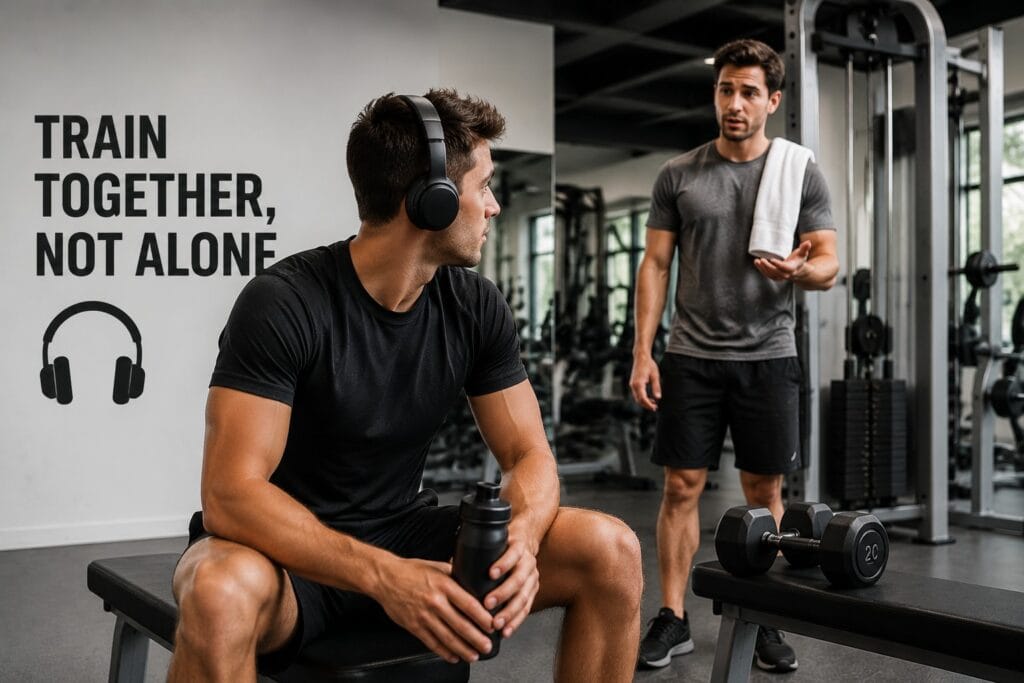
Even if everyone in a gym is focused on their own workout, communication still happens.
Someone needs a spot.
Someone asks if a machine is available.
Someone wants to pass behind a bench.
Someone gives a quick warning.
Headphones can make normal gym interactions slower.
I have also been on the other side.
Trying to get someone’s attention while they are wearing headphones can feel like waiting for the right moment between songs.
A few simple habits make things easier:
- look up between sets;
- avoid staring at your phone while wearing headphones;
- notice when someone is standing near your equipment;
- keep one ear available in crowded areas.
Training with music does not mean training alone.
The gym is still a shared place.
6. Making Hard Sets Feel Easier Than They Are
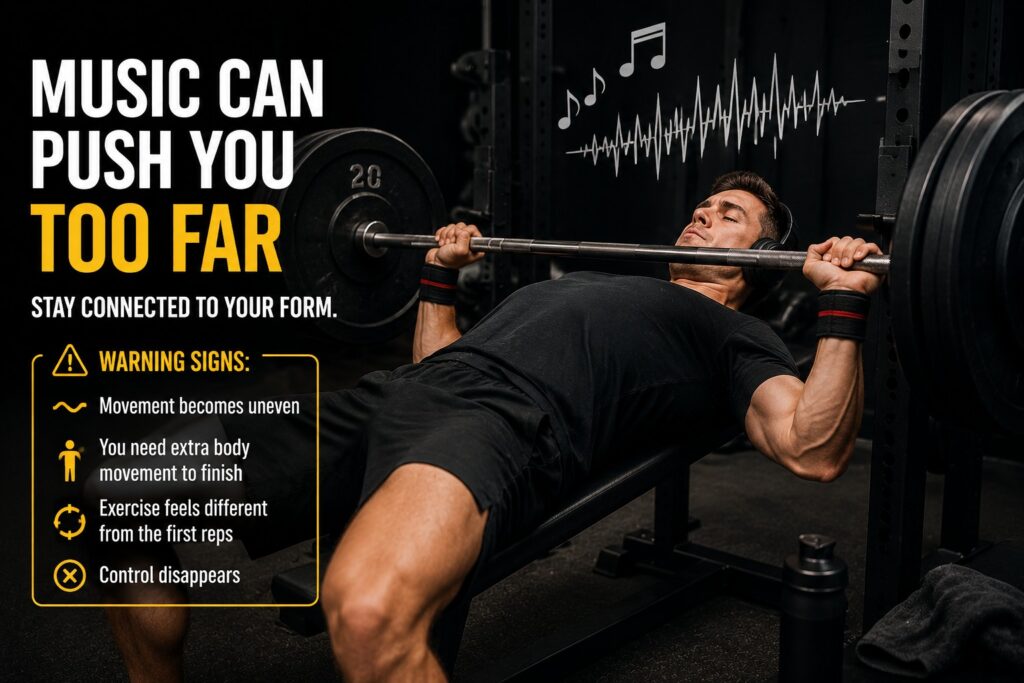
Music can change how effort feels.
A powerful song can help you push through a difficult set.
That can be useful.
The tricky part is knowing whether you are working hard or simply ignoring signs that your form is changing.
This is especially important for beginners.
A person learning bench press, for example, needs time to understand controlled effort.
The bar should move with a stable path.
The shoulders should stay positioned correctly.
The repetitions should look similar from start to finish.
Warning signs that it is time to stop or reduce the weight:
- the movement suddenly becomes uneven;
- you need extra body movement to finish;
- the exercise feels completely different from the first repetitions;
- control disappears.
A study published in the Journal of Strength and Conditioning Research examined how preferred music affects resistance exercise performance.
Researchers found that listening to preferred music during bench press improved motivation and allowed participants to complete more repetitions compared with nonpreferred music.
That is useful information, but it also means you need to stay connected to your actual movement.
7. Using Headphones Without Considering the Workout Type
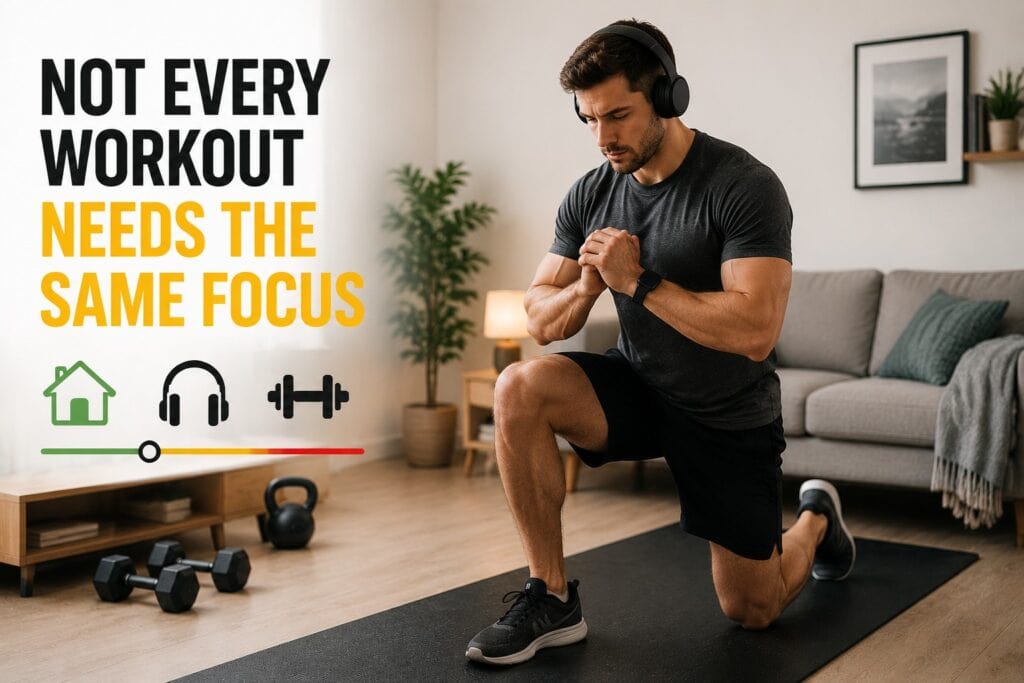
Not every workout needs the same level of attention.
A treadmill walk is different from a heavy squat session.
A home workout is different from a crowded commercial gym.
At home, the environment is usually predictable.
You might be doing:
- push-ups on the floor;
- resistance band exercises;
- mobility work;
- pull-up practice.
There are fewer unexpected situations.
A busy gym changes constantly.
People move equipment.
Machines become available.
Someone walks behind you.
The training space changes every minute.
Headphones usually work well during:
- steady cardio;
- stretching;
- warm-ups;
- lighter machine exercises.
More attention is useful during:
- heavy barbell movements;
- unfamiliar exercises;
- crowded areas;
- movements where people pass close by.
The best choice depends on the session in front of you.
How I Use Headphones Now
I still use headphones when I train.
A good playlist can make a long workout feel smoother.
It can help during repetitive exercises.
It can make a quiet gym session feel more focused.
The difference is that I no longer use them automatically.
Some days I want music from the first minute.
Other days I prefer hearing the room, especially when learning a movement or lifting heavier.
Choosing Gym Headphones Without Losing Awareness
After testing different headphones during workouts, I noticed that the biggest difference was not the sound quality.
It was how they behaved while moving.
The first pair I used at the gym was a simple set of wireless earbuds.
They were easy to carry, comfortable, and almost disappeared during most exercises.
During weight training, that simplicity worked well.
The problem appeared when the fit was not perfect.
I remember doing cable rows and having one earbud slowly move every few repetitions.
The set itself was fine, but stopping to fix it between exercises became distracting.
A good gym headphone should stay out of the way.
Useful features include:
- secure fit;
- comfortable shape;
- sweat resistance;
- easy controls.
In-Ear Earbuds
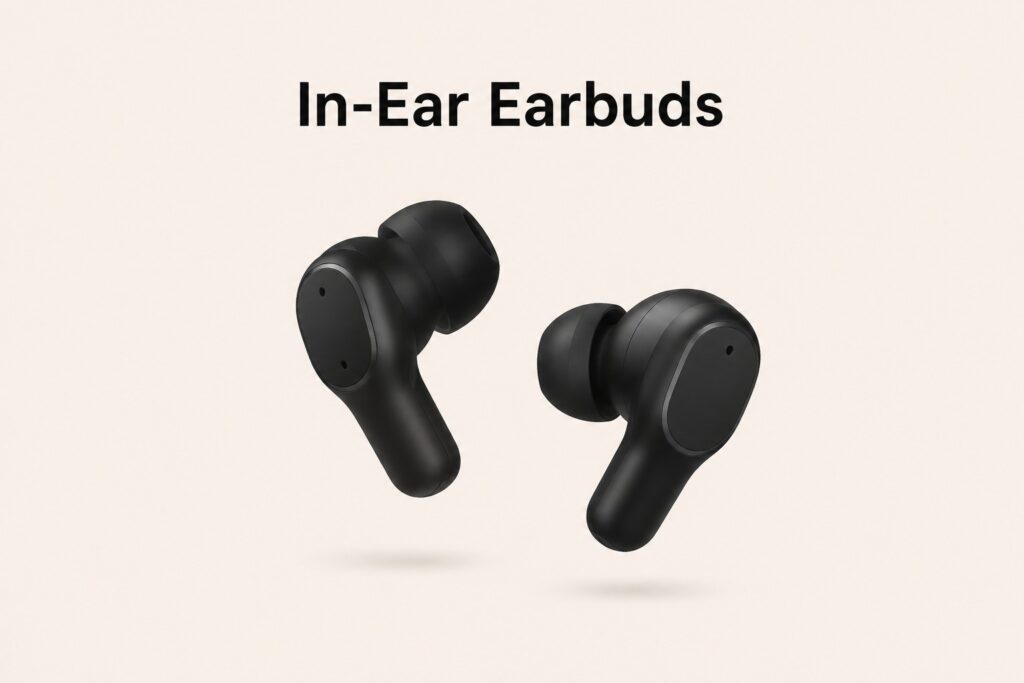
Small earbuds remain one of the easiest options for most gym users.
They work well with exercises where the head and body move naturally.
Dumbbell presses.
Machines.
Bodyweight exercises.
Moderate cardio.
The main thing is finding a model that stays in place without needing constant attention.
Over-Ear Headphones
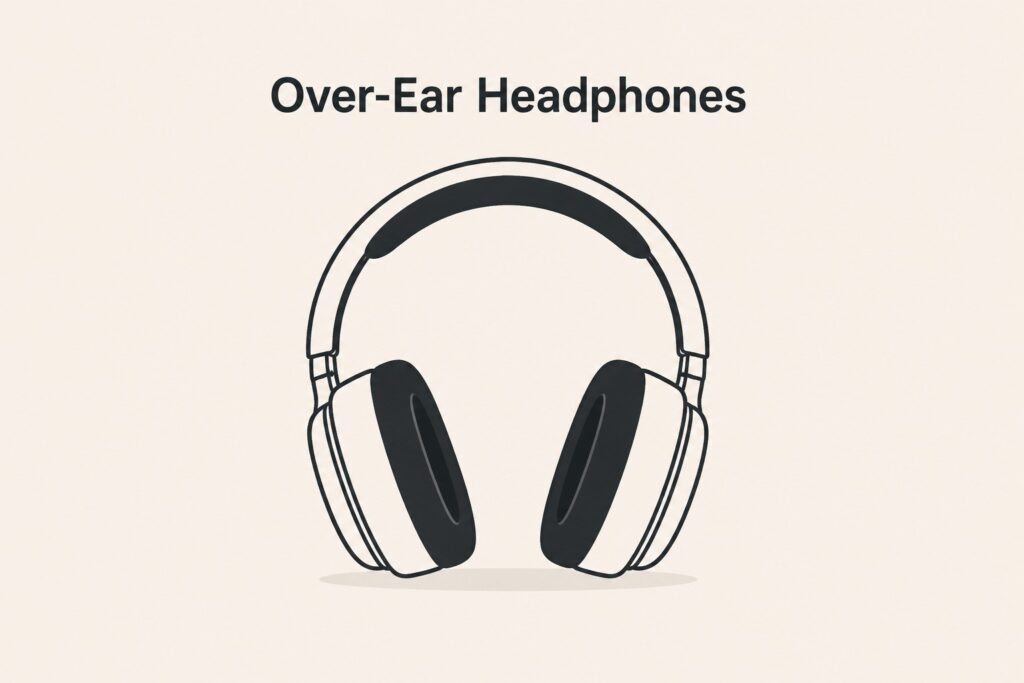
Over-ear models can feel great during longer sessions.
The sound is usually richer, and some people enjoy the stronger feeling of concentration.
I tried them during strength training because I liked the comfort.
The first exercises felt good.
Later, moving between stations, the size became more noticeable.
They were warmer around the ears and less practical when walking through a crowded gym.
For stationary cardio or controlled workouts, they can be comfortable.
For moving around a busy weight room, smaller options are often easier.
Bone Conduction Headphones
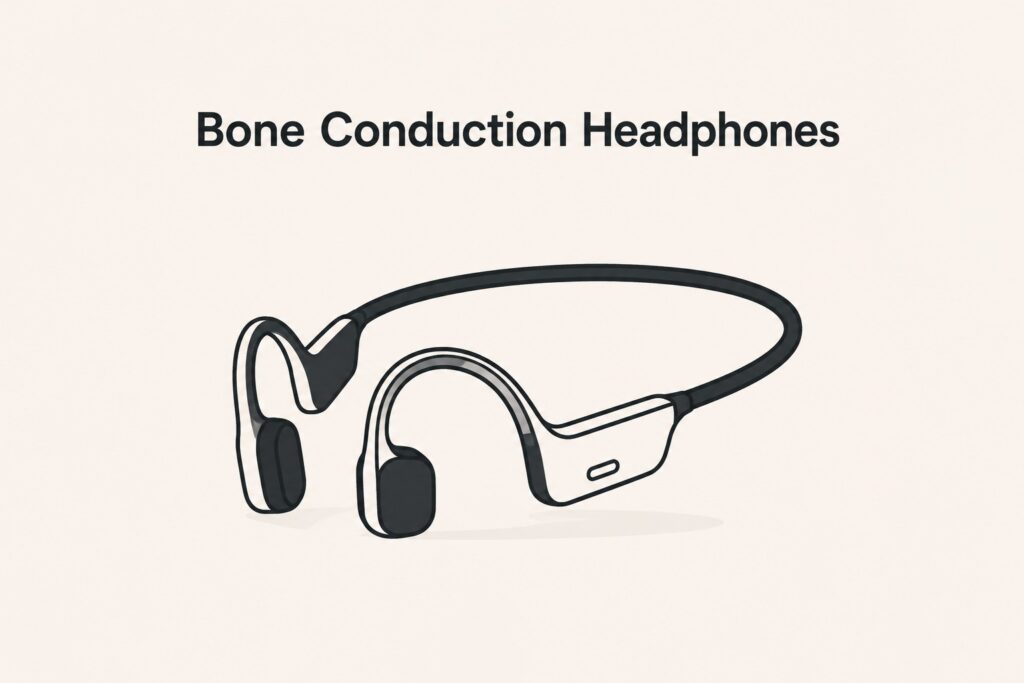
Bone conduction headphones take a different approach.
They sit outside the ear and allow the ear canal to stay open.
The sound experience is different from normal earbuds.
There is usually less bass and less isolation.
The advantage is keeping a more natural connection with surrounding sounds.
For some people, especially during outdoor activities, that difference can be useful.
The best choice is not the most expensive pair.
It is the one that fits the way you actually train.
Final Thoughts
Headphones can make a gym session more enjoyable, but they should not completely remove awareness.
Music works best when it supports training instead of controlling it.
A good workout still depends on noticing the room, the equipment, and how the body is moving.
Understanding why wearing headphones to the gym might be unsafe is not about avoiding music.
It is about using it in a way that keeps training focused, practical, and safer.