A pull-up bar looks simple.
Just a piece of metal above your head.
But the moment someone grabs it, the body starts telling a very different story.
Two people hang from the bar.
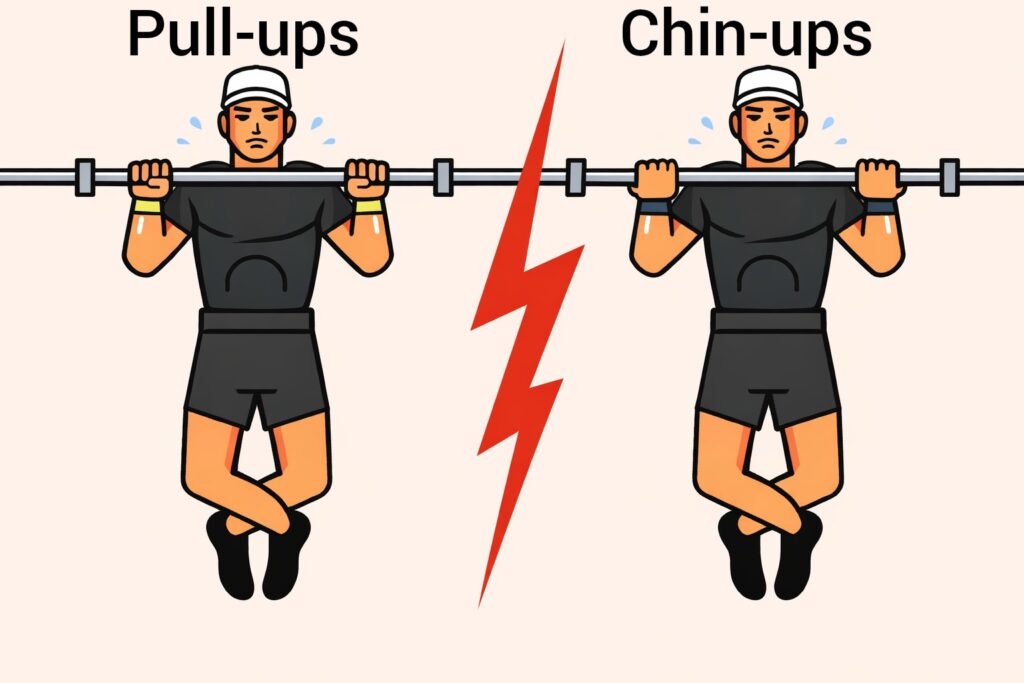
One grips it with palms facing away.
The other turns the palms toward the face.
From a distance the movement looks almost identical.
Yet the muscles involved feel surprisingly different.
One grip makes the back work much harder.
The other lets the arms help far more during the pull.
I notice this every time I train.
That small rotation of the hands looks almost insignificant.
Yet it quietly changes how the pull feels, how the elbows move, and how the body organizes the effort during each repetition.
Once you start paying attention to those details, pull-ups and chin-ups stop looking like identical exercises.
They start feeling like two slightly different tools for building pulling strength.
The Simple Visual Difference Between Pull-Ups and Chin-Ups
At first glance the difference looks almost trivial.
Pull-ups use an overhand grip.
Chin-ups use an underhand grip.
That’s it.
Or at least that’s what most explanations say.
But a beginner standing under a bar might still wonder what those words actually mean.
Pull-Up Hand Position
When I reach for the bar during a pull-up:
- Palms face away from my face
- Knuckles point toward me
- Thumbs wrap around the bar from underneath
The wrists naturally rotate slightly outward.
The elbows tend to flare a little to the sides during the pull.
Chin-Up Hand Position
When I switch to chin-ups:
- Palms face toward my face
- Knuckles point away from me
- The forearms rotate inward
The elbows stay closer to the rib cage.
That small wrist rotation changes how the arms and back cooperate during the lift.
It sounds minor.
But muscles care a lot about angles.
What Actually Happens When You Hang From the Bar
Before talking about pulling, it helps to look at the starting moment.
Hanging from a bar tells you a lot about the movement ahead.
When I hang for 20 seconds before a set, the body immediately gives clues.
Hanging During a Pull-Up Grip
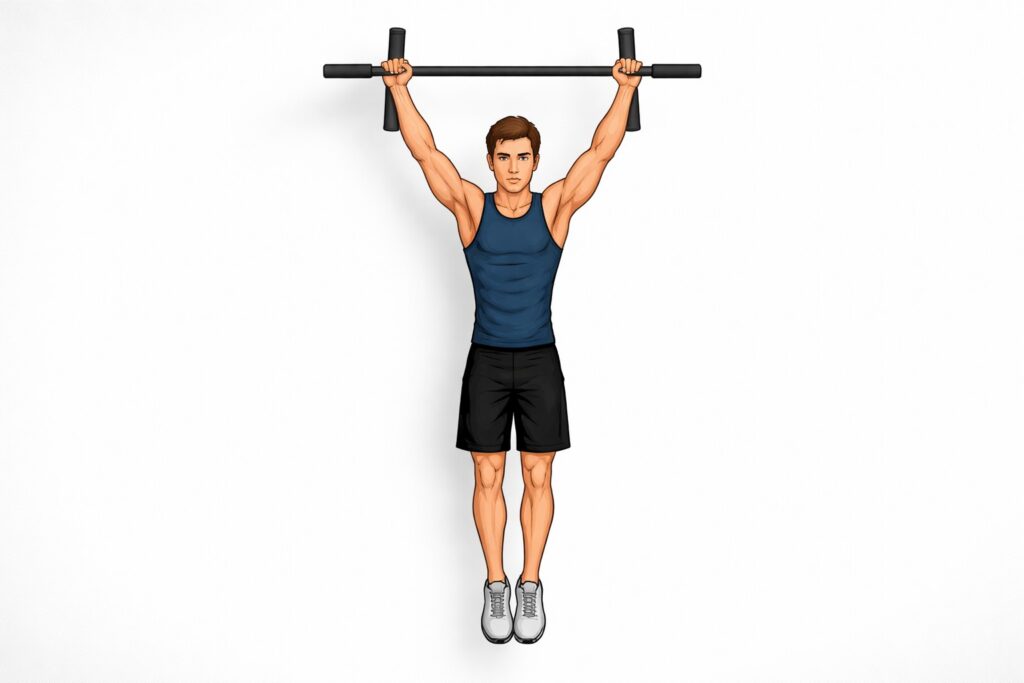
With palms facing away:
- Shoulders feel slightly wider
- The lats stretch along the sides of the rib cage
- The forearms grip hard but the biceps stay fairly quiet
It feels like the back is getting ready to do the heavy work.
Hanging During a Chin-Up Grip
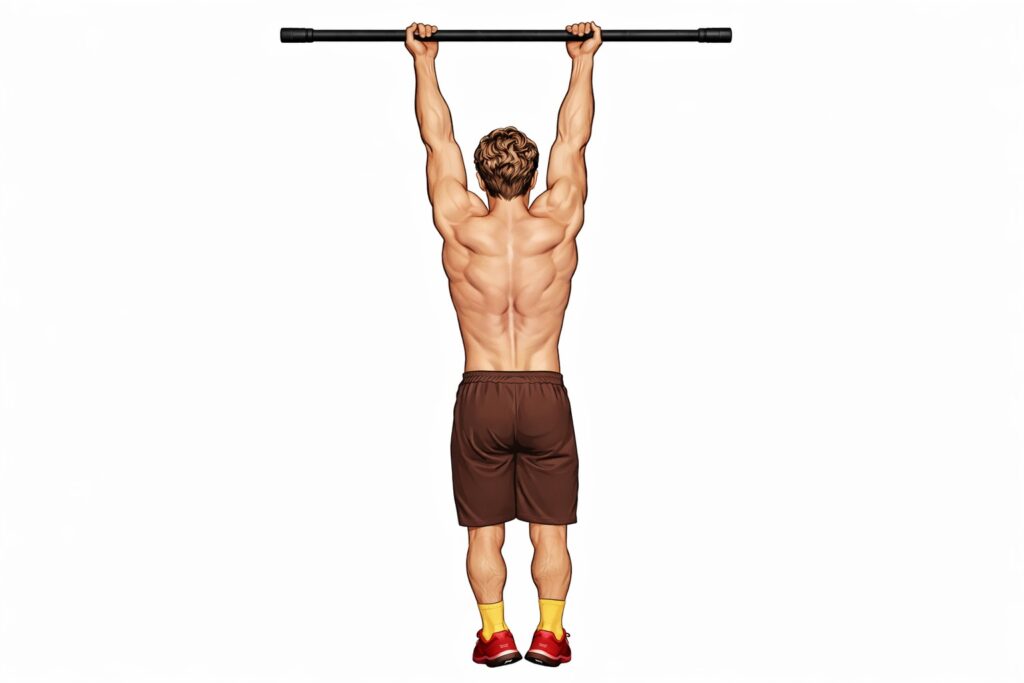
With palms facing me:
- The biceps already feel slightly engaged
- The elbows naturally rotate inward
- The chest feels more open
It almost feels like preparing for a curl while hanging.
Nothing dramatic happens.
Yet the body quietly shifts priorities.
That shift becomes obvious the moment the pull begins.
Pull-Up Mechanics
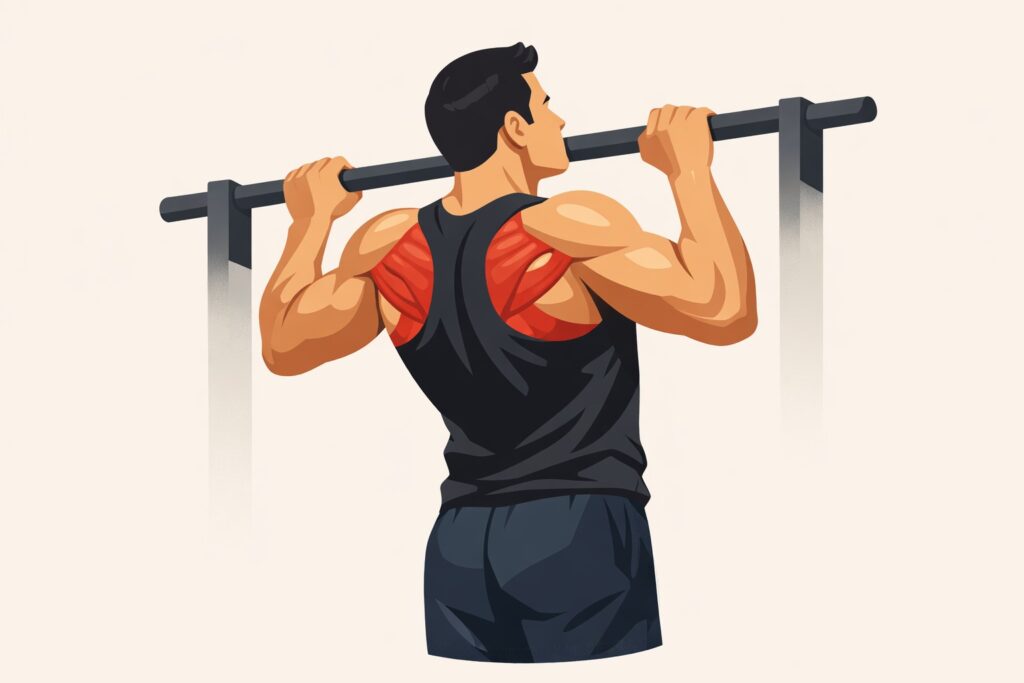
During pull-ups, the overhand grip places the biceps in a weaker mechanical position.
That means the back muscles step in more aggressively.
The movement often feels like pulling the elbows down and back.
When I perform a slow pull-up:
- I hang for two seconds.
- I pull the shoulders down first.
- Elbows start bending.
- Chest rises toward the bar.
After six repetitions my lats feel warm and active.
The arms work too.
But the back clearly leads the movement.
Chin-Up Mechanics
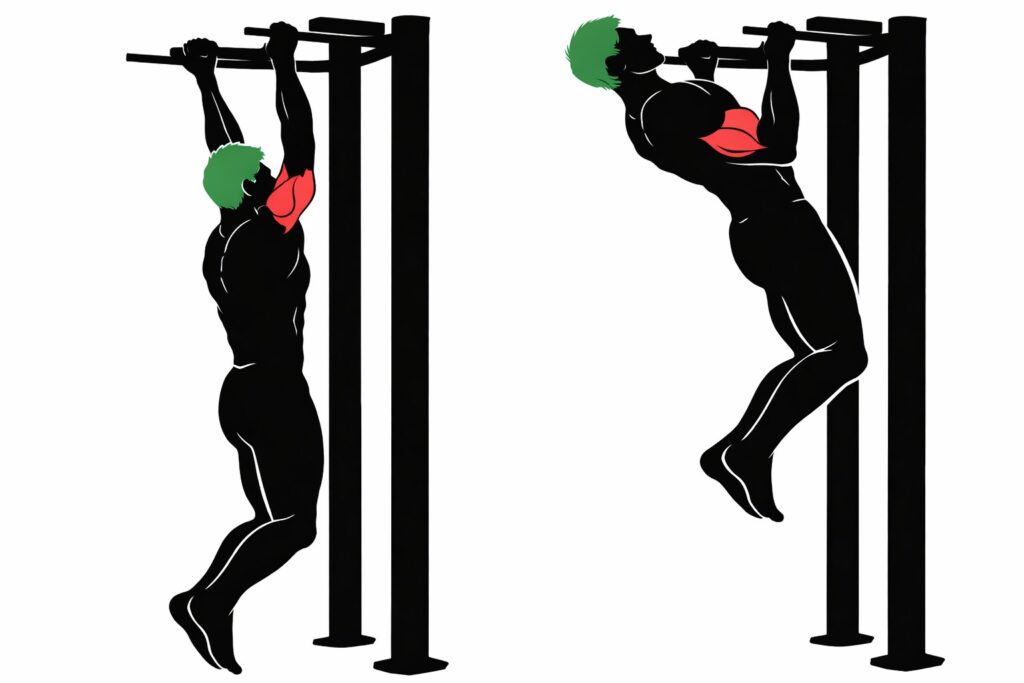
Chin-ups flip the feeling.
Because the palms face inward, the biceps can contract much more efficiently.
Now the pull resembles a hybrid between a row and a curl.
The elbows travel closer to the torso.
When I perform chin-ups slowly:
- The arms feel stronger earlier in the pull.
- The chest approaches the bar more easily.
- The top position feels smoother.
The arms usually fatigue before the back.
That difference surprises many beginners the first time they compare the two grips.
What I Notice When I Switch Grips Mid-Session
A moment from one of my early training sessions still sticks in my head.
I’m at a small park with a pull-up bar.
The weather is cool.
Around 18°C.
I warm up for five minutes.
Then I try two small experiments.
First I perform three pull-ups.
Slow tempo.
The movement feels heavy but controlled.
The lats feel like they’re pulling my torso upward.
Then I rest for two minutes.
Next I do three chin-ups.
I keep the tempo identical.
Suddenly the movement feels easier.
Not easy, but smoother.
The arms assist much more.
It feels almost like the elbows are pulling the body upward instead of the back alone.
That moment makes one thing clear.
Grip orientation actually changes the strength equation.
Muscles That Work During Pull-Ups
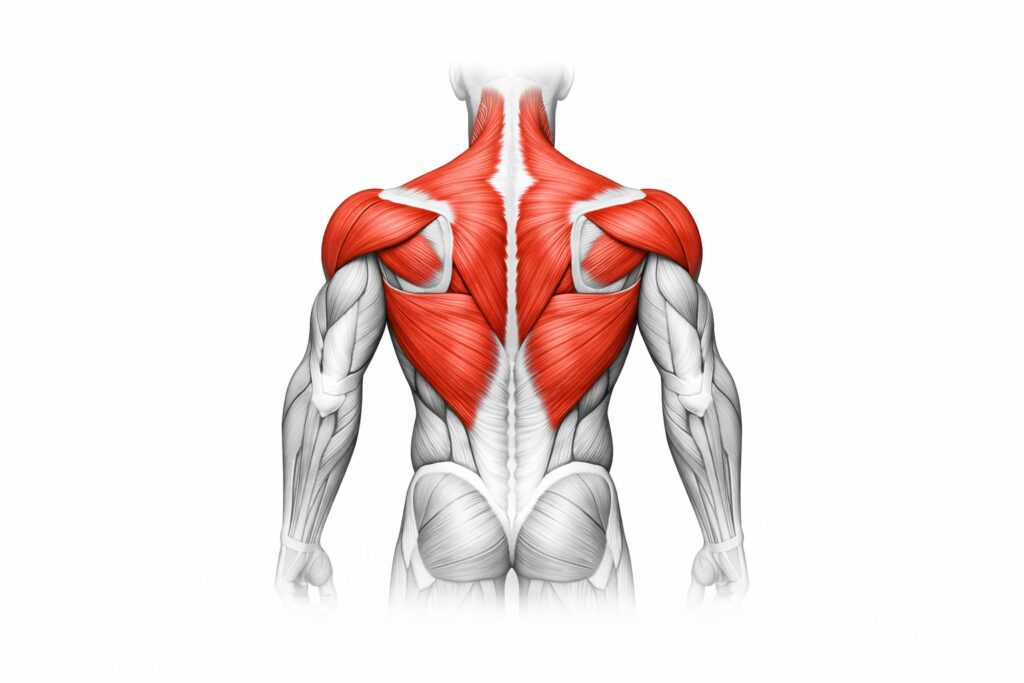
Let’s break down the main players.
Latissimus Dorsi
Often called lats.
Large muscles running along the sides of the back.
During pull-ups they produce most of the vertical pulling force.
If you imagine trying to bring your elbows into your back pockets, that’s basically lat action.
Rear Deltoids
These sit behind the shoulders.
They help move the arms backward during the pull.
Lower Trapezius
This muscle stabilizes the shoulder blades.
It keeps the shoulders from rising too much during the movement.
Forearms
Grip strength keeps the body attached to the bar.
Without it, the pull ends quickly.
During pull-ups these muscles work constantly.
The sensation usually spreads across the mid and upper back.
Muscles That Work During Chin-Ups
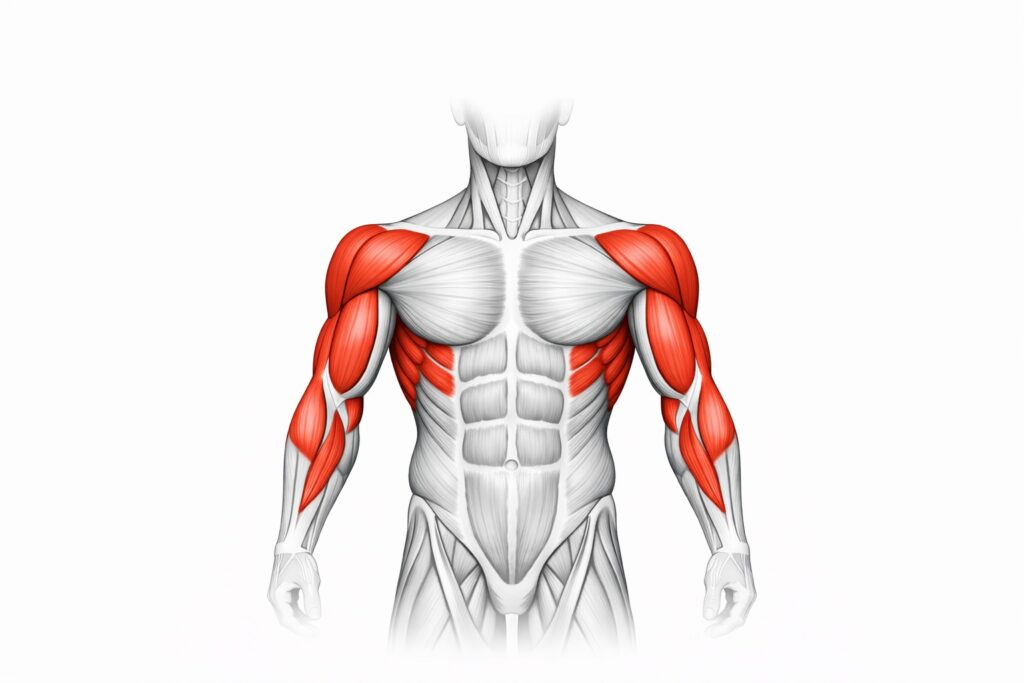
Chin-ups recruit many of the same muscles.
But the emphasis shifts.
Biceps Brachii
The biceps bend the elbow.
Because of the underhand grip, they contribute much more strongly during chin-ups.
Brachialis
This muscle sits under the biceps.
It assists with elbow flexion.
Lats
Still active.
But the arms share more of the load.
Core Muscles
The abs and lower back keep the body stable so the pull remains smooth.
After several chin-up sets I often feel a deep burn along the front of the arms.
Pull-ups rarely produce that sensation as strongly.
Why Chin-Ups Often Feel Easier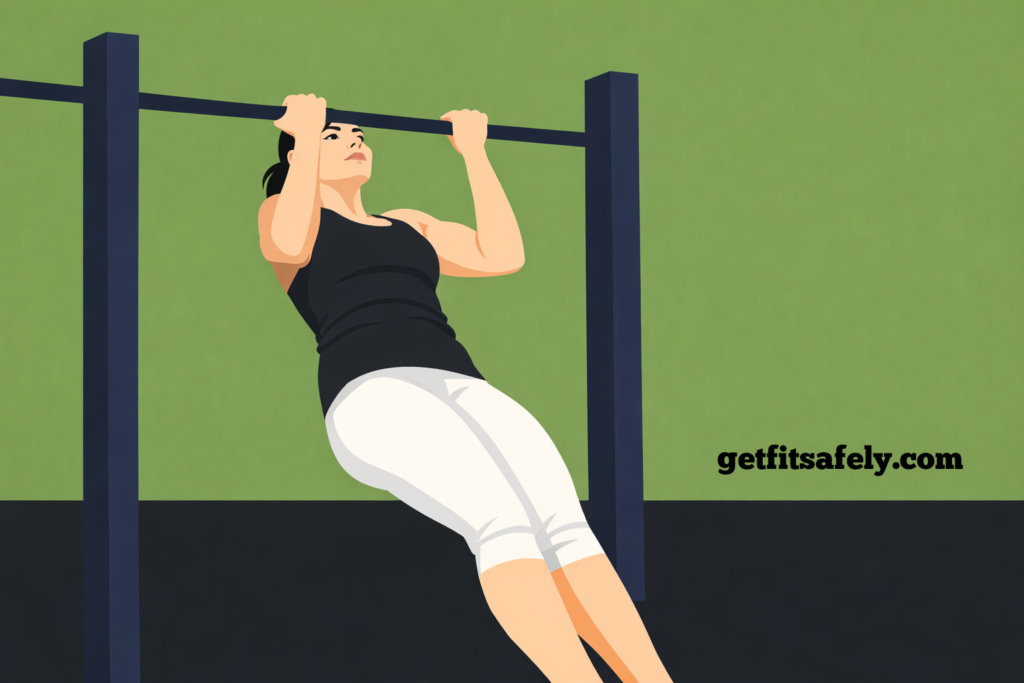
Many people notice they can perform more chin-ups than pull-ups.
That observation makes sense biomechanically.
The reason is simple.
The biceps contribute more power.
Imagine trying to lift a box using both your back and your arms.
Now imagine lifting the same box mostly with your back.
The first scenario usually feels stronger.
During chin-ups, the elbow flexion angle allows the biceps to help more effectively.
That extra assistance often results in:
- More repetitions
- Faster progress at the beginning
- A smoother top position
I often see beginners do something like:
- 3 pull-ups
- 6 chin-ups
On the same day.
The difference can be significant.
What the Top Position Feels Like
The top position reveals another subtle difference.
Pull-Up Top Position
When the chest reaches the bar during pull-ups:
- The elbows sit slightly wider
- The shoulder blades squeeze together
- The upper back feels tight
It feels like finishing a powerful back contraction.
Chin-Up Top Position
During chin-ups:
- Elbows stay closer to the torso
- Biceps contract strongly
- The chest often touches the bar more easily
It resembles the top of a heavy curl combined with a pull.
Both positions train the body well.
They simply emphasize different sensations.
How Grip Width Changes the Experience
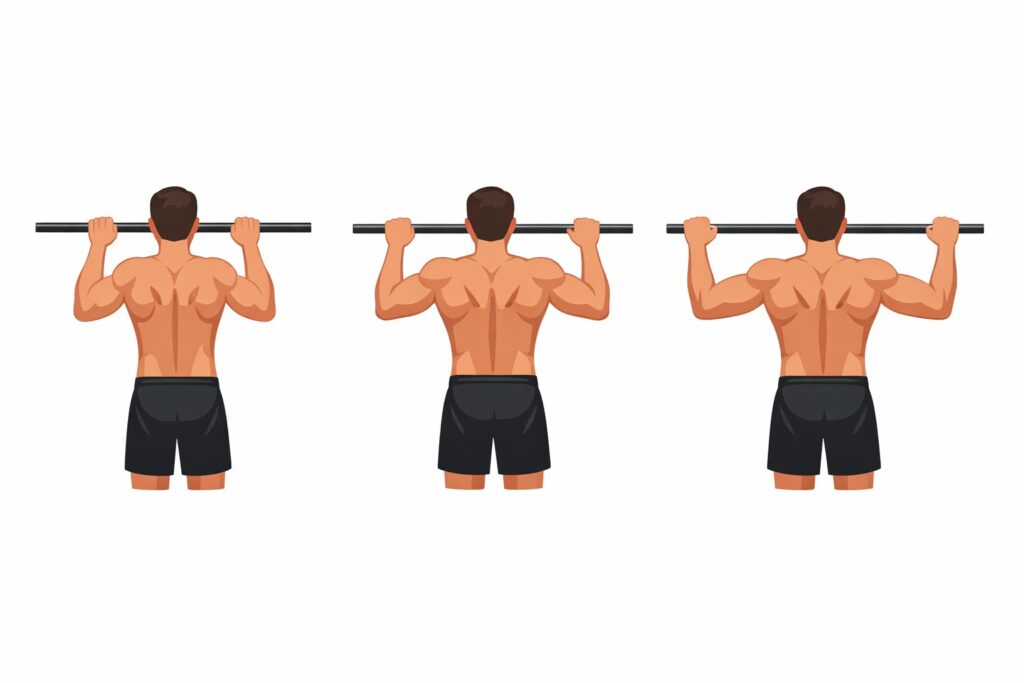
Hand spacing matters too.
Grip width can change the difficulty and muscle involvement.
Narrow Grip
Hands roughly shoulder-width apart.
Often used for chin-ups.
This spacing allows the elbows to travel close to the torso.
Many people feel strong here.
Medium Grip
Hands slightly wider than shoulders.
Common for standard pull-ups.
The back muscles activate strongly.
Wide Grip
Hands significantly wider.
The range of motion becomes shorter.
Yet the pull often feels heavier.
I occasionally try sets like:
- 5 pull-ups medium grip
- 4 pull-ups wide grip
- 3 pull-ups very wide
Resting two minutes between rounds.
The back burns quickly.
Grip width alone can change how the body distributes effort.
What Happens to the Elbows
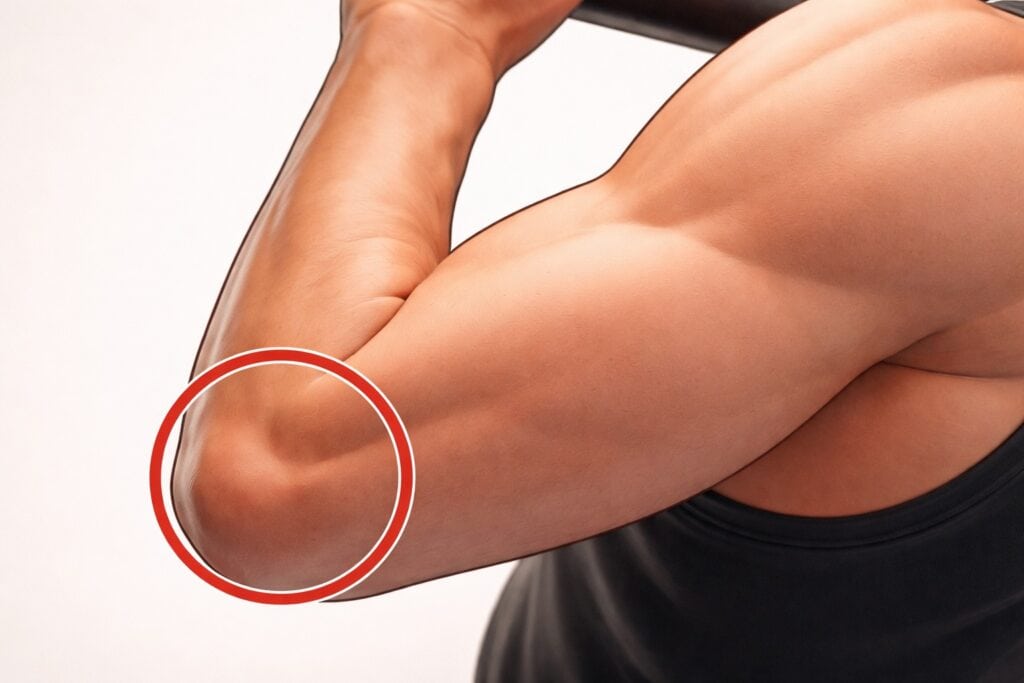
Joint comfort is another interesting difference.
Elbow position shifts depending on the grip.
During Pull-Ups
Elbows move slightly outward.
This places more demand on the shoulder stabilizers.
For some people this feels natural.
For others the shoulders fatigue quickly.
During Chin-Ups
Elbows track closer to the body.
The motion feels compact.
The arms bend more directly.
Many beginners report chin-ups feeling more comfortable on the shoulders.
But that varies from person to person.
How the Movement Evolves Over Several Sets
A single repetition doesn’t reveal much.
The story becomes clearer across multiple sets.
Let’s look at a simple session I often perform.
Example Pull-Up Session
Warm-up:
- 2 minutes hanging
- 10 scapular pull-ups
- 2 easy reps
Then the working sets:
- Set 1: 5 pull-ups
- Rest: 120 seconds
- Set 2: 4 pull-ups
- Rest: 120 seconds
- Set 3: 4 pull-ups
By the final set the lats feel heavy.
The upper back feels engaged.
The arms are working but not exhausted.
Example Chin-Up Session
Warm-up stays the same.
Working sets:
- Set 1: 7 chin-ups
- Rest: 120 seconds
- Set 2: 6 chin-ups
- Rest: 120 seconds
- Set 3: 5 chin-ups
Now the arms burn intensely.
The biceps feel pumped.
The back still works.
But the fatigue pattern feels different.
Two grips.
Two slightly different muscular stories.
Why Many Athletes Train Both
Using only one grip leaves useful strength unexplored.
Pull-ups emphasize back strength strongly.
Chin-ups add significant arm contribution.
Together they create balanced pulling ability.
In my training week I often include both.
For example:
Day 1
- Pull-ups
- Ring rows
- Light chin-ups
Day 3
- Chin-ups
- Inverted rows
- Scapular pull-ups
Rotating grips helps spread the workload across different tissues.
It also keeps training interesting.
When Chin-Ups Help New Lifters the Most
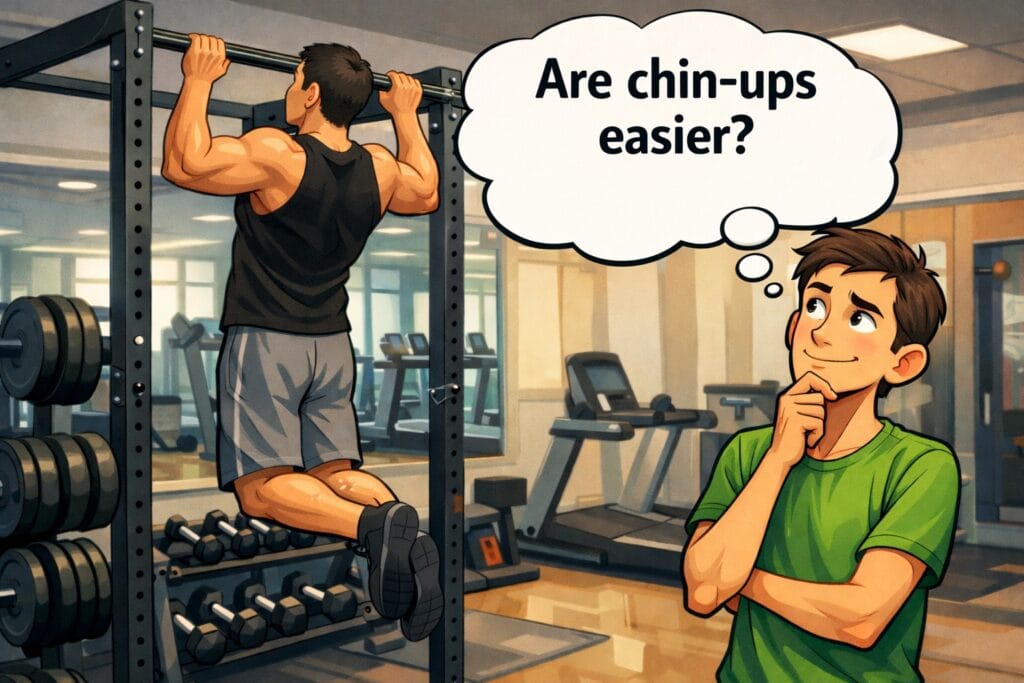
People starting their first pull-up journey often struggle.
Lifting your entire body is not trivial.
Chin-ups can help build the foundation.
The extra biceps assistance allows more repetitions.
That means more practice.
More practice means faster coordination improvements.
A simple beginner routine might look like this:
- 3 chin-ups
- Drop from the bar and take a short break
- Repeat for 5 rounds
If someone cannot perform a full chin-up yet, assisted versions work well.
Examples include:
- Resistance band assistance
- Jumping chin-ups
- Negative chin-ups (slow lowering)
After a few weeks pull-up strength improves significantly, especially if the progression is consistent.
When Pull-Ups Become Very Valuable
As pulling strength grows, pull-ups reveal their importance.
They train the back intensely.
That strength carries over to many other exercises.
Climbing.
Rows.
Gymnastics movements.
Even simple activities like lifting objects overhead.
When I include pull-ups consistently, the back feels more stable during many tasks.
A typical intermediate session might include:
- 6 pull-ups
- Rest 2 minutes
- 5 pull-ups
- Rest 2 minutes
- 4 pull-ups
Four rounds total.
Tempo stays controlled.
Around 2 seconds up and 3 seconds down.
The muscles work hard without rushing.
How Tempo Changes the Challenge
Speed affects difficulty.
A slow repetition increases time under tension.
A fast repetition trains explosive pulling.
For example:
Slow Pull-Up
- 4 seconds upward
- 2 second pause near bar
- 4 seconds lowering
One repetition lasts 10 seconds.
Five reps equal nearly 50 seconds of work.
The muscles fatigue quickly.
Faster Chin-Up
- 1 second pull
- 1 second lowering
Ten repetitions take around 20 seconds.
This feels more dynamic.
Both tempos offer benefits.
I rotate them across sessions to keep training fresh.
What Usually Starts Changing After a Few Weeks
A pattern emerges after consistent practice.
Week 1:
Pull-ups feel extremely heavy.
Chin-ups feel manageable.
Week 3:
Pull-ups improve slightly.
Chin-ups increase noticeably.
Week 6:
Pull-ups begin feeling smoother.
The body learns how to coordinate the movement.
The nervous system becomes more efficient at recruiting muscles together.
The bar above your head stops feeling like an obstacle.
It becomes a familiar training partner.
Technique Details That Improve Pull-Ups and Chin-Ups
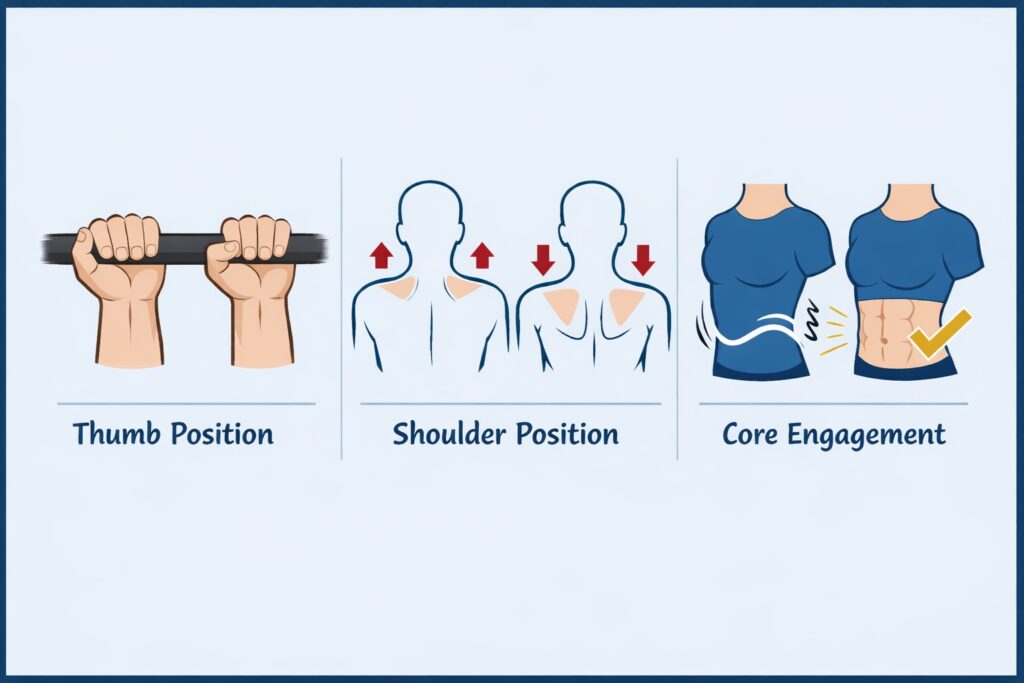
Tiny adjustments influence how the movement feels.
Thumb Position
Wrapping the thumb around the bar creates a stronger grip.
Some athletes use a thumb-over grip for certain variations.
I usually keep the thumb wrapped for stability.
Shoulder Position
Starting each repetition by pulling the shoulders downward stabilizes the movement.
That action engages the back before the arms bend.
Core Engagement
Keeping the ribs slightly tucked prevents swinging.
A stable body transfers force more efficiently.
Small cues like these make the exercise feel smoother.
Pull-Up and Chin-Up Variations Worth Exploring
Once the basics feel comfortable, variations add new challenges.
Neutral Grip Pull-Up
Palms face each other.
Many gyms have parallel handles for this.
The movement often feels very joint-friendly.
Mixed Grip
One hand overhand, one underhand.
This resembles a climbing grip.
Switching sides balances the training.
Weighted Chin-Ups
After reaching around 10–12 repetitions, adding weight becomes possible.
For example:
- Bodyweight chin-ups: 10 reps
- Add 5 kg weight
- Perform 6 reps
Gradually strength increases.
Paused Pull-Ups
Pausing halfway forces the muscles to stabilize.
A typical set might look like:
- Pull halfway
- Hold 2 seconds
- Continue to the bar
- Lower slowly
Three repetitions can feel surprisingly intense.
Other Pull-Up and Chin-Up Variations
How Grip Rotation Helps the Body Stay Healthy
Repetitive movements can irritate joints.
Rotating grips spreads stress across different tissues.
Some days the elbows appreciate chin-ups more.
Other days pull-ups feel smoother.
Listening to those signals helps keep training sustainable.
A weekly plan might include:
- Monday: Pull-ups
- Wednesday: Chin-ups
- Friday: Neutral grip pulls
Three grips.
Three slightly different stress patterns.
The body adapts while staying comfortable.
The Real Lesson From the Bar
Standing under a pull-up bar teaches patience.
At first the difference between pull-ups and chin-ups seems tiny.
Just a twist of the wrists.
But after many sessions the body starts to understand the details.
The back pulls in one way.
The arms assist in another.
Each grip develops a different flavor of strength.
Neither one replaces the other.
Together they build a pulling ability that feels balanced and reliable.
Frequently Asked Questions About Pull-Ups and Chin-Ups
Do pull-ups or chin-ups burn more calories?
The difference is usually very small.
Both exercises use large upper-body muscles and require you to lift your entire body weight.
A typical set of 6–8 reps might burn only a few calories, but repeated sets add up.
What really increases calorie burn is doing multiple rounds, shorter rest periods, or combining them with other bodyweight exercises.
Why do some people feel chin-ups more in the forearms?
Grip strength plays a big role.
When someone hangs from the bar, the forearm muscles work constantly to prevent the hands from slipping.
If those muscles fatigue early, they start to dominate the sensation of the exercise.
Over time the forearms adapt, and the movement begins to feel more balanced across the arms and back.
Is it normal if one grip feels much stronger than the other?
Yes, this happens very often.
Many people naturally perform more chin-ups than pull-ups because the arm position allows the biceps to contribute more.
Others feel stronger in pull-ups because their back muscles dominate the movement.
Strength differences between grips are extremely common, especially during the first months of training.
Can you train pull-ups and chin-ups on the same day?
Yes, many athletes include both in the same workout.
One simple approach is to start with the grip that feels harder, when energy levels are higher.
Then the second grip can follow with slightly fewer repetitions.
This approach spreads the effort across different muscles while keeping the session balanced.
Why do pull-up bars sometimes feel different even when they look identical?
Bar thickness and texture can change the experience a lot.
A thicker bar forces the forearms to work harder.
A smooth bar may require more grip strength than a rough or knurled one.
Even small details like humidity or sweat can affect how secure the hands feel during the exercise.
Do taller people find pull-ups harder?
Sometimes they do.
Longer arms increase the distance the body must travel during each repetition.
That means the muscles perform slightly more work every time you pull upward.
However, with consistent training people of all heights develop strong pull-up ability.