Exercise is one of the best things we can do for our physical and mental health.
But more exercise is not always better.
When training becomes excessive, poorly planned, or difficult to balance with recovery and everyday life, it can bring consequences that rarely appear in fitness transformations.
I have experienced some of them myself—from persistent fatigue and nagging pain to the frustration of seeing progress slow down despite working harder.
The drawbacks of working out can include injuries, disrupted sleep, performance plateaus, financial pressure, social sacrifices, and an unhealthy relationship with exercise or food.
In this article, I’ll examine 12 possible downsides, explain when they are most likely to occur, and show why a balanced approach remains safer than simply pushing harder.
The Bright Side of Exercise: Why We Love It
Here’s how I see it: exercise is one of the most useful investments we can make in our future health.
It can improve strength, cardiovascular fitness, sleep, mood, mobility, and our ability to handle ordinary life without feeling as if the stairs have declared war on us.
The good news is that we do not need to live in the gym to benefit.
Some activity is better than none, and a sustainable amount usually beats a heroic plan that lasts twelve days.
So, whether the couch is calling your name or you are feeling nostalgic for your younger years, getting up and moving still makes sense.
The goal of this article is not to talk anyone out of exercise.
It is to help us recognize when a healthy habit starts asking for more than it gives back.
How Much Exercise Do Adults Really Need?
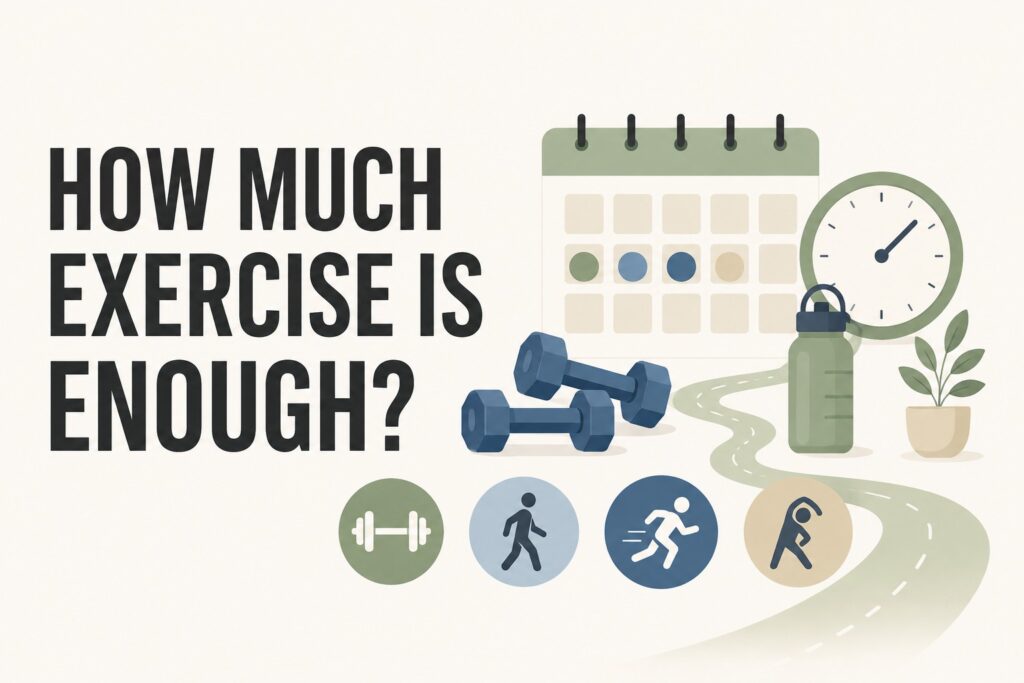
The current U.S. Physical Activity Guidelines for Americans recommend that adults aim for 150 to 300 minutes of moderate-intensity aerobic activity each week, or 75 to 150 minutes of vigorous activity, plus muscle-strengthening work on at least two days.
Moderate activity could include brisk walking, while vigorous activity might include running or a demanding cycling session.
These numbers are public-health targets, not a test you fail if life gets busy.
If you currently do very little, beginning with a manageable amount and gradually building up is more useful than trying to transform into an athlete by Monday morning.
I also prefer spreading activity across the week.
It gives my body time to recover and keeps one enormous workout from feeling like a monthly appointment with regret.
People who are pregnant, postpartum, living with a disability, managing a chronic condition, or returning after a long break may need to adapt the type and amount of exercise with help from a qualified healthcare or fitness professional.
The Dark Side of Fitness

Exercise is fantastic, but it is not all personal records and perfectly timed protein shakes.
Problems are more likely when training load rises faster than our body can tolerate, when we repeatedly ignore pain or fatigue, or when exercise begins controlling our mood, diet, schedule, and relationships.
Here are 12 drawbacks worth knowing—and what we can do about each one.
1. Overtraining Syndrome
Too much of a good thing can become a problem.
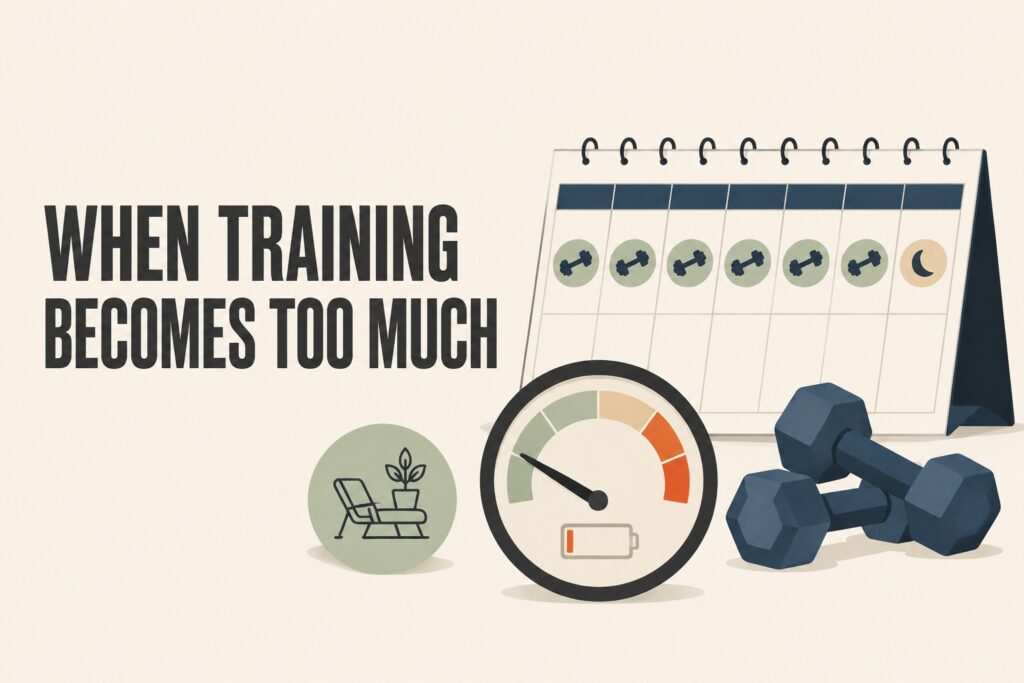
Overtraining syndrome can develop when hard training repeatedly exceeds the body’s ability to recover.
It is more serious than feeling tired after one difficult workout.
Possible warning signs include a persistent drop in performance, unusual fatigue, loss of motivation, disturbed sleep, mood changes, and recurring aches or injuries.
MedlinePlus lists poor performance, longer recovery needs, tiredness, sleep problems, anxiety, heavy limbs, and overuse injuries among the signs that someone may be exercising too much.
I remember being so excited when I first started training that I went to the gym every day.
After a couple of weeks, I felt more drained than energized, yet my brilliant solution was to consider training even harder.
Luckily, common sense eventually entered the building.
How to reduce the risk: Increase training gradually, alternate harder and easier sessions, eat enough, sleep consistently, and treat persistent performance decline as information rather than a challenge to your toughness.
2. Temporary Strain on the Immune System
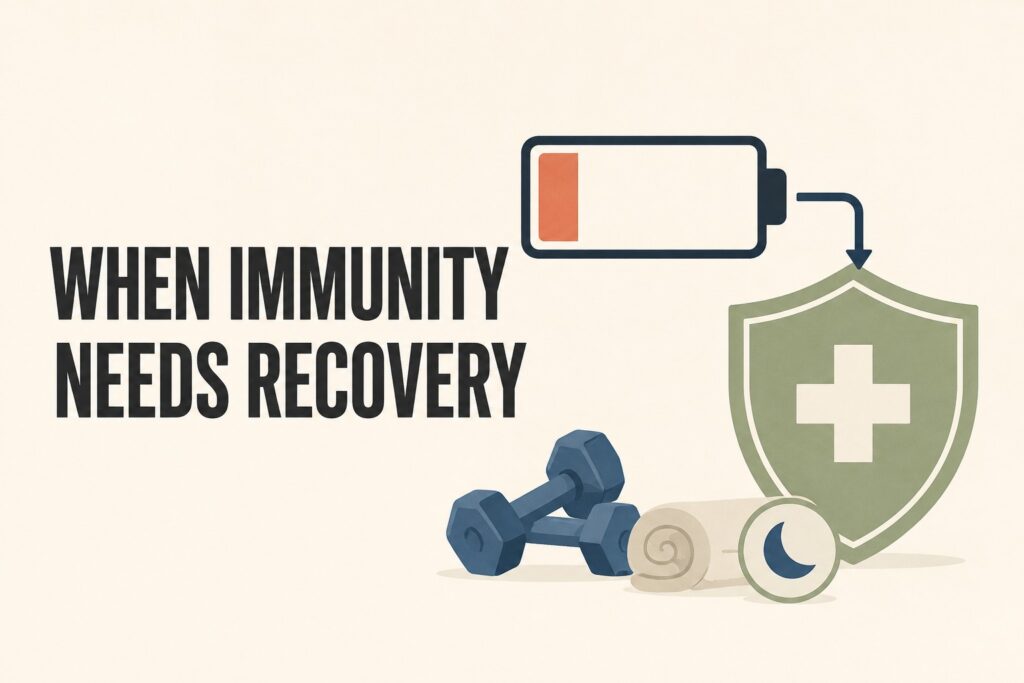
Moderate, regular activity generally supports health, including normal immune function.
The concern is not that an ordinary workout automatically “weakens” your immune system.
Problems are more likely during prolonged periods of very demanding exercise combined with insufficient sleep, inadequate nutrition, psychological stress, or poor recovery.
In that situation, some people notice that they get sick more frequently or take longer to feel fully recovered.
Think of it like leaving several power-hungry apps running on your phone while the flashlight stays on.
The workout may not be the only thing draining the battery, but it certainly does not help.
How to reduce the risk: Avoid stacking hard sessions when you are already sleep-deprived, sick, under unusually high stress, or struggling to eat enough for your activity level.
3. Increased Risk of Injury
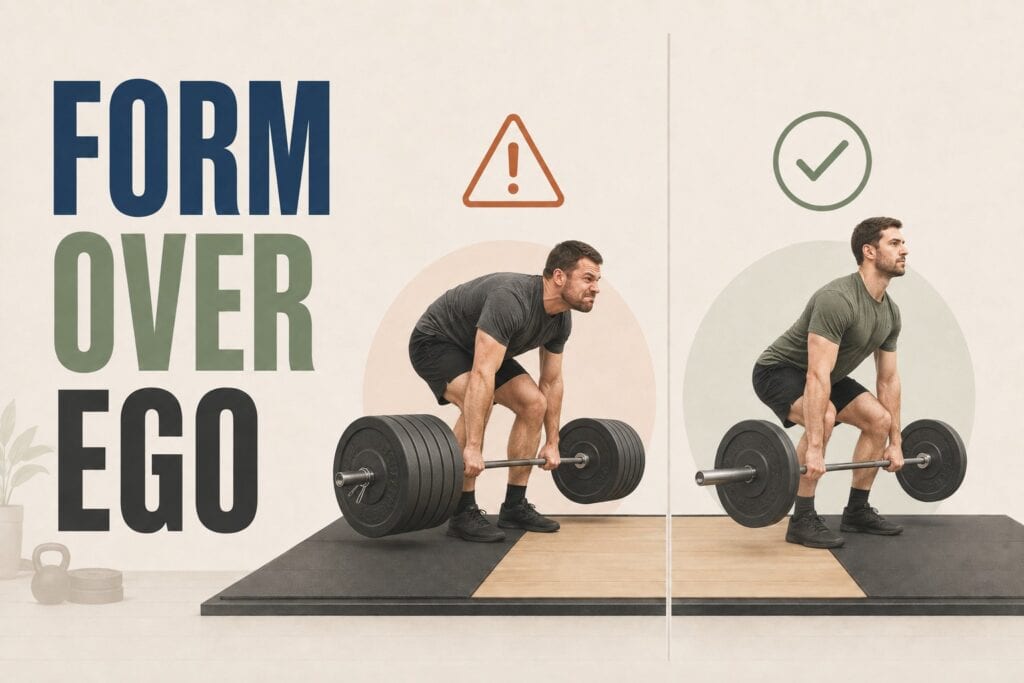
Every physical activity carries some risk, whether it is weight training, running, team sports, or attempting to prove that age is only a number during a weekend soccer game.
Injuries become more likely when load, speed, volume, or impact rises faster than the body can adapt.
Poor technique can contribute, but it is rarely the only factor.
Fatigue, unsuitable equipment, repeated movements, previous injuries, and doing too much too soon also matter.
I once tried to impress myself by lifting more weight than I could control properly.
My back did not applaud the performance.
That experience helped turn “form over ego” from a gym slogan into a rule I actually follow.
How to reduce the risk: Learn the movement with a manageable load, progress one variable at a time, stop when your technique changes substantially, and investigate pain that is sharp, worsening, or repeatedly returns.
4. A Negative Effect on Mental Health
For most people, regular exercise supports mental well-being.
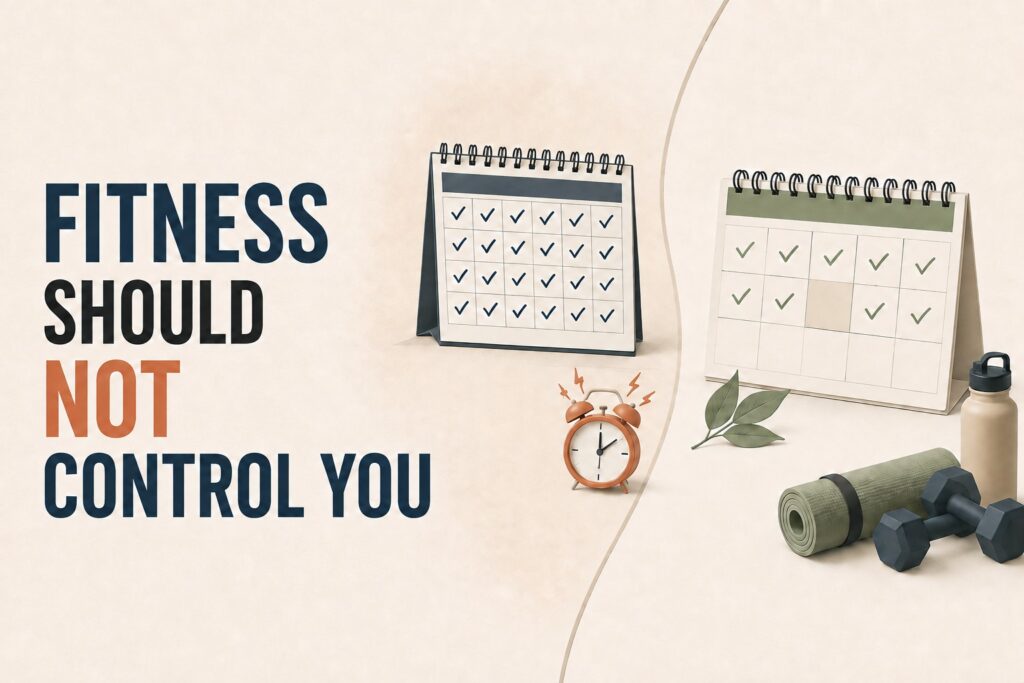
But training can become another source of stress when every session feels like a test of discipline, performance, or appearance.
A workout that once helped you clear your head can start feeling like an obligation you are constantly failing to meet.
There was a time when skipping a workout could ruin my mood.
I eventually realized that fitness was supposed to improve my life, not stand at the door checking my attendance.
Now I allow flexibility when work, sleep, family, or recovery needs more attention.
That has not destroyed my progress.
If anything, it has made training easier to sustain.
How to reduce the risk: Build a routine with flexible days, more than one way to measure progress, and goals that include energy, strength, skill, and enjoyment—not only weight or appearance.
5. Hormonal and Energy-Availability Problems
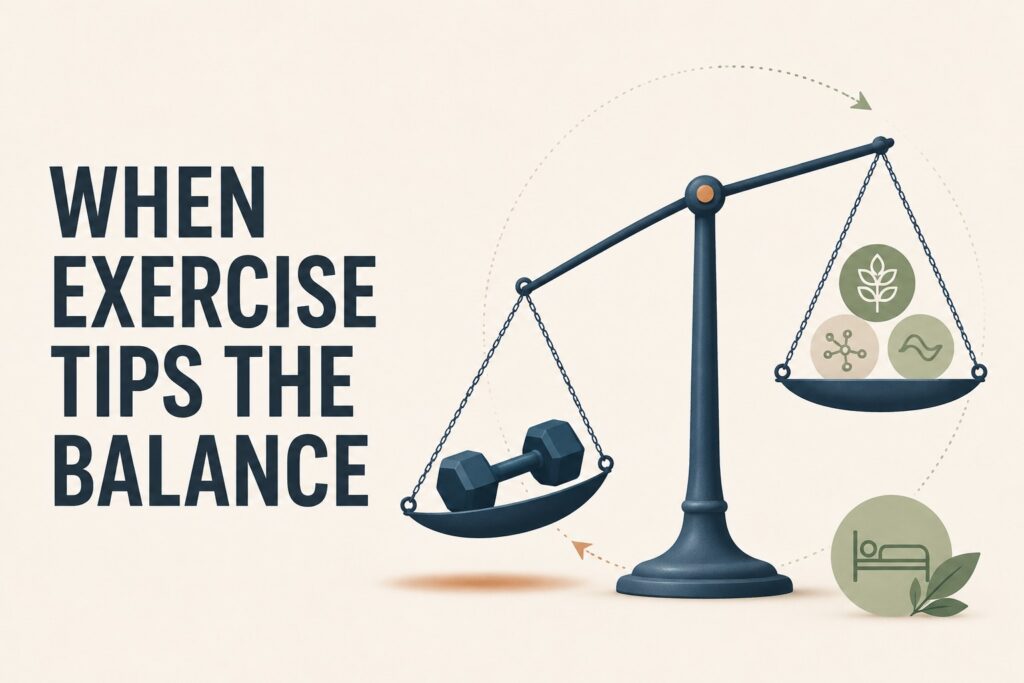
Exercise itself does not normally “mess up” healthy hormones.
The bigger concern is a persistent mismatch between training demands, food intake, and recovery.
When the body repeatedly uses more energy than it receives, active people can develop low energy availability.
In more serious cases, this may contribute to Relative Energy Deficiency in Sport, or REDs, a condition that can affect both women and men.
Possible consequences include menstrual disruption, reduced libido, impaired bone health, poor recovery, mood changes, and declining performance.
The International Olympic Committee’s REDs clinical tool is designed for healthcare professionals evaluating athletes and active people with suspected problematic low energy availability.
Hormones behave less like an on-off switch and more like a balancing act involving training, nutrition, sleep, stress, and health.
Push several of those factors in the wrong direction for long enough, and the balance can shift.
How to reduce the risk: Eat enough to support both training and ordinary life, avoid aggressive dieting during demanding programs, and seek medical advice for menstrual changes, persistent fatigue, reduced libido, repeated bone injuries, or an unexplained performance decline.
6. Sleep Disturbances
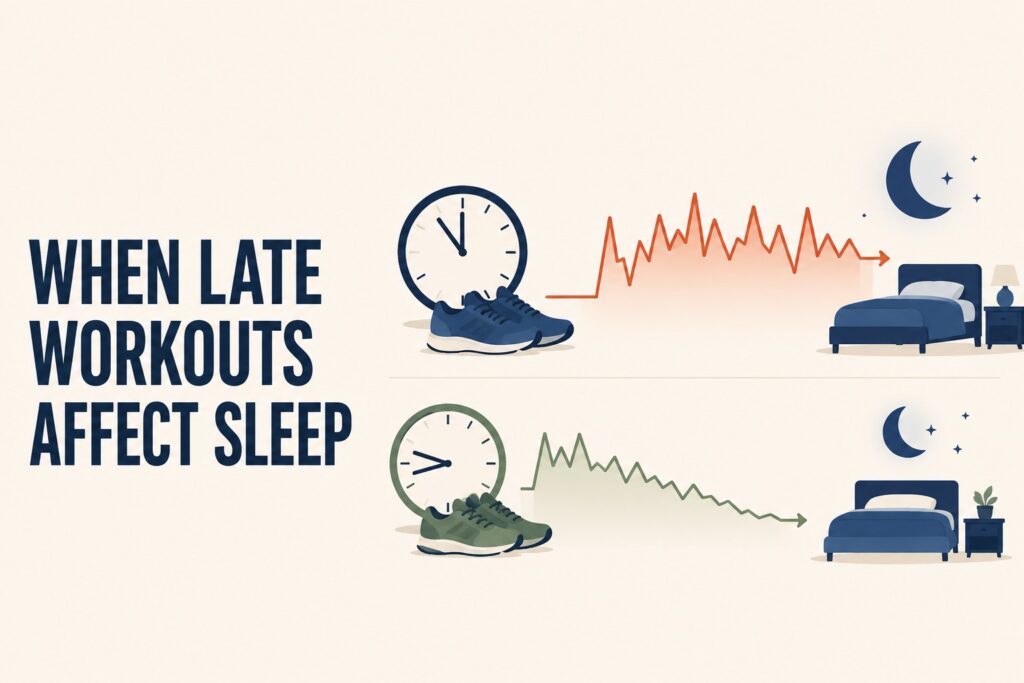
Regular exercise usually improves sleep, but timing and intensity can affect people differently.
The idea that every evening workout ruins sleep is too simple.
A systematic review found that evening exercise did not generally harm sleep in healthy adults, although very vigorous exercise ending close to bedtime may cause difficulties for some people.
I have been guilty of a midnight jog or two.
The run felt great, but staring at the ceiling afterward while my heart still believed we were being chased was less enjoyable.
If late training does not affect your sleep, there may be no reason to change it.
If you repeatedly feel wired, take longer to fall asleep, or wake less refreshed, timing is worth testing.
How to reduce the risk: Move hard sessions earlier when possible, finish with a gradual cooldown, and compare your sleep after late intense workouts with your sleep after lighter or earlier sessions.
7. Compulsive Exercise

Yes, exercise can become compulsive.
The warning sign is not simply enjoying the gym or following a structured program.
The problem begins when someone feels unable to rest despite illness or injury, hides the amount of exercise they perform, trains mainly to compensate for eating, or experiences strong guilt and anxiety when a workout is missed.
At that point, the routine may interfere with work, recovery, and emotional well-being.
Even water can be harmful in an extreme amount, although that is not permission to replace it with energy drinks.
Moderation still matters.
How to reduce the risk: Schedule rest without “earning” it, maintain interests outside fitness, and talk with a healthcare or mental health professional if exercise feels impossible to control.
8. Social Isolation

Training takes time.
Long sessions, travel to the gym, meal preparation, and weekend competitions can gradually crowd out friendships and family time.
This does not mean dedicated athletes are destined to become lonely people with excellent quadriceps.
It means a routine needs to fit into a whole life.
I started organizing weekend hikes with friends because they let us move and catch up at the same time.
Two birds, one stone—and nobody has to pretend that another treadmill interval is a social event.
How to reduce the risk: Set boundaries around training time, choose shorter sessions when necessary, and occasionally turn movement into a shared activity instead of another appointment you attend alone.
9. Financial Strain

Gym memberships, coaching, specialized shoes, smartwatches, supplements, and home equipment can become expensive quickly.
None of these purchases is automatically wasteful.
The problem begins when marketing convinces us that progress is locked behind the next product.
Many pricey machines eventually become glorified clothes racks.
Meanwhile, walking, running, bodyweight exercises, resistance bands, and basic free weights can provide effective training without demanding a second income.
How to reduce the risk: Build your routine first, identify a genuine limitation, and only then buy something that solves it.
10. Diminishing Returns and Plateaus
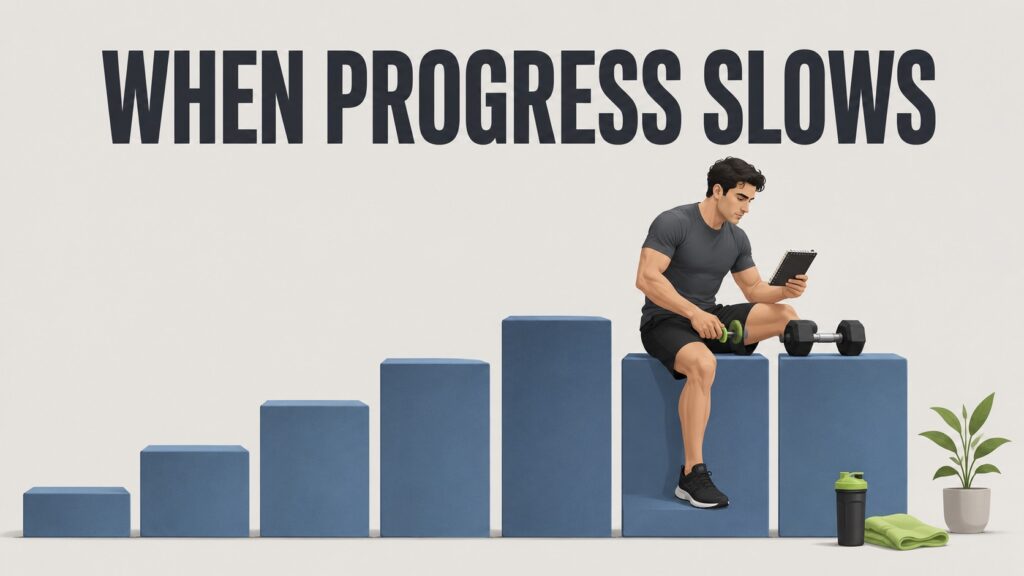
Beginners can often improve quickly because almost every training stimulus is new.
Over time, the body adapts and progress naturally slows.
This is not proof that exercise has stopped working.
It is a normal part of becoming more trained.
The drawback appears when slower progress creates frustration, encourages constant program changes, or tempts someone to add more volume than they can recover from.
Ever hit a plateau?
It can feel as if your body looked at the workout plan and said, “Been there, done that.”
Usually, the answer is not to set the entire plan on fire.
How to reduce the risk: Track performance over several weeks, make small adjustments to load, repetitions, technique, or exercise selection, and remember that maintaining hard-earned fitness is also a result.
11. Muscle and Movement Imbalances
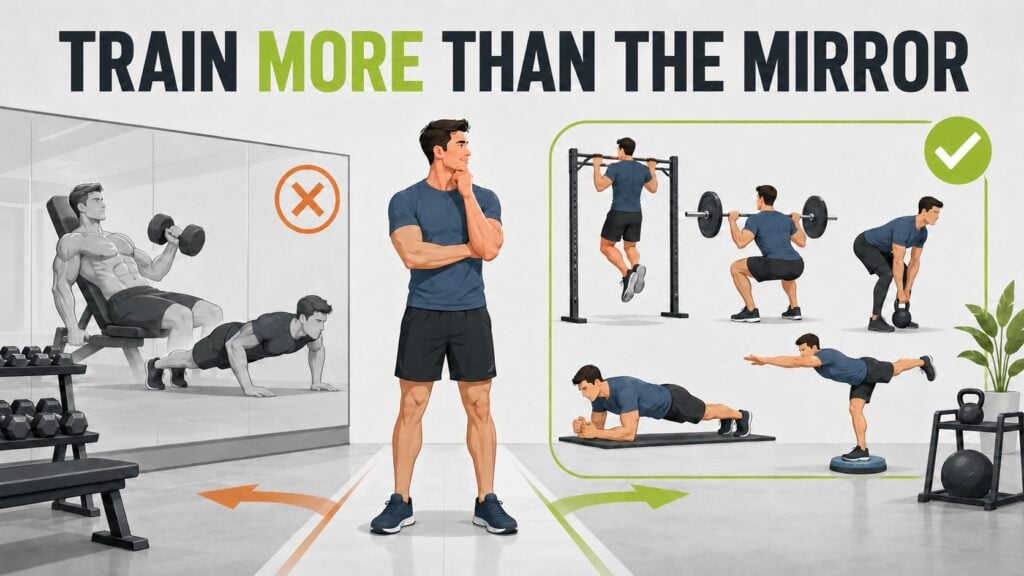
Training only the muscles we can see in the mirror can produce a routine that is more decorative than complete.
Repeatedly emphasizing a few movements while ignoring others may leave some muscles and movement patterns less prepared for the demands placed on them.
That does not mean every minor strength difference causes injury or that the body must be perfectly symmetrical.
Human bodies are not manufactured with a spirit level.
However, a program that includes pushing, pulling, knee-dominant work, hip-dominant work, and appropriate core and balance training is usually more practical than performing chest and arm exercises forever.
Skipping leg day is a joke until the stairs start writing the punchline.
How to reduce the risk: Train the whole body across the week, vary movement patterns when appropriate, and get an individualized assessment if a clear weakness, pain, or limitation affects your training.
12. Disordered Eating and Body-Image Pressure

Exercise does not automatically cause an eating disorder.
However, fitness environments that glorify extreme leanness, rapid transformations, or “earning” food can contribute to an unhealthy relationship with eating and body image in vulnerable people.
Warning signs can include severe food restriction, fear around ordinary meals, constant calorie compensation, frequent body checking, and feeling guilty after eating foods that were never a problem before.
Food should support training, recovery, health, and normal life.
Living on lettuce while thinking about food all day is not a performance strategy.
It is a warning that the pursuit of fitness may be taking more than it gives.
How to reduce the risk: Aim for performance, health, and sustainable habits rather than a constantly shrinking body, and seek help from a qualified healthcare professional if food or exercise begins controlling daily life.
RELATED: Pros and Cons of Exercising 6 Days a Week
Do the Benefits of Exercise Still Outweigh the Drawbacks?
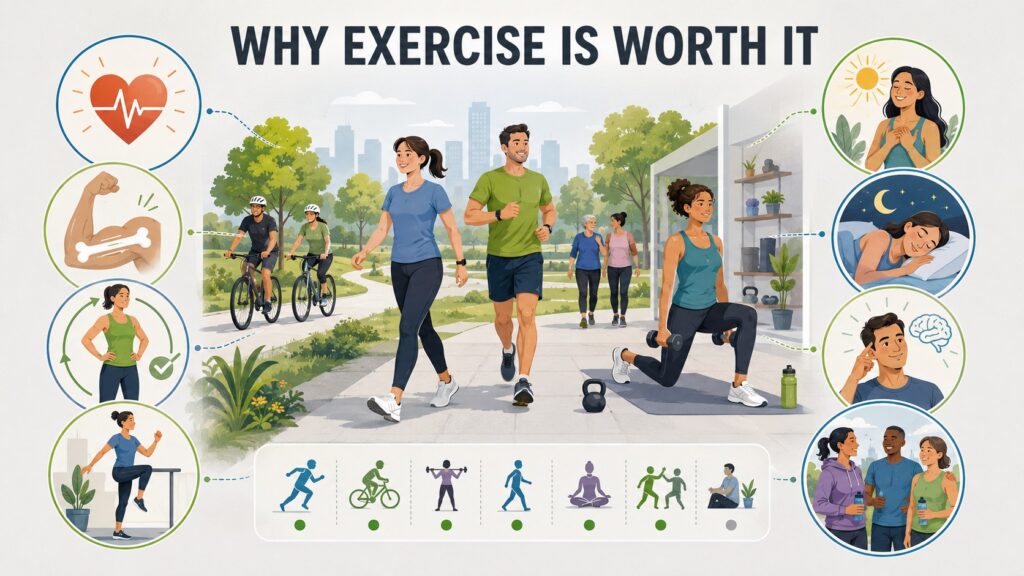
For most people, yes.
The drawbacks in this article are reasons to exercise more intelligently, not reasons to become best friends with the couch.
Regular physical activity can support:
- weight management;
- cardiovascular and metabolic health;
- stronger muscles and bones;
- better mobility and physical function;
- improved mood and stress management;
- better sleep;
- cognitive health;
- greater energy and work capacity;
- social connection through shared activities;
- a longer, healthier life.
The important distinction is between an appropriate dose of exercise and a routine that repeatedly overwhelms recovery or disrupts the rest of life.
More is not automatically better.
Better planned is better.
How I Manage Exercise Overload
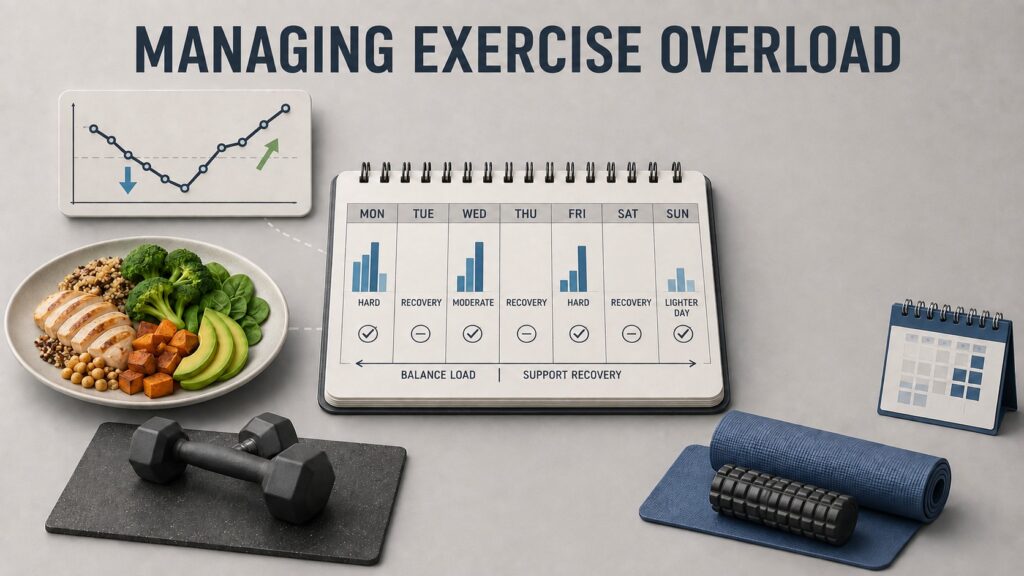
I no longer judge a program only by how tired it makes me during the workout.
I also pay attention to what happens afterward.
These habits help me keep training in proportion:
- Watch performance trends: One weak session happens, but several declining sessions deserve attention.
- Plan easier days: Not every workout needs to audition for an action movie.
- Protect sleep: Recovery becomes much harder when sleep is consistently short or disrupted.
- Eat enough: Training and normal daily life both require energy.
- Adjust around stress: A difficult workweek still adds to the load your body must manage.
- Vary repetitive stress: Changing an exercise, surface, range, or training volume can give irritated tissues a break.
- Take persistent symptoms seriously: Repeated pain, illness, fatigue, or mood changes are not badges of commitment.
Hydration Without the Magic Number

“Drink eight glasses a day” is easy to remember, but hydration needs vary with body size, climate, diet, exercise duration, sweat rate, and health.
A more useful approach is to:
- begin training normally hydrated;
- drink according to thirst during most ordinary workouts;
- bring additional fluid for long, hot, or unusually sweaty sessions;
- consider electrolytes during prolonged exercise with substantial sweating;
- avoid forcing extreme amounts of water in a short period.
Urine that is consistently very dark can suggest that you need more fluid, although supplements, foods, medications, and health conditions can also affect its color.
When Exercise Problems Need Professional Help
Rest and program adjustments can solve many minor training problems, but some signs deserve more attention.
Stop exercising and seek urgent medical care for chest pain, fainting, severe breathing difficulty, signs of heat illness, a visibly deformed joint, sudden major weakness, or dark urine accompanied by severe muscle pain or swelling after intense exercise.
Arrange a non-emergency professional assessment when pain keeps returning, performance remains unusually low, fatigue persists despite rest, menstrual periods become irregular or stop, or food and exercise begin dominating your thoughts and behavior.
Frequently Asked Questions
Can Working Out Cause Digestive Problems?
Yes, intense exercise can sometimes cause nausea, stomach cramps, reflux, bloating, or an urgent need to use the bathroom.
This is more common with running, high-intensity training, heavy lifting, dehydration, or eating a large meal too close to a workout.
Experimenting with meal timing, food choices, fluid intake, and training intensity can often help.
Persistent or severe digestive symptoms should be discussed with a healthcare professional.
Can Exercise Make You Hungrier?
It can.
Some people notice a stronger appetite after long or demanding workouts, while others temporarily feel less hungry immediately afterward.
Feeling hungry is not a sign that the workout “failed.”
It may simply mean your body needs energy to replace what was used during training and recovery.
The goal is not to ignore hunger or use exercise as a reason to restrict food later.
Can Too Much Cardio Make It Harder to Build Muscle?
It can if cardio volume is very high, recovery is poor, or food intake does not support both endurance work and strength training.
That does not mean cardio kills muscle gains.
Walking, cycling, running, and other aerobic exercise can fit well alongside strength training when the total workload is realistic.
The problem usually comes from trying to train for a marathon, build maximum muscle, diet aggressively, and sleep five hours per night at the same time.
Is Muscle Soreness a Sign of a Good Workout?
Not necessarily.
A little soreness can happen when you try a new exercise, increase your training volume, or return after time away.
But soreness is not a reliable scorecard for progress.
You can have an effective workout without struggling to sit down the next day, and extreme soreness can make the next session less productive.
Good technique, gradual progression, and consistent training matter more than chasing pain.