Lat pulldowns vs rows sounds like one of those questions that should have a clean answer.
I spent longer than I would like to admit trying to find it.
Every few months I would convince myself that one of them deserved most of my attention.
The plan always sounded logical.
Pick the better exercise.
Do more of it.
Get a better back.
Actual training kept ruining that theory.
A few weeks focused heavily on lat pulldowns taught me something.
A few weeks focused heavily on rows taught me something else.
Neither lesson looked anything like the simple answers floating around the fitness world.
The Period Where I Thought Lat Pulldowns Were Doing Everything
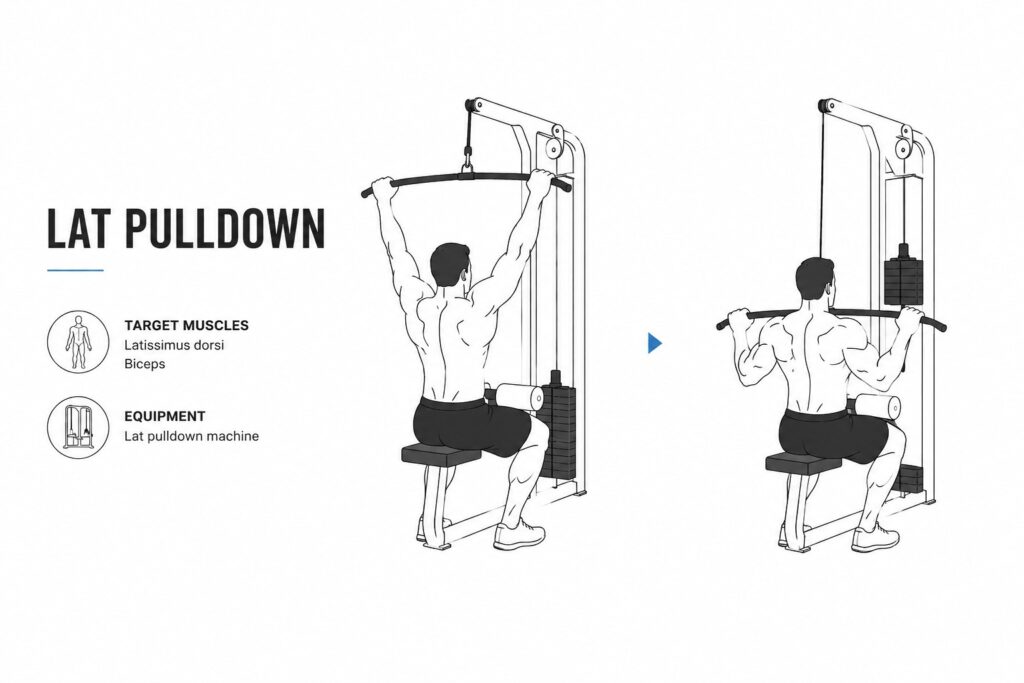
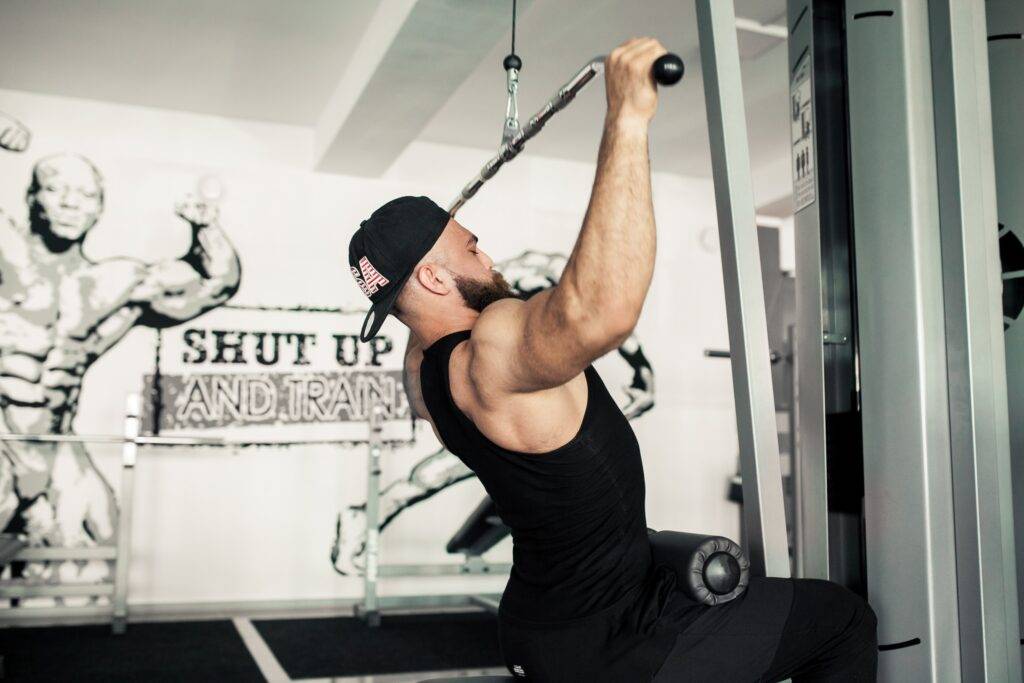
The lat pulldown machine started becoming my favorite stop on back day.
Grab the bar.
Sit down.
Pull toward the upper chest.
Repeat.
A lat pulldown is a vertical pulling exercise.
The resistance comes from above your head.
Your job is to pull that resistance downward while keeping control of your body.
At first, everything seemed great.
The numbers climbed.
The movement felt smooth.
Pull-ups even seemed a little easier.
Walking past the gym mirrors, the upper sides of my back looked fuller than before.
That was enough evidence for me.
Or so I thought.
Several weeks later, another detail started showing up.
Heavy objects pulled toward my torso did not feel quite as solid as expected.
Machine rows felt awkward.
Seated cable rows felt less natural.
Something was missing.
Not strength everywhere.
Strength in a particular direction.
Rows Changed The Conversation
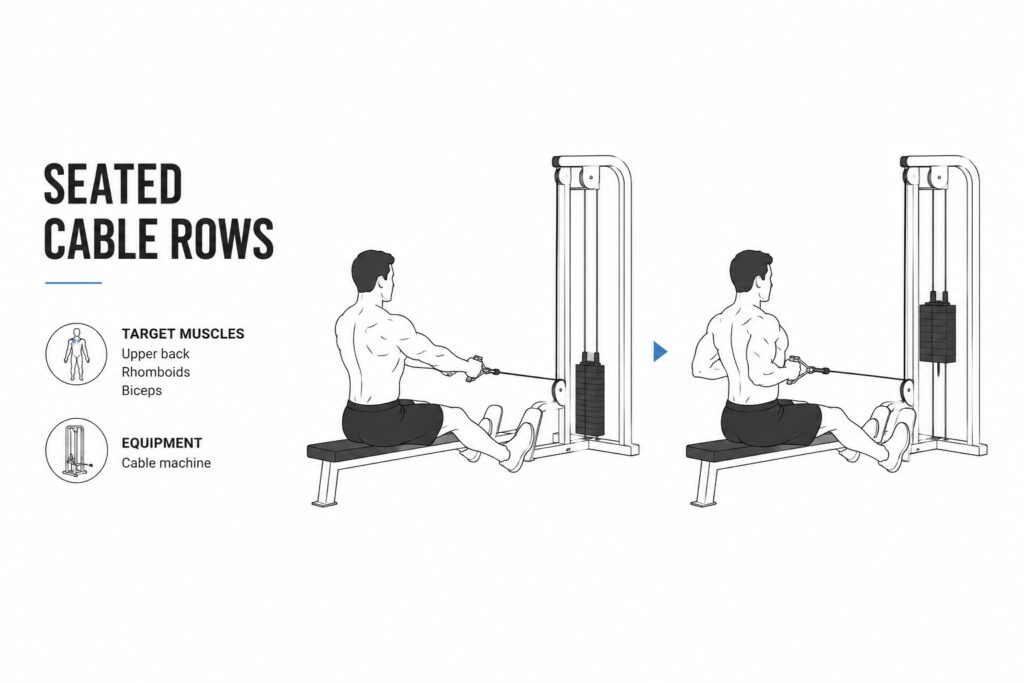
A row pulls resistance toward your body rather than pulling it down from above.
That sounds like a small difference.
Under load, it feels very different.
One afternoon, I sat at a cable row station expecting a routine workout.
The weight selection looked reasonable.
Nothing ambitious.
Nothing reckless.
About halfway through the first set, reality disagreed.
The handle reached my stomach.
The rep counted.
Yet the movement felt far less convincing than I expected.
A few sets later, it became obvious.
Lat pulldowns had improved one part of my pulling strength.
Rows were asking different questions.
Questions I was not answering particularly well.
The Mirror Told Two Different Stories
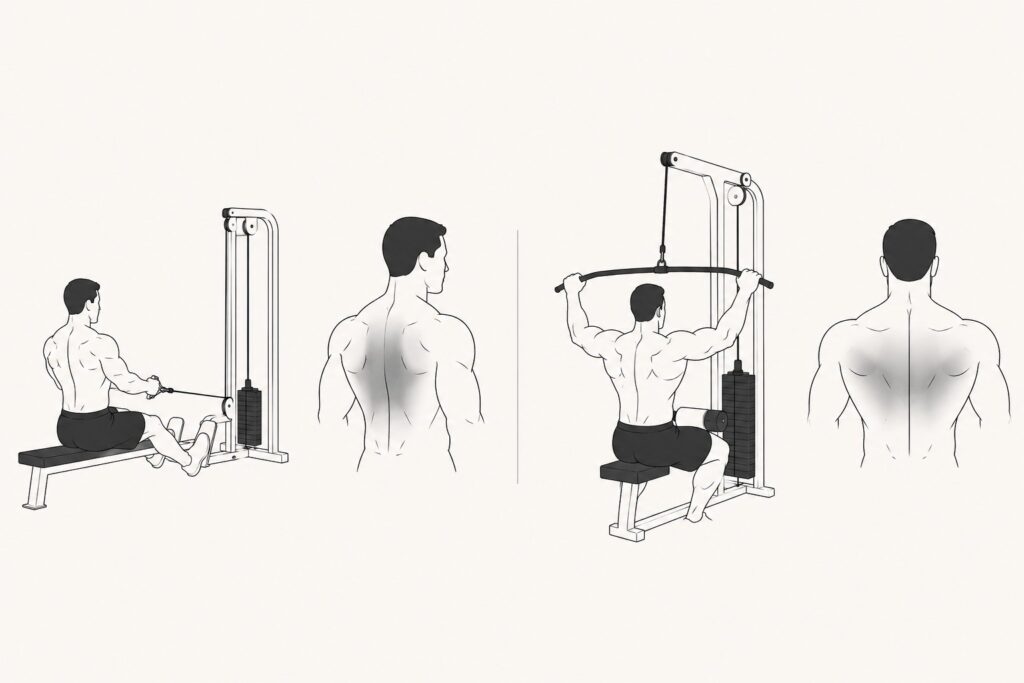
Fitness articles often talk about width and thickness.
That description sounds overly simplistic until you start noticing things yourself.
Rows created an effect that caught me off guard.
T-shirts started feeling slightly different across the upper back.
Standing sideways in the locker room mirror, the torso looked denser.
More compact.
More substantial.
A block of training centered around pulldowns produced another effect.
Looking straight ahead, the upper part of the back appeared wider.
Neither change happened overnight.
Neither change turned me into a comic-book character.
Still, those observations made the old width-versus-thickness conversation easier to understand.
What A Lat Pulldown Actually Trains
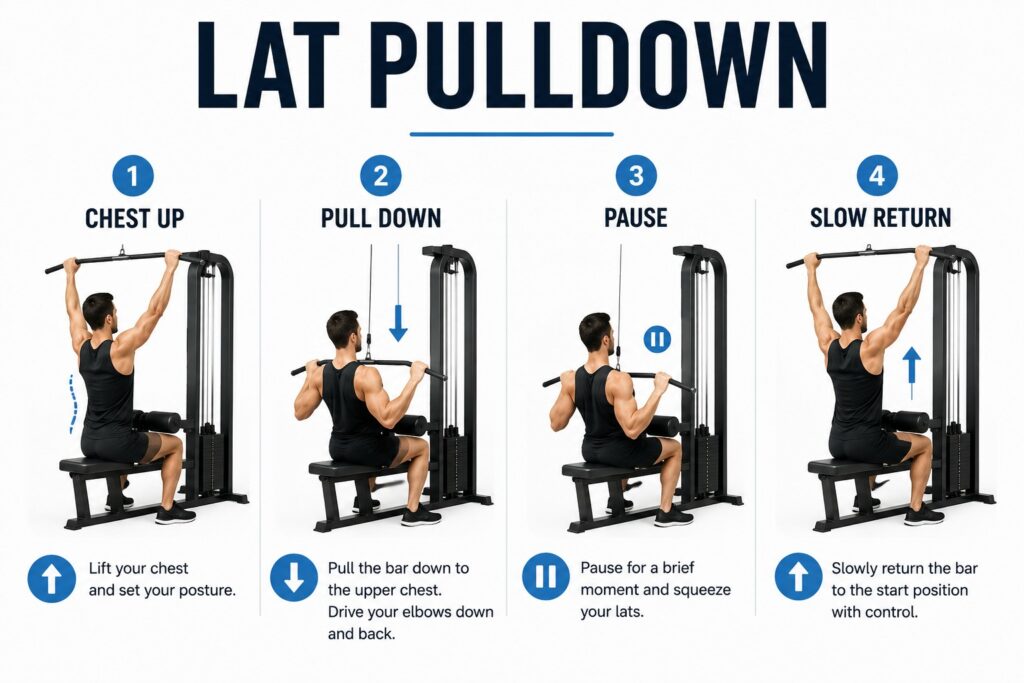
Many beginners sit down at a pulldown machine without really knowing what the exercise is trying to accomplish.
The goal is not simply moving the bar.
The goal is pulling through the muscles of the upper back and lats.
Those lats are the large muscles running down the sides of your torso.
A useful pulldown usually looks like this:
- Hands slightly wider than shoulder width
- Chest lifted naturally
- Bar traveling toward the upper chest
- Controlled return upward
- No swinging backward to manufacture momentum
Watching people use the machine often teaches a useful lesson.
More weight does not automatically create a better rep.
Several times I added plates to the stack only to realize the movement looked worse instead of stronger.
The machine always tells the truth eventually.
What Rows Bring To The Table
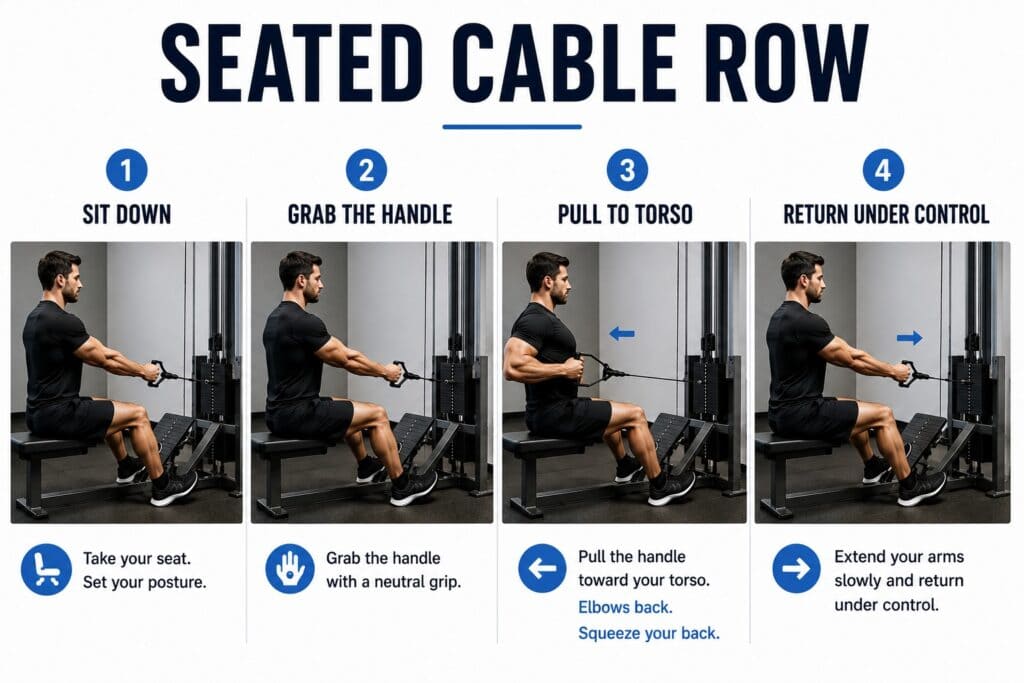
Rows seem simple until they expose habits you did not know were there.
A seated cable row looks almost impossible to mess up.
Sit down.
Grab the handle.
Pull it toward your torso.
Return it under control.
A chest-supported row is even more revealing.
The chest rests against a pad.
Body movement becomes harder.
Momentum becomes harder.
Excuses become harder.
One machine row session changed my opinion quickly.
The load dropped.
The quality improved.
Suddenly every inch of the movement felt more deliberate.
That was not a fun realization.
It was a useful one.
Pull-Ups Helped Me Understand The Difference
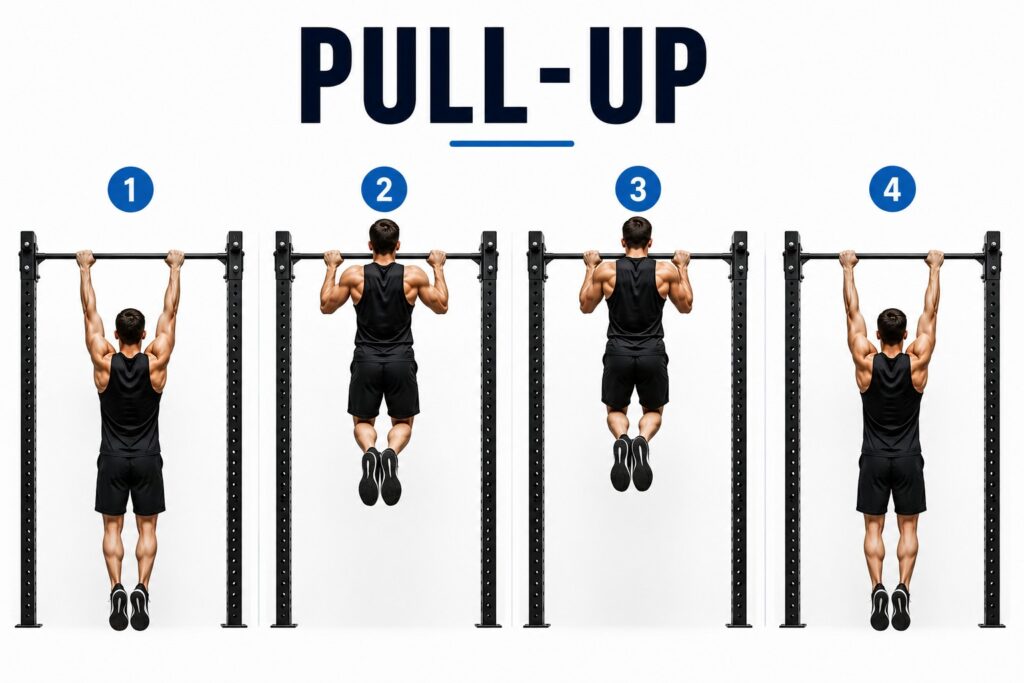
Pull-ups became an accidental experiment.
During periods where rows dominated my training, pull-ups remained part of the program.
Rep numbers stayed decent.
Nothing collapsed.
Yet the movement gradually lost some of its rhythm.
Getting the chin over the bar felt slightly less automatic.
Bringing pulldowns back usually fixed that.
The opposite happened too.
Periods with lots of pulldowns and very little rowing made heavy horizontal pulls feel less polished.
Neither exercise fully covered the job of the other.
That became harder and harder to ignore.
A Study That Matches What I Keep Seeing
Research published in the Journal of Strength and Conditioning Research has shown that changing pulling angles can influence which back muscles contribute the most during an exercise.
That sounds technical.
The practical takeaway is simple.
Pulling downward and pulling toward your body are not identical tasks.
Most lifters discover that long before reading any research paper.
The gym floor teaches the lesson first.
The study simply confirms it.
Situations Where I Lean More Toward One Or The Other
Certain goals make the decision easier.
Lat pulldowns usually earn extra attention when:
- Pull-ups are a priority
- Vertical pulling feels weak
- Building wider lats is the main objective
- Row volume is already high
Rows often move higher on the list when:
- Upper-back development feels behind
- Posture during lifting feels unstable
- Horizontal pulling strength is lagging
- Most training already includes pull-ups and pulldowns
Notice what is missing.
Neither list suggests abandoning the other exercise.
That lesson took me longer to learn than it should have.
When The Pulldown Starts Lying To Me
The pulldown machine can make me feel stronger than I actually am.
That is the tricky part.
The stack moves, so the set feels successful.
But sometimes the torso leans back too much.
The bar travels down, but the movement turns into something closer to a seated cable crunch with a handle in my hands.
A better pulldown feels calmer.
The ribs do not flare like I am trying to win a limbo contest.
The bar comes down because the upper arms drive toward the body.
The return upward stays controlled instead of snapping back.
When I notice the machine getting loud, the rep usually needs less weight.
Not more attitude.
When Rows Turn Into Just Moving Weight
Rows have their own way of fooling me.
A heavier cable row can look productive while doing very little for the back.
The handle reaches the stomach.
The plates move.
The set technically happens.
But if the torso keeps swinging and the last part of the pull gets rushed, I know I am mostly chasing the number.
A better row feels less messy.
The chest stays proud without turning the movement into a backward lean.
The handle travels toward the lower ribs or stomach.
The return feels controlled enough that the next rep starts from a solid position.
Chest-supported rows are useful here because they remove many of my favorite little cheats.
And yes, I say “favorite” because apparently my body is very creative when it wants to avoid honest work.
The Answer Turned Out Less Exciting Than Expected
Part of me wanted one exercise to win.
Life becomes easier when there is a champion.
Training rarely works that way.
Lat pulldowns helped me understand vertical pulling better.
Rows helped me understand horizontal pulling better.
One improved areas the other could not completely replace.
That is why the question eventually changed.
Instead of asking which exercise deserves more time, I started asking which quality of pulling was receiving less attention.
For most lifters, lat pulldowns vs rows is not really a fight.
Both movements earn their place.
Both solve different problems.
And when lat pulldowns vs rows appears in a training program together, the back usually ends up better for it.