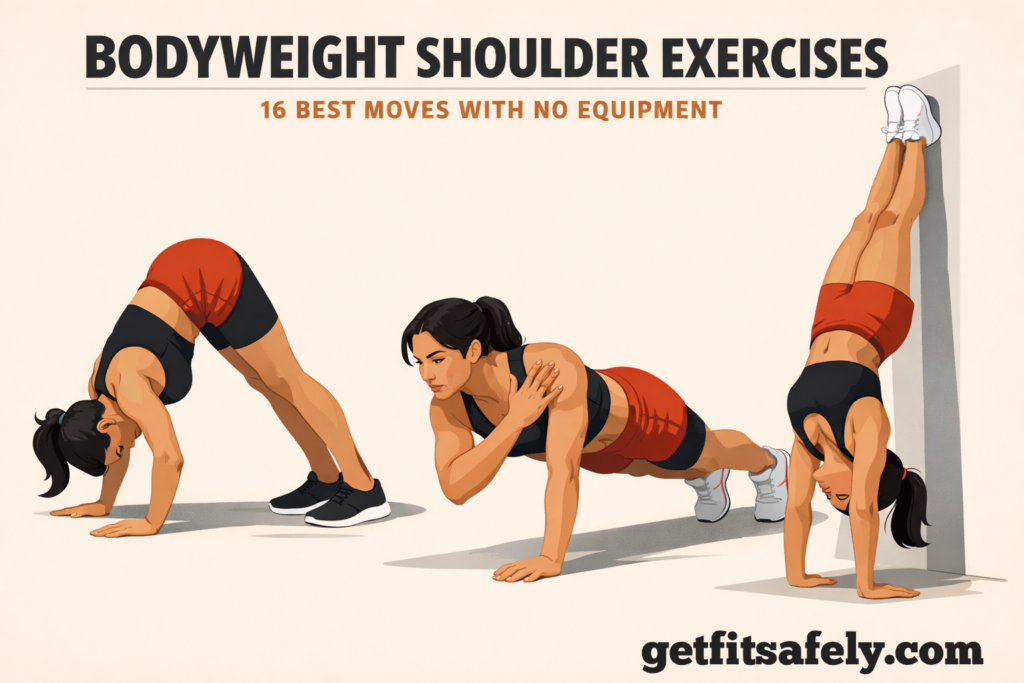
I start caring about shoulder training long before I ever⁹ touch a dumbbell, because bodyweight work shows me very quickly whether my shoulders are truly strong or just good at looking busy.
A lot of people hear “bodyweight shoulders” and picture endless arm circles, random push-ups, and that one heroic attempt at a handstand against a wall that lasts about three seconds before dignity leaves the room.
What I keep seeing instead is this:
shoulders respond really well to smart angles, controlled positions, and exercises that make the joint work through space instead of only pushing weight from point A to point B.
That matters because the shoulder is not one simple hinge.
It is more like a very mobile moving platform that has to stay stable while the arm goes overhead, out to the side, behind the body, and across the chest without the whole thing turning into a crunchy mess.
Bodyweight training does a surprisingly good job of teaching that balance.
Below are 16 bodyweight shoulder exercises that keep showing up in my training, whether I am at home, in a park, or working with almost no equipment.
Some are simple.
Some feel strange the first time.
A few look harmless until your shoulders start burning and you suddenly realize they are doing a lot more work than expected.
Why Bodyweight Shoulder Work Feels Different From Typical Gym Training
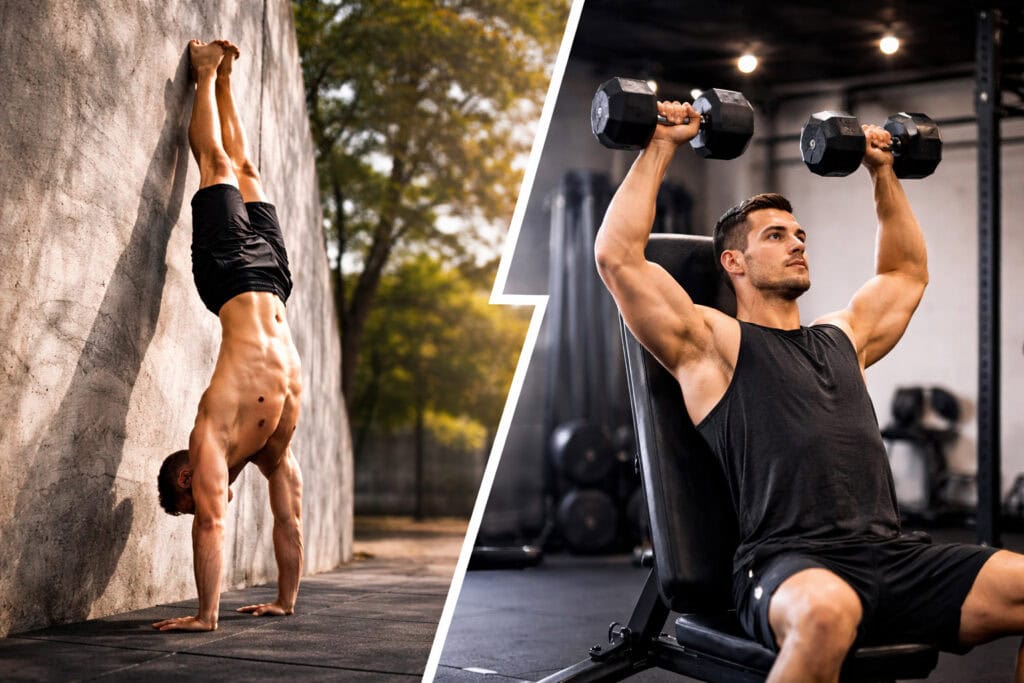
When I train shoulders with no equipment, I notice one big difference right away.
The exercise does not only challenge the shoulder muscle.
It also challenges body position, balance, tension through the trunk, elbow angle, wrist comfort, and control around the shoulder blade.
That means a simple bodyweight movement can feel harder than it looks because more pieces are working together.
A pike push-up, for example, is not just a shoulder press with your body turned upside down.
It asks your shoulders to press, your upper back to assist, your abs to stop the spine from sagging, and your hands to deal with pressure in a way that a machine never asks for.
This is also why beginners sometimes think they “have weak shoulders” when the real story is more interesting.
Sometimes the shoulders are not weak at all.
Sometimes the body just has no clue how to stack the hips, ribs, elbows, and hands in a useful line yet.
That is good news.
It means skill and awareness can improve a lot, even before the muscles get much bigger.
I also like bodyweight shoulder work because it exposes shortcuts immediately.
If I rush the movement, lose position, shrug too hard, or let my elbows drift somewhere weird, the exercise tells on me.
Very politely at first.
Then not so politely.
What The Shoulders Actually Need From Training
A lot of shoulder routines become lopsided because they only chase one sensation.
Usually that is the front-delt burn from pressing variations.
That burn absolutely matters, but the shoulder joint also loves a few other things that do not always get the spotlight.
The first is overhead comfort.
If my arms go overhead and my ribcage pops up like I am trying to impersonate a cobra, the shoulder is not really owning that position.
The second is scapular movement.
That sounds technical, but the idea is simple.
Your shoulder blades need to glide, rotate, lift, lower, and wrap around the ribcage without acting stiff.
The third is stability while moving.
It is one thing to hold a neat position for a photo.
It is another thing to press out of the bottom, lower under control, or shift weight from one arm to the other without turning the movement into a wobbly negotiation.
The fourth is tolerance.
The shoulders often need repeated quality effort.
Not just one proud rep and then an existential crisis.
Good bodyweight training builds that tolerance little by little, and that is where a lot of these exercises shine.
1. Wall Walks
Why I Keep Coming Back To Them
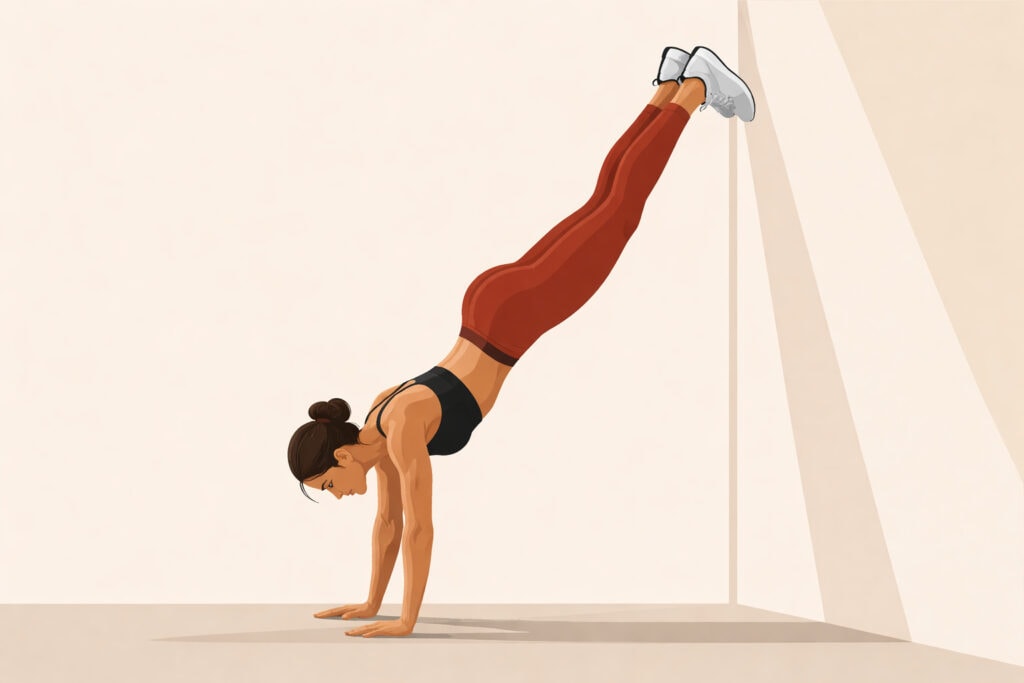
Wall walks are one of those exercises that look like a stunt until you realize they are actually a brilliant shoulder teacher.
They build overhead strength, body awareness, and confidence being upside down without forcing a full freestanding handstand into the picture.
I like them because they show me very fast whether my shoulders are ready to support bodyweight overhead or whether my trunk folds and my ribs flare the second things get spicy.
When I do these well, I feel the front of the shoulders working hard, but I also feel my upper back helping and my midsection staying tight so the body does not collapse into a banana shape.
How I Do Them
I start in a push-up position with my feet near a wall.
Then I slowly walk my feet up the wall while my hands move closer to it along the floor.
I stop well before panic mode.
For a beginner, that might mean the body reaches a slanted angle instead of a near-vertical one, and that is perfectly fine.
At the top position, I think about pushing the floor away, keeping the neck long, and pulling the ribs inward a bit so the lower back does not arch too much.
Then I walk back down with control.
Not fast.
Not flopping.
Not like I am escaping bees.
What I Usually Notice
The first thing most people feel is pressure in the shoulders and wrists.
That is normal, but it should feel like work, not a sharp warning sign.
If the wrists feel overloaded, I shorten the range and spend more time building tolerance with pike work first.
If the lower back takes over, I know I am letting the torso leak instead of holding the body in one organized line.
2. Pike Push-Ups
Why They Matter
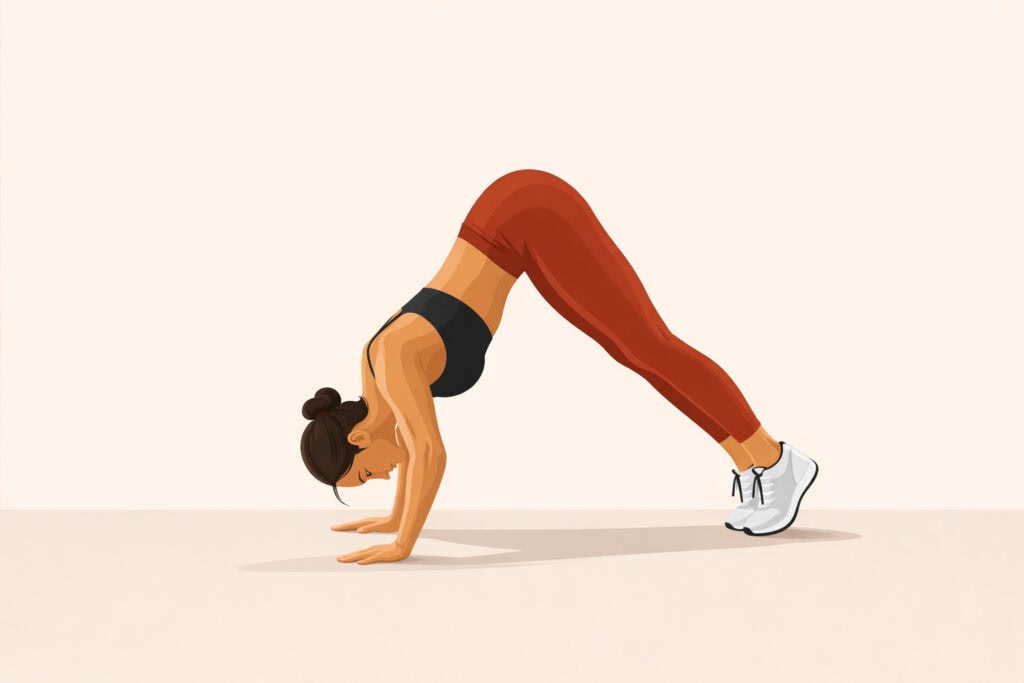
If someone asks me for one classic bodyweight shoulder strength exercise, pike push-ups are near the top of the list.
They are one of the clearest ways to train the shoulders in a pressing pattern without equipment.
They also bridge the gap between regular push-ups and more advanced inverted pressing.
That bridge is useful because many people can do floor push-ups for a while, yet once the angle shifts and the shoulders must carry more of the load, the story changes quickly.
The front delts, triceps, upper chest, and upper back all start contributing in a very noticeable way.
How I Perform Them
I begin with hands on the floor and hips lifted high, making an upside-down V shape.
My feet stay on the ground.
My head travels down toward the floor in front of the hands, not straight between them like a collapsing tent.
That forward path matters because it makes the movement feel more like an overhead press and less like a strange failed push-up.
At the bottom, I aim to keep elbows under decent control instead of letting them shoot wildly out to the side.
Then I press back up by driving through the hands and pushing the shoulders upward.
What I Feel When It Clicks
When the move is clean, I feel a strong burn in the front and upper part of the shoulders, along with work in the triceps.
I also notice the upper traps helping in a healthy way near the top, which is normal.
The neck should not feel jammed.
The lower back should not feel like it is doing unpaid overtime.
If those areas take over, I know the hip position or torso tension has drifted.
How I Make It Easier Or Tougher
For an easier version, I raise my hands on a couch, bench, or sturdy table.
That reduces how much bodyweight goes into the shoulders.
For a tougher version, I elevate the feet on a box or bed.
That shifts more load overhead and makes the movement feel much closer to a bodyweight press.
3. Elevated Pike Push-Ups
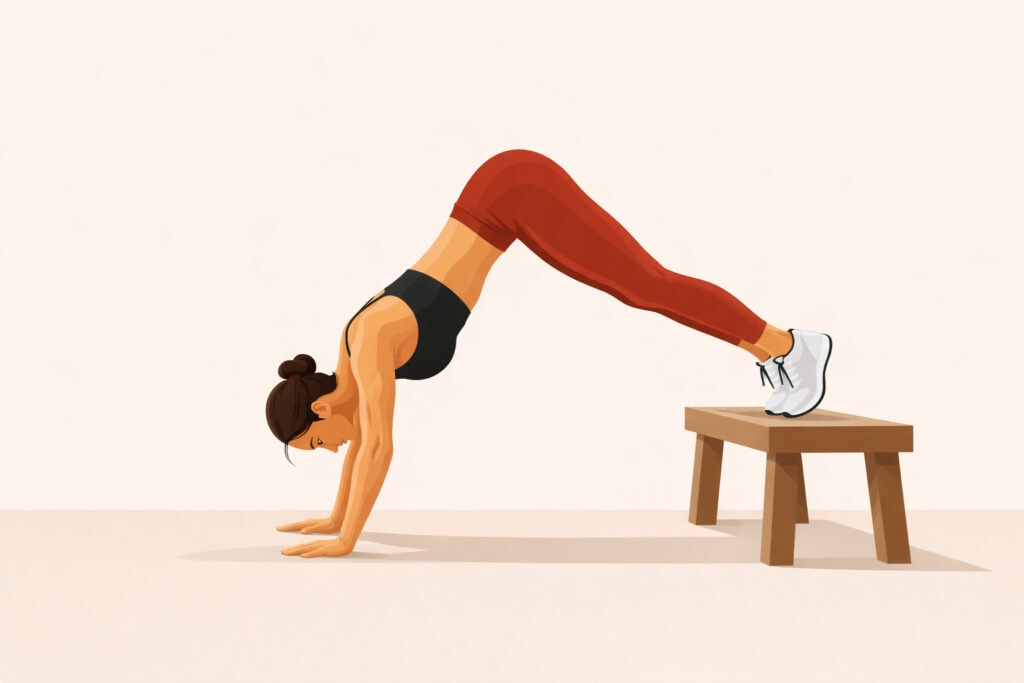
Why This Version Changes Everything
As soon as the feet go up, pike push-ups stop feeling like a warm-up exercise and start feeling like real shoulder business.
This angle places much more bodyweight through the hands and closer to a vertical pressing line.
I use elevated pike push-ups when regular pike push-ups start feeling controlled and I want more intensity without jumping straight into wall-assisted handstand push-up work.
The shoulders get a very focused challenge here.
You can tell within a few controlled rounds whether your pressing mechanics are tidy or whether they still need polishing.
How I Perform Them Without Turning It Messy
I place my feet on a bed, chair, couch edge, or another stable surface.
Hands stay on the floor about shoulder width apart.
From there, I lift the hips and think about stacking them above the shoulders as much as mobility allows.
Then I lower the head toward the floor slightly ahead of the hands and press back up.
I do not chase speed here.
This movement rewards patience.
A slower descent usually tells me more about my actual control than a fast bounce ever could.
What This Exercise Exposes
If the elbows flare way out, I feel less shoulder tension and more joint awkwardness.
If the head travels in the wrong path, the movement turns clunky.
If the hips drop, the shoulders lose their clean line and the whole thing becomes a confused hybrid.
When it goes well, though, the effort feels solid and very direct.
It is one of those moves that makes the shoulders feel worked in a deeply honest way.
4. Handstand Hold Against The Wall
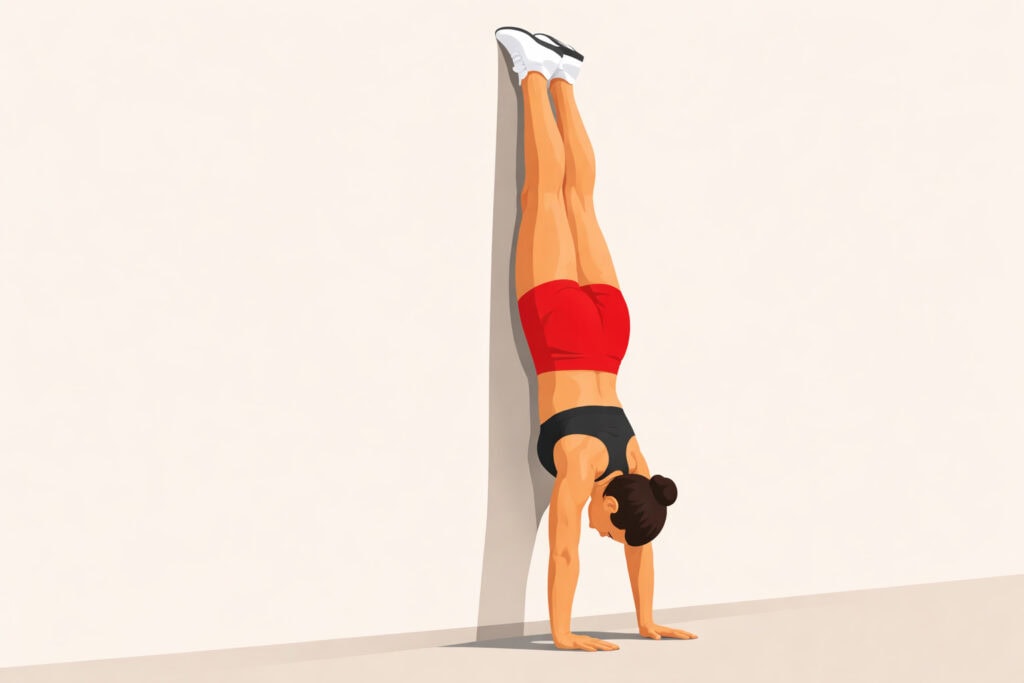
Why A Static Hold Is More Useful Than People Expect
A lot of people only think about movement.
Press up, lower down, repeat.
But sometimes holding a strong position teaches the shoulders more than rushing through a bunch of shaky reps ever will.
A wall handstand hold helps me build overhead comfort, shoulder endurance, and awareness of how the body should line up when the arms are supporting weight overhead.
It also teaches confidence.
That matters more than people admit.
Many beginners are not limited by shoulder strength alone.
They are limited by the weird feeling of being upside down and not trusting where their body is in space.
How I Hold It
I kick up with the chest facing the wall when possible, because that tends to encourage a tidier position.
My hands stay a small distance away from the wall, not half a room away.
I push strongly through the floor, keep the elbows straight, and think about reaching tall through the shoulders instead of sinking down into them.
The belly stays lightly braced and the glutes stay active so the ribcage does not drift forward.
Even a short hold can feel intense when this posture is clean.
What The Hold Teaches Me
This exercise teaches me whether I am really stacking my body or just surviving upside down.
If the shoulders are doing the job, I feel pressure through the hands, activity around the upper back, and a steady challenge in the delts.
If I am hanging on passively, I feel more neck tension, more lower-back arch, and less control.
That difference is huge.
It is the difference between building useful overhead strength and just decorating a wall with your feet.
5. Wall Handstand Shoulder Taps
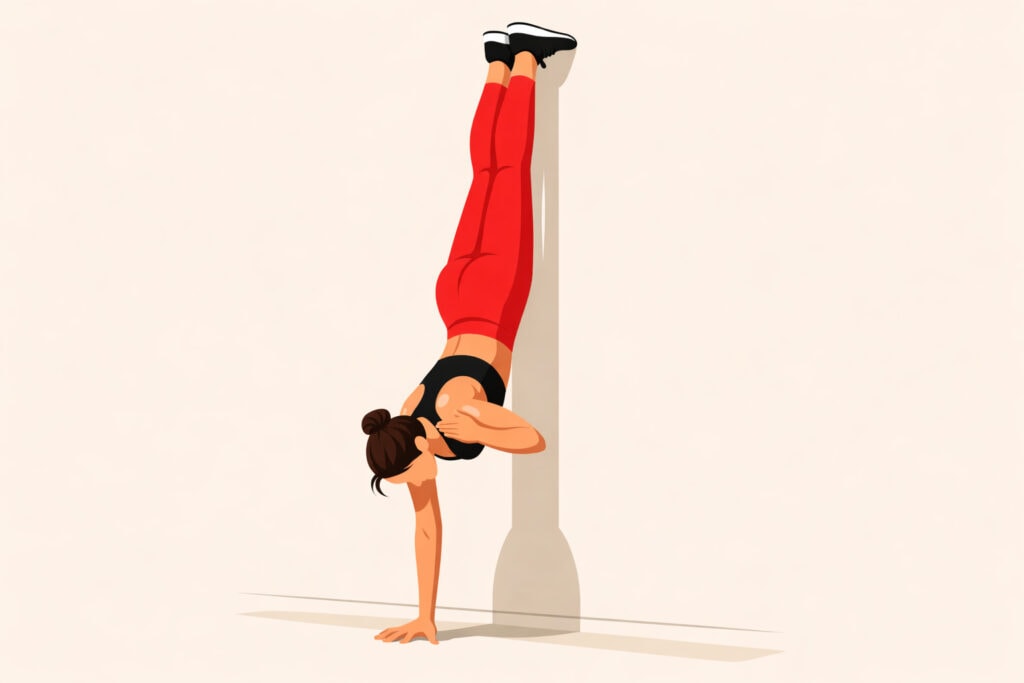
Why These Humble The Room Quickly
Shoulder taps in a wall handstand sound like a small twist on a hold.
They are not.
They are a loud conversation about stability.
As soon as one hand leaves the floor, the supporting shoulder has to work much harder to keep everything stacked and quiet.
This is where I really start noticing whether the shoulder blades, trunk, and hands are cooperating or just pretending.
How I Do Them
I get into a wall handstand hold first.
Once I feel stable, I gently lift one hand and tap the opposite shoulder.
Then I place it back down and switch sides.
The goal is not speed.
The goal is to shift bodyweight cleanly without twisting, flailing, or slamming the free hand back to the ground like I just touched a hot stove.
Even a tiny, calm tap counts.
What I Watch For
If the hips swing all over the place, I know the base is too shaky and I need more regular holds before adding taps.
If the shoulders stay active and the body barely moves, that is a great sign.
This drill teaches the kind of shoulder stability that transfers nicely to handstand work, crawling patterns, and many pushing movements.
6. Downward Dog Push-Ups
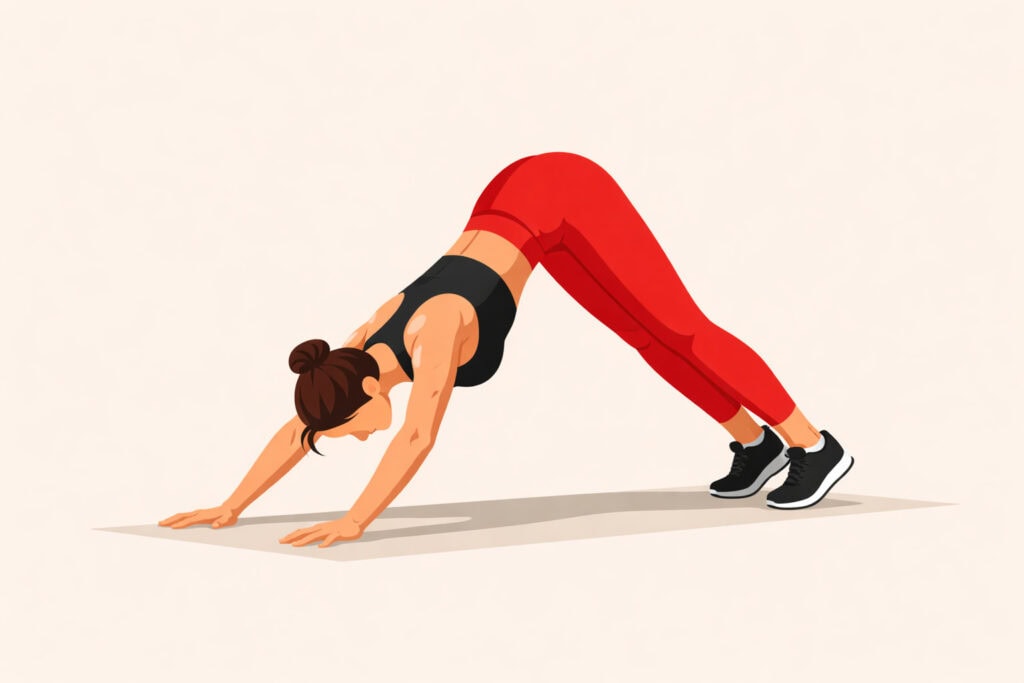
Why I Use Them Even Though They Look Gentle
Downward dog push-ups do not look very intimidating, which is probably why many people underestimate them.
But when I slow them down and move with intention, they become a really useful way to open the shoulders while adding controlled pressing work.
I like them especially for people whose overhead mobility is still a bit tight.
The movement gives the shoulders and upper back room to move while the pressing angle stays more forgiving than a deep pike push-up.
How I Perform Them
I start in a downward dog position with hips high, arms long, and heels reaching toward the floor.
From there, I bend the elbows and let the head travel down and slightly forward, then press back out.
The line of motion is not identical to a strict pike push-up.
It is a little more flowing.
That makes it nice for people who need a shoulder-friendly entry point before harder pressing drills.
What I Feel
When it is done well, I feel work in the shoulders and triceps, but I also notice a stretch through the lats, upper back, and sometimes the calves.
It feels like strength and mobility shaking hands for a moment instead of fighting in different corners.
7. Scapular Push-Ups
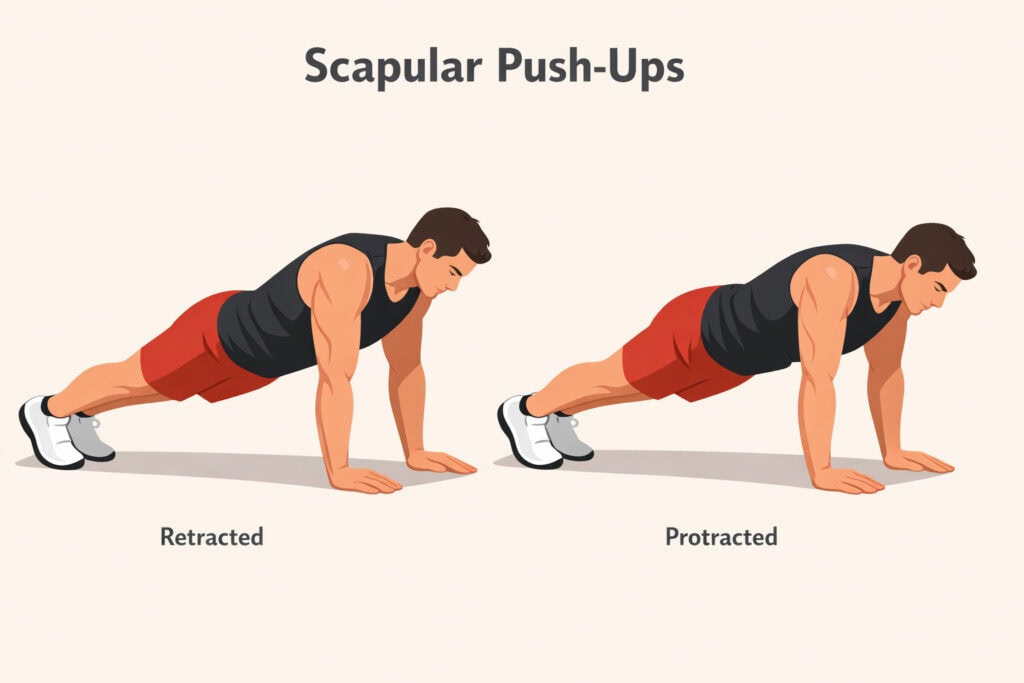
Why Tiny Movement Can Matter A Lot
Scapular push-ups are one of those exercises that look almost too small to matter.
Then I do them correctly and remember that small movement can light up muscles most people barely know exist.
This drill focuses on the shoulder blades gliding around the ribcage.
That helps build serratus anterior function, pressing stability, and better shoulder mechanics overall.
If that sounds complicated, here is the simple version: this exercise teaches your upper body to stay organized instead of floppy.
How I Do Them
I get into a high plank with elbows locked.
Then, without bending the elbows, I let the chest sink a little between the arms as the shoulder blades come toward each other.
After that, I press the floor away and round the upper back slightly as the shoulder blades spread apart.
The elbows stay straight the whole time.
That part is important.
If the elbows bend, the exercise turns into a strange mini push-up and loses the point.
Why This Exercise Helps Shoulder Training In General
When scapular control improves, many bigger shoulder exercises start feeling cleaner.
Pike push-ups feel more stable.
Wall work feels less shaky.
Even regular push-ups often become smoother.
It is not the flashiest drill in the room, but it quietly improves a lot of other movements.
That is usually how the good stuff works.
8. Bear Crawl Shoulder Taps
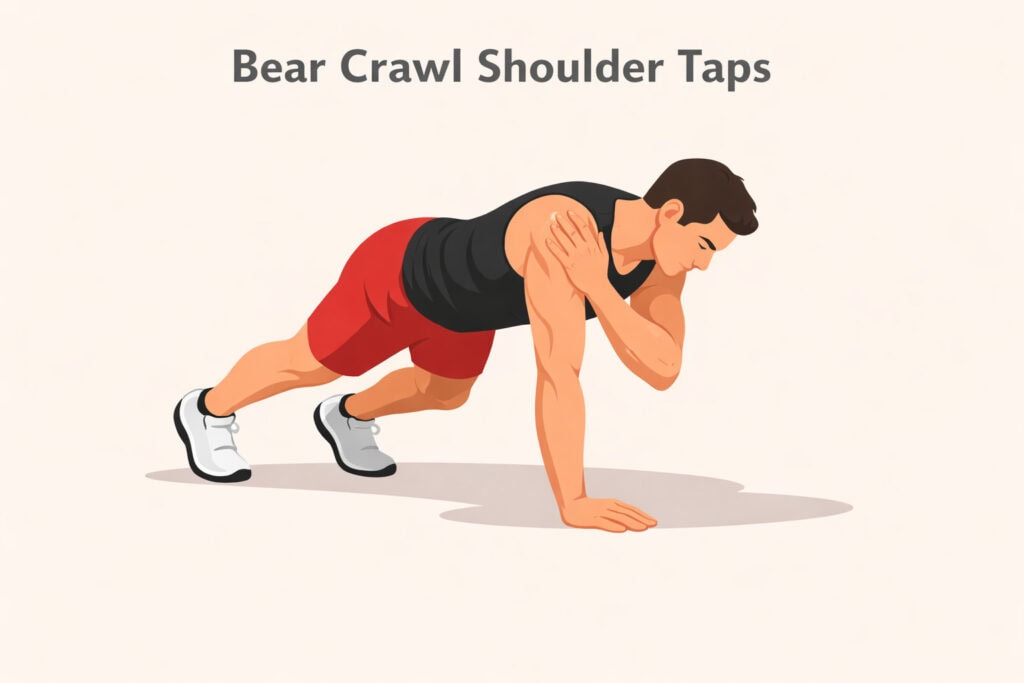
Why I Like Them For Beginners
Bear position is one of my favorite places to introduce shoulder loading without going fully upside down.
The hands are on the floor, the knees hover a little, and the shoulders already have to support a fair chunk of bodyweight.
Once I add shoulder taps, the stabilizing side has to stay strong while the body resists shifting too much.
This teaches coordination, control, and shoulder endurance without needing advanced strength yet.
How I Perform Them
I start on hands and knees, then lift the knees a few inches off the floor.
From there, I slowly tap one shoulder with the opposite hand and return it to the ground.
Then I switch sides.
I keep the hips low, the spine neutral, and the torso as quiet as possible.
If my hips rock wildly left and right, I know I am rushing or placing too much weight into the moving side.
What I Notice In My Body
This move makes the shoulders work, but it also wakes up the abs and the muscles around the shoulder blades.
It feels like a full upper-body coordination drill disguised as a simple crawl variation.
That is one reason I keep using it.
It teaches a lot without needing much room or confidence.
9. Crab Reach
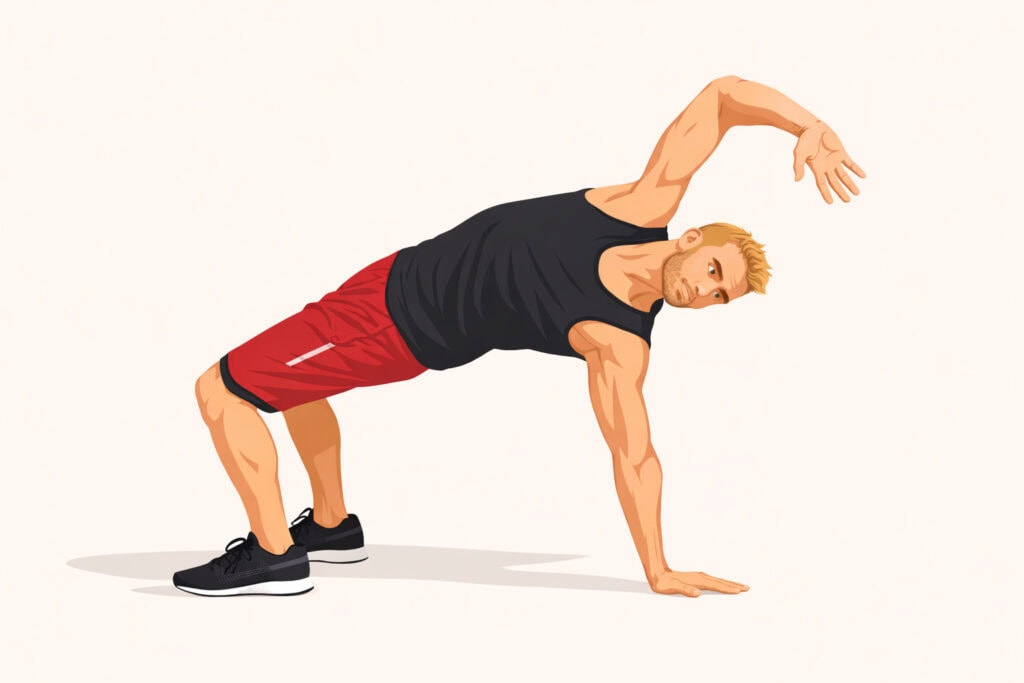
Why It Belongs In A Shoulder Article
Crab reach is not a classic pressing move, but I include it because healthy shoulders need more than brute force.
They need extension, rotation, and the ability to open through angles that modern life often ignores.
A lot of people spend hours rounded forward over desks, phones, steering wheels, and laptops.
Then they ask the shoulders to go overhead and act surprised when the joint feels grumpy.
Crab reach gives the front of the shoulders and chest space while also asking the supporting arm to stabilize.
How I Do It
I start in a crab position with hands behind me and feet on the floor.
Then I drive the hips upward and reach one arm across and overhead, opening the chest toward the ceiling.
The supporting shoulder stays active while the body rotates.
I return with control and repeat on the other side.
This feels more fluid than a strict press, but it still challenges the shoulders in a very useful way.
What It Tends To Improve
After a few rounds, the front of my shoulders often feels less stiff and my overhead positions feel more open.
It is not magic.
It just gives the body a shape that many people almost never train.
That alone can make other shoulder exercises feel far less cramped.
10. Dolphin Push-Ups
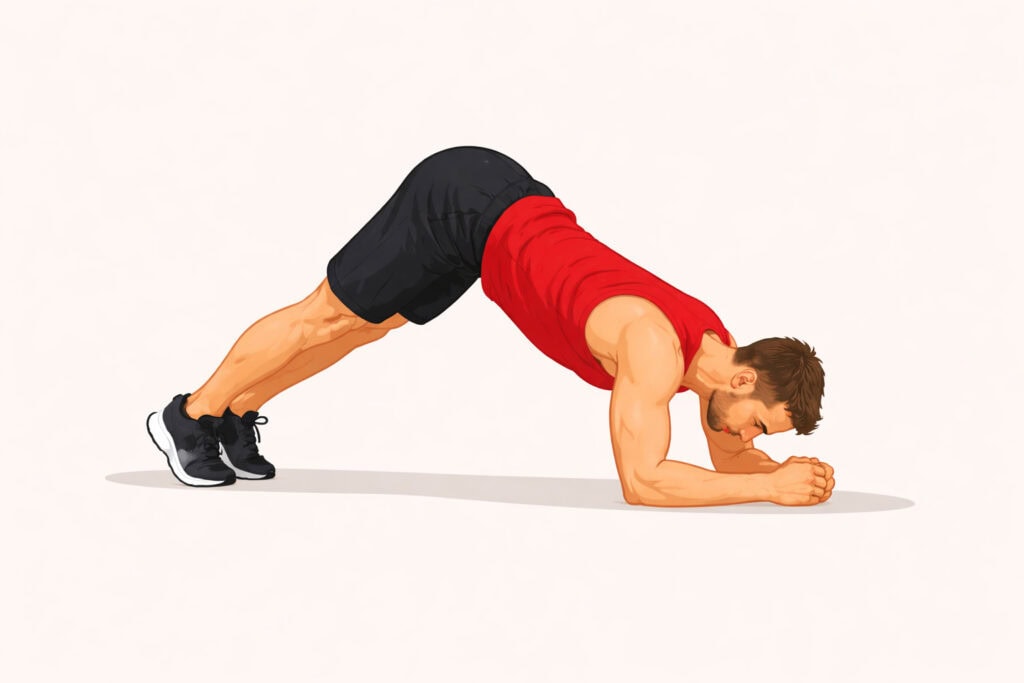
Why They Are Worth Your Time
Dolphin push-ups sit in a nice middle ground between mobility work and pressing strength.
They are similar to a forearm-based downward dog, which means they challenge the shoulders without asking the wrists to carry all the pressure.
That makes them useful for people whose wrists get cranky during pike or wall work.
They also target the shoulders in a slightly different way because the forearm position changes the leverage.
How I Perform Them
I start on my forearms and feet in a pike-like position.
Then I glide my body forward so the shoulders come over the elbows, and I push back again.
Sometimes I add a small dip and press through the shoulders.
Sometimes I keep it more like a controlled rock between positions.
Either way, the front delts and upper back usually know they are involved very quickly.
Who Usually Benefits From Them
I like dolphin variations for beginners, for people building overhead tolerance, and for anyone who wants shoulder work on a day when the wrists are acting dramatic.
Actually, not dramatic.
Let us call the wrists “unhelpfully opinionated.”
That feels fairer.
11. Hindu Push-Ups
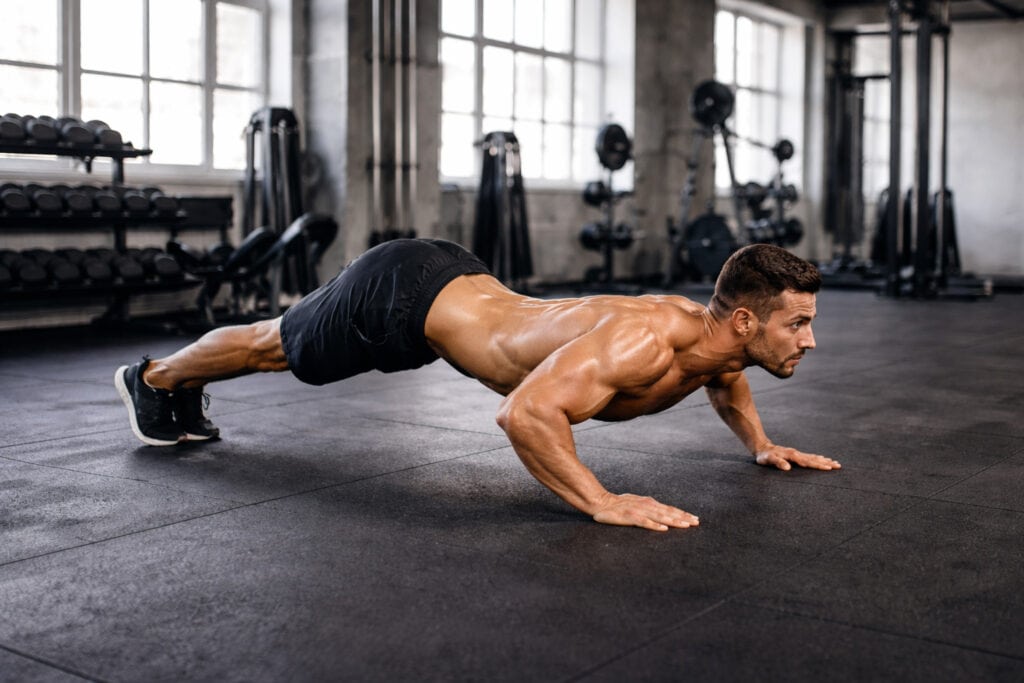
Why This Old-School Move Still Works
Hindu push-ups blend pressing, shoulder mobility, chest work, and a flowing upper-body pattern that can feel surprisingly refreshing.
They are not a pure shoulder move, but the shoulders do plenty of work through a long range of motion.
I use them when I want a bodyweight exercise that feels athletic and opens the body while still building strength.
They are also great when a session starts feeling too rigid and I want one movement with a bit more rhythm.
How I Do Them
I begin in a pike-like position.
Then I lower the head and chest forward in a swooping path, letting the body glide through until I finish in an upward-facing position with the chest open.
After that, I reverse the path or return by lifting the hips back.
The shoulders move through flexion and extension while the elbows bend and straighten.
That gives the upper body a broader challenge than a standard push-up alone.
What I Feel
This movement often gives me a mix of shoulder burn, chest involvement, triceps effort, and a stretch through the front of the body.
It feels a bit like oiling a stiff hinge while also asking it to support weight.
That is a useful combination.
12. Handstand Lean
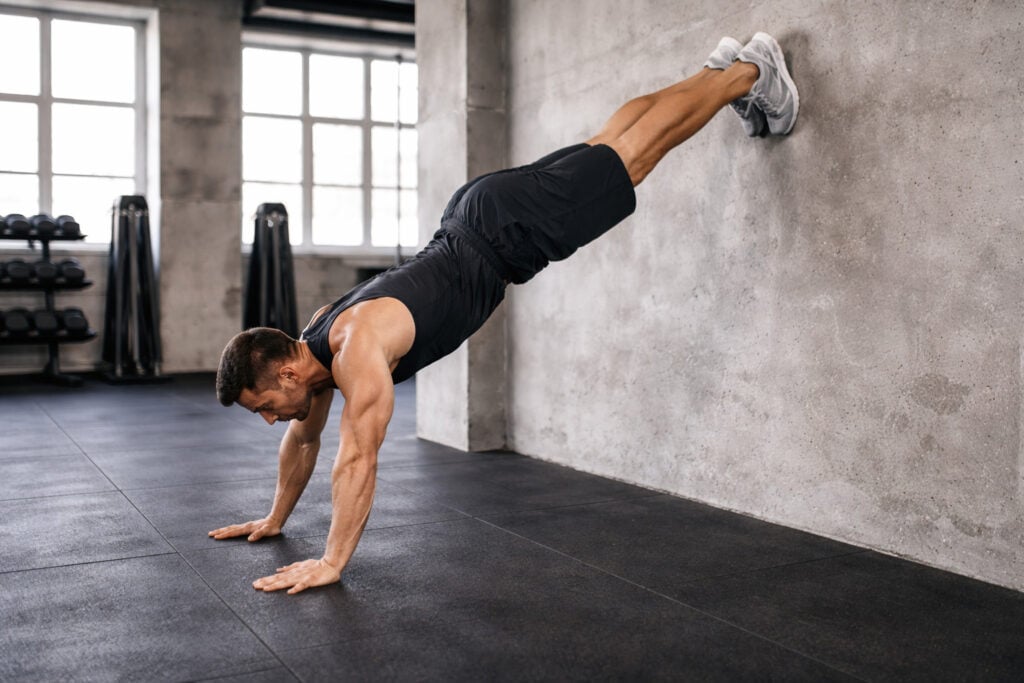
Why Leaning Can Be Enough
People often want the full skill right away.
Full handstand.
Full push-up.
Full upside-down confidence.
But leaning into a wall while the shoulders support more and more bodyweight is one of the cleanest ways I know to build the base for harder overhead work.
A handstand lean teaches the shoulders to tolerate load in a nearly vertical angle without needing full inversion balance.
That makes it much less intimidating for a beginner.
How I Perform It
I face a wall and place my hands on the floor a bit away from it.
Then I walk the feet up only partway and shift bodyweight forward into the hands.
In other cases, I stand facing the wall with hands on it and lean hard enough that the shoulders must push with intent.
The exact version depends on the person and the confidence level.
The main goal is to create a meaningful overhead push angle while keeping the body organized.
What This Builds
I feel this mostly in the front delts and around the upper shoulder area.
It also teaches me how to push “up” through the hands instead of sinking.
That quality becomes useful in handstands, pike work, and almost any inverted shoulder drill.
13. Plank To Downward Dog
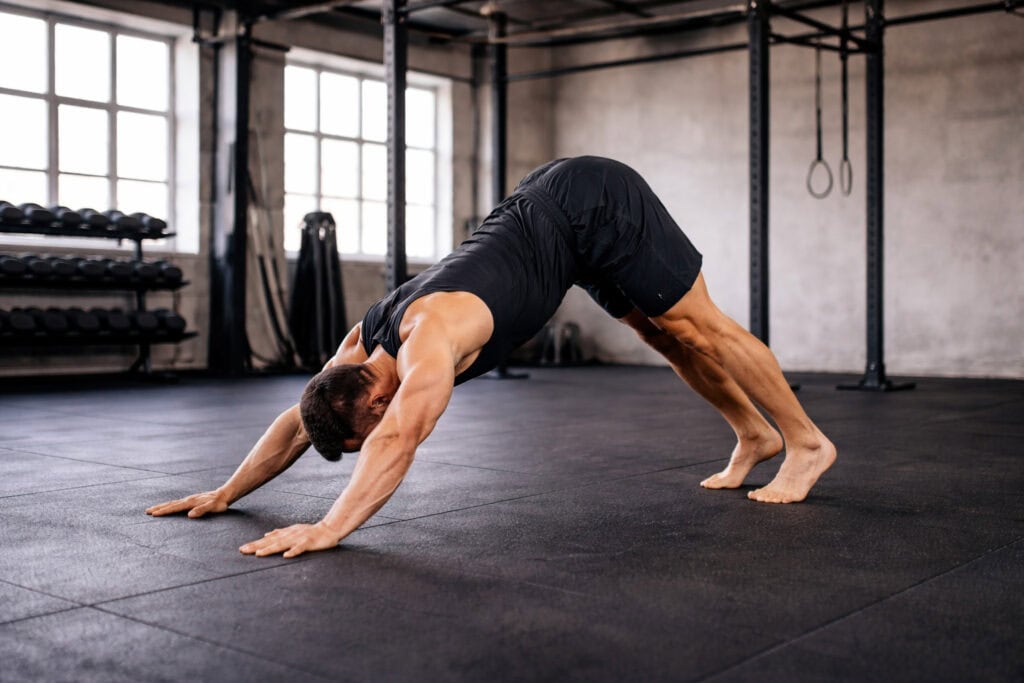
Why This Counts As Shoulder Work
At first glance, plank to downward dog looks like a mobility flow, not strength training.
But when I do it slowly and with intention, the shoulders end up doing a lot.
They support weight in the plank, then move through flexion and upward rotation as the body shifts into downward dog.
This is especially good for beginners because it introduces shoulder loading in motion without making the exercise too aggressive.
It also teaches the shoulder blades to move instead of freezing.
How I Perform It
I begin in a strong plank.
From there, I push the floor away and send the hips back and up into downward dog.
Then I glide forward into plank again.
I keep the elbows straight and let the shoulders move smoothly instead of muscling through with a stiff torso.
When done well, this feels active, not lazy.
It is not just hanging between positions.
What It Improves
This exercise helps connect pressing strength with overhead movement and trunk control.
It also works well as part of a warm-up or as light shoulder volume on recovery-focused days.
Not everything useful has to feel brutal.
Sometimes the shoulder just needs better movement quality before it needs a heroic amount of strain.
14. Side Plank With Reach Or Lift
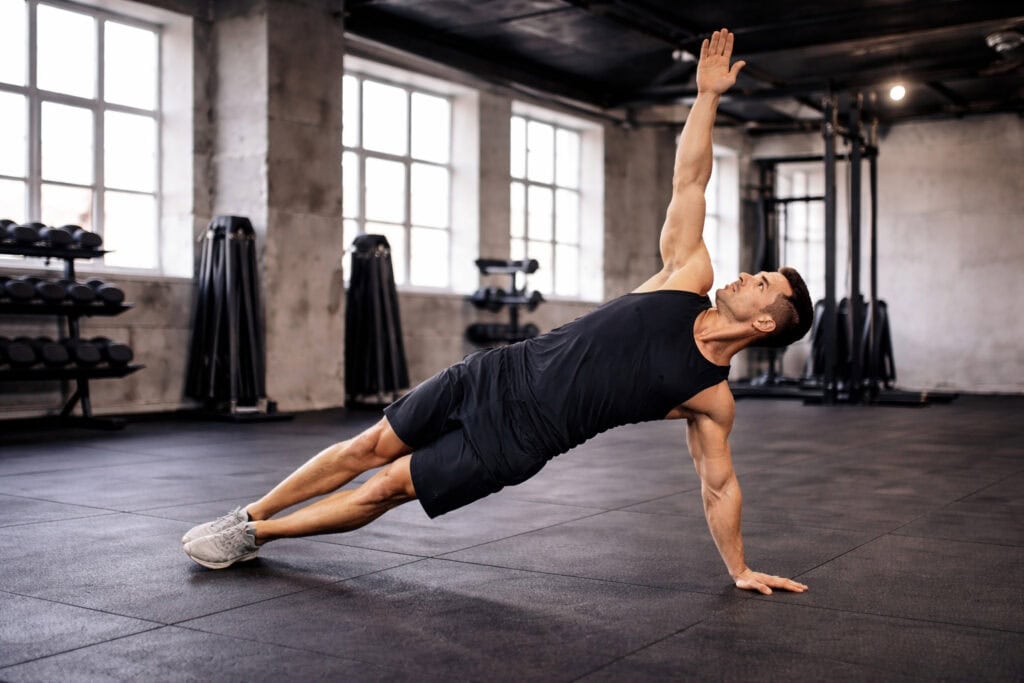
Why The Lateral Shoulder Deserves Attention
A lot of bodyweight shoulder training focuses on the front of the shoulder.
That makes sense because pressing dominates many no-equipment movements.
But the side of the shoulder still deserves attention, and side plank variations are one smart way to challenge it.
In a side plank, the supporting shoulder has to resist collapse while the body stays long and aligned.
If I add a reach, a small arm lift, or a controlled rotation, the demand rises nicely.
How I Do It
I set up on one forearm or straight arm, depending on strength and comfort.
Then I lift the hips and stack the body in a straight line.
From there, I might reach the top arm toward the ceiling, thread it underneath the torso, or lift it slowly out to the side.
The bottom shoulder is doing most of the heavy lifting from a stability point of view.
This becomes very educational very quickly if the shoulder is not used to supporting bodyweight sideways.
What I Feel
The delts, obliques, and muscles around the shoulder blade all have to work.
It is a different flavor of challenge than pike work.
Less overhead pressure.
More anti-collapse duty.
That balance is helpful in a well-rounded shoulder routine.
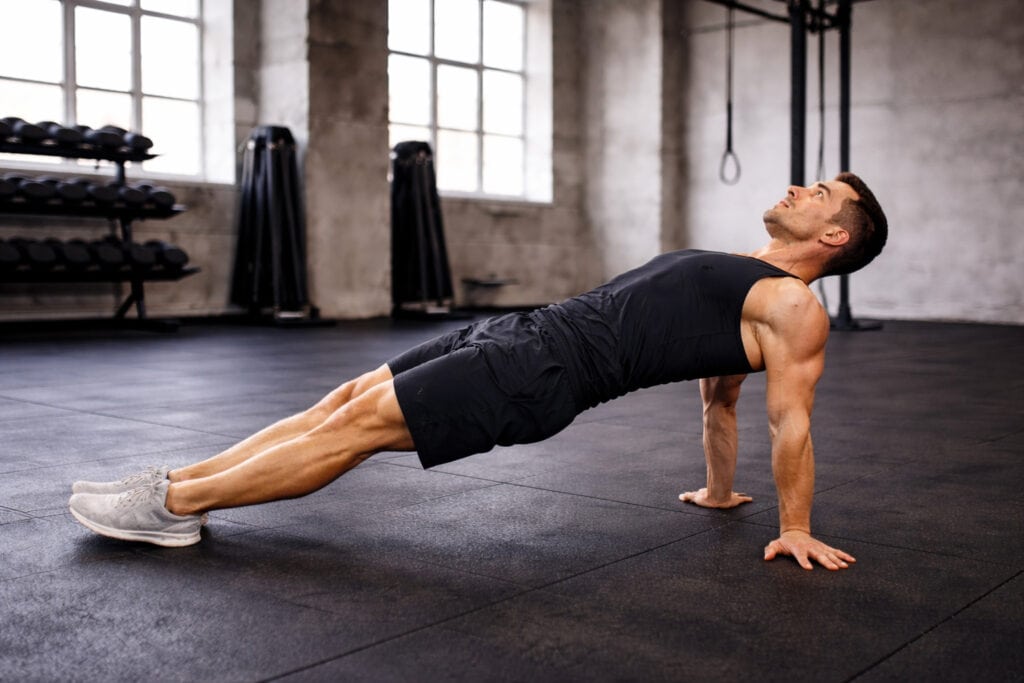
15. Reverse Plank
Why Opening The Front Side Matters
Reverse plank does not get much attention in shoulder conversations, but I keep it in the toolbox because it trains shoulder extension and opens the chest while asking the upper body to support weight behind the torso.
That is a position many people almost never train.
As a result, it can feel awkward at first.
Not bad.
Just unfamiliar.
And unfamiliar positions often reveal what daily life has been neglecting.
How I Perform It
I sit on the floor with legs extended and hands behind me.
Then I press through the hands and lift the hips until the body forms a long line.
The fingers can point toward the feet, slightly outward, or even backward depending on comfort.
I keep the chest open and the shoulders active instead of sinking.
Even holding this for a modest amount of time can make the back of the shoulders, triceps, and upper back work harder than expected.
Why It Helps Other Shoulder Work
When reverse plank starts feeling more natural, I often notice that other positions involving shoulder extension feel less restricted too.
Crab reach becomes smoother.
The chest opens more easily.
The body stops acting like every reach behind the torso is a personal insult.
That is useful.
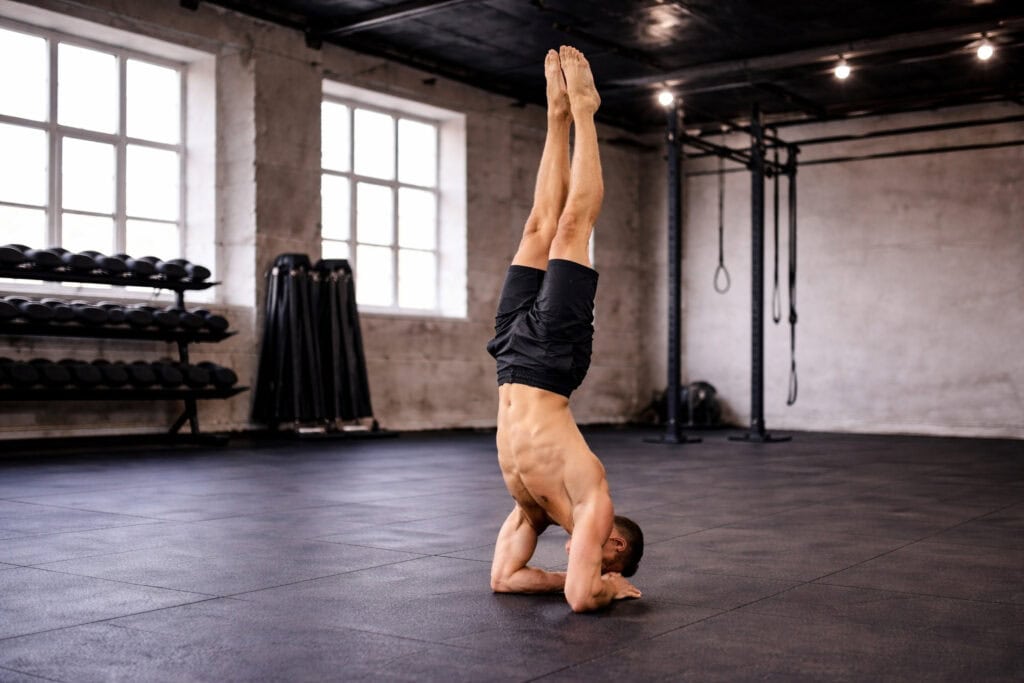
16. Forearm Stand Prep Holds
Why I Include Them
Forearm stand prep gives the shoulders a serious overhead challenge without asking the wrists to handle direct extension under load.
That alone makes it valuable for many people.
It also teaches the upper back and shoulders to support bodyweight while the forearms create a stable base.
You do not need a full forearm stand to benefit from this.
Even a wall-assisted prep hold can light up the shoulders and teach a lot about overhead alignment.
How I Do It
I place my forearms on the floor, elbows about shoulder width apart, and walk the feet in like a dolphin position.
From there, I either hold the pike shape or lightly place one foot, then both feet, on a wall behind me depending on ability.
I push the forearms down, lift the shoulders away from the floor, and keep the torso active.
The feeling is different from a handstand, but still very shoulder-heavy.
What It Builds
This drill improves overhead endurance, confidence, and scapular control.
It can also be a nice alternative for people who want an upside-down shoulder challenge but do not enjoy full handstand work yet.
Why I Never Try to Use All These Shoulder Exercises in One Workout
With 16 exercises on the table, the temptation is to do half of them, get carried away, and then wonder why the shoulders feel cooked before dinner.
I prefer a cleaner structure.
I usually pick one main press, one support hold, one shoulder-blade drill, one opening movement, and one stability exercise.
That gives the session enough variety without turning it into a random buffet of upside-down suffering.
A very beginner-friendly shoulder session might look like this:
- Scapular push-ups
- Plank to downward dog
- Bear crawl shoulder taps
- Downward dog push-ups
- Reverse plank
A more intermediate session might lean this way:
- Pike push-ups
- Elevated pike push-ups
- Wall handstand hold
- Side plank with reach
- Crab reach
A more advanced bodyweight shoulder day might include:
- Wall walks
- Wall handstand shoulder taps
- Handstand lean
- Forearm stand prep holds
- Dolphin push-ups
I do not need every movement to be taken to complete exhaustion.
That usually makes the later exercises sloppier.
Instead, I prefer a few quality rounds where the shoulder still moves well and the body position stays organized.
For example, I might spend around 10 to 15 minutes on my main pressing movement, another 8 to 10 minutes on holds and stability drills, and then finish with a mobility-strength blend like crab reach or reverse plank.
That tends to leave the shoulders challenged without leaving the whole session looking like a rushed accident.
The Kind of Shoulder Soreness I Expect the Next Day
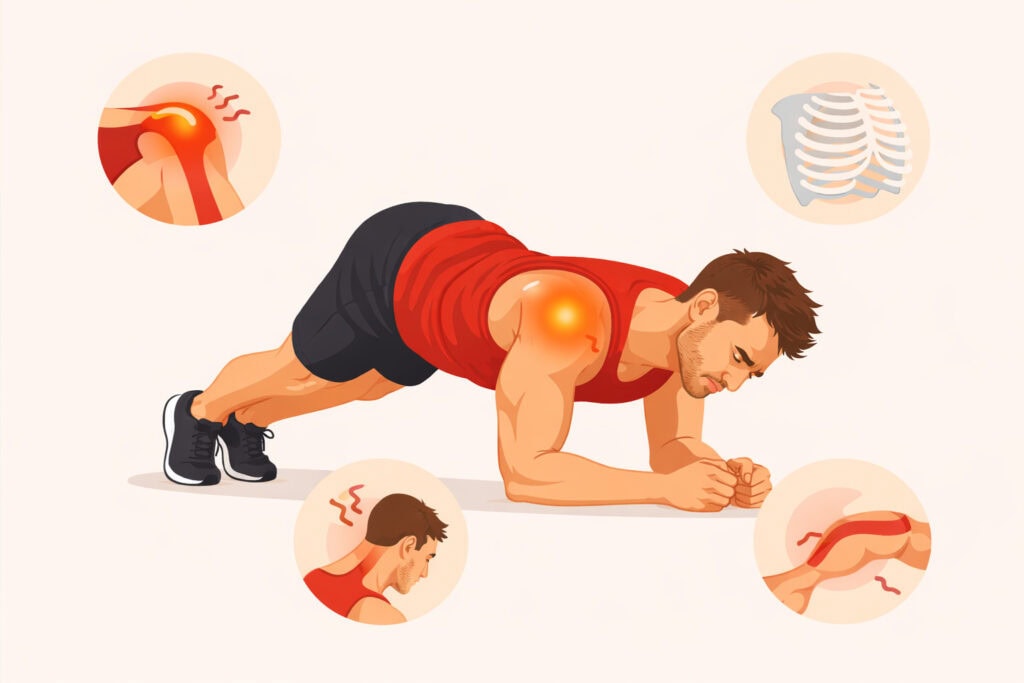
When I train shoulders with bodyweight, I watch for a few signals.
Not because I want to overthink every rep.
Just because those signals usually tell me whether the movement is helping or whether I am starting to fake it.
The first signal is where I feel the effort.
Front shoulder burn, upper back activity, triceps work, and a stable hand connection are all normal.
Sharp pinching in the front of the shoulder is not something I try to “push through.”
The second signal is what my ribs and lower back are doing.
If the ribcage keeps jumping up and the back arches hard, the shoulder is losing a clean working position.
That often means the angle is too ambitious or the trunk is falling asleep on the job.
The third signal is neck tension.
The neck should not feel like the lead actor in a shoulder workout.
A little effort around the upper traps is fine, especially overhead, but the neck should not dominate the sensation.
The fourth signal is quality over the course of the session.
If the first round looks neat and the next one turns into wobbling, rushed reps, and odd elbow paths, I do not pretend the quality is still there.
That is usually my cue to lower the challenge, shorten the range, or move to a less demanding drill.
What I Often Feel The Day After A Good Bodyweight Shoulder Session
A solid bodyweight shoulder session often leaves me with soreness in the front and upper part of the shoulders, sometimes a little in the triceps, and often around the upper back as well.
That combination makes sense because many of these exercises ask the shoulder blades and upper back to help stabilize the pressing.
I also notice that after a well-balanced session, my shoulders feel more “awake” the next day.
Not wrecked.
Not glued together.
Just more present.
Reaching overhead feels easier.
Push-ups feel more stable.
Even posture often feels a bit tidier without me trying to stand like a statue.
If, on the other hand, the wrists feel awful, the neck is fried, or the front of the shoulders feel pinchy instead of worked, I know the execution likely drifted or I pushed the angle too hard too soon.
That feedback matters.
The goal is not to win an argument with the floor.
The goal is to build shoulders that work better.
Where Shoulder Exercises Start Losing Their Focus
Turning Every Press Into A Chest Exercise
This happens a lot with pike push-ups.
The body angle gets too flat, the elbows travel in a messy path, and the movement starts looking more like a regular push-up with hips in the air.
When that happens, the chest takes over and the shoulders lose a lot of the focus.
I fix this by lifting the hips higher, shifting the head path slightly forward, and thinking about pressing “up” through the shoulders.
Going Upside Down Before Owning Simpler Positions
Wall work is fantastic, but skipping straight to handstand attempts before building confidence in bear holds, pike positions, and shoulder loading often creates a lot of flailing and not much learning.
I get much better results when the body first learns how to organize itself closer to the floor.
Then the upside-down work starts feeling like a natural next step instead of chaos with footwear.
Letting The Shoulders Sink During Support Holds
In handstands, side planks, reverse planks, and forearm stand prep, the shoulder should actively push.
If I sink into the joint and hang passively, the position feels heavier and less stable.
A tiny cue helps here: push the floor away.
That cue often changes the whole feeling of the hold.
Forgetting That Mobility Affects Strength
When the chest is stiff, the upper back barely moves, and the shoulders hate going overhead, even strong muscles can look weak in bodyweight training.
That is why I keep crab reach, reverse plank, wall slides, and plank-to-dog variations around.
Sometimes the missing piece is not more grit.
It is more room.
How I Build Toward Harder Versions Without Rushing
I do not treat harder shoulder exercises like trophies.
I treat them like positions the body earns once the earlier versions feel controlled.
For example, I usually want regular pike push-ups to look clean before elevating the feet.
I want wall-supported holds to feel calm before adding shoulder taps.
I want bear shoulder taps to stay quiet before demanding too much from handstand stability.
That approach saves a lot of frustration.
It also produces better shoulder training because the harder version is then actually training the shoulders, not just training survival instincts.
One thing I often do is shorten the range a little at first.
For instance, in elevated pike push-ups, I may lower only as far as I can keep a strong line and decent control.
Over time, that depth improves.
This is much better than diving into the deepest possible range and turning each rep into a negotiation with gravity.
I also like using longer holds in easier positions before jumping to a new movement.
A very tidy wall handstand hold, even for a modest amount of time, often prepares the shoulders better than a dozen ugly attempts at a more demanding drill.
How I Train Shoulders at Home With Bodyweight
Let me give you a full example of how a session can look without making it robotic.
Picture a normal evening at home.
There is enough floor space to move, a wall nearby, and the shoulders feel decent but not magical.
I start with gentle shoulder rotations, wall slides, and scapular push-ups for a few minutes until the upper body stops feeling stiff and the wrists feel ready.
Then I move into pike push-ups as the main effort.
I take a controlled approach, keep the hips high, and focus on a clean head path.
The early rounds feel solid.
By the later rounds, the shoulders burn, the triceps join the party, and I can tell very quickly that sloppier reps would not buy me anything useful.
After that, I go to wall handstand holds.
Nothing fancy.
Just strong, clean positions where I push the floor away and breathe without turning the ribcage into a tent.
The shoulders feel loaded in a very direct way here.
Then I add bear crawl shoulder taps to make the stabilizers work harder without overloading the wrists too much.
At that point the shoulders are not fresh anymore, which is exactly why the exercise becomes interesting.
The goal is to stay calm and organized even while slightly fatigued.
To finish, I use crab reaches and reverse plank.
Those open the front of the body, challenge the shoulders from different angles, and leave the session feeling balanced rather than cramped.
That whole workout does not need endless exercise variety.
It just needs a sensible order and enough attention to quality.
Final Thoughts
Bodyweight shoulder training works best when I stop treating it like a backup option and start treating it like a real training category with its own strengths.
It is not just “what I do when I have no gym.”
It is a legitimate way to build pressing strength, overhead comfort, shoulder stability, and better control through the upper body.
These 16 exercises cover a lot of ground.
Some build rawer pressing strength.
Some improve overhead support.
Some teach the shoulder blades how to move.
Some open positions that daily life tends to close down.
That mix matters.
A shoulder that only presses is incomplete.
A shoulder that only stretches is incomplete too.
The useful middle ground is a shoulder that can support, move, stabilize, and tolerate effort from different angles.
That is exactly what good bodyweight training can build.
And the nice part is that you do not need a rack, a machine, or a pair of shiny dumbbells to start.
FAQ About Bodyweight Shoulder Training
How do I know if a shoulder exercise is too hard for me right now?
A hard exercise is not automatically a problem.
The real issue is when the exercise does not match your current control and strength.
When a movement fits your level, you can usually hold the position or move through it with visible control, useful tension, and no strange joint sensations.
Your shoulders feel challenged, but the body still looks organized.
When an exercise is too demanding, the signs appear quickly.
The body starts twisting, the ribcage pops up, the elbows wander everywhere, and the neck suddenly does more work than it should.
At that point the rep often turns into a small rescue mission instead of a clean movement.
That does not mean the exercise should be abandoned forever.
It usually just means choosing a simpler version that teaches the same pattern.
For example:
- Wall walks feel overwhelming → handstand leans or pike holds often work better
- Elevated pike push-ups feel too aggressive → standard pike push-ups are a good step
- Wall shoulder taps feel unstable → build a stronger handstand hold first
- Reverse plank feels uncomfortable → tabletop holds can prepare the shoulders
The goal is not lowering standards.
The goal is choosing a version that allows the shoulders to actually train instead of improvising under stress.
Can bodyweight shoulder training build muscle?
Yes, bodyweight shoulder training can absolutely build muscle.
Some people assume bodyweight workouts only improve coordination or endurance, but that is not really how muscles work.
When an exercise provides enough tension, enough time under load, and enough challenge for your current strength level, the muscles can grow.
The difference is that overload looks different compared to lifting dumbbells.
Instead of adding more weight to the bar, bodyweight training usually increases difficulty by changing leverage, body angle, stability demands, or range of motion.
A simple pike push-up is a good example.
The exercise becomes significantly harder when you elevate your feet, slow the lowering phase, pause near the bottom, or clean up your body position.
Those adjustments increase the demand on the shoulders without adding external weight.
Front delts respond particularly well to bodyweight pressing variations.
Side and rear delts are a little harder to isolate without equipment, but stability drills, side plank variations, scapular exercises, reverse positions, and overhead support work still help develop a more balanced shoulder.
Dumbbells certainly offer more direct isolation options.
That said, bodyweight shoulder training is far from useless.
It can build strong, capable shoulders when the exercises are chosen and performed well.
What bodyweight shoulder exercises should beginners start with?
For someone completely new to shoulder training, the goal is not jumping straight into difficult inverted exercises.
The goal is helping the shoulders learn how to support weight and move in stable positions.
A very beginner-friendly starting group usually includes:
- Scapular push-ups
- Plank to downward dog
- Bear crawl shoulder taps
- Downward dog push-ups
- Reverse plank
These exercises introduce key shoulder concepts without demanding extreme overhead strength right away.
They help build support strength through the arms, improve shoulder blade control, and teach basic pressing angles.
After these start feeling more coordinated and stable, many people move naturally toward pike push-ups.
From there, wall-supported positions and more advanced variations can gradually enter the routine.
This step-by-step progression works well because each new movement feels like a logical extension of what the shoulders already know how to do.
Which bodyweight shoulder exercises give the strongest shoulder burn?
If the goal is that clear sensation that the shoulders are doing real work, several bodyweight exercises tend to stand out.
The ones that often create the strongest shoulder effort include:
- Pike push-ups
- Elevated pike push-ups
- Wall walks
- Wall handstand holds
- Forearm stand prep holds
These exercises place the shoulders in strong pressing or support positions where a large portion of bodyweight moves through the arms.
That makes the workload very honest.
You quickly feel whether the shoulders are handling the position well.
Even so, building a full shoulder routine only from the hardest drills is rarely the best approach.
Too much intensity without supportive movements often creates stiffness and reduces movement quality.
A better shoulder session usually combines challenging presses with exercises that improve stability, shoulder blade control, and overall movement.
That combination tends to produce stronger and healthier shoulders over time.