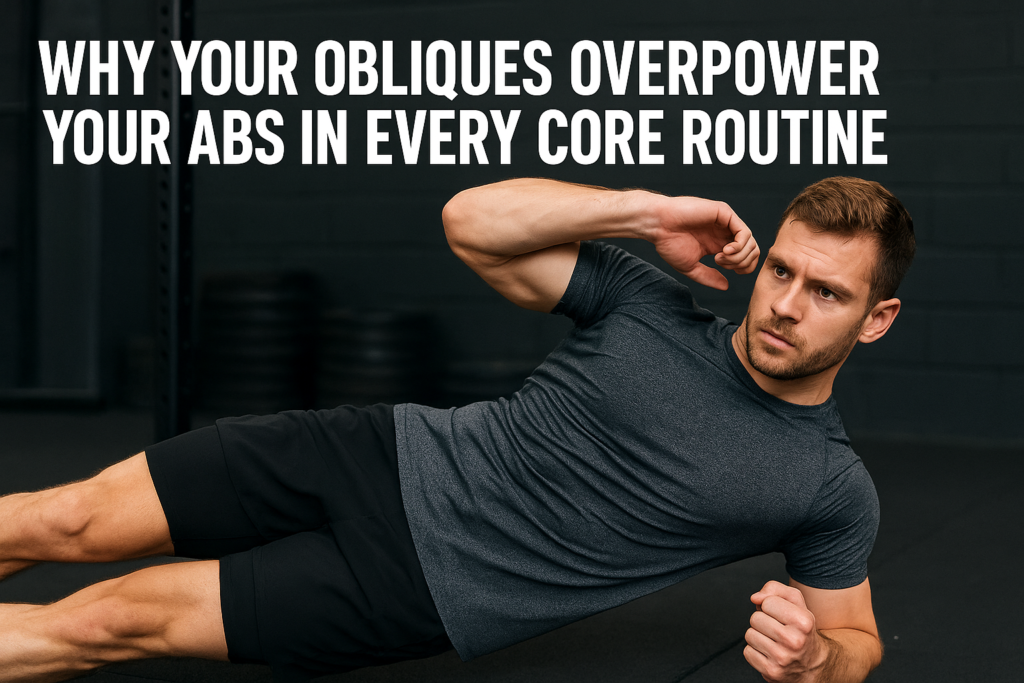
Your obliques are that friend who takes over the group project before anyone else even reacts.
They don’t necessarily dominate because they’re more ambitious; they dominate because they’re already used to managing chaos.
They step in fast, create structure, and handle the assignment in a way that prevents the group from collectively failing.
They’re strong, reactive, and incredibly efficient at compensating when the rest of the core is confused about its job.
If you’ve ever gone through an ab workout hoping for a centered burn and instead ended up with a sharp diagonal tension along the sides of your torso, you’ve experienced the classic “obliques stealing the show” scenario.
It’s frustrating if you’re chasing aesthetics, but completely logical from your body’s point of view.
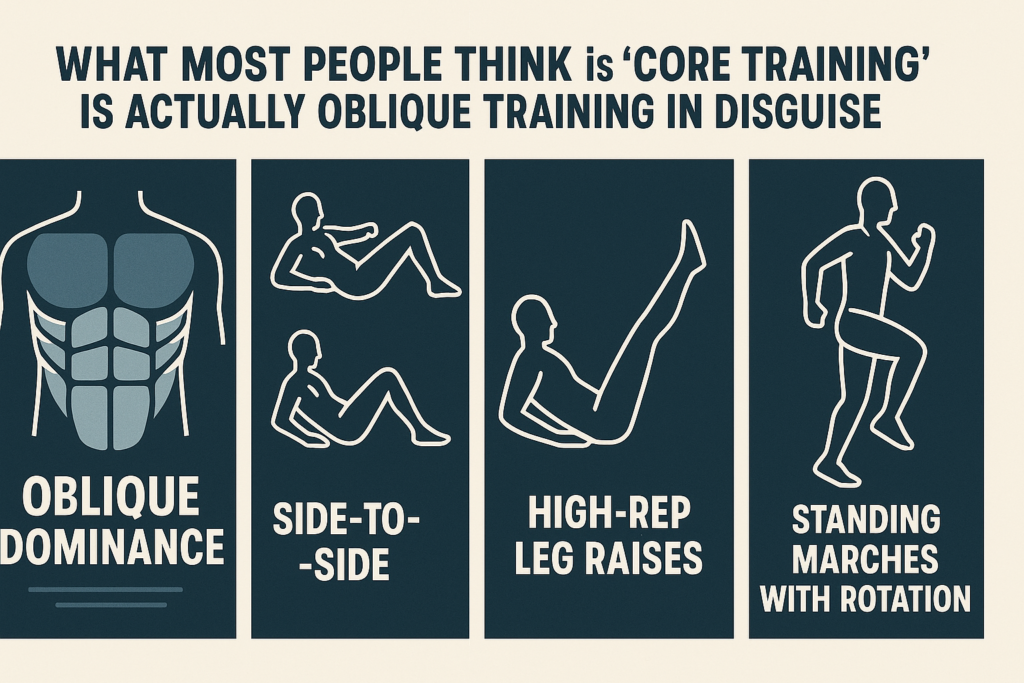
What most people think is “core training” is actually oblique training in disguise
The fitness industry loves exercises that look dynamic and feel intense, partly because intensity is easy to sell and partly because people equate “hard” with “effective.”
The result is that most mainstream core routines revolve around movement patterns that your obliques naturally specialize in, often without anyone realizing it.
Think about the common exercises people perform for their “abs”:
- Side-to-side crunch variations
- Twisting motions
- High-rep leg raises without pelvic control
- Bicycles with wild elbow flinging
- Standing marches with rotation
These movements bias rotation and lateral flexion, which are literally the core competencies of the obliques.
So when you do them, your obliques aren’t taking over to be annoying — they’re just doing what they’re anatomically built to do.
Meanwhile, the rectus abdominis (the six-pack muscle) is sitting quietly in the background thinking, “Hey, shouldn’t I be involved in this too?” but lacking the mechanical setup to participate meaningfully.
This is how people can train “abs” aggressively for years and still end up with minimal changes in abdominal shape, definition, or stability.
They train movement, not recruitment, and movement doesn’t guarantee targeted adaptation.
Your body prioritizes stability over symmetry
The trunk’s number-one job is not aesthetics; it’s spinal stability.
Humans did not evolve to have visible abs; they evolved not to collapse under load or pressure.
So when your body selects which muscles to recruit during a movement, it does not care about balanced development. It cares about preventing injury and keeping you upright.
If your abs are weak, slow to activate, or simply not trained in the right patterns, your body will recruit the muscles that can handle the load fastest.
And because obliques have a mechanical advantage, they often jump in before the rectus or lower abs even register the demand.
Think of it like a gaming party where the tank logs in before the DPS — not because the tank wants all the glory, but because someone needs to stop the room from exploding.
The nervous system does not wait for specialized support characters to show up; it goes with whoever can act immediately.
This strategy keeps you safe, but it also shapes long-term muscular development.
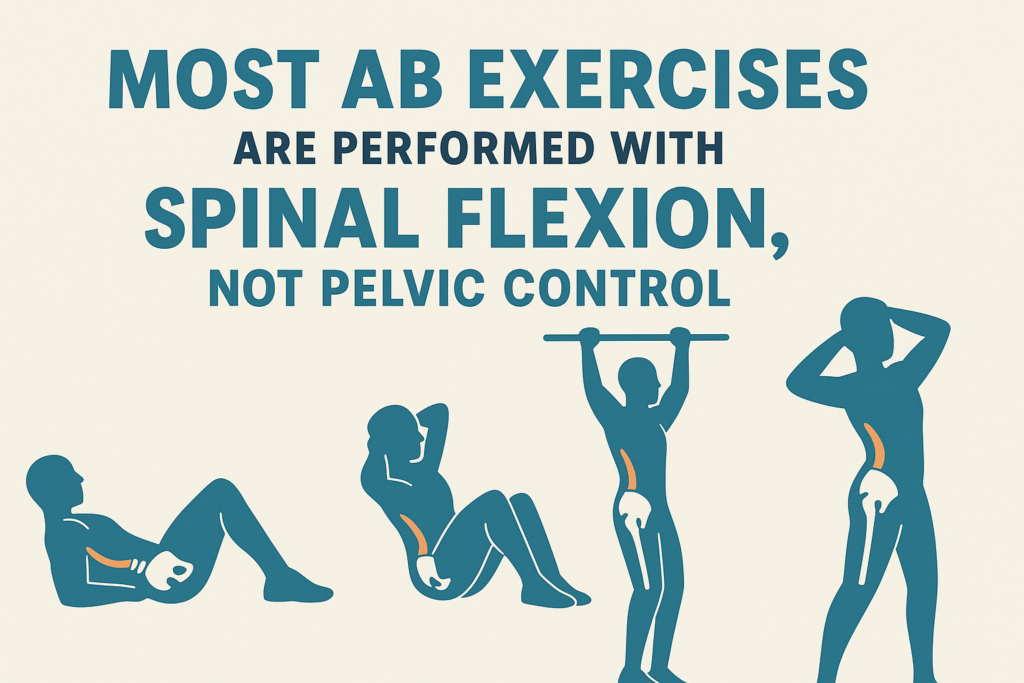
Most ab exercises are performed with spinal flexion, not pelvic control
People assume crunches build abs because crunches feel like “ab movement.”
But most crunches are performed as aggressive spinal flexion driven from the ribs downward, rather than controlled pelvic motion driven from the pelvis upward.
That detail changes everything.
Deep, centered abdominal activation requires posterior pelvic tilt, not just bending the spine forward.
But most people do crunches like they’re folding laundry in a rush — fast, messy, and completely disconnected from intentional movement patterns.
So instead of shortening the abs from the bottom, they shorten from the top, which is an oblique-dominant strategy.
Add even a tiny rotation — intentional or accidental — and the obliques seize control like they’re leading a dance class that nobody asked for.
This doesn’t mean crunches are useless; it means most people have no idea how to manipulate leverage and pelvic position to bias the muscles they think they’re training.
Your breathing patterns might be sabotaging your abs entirely
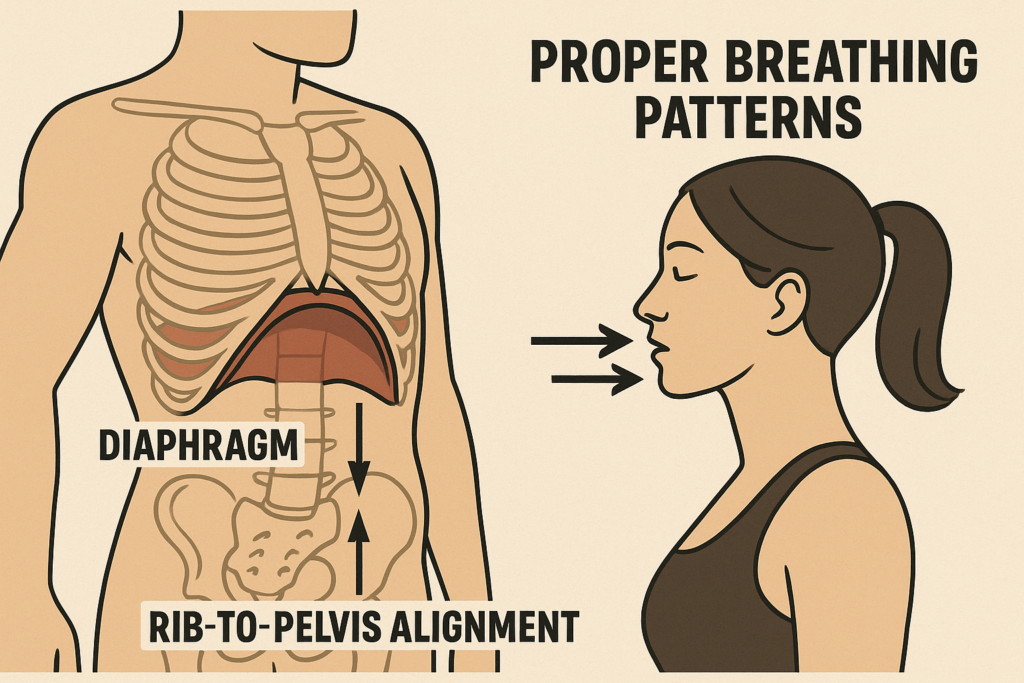
Abs need pressure to generate force, and that pressure starts with proper breathing — specifically, exhaling while maintaining rib and pelvis alignment.
When you breathe in a shallow, chest-dominant way, your diaphragm doesn’t descend efficiently, internal pressure doesn’t increase, and your core becomes a loosely wired structure that relies on surface-level muscles rather than coordinated deep stabilizers.
Modern posture, endless sitting, and stress-driven breathing patterns turn your core into a system of inconsistent signals.
This leads to:
- Weak bottom-up abdominal recruitment
- Overactive superficial muscles
- A constant reliance on oblique bracing instead of coordinated trunk tension
This is why some exercises feel “hard” but don’t generate meaningful results.
You’re working, sweating, shaking — but not recruiting the muscles you’re trying to develop.
It’s the equivalent of trying to type in a password with three different keyboards plugged in at once.
Why your lower abs are always late to the party
The lower portion of the rectus abdominis is notorious for being slow to activate because it’s mechanically disadvantaged and easily overridden by the hip flexors and obliques.
Modern posture makes this worse by putting the pelvis in a position where lower-abs activation requires even more effort.
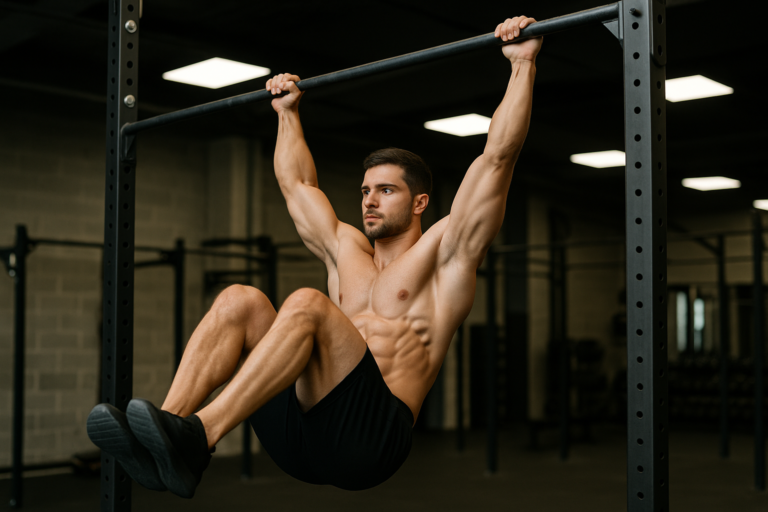
Exercises that involve leg movement without pelvic control — like hanging leg raises or flutter kicks — look like lower-ab work, but often turn into hip-flexor and oblique marathons.
If you feel burning in the hip crease, side ribs, or low back instead of a deep-centered squeeze, that’s compensation showing up again.
This doesn’t mean you’re incapable of activating lower abs; it means your default strategy is built for survival, not aesthetics.
And survival strategies are extremely stubborn to unlearn.
Your brain wires what you practice, not what you intend
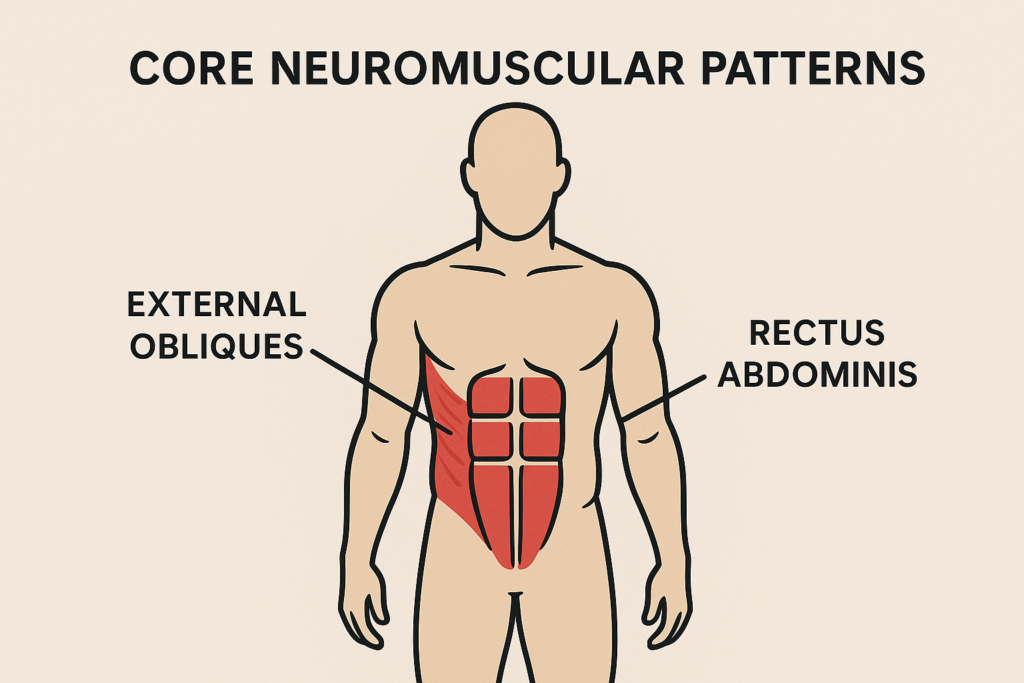
Muscle dominance isn’t a moral failure; it’s neuromuscular programming.
Your body learns what you repeatedly ask it to do, regardless of whether you meant to teach it that skill.
If your core workouts consist mostly of rotation, side bending, and uncontrolled “abs on fire” circuits, your brain learns that strategy as the default.
Once that pattern is automated, it shows up everywhere — during planks, push-ups, squats, and even breathing.
You might think you’re training for aesthetics, but your nervous system is training for survival, efficiency, and repeatability.
And unfortunately, those goals don’t always line up with your beach body aspirations.
How to make your abs actually show up to work
Strengthen recruitment patterns, not just muscles.
Muscles are stupid without coordinated input.
They don’t contract deeply just because you want them to; they contract because the structure, pressure, and alignment make contraction possible.
Focus on exercises that demand:
- Posterior pelvic tilt
- Controlled spinal flexion
- Rib-to-pelvis coordination
- Slow tempo
- Intentional breathing
Avoid strategies based on:
- Fast reps
- Constant twisting
- Sloppy momentum
- Fancy choreography
Intensity without control builds resilience, not definition.
Simple exercises that actually bias the abs
Dead bug with slow exhale
One arm, one leg, long slow breath, pelvis tucked, ribs down.
It looks like rehab, feels like nothing, and works like a cheat code.
Reverse crunch with pelvic tilt
Lift the pelvis first, not the knees.
If you feel tension in the hip flexors, something is off — start smaller.
Hollow body hold
Ribs down, pelvis tucked, spine long.
Breathe slowly and allow the shaking; it’s just nervous system recalibration.
Slow controlled roll-downs
Segment the spine like you’re unrolling tape, not collapsing into the floor.
If you rush, you’re surrendering the movement to compensation.
Oblique dominance is not a “bad problem”
Having strong obliques is not inherently problematic; in fact, it’s extremely useful.
They stabilize the spine, protect the ribs, help you lift, sprint, carry heavy things, and rotate with power.
If you only had a strong rectus abdominis and weak obliques, you’d be unstable, inefficient, and injury-prone.
The issue is not their strength; it’s their monopoly.
When they take over everything, the system becomes unbalanced — not dysfunctional, but biased.
And bias shapes form, posture, tension, and appearance.
Closing thought
Your core doesn’t need to suffer — it just needs to learn.
It gets stronger with patience, good technique, and calm, controlled reps.
Real strength comes from clear signals, steady breathing, and muscles that know what they’re doing.
Keep practicing, and the looks will come on their own —
because a core that works well always ends up looking good too.