It happens every time.
I finish my yoga class, lie down in savasana all peaceful, breathing like a Tibetan monk under the influence of ginger tea, and then I get up…
…and my lower back feels tighter than before.
Not sore. Not inflamed.
Just stiff. Like someone shoved an ironing board in my spine and forgot to take it out.
And I ask myself: wasn’t I supposed to feel more fluid, more relaxed, more… zen?
Instead, nothing.
I walk out of the yoga room like a 60-year-old uncle after changing his car tires.
Let’s see why this happens, and more importantly, what we can do to stop walking out bent in half.
Not all stretches are equally beneficial

From the outside, yoga seems like a soft and harmonious art.
Relaxing music, dim lights, maybe a calm voice guiding you to “let go of all tension”…
Too bad your lower back often doesn’t get the memo.
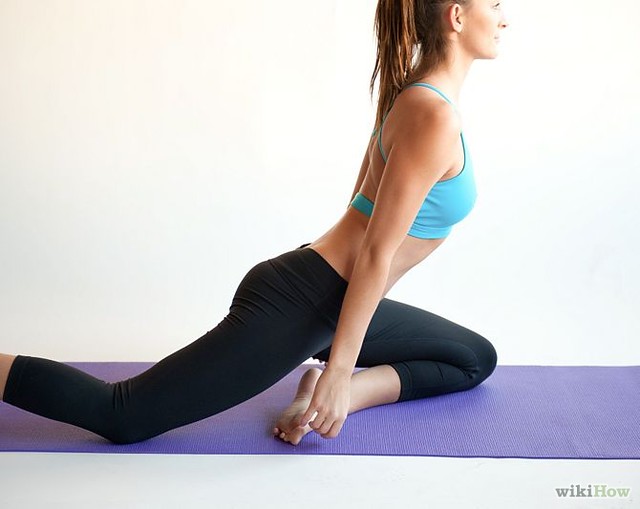
Many poses—especially spinal extensions like cobra, upward dog, camel—aren’t just stretching the muscles.
They’re loading them.
Technically, this is called eccentric contraction: the muscle lengthens, but it does so under strain.
And for your lower back, this means that deep muscles like the spinal erectors, the quadratus lumborum, and their buddies are working their butts off to hold you up.
Yes, even when you think you’re “relaxing.”
That’s why, as soon as the class ends, your lower back feels as stiff as a paddle racket.
A sleeping core makes the lower back work twice as hard
Here we hit the classic case of compensation.
During many yoga poses, in theory, we should have the abs slightly engaged.
Not braced like in a brutal plank, but at least “on.”
The problem?
We often don’t notice, and the core stays off.
So who steps in?
Exactly: the lower back, which starts taking on the full load of the pose, trying to stabilize the spine however it can.
It’s like that coworker who takes over the whole project while everyone else pretends to be busy.
And eventually, even that coworker gets exhausted.
The body’s “safety lock”: protective tension
There’s another explanation, unrelated to how much you worked, but tied to how your body perceived what you did.
During certain poses, if the brain interprets the movement as “potentially dangerous,” it activates a defense mechanism:
muscle guarding, aka protective contraction.
The body thinks: “Hey, you’re pushing me too far here. Let’s shut this down before something goes wrong.”
Result?
When the class ends, your muscles are tighter not because you did something wrong, but because your nervous system chose to play it safe.
The stretch reflex working against you
You know that proud moment when you finally touch your toes?
Too bad your body doesn’t share your enthusiasm.
There’s an automatic mechanism called the myotatic reflex, which kicks in when you stretch a muscle beyond its usual range.
The muscle contracts to protect itself.
That’s right.
You try to lengthen it, and it answers back with a firm NO.
It’s an emergency system.
But after 45 minutes of yoga filled with folds and twists, guess what?
The reflex has been working overtime.
And there you are, with your lower back subjected to stretch + tension + lack of control, paying you back with that classic post-leg-day bodybuilder stiffness.
It’s not the movement itself, but how you get there
Another myth: the deeper you go into a pose, the better.
How many times have you tried to push a bit more just to “get” to the final position?
Cobra with your shoulders up to your ears.
Camel with your back crunched.
Forward folds where you’re pulling on your ankles to “go deeper.”
All of it without activating anything.
Just collapsing into the pose, hoping flexibility will show up by magic.
But if you enter a pose by collapsing, you’re not stretching: you’re compressing.
And the first to suffer is, once again, your dear lower back.
When the breath gets stuck, your back takes the hit
Breathing properly during yoga is not just a detail.
It’s part of the movement.
When you stop breathing in a pose (maybe because it’s intense or because you’re focused on “holding it”), your diaphragm freezes.
And when the diaphragm doesn’t move, the load shifts… guess where?
To your lower back.
Natural abdominal pressure is gone, the ribs don’t expand, and all your stability goes out the window.
Your lower back does its best to keep you upright—but it does it its own way: by tensing up.
Yoga is mobility, but it also requires stability
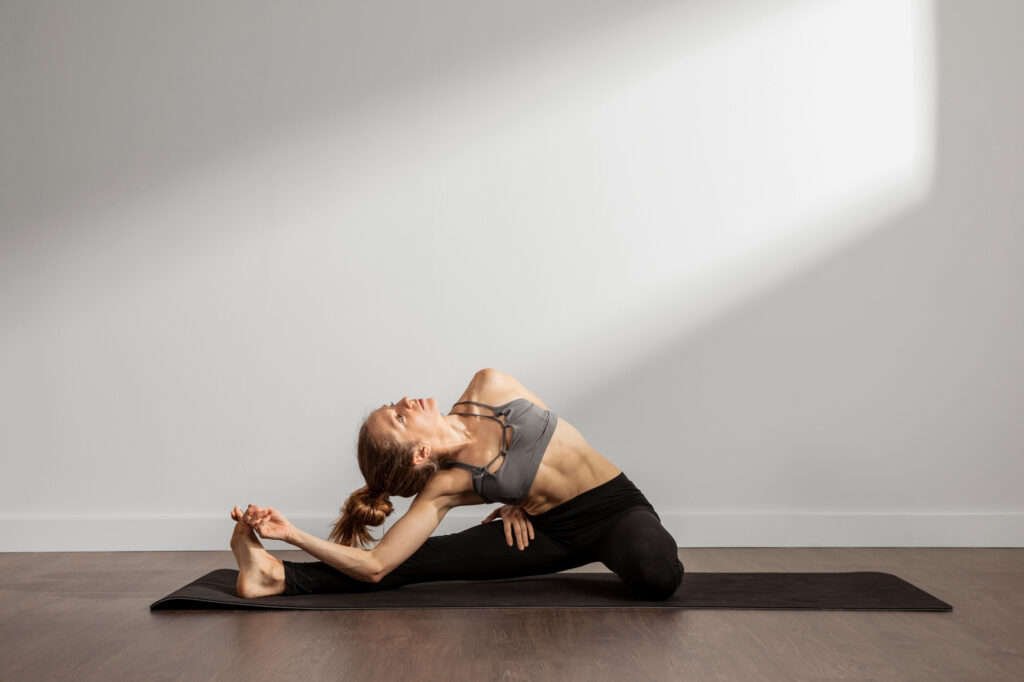
Let’s not forget: flexibility without strength is just a temporary nice stretch.
If you fold forward gracefully but lack strength in the core or glutes to support yourself, your back works three times as hard.
And that tension you feel afterward is a cry for help.
It wants support.
It wants stability.
That’s why many yoga practitioners could greatly benefit from:
- active core exercises (planks, dead bugs, hollow holds)
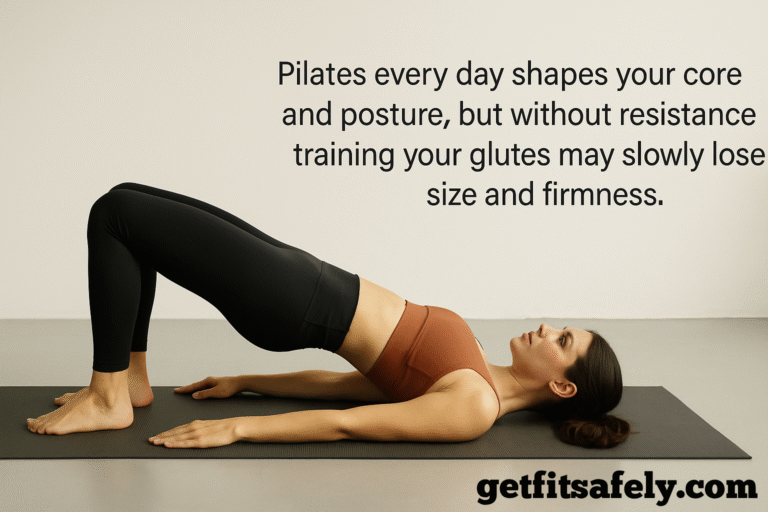
- glute bridges, bird-dogs, hip hinges
- postural work on the lumbar area that’s not just stretching, but strengthening
Ok, so what can I do if I feel stiffer after yoga?
Great question.
Here are a few tips you can start testing right away:
- Don’t force the depth. Aim for control, not aesthetics.
- Engage your abs in every pose: even slight activation can save your back.
- Use props. Blocks, straps, cushions. They make your practice more effective, not easier.
- Breathe better. Inhale into the belly, exhale slowly. Let the breath guide the movement.
- Do targeted strength work for lower back and core, preferably on days separate from yoga.
- Actively recover. Some foam rolling, walks, hydration, and sleep help a lot.
And what if instead of stiffness… it actually hurts?
Okay, now the game changes a bit.
Because it’s one thing to feel your back a bit tight, like it did yoga too and just needs to recover.
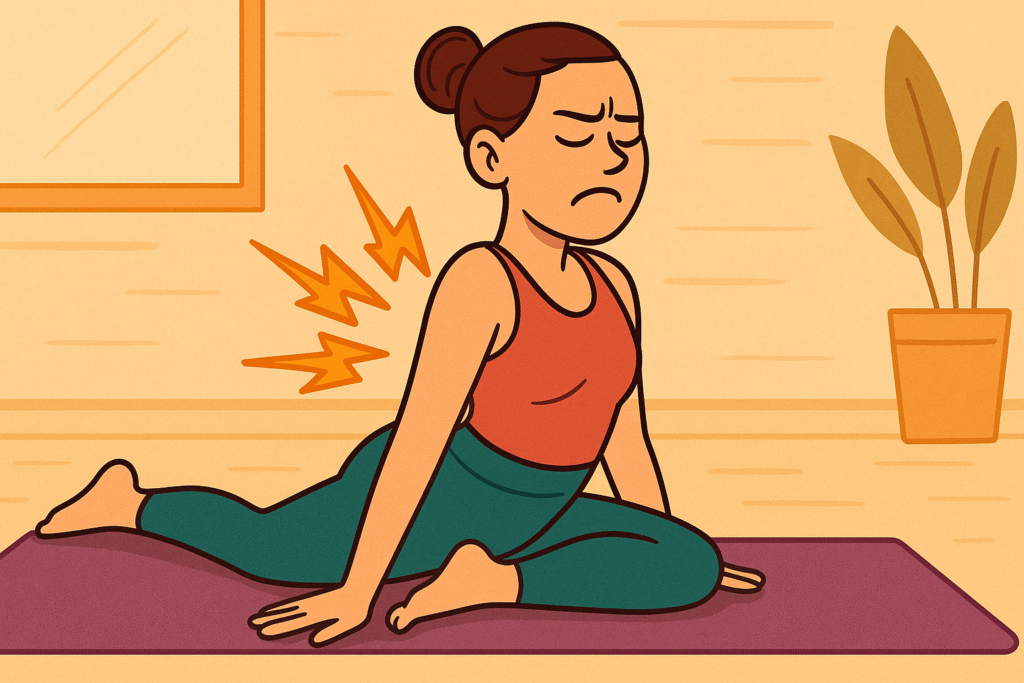
It’s another to get up from the mat and think, “oops, something’s not right.”
If the pain is sharp, stabbing, localized (like a pinch), or radiates toward the glutes or legs, you need to pay real attention.
It’s no longer just a matter of activation, breathing, or “I forgot my core at home.”
This is your body sending an SOS.
So, what do you do?
Here’s a quick guide to handle post-yoga lower back pain:
🔹 1. Immediately stop deep backbends or forward folds
If you’re in pain—especially after a camel, cobra, or bridge—avoid anything that opens the back further.
Same goes for intense forward bends.
No need to push through. Pain doesn’t stretch away.
🔹 2. Lie on your back and unload the spine
Lie supine, knees bent, feet on the floor.
Breathe.
This position unloads the lumbar area and calms defensive muscles.
Want extra relief?
Put a pillow under your knees or rest your calves on a chair. Works wonders.
🔹 3. Avoid excessive heat in the first few hours
I know, heat seems like a magic fix.
But right after acute pain, it can worsen inflammation.
Better to use a cold pack (15 minutes with breaks), at least during the first 24–48 hours.
If the area relaxes, you can switch to heat later.
🔹 4. Don’t try to “unlock” your back by force
Classic mistake: you feel stiff and try to stretch more, thinking it’ll solve it.
Spoiler: you risk making it worse.
Pain isn’t a knot to unravel—it’s an emergency brake.
If you ignore it, you might go from tension… to trauma.
🔹 5. If the pain lasts more than 2–3 days, call a pro
Don’t wait months “hoping it passes.”
If you can’t sleep on your back, feel tingling, shocks, or leg weakness—it’s time to talk to:
- a physical therapist
- a spinal-focused osteopath
- an orthopedic doctor or physiatrist
Better one extra check than one extra relapse.
🔹 6. When you return to the mat, do it in “test mode”
Don’t go back to yoga like nothing happened.
Choose super gentle sequences, maybe yin or restorative, with minimal lumbar extension.
Focus on:
- gentle twists
- supine poses
- breath work
- light core activation
And above all: listen. Every movement is a test.
If it feels good, move forward. If something stings… backtrack.
What if it’s something you were already carrying?
Let’s take a step back.
Yoga doesn’t always cause the stiffness.
Often, it’s just when you notice it.
Maybe you show up after weeks (or months) of desk work, stiff shoes, low activity, and zero posture awareness.
Yoga puts you in new positions, stretching forgotten zones and bringing out hidden tensions.
It’s like opening a closet after moving: you find stuff you didn’t even remember you had.
That post-class lower back stiffness might just be tension that was already there—only now you’re more aware.
And ironically, that’s a good thing.
Because before, you were pushing through without realizing it.
Now your body is speaking, even if it’s using an annoying language.
And if you’ve had an old back spasm, a sports injury, or just a stressful phase…
…it’s likely your lumbar area has been in “protection mode” for a while.
Yoga didn’t cause it.
It just turned on the warning light.
And maybe it was time to face it.
When stiffness hides a real pathology
Sometimes, though, it’s not just muscle tension or poor activation.
There are cases where post-yoga lower back stiffness could signal something deeper.
Not to alarm you, but it’s helpful to know the main conditions that can affect the lower back:
Lumbar hyperlordosis
That exaggerated curve in the lower back, often linked to weak glutes and inactive abs.
If you do lots of spinal extensions in yoga (like cobra or camel) and already have hyperlordosis, the compression may increase.
Result? Stiffness and a feeling of “pressure” in the back.
Facet joint syndrome
The small joints of the spine (facets) can get inflamed if overly compressed, especially during extension or rotation.
Discomfort is felt low, near the spine sides, and can worsen after intense practice.
Lumbar disc issues (herniation, bulge, degeneration)
This affects the discs between the vertebrae.
In these cases, some flexion or twisting movements (like forward folds) can worsen stiffness.
A common sign is that “locked” back feeling, sometimes with pain radiating to the glute or leg.
Sacroiliitis or SI joint dysfunction
When the joint between the sacrum and ilium is inflamed or misaligned, stiffness hits the lower-most back, close to the glutes.
Some yoga poses (especially asymmetrical ones like pigeon or seated twists) can aggravate it.
Piriformis syndrome
Though it involves a deep glute muscle, the tension often affects the lower back.
When the piriformis is tight or inflamed, it pulls on the pelvis and alters lumbar posture, increasing stiffness.
Lumbar osteoarthritis or spondylosis
With age (or long-term overuse), the spine can wear down.
Even without sharp pain, it often leads to chronic stiffness, especially noticeable after movement.
Yoga can help a lot—but must be adapted carefully.
Fibromyalgia or somatoform disorders
Now we enter the world of chronic tension, often amplified by the central nervous system.
Lower back stiffness is widespread, constant, and not always tied to injury.
In these cases, yoga should be practiced gently—more relaxing than dynamic.
RELATED:》》》 Can too much yoga make your core weaker instead of stronger?
Conclusion
If your lower back feels stiffer after yoga, it doesn’t mean you did everything wrong.
It means you’re finally listening.
Your body is telling you what’s missing: control, activation, a balance between strength and flexibility.
The solution isn’t to give up yoga, but to refine it—make it more conscious.
Each class can become a lab to learn how you move, where you compensate, what you can improve.
And over time, that annoying stiffness becomes a useful signal: an invitation to train smarter, not less.