The gym has a way of turning ordinary things into mysterious rituals.
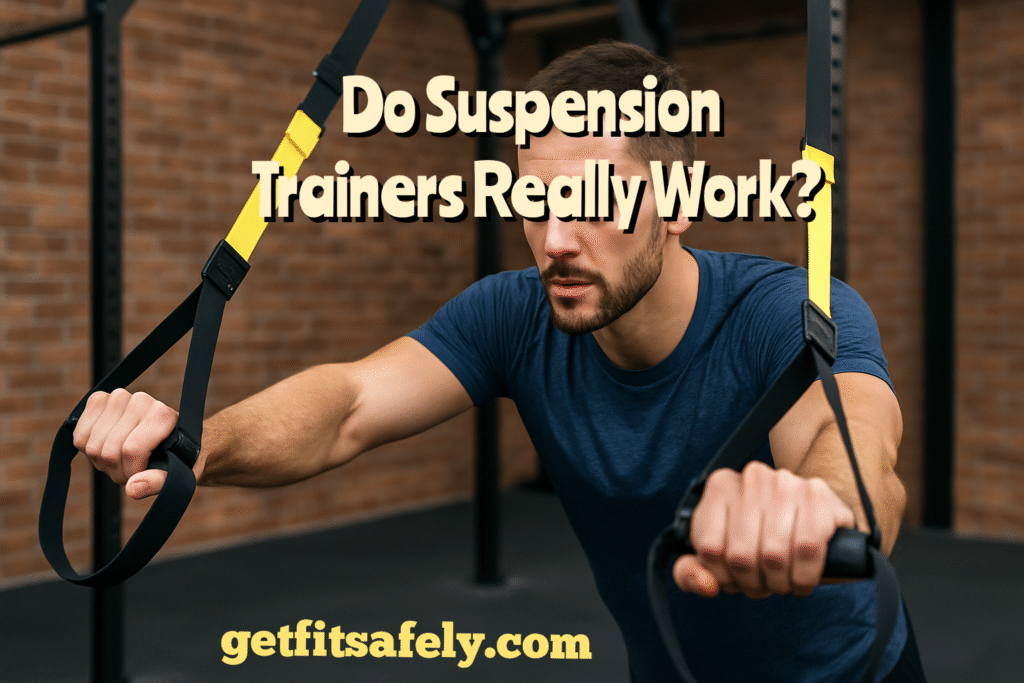
Take those yellow straps hanging from the ceiling — part workout tool, part jungle gym, part midlife crisis equipment.
People swing from them, lean on them, hang upside down like human bats.
From the outside, it looks like chaos.
But behind that chaos, there’s science — and a surprisingly tough workout that hits every stabilizer in the body like a wake-up call.
Suspension trainers have been called everything from “the ultimate minimalist gym” to “a fancy gimmick.”
The truth, as always, sits somewhere between hype and hard reality.
Let’s pull on those straps (literally) and find out what they’re really worth.
The “unstable ground” conspiracy
When you grab those handles and lean forward, your brain freaks out.
Every tiny muscle you didn’t know existed suddenly wakes up and yells, “What’s happening?!”
That’s the beauty—or the torture—of instability.
With suspension training, your center of gravity is constantly shifting, so your stabilizers go into overdrive just to keep you from face-planting.
It’s like doing push-ups on a boat that refuses to stay still.
Even simple moves like rows or lunges feel different because your body has to fight micro-movements the entire time.
That’s what gives suspension training its reputation for building “functional strength”—meaning strength that actually translates into balance, coordination, and body control in real life.
There are studies showing that when using suspension trainers the core and stabiliser muscles are activated at higher levels compared to stable surfaces. (KIPS)
What I found personally:
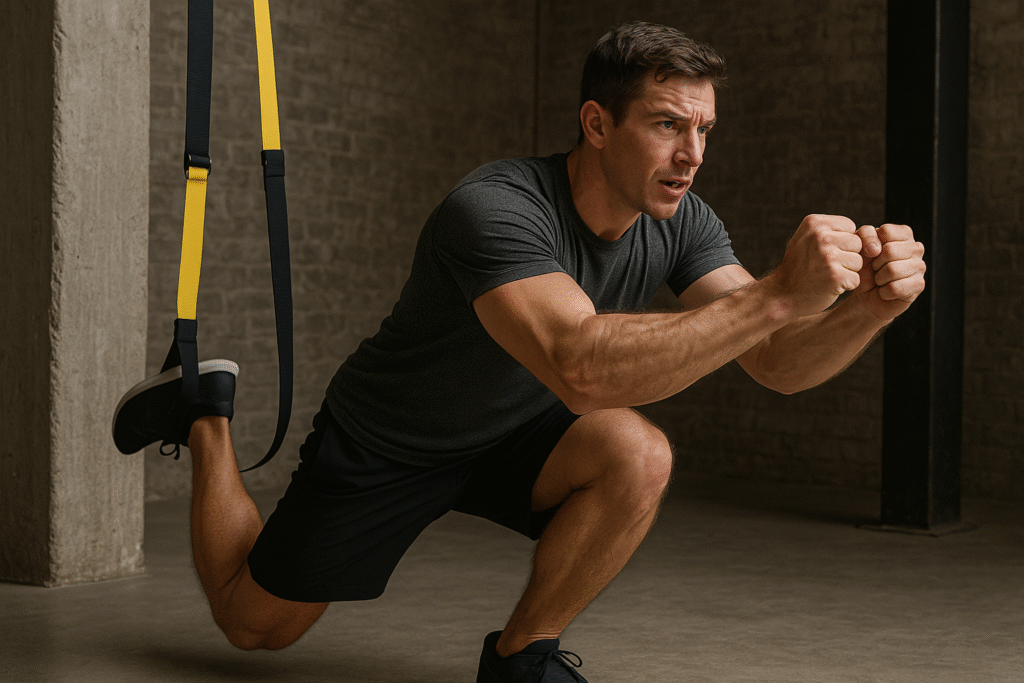
I was doing a suspended single-leg squat and while the working leg was burning, my other leg (and glute/hip side) was trembling just to keep my pelvis in check.
That kind of multi-plane challenge?
Barbell squats didn’t give me that exact “shake in your joints” feeling.
When minimal gear feels like maximum pain
Here’s the catch: suspension trainers look simple, but they can humble you fast.
No plates, no weights, no machines — just two straps and your bodyweight.
Yet, when you’re halfway through a suspended plank and your abs start shaking like you’re in an earthquake drill, you realize simplicity doesn’t mean easy.
You can adjust difficulty just by changing your angle—step back an inch, and suddenly your row feels like pulling a car.
That’s the sneaky genius of it: infinite scalability.
Beginners can start light.
Pros can go full beast mode without touching a dumbbell.
In one gym I trained at, the instructor let newbies do suspended rows with feet firmly on the ground and body nearly upright; the advanced folks had feet raised, body leaning far back, straps lengthened.
That difference alone turned the same move into two entirely different workouts.
Why your core will never forgive you (in a good way)
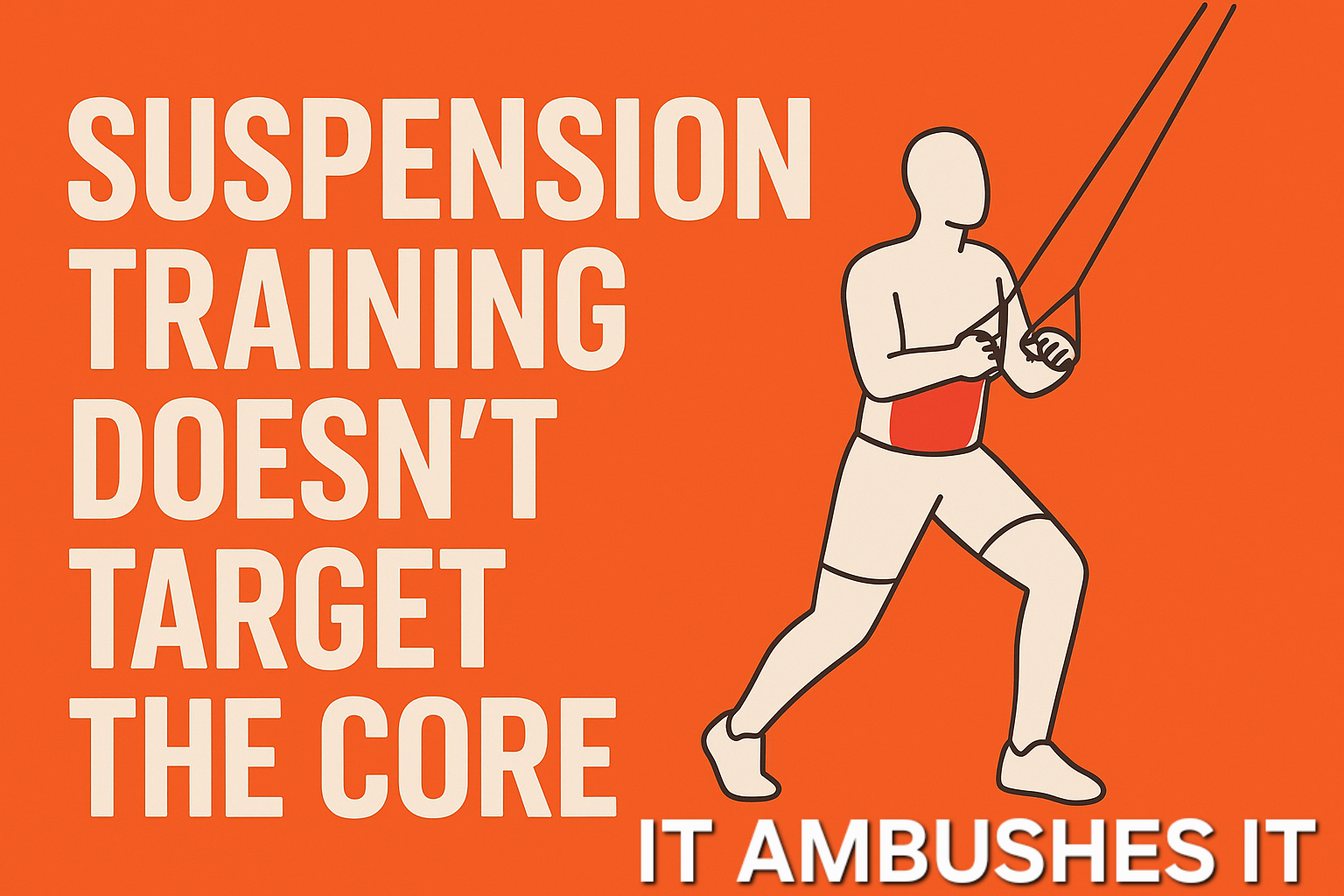
Suspension training doesn’t target the core— it ambushes it.
Every single movement, even upper- or lower-body exercises, demands core engagement.
Try doing a chest press with your hands in straps and your feet on the floor.
Now notice how your midsection feels like it’s auditioning for a sit-up contest.
That’s because you’re stabilizing your spine through constant micro-adjustments — the same kind of deep tension you need for posture, lifting, or even running.
Studies indicate that when arms and/or feet are suspended during plank variations, muscle activation in rectus abdominis, obliques and even hip flexors goes up.
And that’s also why athletes and physical therapists love TRX‐style training for rehab and balance work.
Because it trains your body to feel and connect, not just move and push.
But let’s be real: not everything about it is magic
If you’re chasing raw strength—the kind that makes you add plates every week—suspension training won’t get you there alone.
It’s amazing for coordination, mobility, and core stability.
But you won’t deadlift 400 pounds because you’ve mastered one-arm suspended push-ups.
The tension curve just isn’t the same as lifting a barbell or a heavy dumbbell.
And for hypertrophy lovers, the muscle pump is more endurance-style than brute overload.
Think tone and control, not bulk and beast.
So, if your goal is pure size or PRs, suspension trainers are better as a supplement, not a replacement.
Home gym hero or gym gimmick?
Here’s where I land after years of playing with these straps.
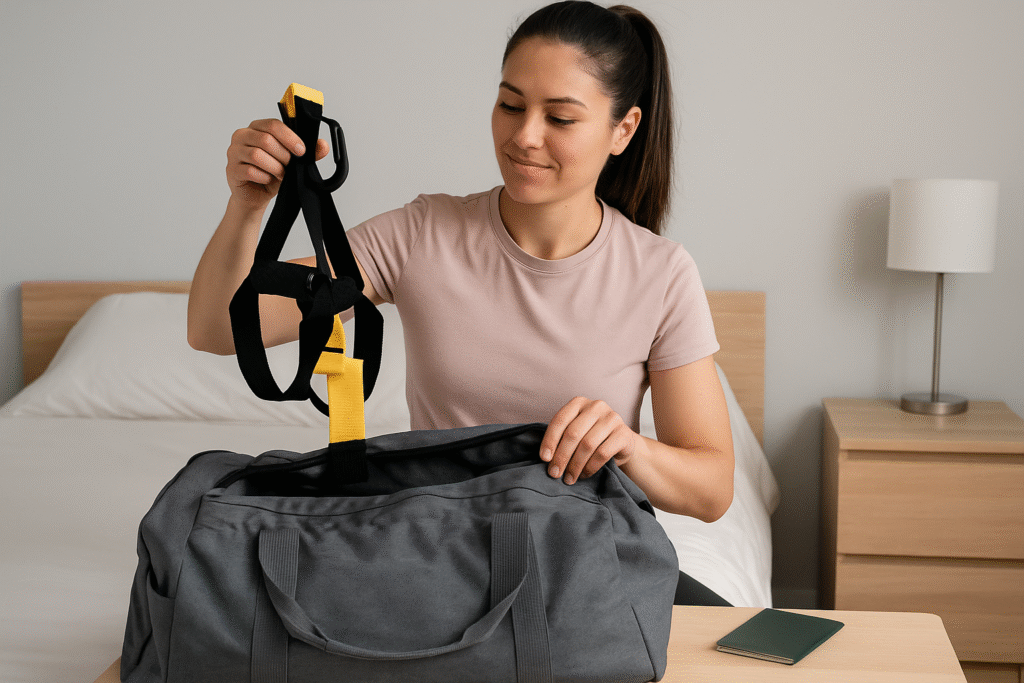
Suspension trainers are the ultimate travel gym — portable, versatile, and brutally efficient when used right.
They’re perfect for:
- people training at home with limited space,
- travelers who don’t want to skip workouts,
- anyone looking to rebuild balance or mobility after injury,
- and yes, those who like to look cool doing airborne push-ups.
But like any tool, they’re only as good as your intention.
If you use them as decoration, they’ll collect dust like that yoga wheel you bought in 2020.
If you use them with consistency, they’ll reshape how your body moves.
Getting real results from two straps and gravity
Okay, let’s dig into how to integrate this stuff so you don’t just swing around and call it a workout.
1. Anchor point & set-up rules
Make sure your anchor point is solid — beams, trees, door frames with real hardware, not flimsy hooks.
The performance studies warn: improper anchor or strap length will reduce effectiveness and increase risk. (PMC)
Set the straps so handles are roughly mid-chest height when you’re standing; adjust length depending on the exercise.
2. Angle equals tension
The more horizontal your body, the more your bodyweight load. Want harder? Step the feet further forward (for rows) or further back (for push-ups).
One study found that as angle increased (closer to horizontal) the load on straps increased up to ~75% of bodyweight in some conditions.
Use this to scale difficulty: beginners more upright, intermediates steeper, advanced almost parallel to the ground.
3. Progressions and regressions
Start with simpler movements: suspension rows with feet on ground, chest press with knees bent.
Build to more demanding: one arm/leg variations, deep suspended lunges, pike to push-up transitions.
Periodize: e.g., 2 weeks intensity focus (harder angles, shorter rest), then 1 week stability focus (slower reps, deliberate control).
4. Integrate with other modalities
Use suspension training alongside traditional lifts. For example: after heavy barbell day, use 2-3 suspension accessory exercises (core + upper back + unilateral work) to round out your session.
During travel or home sessions when barbells aren’t available, you can lean heavier on the straps for your full body.
5. Common mistakes
- Letting hips sag: kills the benefit. Stay rigid from shoulders to ankles.
- Using straps as a crutch: if you’re leaning too upright just to feel safe, you’re not getting real load.
- Lack of variety: once you adapt, you need to change angles, tempo, grip, body-position.
- Neglecting lower-body: many people use only upper-body moves; don’t forget suspended split squats, hamstring curls with heels in cradles, etc.
One user on Reddit put it well:
“the entire body can be so easily worked out … one-legged leg exercises like Bulgarian split squats are tremendously effective for improving one’s balance.” (Reddit)
6. Sample mini-circuit
- 10 suspended rows (feet forward)
- 10 suspended push-ups (body steep)
- 8 suspended split squats each leg
- 30-second suspended plank
Rest 60 seconds, repeat 3-4 rounds — gives you strength, stability, and a little cardio spike.
Advanced science bit (if you love nerding out)
- A 2024 study found that a 9-session suspension training program improved dynamic balance (Y Balance Test) in healthy young adults, though static balance gains were minimal. (MDPI)
- Electromyography (EMG) data show that during suspended plank variations, abdominal muscle activation is significantly greater than floor planks.
- But research also flags that while suspension training activates muscles well, for maximal hypertrophy or maximal strength, free weights or machines still win in overload capacity. (futurefit.co.uk)
How suspension work keeps your body in one piece
Here’s something many fitness articles gloss over: suspension trainers can play a big role in injury prevention and longevity.
Because they force your stabilizer muscles to engage, you can use them to rehabilitate weak glutes, fix hip imbalances, train shoulder stability after overhead issues.
For example, if your rotator cuff is a bit dodgy, using suspended rows and face pulls adds stability challenge while keeping load reasonable.
Older adults benefit too: one study tailored a 12-week suspension training program for adults 60+ and found good feasibility and strength gains.
So if you care about staying fit for life, not just for your next PR, these straps help your body move smarter and safer.
When an athlete trades heavy plates for straps
I trained a friend (ex-college player) who had great strength but crappy control — he deadlifted heavy but his single-leg balance was rubbish, his change of direction slow.
We swapped in suspension training for one weekly accessory session for 8 weeks: single-leg suspended squats, suspended side planks with reach, suspension rows with long lever.
He reported: “My hips feel tighter, my ACL rehab leg doesn’t wobble when I lean, I turn faster on the court.”
When I retested his Y Balance and single leg hop, he improved ~7% in balance reach and felt more stable.
Point is: suspension training added the control layer his heavy lifting lacked.
That time the straps had other plans
I’ll keep this short but it’s worth sharing (because we all laugh at ourselves so you don’t have to).
Years ago I tried one of those advanced suspension pike-to-push-up moves.
Feet in the cradles, hands on floor, hips high — nice and dramatic.
Halfway through I lost the strap angle, slid forward, and ended up with a face plant on a rubber mat in a commercial gym.
My ego bruised, my forehead bleeding, my form totally garbage.
But what I learned that day: if you don’t build the progression, you’ll pay the price.
I should have first done suspended plank holds, then lean-in push-ups, then the pike. I skipped steps because it looked cool.
So take your time. Respect the tool. Progress.
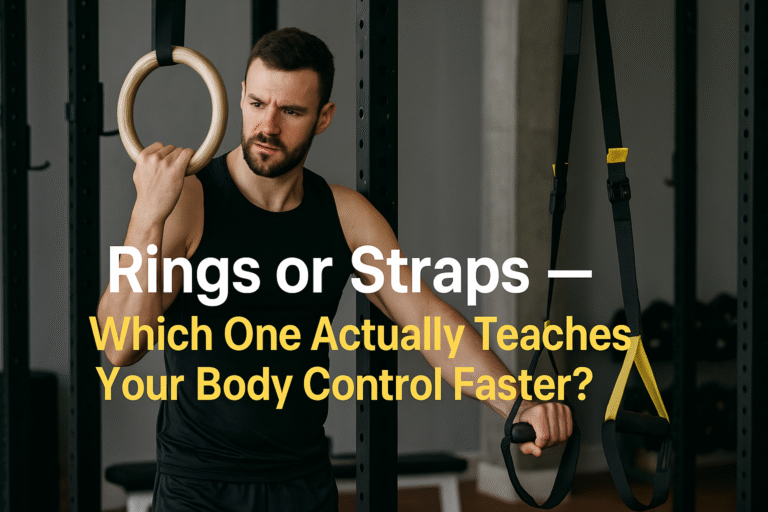
RELATED:》》》 Rings or Straps — Which One Actually Teaches Your Body Control Faster?
Final Thought
If you’re reading this, here’s the takeaway — don’t underestimate the tools you train with.
Whether it’s rings, straps, or just your own bodyweight, what really counts is how you use them.
Set things up with purpose.
Move with control.
Train with awareness instead of autopilot.
Because when you do, your body becomes more adaptable and ready for anything.
Quick FAQ
Are suspension trainers safe for beginners?
Yes — with proper anchor, good instruction, and starting at an upright angle. The instability adds risk if you’re off balance or have weak core, so go light first.
Can I build mass with them?
You’ll build strength and lean muscle, absolutely. But for maximal hypertrophy (10-12 rep sets at high load), you may need to supplement with free weights or machines. Suspension is more about control + stability than sheer mass.
Should I ditch my barbell now and switch entirely?
No. If you love lifting heavy, keep doing it. Think of suspension training as an upgrade, not a substitution for all your strength work.