Let’s be honest — if pain alone built muscle, cyclists would have legs like bodybuilders.
Every spin class ends with someone saying, “My legs are on fire!” and then stepping off the bike expecting to wake up tomorrow with tree trunks for thighs.
Spoiler alert: that burn doesn’t mean growth.
It usually just means you’ve survived a 45-minute cardio inferno disguised as leg day.
So why does it feel like your quads are melting but never seem to get bigger?
Let’s break that down.
Endurance vs. Hypertrophy: Two Very Different Worlds

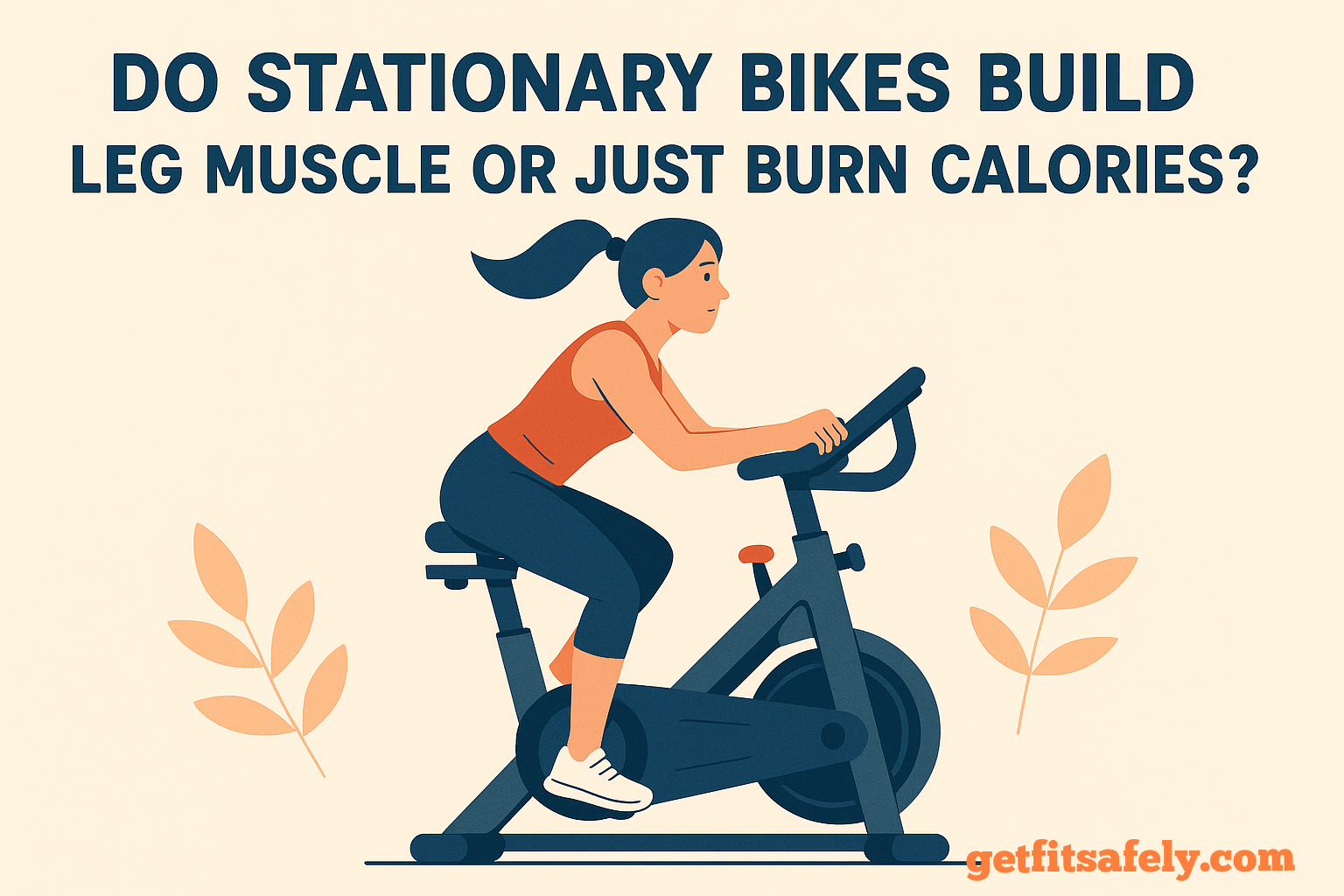
When you’re pedaling away on a stationary bike, you’re basically doing hundreds, sometimes thousands, of low-resistance reps.
That’s endurance training — the land of stamina, mitochondria, and that “I can climb stairs without dying” type of fitness.
Hypertrophy, on the other hand, lives on the opposite side of town.
It’s all about mechanical tension, progressive overload, and making your muscle fibers panic just enough to repair and grow thicker.
To put it simply: biking builds engines, not aesthetics.
You train your muscles to last longer, not to take up more space.
Think marathoner legs versus sprinter legs.
Both powerful — but one’s built for survival, the other for explosion.
The Famous Quad Burn (and Why It Lies to You)
That burning sensation mid-ride?
That’s mostly lactate building up as your muscles struggle to keep producing energy without enough oxygen.
It’s a survival response, not a hypertrophy stimulus.
Sure, it feels intense — like your legs are “working hard” — but intensity isn’t the same as load.
Muscles grow when they’re forced to handle heavier and heavier resistance over time, not just by suffering through fatigue.
Cycling, especially with steady resistance, doesn’t give your quads that overload.
It’s like lifting a five-pound dumbbell a thousand times — impressive commitment, but your muscle fibers aren’t scared enough to grow.
When Stationary Biking Can Actually Build Muscle
Now, before cyclists come for me — yes, under the right conditions, biking can build some muscle.
But the key is intensity and resistance. If you crank up the tension and keep your RPMs lower, you start crossing over into strength-endurance territory.
That’s where you might actually stimulate some growth in your quads and glutes, especially if you’re new to training.
Here’s the thing though — the muscle-building effect plateaus fast.
Once your body adapts, those pedals just don’t push back hard enough to keep the stimulus going.
To keep growing, you’d have to progressively overload — and that’s hard to do when your only “weights” are imaginary hills on a screen.
Cyclist Legs vs. Lifter Legs
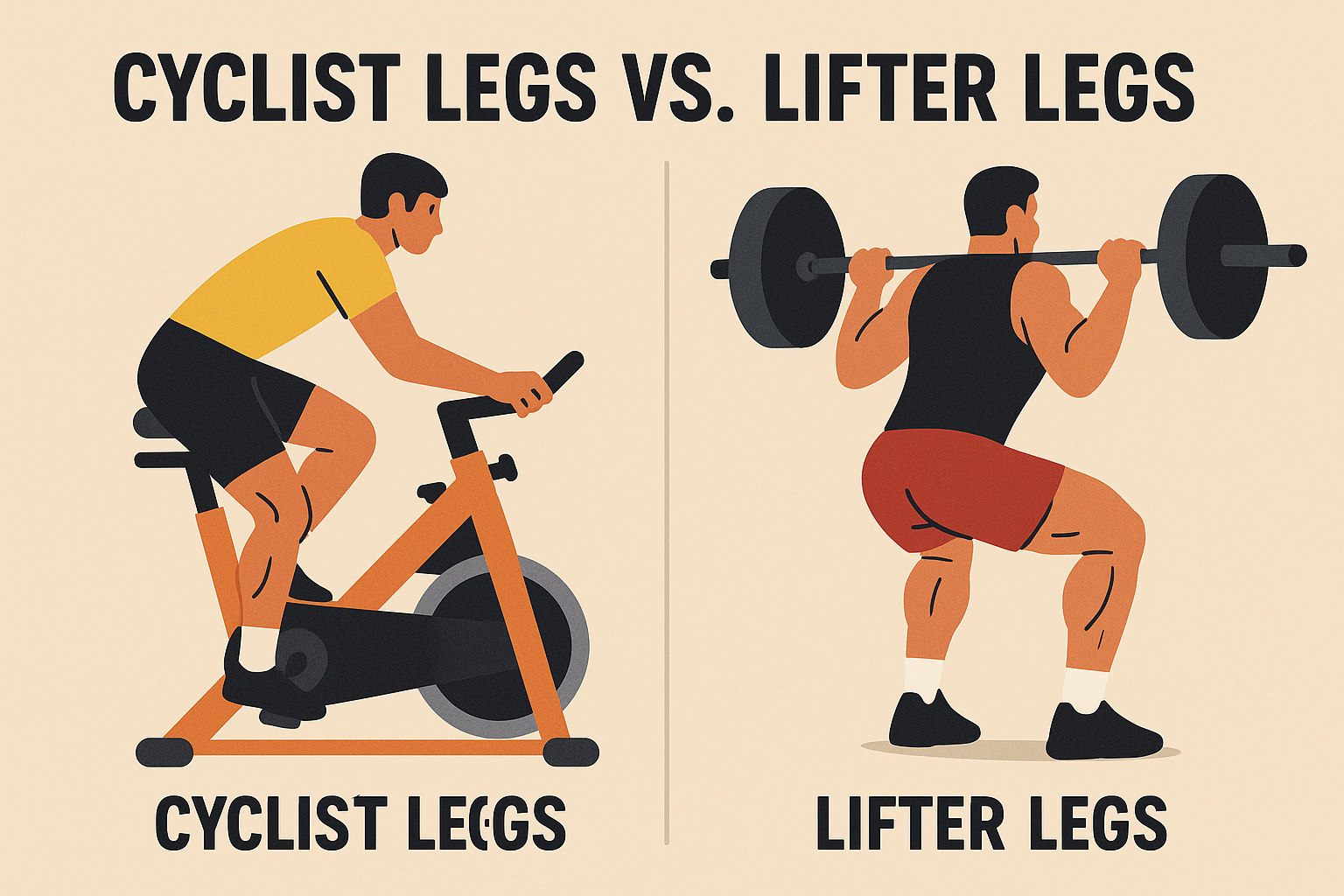
Look at pro cyclists: yes, their legs are muscular, but that comes from years of volume and specialized training — not casual gym bikes.
They also use resistance bikes built for power output, not calorie burn.
Meanwhile, lifters hit squats, leg presses, and lunges with progressively heavier loads, triggering mechanical stress, not just metabolic fatigue.
That’s why their muscles look denser and more defined — they’re literally forcing their fibers to adapt to force, not just endurance.
So, if you’re wondering why your thighs feel solid but don’t look bigger, it’s because your muscles are becoming more efficient, not necessarily thicker.
You’re tuning the engine, not changing the size of the car.
How to Turn Your Bike Sessions into Leg Builders
If you love your bike (and don’t want to touch a barbell), you can still hack your ride to get closer to a hypertrophy-style effect.
- Add sprints: Short, all-out bursts (20–30 seconds) with heavy resistance can recruit more fast-twitch fibers — the ones that actually grow.
- Play with intervals: Mix hard climbs with short recovery phases. It mimics weight training by alternating between load and rest.
- Turn up resistance: Pedal slower, heavier, and with intent. If you can hold a conversation, it’s not enough.
- Stand up: Rising from the saddle shifts activation toward your glutes and hamstrings, adding variety and load.
These tweaks won’t turn your bike into a squat rack, but they’ll make your cardio work for your legs, not against them.
The Hidden Benefit: Metabolic Foundation for Gains
Here’s the part people forget — endurance training can actually support your hypertrophy goals if you use it smartly.
Better blood flow, improved recovery, higher aerobic capacity — all of that helps you train harder in the weight room.
So, biking won’t replace squats, but it can make your squats better.
Think of it like building better plumbing: oxygen and nutrients reach your muscles faster, meaning you recover and grow more efficiently.
You just have to remember — biking is a complement, not a substitute.
So… Should You Ditch the Bike?
Absolutely not.
The stationary bike is an amazing tool for conditioning, recovery days, and even leg endurance.
Just don’t expect it to sculpt your quads like a leg press or give you that “sprinter pop.”
If your goal is pure muscle growth, combine biking with resistance training.
If your goal is athletic legs that don’t quit, keep pedaling — but know what you’re training for.
Because the burn feels good… but only tension makes you grow.
Why Load Matters (and What “Load” Really Means for a Bike Ride)
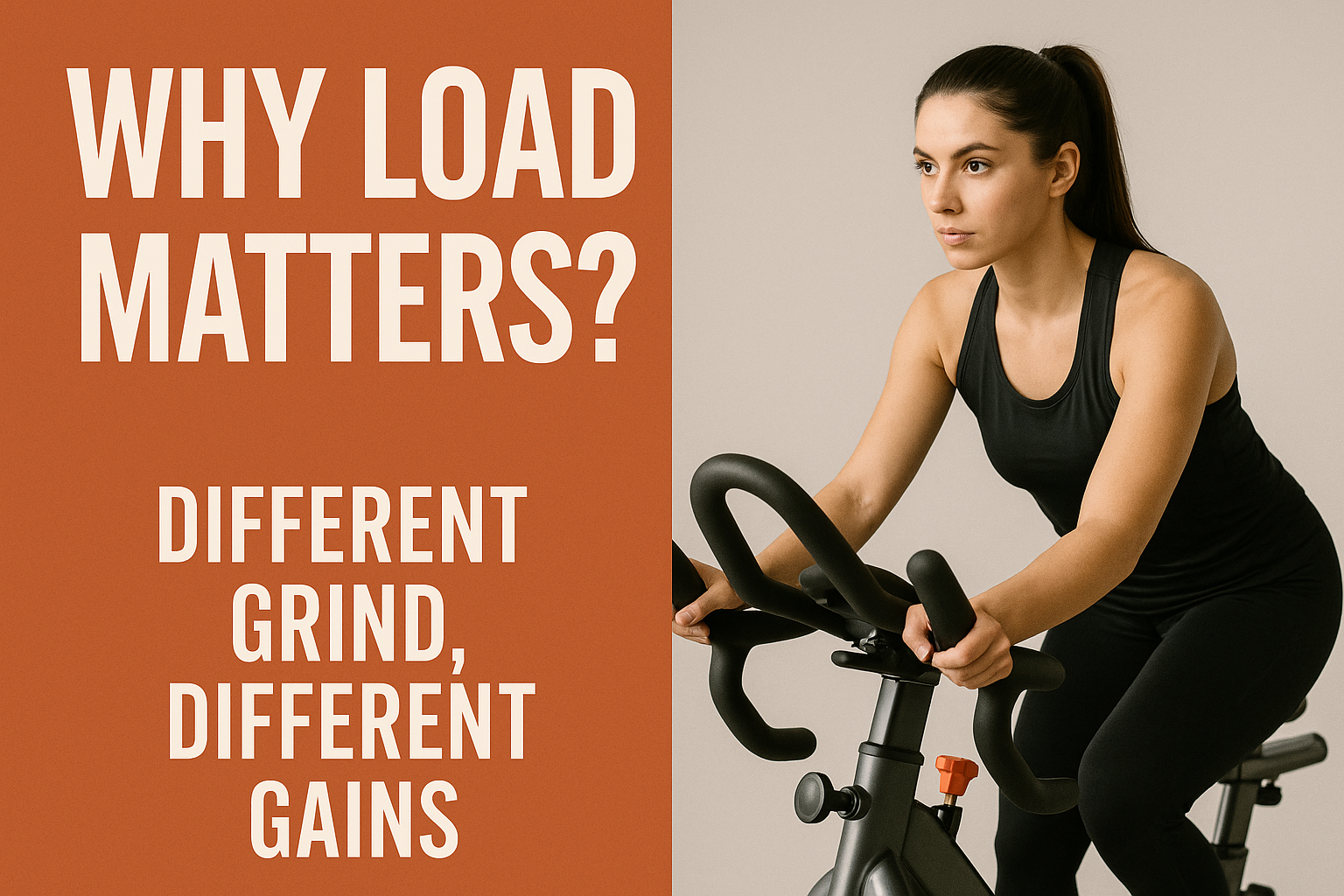
Let’s unpack this because I didn’t mention it enough: “load” means more than turning the resistance knob.
It means muscle fiber recruitment, time under tension, and disruption of homeostasis — the fancy way to say “making your body freak out a little so it repairs stronger.”
On a bike, you’re usually in the realm of low-to‐moderate load repeated many times: classic endurance.
For hypertrophy, you want higher load fewer reps, or heavy resistance for a shorter duration.
On a bike you can approximate that by:
- Rising resistance until you can only pedal ~40-60 RPM for a hill climb simulation.
- Doing 10-15 seconds of maximal sprint, then resting 40-50 seconds, repeating for 10 cycles.
- Standing up for 30–45 seconds on heavy resistance, then sitting for 60 seconds.
These mimic “heavy set” effects.
They force your muscles to handle greater mechanical tension.
Without that, you’re mostly training efficiency.
And yes — the research backs it.
One review stated that while cycling can trigger size and strength gains, you’d get faster/more muscle from traditional weight training. (SELF)
So yeah — load matters.
Don’t kid yourself thinking “hours of spinning = big legs.” Hours of spinning = strong endurance legs.
The Role of Muscle Fibers in Biking vs Lifting
Here’s a quick nerdy dive (you asked for it, right?).
Your muscles have different types of fibers:
- Type I (slow-twitch): built for endurance, continuous work, lots of reps, low load.
- Type IIa & IIx (fast-twitch): built for power, heavier loads, fewer reps, explosive movement.
Stationary biking mostly activates Type I fibers.
That’s why your legs can keep going and going.
To grow big, you need to recruit Type II fibers — the ones that respond to heavy loads.
Biking can tap them (especially if you sprint/stand/heavy resistance) but by default, it doesn’t flood them like squats or leg presses do.
If you’re serious about hypertrophy, your plan should include heavy compound lifts (squats, deadlifts, leg presses) to activate Type II, and use the bike for volume, recovery, conditioning.
Practical Weekly Plan – How to Fit Bike + Leg Training Without Overdoing It
Because I know you want actionable stuff.
Here’s a weekly blueprint:
Monday – Leg strength day: squats, lunges, leg press (add “real leg day”).
Wednesday – Stationary bike session: 30 minutes with heavy resistance intervals (see earlier).
Friday – Hybrid: bike warm-up 10 min, then supersets of leg lifts + glute/hamstring work, then bike cool down 10 min.
Sunday (active recovery) – Easy bike ride 20-30 min at low resistance, just spinning the legs out.
This way you:
- Give your legs a heavy stimulus (necessary for hypertrophy).
- Use the bike to support volume, endurance, conditioning.
- Avoid overtraining by splitting heavy vs easy.
If you just do bike 5 days a week thinking it’ll build giant quads — you’ll burn calories, sure — but you’ll miss the size train.
Pairing modalities wins.
Common Mistakes People Make with Stationary Bikes (and How to Fix Them)
- Using too low resistance for too long
Fix: Turn up resistance. If you’re chatting you’re not pushing enough. - Staying seated the whole time
Fix: Get out of the saddle occasionally. Standing up engages more glutes/hamstrings. - Ignoring cadence and form
Fix: Track your cadence (rpm) and aim for quality strokes. Too fast and light = endurance only. Moderate cadence + higher tension = more muscle stimulus. - Thinking “more time = more muscle”
Fix: Time is useful, but load and intensity matter more for growth. 20-30 min hard = better than 60 min meh if your aim is muscle. - Skipping rest and recovery
Fix: Legs need recovery if you actually want them to grow. Don’t go hard every single day.
When Stationary Bikes Are Actually the Best Choice
Don’t get me wrong — there are times when the bike is not just good, but ideal.
- When you’re injured (especially knees/ankles) and can’t squat heavy. Low-impact option. (arthritis.org)
- When you want a high-volume metabolic leg session after heavy lifting (legs are still taxed, but you shift focus to endurance).
- When your goal is athletic performance (endurance, stamina, leg durability) rather than monster quads.
- When you’re in a conditioning block (sports, off-season, etc.) and you need to build leg engine more than size.
In those contexts, the bike isn’t “lesser” — it’s strategic.
It just needs to match your goal.
Nutrition & Recovery Considerations When You’re Using Bike + Leg Workouts
Because muscle growth doesn’t just happen in the gym/bike — it happens afterward too.
- Protein: Make sure you’re getting ~1.6-2.2g/kg of body weight if hypertrophy is your goal. Bike + leg day = extra demand.
- Calorie surplus: If you’re burning tons of calories on that bike, but eating at maintenance/deficit, your body might prioritize endurance adaptation instead of growth.
- Sleep & recovery: Leg training is taxing. Recovery matters. Use the bike on light days to promote blood flow (active recovery), not heavy sessions every day.
- Supplement your training: Use foam rolling, compression, stretching especially for quads/glutes/hamstrings after heavy bike/leg work so you’re fresh for next session.
💡 Related read:
Ever notice how your legs feel heavier on the bike after an intense squat day?
It all comes down to how you train them.
Take a look at Leg Day Dilemma: Heavy Weights with Low Reps or Light Weights with High Reps? — it breaks down how different leg-day strategies change fatigue, recovery, and overall performance.
Final Thoughts
Your stationary bike isn’t lying to you — it’s just doing its job. It’s designed to make your legs efficient engines, not bigger pistons.
So instead of cursing your bike for not growing your quads, use it strategically:
- Warm up your legs before lifting.
- Flush out soreness on recovery days.
- Build stamina for those brutal leg sessions.
That’s how you make it part of the plan — not the plan itself.
And if you still crave that pump, there’s always the squat rack waiting… right next to your favorite bike.
Now go make your quads proud — both on and off the pedals.