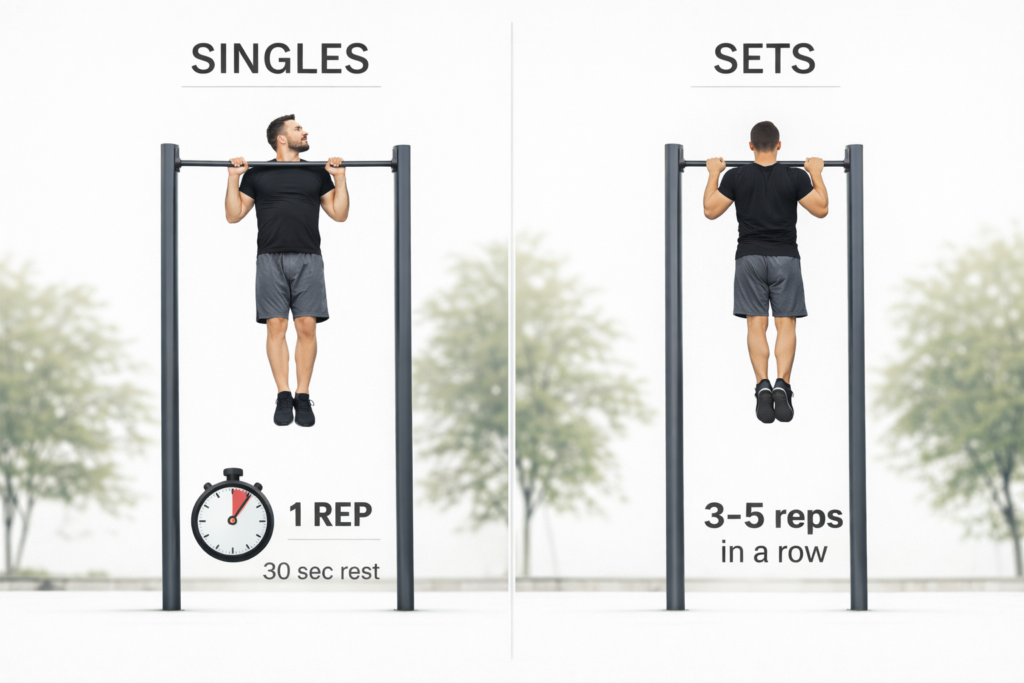
Pull-ups started to feel different when I began doing them one rep at a time, stepping down from the bar after each rep.
I would do one pull-up, put my feet on the ground, breathe, and then go again.
After a few workouts, each pull felt smoother and more controlled, almost like the movement had become cleaner.
Trying to go back to many reps in a row felt messy and rushed, and that’s when I realized that training this way was teaching me something I hadn’t felt before.
When a Normal Pull-Up Session Took a Weird Turn
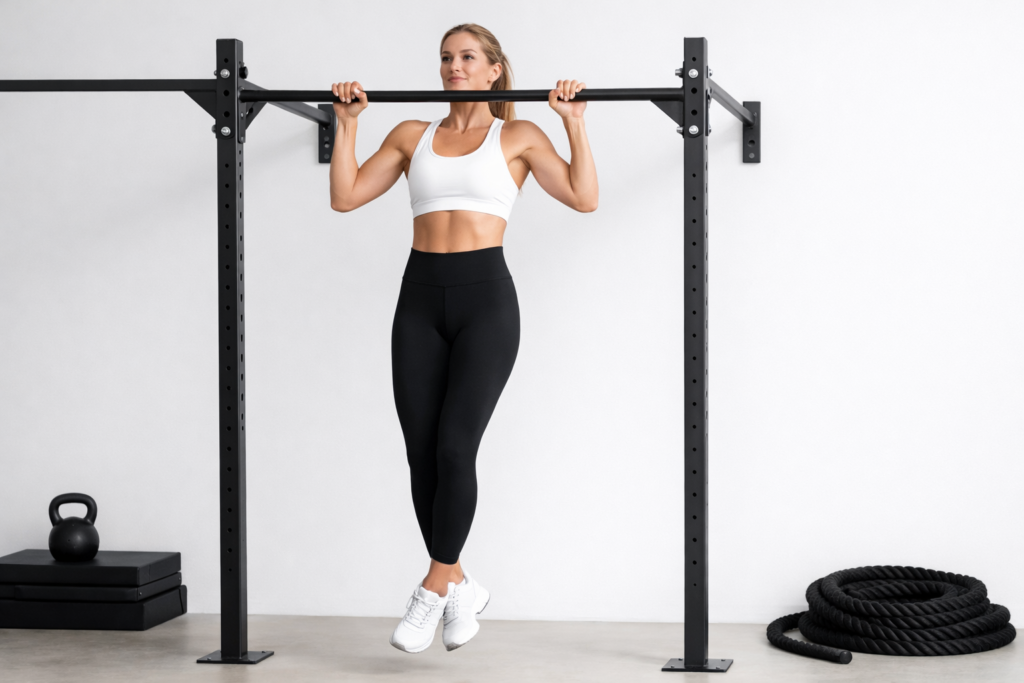
This happened on a day where I walked to the park thinking, “Just do your usual pull-ups and go home.”
The bar was cold.
My hands were dry.
I did a normal warm-up, grabbed the bar, and hit a set of 6.
Rep 1 felt solid.
Rep 2 felt fine.
Rep 3 felt a little slower.
Rep 4 felt like my shoulders were negotiating terms.
Rep 5 felt like my forearms were swelling inside the skin.
Rep 6 got done, but the last half looked like a tired worm climbing a fence.
I rested about 2 minutes, tried another set, and it got worse faster.
On a whim, I said, “Okay, just do singles.”
I did 1 rep every 20 seconds for a while.
Yet every rep felt like rep 1 again.
Calm breathing.
Smooth pulling.
Technique stayed consistent from start to finish.
Just clean pull-ups that looked and felt “organized.”
What “Singles” Mean in Pull-Up Training
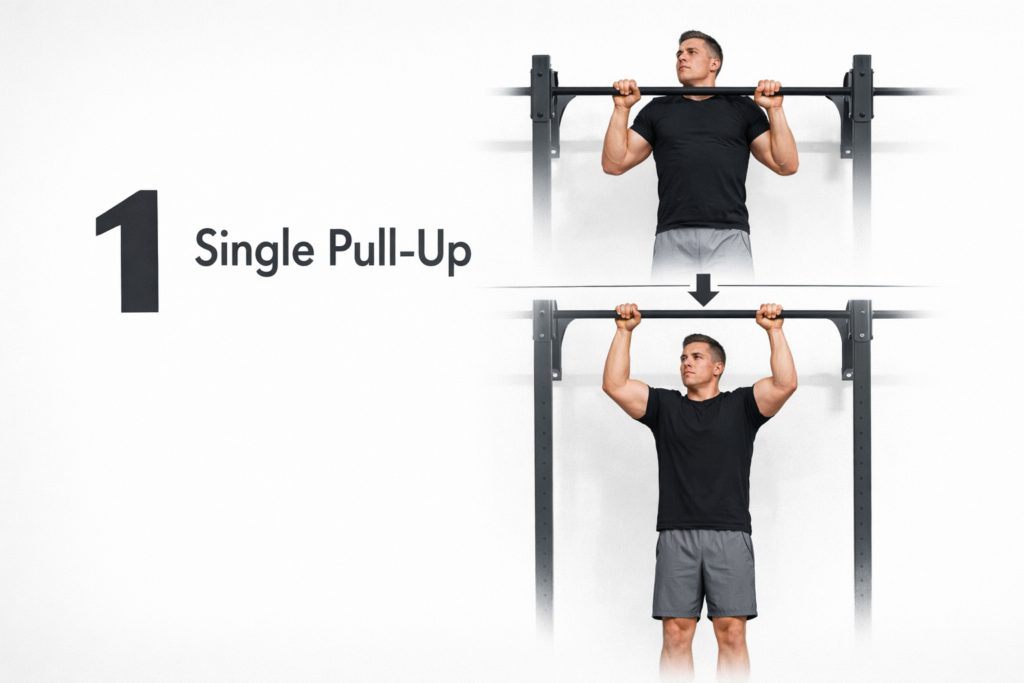
A single is exactly one rep.
A pull-up is you hanging from a bar and pulling your body up until your chin clears the bar.
That’s the basic definition.
The “clean” part is how you get there.
Here’s the simplest version I wish someone had drilled into my head early on:
- Start from a dead hang.
- Hands on the bar slightly wider than shoulder width.
- Legs quiet, no swinging.
- Pull until your chin is above the bar.
- Lower down under control until arms are straight again.
If “dead hang” sounds dramatic, it just means this: arms straight, body hanging, no half-bent elbows cheating the start.
If controlling the lowering part feels impossible, lower for about 2 seconds.
That means: one Mississippi, two Mississippi, and you’re back at the hang.
The pause between reps is part of the method, because it allows breathing, grip reset, and shoulder position to return to a strong starting point.
Why Singles Felt “Stronger” Even Though They Weren’t Building New Muscle Overnight
The difference wasn’t that I became stronger in ten minutes.
What changed was how each rep unfolded.
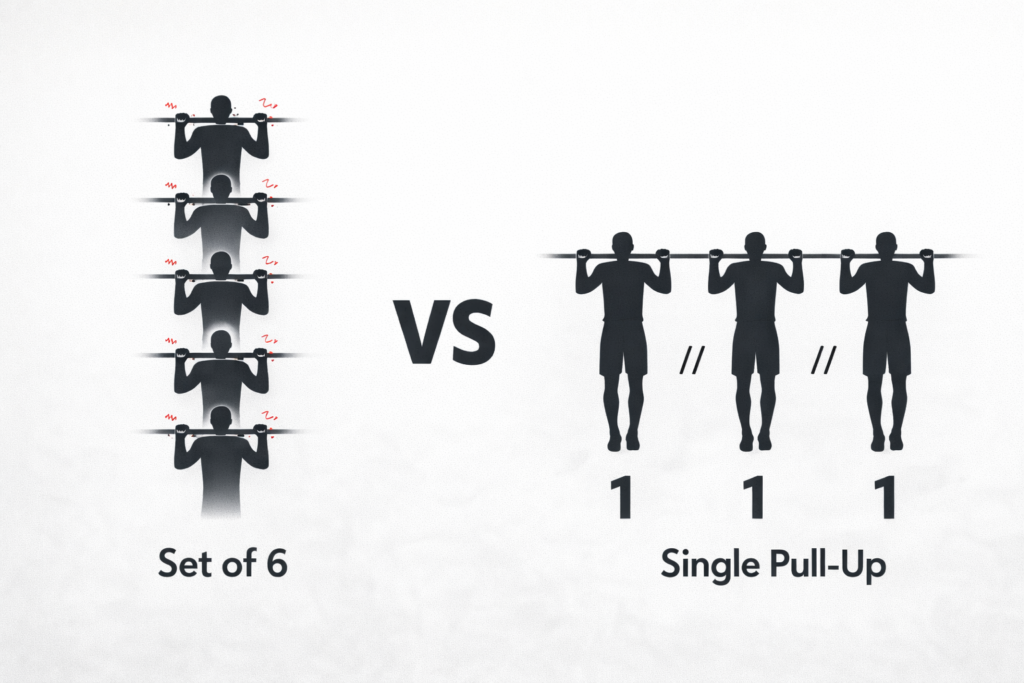
A set of 6 isn’t really one effort, but six separate reps, each one done with a slightly more tired grip, slightly less crisp coordination, slightly worse breathing, and a little more hurry in the pull.
By the fourth or fifth rep, my body would start taking small shortcuts without me noticing.
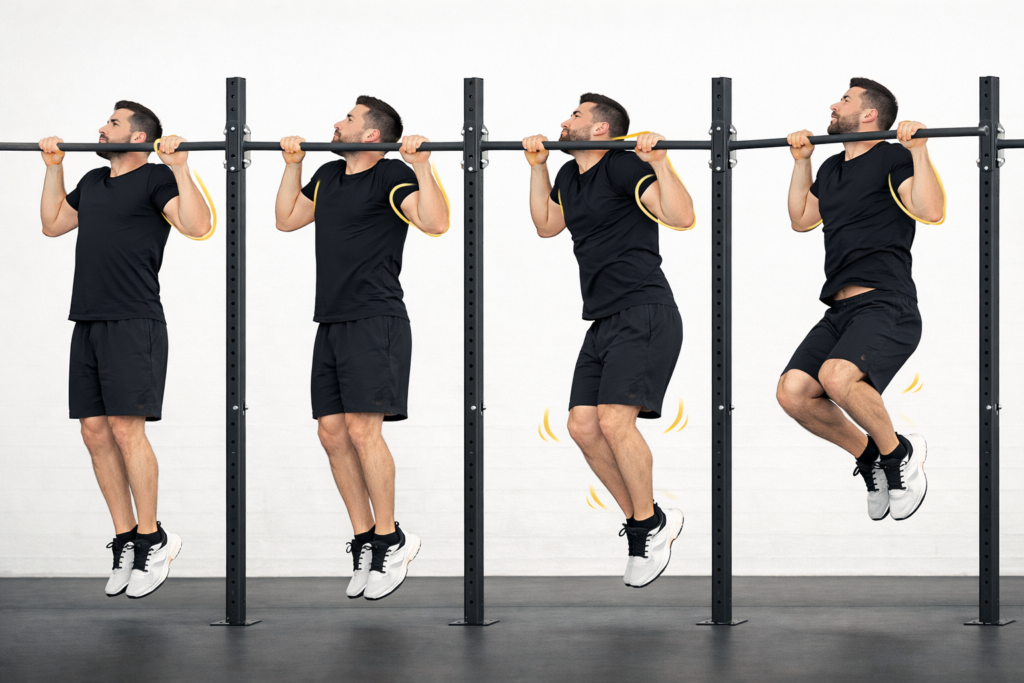
The elbows stopped driving down and back and began drifting forward.
My chest stopped moving toward the bar, and my face started chasing it instead.
Shoulders crept up, almost like I was shrugging through the movement.
Legs got restless, trying to help the rep along.
None of it felt dramatic in the moment.
It just felt like normal tired pull-ups.
Watching a video later made it obvious that rep quality was sliding a little more each time.
Singles changed that because every repetition started from a calm, organized position.
Grip reset, shoulders set, breathing under control, then pull.
Fatigue was still there over the whole workout, but it wasn’t piling up inside a single set and quietly distorting the movement.
That’s why the reps felt sharper and more powerful.
Not easier overall, just cleaner every time, like hitting a reset button before each pull.
Why singles hammered my nervous system without frying my muscles the same way
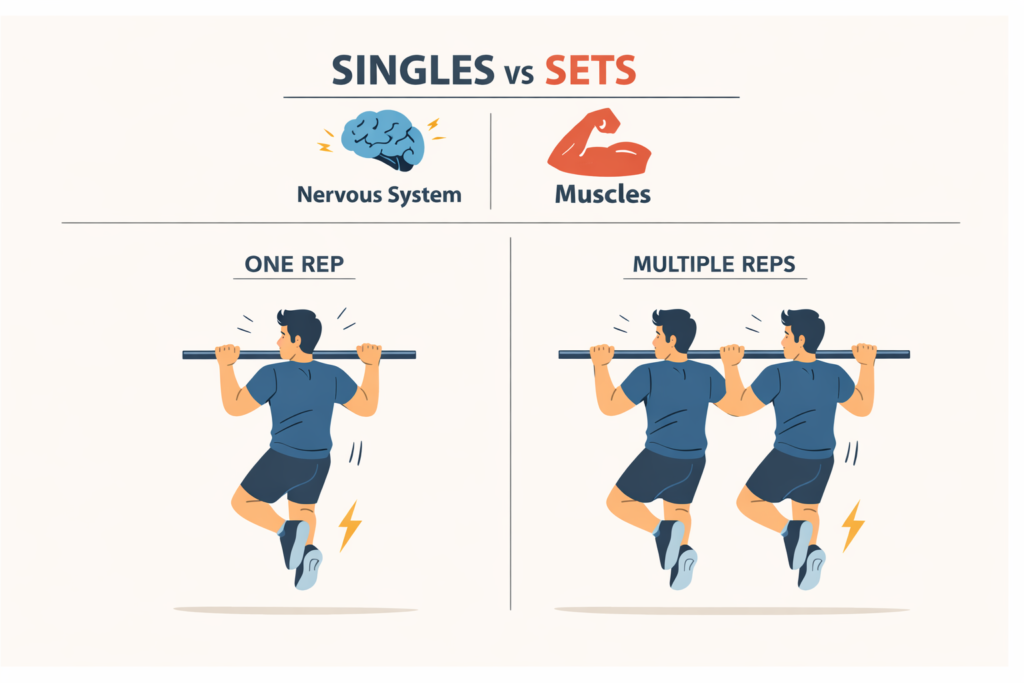
This sounds like a big science phrase, but the idea is simple.
There are two big types of tired you notice in pull-ups.
One is muscle fatigue.
That’s the burning and swelling feeling in your forearms, biceps, and upper back.
The other is coordination fatigue or technical fatigue.
That’s when everything feels slightly off, even if you still have muscle left.
Singles are weirdly good at training the second one.
They make you practice producing a clean, powerful pull while you’re still fresh enough to organize your body.
Sets are great at creating muscle tired, because the reps pile up without a full reset.
That’s why sets often give you a huge forearm pump and a “my back is cooked” feeling.
Singles gave me a different sensation: less burning, more “snap,” and a feeling like my body was learning how to fire the movement on command.
It was like rehearsing the first sentence of a speech perfectly, instead of stumbling through the whole paragraph and hoping the audience forgives you.
The rest time is the whole game (and why 10 seconds vs 30 seconds changed everything)
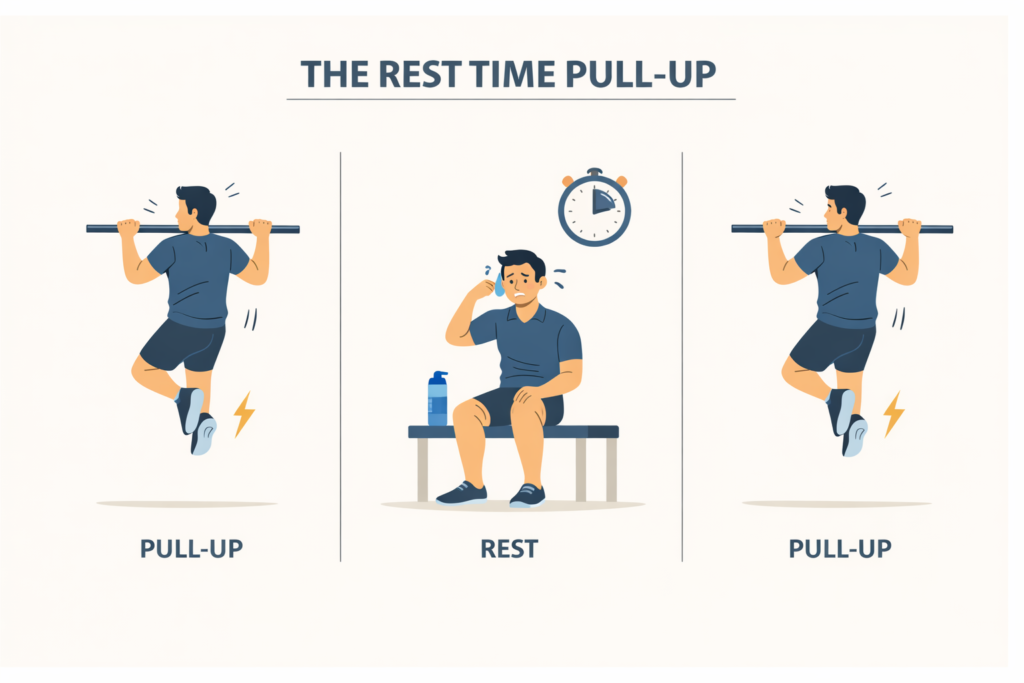
At first I did singles with very short rest.
I tried 1 rep every 10 seconds.
That sounded efficient.
It felt like I was being chased.
By rep 8 to 10, I wasn’t gasping, but my grip started feeling inflated, and my shoulders started creeping up.
So I slowed it down.
I tried 1 rep every 20 seconds.
That felt like I had time to breathe once, shake out the arms, and set the shoulders again.
Then I tried 1 rep every 30 seconds.
That felt almost luxurious, like each rep got its own little setup ritual.
Here’s what I learned the hard way:
- Too short of a rest turns singles into a disguised set.
- Too long of a rest turns it into “one rep, full nap, one rep.”
- The sweet spot was the rest that kept reps clean while still building some fatigue over time.
For me, 20–30 seconds was the zone for bodyweight pull-ups when I was doing a lot of total reps.
When I did harder pull-ups (like with extra weight), 45–90 seconds felt more realistic.
What it felt like in my arms and back (the sensations were not the same at all)
Sets of 6 to 8 gave me this feeling:
Forearms got pumped fast.
Biceps felt tight and hot.
Upper back felt fatigued in a dull way, like a blanket of tiredness.
Breathing got messy inside the set, especially after rep 4.
After the set, I felt “worked,” but also kind of sloppy.
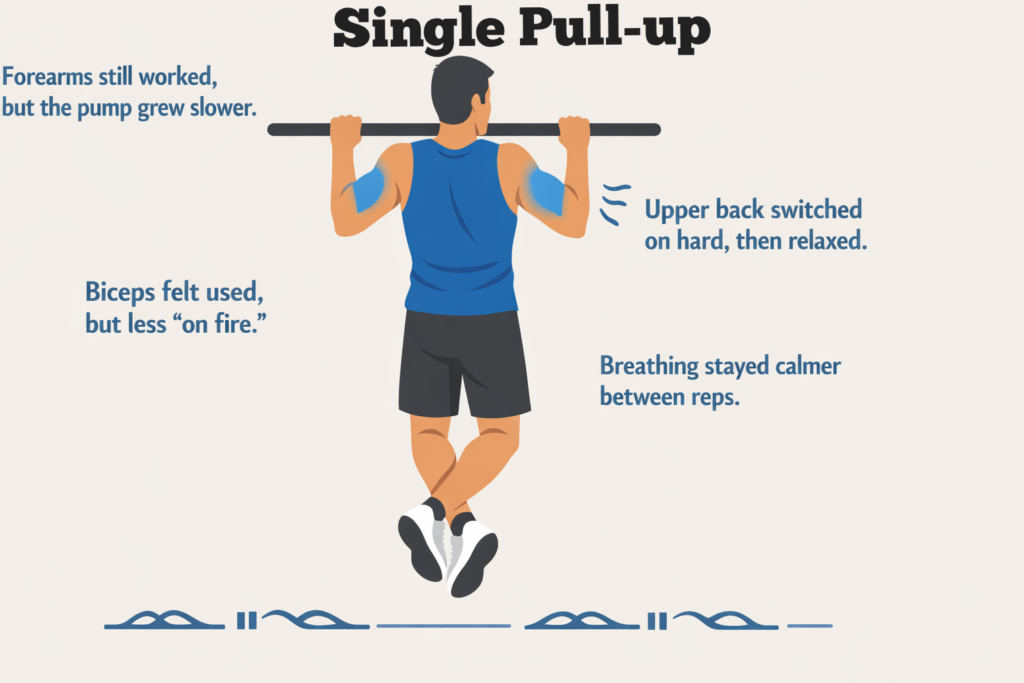
Singles gave me this feeling:
Forearms still worked, but the pump grew slower.
Biceps felt used, but less “on fire.”
Upper back felt more like it was switching on hard for a moment, then relaxing.
Breathing stayed calmer because I could reset between reps.
After a bunch of singles, I felt trained without feeling like I had wrestled a bear.
It was less drama, more precision.
Which is funny, because pull-ups usually love drama.
Why singles exposed weak points that sets let me hide
Sets let you hide behind momentum and rhythm.
If your first reps are strong, you can ride that groove for a while.
Singles remove the groove.
Every rep is a fresh start, so if your setup is bad, it shows immediately.
For me, singles exposed these weak points:
- My grip position was inconsistent.
- My shoulder setup was lazy when I rushed.
- My first inch of the pull was weaker than I thought.
- My breathing timing was random, not deliberate.
Sets let me “flow” past those problems.
Singles forced me to build a repeatable rep.
And repeatable reps are basically the currency of getting better at pull-ups.
The setup I started doing before every single rep (tiny ritual, huge difference)
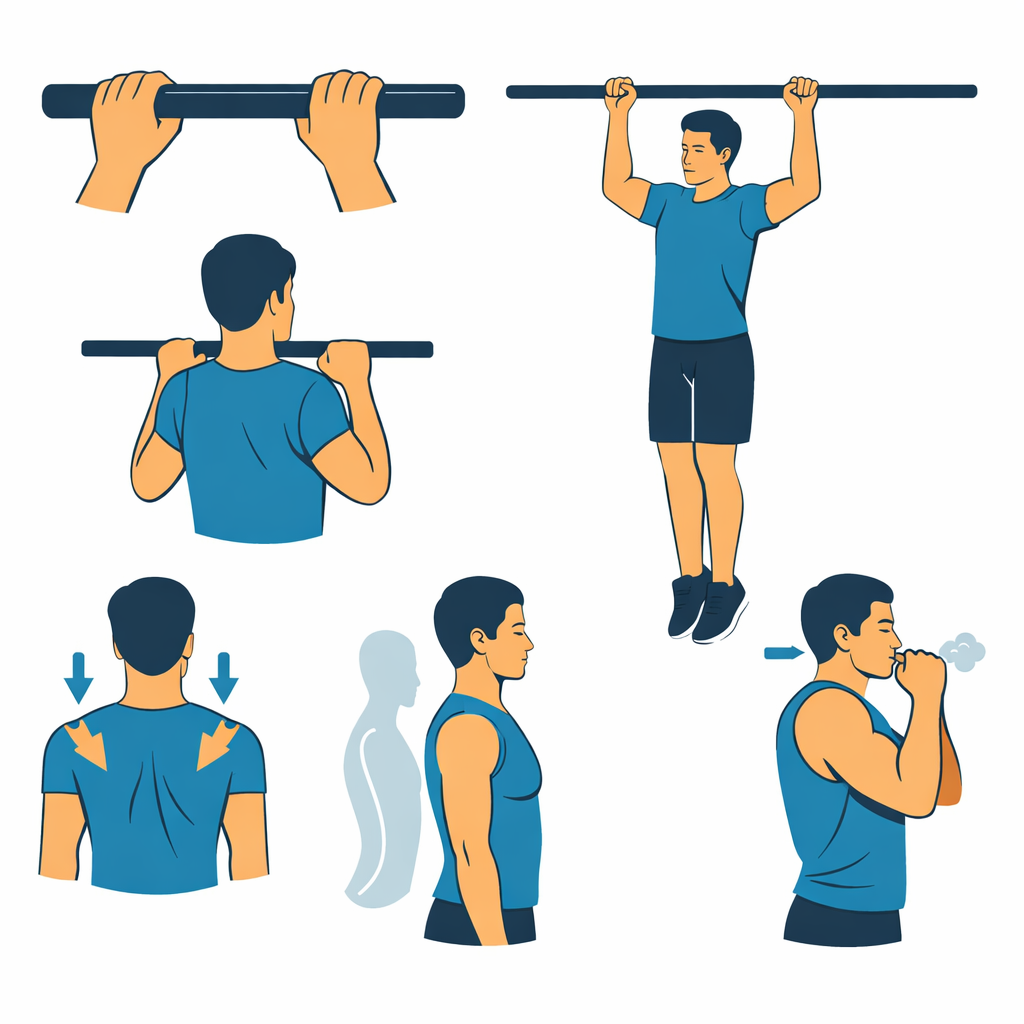
I used to just jump up, grab, pull, drop, repeat.
Singles made me slow down enough to build a consistent setup.
This was my simple checklist before each rep:
- Hands set firmly, thumbs wrapped around the bar.
- Body still for a second, no swinging.
- Shoulders pulled slightly down away from the ears.
- Ribs not flared, so the body didn’t turn into a banana.
- Breath in, hold just a moment, then pull.
That breath part mattered more than I expected.
If I inhaled and pulled, I felt braced and stable.
If I exhaled too early, my body felt loose, and the rep felt shaky.
It wasn’t mystical.
It was just “tension management,” like tightening a jar lid before you twist it.
A full singles session I actually did (numbers, rest, and how it went)
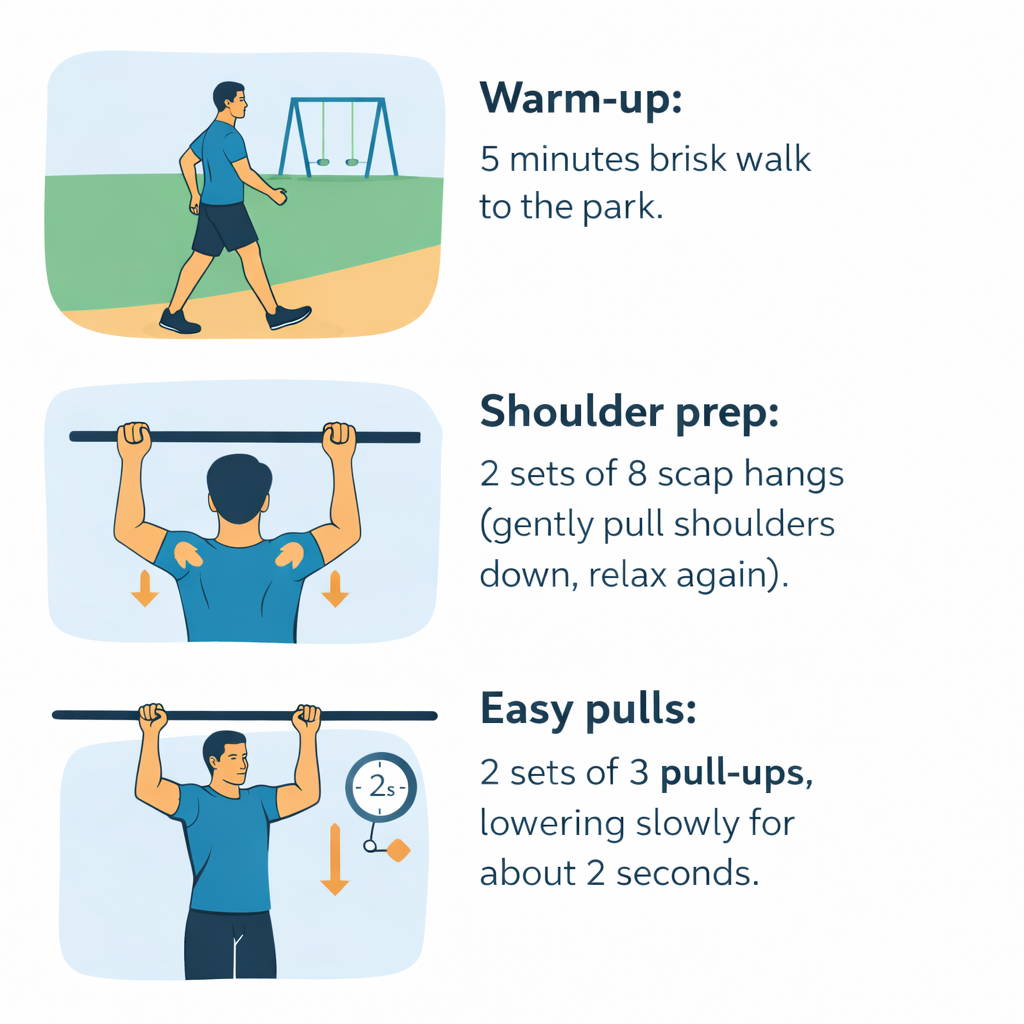
One afternoon, I decided to keep it extremely simple.
No fancy plan.
Just a goal: stack clean singles without turning them into sloppy reps.
This is exactly what I did:
- Warm-up: 5 minutes brisk walk to the park.
- Shoulder prep: 2 sets of 8 scap hangs (hanging and pulling shoulders down slightly, then relaxing).
- Easy pulls: 2 sets of 3 pull-ups with a slow 2-second lowering.
- Main work: 20 singles.
- Rest: 25 seconds between singles.
- Rule: if a rep felt grindy, rest went up to 40 seconds.
How it felt:
Rep 1–5 felt crisp and almost too easy.
Rep 6–10 felt like I had to focus more on keeping shoulders down.
Rep 11–15 my forearms started getting that “pressure” feeling, like the skin is tight.
Rep 16–20 I needed the full 40 seconds sometimes, or the rep started losing that clean line.
Total time for the main work was around 12–14 minutes, including the longer rests.
It didn’t feel like a pump session.
It felt like practice that also made me tired.
A full sets session I compared it to (same total reps, completely different experience)
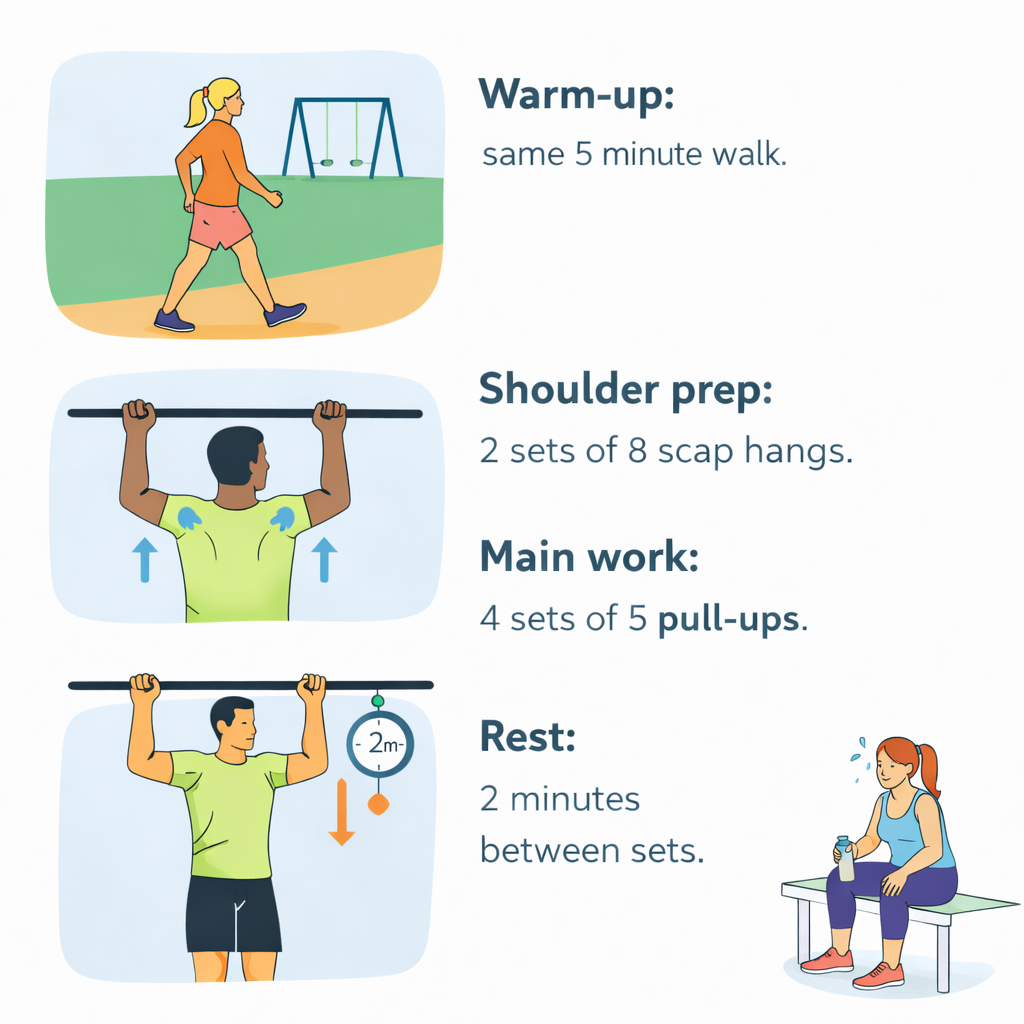
A couple days later, same park, same bar, I tried to match the total reps.
I aimed for 20 total pull-ups again, but in sets.
This is what I did:
- Warm-up: same 5 minute walk.
- Shoulder prep: 2 sets of 8 scap hangs.
- Main work: 4 sets of 5 pull-ups.
- Rest: 2 minutes between sets
- Rule: stop the set if form fell apart.
How it felt:
Set 1: 5 reps felt controlled, last rep slower.
Set 2: 5 reps felt heavier, grip started burning by rep 4.
Set 3: got 4 reps clean, 5th was a grind and I didn’t like how my shoulders rose.
Set 4: got 3 reps, then I stopped because it was turning into ugly pulling.
Total reps ended up 17, not 20.
The pump was bigger.
The fatigue was louder.
The “quality” was worse after the first half.
Same intention.
Different outcome.
Why singles can build strength without making every session feel like a survival show
Strength is not only about how many reps you can suffer through.
It’s also about how much force you can produce with good positions.
Singles let you practice force and position together.
They’re like rehearsing the clean version of the movement repeatedly.
That matters because the pull-up is not just “pull with arms.”
It’s a whole-body coordination thing: grip, shoulders, elbows, trunk tightness, and even how you control the swing.
Sets can build muscle and endurance, but they also encourage “just finish it” behavior.
Singles encourage “make it clean” behavior.
And those are two very different training signals.
When singles made my joints feel better (and when they didn’t)
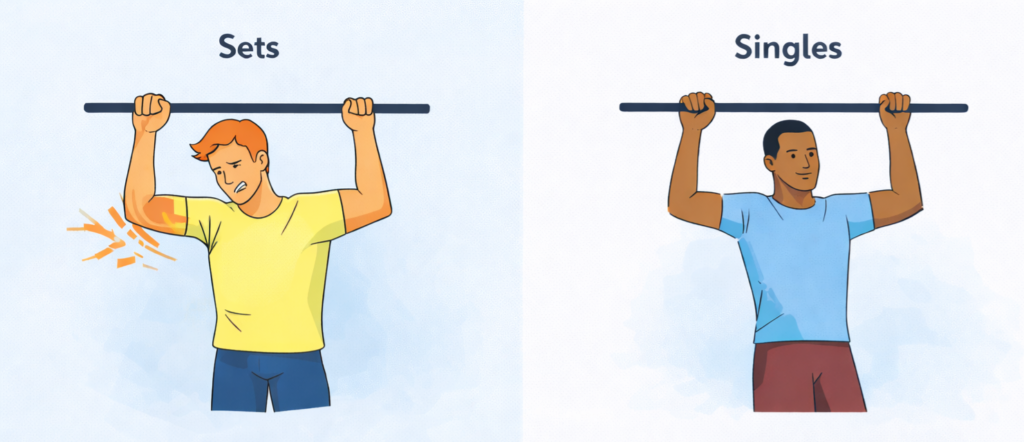
I noticed something surprising in my elbows.
With sets, especially when I pushed close to failure, my elbows felt a little cranky afterward.
Not “injury,” but that irritated feeling that makes you rub your forearm like it owes you money.
With singles, my elbows usually felt calmer.
My guess is simple: less ugly grinding reps, less sudden compensation, less joint stress.
But singles weren’t automatically joint-friendly.
When I rushed the rest and started yanking reps, my shoulders got annoyed fast.
So the rule became: clean pull or no pull.
If I couldn’t set my shoulders and control the start, I waited longer.
Where singles fit best (and where sets still win)
Singles were amazing for:
- Cleaning up technique.
- Practicing strong first reps.
- Building confidence in the movement without turning it into a grind-festival.
- Getting a lot of quality reps while staying in control.
Sets still mattered for:
- Building pull-up endurance.
- Getting a strong muscle pump and fatigue stimulus.
- Learning to keep form while tired.
The best part was realizing it didn’t have to be either-or.
The real trick was using singles for what they’re good at, and sets for what they’re good at, without pretending they feel the same.
Two Simple Ways I Started Using Singles in My Pull-Up Sessions
### Singles first, then a couple small sets
I’d do:
- 12 singles with 25–35 seconds rest.
- Then 2 sets of 4 pull-ups with 2 minutes rest.
How it felt:
The singles made my reps crisp.
The sets gave me that “work” feeling without destroying form.
### Sets first, then singles to keep quality
I’d do:
- 3 sets of 5 pull-ups with 2 minutes rest.
- Then 6 singles with 30 seconds rest, focusing on perfect reps.
How it felt:
The sets drained me.
The singles forced me to stop rushing and finish with clean movement.
It was like cleaning the kitchen after cooking instead of leaving it for future-you to hate.
What changed most: my first inch off the hang
This was the big “oh” moment.
Sets let me cheat the start by staying slightly tense and bouncing into the next rep.
Singles forced me to start from stillness more often.
That made the first inch harder, but also more honest.
I started focusing on this cue:
“Pull the shoulders down first, then pull the elbows down.”
That one idea cleaned up my reps more than any grip tweak I ever tried.
And it made sets feel better too, because the movement started in a stronger position.
RELATED:》》》 How to Progress in Calisthenics
If pull-ups feel stale, try changing the format before changing the exercise
A lot of people jump straight to fancy variations when pull-ups feel stuck.
Neutral grip.
Commando pull-ups.
Towel pull-ups.
Weighted pull-ups.
All cool, but the simplest change is often the most revealing: keep the pull-up, change the rep format.
Singles made the pull-up feel like a skill again, not just a suffering contest.
Sets reminded me that fatigue has a personality and it loves to ruin your form quietly.
Putting both in the same toolbox made my training feel more intentional without turning it into some complicated ritual.