
There’s this unspoken tragedy that hits every fitness-loving renter at some point.
You walk into your new apartment, full of motivation, ready to turn that doorway into a personal jungle gym — and then you realize the walls are basically made of papier-mâché.
No drilling allowed.
No wall anchors.
No “minor modifications.”
Just you, your pull-up dreams, and a landlord who probably has nightmares about damaged drywall.
I’ve been there.
And trust me, nothing crushes your motivation faster than holding a brand-new pull-up bar in your hands and realizing it’s now just an overpriced piece of modern art.
But here’s the good news — there are ways to train like a beast without leaving a single hole in the wall.
You just need to know which kind of pull-up setup fits your space, your goals, and your sanity.
Doorway pull-up bars: the renter’s first love
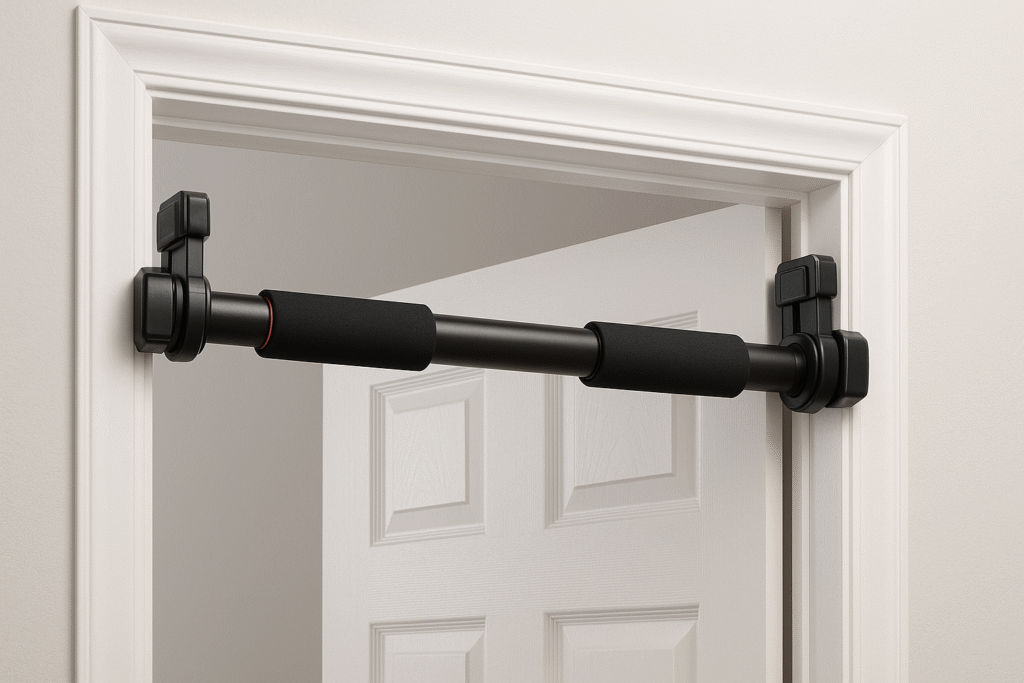
Most people start here — the good old tension-mounted doorway pull-up bar.
It’s light, cheap, and claims to fit “any standard frame.”
(That last line, by the way, has probably broken more hearts than bad Tinder bios.)
The truth is, doorway bars are great if you use them right.
They rely on leverage, not screws, to hold your weight — which means they push against the sides and top of the door frame instead of drilling into it.
The upside?
No marks, no holes, no angry calls from your landlord.
The downside?
You’re limited to neutral and over-hand grips most of the time.
And if your door frame is too narrow or uneven, that “secure fit” can quickly turn into a dramatic slow-motion fall worthy of an action movie.
Still, for beginners or renters who move often, this is a solid start.
Just make sure you pick a brand with rubberized pressure pads (to protect paint) and a weight rating at least 50 lbs higher than your actual body weight.
Also measure your frame width and height carefully — many models fail when the frame is odd or finishes are weird.
If you want a smoother experience, look for doorway bars that use adjustable horizontal grips — they help distribute weight evenly and reduce frame stress.
And don’t forget: always test with a partial hang first.
If it creaks, it’s not ready for your bodyweight yet.
Freestanding pull-up towers: your personal (but bulky) gym corner
If you’ve got some floor space and don’t mind a slightly industrial vibe, freestanding pull-up towers are game changers.
They don’t touch your walls at all.
No screws, no pressure points, no “oops” moments.
These towers usually include a pull-up bar, dip handles, and sometimes a leg-raise station.
Perfect if you want a more complete upper-body workout — without asking your landlord for forgiveness later.
The trade-off?
They take up space.
Like, a lot of it.
You’ll need enough room for the frame and clearance above to avoid headbutting the ceiling mid-rep.
And while they’re stable, cheaper models can wobble a bit, especially on carpet.
Also, you’ll still want to anchor them or at least ensure they won’t slide during explosive work (e.g., kipping or muscle-ups).
But if you’ve got a garage, balcony, or a sturdy living-room corner, this is easily the most “landlord-proof” option out there.
For better stability, place a rubber mat under the base and distribute your weight evenly throughout reps.
If you’re tall, look for adjustable height towers — some can extend up to 90 inches, making them perfect for taller athletes.
Wall-mounted tension systems (yes, they exist)
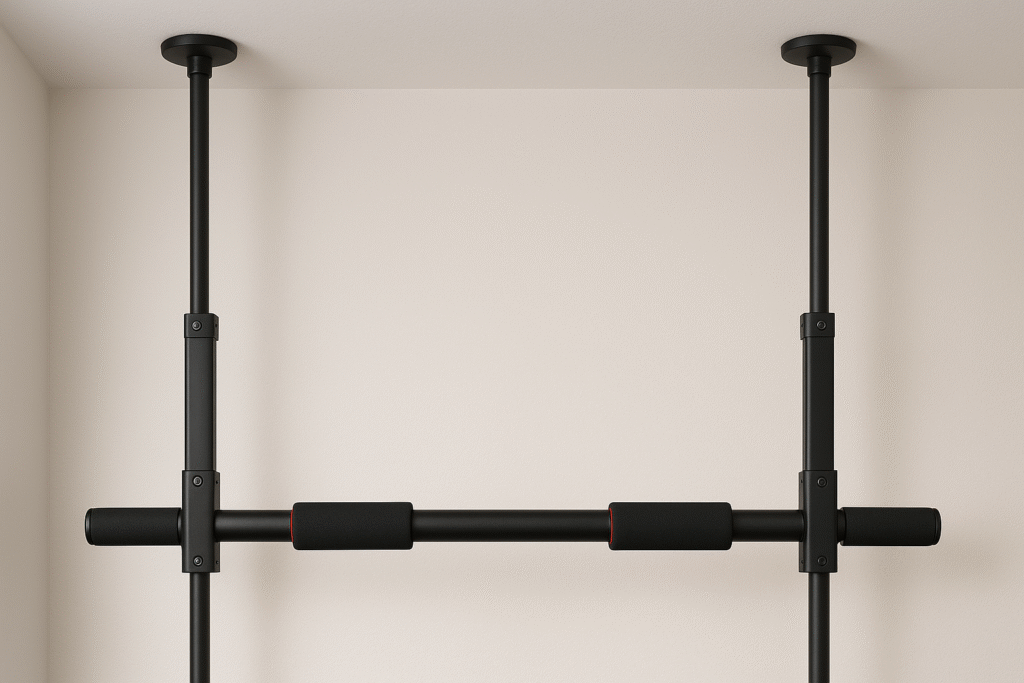
Now, this one’s interesting.
Some modern pull-up systems use vertical tension rods that press between the floor and ceiling — basically like the world’s strongest shower rod.
They’re completely drill-free but feel surprisingly solid.
Think of it as a hybrid between a doorway bar and a power rack.
You can mount multiple bars at different heights, attach resistance bands, and even add TRX straps or rings for a full-body setup.
The biggest advantage?
No doorway limits, no wobbling, and no need for a garage.
The only thing to watch out for is ceiling stability — avoid fragile drywall ceilings and stick to concrete or wood-beam structures.
Otherwise, you might end up testing gravity in ways you didn’t plan to.
Also check manufacturer specs for height, max load, and safety features (some disclaimers talk about “not for kipping”).
When installing, tighten the tension gradually on both ends — overtightening too fast can crack ceilings or dent floorboards.
These systems are perfect if you want a semi-permanent setup without commitment.
Portable and collapsible pull-up bars for nomads
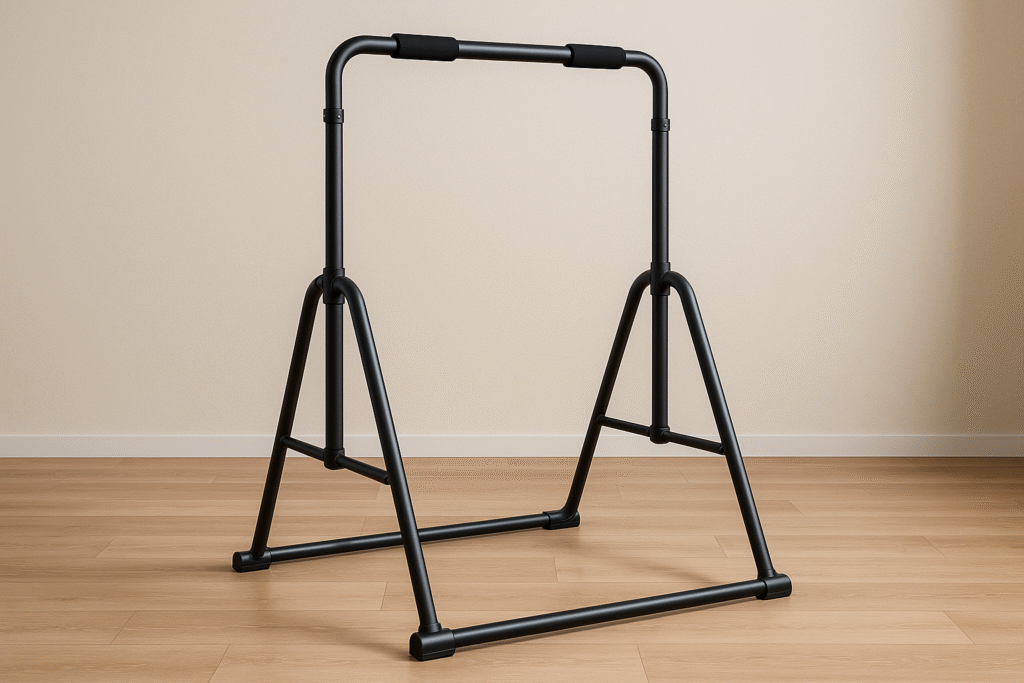
If you move a lot (or just hate assembling furniture), portable pull-up bars are your best friend.
These setups fold flat, weigh around 20 pounds, and can be set up in under a minute.
They usually sit on the floor with a low center of gravity, meaning you can do pull-ups, Australian rows, and even dips — all without mounting anything.
They’re also great for outdoor sessions.
Take it to the park, beach, or parking lot — boom, instant gym.
The catch?
They’re not as tall as standard pull-up rigs, so you’ll need to bend your knees during reps.
But honestly, that’s a small price to pay for mobility and freedom.
The real trade-off is stability and max load: you’ll rarely get kipping muscle-up stability, so keep your ego in check.
If you want to push them harder, pair your collapsible bar with weight vests or resistance bands to keep intensity high without going airborne.
It’s like a travel-sized gym that actually works.
Creative alternatives when space is a luxury
If you’re really tight on space (or patience), you can still train your back effectively — pull-up bar or not.
Here’s how:
- Resistance bands anchored around a heavy table leg can mimic vertical pulls.
- Towel rows using a sturdy door handle (closed, of course) can build solid scapular control.
- Gymnastic rings hung from a tree branch or outdoor beam? Absolute gold.
Remember, your muscles don’t care if you’re pulling a $200 bar or a $10 strap — they just respond to resistance, stability, and consistency.
By alternating grips (supinated, pronated, neutral) even in these makeshift setups, you still hit lats, traps, rhomboids, biceps, forearms — you name it.
Plus, training in unconventional setups can boost coordination and body-awareness in ways a standard gym machine never will.
If you’re bored, try combining isometric holds at the top of your movement — you’ll light up stabilizers you didn’t know existed.
And yes, it counts even if you’re hanging from your closet door.
How to keep your landlord happy (and your deposit safe)
A few quick lessons learned from years of renter-friendly training:
- Always test your setup at half your weight first.
- Never install on wet paint or weak plaster.
- Use a microfiber cloth under tension pads to avoid scuffing.
- Take photos of your walls before and after if you’re paranoid (I am).
- When you move out — store the bar and reinstate the original setup. It’s just good karma.
Trust me — it’s easier to prevent damage than explain why there’s a mysterious rectangular dent above your door frame when you move out.
If you really want to impress your landlord, patch minor paint marks with a matching color sample before your inspection day.
It’s a five-minute fix that can save you hundreds.
Advanced Grip Variations & Execution Tips (for renter-friendly gear)
If you’ve got the pull-up bar sorted and want to go beyond “just hang and pull,” here are some renter-safe upgrades:
- Mixed grip pull-ups (one palm facing you, one facing away) help eliminate strength imbalances.
- Slow eccentric reps: take 4–6 seconds to lower yourself — this increases time under tension and builds strength without needing heavy weights.
- Scapular pull-ups: hang still, then initiate movement by shrugging your shoulders down and back, pulling the bar slightly — great for scap control and shoulder health.
- L-hang holds: raise your legs in front of you while hanging — you’ll feel it in your core and hip flexors. Many pull-up bars support this if there’s enough clearance.
These techniques work whether you’re on a doorway bar or a free-standing rig; the key is control, not momentum.
If you want a serious challenge, try Archer pull-ups or Typewriter pull-ups — advanced but perfect for when you’ve maxed out standard versions.
Pull-Up Bars for Renters: Safety Steps You Shouldn’t Skip
Before you jump into your first session, run through this audit:
- Door frame/tension-bar installation: inspect the top trim — if it flexes or creaks when you hang, it’s a red flag.
- Carpet vs hardwood: if you’re on carpet, place a rubber mat under freestanding towers to prevent slipping or uneven stability.
- Clearance: For pull-ups you’ll need at least 30 inches (≈76 cm) of overhead clearance plus width so your head and arms aren’t hitting the door sides.
- Load rating: Choose gear rated at least 1.25× your bodyweight if you plan to do kipping or explosive moves.
- Inspect regularly: Check bolts and rubber pads monthly. Tension bars can lose grip due to small shifts over time.
- Store when moving: If you’re tight on space or expect landlord inspections, keep the bar disassembled and stowed between uses.
When a Drill-Free Bar Isn’t Enough: What’s Next?
Okay so you’ve done your pull-ups, adjusted your grips, hovered your bodyweight — but what if you want more?
Here are upgrades for the renter who wants to go “next level”:
- Attach gymnastic rings to your bar (or tower) for ring pull-ups, muscle-up progressions, and explosive training.
- Use resistance bands around the bar or tower to add variable load — perfect for assisted pull-ups or band-resisted pulls.
- Combine with a small TRX strap anchored to the same frame — you’re now unlocking back rows, single-arm pulls, and “pull-up triples.”
- Add holds and pauses: At the top of a pull-up, hold your chin over the bar for 2–3 seconds before lowering — increases stability and control.
- Track progress: Use a simple chart (sets × reps × variations). Over time you’ll see not just brute strength but coordination, grip, and endurance improve.
These aren’t limited by whether your bar is drilled or tension-mounted — they’re limited only by your imagination and dedication.
If you’re craving variety, rotate between wide grip, close grip, and towel pull-ups every week — it keeps your nervous system guessing and your progress steady.
💪 Related post: Discover the 10 exercises to train the biceps on the Pull-Up bar — practical moves you can do right at home, no drills needed.
Conclusion
Pull-ups are one of the purest expressions of strength — simple, raw, and honest.
But being a renter shouldn’t mean you give up on that feeling of conquering your own bodyweight.
There’s a way to build that power without breaking walls or losing deposits.
Whether it’s a doorway setup, a freestanding tower, or a foldable frame, it’s all about adapting your environment to your goals.
Your space might limit your options, but it doesn’t define your potential.
And if you can master your body with just gravity, creativity, and a bit of balance — you’re already stronger than most people realize.
FAQs
Will a doorway bar damage my paint or frame?
Possibly. Many reviewers report minor scuffs or indentations. Use protective pads, and remove after your session if you’re paranoid.
Can I do kipping or muscle-ups on a no-drill bar?
Generally not recommended unless the bar is rated for it and your frame is rock-solid. Most no-drill setups aren’t designed for dynamic movement.
My ceiling is low — what’s my best bet?
A doorway bar or foldable portable setup is your best bet. Freestanding towers may be unusable if you lack headroom.
I rent a furnished apartment — can I still set up something long-term?
Yes — go tension bars, collapsible towers, or portable rigs. Just make sure you store everything if you move out, and document the condition of the space before AND after.