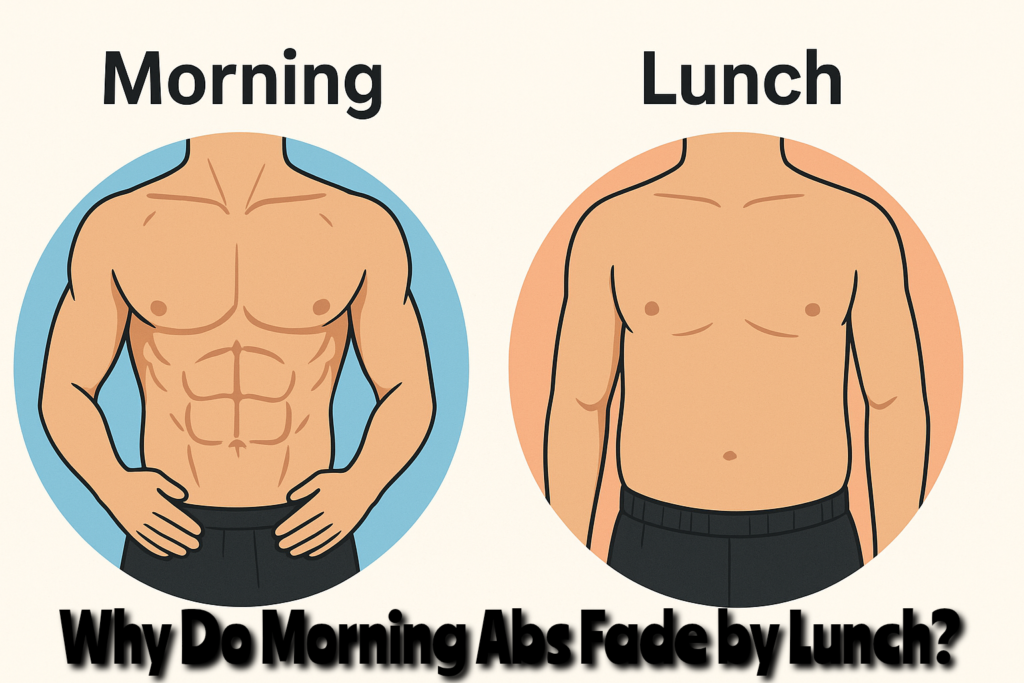
You wake up, shuffle to the bathroom, lift the shirt and… wow.
Obliques, a faint six-pack, maybe even a nice line in the middle.
Fast forward to lunch and suddenly your abs look like they took the rest of the day off.
Same body.
Same person.
Completely different mirror.
Let’s unpack what’s actually happening here without magic detox teas or “celebrity tricks”.
Quick truth: your abs aren’t gone at all
Your abs are still there in the afternoon.
They just become a little less visible because:
- You have food and water in your digestive system
- Your body is holding a bit more fluid
- Your posture changes when you sit and work
- Lighting and angles are less “kind” than your morning bathroom mirror
Think of your abs like text on a white screen.
In the morning, the brightness is at 100% and the font is sharp.
During the day, you slowly add layers of translucent filters on top.
The text doesn’t vanish.
It just gets harder to see.
What’s going on between breakfast and lunch, in simple terms
1. Your stomach and intestines are no longer “empty”
In the morning, especially if you went to bed a few hours after your last meal, your digestive system is relatively empty.
Less food volume means less “stuff” pushing out against your abdominal wall.
By lunch, you’ve probably had:
- Water or coffee
- Maybe breakfast
- Possibly a snack
All that has weight and volume.
Your abdominal wall has to make space.
That “space” is what you interpret as “my abs are gone”.
2. Fluids shift, and you hold a bit more water
Overnight, you’re not drinking, not eating salty foods, not pounding carbs.
You often wake up slightly dehydrated.
Result:
- Skin can look a bit tighter
- Muscles can look a bit more defined
Once you start eating and drinking:
- Carbs pull water into your muscles and glycogen stores
- Sodium (salt) intake can cause you to retain some water
- Your body corrects that mild overnight dehydration
That’s not fat gain.
That’s fluid balance doing its thing.
From the mirror’s point of view, though, you go from “crispy HD” to “slightly soft 720p”.
3. Gravity, posture and sitting are not on your side
In the morning you’re usually standing straight in front of the mirror, maybe even subconsciously bracing your core.
Two hours later you’re:
- Sitting at a desk
- Curving your back
- Letting your belly relax while you answer emails
When you sit and round your spine, your pelvis tilts and your abdominal wall folds a bit forward.
Even with low body fat, a relaxed belly in a seated, slouched position will never look like a standing, flexed morning pose.
That’s not a “bad body”.
That’s just human anatomy plus office life.
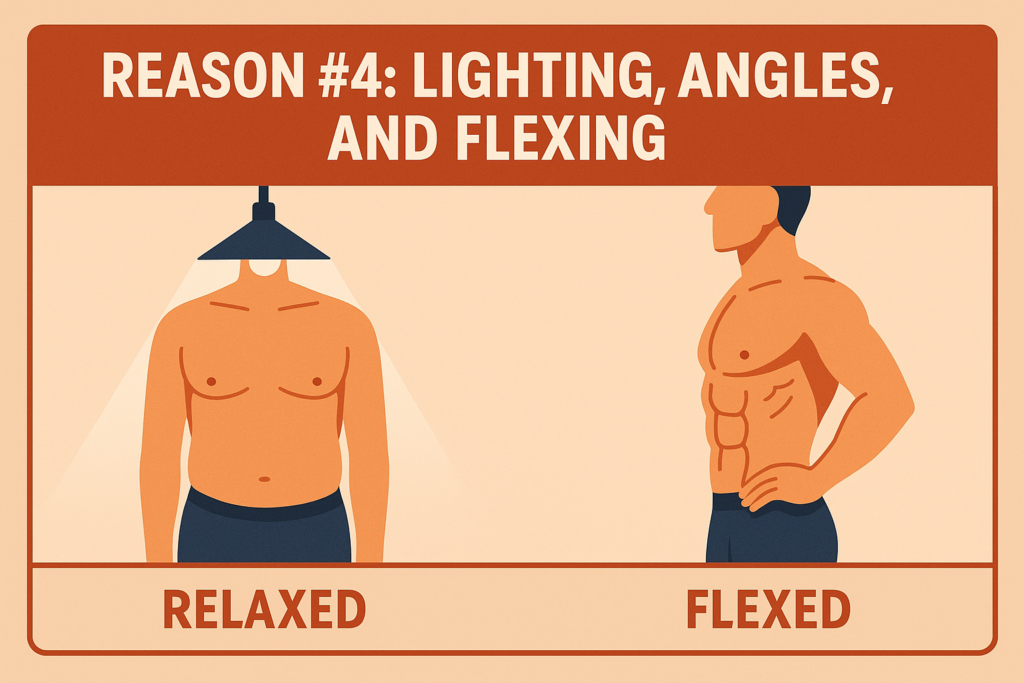
4. Lighting, angles and flexing vs. relaxing
Morning bathroom:
- Overhead light
- Short distance to the mirror
- You’re centered and paying attention
- You’re probably holding a small, almost invisible flex
Midday reality:
- Random office bathroom lighting
- Side angles or unflattering mirrors
- You’re not thinking about posture or core tension
Abs are insanely sensitive to:
- Angle of the light
- Direction of the shadows
- Whether you’re relaxed or slightly flexed
It’s like taking a photo of the same gaming setup with the room lights vs. a soft RGB ring light.
Same hardware.
Completely different vibe.
Reason #1: Food volume and bloating – the biggest culprit
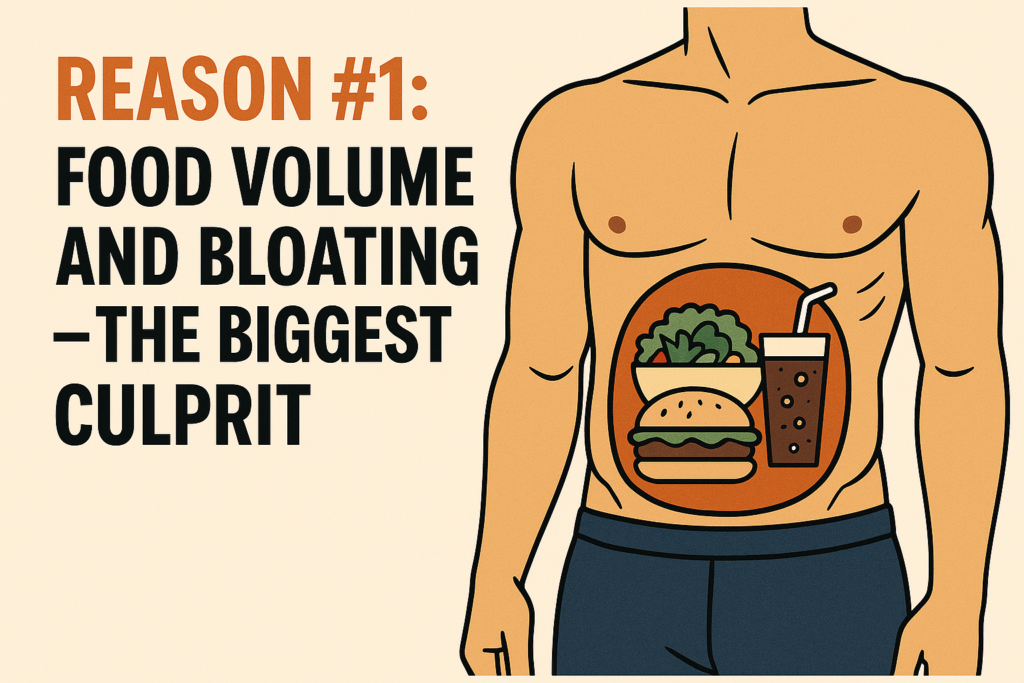
Let’s separate two things that often get confused:
- Normal fullness
- Problematic bloating
Normal fullness (totally expected)
Every time you eat, the food has:
- Volume (takes up space)
- Weight
- Specific digestion time
Your stomach and intestines are not a black hole.
They expand a bit, move, contract, and slowly push the meal forward.
So if you eat a big breakfast or lunch (especially with:
- Lots of veggies and fiber
- Beans, lentils, chickpeas
- Carbonated drinks
- Very large portions
…your belly will naturally “press out” a bit.
That doesn’t mean you’re “fatter” than in the morning.
It just means there is literally more stuff inside you.
Problematic bloating (when it’s more than just food)
Sometimes the “my abs disappeared” feeling is mixed with:
- Pain or discomfort
- Hard, distended belly
- Gas, cramps or weird pressure
- Irregular digestion
In that case, we might be looking at:
- Food intolerances (lactose, gluten for some people, high FODMAP foods)
- Very fast eating and swallowing lots of air
- Large, infrequent meals that overload your system
If your “disappearing abs” always come with pain, loud digestion or you feel like a balloon ready to pop, it’s worth talking to a doctor or dietitian.
Not for aesthetics, but for health.
Reason #2: Water retention, carbs and sodium
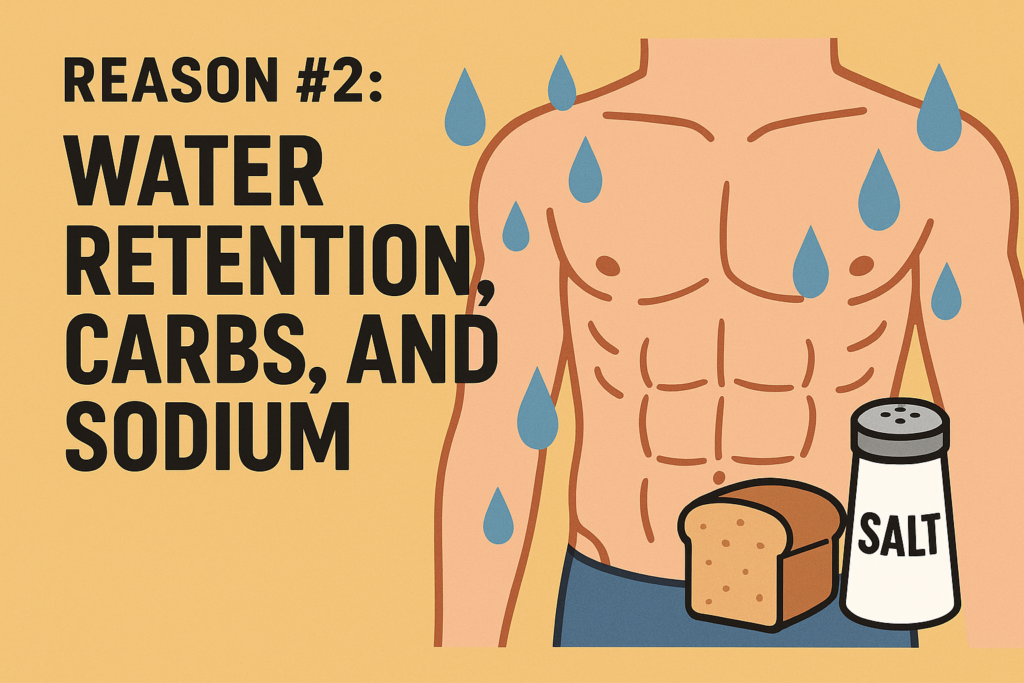
Your muscles store carbs as glycogen.
For every gram of glycogen, your body stores several grams of water.
That’s normal and actually useful for training and performance.
But visually, it can make you look a little smoother during the day.
Morning vs. daytime water situation
- Morning: slightly dehydrated, less food, maybe less sodium on board
- Daytime: more hydration, more sodium, more carbs in circulation
You also have hormone fluctuations (like cortisol) that can affect how you hold water throughout the day.
None of this means “I got fat in 4 hours”.
It just shifts how tight or soft things look on the surface.
What you can actually do for water retention
You don’t need to go full “no salt, no carbs, no joy”.
But you can:
- Keep sodium intake relatively consistent day to day, instead of swinging from super low to super salty
- Drink water evenly across the day instead of chugging massive amounts at once
- Avoid going overboard with ultra-processed, super salty snacks
These adjustments won’t make you stage-lean shredded, but they can reduce that extreme “morning vs. afternoon” contrast.
Reason #3: Posture, core activation and how you stand
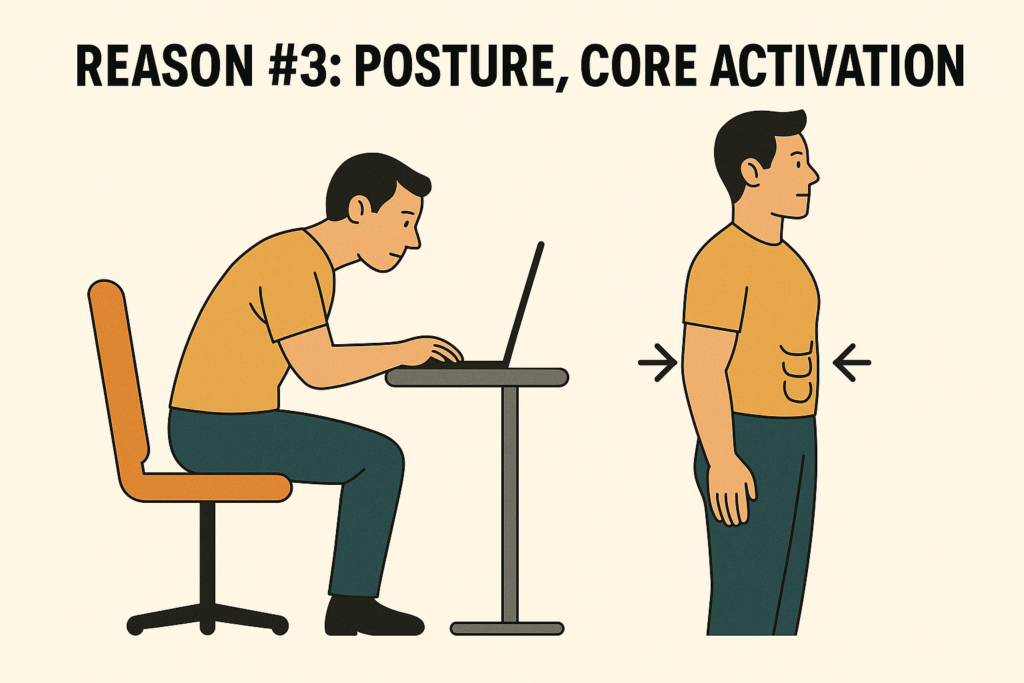
You can have strong abs and still look “soft” if you:
- Spend most of the day sitting
- Stand with your pelvis pushed forward and ribs flared
- Never consciously use your deep core muscles
Deep core vs. “ab crunch” muscles
Your core isn’t just the six-pack muscle.
You also have deeper muscles (like the transverse abdominis) that act like a built-in corset.
When those muscles are weak or never used, your belly tends to relax outward more, especially when you’re tired or after meals.
Practical moves that help visually
You don’t need circus-grade skills.
Start focusing on:
- Exercises where you resist extension (planks, dead bugs, ab rollouts at your level)
- Breathing drills where you exhale fully and lightly brace your midsection
- Standing tall with ribs stacked over pelvis, not leaning back with the belly forward
This doesn’t make your abs “never move” after food (they will), but it helps your default relaxed posture look less “melted”.
Reason #4: Your body fat level vs. your expectations
Here’s the tough but honest part.
Morning abs can be a bit of an illusion.
If your body fat is in a “fit but not ultra lean” range, the sunlight + empty stomach + slight dehydration combo can show a faint six-pack that is right on the edge of visibility.
Throughout the day, that little bit of extra fluid, food and normal relaxation is enough to blur the lines.
That doesn’t mean you’re “not lean enough”.
It just means you’re human and not photoshopped.
How lean do you really need to be to see abs all day?
Roughly speaking (these are just general ranges, not rules):
- Men often need to be around the low-teens or below in body fat to have abs visible most of the day
- Women often need to be in the mid- to high-teens or low-20s in body fat for consistent ab lines
Below that, keeping abs super sharp from wake-up to bedtime usually comes with trade-offs:
- Lower energy
- Harder recovery
- More food obsession
- Hormonal stress, especially in women
So if your abs “disappear” a bit after lunch, but you have good energy, decent strength and a healthy life, that trade-off might actually be a good sign.
For women: hormones, cycle and “mysterious” lower belly
If you menstruate, your abs are playing on hard mode.
Hormonal shifts across the cycle can affect:
- Water retention (especially around PMS)
- Bowel regularity
- Appetite and cravings
Many women notice:
- Lower belly looks flatter right after their period
- More bloated, “puffy” feeling in the days before bleeding starts
So if some days your morning abs are amazing and other days they’re on vacation, but your habits are the same, hormones might be a big piece of the puzzle.
Again, not a failure.
Just biology.
When is “disappearing abs” a red flag instead of just annoying?
Most of the time, this is 100% cosmetic and 0% medical.
But you should consider checking in with a professional if you notice:
- Strong pain, not just mild fullness
- Very hard, tense belly that doesn’t go away
- Bloating that’s getting worse over time
- Sudden changes in bowel habits (constipation or diarrhea)
- Unintentional weight loss or fatigue
Aesthetic frustration is normal.
Signs that something feels wrong in your body deserve real attention.
What you can actually do about it (without losing your mind)
Let’s split this into two categories:
- Things that help your abs look more consistent day-to-day
- Things that help long-term definition and health
1. Habits for more consistent daily definition
You won’t cheat biology, but you can smooth out the extremes.
- Eat slowly
Less air swallowed, fewer giant food “bricks” sitting in your stomach. - Watch portion size per meal
Same calories, but split across 3–4 balanced meals instead of 1–2 massive feasts. - Be smart with high-fiber foods around “vanity” moments
Veggies and beans are great, but loading up on huge amounts right before the beach or photos will push your belly out. - Limit very fizzy drinks if they blow you up
Some people handle sparkling water fine, others feel like a human balloon. - Keep sodium relatively steady day to day
Big salt swings can make water retention more unpredictable.
2. Training habits that support visible abs
You cannot spot-reduce belly fat, but you can:
- Build actual ab muscle (so lines are more pronounced when you’re lean enough)
- Improve posture, so your default relaxed position looks better
- Get stronger overall, which helps long-term fat loss and maintenance
Good moves to include regularly:
- Planks and side planks (progressed over time)
- Hanging knee raises or leg raises (within your strength level)
- Dead bugs, hollow holds, ab rollouts
- Compound lifts (squats, deadlifts, rows, push-ups) done with proper bracing
Think of it like leveling up your character in a game.
You’re not just unlocking the “ab skin”.
You’re investing in core strength, stability and performance.
3. Nutrition for long-term ab visibility
If the goal is: “I’d like my abs to look more similar all day, not just at 7 a.m.”, then the long-term key is body fat management.
Basic pillars:
- Slight, sustainable calorie deficit if you need to lose fat
- Prioritize protein (helps muscles and satiety)
- Include plenty of whole foods, but with a fiber level your gut can tolerate
- Stay active beyond workouts (steps, daily movement)
No need for extreme cutting or “no carb after 6 p.m.” rules.
Just consistent habits that nudge body fat down or help keep it stable.
A sample “flat-ish from morning to evening” day
This is not a strict plan, just an example of how someone could structure things.
Morning
- Wake up, drink a normal glass of water (not 1.5L at once)
- Light to moderate breakfast: protein + some carbs + a bit of fat (e.g., Greek yogurt, berries, oats)
- Short walk or light movement to get digestion going
Late morning
- Coffee or tea if you like, maybe a small snack if you’re hungry (fruit + nuts, yogurt, or something similar)
- Stay hydrated, but spread your fluids instead of chugging huge amounts
Lunch
- Balanced plate:
- Protein source
- Moderate portion of carbs
- Veggies, but not an entire forest if big bloating is a problem for you
- Eat slowly, put fork down between bites, breathe
Afternoon
- Get up and move after lunch (5–10 minutes walk helps digestion a lot)
- If you snack, keep it balanced and not super salty or ultra processed
Evening
- Normal dinner, not your biggest meal of the day if it always leaves you uncomfortably full
- Try to finish eating 2–3 hours before bed so your morning look benefits from better digestion overnight
With this kind of structure, you won’t have “contest prep” abs 24/7, but you also won’t go from superhero to “who stole my core?” in three hours.
Mindset reset: your abs are not a daily performance review
It’s easy to treat the mirror like a score screen.
Morning: “Nice, I’m on track.”
Lunch: “Everything’s ruined, what’s the point?”
Here’s the truth:
- Your abs changing across the day is normal physiology, not failure
- Small fluctuations in water, food and posture are expected, not a sign that your plan isn’t working
- The trend over weeks and months matters infinitely more than a single midday check
Try this instead:
- Use morning progress photos (same light, same pose) to track long-term changes
- Accept that the “I just ate and I’m sitting” version of your body is also real and totally valid
- Judge your routine by energy, strength, sleep and consistency, not by one unforgiving angle after a heavy meal
The bottom line
Your abs don’t actually disappear between breakfast and lunch.
They get temporarily “covered” by normal, boring, absolutely human stuff: food, water, posture and lighting.
If you want them to look a bit more consistent, you can:
- Improve digestion habits
- Train your core and posture
- Manage body fat with realistic nutrition
- Keep daily routines relatively stable
But the real win isn’t keeping a razor-sharp six-pack from sunrise to sunset.
The real win is building a body that feels strong, moves well, digests food without drama, and lets you live your life without obsessing over every tiny change in the mirror.
Your morning abs are not a lie.
They’re just one snapshot of a body that’s constantly doing its job.
And that body already deserves a lot more credit than it usually gets.