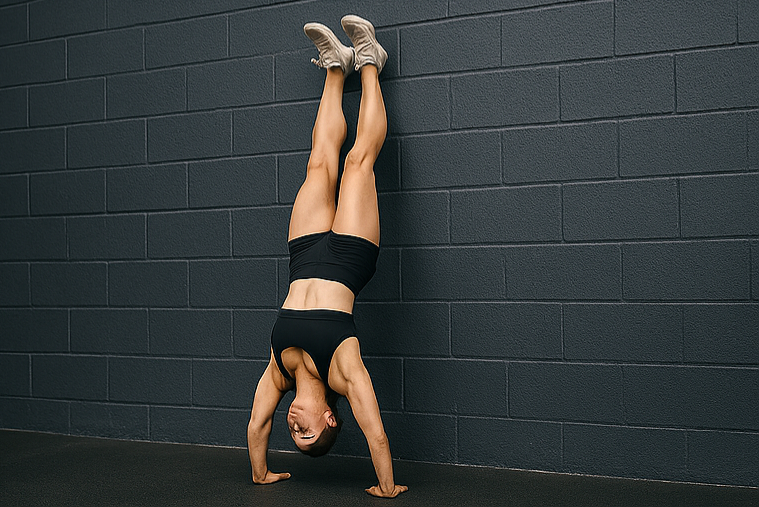
At some point you end up kicking into a wall handstand and thinking, “Is this helping my shoulders…
or am I auditioning to be modern art?”
I had that thought the first time my feet slid up the wall and my wrists started begging for mercy like I owed them money.
And the funny part?
The longer I stayed there, the more I realized something weird — my shoulders felt strong, but in a very “static statue guarding a museum” kind of way.
Not exactly superhero-level strength.
But not nothing, either.
Shoulder Strength from Handstand Holds: What You’re Really Getting
Let’s cut through the noise.
Wall-supported handstand holds do build shoulder strength.
But the flavor of strength you gain isn’t the one most people imagine.
It’s not “push-pressing a barbell overhead” strength.
And it’s not “I can finally do a freestanding handstand on the beach” strength either.
It’s more like “my shoulder stabilizers finally woke up from a two-year nap.”
When you’re upside down against the wall, everything from your traps to your rotator cuff is working overtime just to keep you aligned and not wobbling like a shopping cart with one broken wheel.
That static tension is real.
It’s the kind of isometric work that builds endurance, control, and joint resilience.
But raw power?
That’s where things get interesting.
|
Fast Breakdown: Are We Giving Wall Handstands Too Much Credit?
Wall handstands aren’t magic — they won’t unlock big skills alone. What they *do* build: Think of them like a house frame: unseen, but absolutely essential. |
How Wall Handstand Holds Actually Load Your Shoulders
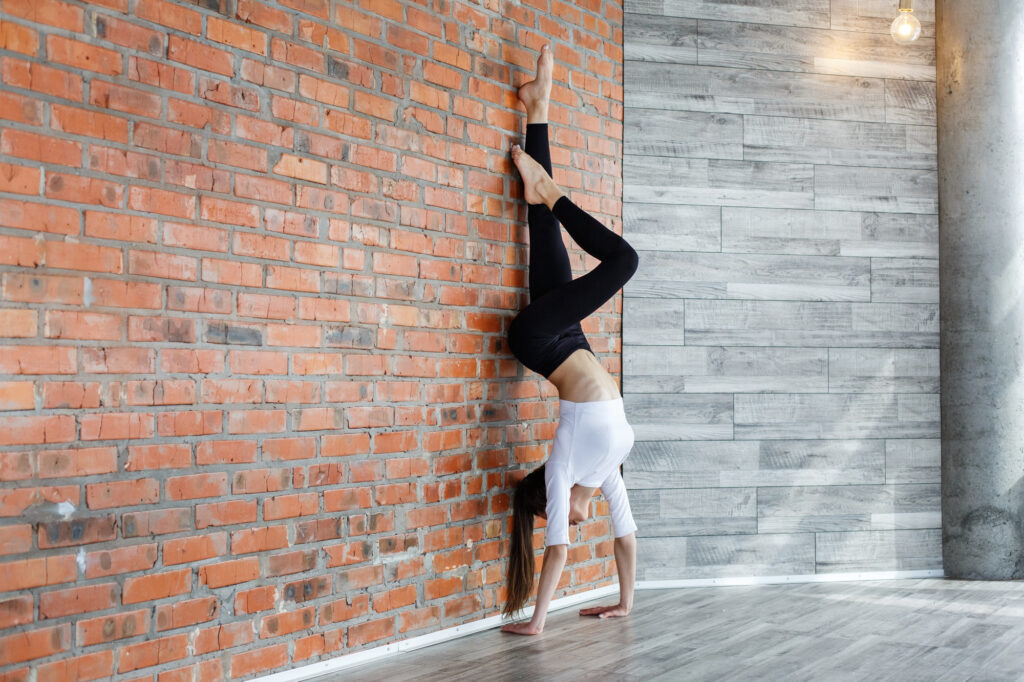
If you strip it down to physics — and trust me, I’m no physics major, just a guy who has spent too many hours upside down — you’re basically stacking your bodyweight over your glenohumeral joint.
In that position:
Your delts act like brakes
Your traps act like suspension
Your rotator cuff acts like the steering wheel
Your serratus anterior tries its best to keep the whole structure from collapsing like a bad Jenga tower
That isometric load is solid.
It trains the tissues that usually get overlooked by heavy lifting.
But the wall gives you a huge assist.
You’re not balancing.
You’re not shifting weight dynamically.
You’re not stabilizing in 360 degrees.
Why Wall-Supported Handstands Don’t Transfer Perfectly to Freestanding Strength
Here’s a spicy truth that annoyed me for years:
You can hold a perfect, rigid wall handstand for 40 seconds…
and still fall over instantly the moment you try it freestanding.
Wall holds teach your shoulders how to exist under a vertical load.
Freestanding handstands teach them how to react under vertical load.
That reactive micro-stabilization — the quick corrections, the little wrist shifts, the shoulder nudges — is where the real work happens for full control.
When Wall Holds Actually Helped Me Progress
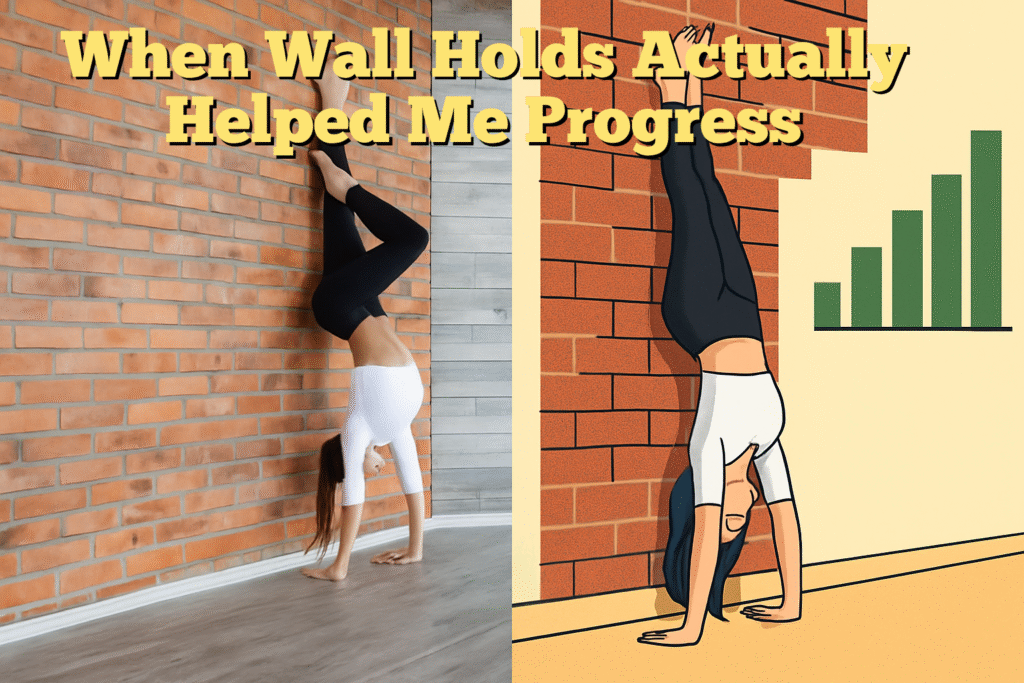
There was a period when I added wall handstand holds at the end of upper-body days just because I saw calisthenics guys do it.
I expected miracles.
What I got instead was… clarity.
Within a few weeks:
My overhead pressing felt smoother
My shoulders didn’t ache as much
My upper traps stopped taking over everything
My lockout position felt rock solid
Did I suddenly become a handstand god?
Nope.
But my foundation improved.
And when I finally started practicing freestanding handstands, that “static strength base” made everything a little more forgiving.
Where Wall Holds Perform Well (and Where They Don’t)
Think of wall-supported handstand holds like the rice and beans of shoulder training.
- Cheap.
- Reliable.
- Good for you.
- But not exactly gourmet.
They perform well for:
- Building endurance in the delts and traps
- Strengthening connective tissue
- Improving overhead comfort
- Teaching proper vertical alignment
- Boosting confidence in an inverted position
They fall short for:
- Explosive overhead power
- Dynamic pushing strength
- Wrist control in handstands
- Balance and micro-stability
- Free-standing progress (unless paired with other drills)
Do They Make Your Shoulders Bigger?
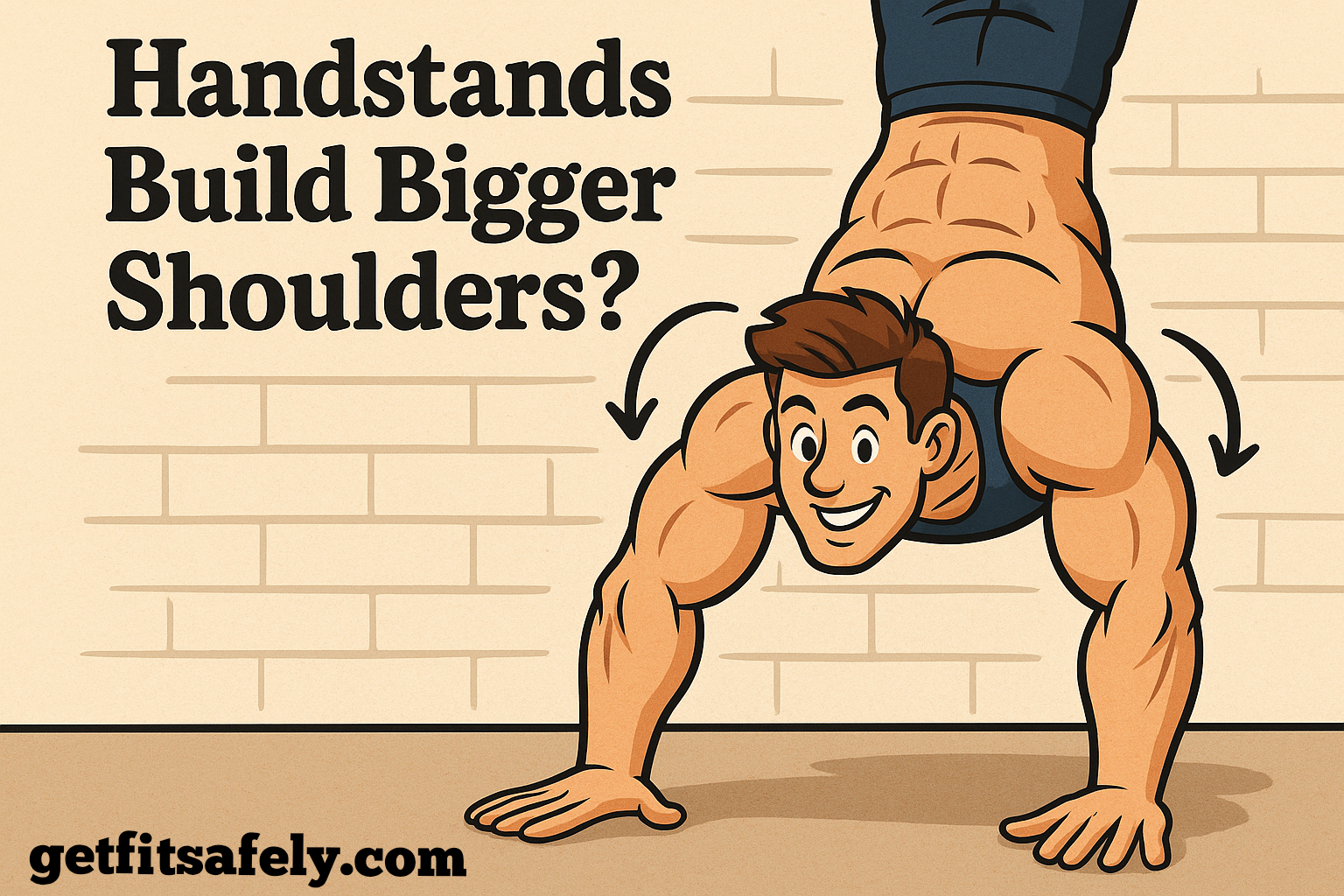
Static holds can contribute to hypertrophy.
But they’re not the main driver.
Hypertrophy loves movement — reps, tempo, stretch, contraction, blood flow.
And wall handstand holds?
Not much of that happening.
You will get some muscle development.
Mostly in the upper delts and traps.
But if your goal is boulder shoulders, you’ll still want:
- Dumbbell presses
- Pike push-ups
- Wall-walks
- Deficit handstand push-ups
- Standard overhead pressing
RELATED:》》》Is Training Just Push-Ups and Handstand Holds Enough for Real Progress?
How to Actually Get Shoulder Gains from Wall Handstands
If you want wall handstands to stop being “just a vibe” and start being an actual strength builder, here’s the formula that made the biggest difference for me:
- Keep your ribs tucked
- Don’t let your lower back arch.
- That forces your shoulders to carry the real load.
- Push the floor away
- Think “active shoulder flexion” instead of resting into your joints.
- Use a timer, not guesswork (Most people bail at 12 seconds thinking they’ve done 40)
Add variations:
- Wall handstand shrugs
- Toe pulls
- Wall “nose-to-wall” holds
- Pair with dynamic work
Follow the hold with pike push-ups or wall walks for the perfect combo.
Compared to Other Shoulder Builders: Where Wall Holds Stand
A lot of people wonder how wall-supported handstand holds compare to other shoulder exercises, even if they never actually say it out loud.
So let’s lay it out without turning this into a laboratory report.
Versus Pike Push-Ups
- Pike push-ups give your delts a deeper stretch and a more intense mechanical load.
- They’re better for pure strength and muscle growth.
- Wall holds win in endurance and stability, but not in raw power.
Versus Wall Walks
- Wall walks are the “full package”: strength, mobility, and coordination.
- They ask a lot more from your shoulders.
- Wall holds feel like a warm-up by comparison — useful, but not the main event.
Versus Overhead Pressing
- Overhead pressing is the king of vertical strength.
- Clear load, clear progression, clear payoff.
- Wall holds don’t replace it, but they make your overhead mechanics smoother and more controlled.
Different tools.
Different outcomes.
And that’s totally fine.
Why Everyone Is Obsessed with Handstands Right Now
Honestly?
Handstands scratch an itch that today’s lifting culture doesn’t always address.
They’re fun.
They’re weirdly empowering.
They feel like leveling up in a video game without needing plates or machines.
Plus, they give you a new relationship with gravity.
And yes, that sounds dramatic, but once you’ve been upside down a few times, you understand what I mean.
A wall-supported handstand is like dipping your toes into that world.
It’s the on-ramp.
The first doorway.
And that makes it valuable — even if it’s not the whole picture.
What to Do This Week (If You Want to Actually Feel a Difference)
Here’s something simple you can try over the next seven days.
Nothing strict.
Nothing complicated.
Just a gentle push in the right direction.
Pick two days this week when you’re already training upper body.
At the end of those sessions, slide your feet up the wall and hold a clean, active handstand for whatever time feels challenging but not ridiculous.
Maybe it’s 12 seconds.
Maybe it’s 30.
Doesn’t matter — just be honest with yourself.
On a different day, try a nose-to-wall hold, even if it’s just for a few breaths.
It’ll feel awkward.
It’ll feel tighter.
It’ll also teach your shoulders more in ten seconds than a minute of leaning back on the wall.
And once this little experiment is done, pay attention.
Notice whether your overhead pressing feels smoother.
Notice whether your shoulders stack more naturally.
Notice whether inversion feels less intimidating.
That’s how progress often starts — not with a rigid program, but with tiny experiments that make your body say, “Hey… this actually helps.”
Final Takeaway
If you love wall-supported handstand holds, keep them.
They’re great.
They’re safe.
They’re efficient.
And they definitely make your shoulders and upper back more solid.
Just don’t expect them to replace real overhead work or advanced handstand training.
They’re a tool — not the entire toolbox.
Mix them with dynamic pushing, pressing, balancing, and mobility.
That’s how you get shoulders that are strong, stable, and ready for anything.