
Training your abs every day is one of those topics that refuses to die and keeps circulating forever.
It sits right next to intermittent fasting, CrossFit opinions, and whether lifting weights “stunts growth” in the category of debates that trigger disproportionate emotional reactions online.
For some people, training abs daily feels like a badge of discipline.
For others, it’s a guaranteed route to hip flexor misery and a chiropractor subscription.
And because the fitness world loves binary thinking, discussions often collapse into two predictable camps:
- “The daily grind will give you abs fast.”
- “Daily ab training is dangerous, pointless, and bad for your back.”
The truth — like most things involving human physiology — is far more nuanced.
Daily ab training can be:
- Smart, effective, and performance-enhancing
or - Wasteful, counterproductive, and injury-prone
depending entirely on how it’s done, who is doing it, and what the intended goal is.
This article breaks down the topic in a way that isn’t rooted in motivation slogans or scare tactics, but in how the core is built, what it does, and how it adapts to stress over time.
If you want a six-pack, strength, spinal resilience, or simply to stop wasting time, understanding these mechanisms helps you make better choices than “more is always better.”
Your Core Is a 360° System
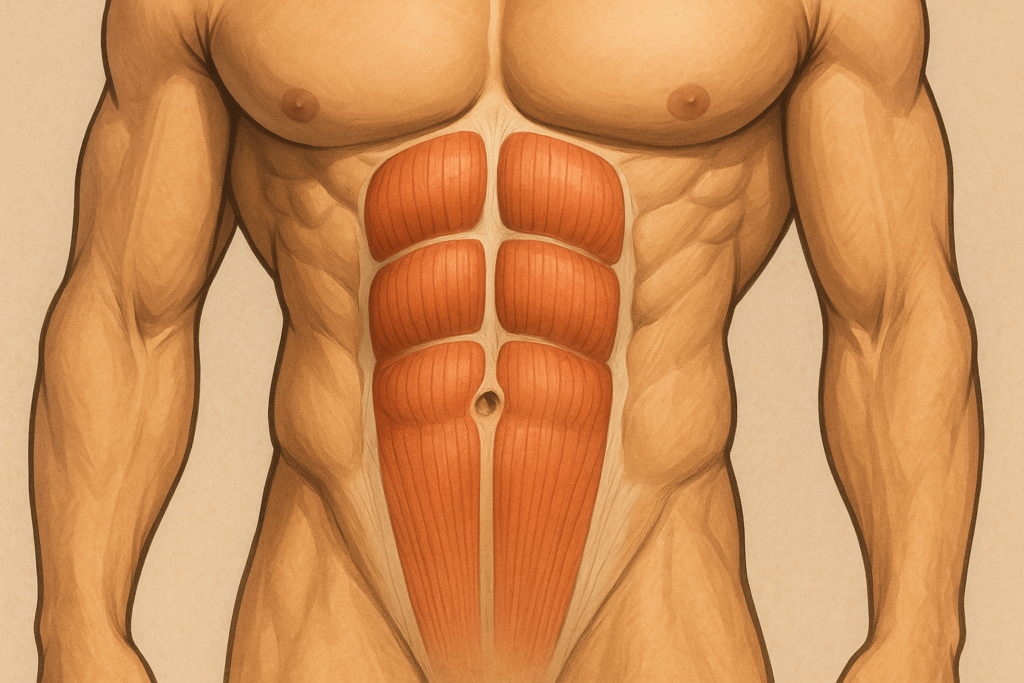
Let’s start by clarifying the obvious but often ignored point:
The core is not the same thing as “abs,” and training only what you can see in the mirror is not the same thing as training what your body actually uses.
The visible “six-pack” muscles — the rectus abdominis — are only one part of a larger, interconnected system designed to stabilize, transfer force, and allow movement in multiple planes.
Major components include:
- Rectus abdominis
- Internal and external obliques
- Transverse abdominis
- Erector spinae
- Quadratus lumborum
- Multifidus
- Diaphragm
- Pelvic floor musculature
These muscles don’t all share the same:
- Architecture
- Fiber composition
- Functional role
- Activation pattern
- Adaptation profile
Some produce movement (like trunk flexion or rotation).
Others resist movement to prevent spinal shear forces, torque, or collapse.
One reason people struggle with programming is that they treat the entire system as a binary strength-vs-endurance muscle, when in reality, different regions respond better to:
- Load
- Frequency
- Tempo
- Stability vs mobility tasks
So when we ask whether you can train “abs” every day, we’re actually asking whether you can load a complex, multi-muscle stabilizing system every day without compromising adaptation or performance.
That requires more nuance than “yes” or “no.”
Why People Believe the Core Recovers Faster Than Other Muscles
There’s a widespread belief that “abs can be trained every day because they recover fast.”
Like many half-truths in the training scene, this comes from something real — but people flatten it into a kind of modern mythology.
Many core muscles, particularly stabilizers, contain a higher proportion of slow-twitch fibers.
These fibers are:
- Fatigue-resistant
- Aerobically powered
- Built for continuous low-level activity
This makes sense evolutionarily.
Your body needs to:
- Stand up
- Walk
- Breathe
- Stabilize
- Carry loads
- Support spinal loads
All day long, every day.
So yes:
- The core tolerates frequent, low-intensity activity well
- It is more resilient to daily activation than, say, the triceps or pecs
- It is better suited for endurance and stabilization work
But this does not automatically mean it handles high-intensity, high-volume exercise every day.
To put it differently:
You can walk every day.
You probably shouldn’t max squat every day.
Same muscle group — different type of stimulus.
The Core’s Daily Job Gives It a Weird Training Profile
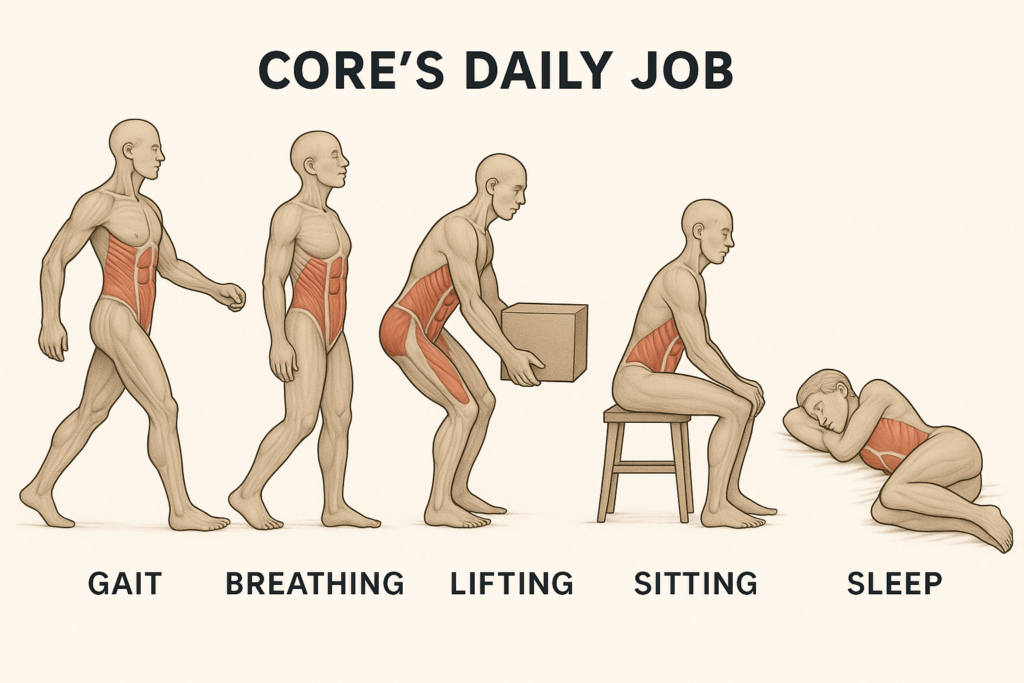
Another overlooked fact:
The core is chronically active, but not chronically overloaded.
It stabilizes:
- During gait
- During breathing
- During lifting
- During sitting and standing
- Even during sleep positioning
Which means it is constantly receiving low-level activation, but relatively little high-tension contraction unless intentionally targeted with:
- Load
- Unstable environments
- High leverage positions
- Horizontal resistance vectors
This matters because adaptation is specific.
A core that’s highly conditioned for endurance and stabilization doesn’t automatically become:
- Thick
- Strong
- Powerful
Just like running a marathon doesn’t build big quads.
Daily activation ≠ hypertrophic stimulus.
Which brings us to the fundamental confusion behind many “daily ab routines”:
People expect hypertrophy from protocols that produce endurance adaptations.
That’s a category error — not a recovery issue.
Why Daily Ab Training Fails for Muscle Growth (Even If It Feels Hard)
Muscle growth is not caused by:
- High rep counts
- Burn
- Cramping
- Fatigue
- Sweat
- Duration
It’s caused by:
- Mechanical tension
- Motor unit recruitment
- Metabolic stress (to a degree)
- Overload
- Recovery
The rectus abdominis is a skeletal muscle like any other.
So optimal hypertrophy usually requires:
- Load
- Low-to-moderate reps
- Progressive overload
- Adequate rest
Which daily high-volume routines do not provide.
Doing 200+ reps of:
- Crunches
- Sit-ups
- Bicycle kicks
- Leg raises
is basically muscular cardio.
It builds endurance — not thickness.
This is why people can do daily abs for months and still not see visible change.
They did a lot of work.
They just didn’t do the kind of work that drives the adaptation they wanted.
Why Hip Flexor Compensation Is the Real Culprit, Not “Bad Lower Ab Genetics”
One of the biggest reasons daily ab training “doesn’t work,” especially for the lower abs, has nothing to do with frequency — and everything to do with mechanics.
Movements like leg raises and knee tucks are not inherently ab exercises.
They become ab exercises when you can:
- Posteriorly tilt the pelvis
- Maintain lumbar flexion
- Control ribcage position
If you cannot — and most people cannot — the prime movers become:
- Psoas major
- Tensor fasciae latae (TFL)
- Rectus femoris
Which leads to:
- Hip tightness
- Anterior pelvic tilt
- Lower-back compression
- “My lower abs don’t activate” complaints
Daily ab routines often magnify this dysfunction because they increase exposure to faulty mechanics.
You’re not building better control.
You’re reinforcing compensations under fatigue.
What Daily Ab Training Is Actually Good For
Daily training shines when the goal is neuromuscular, not hypertrophic improvement.
Skill-based training benefits from frequency because:
- The nervous system learns better through repetition
- Low fatigue environments improve motor control
- Movement quality improves without compensations
This is particularly useful for:
- Breathing mechanics
- Bracing strategies
- Ribcage positioning
- Hip tilt control
- Anti-extension endurance
- Anti-rotation control
These qualities change posture, lifting mechanics, and injury risk — sometimes dramatically.
In real-world training, this translates to improvements in:
- Squat stability
- Deadlift lockout
- Sprint mechanics
- Overhead work
- Lower-back pain
So “daily abs” isn’t primarily a hypertrophy program.
It’s a movement quality and resilience program.
The Behavioral Benefit: Daily Habits Change Bodies
There’s another reason daily ab programs have a reputation for “transforming physiques,” and it has nothing to do with muscle fibers.
Daily training creates:
- A ritual
- A behavioral anchor
- A sense of identity
- A bias toward other healthy actions
This leads to better adherence in:
- Nutrition
- Hydration
- Cardio
- Sleep
- Training consistency
Not because of physiology, but psychology.
“Daily abs” are often successful because they change behavior — not because they’re uniquely effective.
The Downside: Daily Fatigue Can Wreck Performance
When people push intensity daily — especially with loaded flexion work — they often experience:
- Hip tightness
- Lumbar fatigue
- Reduced bracing capacity
- Bar path instability
Which degrades performance in:
- Squats
- Deadlifts
- Overhead press
- Sprinting
- Olympic lifts
Why?
Because the core isn’t just a cosmetic region — it’s a force transmission system.
A fatigued transmission system makes everything worse.
This is one of the strongest arguments against daily high-intensity ab work for lifters:
It sabotages the lifts that matter more.
So, Can Daily Ab Training Build Visible Muscle?
Yes — but only under specific conditions:
- Low volume per session
- High mechanical tension
- Alternating movement patterns
- Sufficient recovery
- Good technique
Example “daily hypertrophy microcycle”:
- Day 1: Cable crunches 6–8 reps
- Day 2: Ab wheel 6–8 reps
- Day 3: Heavy side plank 20–30 sec
- Day 4: Rest / breathing
- Repeat
Short, heavy, recoverable.
This works because:
- Low volume prevents fatigue accumulation
- High tension drives adaptation
- Movement variability prevents wear
It’s rare — but it’s effective.
Most people don’t fail because of frequency.
They fail because of absurd volume.
If Your Goal Is Aesthetics, Training Alone Won’t Do It
You cannot crunch away nutritional state.
Abs become visible when:
- They exist (muscle mass)
AND - You can see them (body fat low enough)
Most people focus on the first.
The bottleneck is usually the second.
You can train abs flawlessly and still not see them if:
- Body fat distribution favors the midsection
- Calories are chronically excessive
- You rely on low-satiety, high-density foods
This isn’t moral failure.
It’s biology.
Visible abs are more nutritionally dependent than most muscle groups.
Conclusion
Training your abs every day is:
- Not a shortcut
- Not a myth
- Not inherently unsafe
- Not inherently optimal
It’s a tool — one that works best when applied to the right goals:
Daily training is effective for:
- Motor control
- Posture
- Breathing mechanics
- Bracing skill
- Habit building
- Injury reduction
Less frequent, loaded training is better for:
- Muscle growth
- Strength
- Power
- Aesthetics
So if your goal is visible abs:
- Lift heavy
- Eat intelligently
- Sleep enough
- Train with intent
And if your goal is better movement, less pain, more confidence, and fewer injuries?
Daily abs — done smartly — can be a high-value practice.
Just understand what you’re actually training, and why.