At some point, everyone trying to master pike push-ups hits the same awkward stage — hips too high and shoulders unsure where to go.
And the lower back usually jumps in too, acting like it has its own opinion.
That’s when the question comes up:
Is that slight arch in the back actually bad, or just part of how the body naturally adjusts?
Let’s be real.
Every time someone posts a pike push-up tutorial on YouTube, there’s always that one person in the comments shouting,
“Keep your back straight or you’ll destroy your spine!”
But here’s the thing — it’s not that black and white.
Your spine isn’t a fragile stick waiting to snap if it bends three degrees out of alignment.
It’s more like a suspension bridge: flexible, adaptive, and designed to move.
Understanding What That “Arch” Really Means
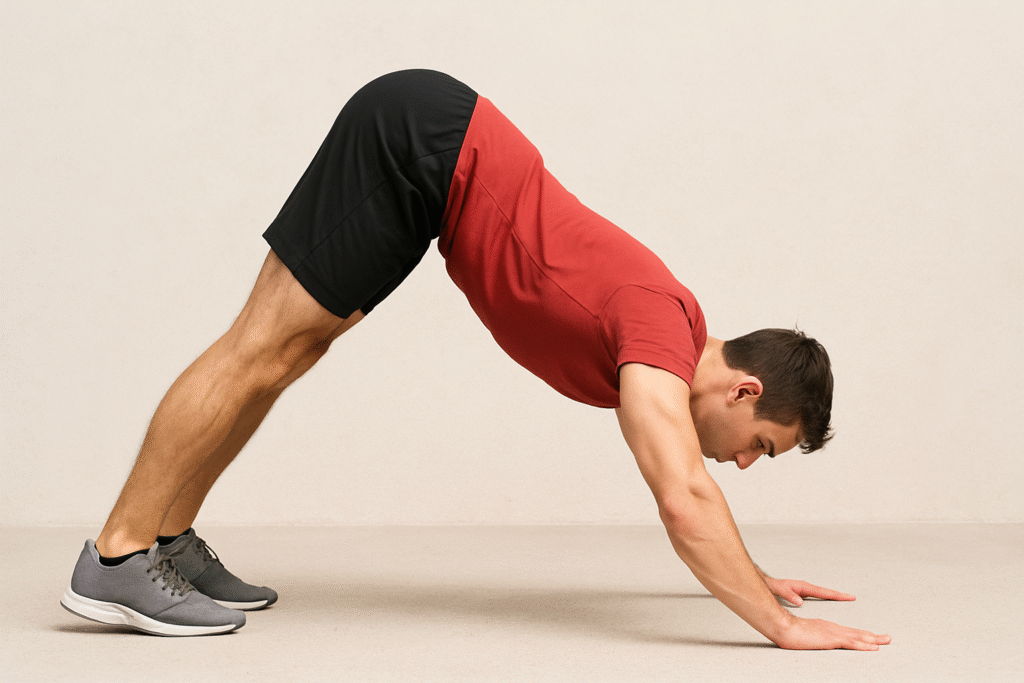
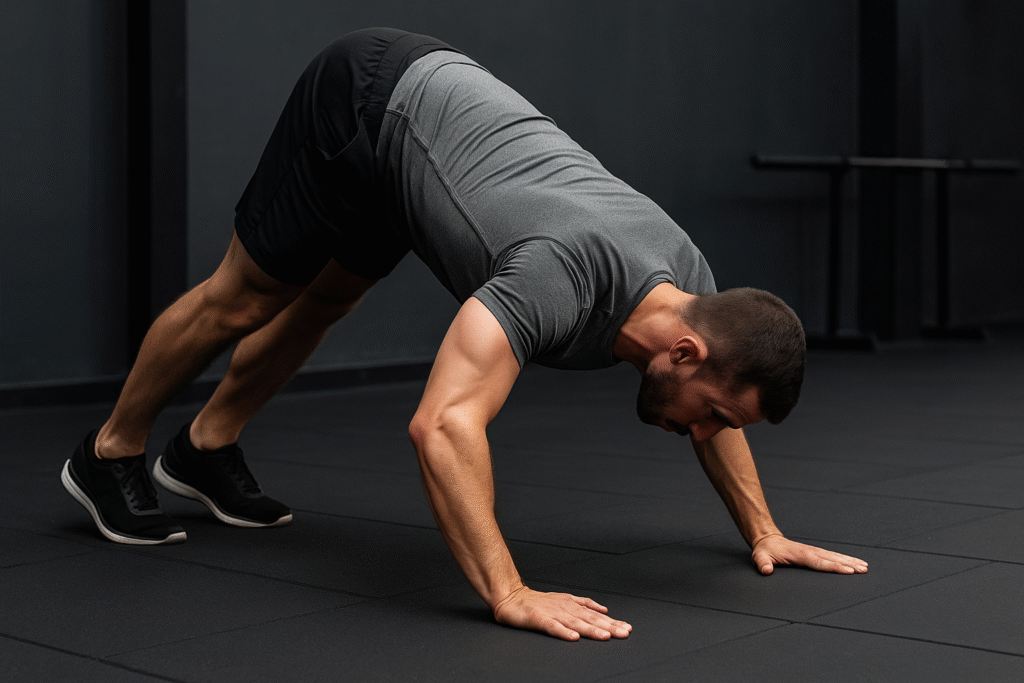
When you get into a pike push-up position, your goal is to shift your torso almost vertical, like a handstand that’s cheating a bit.
But unless you’re insanely flexible or have gymnast-level mobility, your hips and hamstrings will limit how much you can fold forward.
That’s when the lower back steps in to help — adding a small arch to keep your balance and prevent your shoulders from collapsing.
So if your arch is slight, it’s not “wrong” — it’s just your body doing a little compensation dance to make the movement smoother.
Think of it like this: you’re not doing a banana pike, just a gentle curve.
Your goal should be to keep your core engaged enough to avoid turning it into a mini backbend session.
When the Arch Becomes a Problem
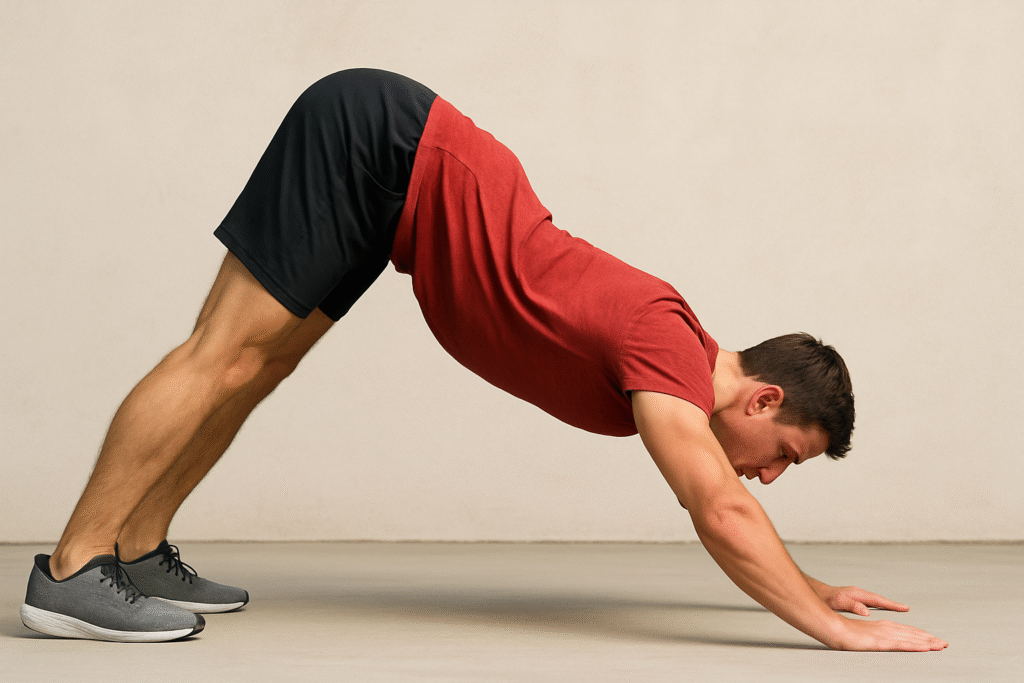
There’s a difference between a helpful micro-arch and a lazy sag.
If your belly is hanging down like you’re doing a sad plank, that’s not good.
A big arch shifts the pressure away from your shoulders and into your lower back.
And if you do that repeatedly, you’re not just missing shoulder gains — you’re also teaching your spine to take impact it was never meant to handle.
Here’s how to tell if your arch is too much:
- You feel pressure or compression in your lower back instead of your shoulders.
- Your hips start sinking mid-rep.
- Your arms aren’t in a vertical line when you’re at the bottom.
If any of those sound familiar, your form probably needs tightening.
How to Fix It Without Losing Balance
The trick isn’t to eliminate the arch — it’s to control it.
Start by tucking your ribs slightly, like you’re trying to zip up your core from pelvis to sternum.
This keeps your abs engaged and prevents the sag from spreading into your lower back.
Next, think of “stacking” your joints: wrists under shoulders, hips above them.
If your hamstrings are tight, bend your knees a bit.
It’s better to have bent legs with a strong shoulder angle than straight legs with a painful arch.
Oh, and breathe.
A lot of people forget to breathe when doing pike push-ups and end up bracing too much, which can make that arch worse.
What Science (and Common Sense) Say About Spinal Arches
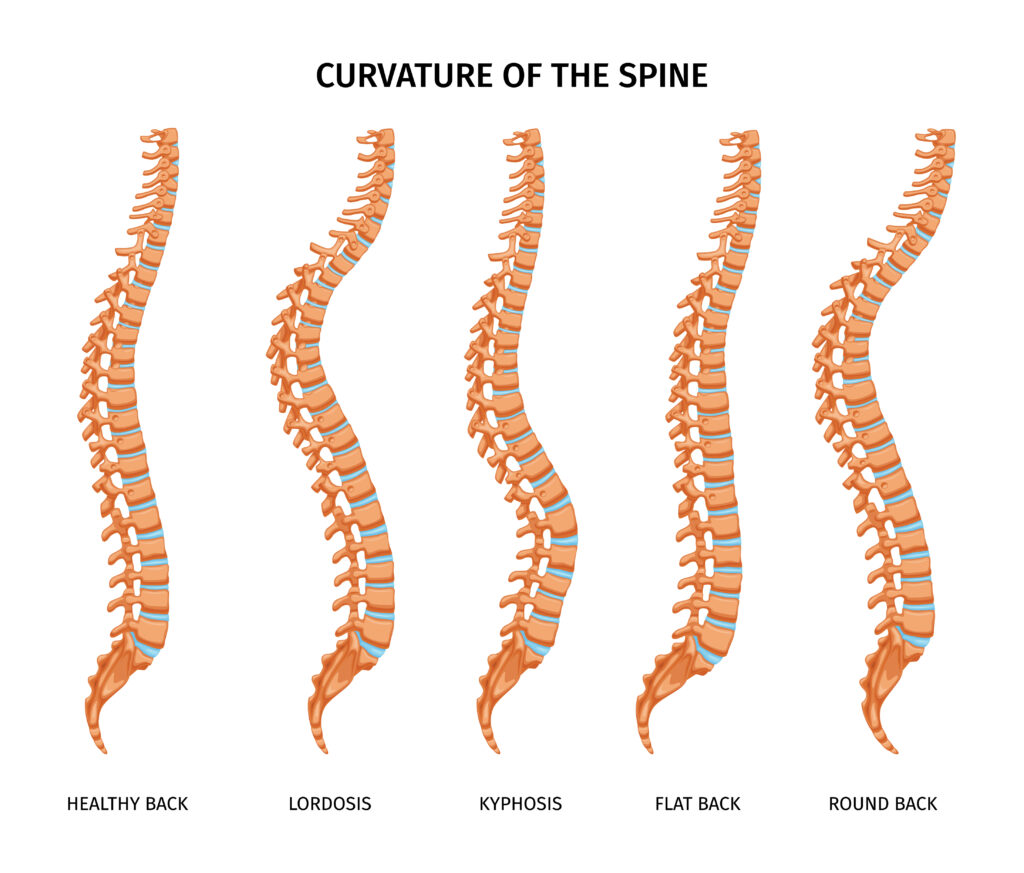
Here’s the fun part: your spine has natural curves.
They’re called lordosis (inward) and kyphosis (outward), and they exist for a reason.
Those curves help you absorb force, distribute load, and stay stable.
So when you arch slightly during a movement like a pike push-up, you’re not “breaking form” — you’re using your natural structure.
The problem comes when you exaggerate that curve while under tension.
That’s when the vertebrae compress unevenly and muscles like the erector spinae start overworking to keep you from folding like a lawn chair.
So yeah — a small arch is normal.
But if it starts feeling like a yoga pose gone wrong, it’s time to back off and adjust.
How Strong Core Engagement Changes Everything
People love to talk about shoulder strength in pike push-ups — and yeah, it’s all about those delts.
But your core is the unsung hero keeping your body from wobbling like a Jenga tower.
Try this little experiment: do a pike push-up with your abs relaxed, then do one where you actively pull your belly button toward your spine.
You’ll instantly feel more control, and your back arch will naturally shrink to a safer range.
Engaging your core doesn’t just “protect” your back — it also channels more power through your upper body, making your reps smoother and more efficient.
Where to Focus Instead of Overthinking the Arch
Instead of obsessing over the angle of your spine, focus on what actually matters:
- Shoulders moving through a full range of motion.
- Head touching the floor between your hands, not in front of them.
- Smooth tempo — no collapsing or jerking on the way down.
Master those, and the micro-details of your spine will usually fall into place.
Your body naturally finds the path of least resistance when the rest of your form is solid.
It’s a Mobility Thing, Not a Strength Issue
Most form issues in pike push-ups come from tightness, not weakness.
So here are the mobility drills that actually fix the problem.
1. Downward Dog Pulses (Hamstrings + Shoulders)
Push your hips up, keep your heels heavy, and gently pulse your chest toward the floor.
Small movement, slow breathing, 20–30 pulses.
2. Toe-Reach Hamstring Stretch
Stand tall, hinge at the hips, reach toward your toes without rounding your back.
Hold 5–10 seconds, repeat a few times.
3. Half-Kneeling Hip Flexor Stretch
The difference this makes is night and day — suddenly, you’re not fighting your own tightness mid-rep.
One knee down, one foot forward.
Tuck your pelvis slightly, then shift forward until you feel the front of the hip open.
Hold 20–30 seconds per side.
4. Cat-Cow (Spine Control)
On all fours, arch your back up, then gently drop your chest while lifting your tailbone.
Move slowly for 10–15 reps.
5. Hollow-Body Activation (Core + Spine Stability)
Lie on your back, lift shoulders and legs slightly, ribs down, lower back gently pressed to the floor.
Hold 10–20 seconds.
Forum-Style Wisdom You Don’t Usually Hear
If you’ve ever scrolled through Reddit’s BodyweightFitness threads or YouTube comments, you’ll see the same issues come up again and again:
“My back arches at the bottom of pike push-ups even though I feel it in my shoulders — what gives?”
“I think my hamstrings are too tight — could that cause it?”
Yes and yes.
Hamstring tightness, poor glute engagement, and lack of core awareness are the trifecta behind most exaggerated arches.
It’s not that you “don’t know form” — it’s that your body is compensating to keep balance.
What helps most people in those forum discussions?
Learning to squeeze the glutes slightly during the descent and tuck the ribs in without collapsing the chest.
That single cue keeps your spine neutral without killing your range of motion.
Your No-Pain Pike Setup Guide
Before each session, run through this mental checklist:
- Warm up your shoulders, core, and glutes — not just your arms.
- Check your setup: hands slightly wider than shoulders, head between arms, not ahead of them.
- Keep your ribs tucked and glutes active.
- If your lower back feels pinched or compressed, stop and reset your angle.
- Stretch your hamstrings for 30 seconds between sets if needed.
| 💡 If you want a simple path to steady progress, I’d also recommend checking out the Calisthenics Progression Guide. |
The Bottom Line
A little arch during pike push-ups isn’t the villain it’s made out to be.
It’s part of how your body balances force and flexibility.
Just don’t let that arch become a crutch.
Train your core.
Improve your hamstring mobility, and learn to move in one powerful, connected line.