I used to think weak glutes were a personality trait.
Like, “Hi, nice to meet you, I struggle to feel my butt doing anything except sitting.”
And because I lift, that felt ridiculous.
I could deadlift more than my bodyweight, but my hips still moved like someone had unplugged my power cable.
Single-leg hip thrusts started popping up in my feed like a suspiciously targeted ad that knows my insecurities better than I do.
So I tried them.
And I immediately realized two things:
my balance is trash,
and my glutes are not as “activated” as I believed.
| Quick Answer: Do Single-Leg Hip Thrusts Fix Weak Glutes? |
| They can, if weak glutes are caused by poor activation, asymmetry, and lack of single-leg strength.
They might not, if your weakness comes from technique errors, bad bracing, mobility issues, or heavy bilateral imbalance. Think of them as a strong starting point, not a miracle cure. |
Why Weak Glutes Happen In The First Place
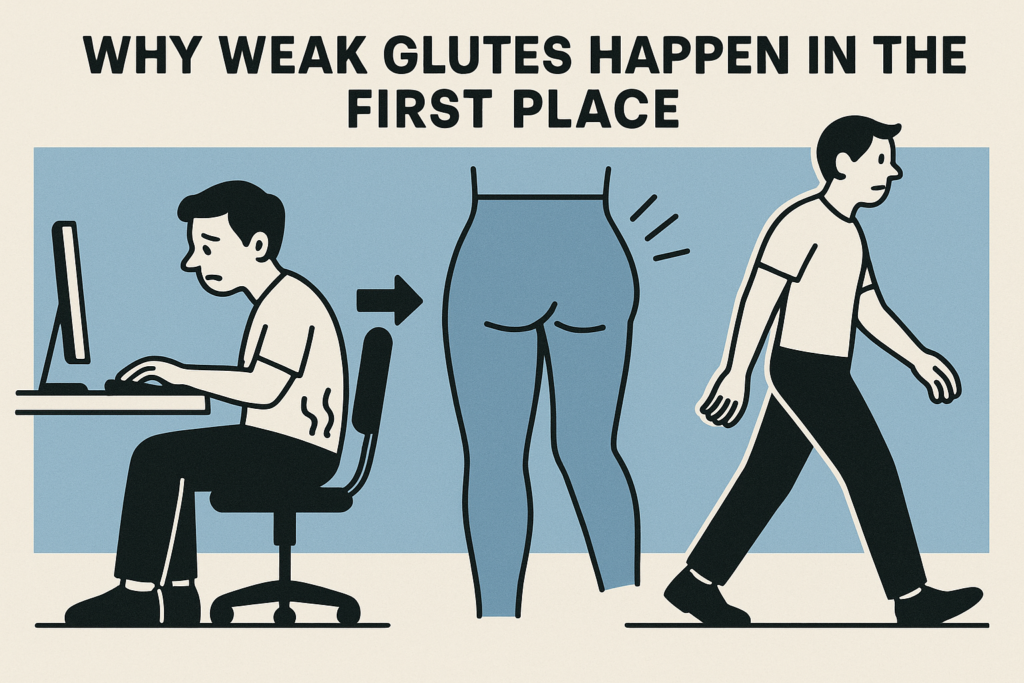
Before getting too deep into whether one specific exercise can fix a problem, it’s worth asking how the problem shows up in the first place.
Most people don’t have weak glutes because they skip leg day or because they’re emotionally detached from lower body training.
It usually starts way earlier than that, in daily life, where the hips rarely have to push, rotate, or stabilize in meaningful ways.
We sit more than we move.
We walk in straight, tiny steps.
We lean forward when we stand.
So the glutes, which are supposed to be powerful hip extensors, slide into early retirement while other muscles do the everyday work.
Then you hit the gym and naturally fall into quad-dominant patterns because they’re used to doing the heavy lifting.
By the time you realize your glutes aren’t doing their job, it feels less like a weakness and more like a forgotten skill.
That’s why some people need “reminder exercises” before they ever get strong ones.
Single-Leg Hip Thrusts For Weak Glutes: Why Everyone Talks About Them
There’s something oddly humbling about holding your body up with one leg while pretending everything is fine.
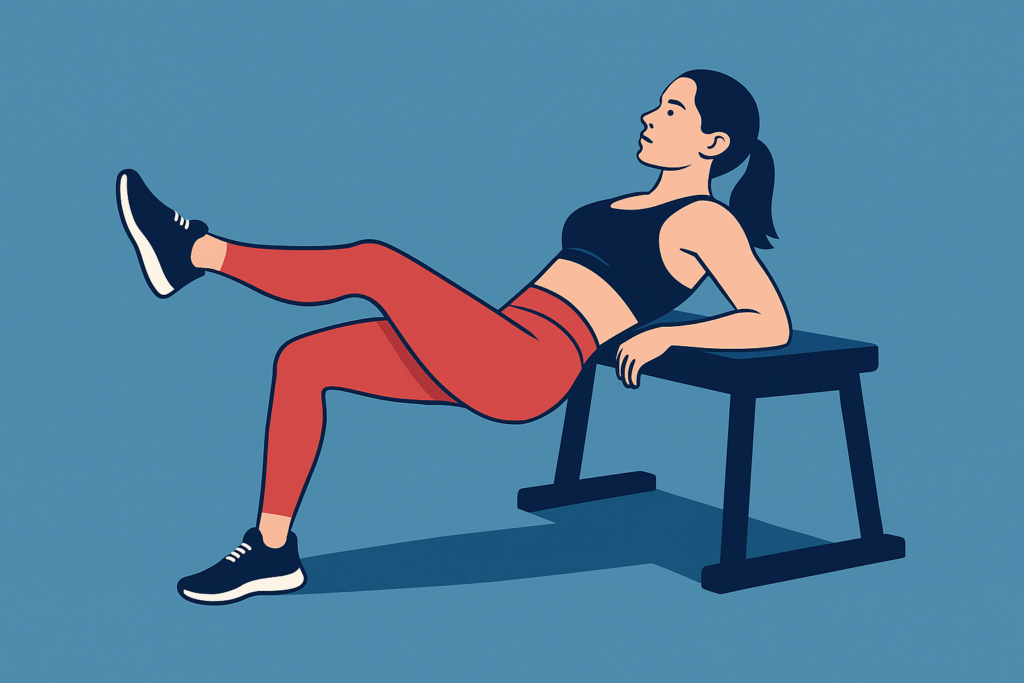
Single-leg hip thrusts ask your hips to push, stabilize, coordinate, and not fall off the bench at the same time.
That’s basically a neurological circus act.
And that’s why people hype them up for fixing weak glutes.
They challenge the hips through unilateral loading, which means each glute works independently so the stronger one can’t “help out” the weaker one.
If you’ve ever felt one side of your butt doing all the work during squats or deadlifts, you know what I mean.
Your brain basically hires one glute as the overworked employee while the other stays on lunch break.
Single-leg hip thrusts force that lazy employee back into the office.
How Single-Leg Hip Thrusts Compare To Other Glute Exercise

If you train lower body regularly, you’re probably doing something for glutes already.
Barbell hip thrusts build big, showy top-end force.
Lunges and step ups hit single-leg strength but still let the quads steer the wheel because the knee extends first.
Single-leg hip thrusts sit in an awkward middle ground where almost all responsibility falls on hip extension, with no backup from momentum or leverage.
It’s not “better” than everything else.
It’s just more honest about exposing which side can deliver force and which side checks out early.
Not glamorous, but informative.
And sometimes brute information is what a stubborn glute needs.
Single-Leg Hip Thrusts And The Whole “Glute Activation” Situation
There’s a weird disconnect that happens when you train legs.
Your quads fire up from almost anything.
Your hamstrings get sore if you simply walk up stairs too aggressively.
But your glutes sometimes sit there like a stubborn Wi-Fi connection.
Single-leg hip thrusts increase hip extension demand and position the glute fibers in a mechanically favorable lengthened position.
That basically nudges the muscle to participate instead of letting larger muscles dominate the movement.
And because you’re pushing through one leg, the load per glute is relatively higher without actually needing heavier weights.
Which is funny, because this is the one exercise where a dumbbell that looks like a doorstop feels like a meteor.
Do Single-Leg Hip Thrusts Really Fix Weak Glutes Or Just Make Them Burn?
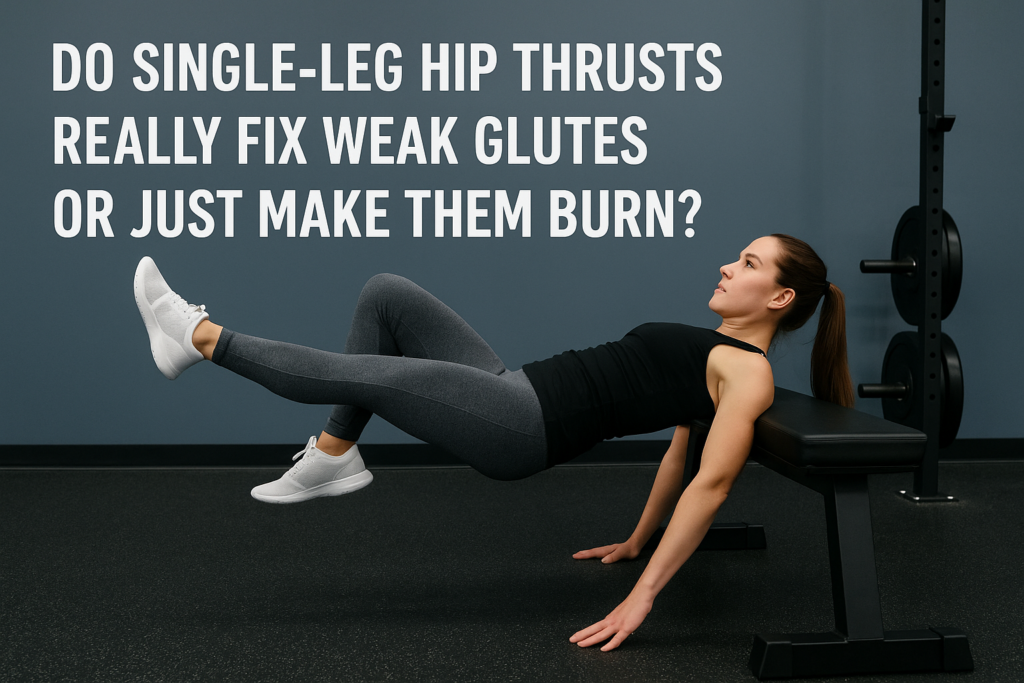
The burning sensation is cute, but it’s not the goal.
Weak glutes are usually a mix of poor recruitment, asymmetry, and low strength endurance.
Single-leg hip thrusts can improve all three because they:
- Increase motor unit recruitment
- Strengthen stabilizers around the hip
- Reduce side-to-side dominance
- Improve load tolerance per glute
But that doesn’t automatically fix every lower-body issue.
Weak glutes often show up during bigger tasks like heavy squats, sprinting, or landing mechanics.
If an exercise strengthens you but doesn’t translate to those movements, it feels like studying for the wrong exam.
Single-leg hip thrusts help, but they’re not the full story.
How To Make Single-Leg Hip Thrusts Actually Build Strength (Not Just Shake)
I used to rush through these like I was trying to finish them before someone walked in and judged my weird setup.
But tempo matters.
Speed makes momentum do the work.
Tempo makes muscle do the work.
Here’s what worked for me when my left glute refused to participate:
- Pause at the top for one full second
- Lower sloooow like molasses
- Point your toe up so the quad chills out
- Actively push the knee outward
Suddenly everything lights up like a car battery being jump-started.
And when that connection improves, strength comes easier because the muscle finally knows what it’s supposed to do.
Single-Leg Hip Thrusts And The Mystery Of One “Dead” Glute
I swear one side of my body has a stronger emotional commitment to fitness than the other.
That imbalance messes with your movement patterns:
your pelvis shifts,
your hip hikes,
your squat looks like it took a wrong turn halfway down.
Single-leg hip thrusts force each hip joint through the same range without compensation, so your skeleton stops doing interpretive dance under load.
As symmetry improves, you stop leaking force sideways, and lifts feel smoother.
Not necessarily easier, but smoother.
The Real-World Payoff Of Single-Leg Hip Thrusts For Weak Glutes
Strength on one leg isn’t just a niche skill for people who do yoga in the park.
It affects everything from sprinting to jumping to walking uphill without sounding like an exhausted walrus.
Single-leg hip movements build hip extension power, which is basically the engine behind:
- Faster acceleration
- Stronger lockouts
- Better posture under load
- Reduced hip irritation
- Less quad-dominant fatigue
Your body starts using your butt for what it was designed for, instead of asking your knees to do the work of a small tractor.
Simple Setup That Works
I like them best as a secondary movement after a squat or hinge.
Something like:
3–4 sets
8–12 reps per side
controlled tempo
1–2 sec pause at top
Once you can do that without twitching like you’re being electrocuted, add load gradually.
Not dramatic jumps.
Slow increases.
Because heavy plus sloppy is just fancy suffering.
Single-Leg Hip Thrusts: Worth The Effort For Weak Glutes
When I started doing these consistently, my hips stopped wobbling during deadlifts, and my sprint speed actually improved.
Not in a superhero way, more in a “wow, I don’t feel like I’m dragging a broken wheel” way.
The exercise taught my body how to use each glute individually, and that skill carried over into real training.
But it didn’t fix everything on its own.
It just gave me a foundation to build on.