I wasn’t planning to have a spiritual moment with two plastic bottles from the pantry.
I’d just come home from the gym, shoulders already a bit toasted, when I realized I’d completely forgotten to do lateral raises.
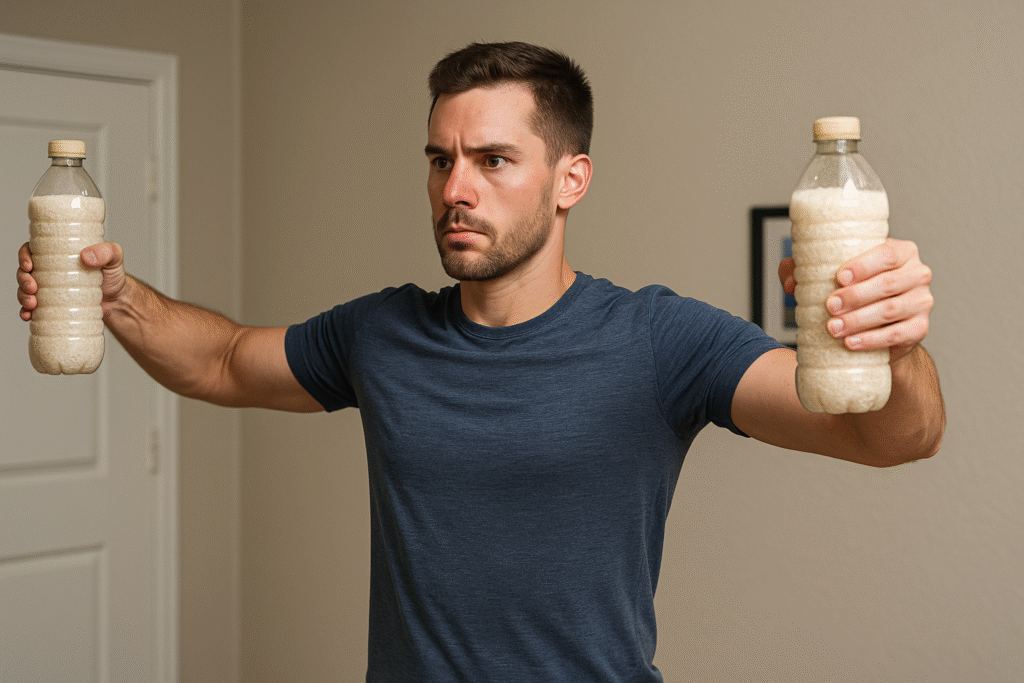
So I grabbed two rice bottles — the cheap kind with that crinkly label that falls off after one wash — thinking, “Whatever, I’ll just crank out a quick pump.”
Three reps in, my shoulders lit up like I was holding two kettlebells forged in the core of the sun.
And I actually laughed out loud.
Because why on earth does lifting eleven ounces of rice feel like trying to win an Olympic event I never signed up for?
It’s one of those tiny fitness mysteries you don’t expect, like when your legs shake during bodyweight warm-ups more than during your max squat.
But there is a reason.
And it’s way more interesting than “your shoulders are weak.”
How Rice Bottles Change the Mechanics of Shoulder Raises
Homemade weights hit different because they’re not really “weights.”
They’re awkward.
They slosh.
They shift.
Every micro-movement changes the load on your shoulder joint.
When you use dumbbells in the gym, gravity stays predictable.
Dumbbells drop straight down.
The center of mass stays where it is.
Your muscles know exactly what’s happening.
But a rice bottle?
It’s a chaotic little rebel.
The rice moves a split second after you move.
The weight distribution changes while you’re mid-rep.
Your stabilizers have to adjust constantly, even if you’re lifting the equivalent of a large sandwich.
That instability forces your deltoid fibers — especially the lateral head — to fire like crazy to keep everything in line.
It feels like your shoulders are fighting a tiny earthquake.
And your nervous system hates tiny earthquakes.
So it burns.
Why Light Weight Creates That Deep, Creeping Fatigue
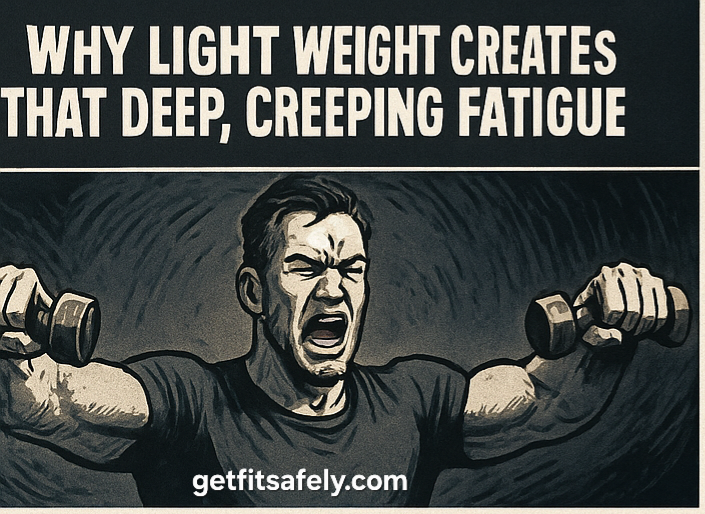
One thing I’ve noticed over the years is that light weights punish you not with intensity, but with time under tension.
Rice bottles don’t let you cheat momentum.
You can’t swing them.
You can’t explode out of the bottom.
You can’t “muscle through” the sticking point the way you might with heavier loads.
Every second you’re lifting them, your shoulders stay under load.
This creates that long, slow burn that sneaks up on you like a delayed tax bill.
Your fast-twitch fibers stop helping.
Your smaller stabilizers take over.
And suddenly you’re experiencing a very personal conversation with your rotator cuff.
It’s humbling.
And honestly, it’s kind of beautiful.
How Homemade Weights Force Better Shoulder Positioning
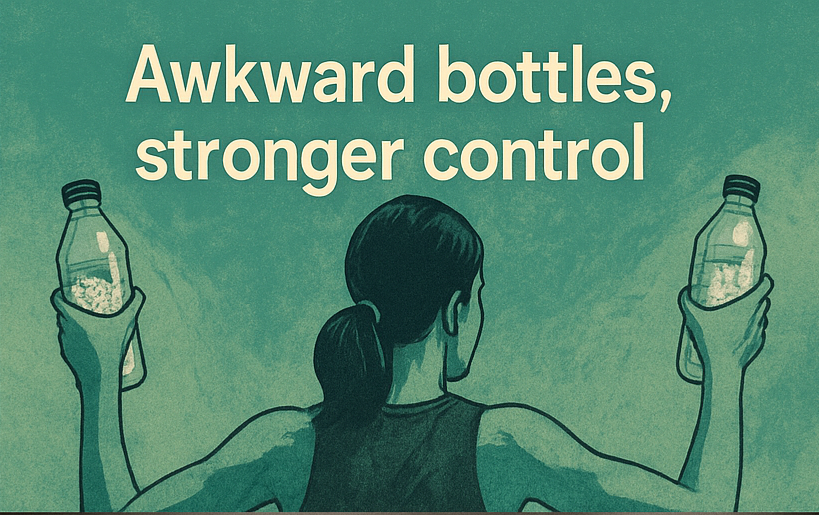
There’s another unexpected twist.
When the weight is super light, you stop trying to “muscle” the movement and start actually lifting with proper form.
You tighten your core.
You raise your arms at the right angle.
You stop shrugging.
You stop speeding through reps like you’re trying to catch a bus.
With rice bottles, you can feel every inch of the raise, including all the weak points you normally rush past.
If you tend to use too much upper trap, the bottle tells on you immediately.
If your shoulders drift forward, the bottle punishes you instantly.
Light load removes the noise and exposes the signal.
And sometimes the signal is: “You’ve been cheating this exercise since 2014.”
The Weirdly High “Stability Tax” of Household Objects
There’s a reason physical therapists love resistance bands and light tools that feel almost insignificant.
The “stability tax” is real.
Your stabilizer muscles — especially your supraspinatus, lower traps, anterior serratus, and deep rotator cuff — get hit harder when the load is inconsistent.
Gym weights reward strength.
Homemade weights reward coordination.
And coordination requires effort.
So that burn you feel?
It’s the tax you pay for using muscles you didn’t even know were on payroll.
What This Means for Your Shoulder Gains
Here’s the fun part.
That crazy burn?
It’s actually good news.
You’re building the muscles that make your shoulders both stronger and safer.
Homemade-weight raises help with:
- Cleaner lifting mechanics
- Stronger stabilizers
- Better shoulder mobility
- More control in overhead movements
- Healthier long-term joint stability
This is the kind of strength that translates to real-life movement, not just gym PRs.
And your shoulders will thank you next time a workout asks for strict form instead of brute force.
RELATED:》》》Can You Really Get Gym-Level Strength Without Ever Leaving Your Living Room?
Should You Replace Dumbbells With Rice Bottles?
Not really.
But they’re a surprisingly effective addition.
Think of them as seasoning — they don’t replace the main dish, but they make everything better.
You can use them for:
- High-rep burnouts
- Shoulder warm-ups
- Prehab sessions
- Technique practice
- Travel workouts when you only have bottled water and creativity
And trust me, your shoulders will feel every rep.
Why Shoulder Raises With Rice Bottles Trigger That “Perceived Fatigue Spike”
There’s a whole different kind of tired your body feels when a movement doesn’t match what your brain expects.
Your shoulders react strongly when the resistance is unfamiliar, even if the load is tiny.
Your brain predicts the effort based on what you normally lift, and when the reality doesn’t line up, the signal gets scrambled.
That mismatch makes the movement feel harder before your muscles are actually close to failing.
It’s the equivalent of thinking you’re stepping onto solid ground and landing on a soft mat — everything fires extra just to stay in control.
This “fatigue spike” shows up fast because your nervous system increases the effort level the moment the pattern feels unusual.
Rice bottles create a movement pattern your body doesn’t recognize, so the burn arrives way earlier than expected.
And that early burn has little to do with strength and everything to do with perception.
How the Slow, Unintentional Pace of Rice Bottle Raises Intensifies the Burn
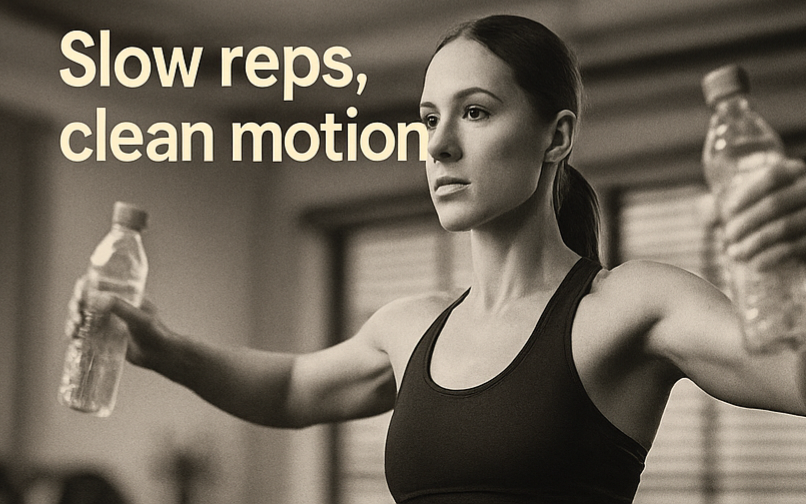
When the weight is too light to force urgency, your body naturally slows down every part of the rep.
You don’t try to create momentum because you don’t need it.
You don’t rush the bottom position because nothing feels heavy enough to “escape.”
This slower rhythm stretches out the discomfort and makes each centimeter feel exaggerated.
The top of the rep takes longer.
The lowering phase takes longer.
Even the transition between reps feels like it lingers more than usual.
This slow pacing isn’t planned — it just happens when the load doesn’t intimidate you.
And that longer rep duration amplifies the burn in a way heavier weights often don’t.
A lightweight object creates a slow-motion effect that forces your shoulders to stay alert and engaged the whole time.
Why a Cleaner Range of Motion With Rice Bottles Feels So Much More Intense
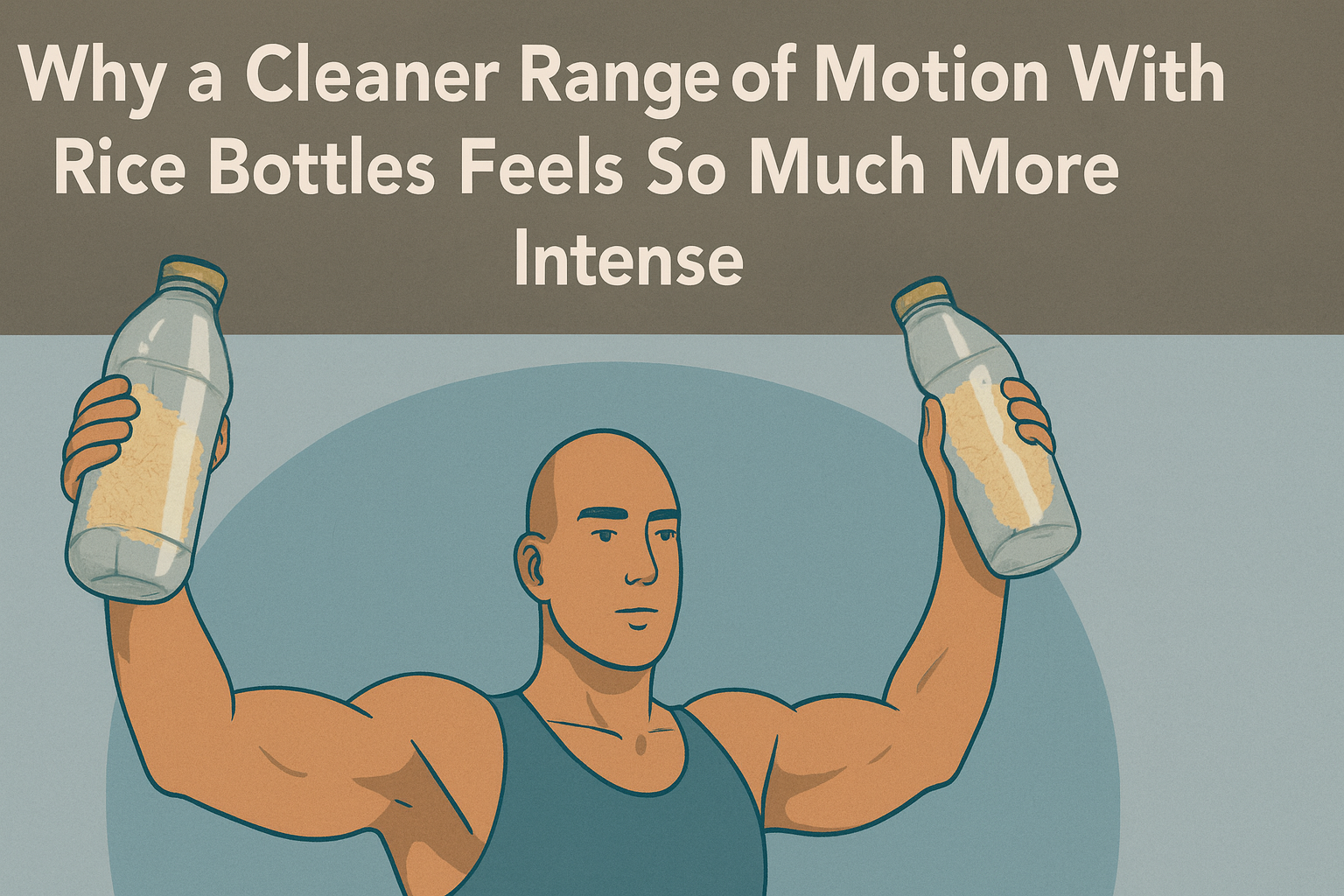
Lighter objects encourage you to move through a fuller range without shortcuts.
There’s no temptation to swing.
No instinct to cut the rep early.
Nothing convincing you to shorten the arc to survive the last few reps.
The movement becomes smoother, longer, and more deliberate because the weight doesn’t pressure you into rushing.
And when you use the full range, the tension sticks to your shoulders all the way from the bottom to the very top.
The last degrees of the raise — the ones you usually speed through — suddenly become the hardest part.
This creates a type of burn that feels clean and sharp, not chaotic or sloppy.
It’s the kind of burn you notice equally in the middle, the top, and the slow lowering phase.
Rice bottles don’t make you stronger on their own, but they make you move better.
RELATED: Why Do My Shoulders Pop and Crack During Lateral Raises but Not Hurt?
Final Takeaway
If you’ve ever been humbled by a pair of rice bottles, welcome to the club.
Sometimes the smallest weights end up teaching you the biggest lessons about how your body moves.
They expose the gaps you never notice with heavier loads.
They sharpen your control.
They force cleaner patterns.
And they remind you that intensity isn’t always about the number printed on the weight — sometimes it’s about how honestly you move through each rep.
Keep lifting.
Keep experimenting.
And never underestimate how far a couple of cheap household objects can push your shoulder gains.