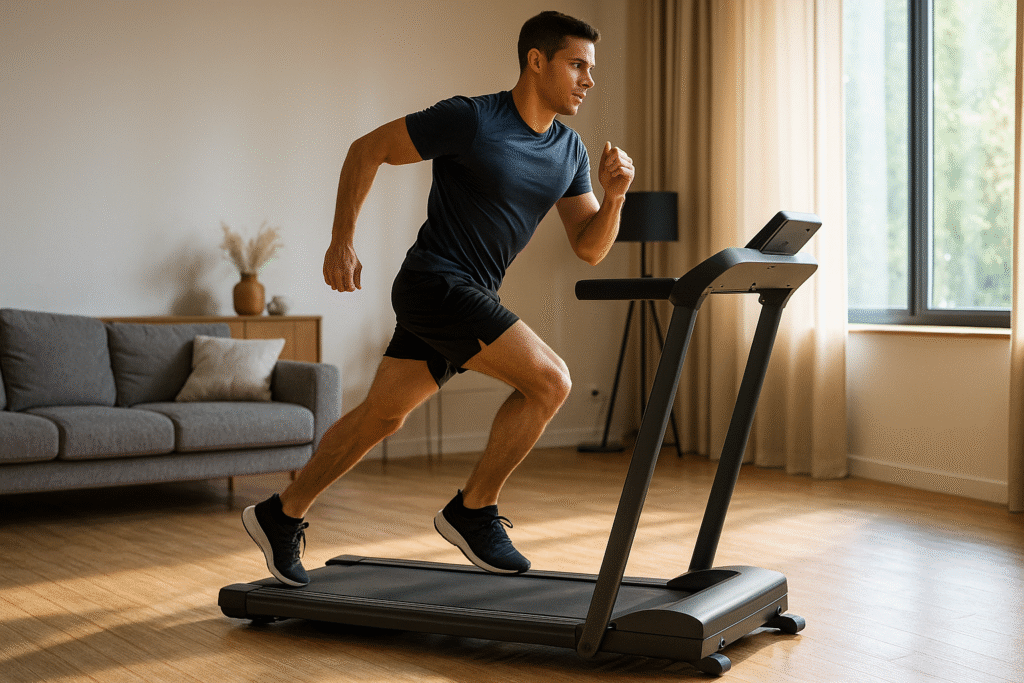
Sprinting on a foldable treadmill looks harmless until the belt starts humming like it’s about to lift off.
A few seconds in, the floor begins to vibrate, the handles rattle, and suddenly the whole setup feels one sneeze away from collapsing.
Someone in the room usually shouts something reassuring like, “Bro, if that thing folds mid-run, it’s over.”
And weirdly enough, it doesn’t even sound like an exaggeration.
Because when that frame starts trembling beneath your feet, every step feels like gambling with physics.
No wonder most people stick to walking speeds and call it a day.
What Happens When You Start Running Hard
Running changes everything.
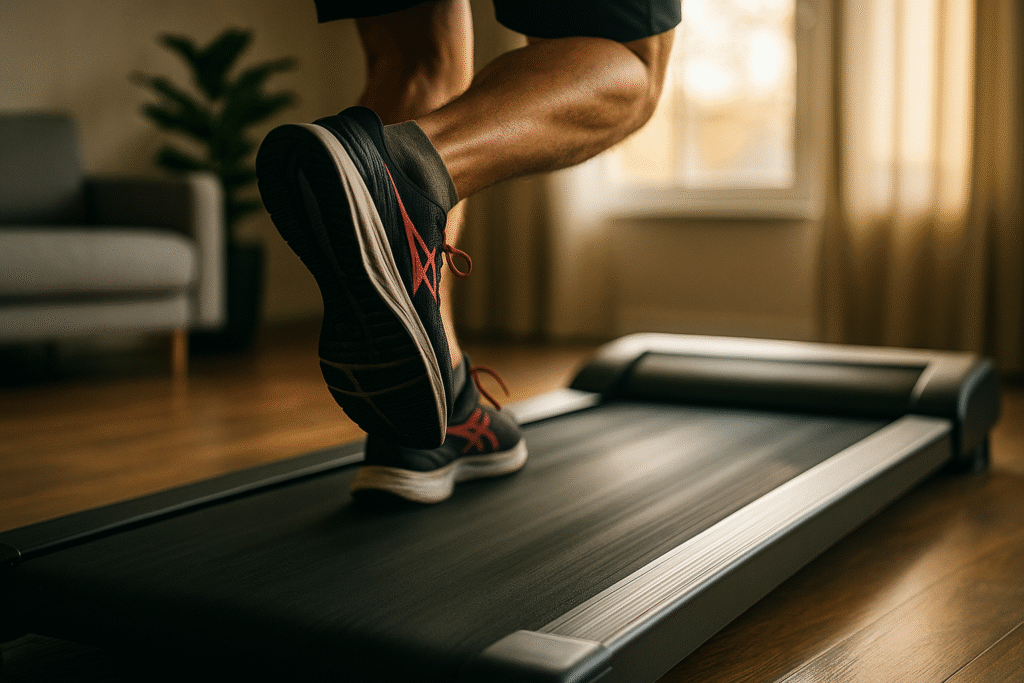
Once you go above 6 or 7 mph, the treadmill isn’t just supporting your weight — it’s dealing with impact force up to three times your body weight per stride.
That means every sprint is like dropping a loaded backpack on the deck, over and over again.
On cheap foldables, that kind of shock goes straight into the frame.
The bolts loosen, the belt starts slipping, and the motor sounds like it’s grinding coffee beans.
High-end foldables, though?
They’re built differently — thicker steel frames, bigger rollers, stronger decks, and better shock absorption layers (8–10 mm elastomer pads).
So yes, you can run fast — but not on every model.
| Want to know how most foldable treadmills hold up in the long run? Check out the main breakdown here — it’s all about what really affects their durability and lifespan. Read the full post → |
Why the Motor Matters More Than Anything
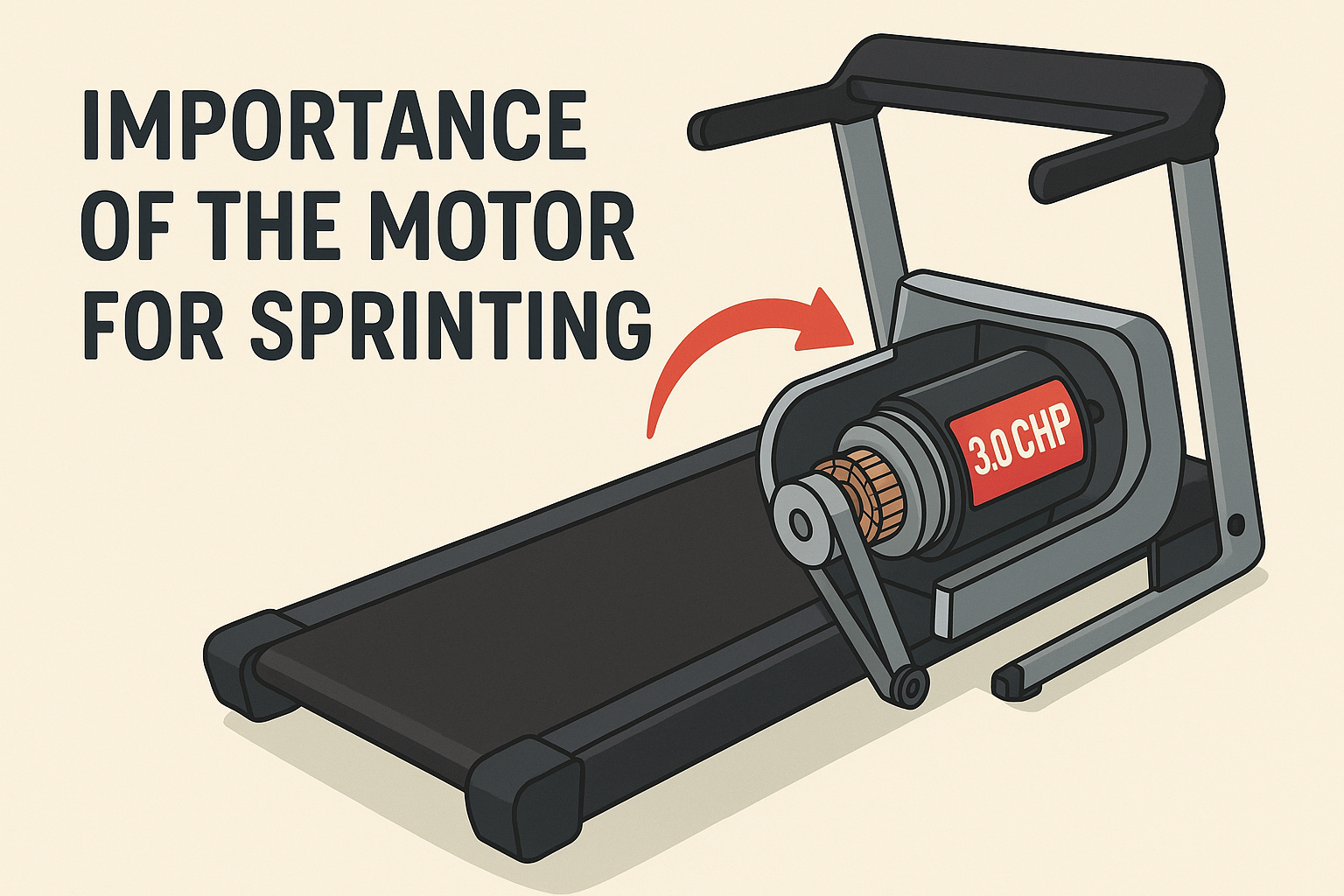
When it comes to sprinting, your motor isn’t just “power,” it’s your treadmill’s heartbeat.
If it’s under 2.5 CHP (continuous horsepower), it’s not designed for repeated high-speed bursts.
Once you hit 8+ mph, the load on the motor spikes 40–60%, which overheats the brushes and burns the circuit board over time.
That’s why high-performance foldables usually start around 3.0–3.5 CHP — enough to handle both speed and incline without whining like a dying blender.
In short: if you plan to sprint, motor size = lifespan.
Built Solid or Built to Shake
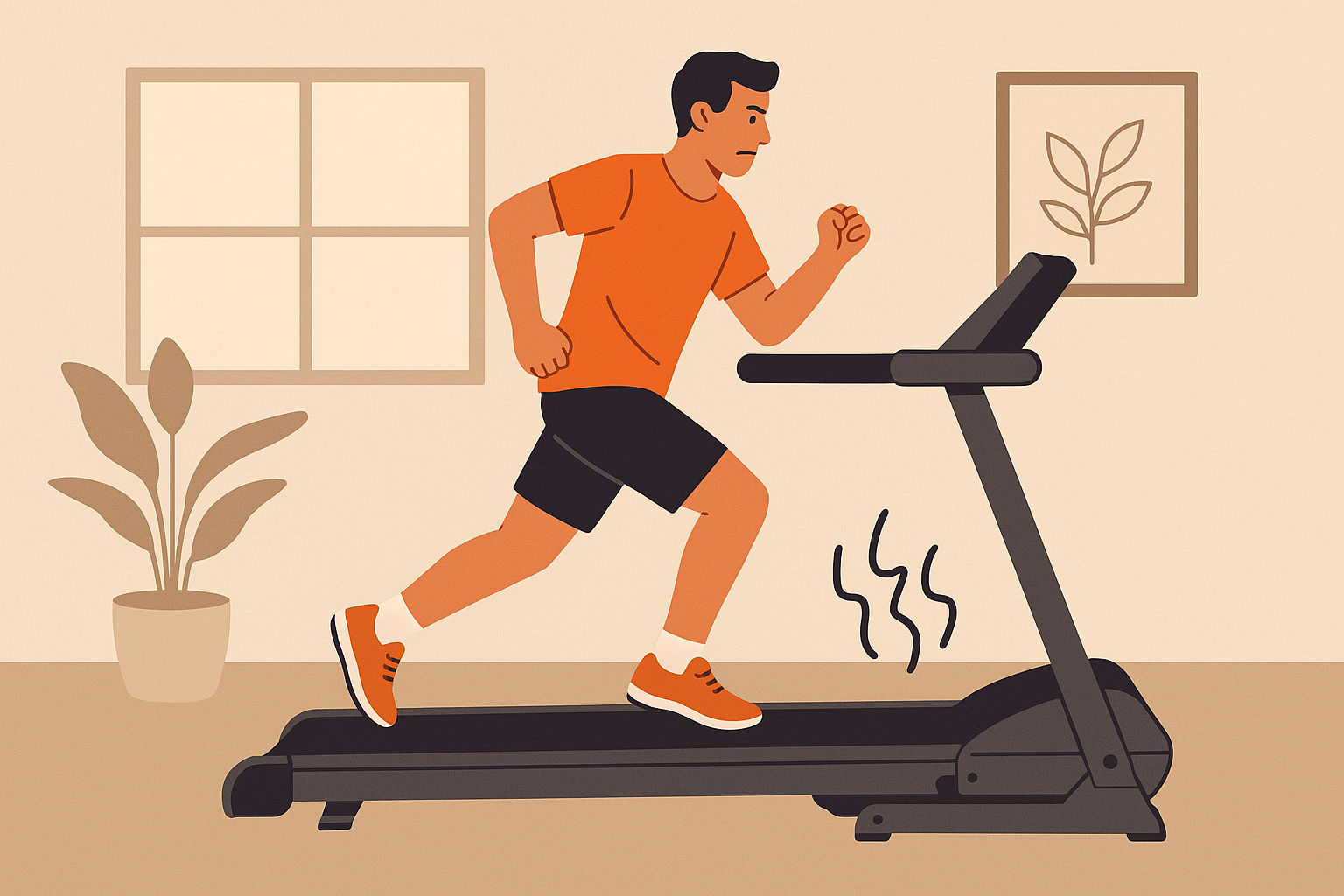
Speed means nothing if your deck wobbles like jelly.
Foldable treadmills use a pivot hinge and a locking mechanism under the deck.
When that hinge isn’t reinforced properly, you’ll feel a tiny vibration at high speeds — that’s the deck flexing under pressure.
At first, it feels harmless.
Then, over time, it messes with belt tracking and causes uneven wear.
That’s why runners who do fast intervals should look for:
- A steel hydraulic frame, not plastic
- Roller diameter above 2 inches (reduces belt slip)
- Deck thickness at least 1 inch
- Weight rating over 300 lbs (means stronger structure)
You don’t have to be heavy to need a strong treadmill — just fast.
| If you’re looking for something lighter or easier to move around, compact treadmills are a different story — smaller, quieter, and built for daily convenience more than speed. See how they compare → |
So, Is It Safe to Sprint on a Foldable Treadmill?
Yes — but only if you pick one built for it and treat it like a machine, not a trampoline.
Running fast on a foldable treadmill is completely safe when:
- The frame is stable (no side flexing)
- The motor is at least 3.0 CHP
- The belt is regularly lubricated and tensioned
- You wear proper running shoes (not flat soles or barefoot shoes)
One thing that helps?
Start gradual.
Let the treadmill warm up for 5 minutes, then build speed — sudden acceleration puts unnecessary strain on the drive belt.
Tips to Keep It from Breaking Down Over Time
If you’re serious about speed, maintenance isn’t optional.
Do this regularly:
- Lubricate the belt every 150 miles
- Check for belt alignment every month
- Tighten hinge bolts every few weeks
- Keep the area under the motor clean for airflow
- Avoid folding it immediately after intense sessions (trap heat = slow death)
Treat it like a car engine — clean air, good oil, no reckless driving.
That’s the difference between a treadmill that lasts 10 years and one that turns into an expensive coat rack.
Making Fast Runs on a Foldable Treadmill Actually Worth It
Running fast indoors doesn’t have to feel like punishment.
Most people either go too hard and destroy their treadmill, or hold back so much that they might as well be walking.
The sweet spot is finding speed sessions that challenge you without cooking your machine.
Here’s what works in real life:
- Use controlled intervals.
Alternate 45 seconds fast, 75 seconds recovery — enough to get intensity without overheating the motor. - Play with incline instead of max speed.
A small incline (3–4%) builds power and cardio load without slamming the belt at full speed. - Run by cadence, not ego.
Keep your stride quick and light — shorter steps reduce impact and vibration on the deck. - Warm up and cool down properly.
The first few minutes at a walk help lubricate the belt naturally; the cooldown prevents motor heat spikes. - Save your sprints for purpose.
Two to three short sessions a week is more than enough for progress — any more, and you’re just testing physics.
Details That Separate Cheap Foldables from Real Runners
Two treadmills can look identical online — same size, same motor rating, same “max speed” — and yet one starts rattling after a month while the other runs smooth for years.
The difference usually hides in small engineering details most buyers never notice.
Here’s what actually matters when you plan to run fast:
- Roller size and weight.
Bigger rollers (2.5″ or more) spread tension better, reducing belt slip and heat buildup.
Small rollers wear belts faster — they’re fine for walking, not sprinting. - Motor cooling vents.
Premium models have open rear vents for airflow; cheaper ones are sealed tight and cook themselves during long runs. - Deck suspension layout.
Look for evenly spaced elastomer pads, not just two at the back.
That distributes force across the frame and prevents the “bounce zone” effect under your feet. - Noise at high speed.
A smooth hum = aligned parts.
A rhythmic clunk = misaligned roller bearings or loose deck bolts — both fixable, but signs of poor assembly.
Conclusion
Yes, you can absolutely run fast on a foldable treadmill — but only if it’s built for performance and you respect its limits.
Think of it like a compact sports car: it can go fast, but only if you keep it tuned.
So if you’re planning to push speed workouts at home, invest in the right motor, deck, and structure.
Because the goal isn’t just to run fast — it’s to run long enough to make it worth it.