There’s this moment every lifter faces.
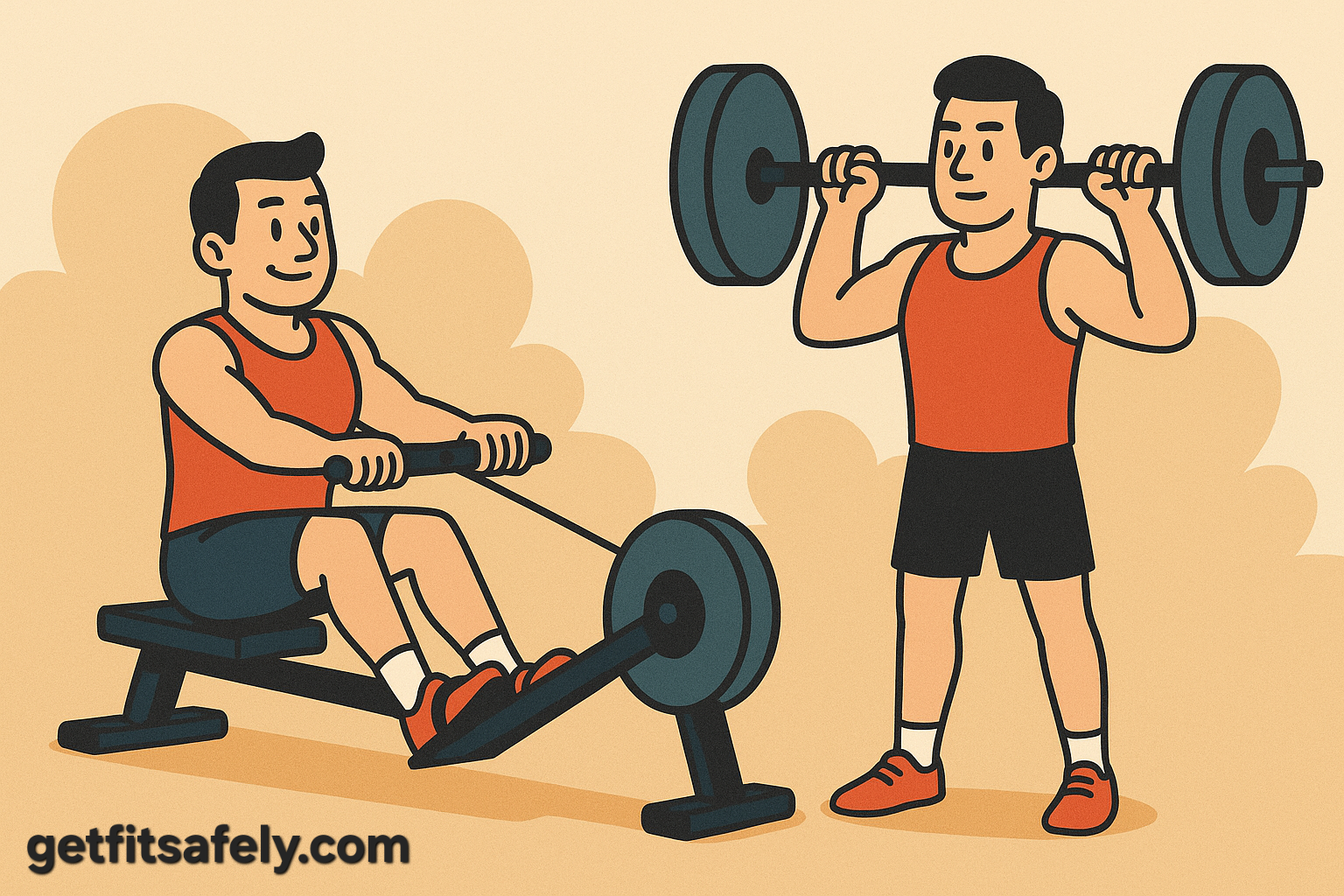
You start loving your strength routine — your bench, your squats, your rows — and then you buy a shiny water rower because everyone online swears it’s the ultimate cardio that won’t kill your gains.
Fast forward a few weeks, and your legs feel cooked, your traps are twitching in your sleep, and you’re wondering if you just accidentally signed up for the fatigue Olympics.
Welcome to the world of mixing rowing with lifting — where performance dreams meet recovery nightmares.
But don’t worry.
This isn’t another “do both and you’ll be fine” article.
This is about how to actually pull it off without frying your central nervous system or turning your workouts into a permanent soreness festival.
The First Mistake Everyone Makes When They Add Rowing
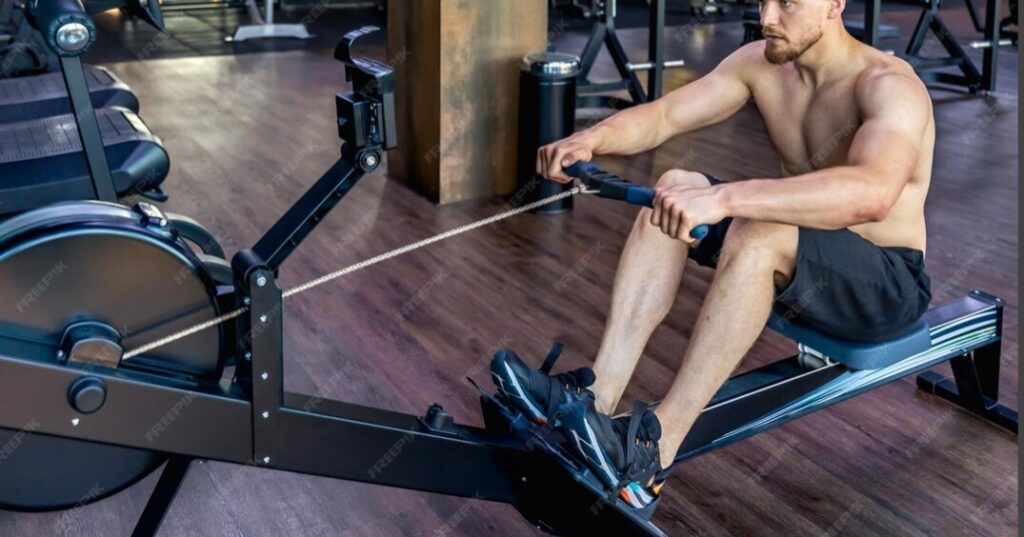
The biggest trap? Treating rowing like a “bonus cardio day.”
Most lifters think: “I’ll just toss in a few 20-minute sessions between lifts — how bad can it be?”
Pretty bad, actually.
Rowing and strength training don’t blend easily by accident.
Rowing isn’t your average treadmill stroll.
It’s a full-body, high-output movement that hits your posterior chain, core, and grip — all the same muscles you already blast when lifting.
If you go hard on the rower and then hit deadlifts the next day, guess what?
Your body doesn’t care that one was “cardio” and the other “strength.”
It just knows your hamstrings are toast.
I learned that the hard way after thinking a few 1,000-meter sprints wouldn’t mess with my pull day.
By the third set of barbell rows, I was rowing like a sad shrimp trying to escape a net.
So yeah — the first rule of combining rowing and lifting is this: Don’t underestimate the overlap.
Understanding What Rowing Actually Demands
If you’ve ever watched elite rowers, they’re not just fit — they’re freakishly efficient engines.
Why?
Because concurrent training pushes two systems at once:
- Aerobic capacity (the endurance side — heart, lungs, oxygen transport).
- Anaerobic power (short bursts — legs, core, pulling strength).
That’s rare.
Most forms of cardio lean one way or the other.
Rowing sits in this brutal middle ground where both systems light up like a Christmas tree.
And here’s where lifters screw up: they already train anaerobically every time they lift heavy.
So if you keep adding anaerobic rowing intervals on top, you’re doubling that load.
It’s like hitting the same muscle twice before it’s had a chance to recover — only now, it’s your entire metabolism that’s overtrained.
The Overlap Problem: When Rowing Steals From Your Strength
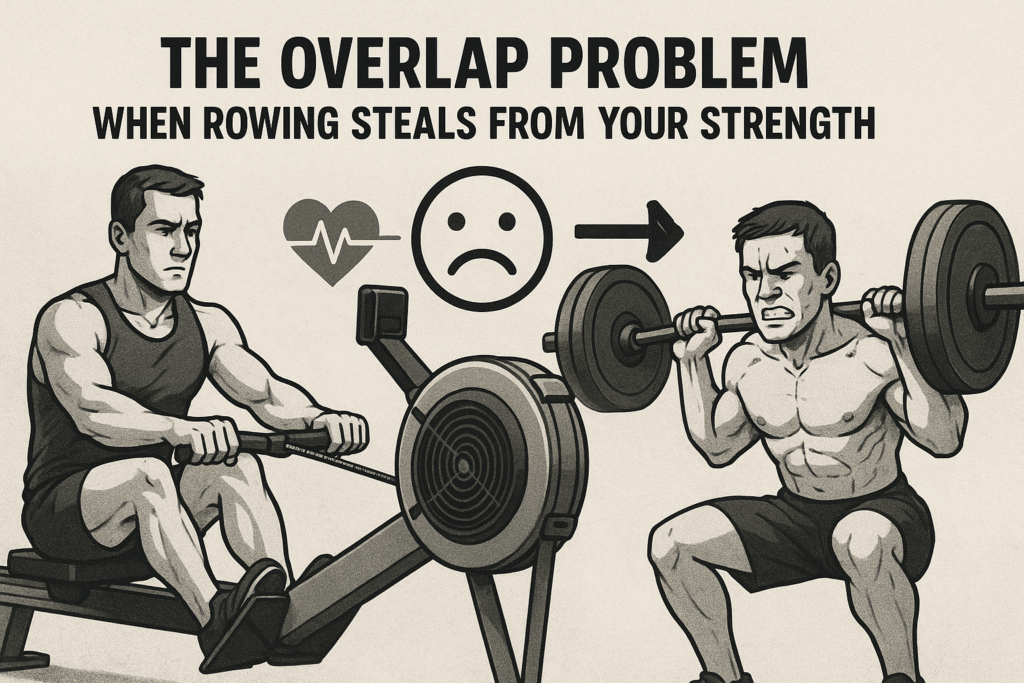
Let’s talk about the interference effect — the scientific name for when strength and endurance try to adapt to different things at the same time.
Your body can get stronger, or it can get more efficient at using oxygen — but doing both aggressively at once makes it harder to adapt to either.
Studies on rowing for lifters show that excessive cardio volume can reduce muscle protein synthesis and blunt hypertrophy, especially in the lower body.
But it’s not a death sentence.
It’s about timing and recovery.
If your rowing sessions come right before or right after heavy squats or deadlifts, your CNS and glycogen stores get hit twice.
If you just shift them by 6–8 hours — or even better, on alternate days — you minimize that interference drastically.
How to Tell When Your Body’s Had Enough
Before your body fully waves the white flag, it gives you clues.
Here’s what to look for when your rowing workout recovery is spiraling into chaos:
- Constant low-back tightness even after light warm-ups.
- Sleep getting worse — heart racing at night or waking up restless.
- You can’t hit the same weights even after a “rest” day.
- Your morning rowing pace feels harder at the same split.
- Mood swings (yeah, even cardio guilt counts).
If two or more of these are happening — you’re not “pushing through.”
You’re overreaching — and that’s a nice way of saying you’re headed for a performance crash.
Balancing Both Without Killing Recovery
Here’s where things get fun — and surprisingly logical.
You don’t need to ditch either discipline.
You just have to plan them like they’re teammates, not rivals.
A balanced hybrid athlete training week might look like this:
Option A — Strength Priority (row for conditioning)
- Mon: Heavy lifting (upper or lower)
- Tue: Easy steady-state row (30–40 min, conversational pace)
- Wed: Off or mobility
- Thu: Strength
- Fri: Short rowing intervals (ex: 6 × 250m with full rest)
- Sat: Accessory lifts or bodyweight work
- Sun: Off
Option B — Rowing Priority (building cardio base)
- Mon: Long endurance row
- Tue: Moderate lifting (avoid failure)
- Wed: Rest
- Thu: Row intervals
- Fri: Strength
- Sat/Sun: Optional active recovery
The key?
Intensity rotation.
Don’t let both workouts demand maximum effort in the same 48 hours.
Dive into Rowing for Size: Is It Possible to Get Jacked Without Weights? to see how rowing can trigger hypertrophy and which training tweaks make it happen.
The “Row Before or After Lifting” Debate
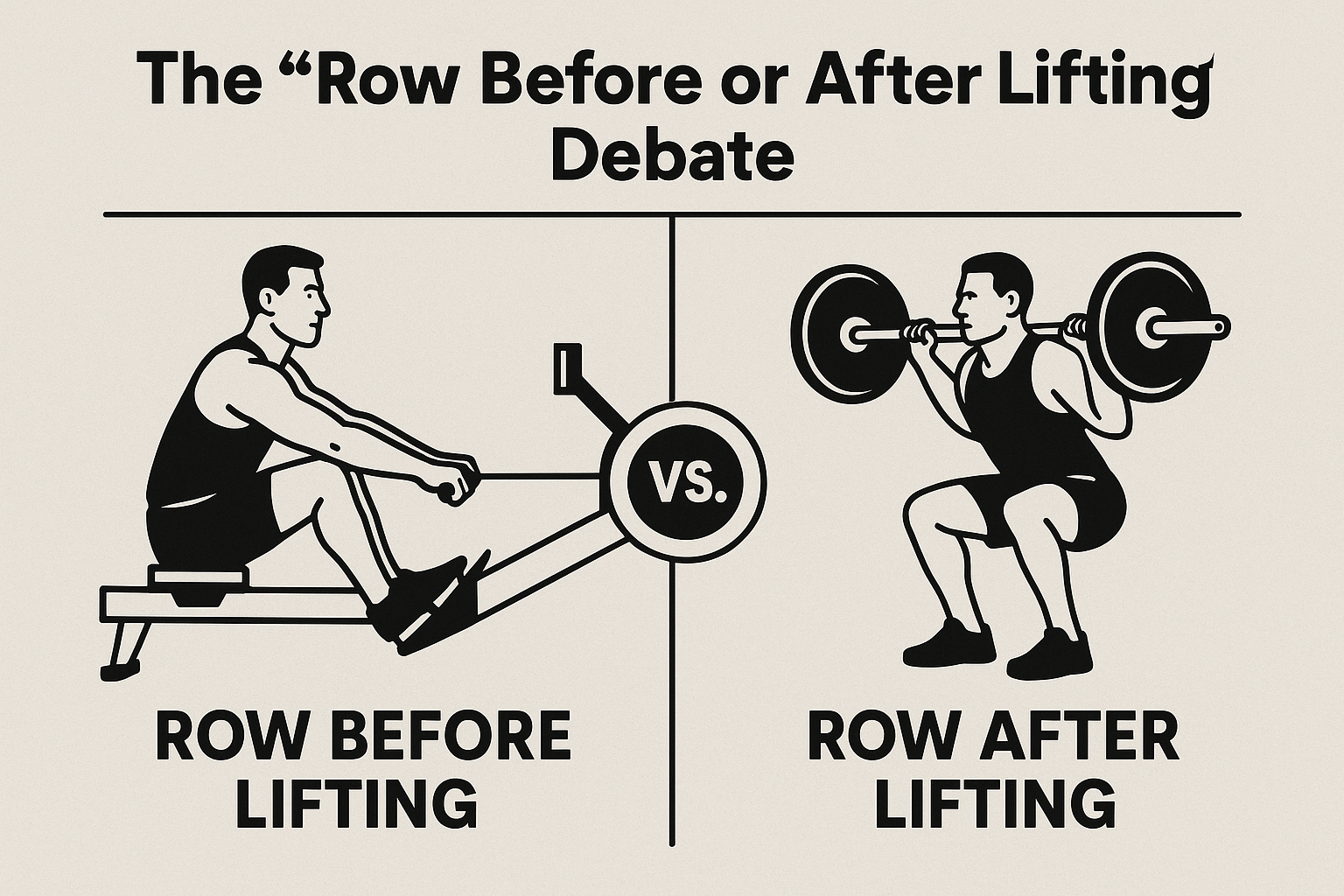
Ah yes, the eternal question — should you row before or after lifting?
Here’s the real answer: it depends on what you care about most right now.
If you’re focused on strength and hypertrophy, lift first.
Your nervous system fires best when fresh, and rowing fatigues the exact stabilizers you need for form.
If your main goal is aerobic capacity or fat loss, then start with rowing.
That way, you push endurance when your energy is highest.
Personally, I like to separate them by at least 6 hours when possible — morning rowing, evening lifting.
That gives your glycogen levels time to rebound and your nervous system a mini reset.
The Hormonal Side of Dual Training
Here’s what the science side often forgets to explain like a human.
Every workout you do shifts hormones and nervous system states.
Rowing, especially intervals, ramps up cortisol and adrenaline — great for power and endurance, but terrible if stacked before heavy lifting.
Lifting, on the other hand, spikes testosterone and growth hormone, which are crucial for recovery and muscle repair.
If you’re constantly doing HIIT rowing and lifting right before each other, you’re essentially training under cortisol — the catabolic hormone that keeps your system on high alert.
The fix? Space the sessions.
Eat carbs.
And don’t go all-out on both within the same 24-hour window more than twice a week.
Rowing Volume: How Much Is Too Much
Let’s talk dosage — because that’s where most burnout stories start.
Rowing, unlike running, doesn’t hurt your joints as much.
That makes it deceptively sustainable.
You finish a 20-minute session and think, “Hey, that wasn’t bad.”
Then you add 30 minutes tomorrow.
And 40 the day after.
And before you know it, your grip strength and CNS are crying for help.
Here’s a general safe zone for rowing volume for strength athletes:
- 2 short sessions (15–20 min) per week if you’re strength-focused.
- 3 moderate sessions (30–40 min) if you’re balancing both.
- 4–5 varied sessions only if your lifts are secondary.
Also, alternate between styles:
- Steady-state rowing (low-intensity, zone 2).
- Intervals (short, hard bursts).
- Technical work (form drills, lower rate).
This way, you’re stimulating adaptation, not inflammation.
The Sneaky Muscle Fatigue Nobody Talks About
Here’s something most people never realize until too late.
Rowing drains your grip and rear delts like crazy.
If you row hard three times a week, and also pull heavy on your back days, you’re basically never letting those stabilizers rest.
That leads to what I call the “perma-tight scapula syndrome.”
Your shoulders start rounding, your pull-ups feel sluggish, and your posture looks like you’ve been living on a laptop.
Simple fix: rotate your pulling angles and intensity.
Instead of always doing barbell rows, throw in:
- Chest-supported rows.
- TRX inverted rows.
- Face pulls or band pull-aparts.
And yes, stretch your forearms.
Tight grip = tight everything up the chain.
Fueling Dual Training Without Running on Empty
Most people who burn out while combining both simply… under-eat.
They assume rowing “just burns a few calories,” but trust me — your metabolism notices.
Here’s what helped me stop crashing halfway through my training weeks:
Add a carb source (like oats or banana) pre-rowing.
Take a protein + carb combo post-lifting.
If you’re doing both on the same day, snack between sessions — something simple like Greek yogurt, fruit, or rice cakes.
Don’t go keto, don’t go low-carb, and for the love of all things iron, don’t fast before interval rows.
The Smart Way to Track Fatigue Before It Hits
Here’s a small but powerful trick: track performance drift.
If your usual 2k row pace suddenly feels harder at the same split, or your barbell warm-ups start feeling heavy for no reason, your system is already signaling fatigue.
Try this checklist once a week:
- Is your split pace slower by more than 3 seconds/500m?
- Are your barbell warm-ups moving slower?
- Did your resting heart rate go up 5–7 bpm this week?
- Do you feel mentally “flat” before training?
If yes to two or more — it’s time to dial volume back or take a deload.
Building the Perfect Long-Term Combo
The best rowing–lifting combo isn’t about perfection.
It’s about sustainability.
If you find yourself dreading either workout, your balance is off.
If you wake up pumped for both, you’re doing it right.
Here’s the checklist I use now:
✅ My lifts feel strong.
✅ My row times are stable or improving.
✅ My sleep is solid.
✅ I actually look forward to training.
That’s the sweet spot — not pushing the limit every day, but riding the edge smartly.
Because when you finally get it right, something cool happens: your endurance feeds your power, and your power feeds your endurance.
Why HIIT Rowing Can Make or Break Your Lifting Week
Here’s a wild truth most lifters ignore.
HIIT rowing isn’t “just cardio.”
It’s basically plyometrics for your entire posterior chain.
When you throw all-out intervals into your week — like 10 × 500m sprints — you’re not doing recovery cardio.
You’re sending the same fatigue signals as a heavy squat session.
So if your split already includes leg day and pulling day, you’ve just created a silent triple hit.
The smart play? Cap your HIIT rowing to once a week max.
And schedule it right after your lower-body lifting day, not before.
That way, you consolidate stress instead of spreading it across the whole week — a trick endurance athletes call “fatigue stacking.”
It’s brutal in the moment but golden for recovery.
See the full guide Compact vs. Foldable Rowers: What’s Actually Better for a Small Apartment Gym? to find which model fits your space and goals best.
How Periodization Keeps You From Hitting the Wall
If you’ve been lifting and rowing for months straight with no changes in structure, you’re not training anymore — you’re just surviving.
The best hybrid athletes use periodization for rowing and lifting — treating their training like seasons, not weeks.
Base phase (4–6 weeks): steady-state rowing, moderate lifting volume, high focus on technique.
Power phase (3–4 weeks): add shorter, faster rows and explosive lifts (cleans, push presses, kettlebell swings).
Maintenance phase: balance intensity, reduce frequency, and let recovery catch up.
This rhythm prevents that creeping fatigue where every session feels like Groundhog Day.
It also keeps your motivation high — because no system in your body thrives on monotony.
Think of periodization as your burnout insurance.
The Mind–Body Feedback Loop No One Mentions
When you start balancing rowing and lifting well, something subtle shifts.
Your body stops seeing them as separate things — it starts syncing them.
Your breath control during lifts improves because of the endurance work.
Your stroke rhythm during rows becomes smoother because of the stability from lifting.
That’s the hidden advantage of hybrid training most people miss: you’re literally rewiring coordination and pacing across disciplines.
And mentally? It’s therapy.
You stop obsessing over PRs and start chasing flow — that state where your power and control finally click.
Final Thoughts
If you love rowing and lifting, you don’t have to pick sides.
Just stop treating your body like it’s got infinite batteries.
Balance intensity.
Respect recovery.
Fuel like an athlete, not a spreadsheet.
Because the real win isn’t rowing 10k and still deadlifting 400.
It’s waking up the next day ready — not wrecked.
That’s what makes fitness sustainable, not just impressive.