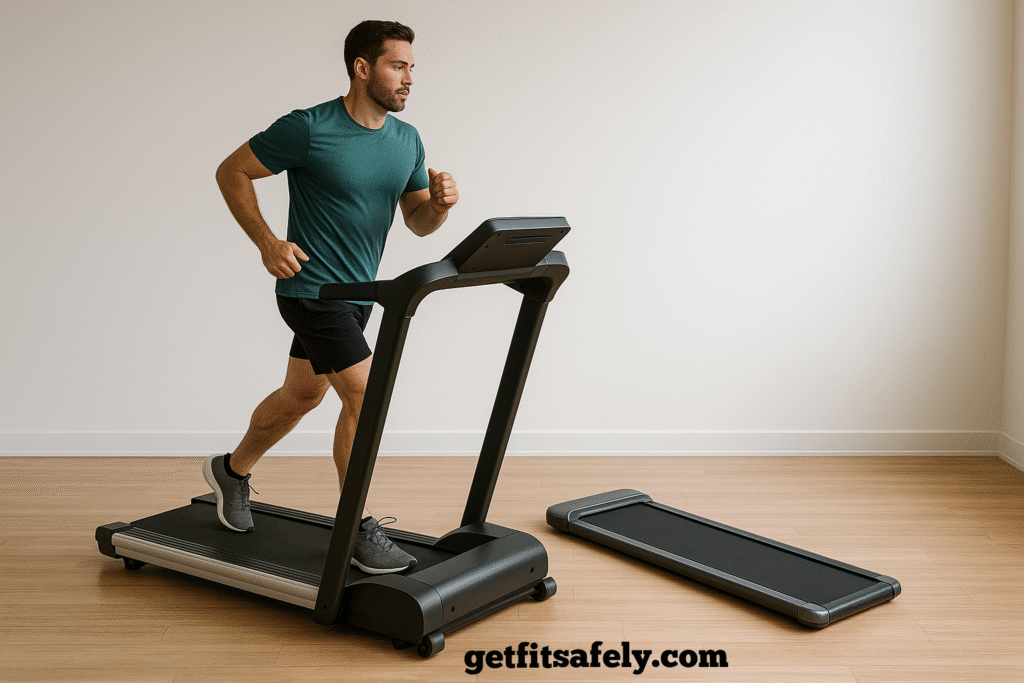
Halfway down a narrow hallway, a treadmill turns from fitness gear into pure chaos.
It’s not heavy — just unreasonably awkward.
Like a sofa determined to fight back.
Moments like that reveal the truth: folding isn’t the same as portable.
One looks easy on paper. The other truly is.
Folding doesn’t mean featherweight
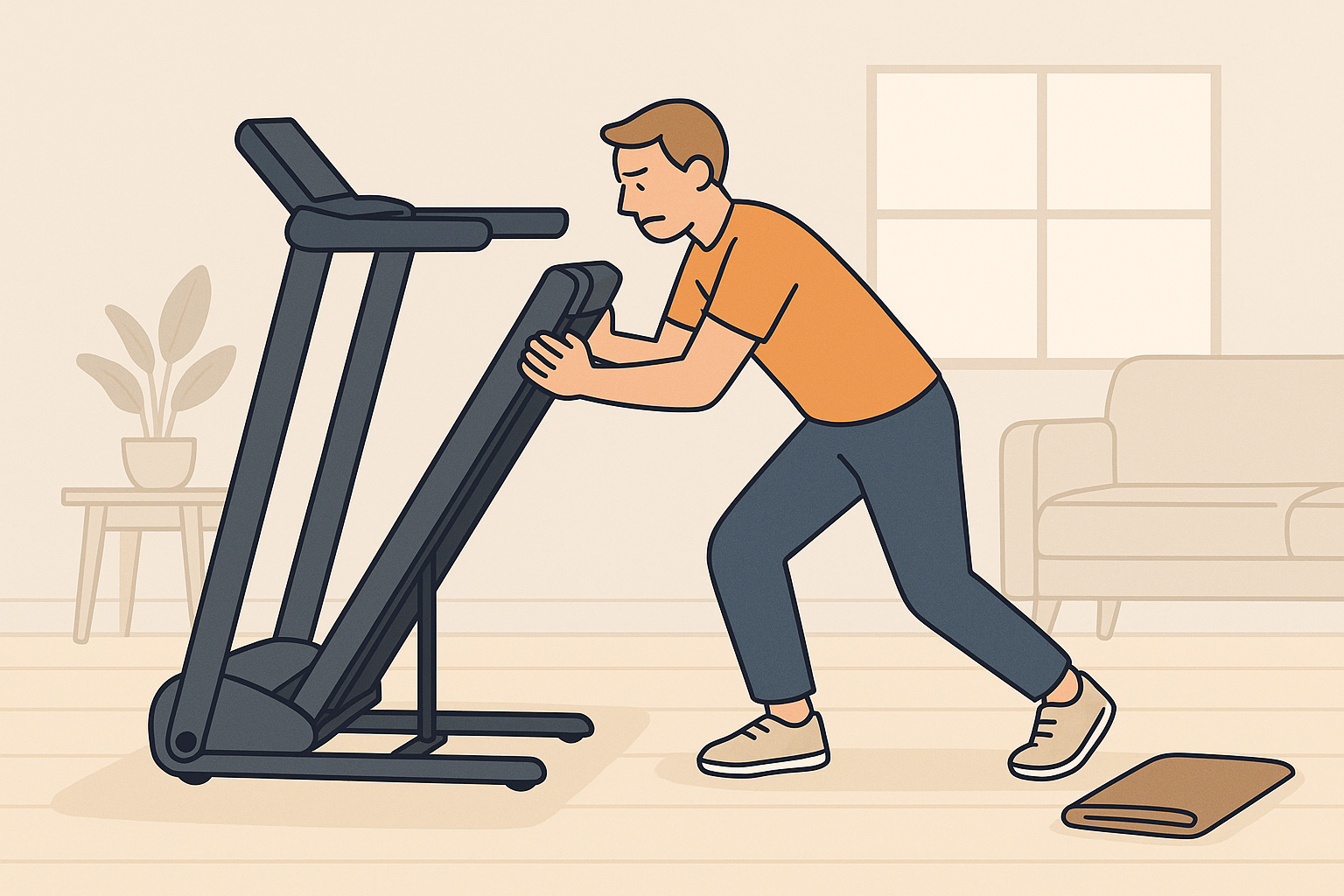
Here’s the truth nobody puts on the product page: a folding treadmill is still a full-size machine.
It’s got a solid deck, a real motor, and a belt long enough for a decent stride.
It’s called “folding” because it bends, not because it’s light.
You’ll still wrestle it around like a stubborn roommate every time you need to move it.
But that weight?
That’s also what makes it stable.
You can run fast, do sprints, or even incline work without feeling like the floor’s about to give out.
Folding treadmills are for people who want serious training but live in places that force compromise.
They’re the middle ground between gym-grade gear and apartment survival.
Portable means freedom, but also limits
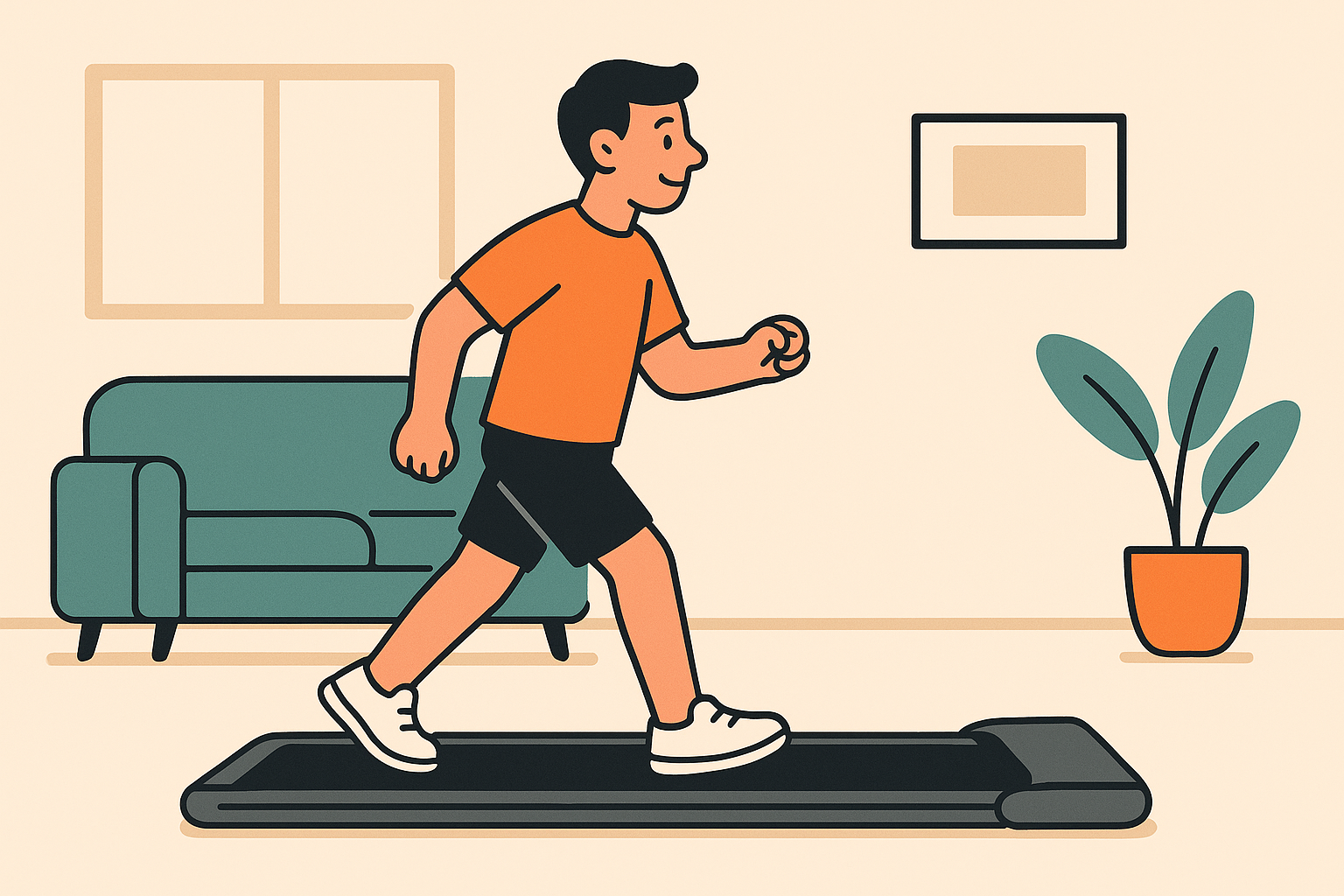
Portable treadmills are a whole different breed.
They’re not built for bragging rights — they’re built for people who just want to move.
Usually lighter, flatter, and without an incline, they’re meant to slip under a bed or behind a sofa when not in use.
And honestly, that’s what makes them genius.
I’ve had days where my portable treadmill saved me from skipping movement altogether.
Five minutes before dinner, ten after breakfast — suddenly you’ve walked a mile without thinking.
But let’s be real: you’re not running marathons on it.
It’s more like a steady stroll companion — perfect for daily activity, not for chasing PRs.
Two different vibes, two different mindsets
A folding treadmill turns your space into a mini gym.
You schedule time for it.
It’s about structure, intensity, routine.
A portable treadmill blends into your day.
You don’t plan it — you fit it in.
That small distinction makes all the difference in how consistently you’ll use it.
If you’re the kind of person who thrives on ritual and “training time,” folding fits.
If you’re more about easy movement and less about setup, portable wins.
How it feels when you use them
Running on a folding treadmill feels stable, powerful, and close to what you’d expect in a gym.
There’s bounce under your feet, steady traction, and the comforting hum of a strong motor.
Portable treadmills feel more minimal — lighter steps, thinner belt, slightly less cushion.
You can still get a rhythm, but it’s more of a walk or jog groove.
Honestly, I like both for different reasons.
The folding one challenges me.
The portable one keeps me from becoming a statue during workdays.
Performance vs. practicality
If we strip it down to the essentials:
- Folding treadmills:
- Higher speed (usually up to 10 mph)
- Incline settings
- Better shock absorption
- Heavier and more durable
- Portable treadmills:
- Lightweight and slim
- Max speed around 4–6 mph
- Easier to store
- Best for walking or light jogs
It’s not about which one is better.
It’s about which one fits your goals — and your floor plan.
What nobody tells you about “saving space”
I learned this the hard way: space-saving means something completely different in marketing than in real life.
Folding treadmills save floor space, not storage space.
They stand tall and look neat, but they still live in your room.
Portable treadmills save visual space — they vanish when you’re done.
Slide it under the bed, and suddenly your living room feels twice as big.
If you’re living in a small apartment or studio, that invisibility is a blessing.
Because sometimes the best fitness equipment is the one that doesn’t take over your life.
Choosing the right one for your lifestyle
Here’s a quick way to figure it out:
| Your Goal | Best Pick | Why |
|---|---|---|
| Running, intervals, cardio training | Folding treadmill | Feels like a real gym setup with better stride support |
| Daily steps, gentle activity | Portable treadmill | Easier to use every day without setup fatigue |
| Apartment or shared space | Portable treadmill | Disappears when not in use — quiet and compact |
| Dedicated corner or small home gym | Folding treadmill | More features and long-term reliability |
If you’ve got the space, folding treadmills give you room to grow.
If you don’t, portable treadmills keep you active instead of frustrated.
When Specs Actually Matter (and When They Don’t)
Most folding and portable treadmills look similar in ads — same sleek photos, same “fits anywhere” promise.
But the numbers tell a very different story once you check the specs.
| Feature | Folding Treadmill | Portable / Under-Desk Treadmill |
|---|---|---|
| Weight | 90–120 lbs | 40–60 lbs |
| Motor Power | 2.5–3.5 HP | 1.0–2.0 HP |
| Max Speed | Up to 10–12 mph | Usually 4–6 mph |
| Incline Option | Manual or automatic up to 10–15% | Rarely included |
| Running Belt Length | 48–60 inches | 35–45 inches |
| Noise Level | Moderate | Lower, ideal for shared spaces |
| Storage Height (Folded) | 45–60 inches upright | 6–8 inches flat |
| Best For | Runners, structured workouts | Walkers, remote workers, small apartments |
Here’s the thing — if you plan to train, you’ll feel the difference immediately.
The belt length alone can change your stride and comfort.
But if your main goal is to stay active and hit 10k steps, the portable one wins because it’s silent, slim, and less intimidating.
Sometimes, less horsepower = fewer excuses.
Before You Buy — A Quick Reality Check
If you’re debating between the two, ask yourself these questions before hitting “add to cart.”
- Where will it live when you’re not using it?
(If your answer is “in the hallway,” go portable. You’ll thank yourself later.) - How do you plan to use it — workouts or movement breaks?
Structured training → folding.
All-day movement → portable. - Are you okay with setup and maintenance?
Folding treadmills need more assembly and motor upkeep. Portable ones? Plug and play. - Noise tolerance:
Live upstairs or with roommates? Portable treadmills are whisper-quiet. - Do you need incline or speed variation?
If you get bored easily, that incline button on a folding treadmill can save your motivation.
Basically, think less about “which one is better” and more about “which one fits the version of me I’ll actually stick with.”
Bonus: The Small-Space Survival Plan
If your treadmill is going in a small apartment, here’s what actually helps:
- Use a rubberized floor mat to reduce noise and vibration.
- Keep it near a wall outlet — long cords create clutter and trip hazards.
- If you’re using a portable treadmill under a desk, keep your monitor at eye level to avoid bad posture.
- Store resistance bands or a yoga mat right next to it — that visual cue keeps the habit alive.
Because sometimes, the smartest “space-saving trick” isn’t folding steel.
It’s designing a corner of your home that quietly reminds you to move.
🏡 Related Reading:
• Do Compact Treadmills Really Save Space or Just Cut Corners?
• Are Foldable Treadmills Actually Worth It or Do They Break Faster Than Normal Ones?
• What Should You Look for When Buying a Compact Treadmill for Small Spaces?
Final thoughts
At the end of the day, whether your treadmill folds, slides, or vanishes completely doesn’t matter.
What matters is that it doesn’t collect dust.
Because discipline isn’t built in square footage — it’s built in small daily moves that add up.
So yeah, folding and portable treadmills are different.
But both can keep you moving, sweating, and sane — as long as you actually step on them.
FAQs
🟦 Can you actually run on a portable treadmill?
Not really — most portable or under-desk treadmills max out around 6 mph.
You can jog, but they’re designed for walking or light cardio, not sprints.
🟦 Do folding treadmills lose stability over time?
Only if they’re poorly built.
Higher-end models use hydraulic hinges and heavy frames, so you’ll barely notice a difference from non-folding treadmills
🟦 Are portable treadmills good for apartments?
Absolutely — they’re quiet, compact, and easy to hide.
A good anti-vibration mat will also keep your downstairs neighbors happy.
🟦 What’s the difference between “fold-flat” and “folding”?
“Fold-flat” treadmills lie completely horizontal — you can slide them under furniture.
“Folding” ones stand upright — better for vertical storage but bulkier overall.
🟦 How long do these machines last?
A folding treadmill can easily last 5–10 years with maintenance.
Portable treadmills usually around 3–5 years, depending on usage and motor strength.