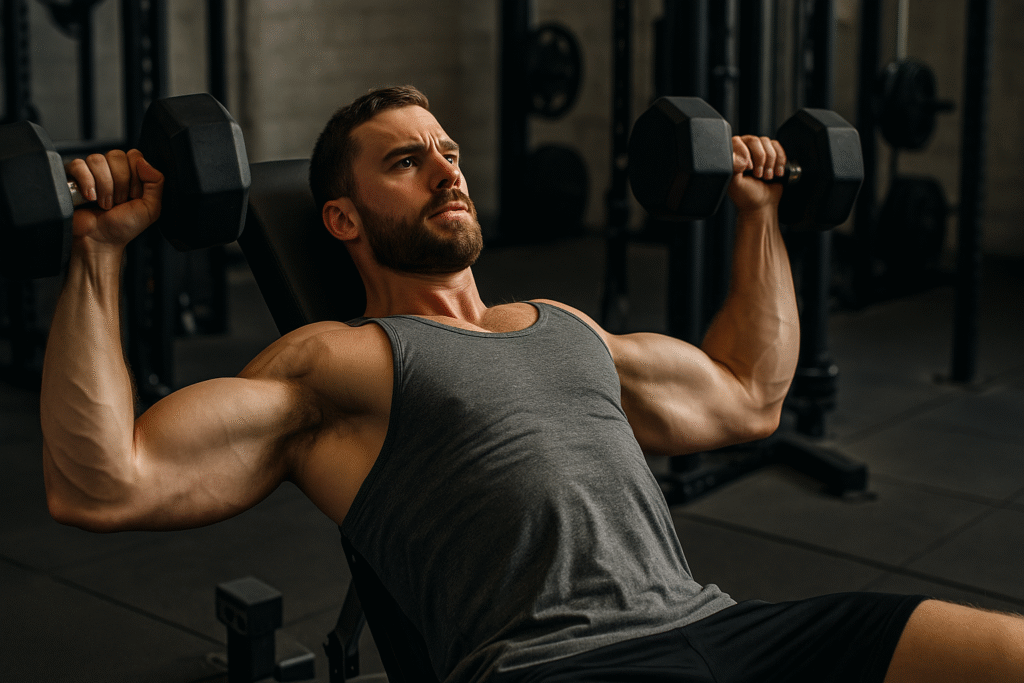
I used to think chest day was simple.
Walk into the gym, load the bar, bench heavy, leave with a pump.
But then I kept hearing whispers in the locker room: “Bro, start with flys. Pre-fatigue the pecs. That’s how you grow faster.”
And being the kind of lifter who can’t resist testing stuff, I had to try it.
Spoiler: not the dumbest thing I’ve ever done.
The method behind the madness
Bench press is a compound lift.
Your chest isn’t the only player—shoulders and triceps always crash the party.
Great for overall strength.
But if your triceps give up before your chest does, your pecs never get the full beating they deserve.
That’s where flys-first comes in.
You hit your pecs early, weaken them just enough, and when you move to bench, they can’t hide behind your stronger helpers.
There’s actual research on this.
It’s called “pre-exhaustion”—doing an isolation move first, then a compound.
Some studies show chest activation goes up when you do flys before bench.
But not all results are pretty. Other research shows you just get weaker overall, limiting how much weight you push.
Less weight means less mechanical tension, and tension is one of the main drivers of muscle growth.
So… brilliant hack or gym folklore?
Truth?
Somewhere in between.
The day flys came first
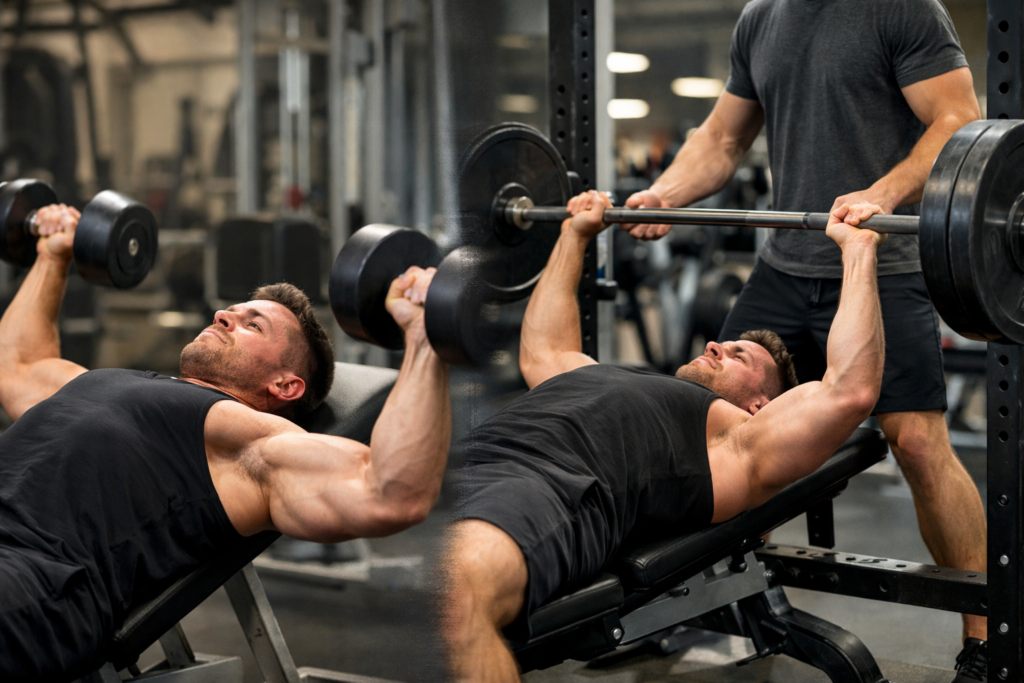
The first time I did flys before bench, my pecs felt like they were about to explode out of my shirt.
Every press after that was fire—pure chest burn, the kind that hurts but makes you smirk at the same time.
The downside? My numbers tanked.
Normally I’d press 225 without much stress. After pre-exhaust? Struggling with 185.
Chest was fried? Absolutely.
Did I grow more in the long run? Not really more, not less—just different.
If you’re a beginner, skip it.
Your chest will grow fine with bench first, and you need that strength base.
But if you’re an intermediate lifter struggling to feel the chest during bench, flys-first could be a cheat code.
It forces your pecs to take over, instead of letting triceps and shoulders hog the spotlight.
When flys-before-bench really shines
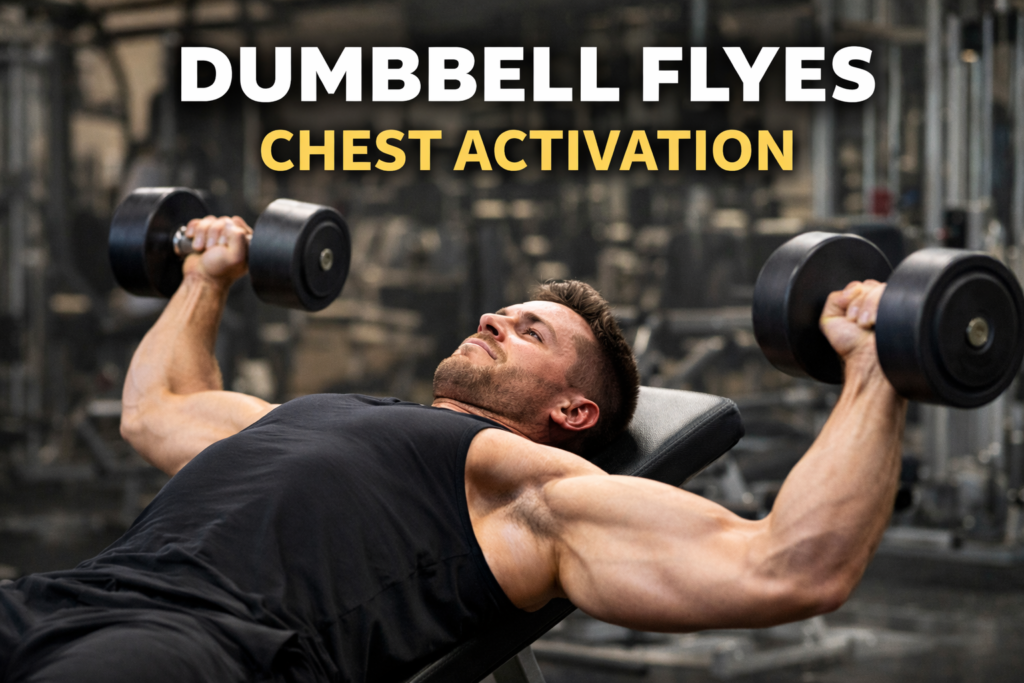
Here’s what most people miss: pre-exhaust isn’t just about “burning the chest more.” It’s about shifting who fails first.
Normally, triceps or shoulders tap out before your pecs do.
The lift ends, but your chest still had fuel left.
Flys-first flips the order. Suddenly your chest is the one screaming, while triceps just hang on for dear life.
For lifters who always finish bench with arms fried and chest barely warm, this is the shake-up you needed.
The budget lifter’s secret weapon
Not everyone has a home gym with Olympic bars and 100-pound dumbbells.
Maybe you’re training with a pair of 30s and a wobbly Amazon bench.
Guess what?
Pre-exhaust evens the field.
Two sets of flys and suddenly those light presses feel like a heavyweight showdown.
Your pecs don’t care about the number printed on the dumbbell—they care about tension.
And you can trick them into thinking you’re lifting more iron than you actually have.
A tactical move, not an eternal plan
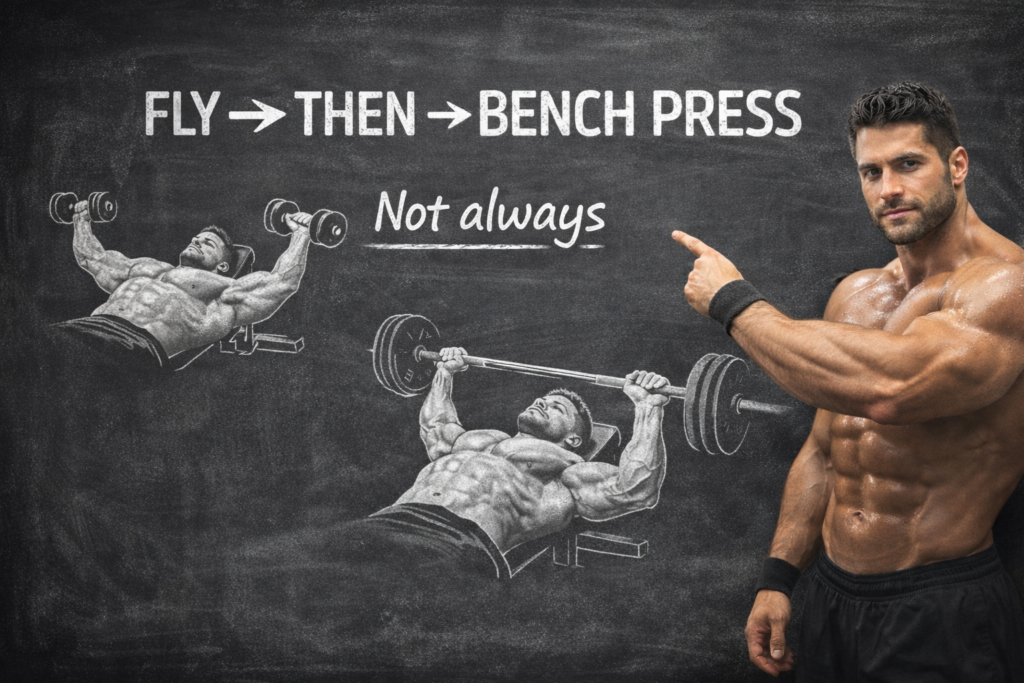
The secret is balance.
Start with one or two controlled sets of flys—dumbbells or cables—just enough to wake up the pecs and pump some blood in.
Then move to the bench with solid form, steady tempo, and a real squeeze at the top.
But don’t turn it into a ritual.
This move works best when it’s used like hot sauce—sprinkle it on occasionally, not on every meal.
If you use it all the time, your muscles adapt and the spark fades.
Save it for when progress stalls, when your chest refuses to grow, or when you just want to shake things up.
That’s when it hits the hardest.
Where flys fit in your program
People often treat flys-first like a one-off gimmick.
But the truth is, its value changes depending on your training phase.
If you’re in a strength block, it doesn’t make sense.
The goal is max load and neural coordination.
Flys-first just sabotage that.
In a hypertrophy block, though?
Perfect.
Use it for 3–4 weeks as a shock phase. Start every chest workout with flys, then press. Your pecs won’t know what hit them.
And if you’re cutting?
Even better. Weights are lighter, recovery is trickier, and the pump matters more. Pre-exhaust lets you squeeze the most growth out of fewer plates.
Not just activation: pump and muscle damage
Reducing flys-first to just “better activation” is selling it short.
When you bench after flys, your pecs are already pumped, congested, and swimming in lactic acid.
That’s stress.
That’s metabolic overload.
This isn’t the same as pressing heavy fresh.
You’re not chasing pure mechanical tension—you’re layering in muscle damage and metabolic stress.
And real hypertrophy comes from mixing all three: tension, stress, and damage.
Flys-first gives you the piece you’re usually missing if you only chase numbers on the bar.
When your shoulders steal the spotlight
Here’s the part no one admits: not everyone feels the bench the same way.
Some lifters have shoulders that take over everything—every press turns into a front-delt festival.
For them, flys-first are gold.
They quiet the shoulders and finally force the chest to carry the load.
Others naturally lock into their pecs with no problem.
For them, flys-first can backfire by draining strength before the main lift even starts.
The rule of thumb?
If months of pressing left you with round shoulders but a flat chest, start with flys.
If your pecs already pop, keep it as an occasional twist, not your default recipe.
How to progress week by week
Instead of just winging it, try a mini-cycle:
- Week 1–2 → 1–2 light sets of flys before bench. Just enough to warm pecs up.
- Week 3–4 → 3 sets, moderate weight, full stretch and squeeze. Now the chest comes into bench pre-fatigued.
- Week 5 → deload. Bench fresh, no pre-exhaust. Focus on strength.
- Week 6+ → repeat the cycle or swap in a new combo (like cable flys + incline press).
This way you avoid adapting too fast, and you keep hitting pecs with a perfect blend of tension, pump, and fatigue.
The bottom line
Starting with flys before bench isn’t a magic shortcut to a bigger chest.
It’s a tool.
For some, it changes the way they feel and train their pecs.
For others, it’s just extra burn with no real payoff.
The only way to know?
Try it for a few weeks.
See how your body responds.
That’s the beauty of lifting—it’s not about following one formula.
It’s about experimenting, adjusting, and finding what makes your muscles scream in the best way possible.