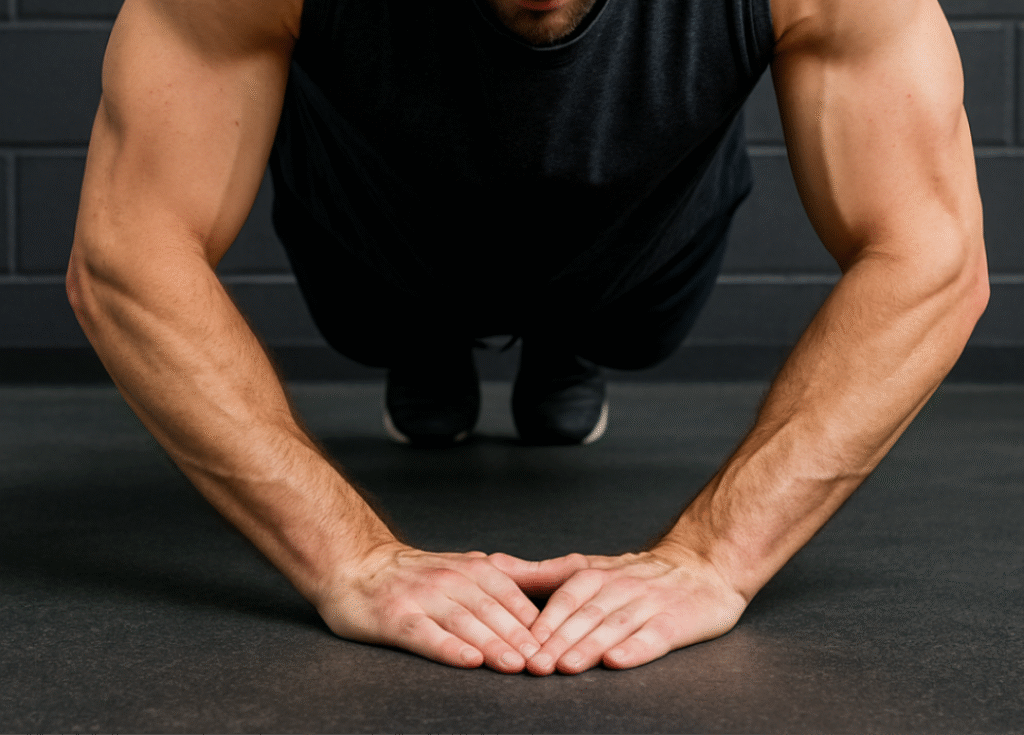
I never had wrist issues with diamond push-ups.
Not on my first try, not years later.
As a teenager I just dropped on the floor, put my hands together, pushed… and everything felt normal.
No pain.
No weird clicking.
Nothing.
But I’ve coached a lot of younger guys who can’t get through one clean rep without their wrists lighting up.
One push and they’re already shaking their hands out like they touched something hot.
That’s when it hit me:
diamond push-ups don’t bother everyone the same way.
Some people can do them right away.
Others feel pain instantly.
And it’s not about toughness or weak wrists.
It usually comes down to one thing: how your joints line up during the movement.
Simple as that.
Why Diamond Push-Ups Punish the Wrist Joint
Diamond push-ups flip your normal hand placement into a super-narrow base.
That small adjustment completely changes how your upper body distributes load.
Your elbows tuck harder, your chest drifts forward, and your whole center of mass sneaks past your hands.
The moment that happens, your wrists are on the front line with zero backup.
And here’s the big thing people forget.
The wrist can handle extension, just not when the angle gets too deep or when your whole weight shifts forward.
Diamond push-ups push most people straight into that “bad angle + too much weight” combo.
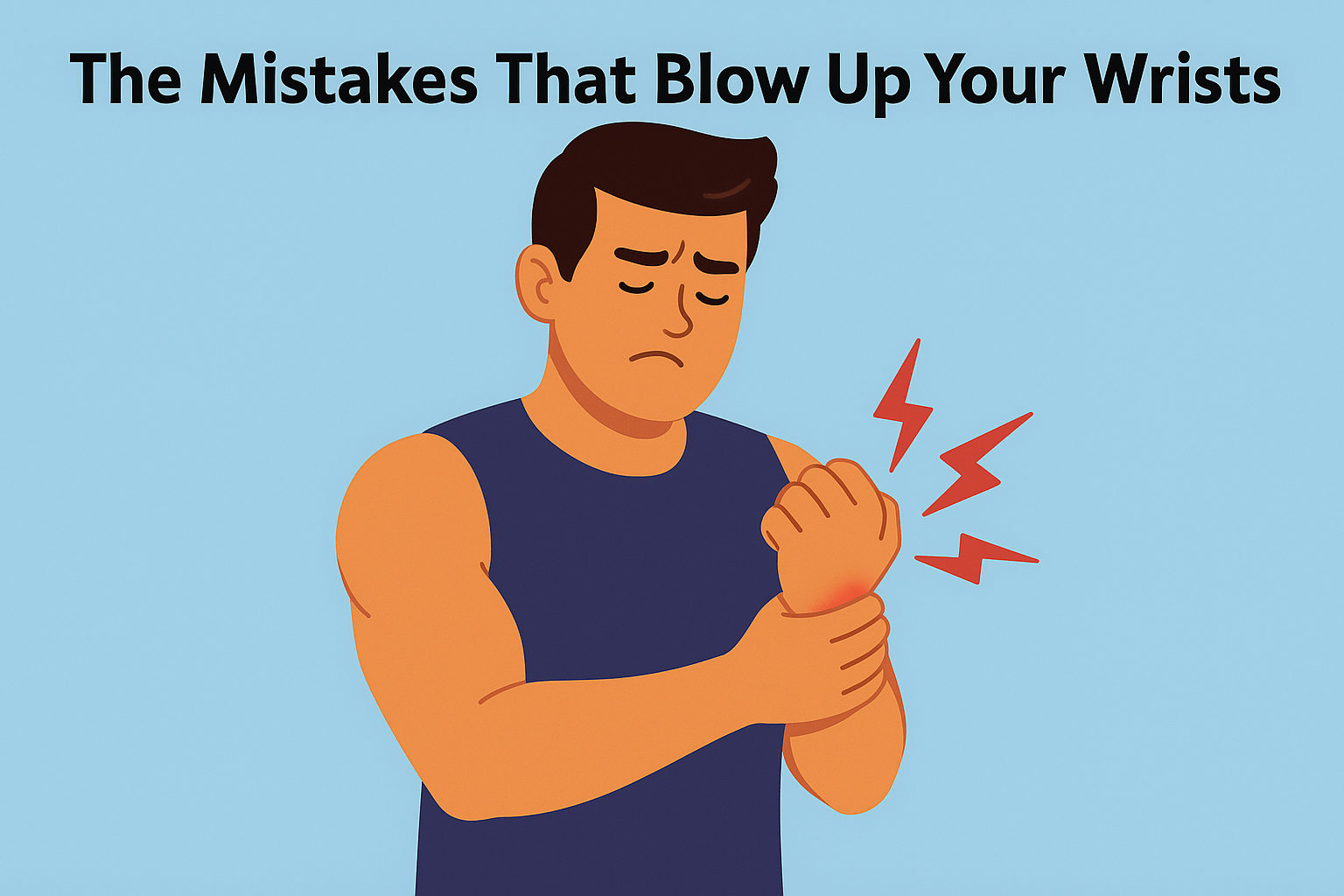
The Mistakes That Blow Up Your Wrists
Hands Too Close for Your Own Good
Everyone hears “diamond” and thinks the gap must be microscopic.
But you’re not trying to defuse a bomb.
If your hands are so close that your thumbs touch but your shoulders scream, that’s not “perfect form.”
That’s stress for no reason.
Ignoring the Palm and Dumping Weight Into the Joint
When people touch their index fingers together, they stop thinking about their palms entirely.
Weight slides toward the wrist crease.
And that’s the part of the joint that hates you the most.
Letting the Shoulders Drift Forward
Most people don’t even realize they’re leaning.
It feels stable.
It feels powerful.
But it sends all the pressure straight to the wrist.
Undertrained Forearms
You can curl 40s, bench your bodyweight, and crank out pull-ups — but if your forearms aren’t used to stabilizing, diamonds expose you instantly.
Who Should Probably Skip Diamond Push-Ups (At Least for Now)
Some people are simply not ready for the joint angles this exercise demands.
And that’s not a knock — it’s just anatomy doing its job.
If regular push-ups already bother your wrists, diamonds will multiply that feeling by ten.
If holding a plank creates pressure or numbness in your palm or fingers, that’s another red flag.
You might also want to hold off if you can’t comfortably hit about 90 degrees of wrist extension when leaning gently into the floor.
If that angle feels stiff, sharp, or pinchy, your body is telling you to build mobility first.
The good news?
You’re not “failing” the exercise.
You’re avoiding a problem before it starts.
Why Younger Lifters Have More Wrist Pain Than They Think
Over the years, I’ve noticed something funny.
Teenagers and early-twenties lifters complain about wrist pain during diamonds way more often than older lifters.
You’d think younger joints would be bulletproof — but lifestyle says otherwise.
Hours on phones put the wrist into constant flexion.
Typing and gaming don’t train wrist extension at all.
Most young athletes haven’t built the forearm strength older guys developed from years of manual work, sports, or general life.
So when a young lifter suddenly drops into a diamond push-up, their wrists get hit with an angle and load they’ve never actually trained.
How Finger Position Changes the Entire Exercise
Here’s something most people never think about: your fingers do half the stabilizing work.
When your fingers stay tight and stiff, all the pressure goes straight to the wrist crease.
When you spread them out like you’re gripping the ground, the force spreads evenly across the palm.
Think of your hand like a tripod.
The wider the base, the easier it is to stabilize.
Creating that suction-cup feeling in the palm makes the whole movement smoother, safer, and stronger.
Try these simple grip exercises to strengthen your wrists.
They help you build stability, endurance, and a stronger grip for every workout.
Why Some People Feel Triceps and Others Feel Chest During Diamonds
Diamond push-ups are supposed to hammer the triceps — but many people end up feeling mostly chest.
If your elbows flare even slightly, your pecs jump in to save the day.
If your torso leans too far forward, the chest takes over again.
But when your hands stay close, your elbows stay tight, and your shoulders stay stacked, the triceps finally get the spotlight.
The cool thing?
You can tell instantly what muscle you’re using based on where you feel the burn after five reps.
How to Do Diamond Push-Ups Correctly Without Wrecking Your Wrists
1.Start Narrow-ish, Not “Diamond or Die”
If this move destroys you, widen your hands a bit.
You’ll still feel the triceps light up without bending your wrists like origami.
2.Angle Your Hands Out Slightly
A tiny outward rotation changes everything.
Your wrists stop feeling trapped in one rigid position.
Your elbows track more naturally.
And your shoulders settle in like they actually want to help.
3.Grip the Floor Like You Mean It
Think of your hands like suction cups.
Spread your fingers.
Press your knuckles down.
Feel the whole palm working — not just the inner edge.
4.Keep Your Chest Stacked Over Your Hands
Before lowering, pause for half a second.
Look where your shoulders are.
If they’re ahead of your wrists, shift back.
This one adjustment alone has fixed wrist pain for more people than any stretch I’ve ever recommended.
How to Progress Toward Full Diamond Push-Ups Without Pain
Most people jump straight into the hardest version.
But diamond push-ups are way more manageable — and kinder to your joints — when you treat them like a progression.
1# Start with Regular Push-Ups
Build stability and strength with a solid base.
No rush.
2# Move to Narrow Push-Ups
Hands closer than shoulder-width, but not touching.
This alone will already light up your triceps.
3# Angle Your Hands Slightly Inward
A subtle rotation wakes up the triceps without smashing your wrists.
4# Try Diamond Push-Ups on a Bench
Elevating the hands reduces load immediately.
It’s the perfect halfway point.
5# Drop to Full Diamond Push-Ups on the Floor
Once the angle feels natural, go for the classic version.
6# Add Weight Only If You Truly Need It
Most people never need a weighted vest for these.
But if you’re built different — respect.
RELATED:》》》 Step-by-Step Push-Up Progression for Calisthenics
Real Benefits of Diamond Push-Ups (When You Do Them Right)
Diamond push-ups do more than just “hit the triceps harder.”
They teach your shoulders to stabilize under a narrow base — a skill that transfers to dips, bench press, and handstand work.
They build lockout strength at the elbow, which helps in any pressing movement you care about.
They also challenge the serratus and deep core muscles more than most people realize.
And once your wrists adapt, this exercise becomes a clean, powerful, joint-friendly way to load the upper body anywhere, anytime.
Recovering From Past Wrist Abuse
If you’ve already gone too hard too soon (been there), here’s a simple routine to help reset things:
- Wrist circles — slow and controlled
- Palm lifts — fingers stay down, lift just the palm
- Reverse palm stretch — fingers toward knees, lean gently
- Forearm curls — both flexion and extension
- Light plank holds — building tolerance without the angle
How to Know If You’re Doing Diamond Push-Ups Correctly
There are a few dead-simple signs that your form is dialed in.
If you feel the burn along the back of your arms more than the front of your shoulders, you’re doing great.
If your torso stays stable without wobbling side to side, your core is supporting you properly.
If your wrists don’t scream after a set, your angle is correct.
If you’re sore right above the elbow the next day, congratulations — that’s the long head of your triceps waking up.
RELATED:》》》Calisthenics Progression Guide
Before You Drop to the Floor Again
Your wrists aren’t the problem.
Your setup is.
Adjust a few angles.
Strengthen the bits you’ve been ignoring.
And ease your way into diamonds instead of forcing yourself into the Instagram version of the exercise.
Give yourself time and let your body adapt.