Let me tell you straight up—I love dips.
They’re gritty, old-school, and make you feel like you’re training in some prison yard with nothing but your own bodyweight and bad intentions.
But can they really build a chest that looks like two slabs of armor plates under your T-shirt?
That’s where things get fun.
Why dips hit differently
Dips aren’t just another chest exercise.
They’re a compound movement that throws your whole upper body into the fire—chest, triceps, shoulders, even your core just to keep you steady.
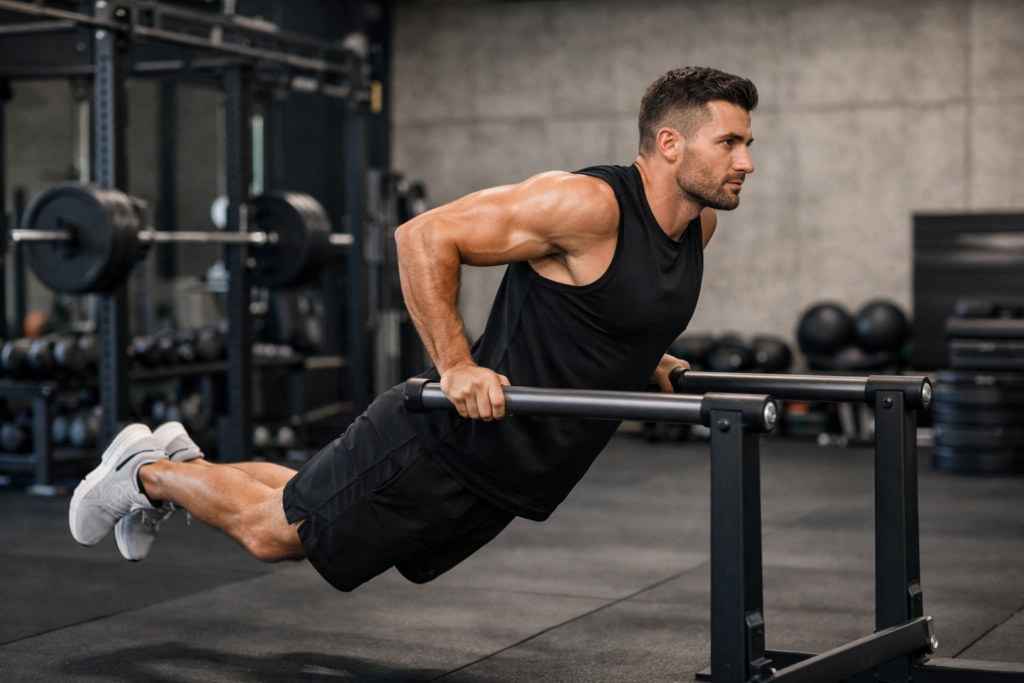
When you lean forward and keep your elbows flared a bit, you shift the emphasis straight into your pecs.
It’s like doing a decline press without the bench.
And here’s the wild part: dips overload your chest in a stretched position.
When your pec fibers are lengthened under tension, you create more muscle damage—and more growth potential.
It’s that “holy soreness” you feel the next day, the kind that tells you something got torched in a good way.
The gym-floor logic and the “meathead proof”
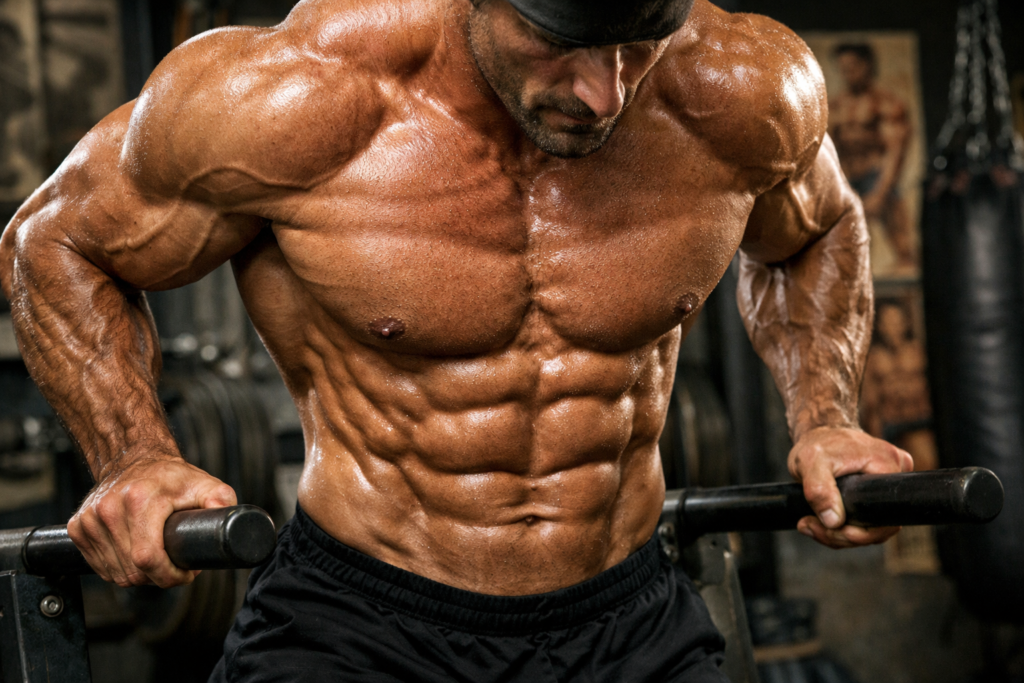
Biomechanics nerds will tell you that dips place your chest fibers at a mechanical advantage in the lower portion of the movement.
Translation?
That deep stretch you feel at the bottom isn’t just pain—it’s science-backed hypertrophy gold.
And if you don’t trust the lab coats, trust the old-school bodybuilders.
Plenty of golden era guys swore by dips to carve out their lower pec shelf.
You know that sharp line where your chest meets your abs?
Yeah, dips were their secret sauce.
But here’s the catch
Can you only do dips and expect a superhero chest? Not quite.
Here’s why:
- Dips bias the lower and middle pecs.
- They don’t fully hit the upper chest, which gives that lifted, square look everyone craves.
- And over time, over-relying on dips can overload your shoulders if your mobility isn’t dialed in.
Think of it like eating pizza every day.
Amazing for a while, but eventually your body starts begging for a little variety.
Where dips do the heavy lifting
If you treat dips as the meat and potatoes of your chest workout, you can absolutely grow.
They’re heavy, scalable (just strap on a plate or two), and they build that thick, dense look.
But the smartest move? Pair dips with:
- Incline pressing for upper pecs
- Fly variations for full contraction
- Push-ups or machine work for extra volume without frying your joints
The matter of progression over time
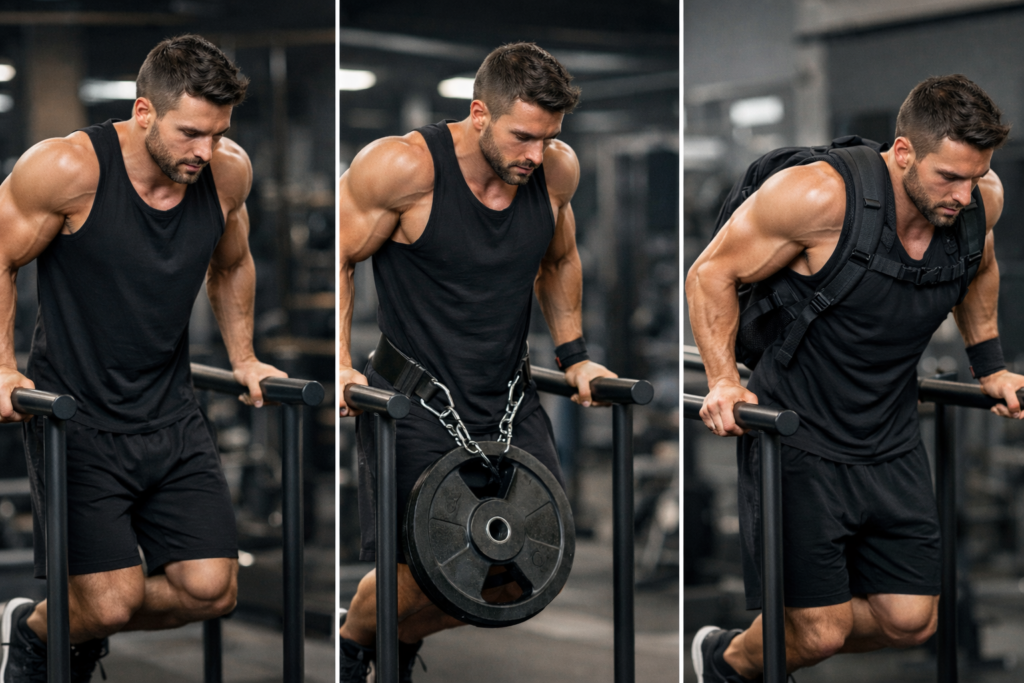
One thing people often underestimate about dips is that they are incredibly progressive.
We’re not talking about an exercise that stops stimulating growth after a couple of months.
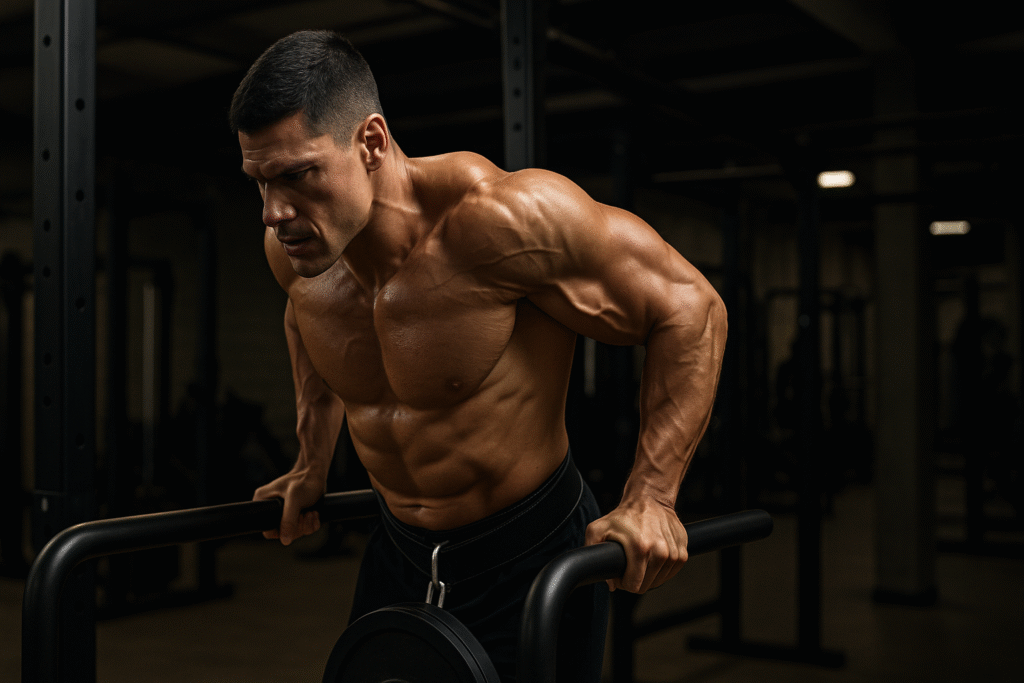
With dips, you can start with just bodyweight and then, as you get stronger, begin adding weight with a lifting belt or even a simple backpack full of plates.
This ability to progressively load makes them much more similar to a barbell bench press than most think.
And progressive overload is one of the key factors for hypertrophy.
In other words, dips are not just a “calisthenics move,” but a true bodybuilding weapon when pushed consistently.
The wildcard of genetics and levers
There’s a variable we can’t ignore: genetics.
Some people have perfect levers for dips, with stable shoulders, strong triceps, and a chest structure that enhances the pushing angle.
For them, dips become a chest war machine.
Others, on the other hand, immediately run into shoulder pain or discomfort, or they can’t lean forward enough to properly stimulate the pecs.
Result?
They end up training their triceps more than their chest.
This doesn’t mean dips don’t work, but not everyone will experience them the same way.
For some, they’ll be “the king exercise,” for others just one piece of the puzzle.
The connection with other exercises
Another interesting point: improving at dips brings crossover benefits.
Those who get strong at dips often see improvements in their bench press and explosive push-ups as well.
Why?
Because dips build strength in the bottom portion of the movement and teach the body to handle heavy loads in a fully stretched position.
It’s no coincidence that many powerlifters include them as an accessory lift to strengthen their bench press.
So even if dips alone aren’t enough to create a fully balanced chest, they still become a performance multiplier for other lifts.
The role of safety and technique
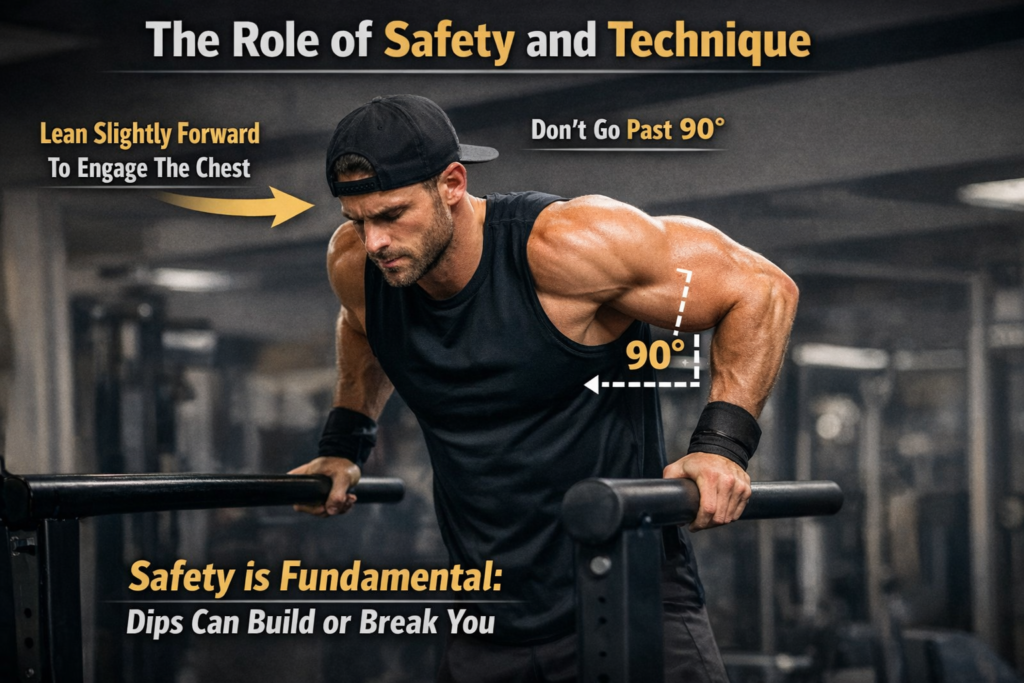
A common mistake is thinking dips are “simple” and that you just drop down and push back up.
The truth is, technique is the difference between growth and injury.
- Leaning slightly forward to activate the chest instead of dumping everything on the triceps.
- Not going too far past 90° if you lack mobility—pushing too low can stress the shoulders.
- Controlling the descent instead of dropping like a sack of potatoes.
Safety is fundamental, because dips are as effective as they are ruthless to those who do them wrong.
How to structure a “dip routine”
Let’s imagine you really want to set up a program built around dips.
It’s not enough to just do 3×10 every time and hope for the best.
Here’s an example of how it could work:
- Monday: Weighted dips (strength progression) + explosive push-ups.
- Wednesday: High-volume bodyweight dips + chest flys with dumbbells or bands.
- Friday: Tempo dips (3–4 second controlled descent) + light incline bench.
This way, dips stay at the center of the routine, but with variations and accessories that balance out weaknesses.
What others say (and what they don’t tell you)
If you dig into forums like Reddit or old bodybuilding threads, you’ll always find two camps:
Those who swear they built their chest with dips alone.
And those who say “dips are only for triceps.”
The truth lies in the middle, but here’s a detail almost nobody points out: the variation of torso angle.
In practice, not all dips are created equal.
If you stay too upright, your triceps take over.
If you lean forward properly, the chest steals the spotlight.
Many who criticize dips for chest growth have actually been doing them “wrong,” in a neutral position.
The topic of range of motion (ROM)
Other articles highlight an interesting point: depth of movement.
Many beginners are afraid of going too low—and partly they’re right because shoulders are delicate.
But if you never reach the “deep stretch,” you miss out on much of the dips’ potential.
It’s exactly in that fully stretched range where pec fibers get torn down and rebuilt thicker.
Of course, you need to get there gradually, maybe first working on scapular mobility and shoulder strength.
But ignoring that part completely means limiting your gains.
The comparison with bench press
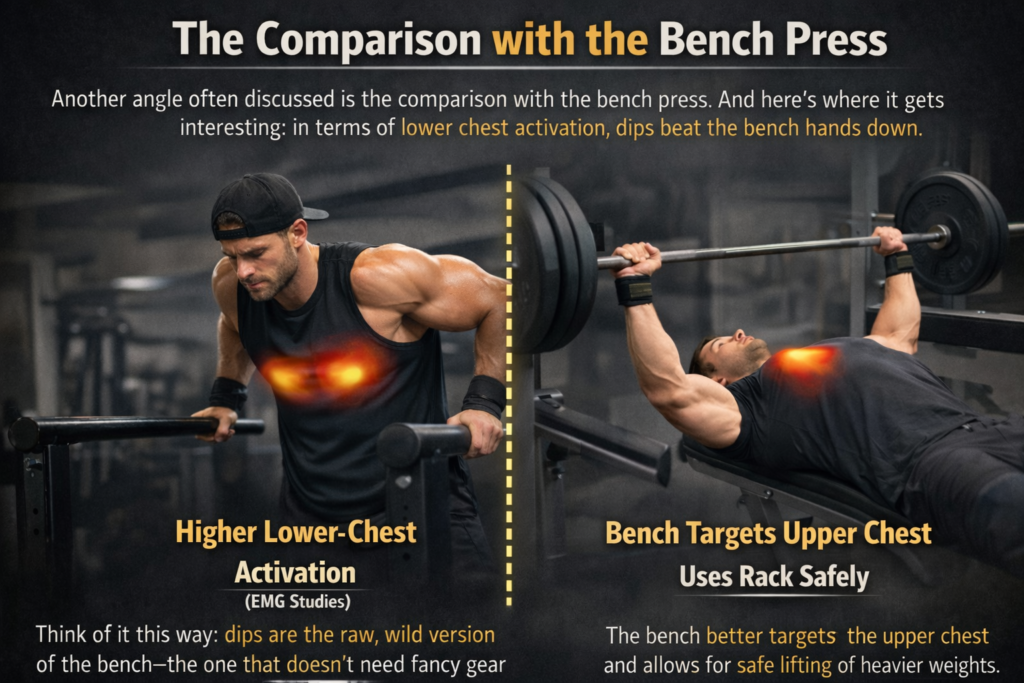
Another angle often discussed is the comparison with the bench press.
And here’s where it gets interesting: in terms of lower chest activation, dips beat the bench hands down.
Several EMG studies have shown higher peaks during dips compared to the bench in that specific region.
What the bench has, however, is the ability to better target the upper chest and to push massive loads safely with a rack.
So it’s not about “one or the other.”
Think of it this way: dips are the raw, wild version of the bench—the one that doesn’t need fancy gear but still leaves your ribs sore.
The final word
So, can a chest routine built only around dips blow up your pecs?
Yes—up to a point.
Dips can pack size and density onto your chest faster than most exercises, especially if you lean forward and go deep.
But if you want a chest that’s full, balanced, and popping from every angle, you need more tools in the toolbox.
Here’s the good news: dips don’t have to be your only move, but they should always be in the rotation.
They’re the grit, the raw power, the no-frills builder you can count on.
So keep dipping.
Stack some plates, chase that deep stretch, and let your pecs grow.