Here’s the deal.
Every chest workout I’ve ever done has eventually forced me to ask the same question:
Am I hitting the right angles, or am I just doing flat bench because that’s what everyone else is doing?
The chest isn’t just one slab of meat sitting there waiting for plates to be stacked.
It’s layered. It has fibers running in different directions, and those fibers respond differently depending on how you push, pull, and stretch them.
That’s why the split between incline press, flat press, and flys actually matters.
Not in a “if you don’t do 37% incline you’ll never grow” kind of way, but in a real-world, practical “how do I get my chest to pop when I wear a T-shirt” kind of way.
Why flat pressing is still king
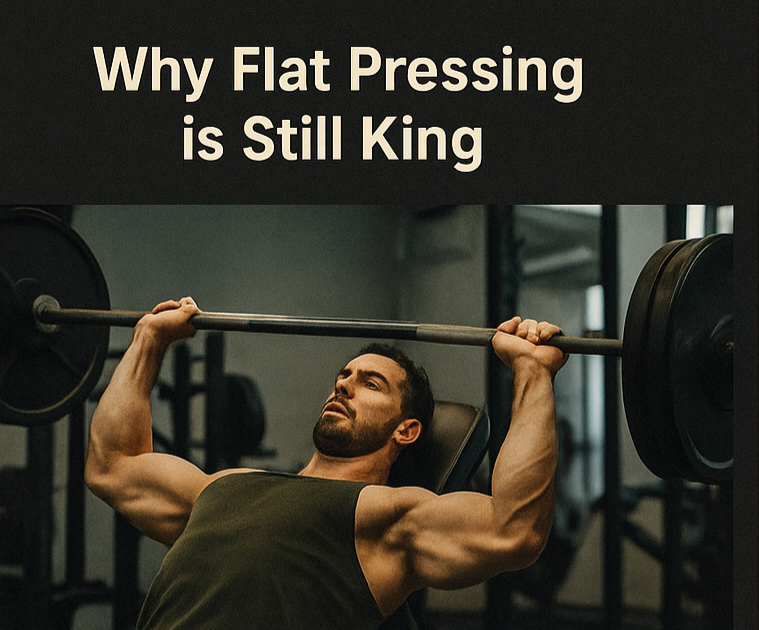
The flat press is the bread and butter.
Barbell or dumbbells, it doesn’t really matter.
You’re moving the most weight here, and that’s the number one reason it should never leave the program.
Think of it like your main dish. Steak, pizza, whatever fuels your soul.
You can’t build a chest without a heavy flat press somewhere in the mix because that’s where you overload the most fibers.
The middle chest is what fills out first, and that’s what flat pressing hammers.
But here’s the catch—if you live only on flat pressing, your chest starts to look like a brick wall with no slope.
Wide, but flat. No upper shelf. No detail.
How I program it:
- 4–5 sets of 6–8 reps if I’m chasing strength and mass.
- Sometimes I switch to dumbbells for 8–10 reps just to force more stability work.
- On flat barbell bench, I always keep at least two reps in reserve, because grinding to failure wrecks my shoulders more than it helps my pecs.
The incline press – the missing shelf
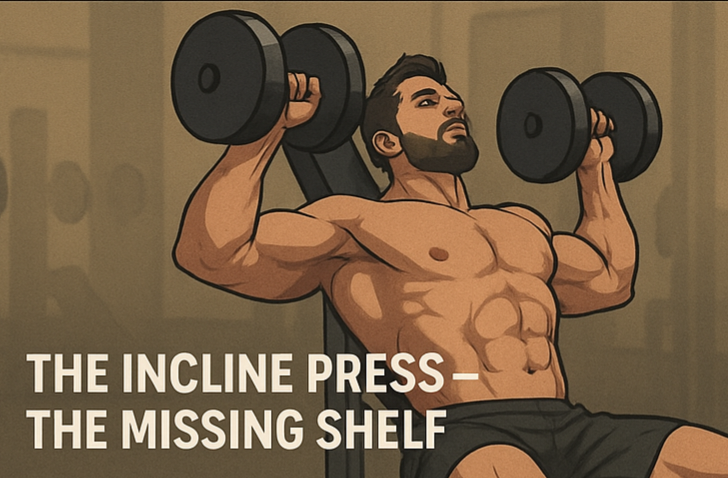
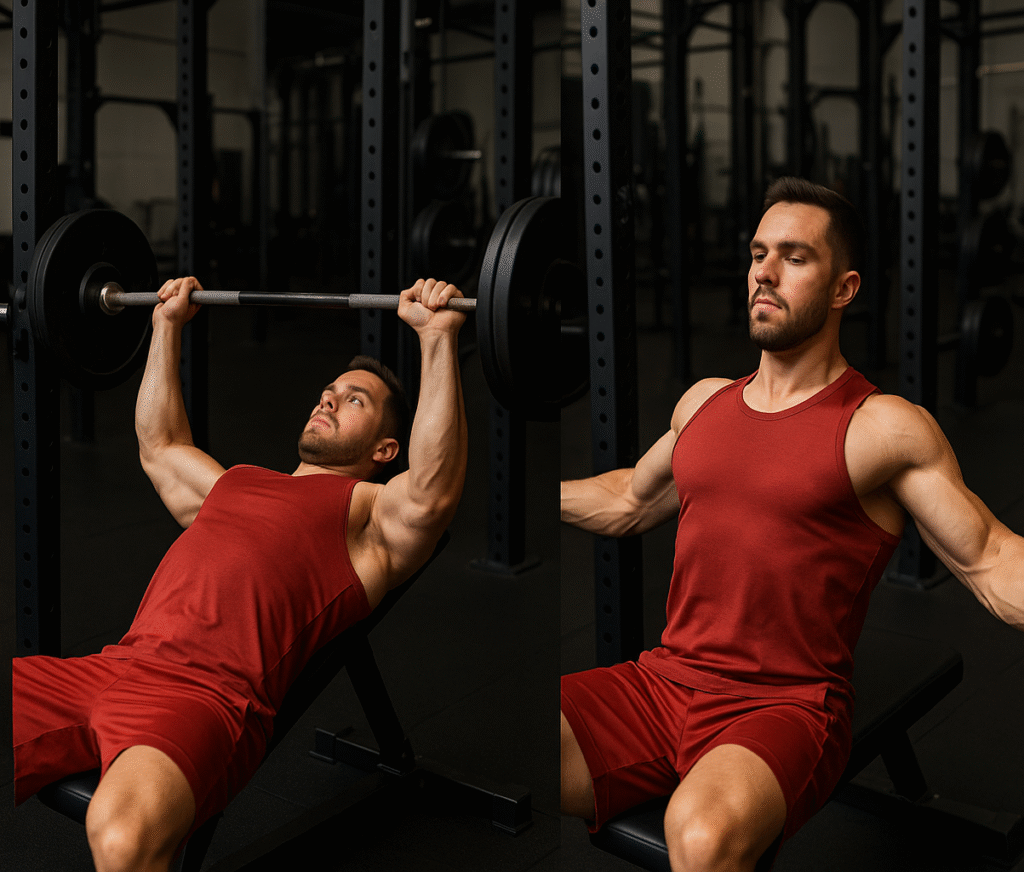
Incline pressing is where things start looking aesthetic.
That upper chest?
That’s the part that makes you look like your pecs are climbing up to meet your collarbone.
When it’s underdeveloped, you know it.
You look strong, but the T-shirt test fails. No “plate of armor” vibe.
Incline pressing doesn’t need to be done at 45 degrees like most benches in commercial gyms.
That angle can sometimes turn the move into more of a shoulder press.
A smaller incline—like 20–30 degrees—is usually the sweet spot.
Heavy enough to still load the chest, but angled enough to really light up the upper fibers.
How I program it:
- 3–4 sets of 8–10 reps with dumbbells. I love the stretch at the bottom and the squeeze at the top.
- If I go barbell, I keep it a little heavier, 5–7 reps, just so I don’t turn it into a high-rep shoulder workout.
- Sometimes I’ll throw in a drop set on incline dumbbells—finish the main sets heavy, then grab lighter bells and burn out another 12–15 reps. That’s when the upper chest pump gets nasty.
Flys – the stretch that finishes the job
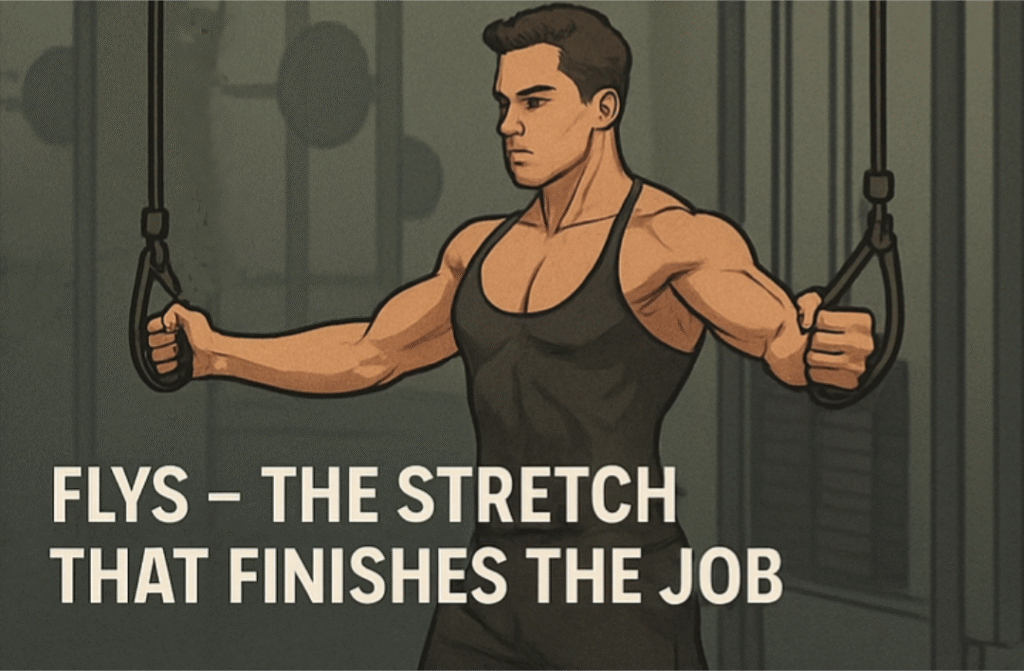
I’ll be honest, I used to hate flys.
They felt awkward, almost too “bro-science” at first.
But the truth is, flys are the finisher move that your chest craves.
Not because they add a ton of mass by themselves, but because they stretch the fibers under tension and carve out detail you don’t get from just pressing.
Think of them as the polish on the car. The wax after the heavy lifting is done.
Without them, you can still have a strong chest, but it won’t have that round, sculpted look.
Dumbbell flys, cable flys, machine flys—they all work.
It’s not about the load; it’s about control, tension, and squeezing like you’re trying to crush an invisible watermelon between your pecs.
How I program it:
- 3 sets of 12–15 reps, slow and controlled.
- On cables, I love doing high-to-low flys to hit the lower chest or mid-level flys for a pure squeeze.
- Sometimes I’ll do a fly variation as a pre-exhaust move before pressing, just to spice things up and make the press feel different.
Chest Day Done Right
Here’s how I like to put everything together when it’s time to hit chest the right way.
I start with the Flat Barbell Bench – 4 sets of 6–8 reps.
Heavy, focused, no messing around.
This is the part of the workout that makes me feel like I’m actually building raw power.
Then I move to the Incline Dumbbell Press– 4 sets of 8–10 reps.
This is where the shape starts to come alive. I slow down, feel the stretch at the bottom, and squeeze hard at the top.
Every rep feels like I’m carving out the shelf I want my chest to have.
Next are Cable Flys – 3 sets of 12–15 reps.
These aren’t about weight, they’re about feel.
I go slow, lock in the squeeze, and make sure the chest is doing all the work. By this point, the pump is unreal.
And if I still have gas in the tank?
I throw in a push-up burnout to failure.
It’s nothing fancy, just pure grit.
It empties whatever’s left in me and leaves my chest feeling like it’s on fire—in the best way possible.
That’s my go-to structure.
Flat for strength, incline for fullness, flys for detail, push-ups for the kill shot.
If I’m short on time, I don’t overthink it.
I’ll run flat + incline, then superset a couple of quick sets of flys at the end.
It’s not perfect, but it keeps the balance.
And at the end of the day, that balance is what makes chest day actually deliver results instead of just checking a box.
Example progression – 4 weeks to a fuller chest
Now, if you’re the kind of lifter who likes a plan (and not just vibes), here’s how I’d roll out a four-week block to actually push progress without overthinking it:
Week 1:
- Flat press 4×6 (moderate weight, leave 2 reps in the tank).
- Incline press 3×8–10 (focus on form).
- Flys 3×12–15 (controlled, not rushed).
Week 2:
- Flat press 4×6 (add 5–10 lbs if last week felt solid).
- Incline press 4×8 (slightly heavier).
- Flys 3×12–15 (maybe swap dumbbells for cables).
Week 3:
- Flat press 5×5 (heavier, strength focus).
- Incline press 4×6–8 (push the load, but keep tension on chest).
- Flys 3×15 (squeeze harder, longer holds at the peak).
Week 4 (deload/pump week):
- Flat press 3×8 (lighter, explosive reps).
- Incline press 3×10 (controlled, moderate weight).
- Flys 4×15–20 (pump focus, slow tempo).
After this, reset, add weight, or change angles slightly.
The chest grows best when it gets hit from all sides, but it also loves novelty every few weeks.
| 1) RELATED: 》》》 Will hitting chest once a week with crazy volume work better than training it five times lighter?
2) RELATED:》》》Training Non-Stop but Your Gains Won’t Show Up? |
Final thoughts
At the end of the day, there isn’t one perfect “ratio” that works for everyone.
The best split is the one that leaves your chest looking balanced, full, and strong—without frying your shoulders or stalling progress.
What matters most is that you’re not married to just one angle or one move.
Chest growth comes from hitting it heavy, hitting it smart, and then finishing with finesse.
So press heavy, incline smart, and don’t sleep on flys.
Your future T-shirt selfies will thank you.