Knee pain has a special talent.
It can take a perfectly normal walk and turn it into a negotiation.
For a while, I blamed my training.
Squats, split squats, stairs, long days on my feet, even “just” walking.
Everything started to feel suspicious.
Then one day the pattern got too obvious to ignore.
The same route would feel fine in one pair of shoes.
The same route would feel like my kneecap was filing a complaint in another pair.
So I did what any reasonable person would do.
Walking shoes became the focus for the next 60 days.
Not a “one walk and I’m cured” story.
Just a very practical, slightly obsessive approach that taught me something important.
Sometimes it’s not your workout.
Sometimes it’s what’s between you and the ground.
What I Mean by “Knee Pain” in This Story
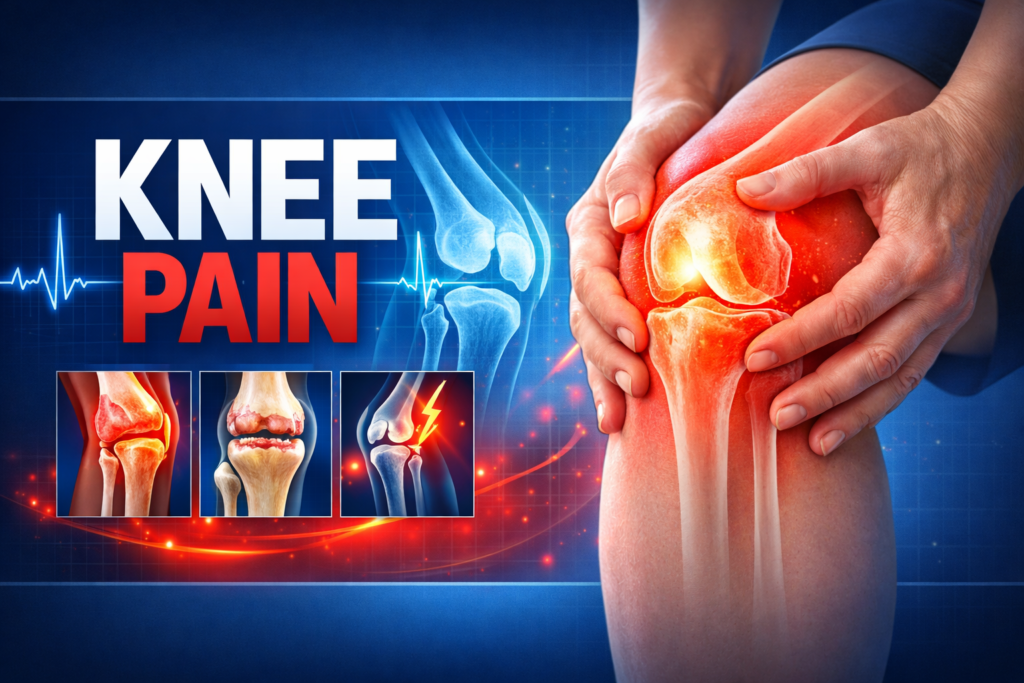
Knee pain is a broad term.
It’s like saying “my computer is slow” without mentioning whether it’s the Wi-Fi, the hard drive, or the fact that you have 74 tabs open.
In my case, the discomfort was mostly in two zones.
One was around the front of the knee, near the kneecap area.
The other was a more “deep joint” ache that showed up after longer walks.
Important detail: this was not sharp, sudden, injury-type pain.
No popping moment.
No swelling that ballooned overnight.
No “I can’t put weight on it” situation.
It was the annoying kind.
The kind that makes you subtly change how you walk without realizing it.
The kind that doesn’t stop you today, but feels like it’s collecting interest for next week.
If anyone reading has severe pain, instability, swelling, fever, numbness, or pain after a clear injury, that’s a different category.
That’s “get assessed” territory, not “let’s geek out about shoes” territory.
Why I Suspected Shoes Instead of Training
The giveaway was consistency.
Training stress usually builds and fades in patterns.
Shoes can create patterns that flip instantly.
I noticed three things that kept repeating.
Pain would spike on days when walking was the main activity.
Pain would drop on similar walking days if I wore a different pair.
Pain would sometimes show up within 10–15 minutes, which is suspiciously fast for “overuse from last week’s workout.”
That doesn’t mean strength work wasn’t part of the picture.
It just meant footwear was acting like a volume knob.
Training was the song.
Shoes were the speaker settings.
The 60-Day Test Setup
I didn’t want a vague “these feel nice” review.
I wanted a repeatable test, because my brain loves lying to me when something is new and shiny.
So I set rules.
Not perfect science, but structured enough to be useful.
The Ground Rules
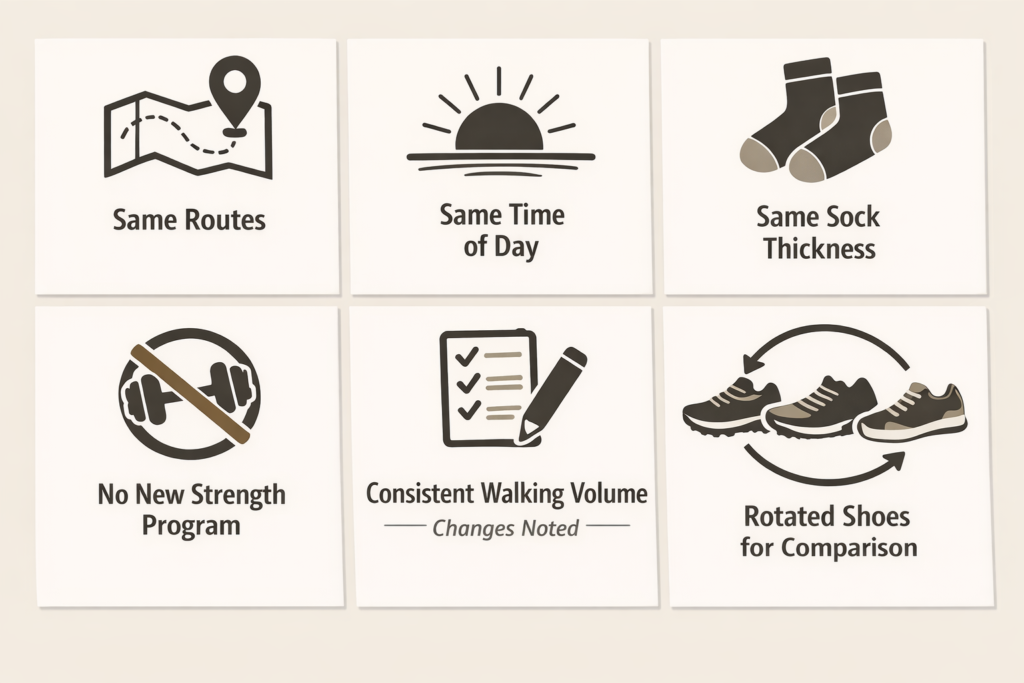
Same walking routes as much as possible.
Same time of day most days.
Same socks thickness.
No “new strength program” launched during the test.
Walking volume stayed consistent.
When volume changed, I wrote it down.
I rotated shoes instead of “sticking with the winner,” because the point was comparison.
I also gave each shoe enough exposures to stop being a first-impression illusion.
The Pain and Stress Tracking
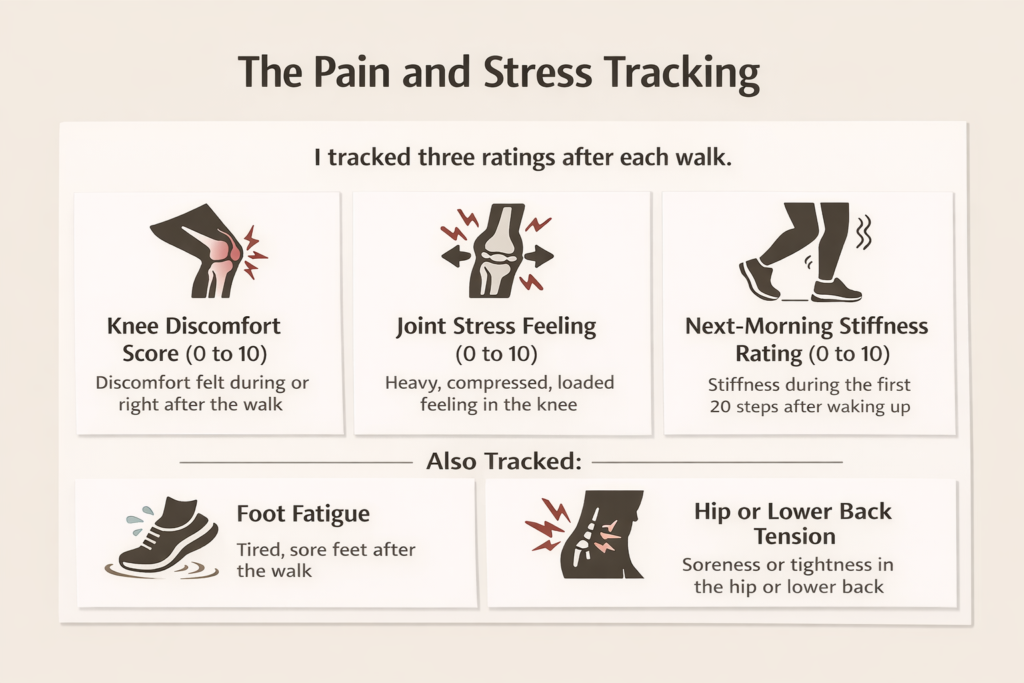
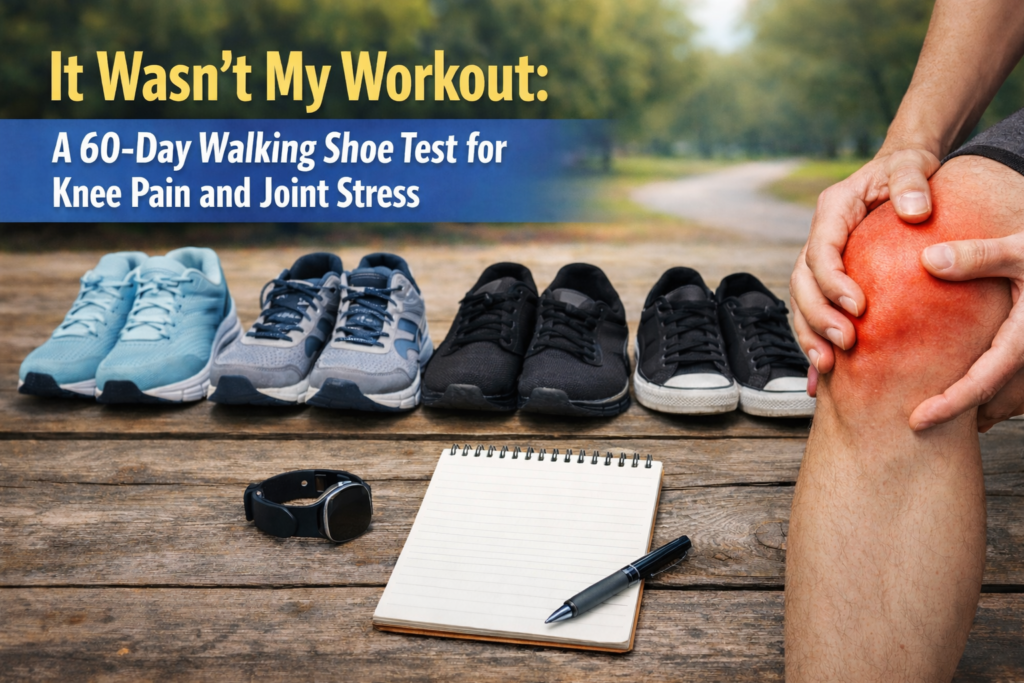
I tracked three ratings after each walk.
A knee discomfort score from 0 to 10.
A “joint stress” feeling from 0 to 10.
A next-morning stiffness rating from 0 to 10.
Here’s how I defined them so I wouldn’t cheat.
Knee discomfort was what I felt during the walk or right after.
Joint stress was that heavy, compressed, “my knee got loaded weirdly” feeling.
Next-morning stiffness was how my knee felt during the first 20 steps after waking up.
I also tracked two non-knee things.
Foot fatigue, because shoes can feel good for knees but punish feet.
Hip or lower back tension, because sometimes the problem simply moves upstairs.
The Walking Dose
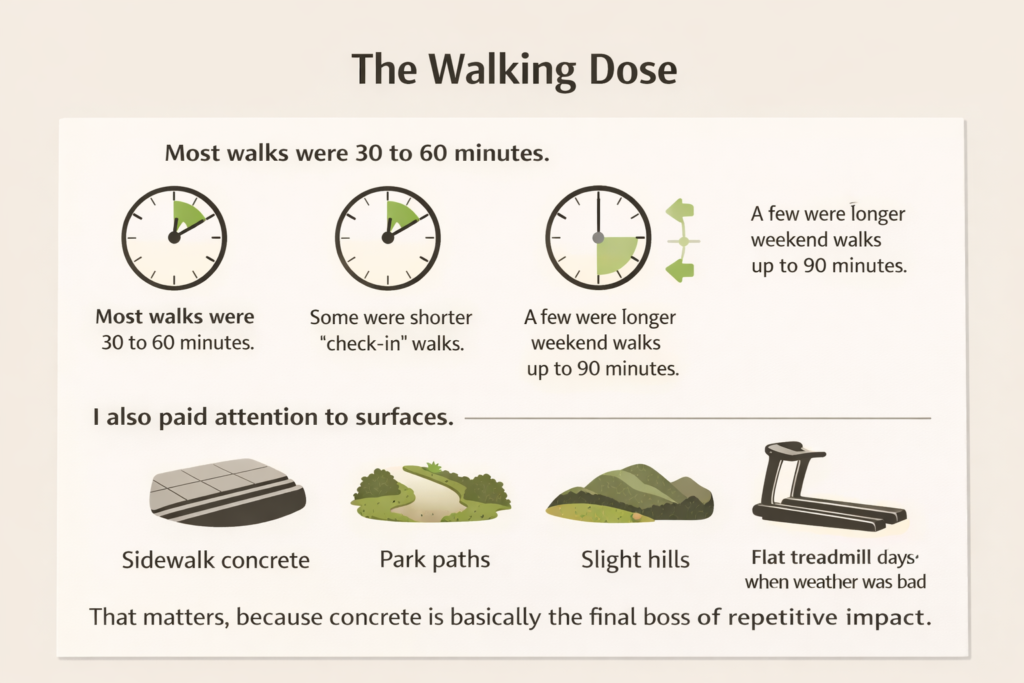
Most walks were 30 to 60 minutes.
Some were shorter “check-in” walks.
A few were longer weekend walks up to 90 minutes.
I also paid attention to surfaces.
Sidewalk concrete.
Park paths.
Slight hills.
Flat treadmill days when weather was bad.
That matters, because concrete is basically the final boss of repetitive impact.
The Shoe Categories I Tested
I tested four categories, because real life rarely gives you only two choices.
I also wanted to see whether my knee liked softness, support, or something else entirely.
I’m not using brand names here on purpose.
Brands change models constantly, and I don’t want this to become outdated in six months.
What matters is the “type” of shoe and the mechanics.
Category 1: The Max Cushion Walker
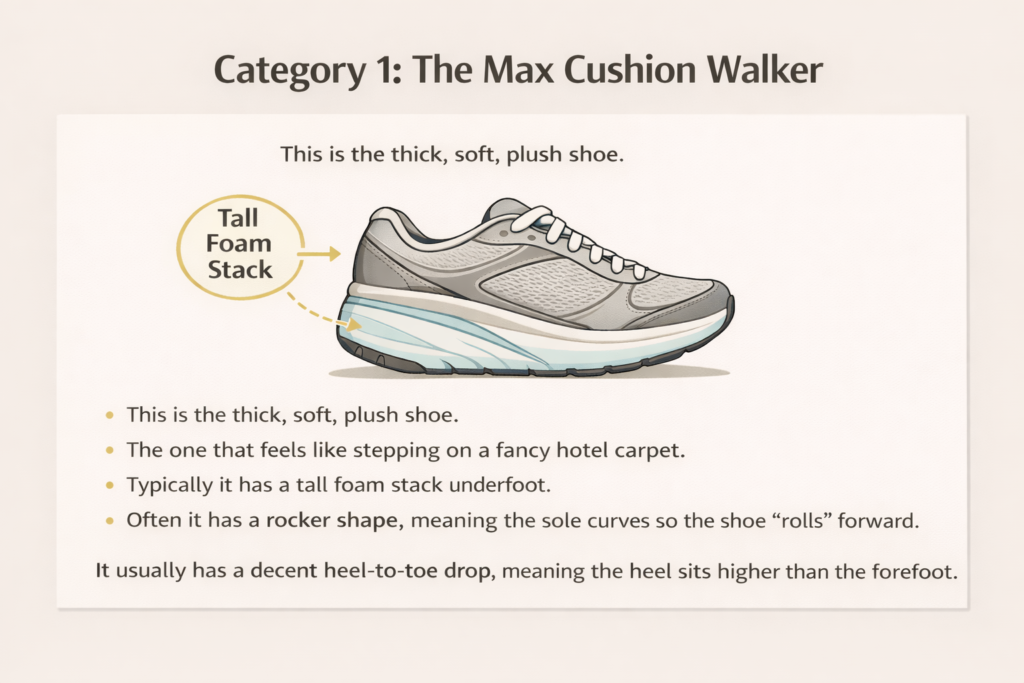
This is the thick, soft, plush shoe.
The one that feels like stepping on a fancy hotel carpet.
Typically it has a tall foam stack underfoot.
Often it has a rocker shape, meaning the sole curves so the shoe “rolls” forward.
It usually has a decent heel-to-toe drop, meaning the heel sits higher than the forefoot.
Category 2: The Stability Support Shoe
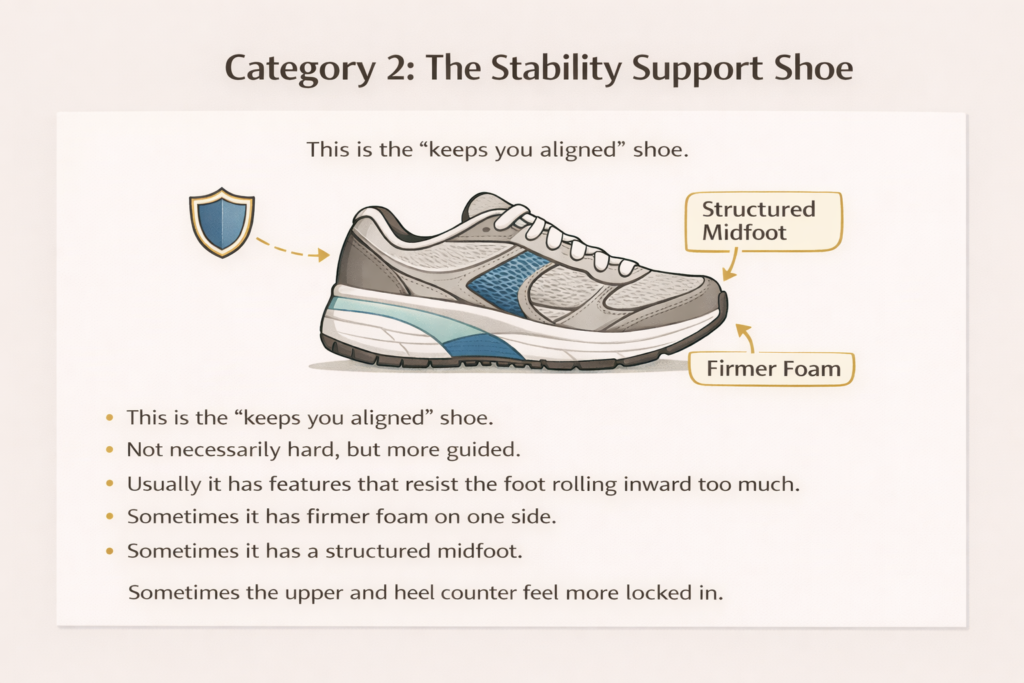
This is the “keeps you aligned” shoe.
Not necessarily hard, but more guided.
Usually it has features that resist the foot rolling inward too much.
Sometimes it has firmer foam on one side.
Sometimes it has a structured midfoot.
Sometimes the upper and heel counter feel more locked in.
Category 3: The Flexible Minimal-ish Shoe

Not barefoot, but closer to it.
Lower stack height, less squish.
More flexible sole.
Often lower heel drop.
People love these for “natural movement,” and people also hate them for “why do my calves feel like they got unplugged.”
Both reactions can be true.
Category 4: The Firm, Flat “Everyday Sneaker”
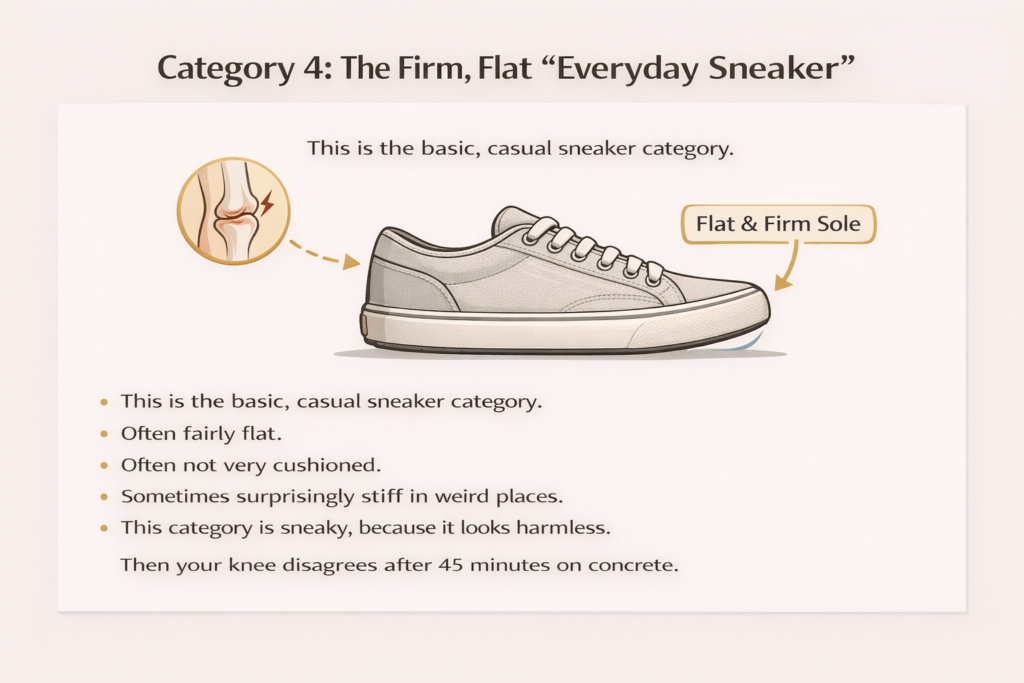
This is the basic, casual sneaker category.
Often fairly flat.
Often not very cushioned.
Sometimes surprisingly stiff in weird places.
This category is sneaky, because it looks harmless.
Then your knee disagrees after 45 minutes on concrete.
The Walking Form I Used So Shoes Wouldn’t Get Blamed for Everything
If I walked differently in every shoe, the whole test would be chaos.
So I used a consistent walking technique.
Not robotic.
Just intentional.
My Baseline Form Cues
I kept stride length moderate.
That means I avoided reaching my foot way out in front like I was trying to win a long jump contest.
Overstriding often increases braking forces, and knees usually hate braking forces.
I aimed for a quiet foot strike.
Not tiptoeing.
Not stomping.
Just “if this sounds loud, I’m probably slamming the ground.”
I kept my torso tall and stacked.
Ribs not flared up.
Head not forward like a curious turtle.
That posture matters, because if the torso collapses, hips often stop helping.
I let my arms swing naturally.
Arm swing helps counter-rotate the torso.
Less counter-rotation can mean more rotational stress down at the knee.
What I Did on Hills
On uphill sections, I shortened stride even more.
I leaned slightly from the ankles, not bending at the waist.
That keeps glutes working rather than dumping everything into the front of the knee.
On downhill sections, I slowed down on purpose.
Downhill is where knees get taxed.
If you speed downhill, the knee becomes the brake pad.
Brake pads wear out, even on expensive cars.
Week-by-Week: What Actually Happened
This is the part people usually skip to.
I get it.
This is the “show me the receipts” section.
Days 1–10: The Honeymoon Phase Lies to Everyone
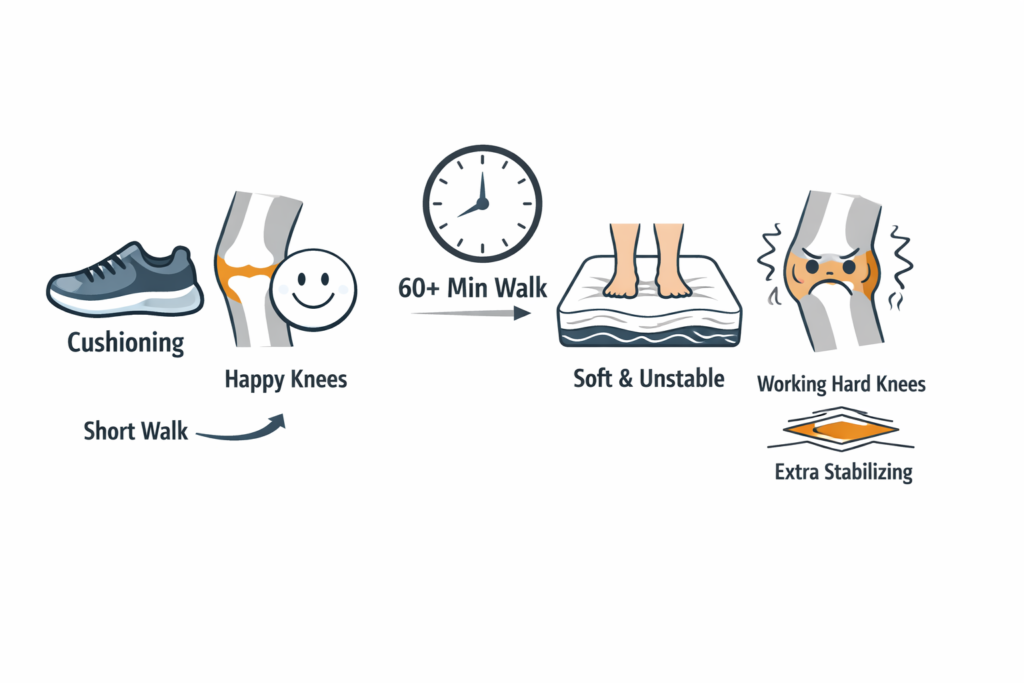
The max cushion shoe felt incredible at first.
My brain immediately wanted to declare victory.
Knee discomfort dropped quickly during short walks.
Joint stress felt lower, especially on concrete.
Then I did a longer walk.
Around the 60-minute mark, something changed.
My knees didn’t feel sharp pain, but they felt… busy.
Like they were stabilizing more than usual.
The best way I can describe it is this.
Soft foam can feel like comfort.
Soft foam can also feel like walking on a mattress.
A mattress is cozy.
A mattress is also not stable.
My knee didn’t hate the cushioning.
My knee hated the subtle wobble and the extra control work.
Days 11–25: Stability Support Started Looking Suspiciously Good
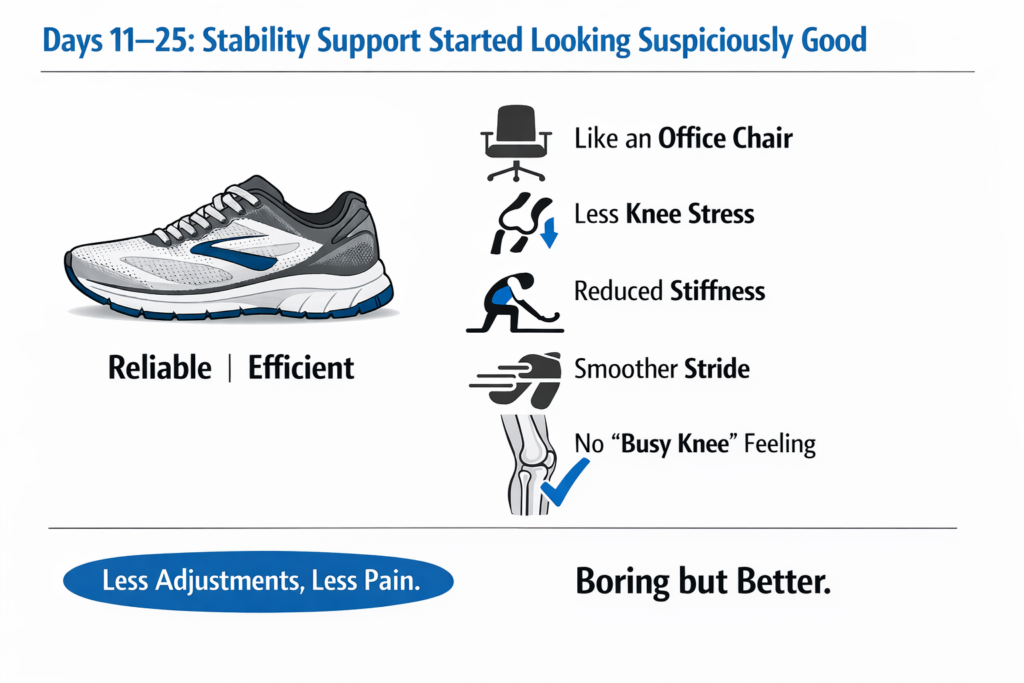
When I switched to the stability support shoe, the “soft wow” factor disappeared.
No hotel carpet vibe.
More like a reliable office chair.
Not exciting, but your back stops complaining.
Knee discomfort during walks stayed lower and more consistent.
Joint stress after walks dropped more noticeably than I expected.
Next-morning stiffness was also better on average.
The surprise was that the stability shoe felt more efficient.
My stride felt smoother without needing micro-adjustments.
Less micro-adjustment usually means less work for the knee.
On longer walks, the stability shoe didn’t give me that “busy knee” sensation.
It didn’t feel magical.
It just felt boring in the best possible way.
Days 26–40: Minimal-ish Shoes Were Great Until They Weren’t
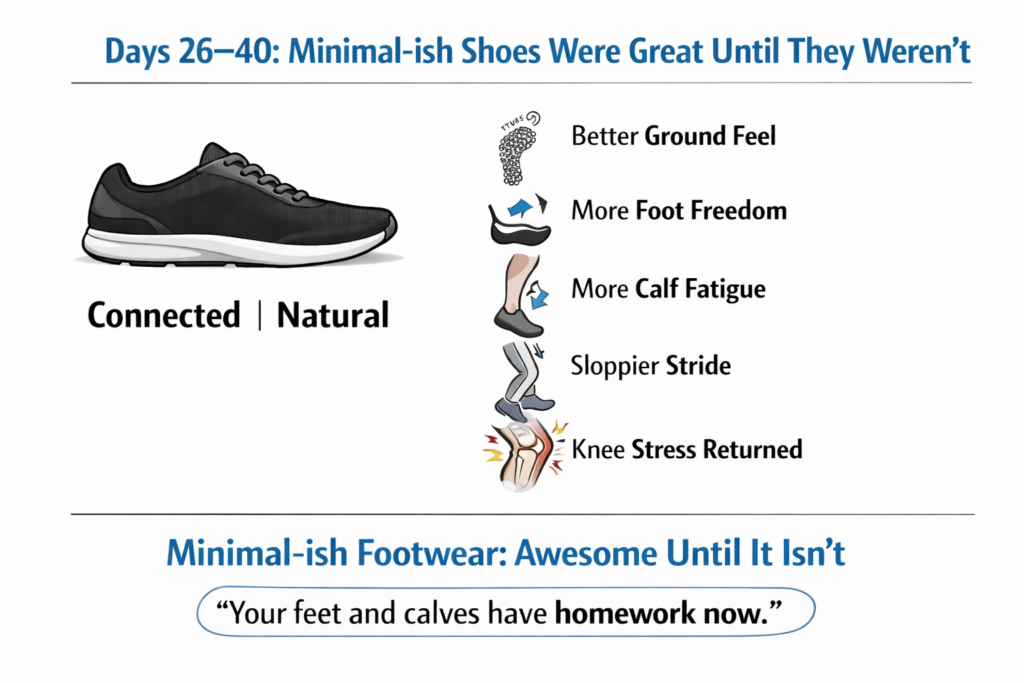
The flexible, lower-cushion shoe made walking feel more “connected.”
More ground feel.
More foot movement.
More natural roll-through.
Knees felt fine on short walks.
Sometimes they felt even better, because the shoe didn’t trap me in a guided pattern.
Then the calf and foot fatigue started showing up.
Not instantly.
Quietly.
Like a software update installing in the background.
When calves got fatigued, my walking mechanics changed.
Heel lift timing shifted.
Stride got sloppier.
Hip extension got lazier.
That’s when the knee stress crept back.
Not because the shoe was “bad.”
Because the shoe demanded more work from tissues that weren’t ready for that demand.
Minimal-ish footwear can be awesome.
It can also be a very polite way of saying, “Your feet and calves have homework now.”
Days 41–60: The Basic Everyday Sneaker Was the Quiet Villain
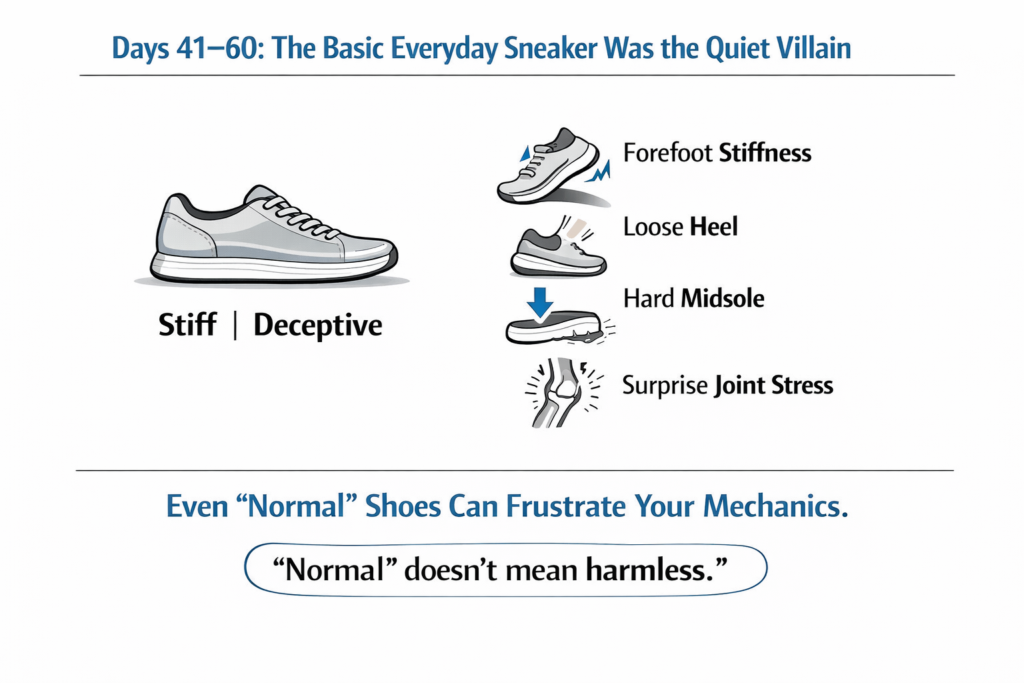
This was the most important lesson.
The casual sneaker was the shoe I wore for errands, travel days, and “whatever.”
On short walks, it felt totally fine.
On concrete, after 40–50 minutes, it started creating the highest joint stress scores.
The cushioning wasn’t enough, but the bigger issue was stiffness in the wrong places.
The sole didn’t flex smoothly at the forefoot.
The heel counter didn’t hold me well.
The midsole didn’t absorb impact.
So my foot did weird compensations.
Then my knee handled the consequences.
This was the shoe that taught me the big point.
A shoe doesn’t have to feel painful to be mechanically irritating.
It can feel “normal” while slowly loading the wrong tissues.
RELATED:》》》10 Proven Strategies to Prevent Knee Pain While Weightlifting
The Specific Shoe Features That Mattered Most for My Knee
This is the part that actually helps someone choose shoes without copying my exact choices.
Different knees will like different things.
But certain features kept showing patterns.
1) Stability Was More Important Than Maximum Softness
My knee liked cushioning.
My knee liked cushioning that didn’t wobble.
When the foam was too soft or too tall, my knee had to stabilize more.
That extra stabilization work wasn’t painful immediately.
It showed up later as joint stress and next-day stiffness.
A slightly firmer, more guided platform gave me consistent comfort.
Not dramatic.
Just repeatable.
2) Rocker Soles Helped, But Only When the Shoe Felt Controlled
A rocker sole can reduce how much your ankle has to bend forward.
That can reduce load in some people’s knees, especially in longer walks.
When rocker was paired with a stable base, it felt smooth.
When rocker was paired with a soft, unstable base, it felt like walking on a rolling pin.
So rocker wasn’t good or bad.
Rocker was a multiplier.
It amplified stability when stability was already there.
3) Heel-to-Toe Drop Changed Where My Body Felt the Work
Higher drop shoes shifted load away from calves and Achilles.
Lower drop shoes demanded more from calves.
When calves weren’t fresh, lower drop indirectly made my knee crankier.
Not immediately.
Later, when form got messy.
So drop wasn’t a “knee feature” directly.
Drop changed the chain of fatigue, and fatigue changed my mechanics.
4) Fit and Lockdown Were Non-Negotiable
If my heel slipped, my knee complained.
If my midfoot wasn’t secure, my foot would collapse a bit.
If my foot collapsed, my knee had to manage extra rotation.
I’m not saying pronation is evil.
I’m saying uncontrolled motion plus repetitive steps can irritate tissues.
The stability shoe wasn’t just stable in the midsole.
It also held my foot like it meant it.
That mattered more than I expected.
RELATED:》》》Squat Shoes: Real Stability or Just Hype?
The “Joint Stress” Feeling — Without the Confusing Stuff
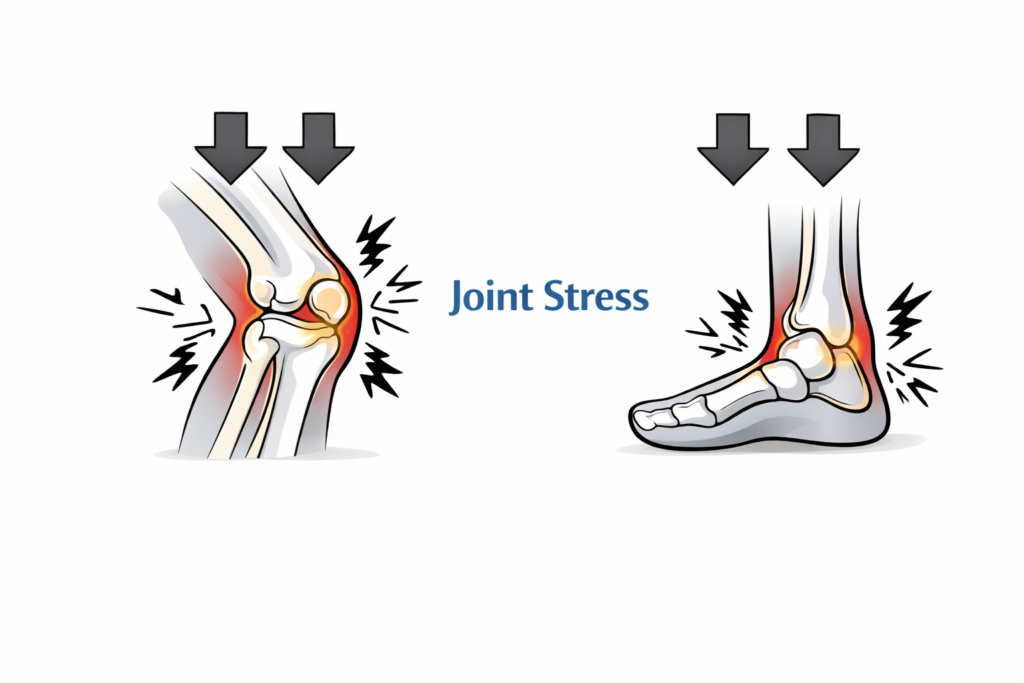
Joint stress is a weird sensation.
It’s not the same as muscle soreness.
It’s not the same as sharp pain.
For me it felt like compression.
Like the knee was taking a lot of load in a small area.
Like the joint needed to be “decompressed.”
Shoes changed that feeling dramatically.
So did surface choice.
So did fatigue.
If this sounds familiar, the goal isn’t to find the softest shoe on Earth.
The goal is to reduce the forces that make the knee act like a brake.
The Two Walking Habits That Made Any Shoe Worse
Even the “best” shoe got worse when I did these two things.
Overstriding on Autopilot
Overstriding means your foot lands too far in front of your body.
That creates a braking force with every step.
Braking forces go somewhere.
Often they go into the knee.
The fix wasn’t complicated.
I shortened my stride slightly.
I increased cadence a bit, meaning slightly more steps per minute.
Not speedwalking.
Just less reach.
Speeding Downhill Because It Felt Easy
Downhill walking loads the knee more.
Especially the front of the knee.
Speeding downhill turns the knee into a shock absorber and a brake at the same time.
That’s like asking one employee to do two jobs with no lunch break.
Eventually HR gets involved.
Slowing down downhill helped more than any foam technology.
That was humbling.
The Strength Work I Kept Constant, and Why It Matters
Shoes are not a full solution if the knee is irritated.
They’re a tool.
Strength and control are still the foundation.
I kept a small, consistent support routine during the test.
Nothing heroic.
Just enough to keep my hips and legs doing their job.
Exercise 1: Step-Down for Knee Control
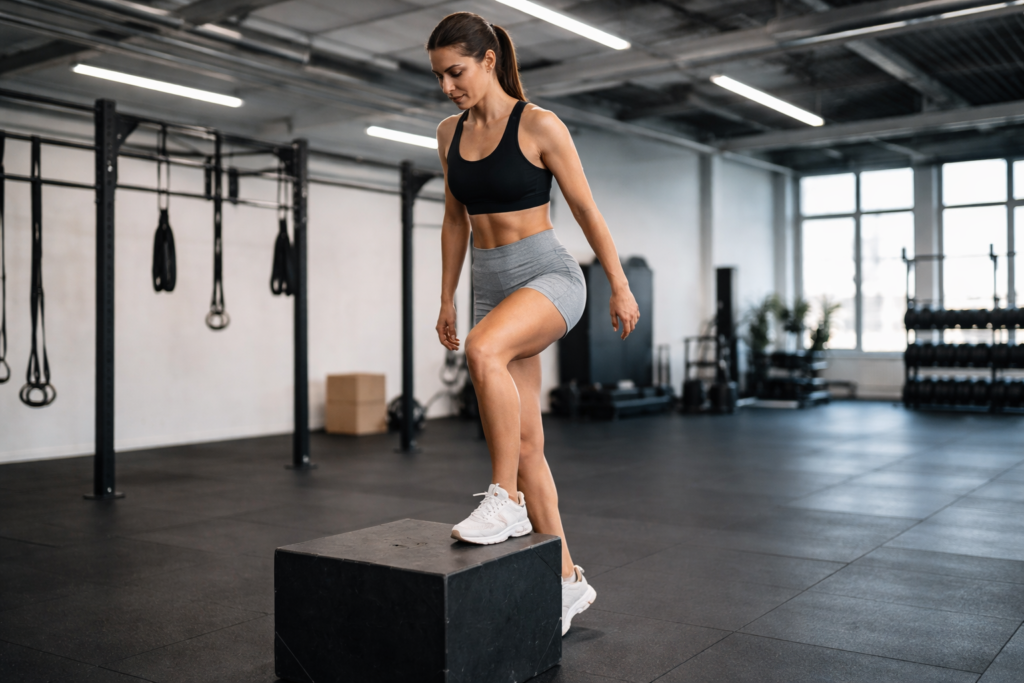
This targets the ability to control the knee as you lower.
That’s basically the same skill you need in stairs and downhill walking.
How I did it.
I stood on a low step.
I slowly lowered one foot toward the floor without dropping.
I kept the standing knee tracking roughly over the middle of the foot.
I touched the heel lightly, then came back up.
If the knee dove inward, I reduced the height.
If the hip did all the work and the knee felt nothing, I slowed down more.
This wasn’t about pain.
This was about control.
Exercise 2: Glute Med Side-Lying Leg Raises
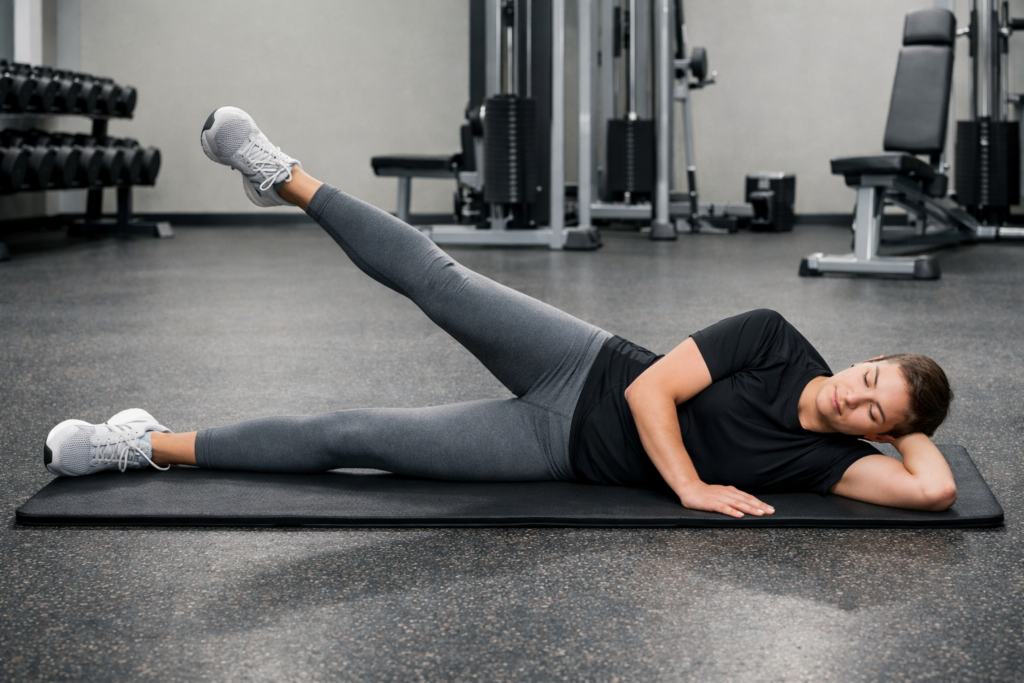
The glute med helps control hip position.
Hip position influences knee alignment.
How I did it.
I lay on my side with legs straight.
I lifted the top leg slightly behind my body line.
I kept toes facing forward, not turned up to the ceiling.
I moved slowly, focusing on the side of the hip.
When people do this fast, the front hip takes over.
Slower reps kept it honest.
Exercise 3: Calf Raises for Shock Absorption
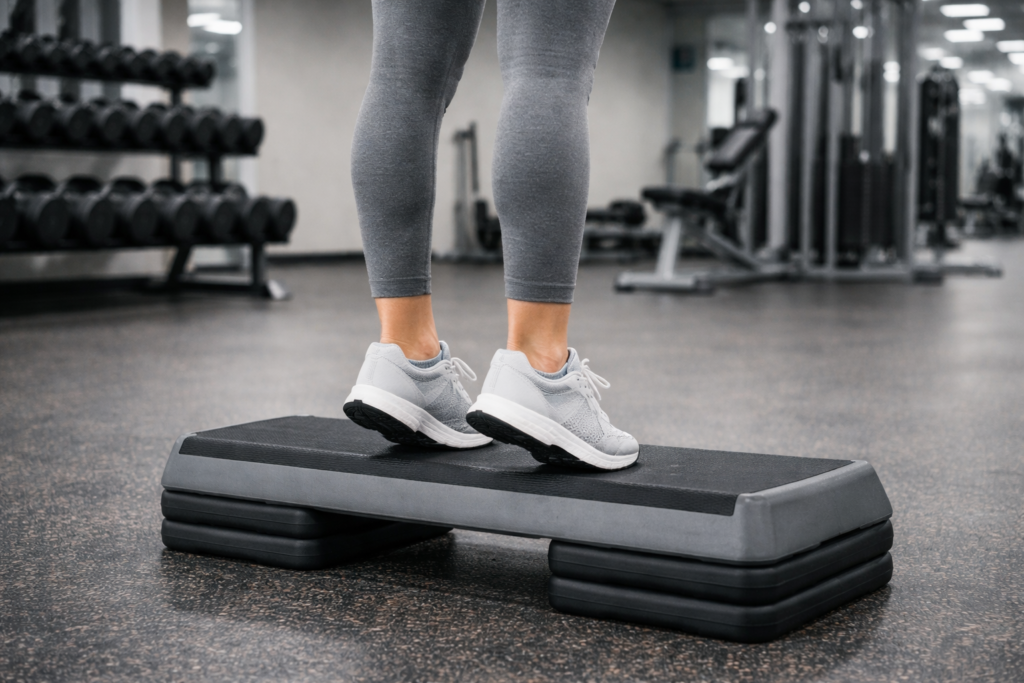
Calves help manage impact and forward movement.
Weak calves can shift load upward.
Upward means knees.
How I did it.
I stood near a wall for balance.
I rose up on the balls of my feet.
I paused at the top.
I lowered slowly, full range.
If I used minimal-ish shoes on walking days, I emphasized calf work more.
That reduced the fatigue cascade that irritated my knee later.
What I’d Tell Someone Choosing Walking Shoes for Knee Pain
This is not medical advice.
It’s a practical framework from my test.
Start With Stability, Not Extreme Softness
If knees feel cranky, a stable platform often beats a marshmallow platform.
Soft can be soothing.
Too soft can be sloppy.
A shoe that feels “controlled” usually reduces the small chaotic motions that irritate joints.
Make Lockdown a Priority
Heel slip and midfoot wobble are red flags.
They don’t always hurt immediately.
They often show up later as joint stress.
A simple check helps.
Walk fast in the store.
Take tight turns.
If the foot swims inside the shoe, the knee may end up doing the steering.
Use Minimal-ish Shoes Like a Progression, Not a Personality
Minimal-ish footwear can be great.
It can also be too much too soon.
If someone wants to transition, I’d do it gradually.
Short walks first.
Then longer.
Then harder surfaces.
Treat it like training volume, because it is training volume.
Match the Shoe to the Surface
Concrete punishes mistakes.
Trails forgive more.
Treadmills can reduce impact but change mechanics a bit.
If most walking is urban, cushioning and stability matter more.
If walking is softer terrain, flexibility might feel better.
RELATED:》》》 How to Stay Safe in the Gym Without Sacrificing Results or Motivation
My Final Result After 60 Days
The stability support shoe became my default for long walks.
It gave the best balance of low discomfort and low joint stress.
The max cushion shoe stayed in rotation for recovery-style walks.
Shorter walks felt great.
Longer walks sometimes created that “busy knee” feeling.
The minimal-ish shoe became a tool, not a main shoe.
I used it for short walks and foot-strength days.
I treated it like a stimulus, not a forever solution.
The casual sneaker got demoted to truly casual use.
Errands, short outings, low volume.
Not long concrete walks.
And here’s the biggest takeaway.
My knee didn’t need me to quit training.
My knee needed me to stop letting a random shoe decide how my leg handled thousands of steps.
Conclusion
If walking is one of the few forms of exercise that feels accessible right now, knee pain can feel like the universe is being petty.
Like, “Really?”
“Even walking?”
The good news is that footwear is one of the easiest levers to adjust.
No complicated program.
No dramatic lifestyle reboot.
Just a better interface with the ground.
If knees have been grumpy, a simple experiment can already tell you a lot.
Walk the same route twice in different shoes.
Pay attention to how your knees feel during the walk, right after, and the next morning.
That kind of comparison won’t magically fix everything.
Still, it can stop you from blaming your workout for a problem your shoes may be quietly creating.
Sometimes the issue isn’t how you move.
It’s what you’re moving on.