I bet a lot of you have hated cardio, just like I did.
For a long time, it felt like something that only made me more tired.
Later, I started using it in a lighter way, without overdoing it.
Then a simple question popped into my head.
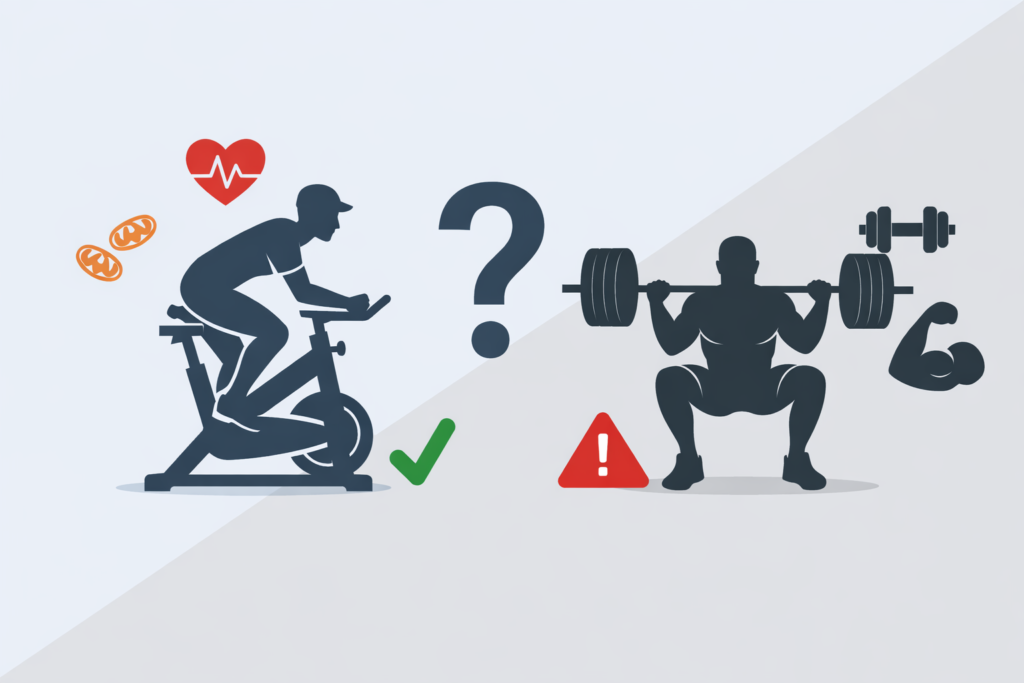
Does Zone 2 actually help recovery, or does it mess with training?
What “Zone 2” Actually Means (Without the Voodoo)
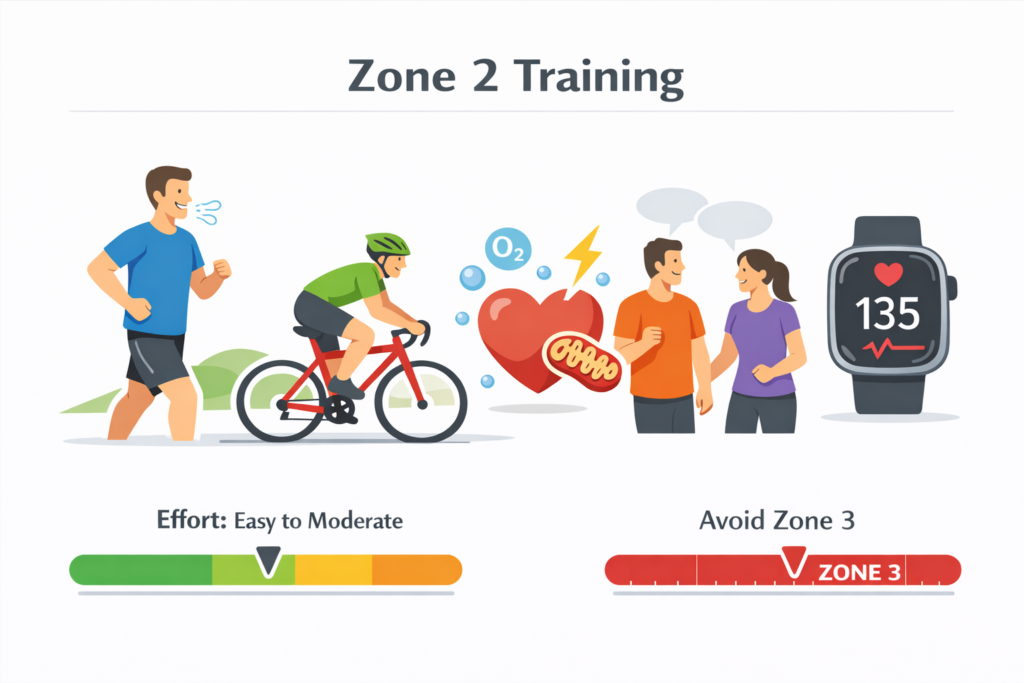
Zone 2 is a level of cardio intensity that sits in the “comfortably working” range.
Breathing gets deeper, sweat shows up, but a conversation is still possible without sounding like a malfunctioning vacuum cleaner.
Physiologically, this intensity tends to rely heavily on aerobic metabolism, meaning the body uses oxygen efficiently to produce energy.
That matters because aerobic work improves endurance, mitochondrial function (the “power plants” inside cells), and general cardiovascular capacity.
Here’s the problem: “Zone 2” sounds precise, but real life is messy.
Heart rate zones can be estimated from max heart rate, but those formulas are famously imperfect.
A better way is combining heart rate with a talk test and perceived effort.
Zone 2 usually feels like a steady “I can keep this up for a long time” pace, not a “please delete my lungs” pace.
If cycling is new, legs may burn early even at low intensity, and that can trick effort upward.
That mismatch is one reason Zone 2 can accidentally become “Zone 3 with denial.”
The Simple “Zone 2 Check” I Used While Cycling
Numbers help, but numbers also lie when the body is tired or caffeinated.
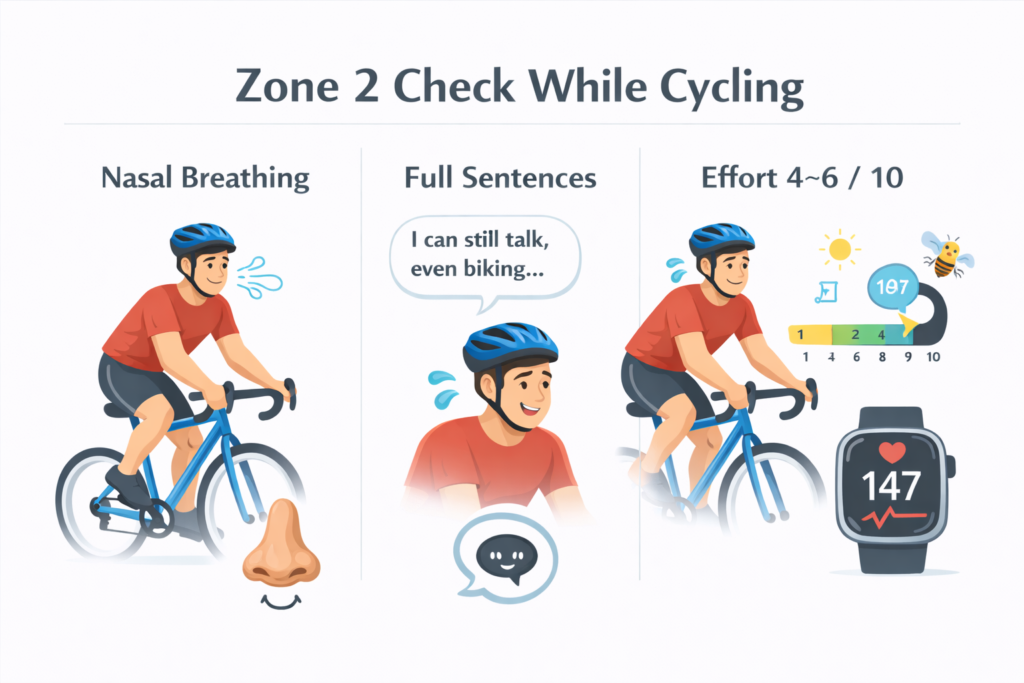
So I used three checks at the same time.
First check: nasal breathing wasn’t mandatory, but it was usually possible for chunks of time.
Second check: full sentences could come out without pausing every three words.
Third check: effort sat around 4–6 out of 10, where 10 is sprinting from a swarm of bees.
Heart rate stayed relatively stable after the first warm-up chunk.
A slow drift upward over time was normal, especially when the room was warm or hydration was sloppy.
That drift didn’t automatically mean the intensity was wrong.
It just meant the body was doing human stuff like sweating, heating up, and adjusting.
Why Cycling (Specifically) Feels “Safe”… Until It Doesn’t

Cycling is low-impact, which is why people love it.
No pounding, no angry knees from repetitive running, no ankles negotiating terms.
That low impact makes it tempting to add a lot of it, because soreness doesn’t scream the next day.
Muscles can still accumulate fatigue even when joints feel fine.
Quads and glutes can get quietly toasted if resistance creeps up.
Cadence also changes the game.
A slow grind at a heavy resistance becomes strength-endurance work, even if heart rate looks “Zone 2-ish.”
Higher cadence with lighter resistance shifts stress away from muscular grinding and toward cardiovascular demand.
For lifting compatibility, that distinction matters more than most people think.
The Interference Question (What Everyone Is Really Asking)
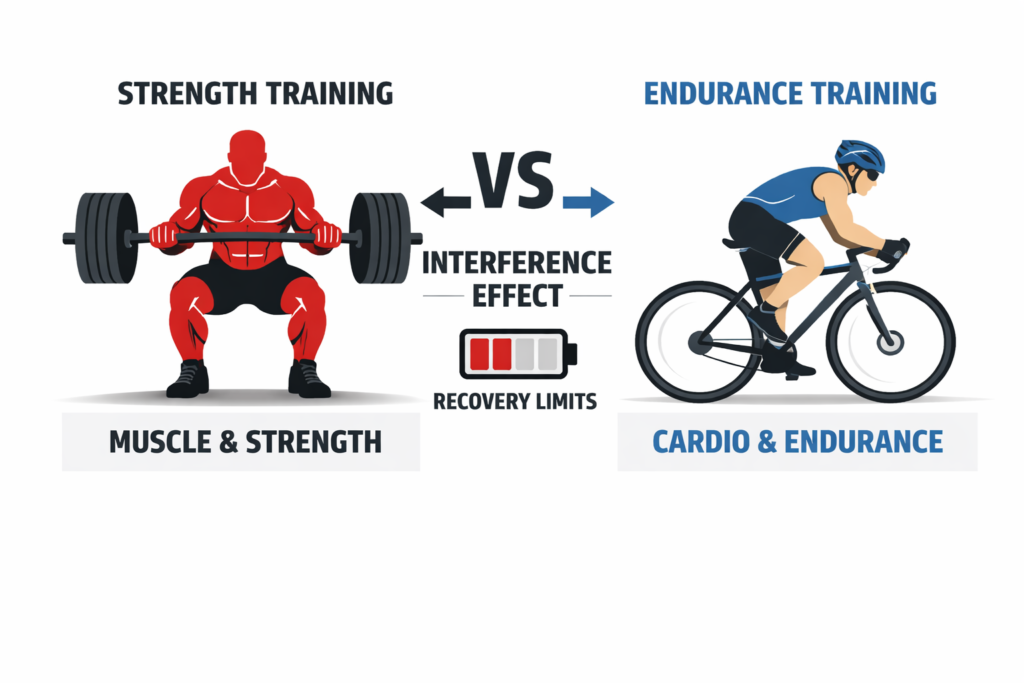
The fear is simple.
Cardio might interfere with muscle growth and strength gains.
That fear isn’t totally made up, but it’s also not a guaranteed curse.
The “interference effect” is mostly about competing adaptations and limited recovery resources.
Strength training pushes signals related to muscle building and neuromuscular performance.
Endurance training pushes signals that make the body better at long-duration energy production.
Those signals can collide depending on intensity, volume, timing, and how beat up recovery is overall.
Hard endurance work is the usual troublemaker.
Zone 2 is gentler, but “gentler” doesn’t mean “free.”
Fatigue is still fatigue, and legs don’t care whether it came from squats or spinning.
How the Body Decides What to Adapt To
Inside the body, training triggers molecular pathways that tell tissues what to adapt to.
Strength training tends to push pathways associated with building and repairing muscle.
Endurance training tends to push pathways associated with energy efficiency and endurance capacity.
One pathway often mentioned is AMPK, which responds to energy stress and endurance-type work.
Another one is mTOR, which is heavily involved in muscle protein synthesis and growth signaling.
In very simplified terms, endurance stress can temporarily dampen some growth signaling if recovery resources are limited.
That doesn’t mean cardio deletes gains like a villain in a cape.
It means stacking stress without respecting recovery can blunt progress.
Zone 2 is less likely to cause that clash than high-intensity intervals, especially if overall volume is reasonable.
Still, the body doesn’t read training labels.
It reads stress, fuel availability, sleep quality, and whether legs feel like they’ve been living on stairs.
How I Set Things Up in Practice
Instead of trusting vibes, I ran comparisons where only one major variable changed.
Cycling stayed in the Zone 2 feel range using the checks I mentioned earlier.
Strength work stayed consistent: same main lifts, same rough weekly volume, same warm-up structure.
Food stayed stable on purpose, because changing calories and blaming cardio is peak self-sabotage.
Sleep got tracked loosely, because pretending sleep doesn’t matter is basically comedy.
Performance markers were simple.
Bar speed and perceived heaviness on big lifts.
Rep quality near the end of sets.
General leg “snap” on warm-ups.
Resting heart rate and overall tiredness were noted, because systemic fatigue shows up there first.
The biggest thing I tracked was how I felt during the first hard working sets.
That’s where interference shows up before it becomes a full-on plateau.
What Happened When Zone 2 Was Added After Lifting
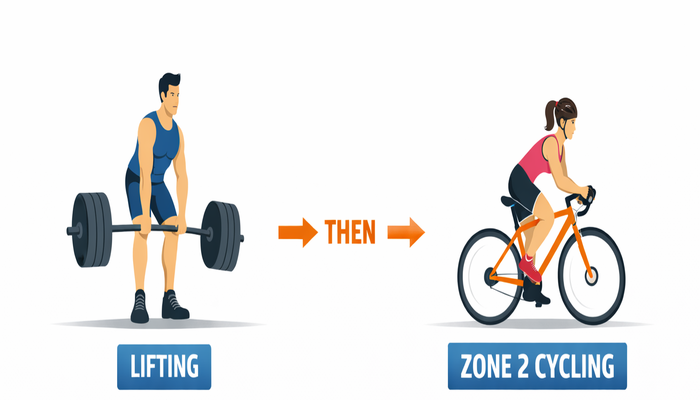
Cycling after lifting felt like a “cooldown that actually does something.”
Blood flow improved, legs felt warmer and looser, and soreness often felt less sharp the next day.
That sounds magical, but the details mattered.
Keeping resistance low was the difference between recovery and sabotage.
A light spin at a higher cadence felt like flushing fatigue.
A slightly heavier resistance turned it into sneaky extra quad work.
When that happened, squats and deadlifts started feeling heavier two sessions later, not immediately.
Delayed fatigue is the trickster here.
Recovery felt great short-term, then strength sessions felt like someone replaced my legs with damp towels.
Duration mattered too.
Shorter Zone 2 rides after lifting were easy to recover from.
Longer rides after heavy leg training sometimes pushed overall stress past the “productive” line.
What Happened When Zone 2 Was Done Before Lifting
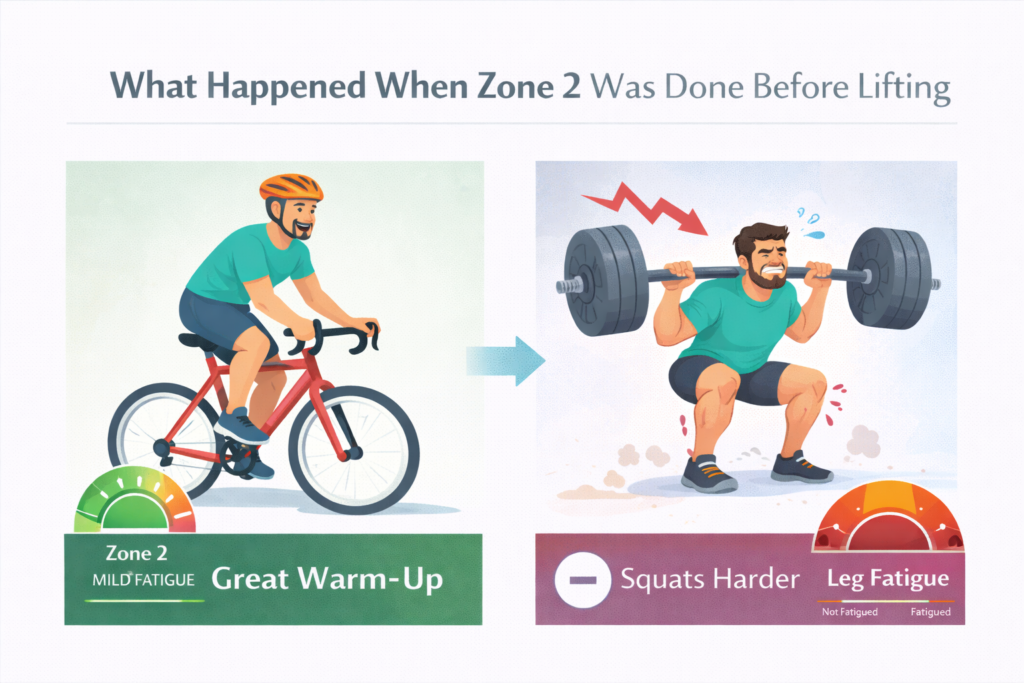
Cycling before lifting was the most misleading setup.
The warm-up felt amazing, joints felt oiled, and mentally everything felt “online.”
Then heavy sets arrived, and the real test started.
Even at Zone 2 intensity, some glycogen got used and local leg fatigue crept in.
Heavy squats don’t care if fatigue is mild.
A mild drop in sharpness can feel huge under a heavy bar.
Bar speed slowed earlier, and the last reps felt grindier than they should.
Strength didn’t vanish, but top-end performance became slightly less explosive.
That mattered most on lower-body days.
Upper-body lifting was far less affected by pre-ride Zone 2, unless the ride was long or resistance was too high.
What Happened When Zone 2 Was On “Non-Lifting” Days
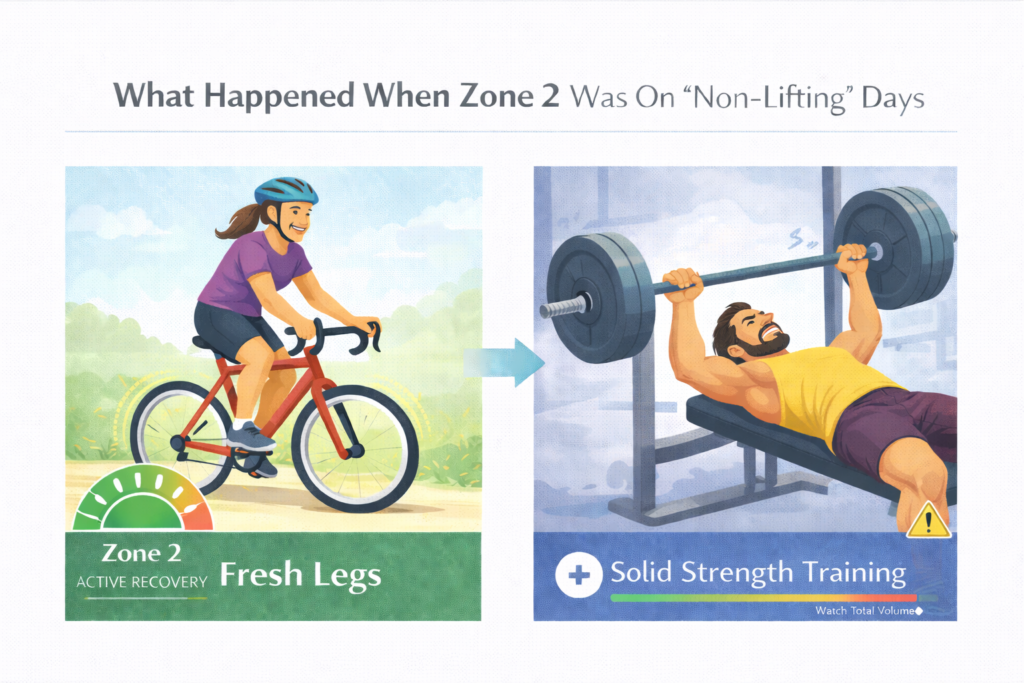
This was the sweet spot more often than not.
Zone 2 on non-lifting days improved overall recovery and kept fatigue “moving” instead of pooling.
Legs felt fresher for heavy training compared to complete inactivity.
That surprised me at first, because rest days are supposed to be sacred.
Turns out, “rest” doesn’t always mean “motionless.”
Active recovery can reduce stiffness, improve circulation, and help maintain training rhythm.
The risk was volume creep.
Because Zone 2 feels easy, it’s tempting to keep adding minutes like it’s free money.
Once total weekly cycling volume got too high, leg training started losing some pop.
The line between “helpful” and “too much” was clearer when I watched lifting performance, not cardio performance.
Cycling got better easily.
Strength needs more respect.
How I Kept Zone 2 From Becoming “Leg Day in Disguise”
Cycling can be made more “cardio” or more “legs,” even at similar heart rates.
Cadence was the main tool.
Higher cadence with lower resistance reduced muscular strain.
A steady, smooth spin kept quads from burning.
Seat height and position mattered too.
A low seat increases knee bend and can load quads more aggressively.
A more appropriate seat height made pedaling smoother and reduced that “quad pump” feeling.
Gear selection was the quiet hero.
If resistance felt like pushing through mud, it wasn’t Zone 2 for lifting compatibility.
Zone 2 should feel like the heart is working steadily, not like the legs are doing weighted lunges.
The Timing Rule That Actually Helped
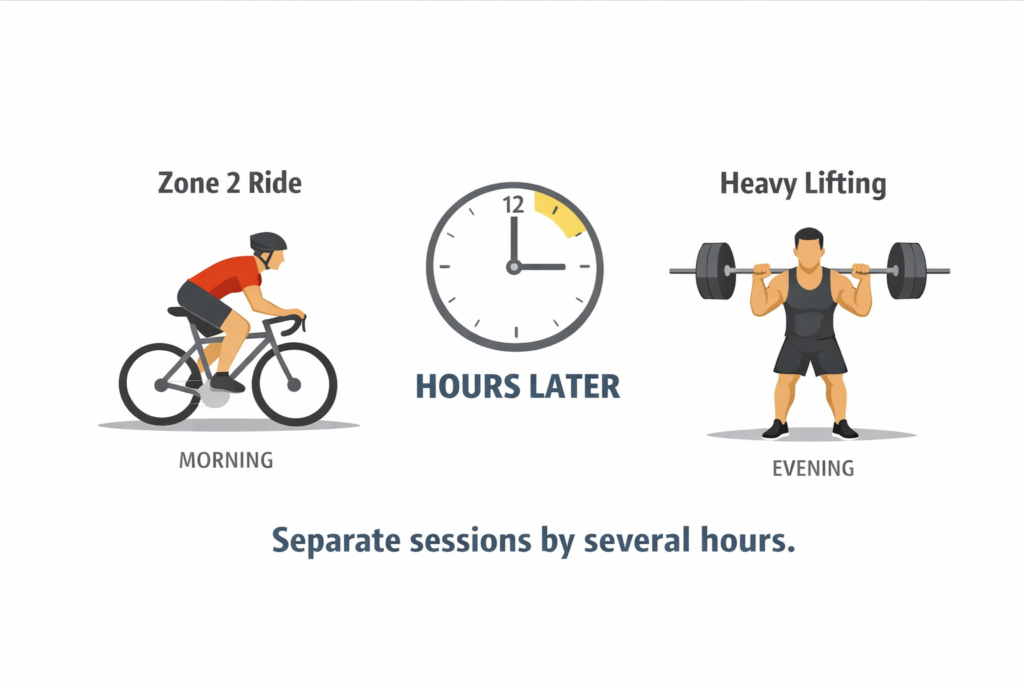
Spacing mattered more than I expected.
Zone 2 right next to heavy leg lifting was the highest-risk setup for interference.
Zone 2 separated by several hours felt significantly better.
Morning ride and later lifting was more manageable than ride right before.
Lifting first and then a short easy spin was also manageable, as long as it stayed truly easy.
When sessions were stacked too tightly, the body felt like it had to pick a priority.
That priority was usually “survive,” not “set PRs.”
So the practical takeaway from my testing was boring but effective.
Keep the hardest strength work protected by time, fuel, and freshness.
Let Zone 2 support training, not compete with it.
Fueling Was the Hidden Variable (And It Was Annoyingly Powerful)
Cycling plus lifting creates a bigger energy demand.
That means low calories can turn “smart cardio” into “why do my legs hate me.”
Carbohydrates mattered the most for performance quality.
Glycogen is basically the stored fuel that heavy lifting loves.
Zone 2 uses a mix of fats and carbs, but carbs still play a role, especially as duration increases.
Under-fueling made the interference effect feel way worse.
Adequate food made the same training load feel normal.
Protein stayed consistent, because muscle repair doesn’t negotiate.
Hydration mattered more than expected too.
Even mild dehydration made heart rate drift and made Zone 2 feel harder than it should.
That created a domino effect where “easy ride” became “moderate ride,” which became “why are squats awful.”
How Strength Training Was Affected (The Specific Patterns I Noticed)
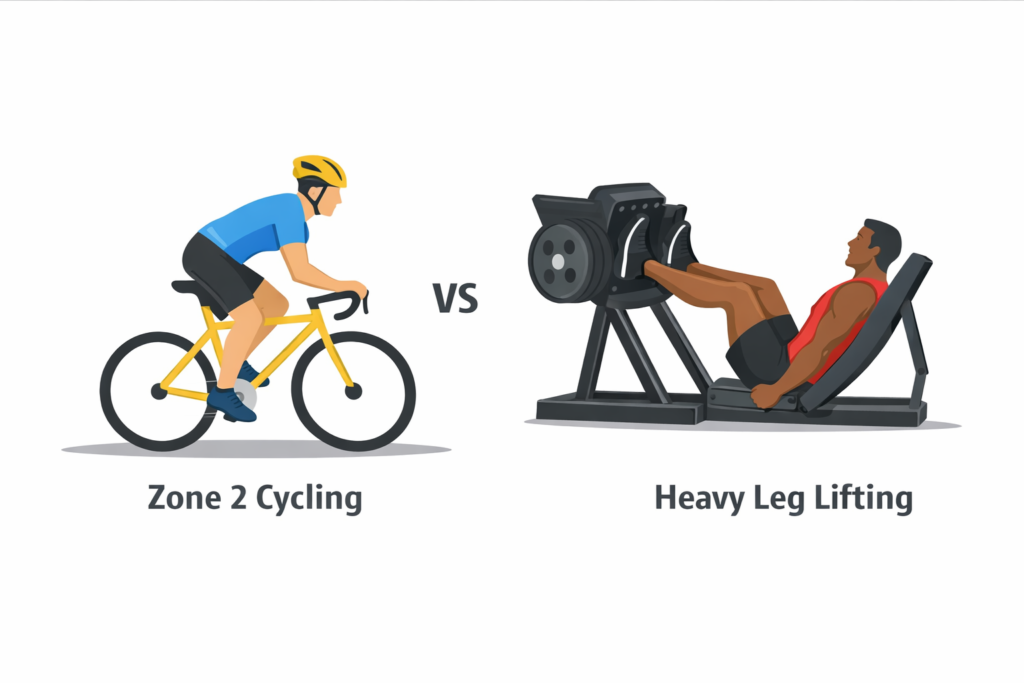
The effects on strength weren’t dramatic or obvious at first—they showed up in smaller, easier-to-miss ways.
Strength loss didn’t show up as dramatic failure.
Instead, it showed up as subtle quality decay.
Warm-up sets felt heavier than expected.
The first working set felt like a second working set.
Rep speed slowed earlier.
The last reps looked uglier and required more mental effort.
Progress didn’t stop instantly, but momentum slowed.
That pattern usually meant accumulated fatigue was rising faster than recovery capacity.
Zone 2 wasn’t evil in those moments.
Volume management was the actual issue.
Once cycling volume was dialed back slightly, strength sessions regained their “snap.”
Muscle Growth Concerns (And Why the Mirror Doesn’t Panic on Day Two)
Hypertrophy depends on training volume, mechanical tension, recovery, and nutrition working together.
Zone 2 work can support recovery and overall work capacity, which indirectly supports muscle growth.
Improved work capacity often leads to better-quality sets over time, not just more work.
The trade-off shows up when endurance volume gets too high.
Recovery resources become stretched.
Lifting quality starts to slip.
When lifting quality drops, the hypertrophy stimulus usually drops with it.
With moderate volume and truly easy intensity, Zone 2 didn’t appear to interfere with muscle growth at all.
How Good Intentions Turned Into Extra Fatigue
It usually started with good intentions.
Letting ego sneak into cardio was the first shift.
Zone 2 feels slow, so speeding up feels productive.
That speed-up quietly changes the training stimulus.
Using too much resistance came next, because it “felt smooth.”
Smooth doesn’t mean easy.
Quads can work hard without screaming immediately.
Time was the third thing that crept up.
Recovery felt good at first, so adding minutes felt harmless.
Easy cardio is addictive because it doesn’t hurt like intervals.
That makes it easy to double weekly volume without noticing.
Sleep was the last piece to get ignored.
Zone 2 can feel recoverable, but stacked stress plus poor sleep equals heavy legs and cranky sessions.
No magic plan survives a bad sleep streak.
How I’d Explain the “Smart Cardio” Version of Zone 2 Cycling
Smart Zone 2 cycling feels like a background upgrade.
Heart and lungs get better.
Recovery feels smoother.
General energy improves.
Lifting sessions feel more repeatable across the week.
That version requires discipline because it’s intentionally not impressive.
Intensity stays controlled.
Resistance stays light.
Duration stays reasonable.
Fueling stays adequate.
That’s the version that actually plays nicely with lifting.
How I’d Explain the “Hidden Interference” Version of Zone 2 Cycling
Interference shows up when Zone 2 becomes “kind of harder” most of the time.
Heart rate creeps up.
Cadence drops.
Resistance rises.
Ride duration expands.
Leg fatigue accumulates.
Strength work becomes slightly worse, repeatedly.
That version creates a quiet tug-of-war for recovery.
The body can adapt to a lot, but adaptation still costs something.
When the cost is paid with weaker lifting sessions, the trade becomes obvious.
A Practical Way to Combine Them (The Structure That Worked Best for Me)
Heavy lower-body lifting stayed protected as the priority.
Zone 2 got placed where it supported that priority.
Non-lifting days were often the best place for longer Zone 2 rides.
Short easy spins after lifting worked when resistance stayed genuinely light.
Upper-body days tolerated Zone 2 better because legs weren’t the main limiter.
Spacing sessions by several hours reduced the “drag” feeling in strength work.
Weekly cycling volume stayed stable instead of creeping upward.
That stability kept recovery predictable, which kept progress consistent.
Consistency beats heroic bursts that blow up two weeks later.
So… Where Does Zone 2 Cycling Really Fit When You Lift Weights?
Zone 2 cycling is smart cardio when it stays honest.
Honest intensity.
Honest resistance.
Honest volume.
Honest recovery.
Interference happens when “easy” becomes a story told to justify doing more.
The body doesn’t care about the story.
It responds to stress, and it always sends a bill.
The good news is that the bill is negotiable.
A few tweaks in cadence, resistance, duration, timing, and fueling can flip Zone 2 from “sneaky fatigue” into “recovery with benefits.”
That’s a pretty good deal for something that also makes climbing stairs feel less like a mini horror movie.
If the goal is getting stronger while staying athletic and healthy, Zone 2 can absolutely belong in the plan.
Just let lifting be the headline and make cardio the supportive character that actually helps the plot.