The first run-in with wide push-ups happened thanks to some totally random YouTube comment hyping it up as “the ultimate chest hack.”
Dropped to the floor in a second.
Hands spread way past shoulder width, basically a confused starfish on a yoga mat.
Lowered down… and the front delts immediately staged a protest while the chest acted like it took a day off.
The whole thing felt like trying to spread peanut butter with the wrong side of a spoon — technically doable, but everything in your body says it’s not the right call.
That one rep sparked a bunch of questions.
Are wide push-ups awkward by design?
Oppure internet distribuisce consigli sulla forma con la stessa affidabilità dei biscotti della fortuna?
It’s not really a dramatic yes-or-no situation.
But wide push-ups definitely come with quirks that let the front delts jump to the front row unless you know how to keep them in check.
So here’s a breakdown that mixes a little gym-logic, some real biomechanics, and the kind of humility that only shows up when your own bodyweight puts you in your place.
The Wide Push-Up Set-Up and Why It Shifts Stress Forward
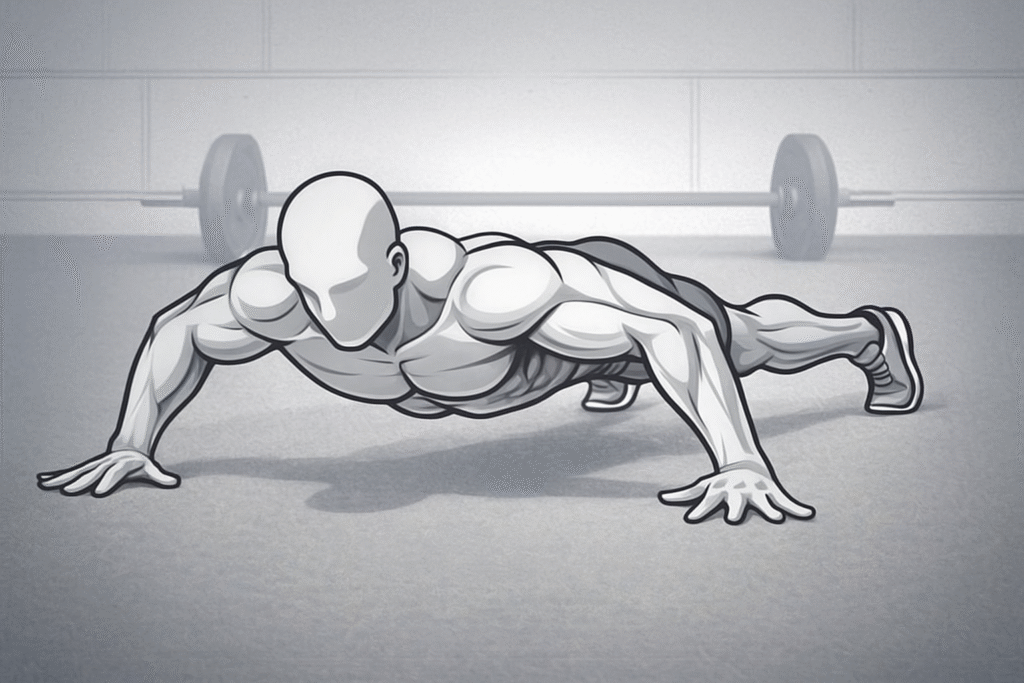
When you widen your hands, two things happen before you even start the first rep.
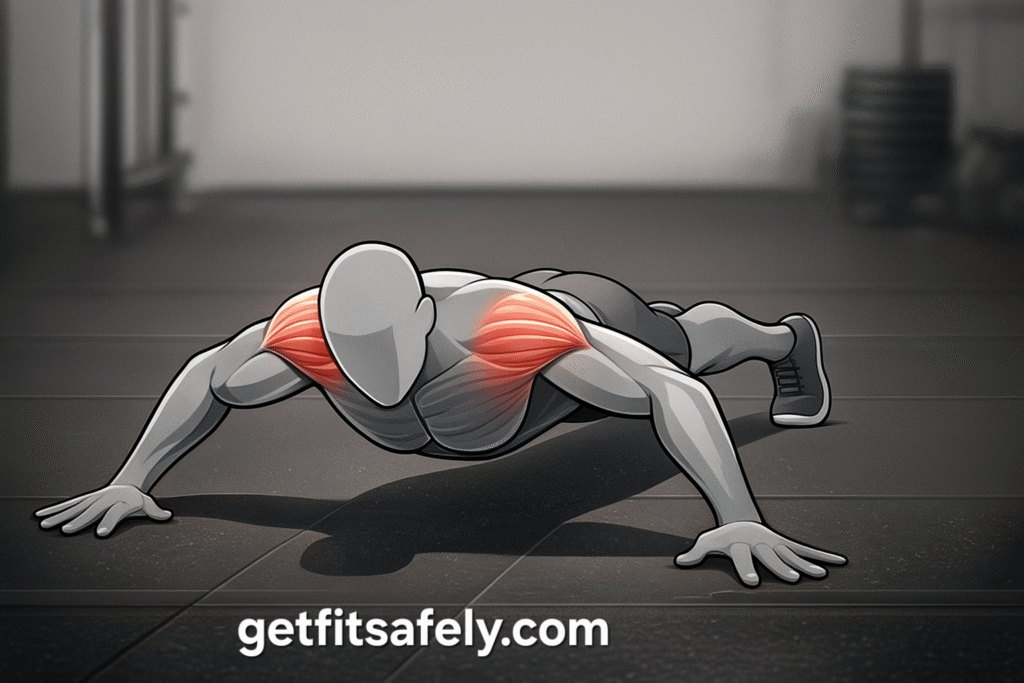
Your elbows flare out.
And your upper arm moves into horizontal abduction.
That’s shoulder-flexion country.
Your chest can still work.
But your front delts are in a mechanical position that practically begs them to take over.
It’s like giving one muscle group a VIP fast-pass to the movement and asking the chest to enter from the regular line with everyone else.
And unlike narrower variations, your torso angle doesn’t naturally assist the chest.
Your front delts are positioned closer to the direction of force, so they get the first bite of the apple before the pecs join the party.
You can feel this instantly.
The top half of the rep becomes all shoulder drive, while the bottom feels like your chest is trying to clap from another room.
Why Your Chest Doesn’t Always Fire the Way You Expect
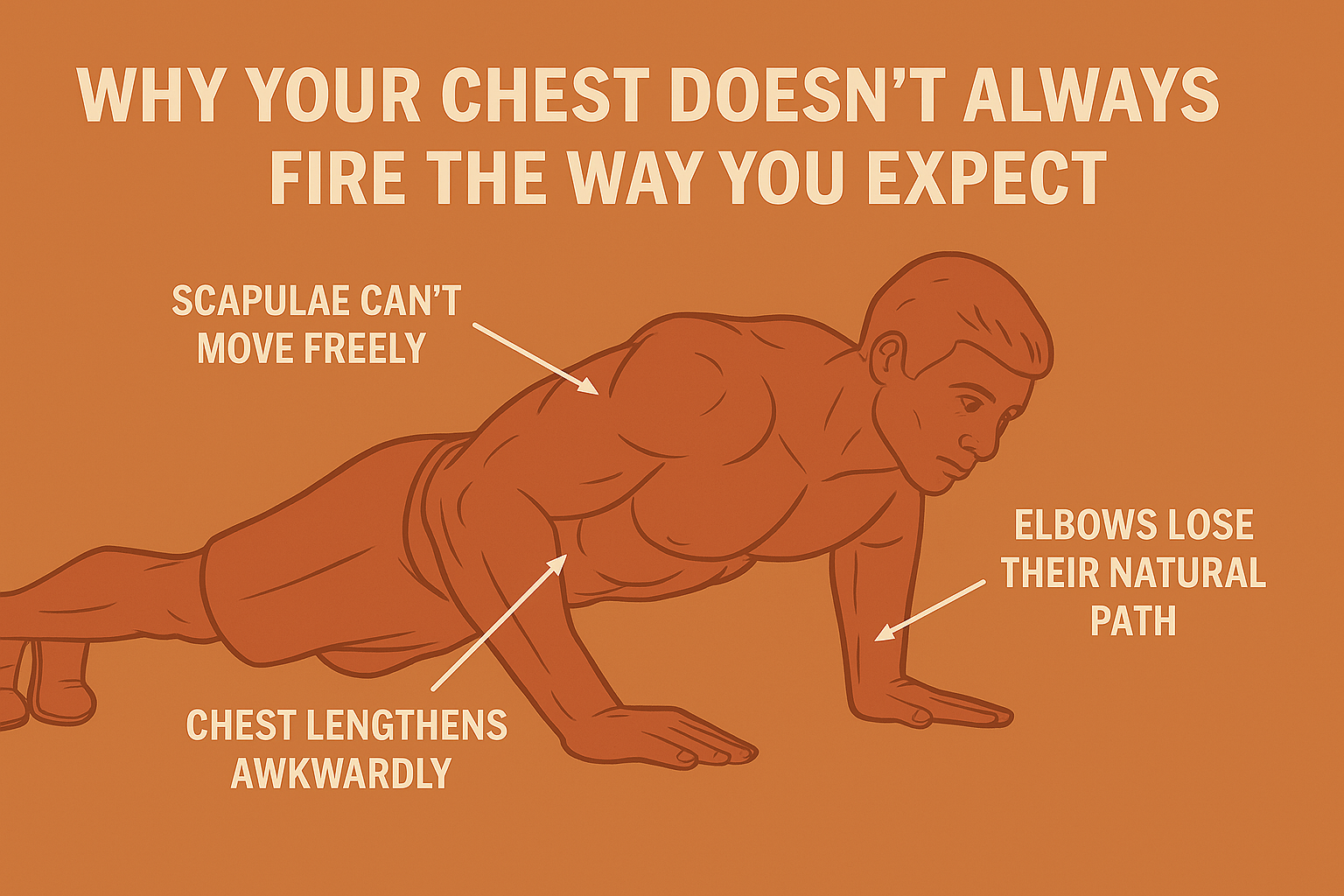
There’s a common misconception that going wider “opens the chest.”
That’s true visually.
But mechanically?
Not so much.
When your hands go wide:
Your scapulae can’t move freely.
Your elbows lose their natural path.
Your chest lengthens awkwardly instead of tensioning efficiently.
Think of your chest like an old-school bungee cord.
It needs a clean, consistent stretch direction to snap back with force.
Wide push-ups stretch it sideways, not forward, so the tension is kind of wasted rather than converted into actual pressing power.
And when tension is wasted, the body shifts responsibility to a muscle that can handle it.
Enter the front delts.
They’re basically that coworker who steps in because nobody else is doing the job “correctly.”
Where Wide Push-Ups Actually Make Sense
Wide push-ups aren’t useless.
They’re just misunderstood.
If your goal is:
- More upper-body volume
- A change in joint angle
- A challenge to stabilizing muscles
A variation to break monotony
…wide push-ups can be a spicy addition.
They can also hammer the outer pec fibers if you know how to position yourself.
But most people don’t use the right mechanics because the movement looks deceptively simple.
It’s like trying to tune a guitar by ear on day one.
Possible, but not pretty.
How to Actually Make Wide Push-Ups Hit the Chest More
You don’t have to ditch the movement.
But you do have to approach it like a carpenter who finally buys a tape measure instead of guessing cuts by vibe.
Here are the adjustments that instantly shift activation away from the delts:
- Bring your elbows 30–45 degrees down from perpendicular.
- Turn your hands slightly outward to align the humerus better.
- Angle your torso forward so your chest leads the movement instead of your shoulders.
- Actively “pull the floor apart” with your hands to preload the pecs.
- Keep a slight arch in the upper back so your sternum stays the highest point.
These cues feel small when you read them.
But in practice they’re the difference between “front-delt burn” and “my chest feels like it’s inflating.”
Biomechanically, you’re adjusting the torque so the pecs can generate internal adduction more effectively.
And when the pecs create the movement, the delts stop acting like helicopter parents trying to run the whole show.
What Happens If Your Shoulders Still Take Over
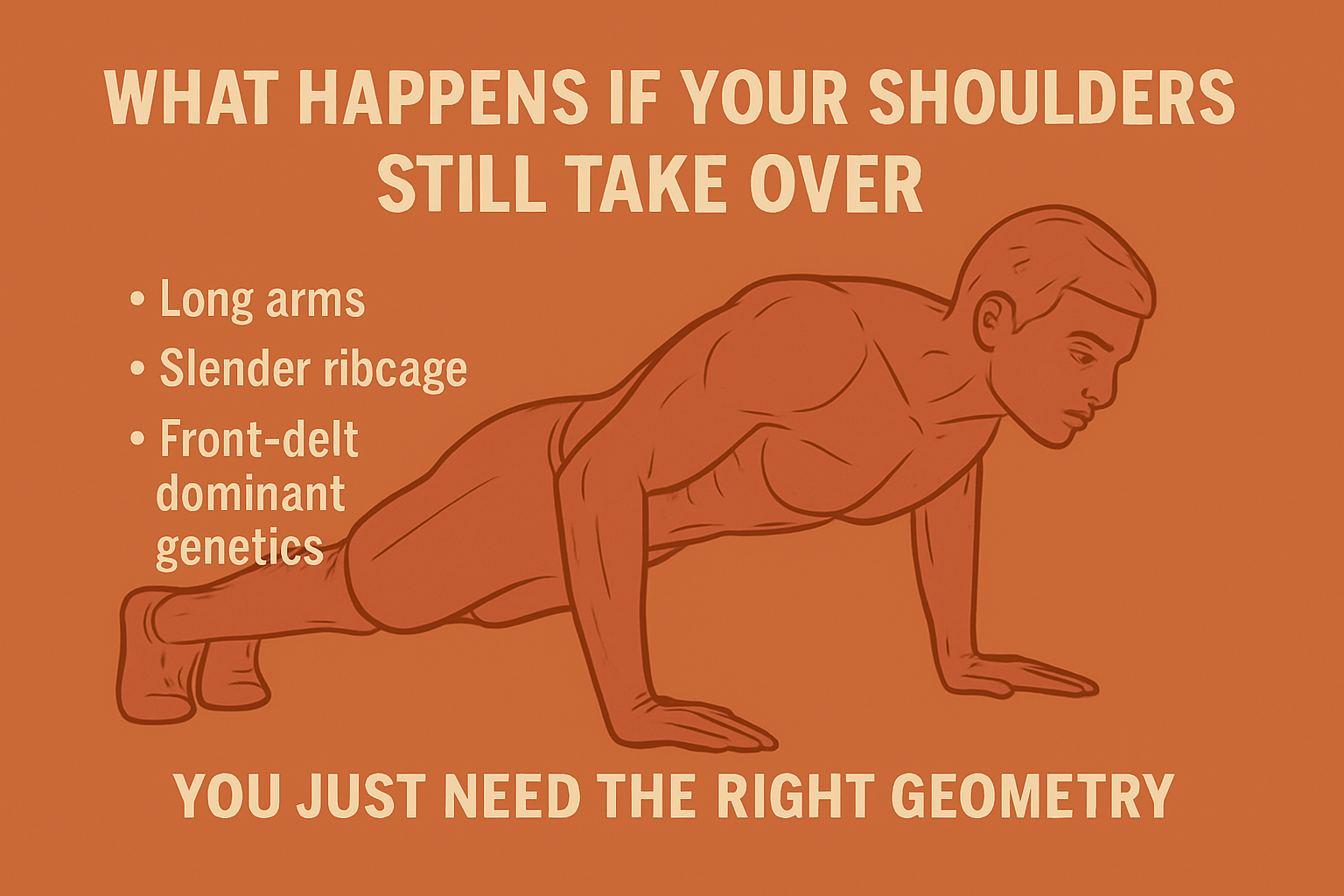
Here’s the part nobody wants to hear:
Some people are simply built with shoulder mechanics that overpower the pecs.
Long arms.
Slender ribcage.
Front-delt dominant genetics.
If this is you, every push-up variation will feel like a support ticket being rerouted to the front delts first.
Wide push-ups just make the imbalance more obvious.
It’s not a flaw.
It’s simply how your leverages distribute force.
And those leverages aren’t broken — they just need smarter angles.
This is why exercises like decline push-ups, weighted dips, and ring push-ups often “fix” the chest-activation issue.
They change the line of pull in a way that wide push-ups can’t fully replicate.
You’re not broken.
You just need the right geometry.
When Wide Push-Ups Make Sense in a Program
If you already train chest with:
- Bench
- Weighted push-ups
- Rings
- Dips
…then wide push-ups are like adding grated parmesan to a meal that already tastes great.
Optional, but enjoyable.
They’re perfect for:
- A burnout finisher
- A pump-chasing superset
- A bodyweight-only day
- A deload week where you want more motion, less load
But they’re not the star of the show.
They’re not the best tool for progressive overload.
And they’re definitely not the king of chest isolation.
Their mechanics just don’t line up for that role.
How to Know If Your Chest Is Actually Doing the Work (Before You Blame the Movement)
A lot of people swear wide push-ups “don’t hit the chest,” but here’s the funny thing.
Half of the time, the chest is working — the lifter just doesn’t know how to spot the signs.
Before assuming your shoulders hijacked the movement, run this quick checklist that feels more like body-awareness training than biomechanics class.
If your sternum feels like it’s moving toward the floor instead of your shoulders collapsing forward, that’s a green light.
If you feel tension spreading across the middle of your chest like someone slowly pulling a seatbelt, you’re in the right zone.
If your elbows stay low and your hands feel like they’re “gripping outward,” your pecs are preloaded properly.
If the first five reps feel smooth and connected instead of sharp and shoulder-heavy, you’re using the right angles.
And here’s the kicker.
Your chest might not burn mid-rep — it often shows itself afterward, when you’re standing there feeling a warm, slow pump that builds from the inside out, not a sharp front-delt fatigue.
Wide push-ups aren’t a guessing game.
Your body gives you feedback instantly — you just have to learn to read the signals.
Once you know what chest activation really feels like, the movement stops being a mystery and becomes just another tool you can fine-tune.
A More Practical Way to Think About It
Instead of obsessing over whether wide push-ups are “good” or “bad,” think about them like this:
- Narrow push-up → more triceps
- Standard push-up → balanced pecs
- Decline push-up → lower chest emphasis
- Ring push-up → full pec engagement
- Wide push-up → chest stretch and delt contribution
Each variation paints a different part of the picture.
Wide push-ups just paint with a brush that overlaps into shoulder territory.
And that’s fine — it’s still art.
This video shows several different hand positions for push-ups so you can clearly see how each setup actually looks in practice.
What the Research Whispers While Everyone Else Yells
After all the debates, cues, and arguments on Reddit, I actually went digging through the research expecting some dramatic verdict like:
“Wide push-ups officially confirmed to be the front-delt apocalypse.”
But nope.
What researchers actually found is way less dramatic than the internet wants it to be.
One EMG paper from Marcolin and colleagues — EMG Differences Across Push-Up Variations —
basically says what every lifter learns the hard way:
change the width, and the workload shifts — but nothing gets deleted.
The pecs don’t disappear, the delts don’t take over like a hostile takeover, and the movement doesn’t suddenly morph into a shoulder press.
It just changes the emphasis.
Another study, the one by Cogley et al. — Muscle Activation in Different Push-Up Hand Widths —
looked at different hand placements and found something hilariously simple:
a wider setup can tilt the activation toward the shoulders…
but mostly when your angles are sloppy enough to make your joints draft a resignation letter.
And then there’s the super underrated paper by Topalidou (Anastasia) —
Push-Up Mechanics from Different Hand Positions —
which practically shrugged and said:
“Relax. The differences aren’t even that extreme unless you go full starfish mode.”
That’s when it finally clicked.
Wide push-ups aren’t cursed.
They’re just sensitive — the kind of movement that reacts instantly to tiny changes in elbow flare, scapular position, and tension.
Mess up one angle and the delts take over instantly.
RELATED:》》》 Is Bodyweight Training Really Enough to Build Serious Strength — or Just a Beginner Thing?
Final Takeaway
At the end of the day, wide push-ups teach you something valuable.
They show you how your body naturally distributes force.
They show you how your chest responds to different joint angles.
They show you whether you’re someone who’s shoulder-dominant by design or by habit.
And once you know that?
You can choose variations that suit your frame.
You can add wide push-ups when you want more volume, not when you expect perfect chest isolation.
Your training becomes less about “is this movement cursed?” and more about “how can I make it work for me?”
And that mindset — more than any rep, set, or variation — is what keeps you progressing long-term.